-
-
project thumbnail
-
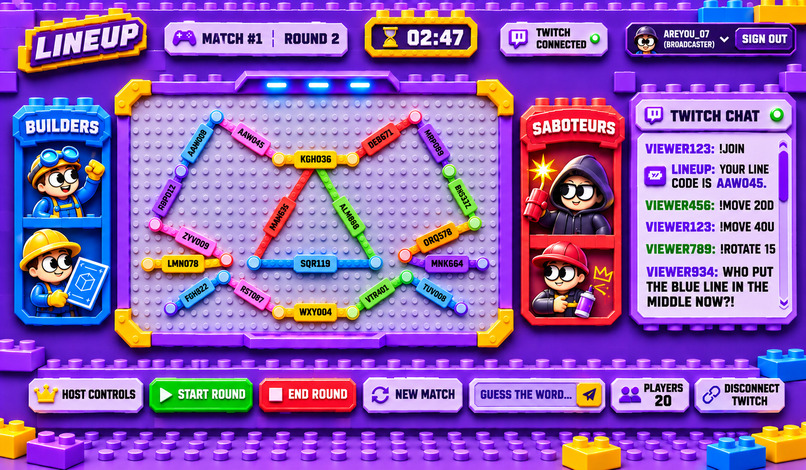
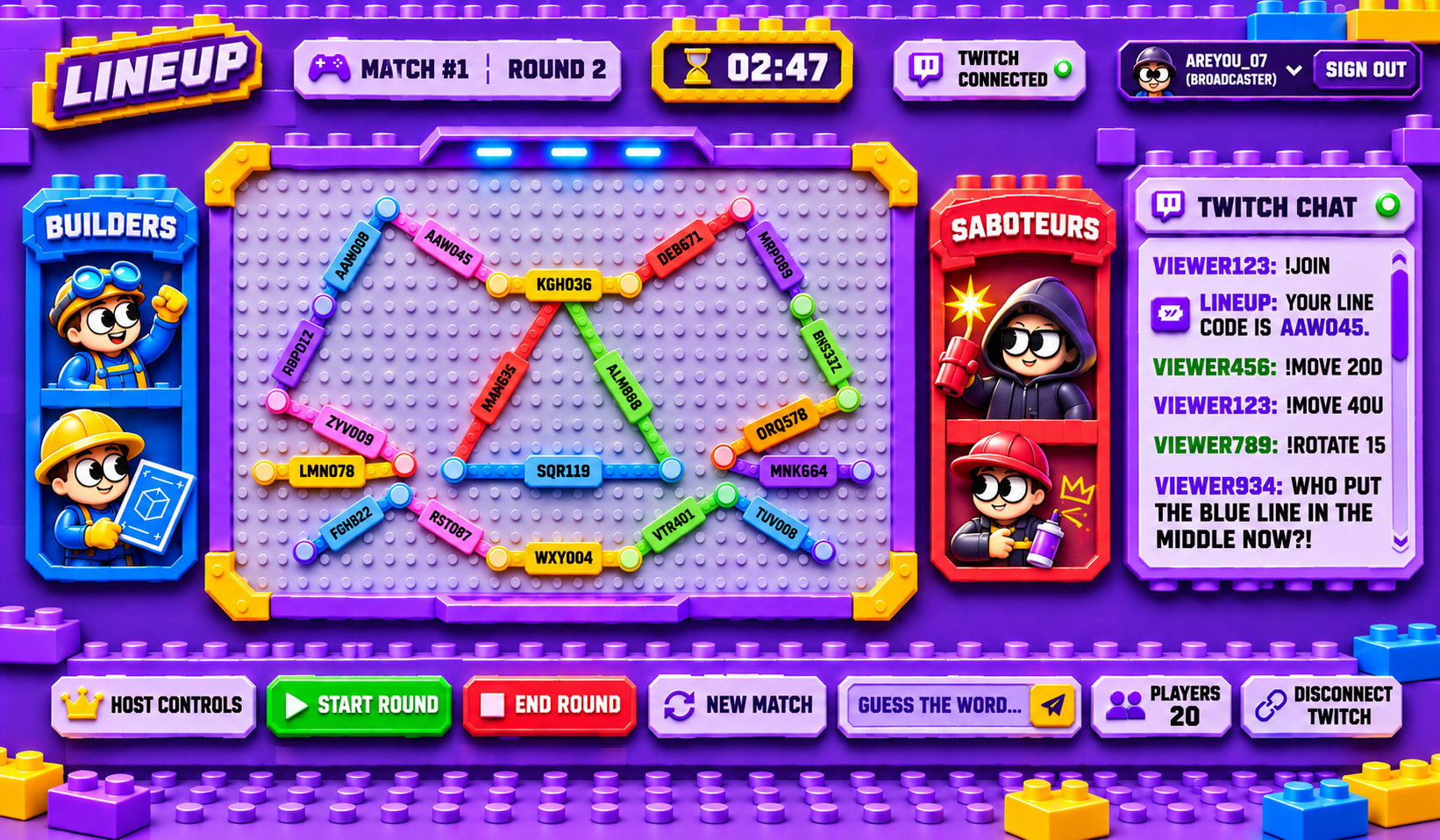
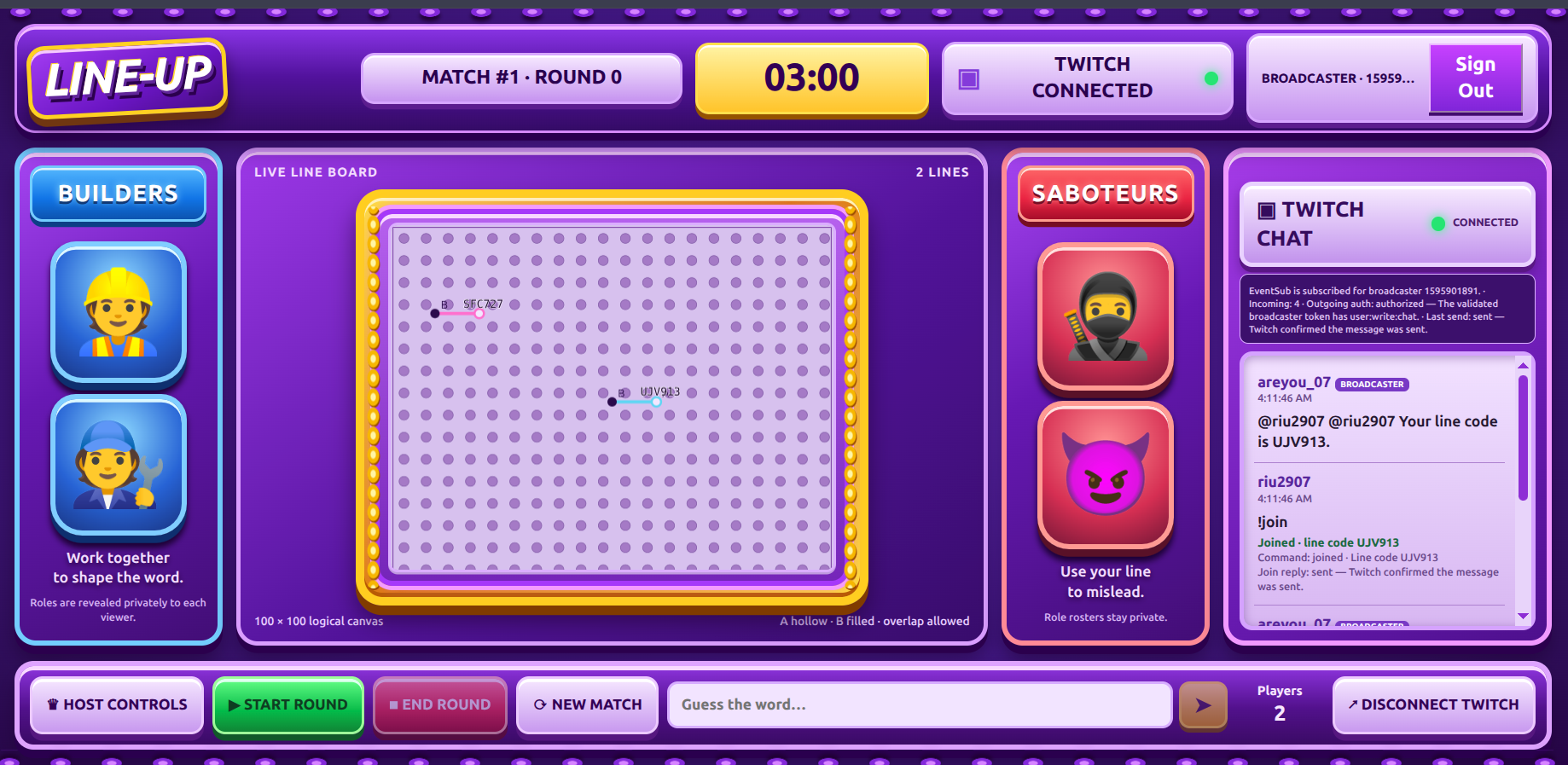
updated ui
-
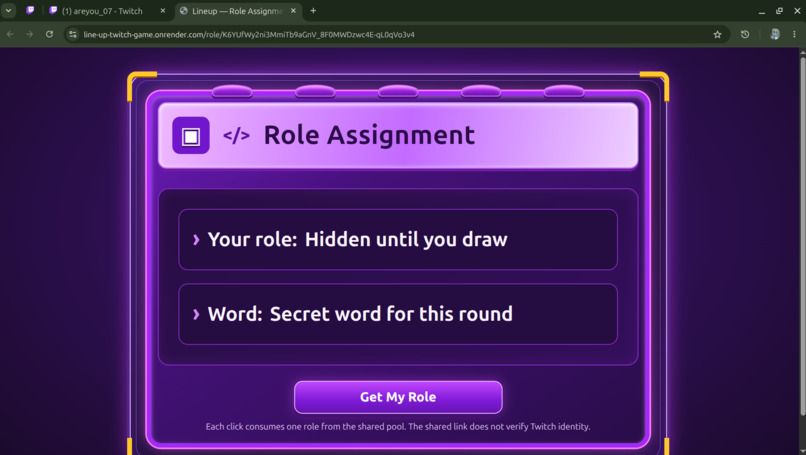
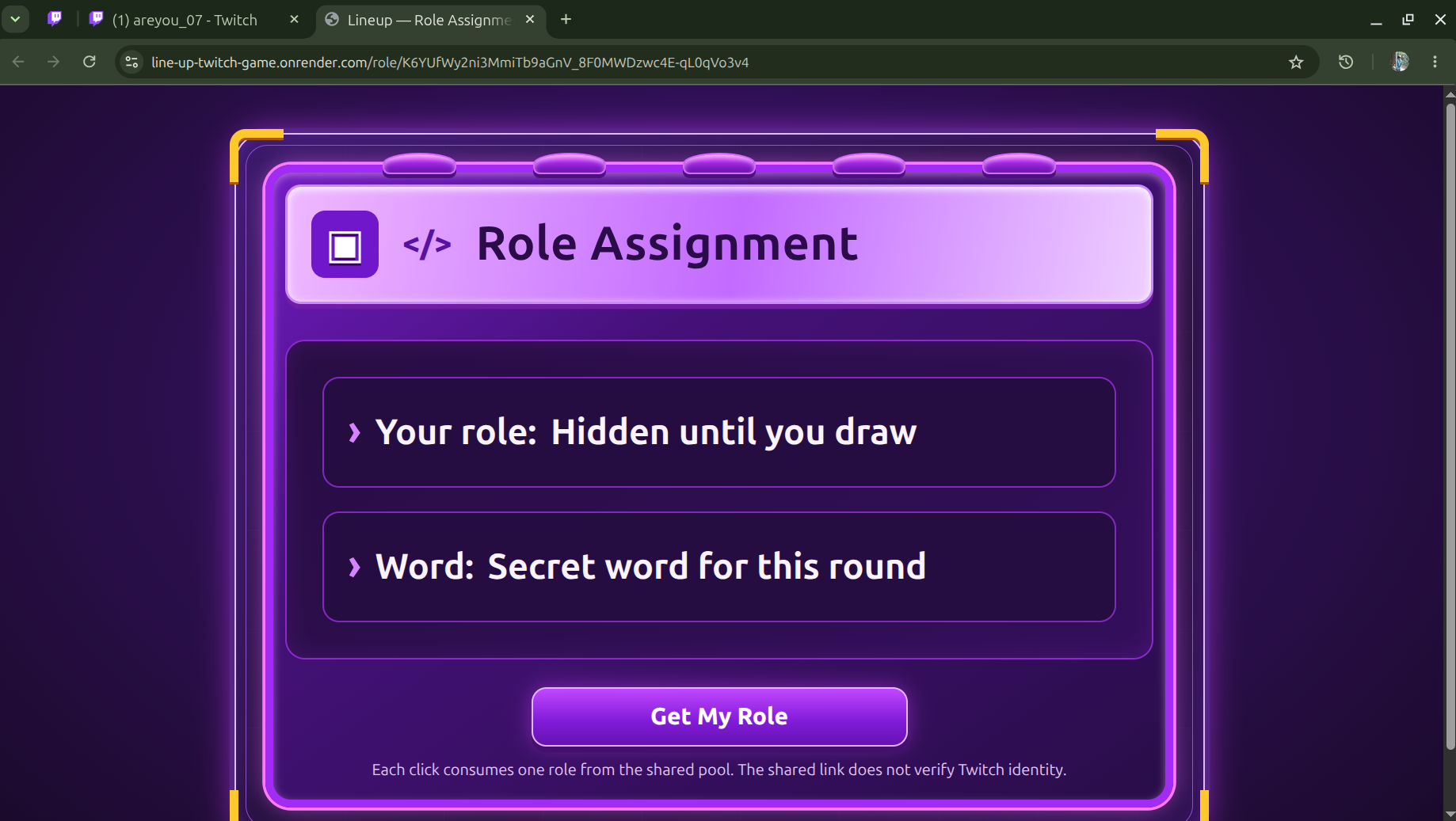
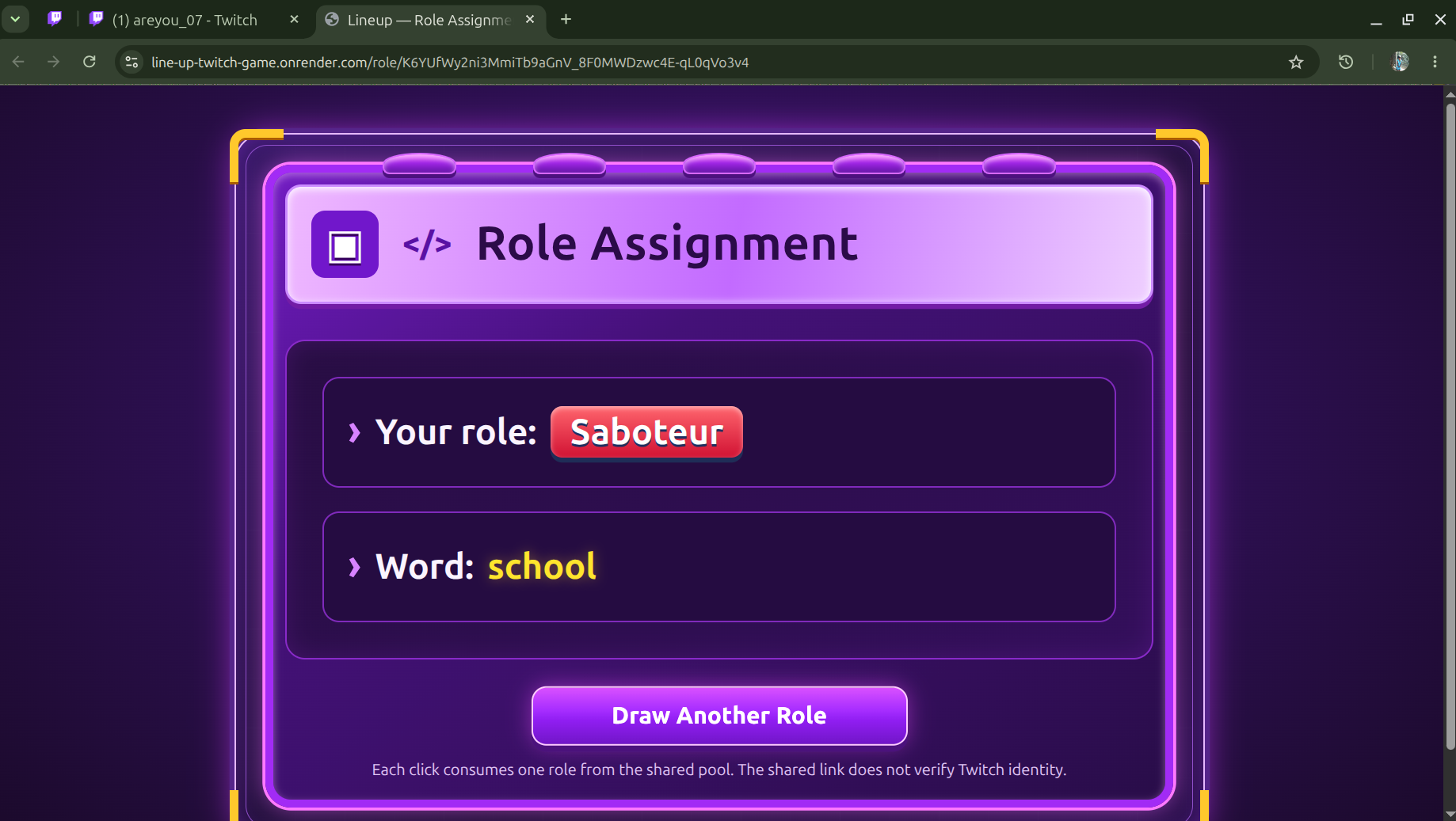
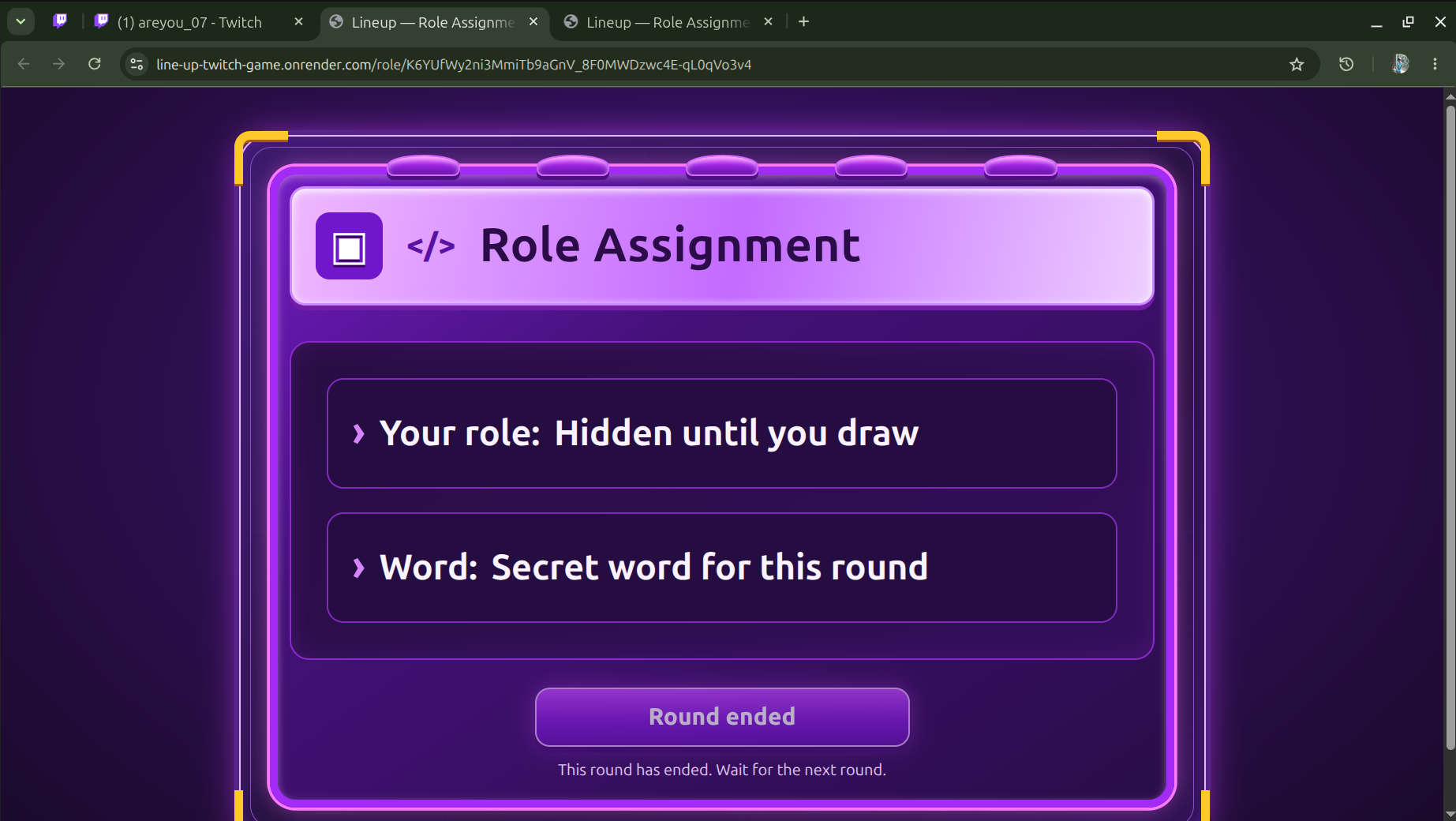
role assignment site from stream chat
-
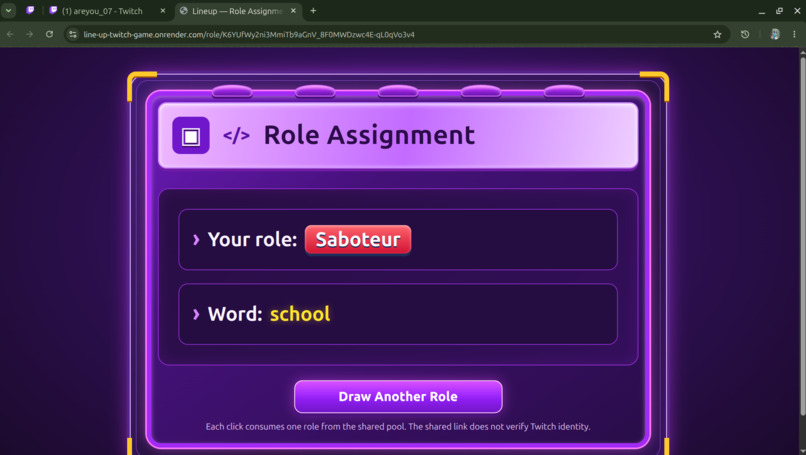
role revealed randomly
-
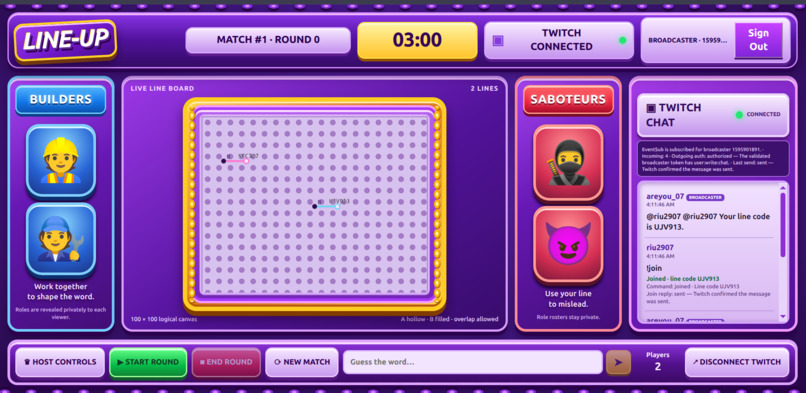
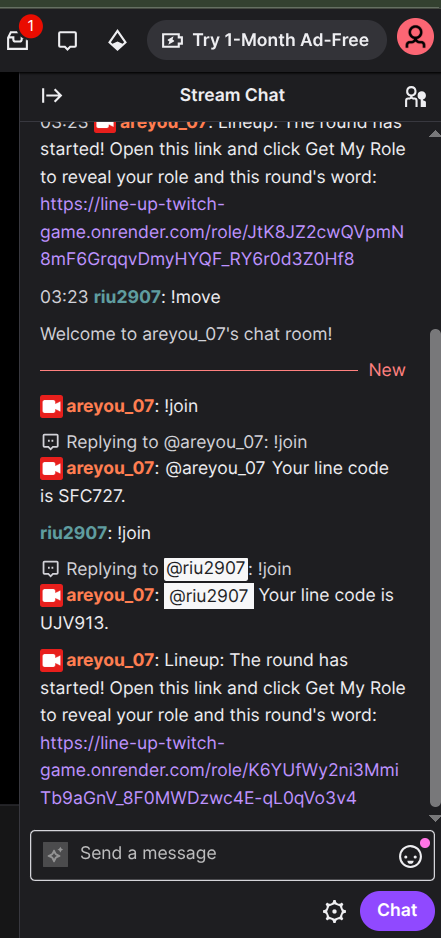
viewers joined from twitch chat
-
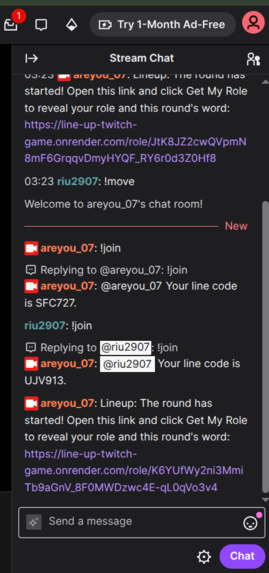
stream chat
-
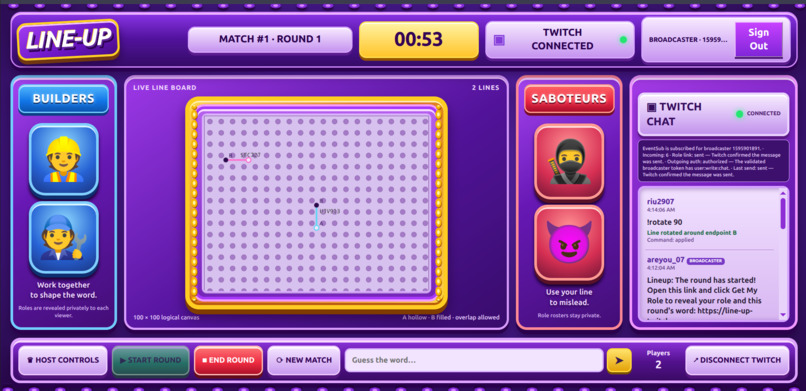
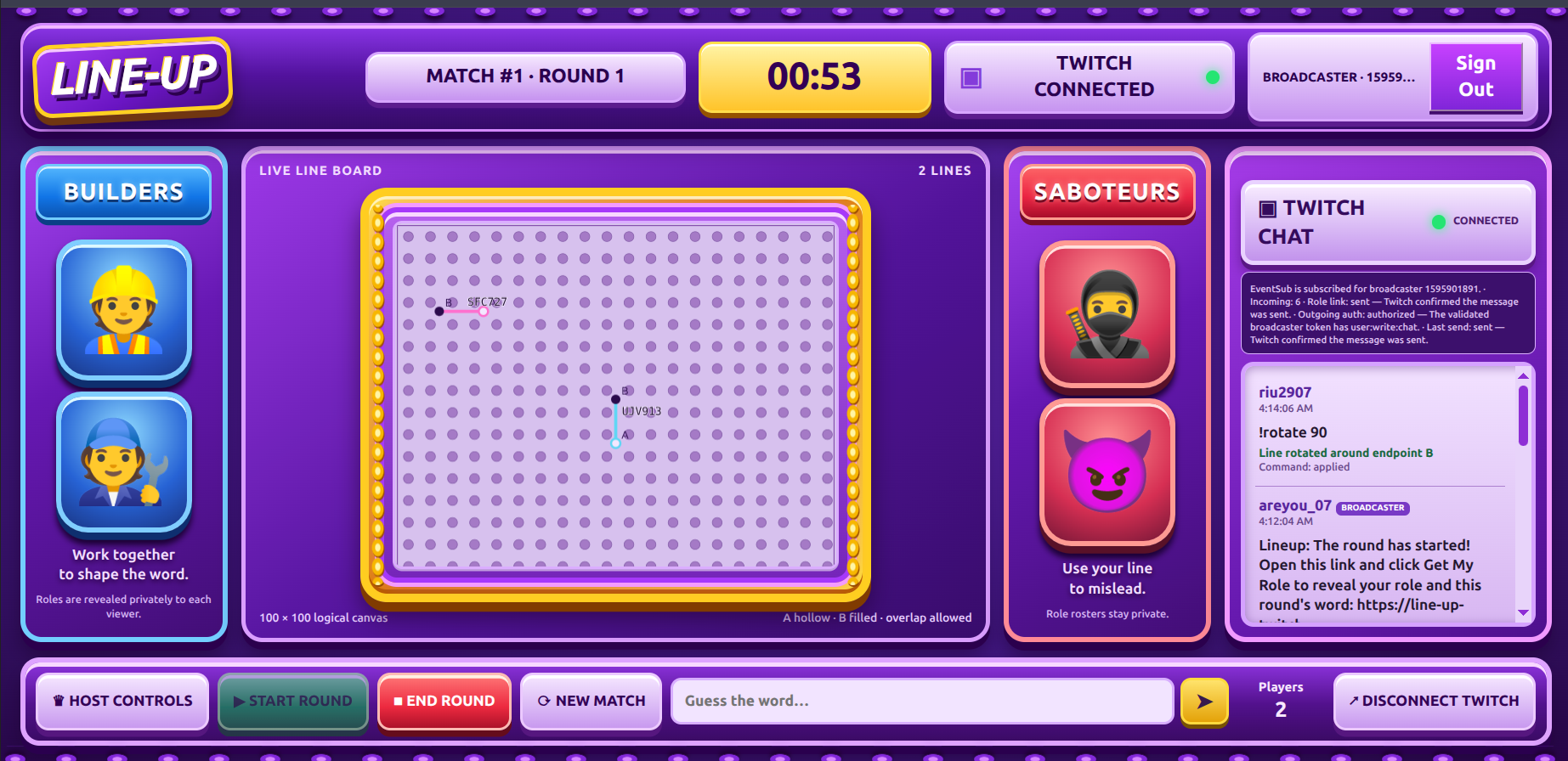
moving, rotating the lines to form the image
-
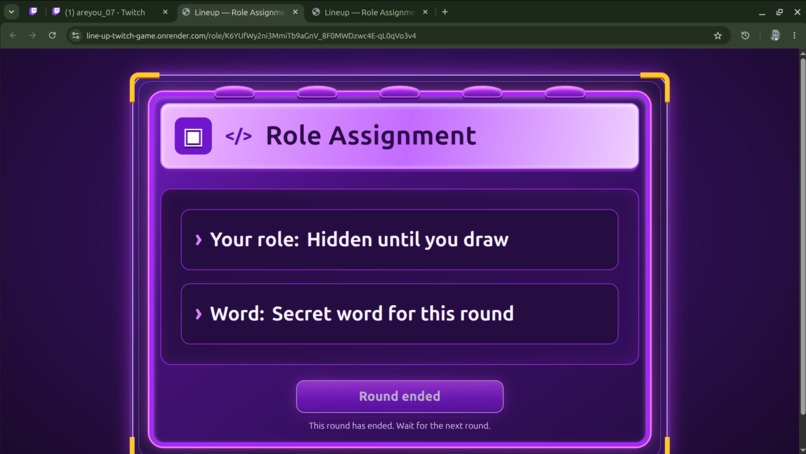
roles hidden after completion of round
Inspiration
Twitch chat is more than a place to send messages. It can be an active part of a game. We wanted to explore how a streamer could turn their community into players who collectively shape a live experience, rather than simply watching someone else play.
What it does
Line-Up is an interactive social-deduction game designed around Twitch chat. Viewers join a round through chat commands and contribute lines to a shared visual board. Builders work toward the round's objective, while hidden Saboteurs try to disrupt their progress. The host manages the round, monitors activity, and guesses the target word.
The result is a game in which the audience participates directly in the action, with chat commands, a shared visual playfield, hidden roles, and a timed objective.
How I built it
We built Line-Up as a web application with a live dashboard and a backend that manages game state and round logic. The application connects to Twitch so the streamer can interact with the community through chat and use Twitch authentication for host access. The interface brings the game board, player activity, round controls, and guessing interaction into one place.
We used OpenAI Codex to help develop and iterate on the application, including its interface, game logic, and Twitch integration.
Challenges I ran into
One of my main challenges was bringing Twitch interactions and game mechanics together into a coherent experience. Chat commands need to produce meaningful gameplay changes, while the host needs to manage rounds and players need clear feedback about the game's progress.
We also had to balance the shared nature of the game with hidden-role mechanics, where revealing too much information could undermine the experience.
Accomplishments that we're proud of
We built a working, deployed prototype that connects a visual game experience with Twitch community participation. We are particularly proud of bringing together chat-driven actions, a shared game board, hidden team roles, and host-controlled round progression in one application.
Most importantly, Line-Up moves beyond displaying chat alongside a game: viewer participation is part of the intended gameplay itself.
What i learned
I learned that building for a live community involves more than implementing individual features. Authentication, chat integration, game state, player feedback, and the host experience must work together reliably.
I also learned to use Codex as a development partner for building and refining a real application, while testing the resulting implementation and addressing integration issues along the way.
What's next for Line-Up
I would like to expand Line-Up with more game modes, fan based-word sets, richer community interactions, better round summaries, scoreboards, and additional tools that help streamers turn their chat into an active part of the show.
Built With
- css
- html
- javascript
- node.js
- openai-codex
- twitch
- twitch-eventsub
- websockets
- websockets-(only-if-your-implementation-uses-them)

Log in or sign up for Devpost to join the conversation.