-
-
Cover Page
-
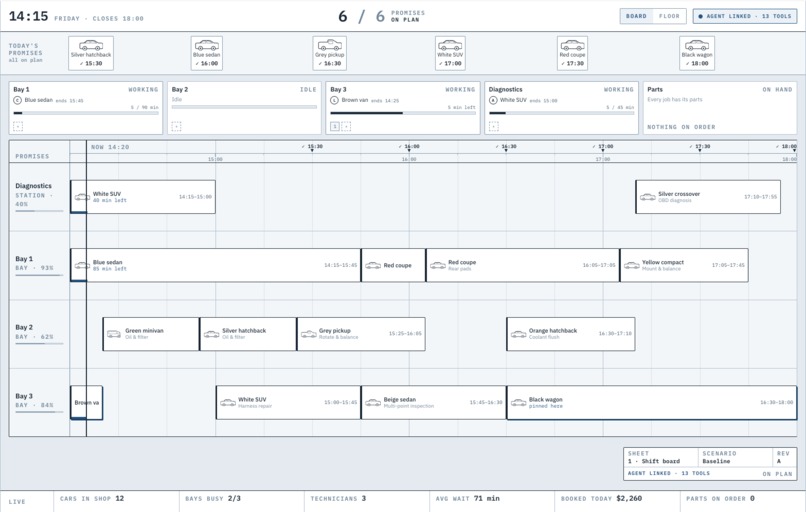
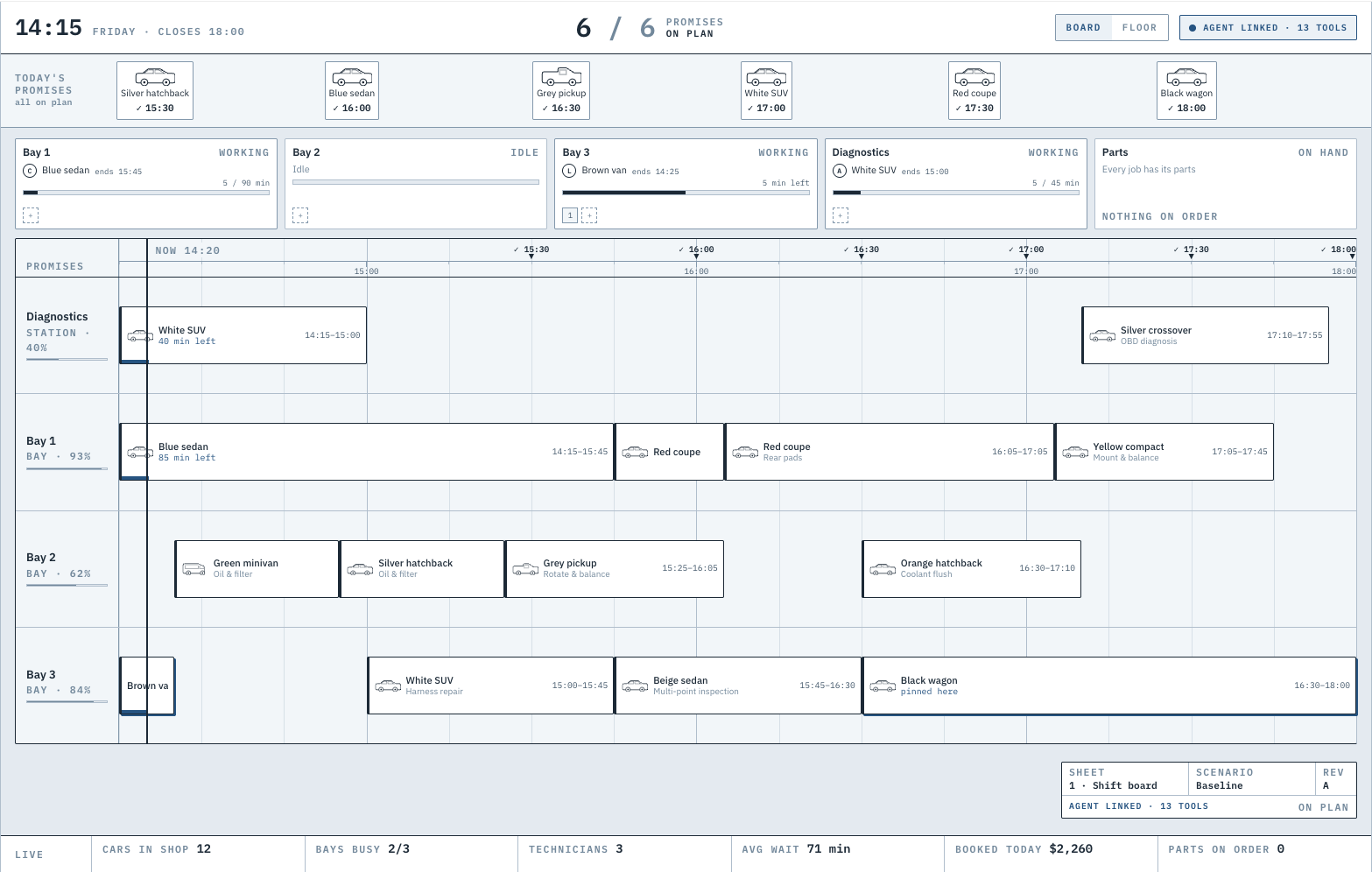
Board View
-
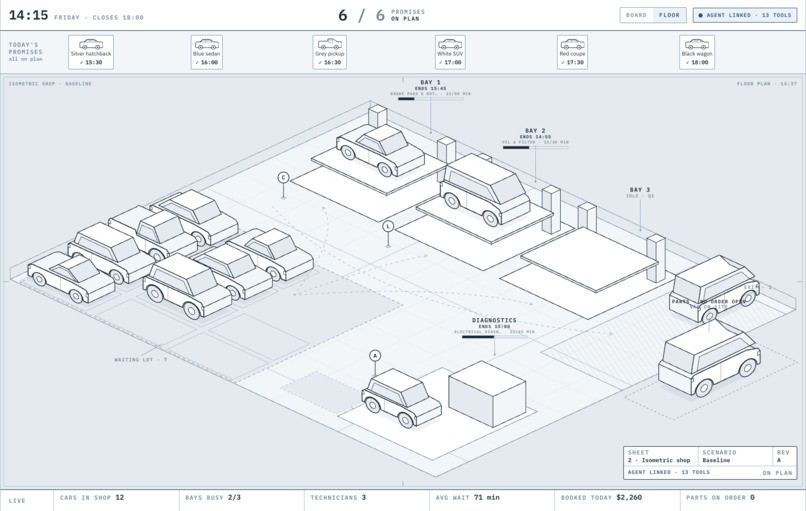
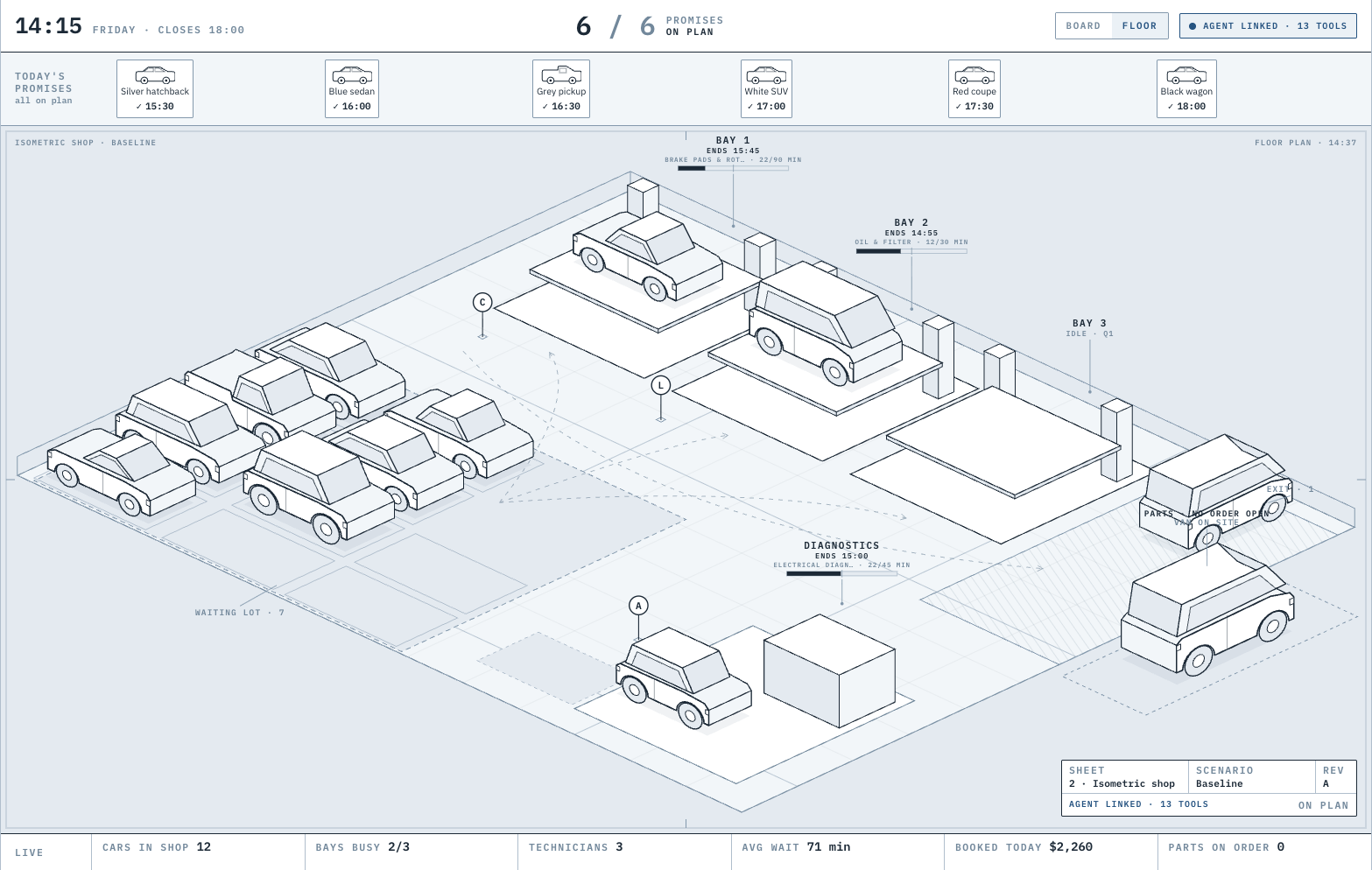
Isometric Floor View
Inspiration
Every shop floor I've seen runs on one person's head: the manager who knows which bay frees up at 3:45 and which customer will actually wait. When a part slips, that person starts moving cars by gut feel. I wanted an agent on that floor, not a chatbot beside it, working the same board, with the manager still holding the pen.
What it does
The agent inspects the floor through WebMCP tools, searches alternative schedules across thousands of seeded simulation runs, and lands a plan grounded with real-time data. The manager can click around all dropdowns, drag any car, or even lock a slot; whereas the agent catches up on all movements, understands them and explains what trade-off would each implicate.
How we built it
Developed 13 tools via document.modelContext.registerTool({ name, description, inputSchema, execute }). Deterministic seeded engine in pure TypeScript. Next.js + Zustand + Vercel, isometric SVG floor, blueprint design language. Built with Claude Code and Codex.
Challenges we ran into
Defining the role of the app's agentic end was the biggest challenge of the project. My first instinct was an extension of the human: given a task, the agent would click the elements a person would click. That framing collapsed fast, it makes the agent a fragile imitation of the manager, fighting the same UI. The turn was to give the agent its own door into the same world: typed tools that carry context, instead of decorated CRUD calls.
Accomplishments that we're proud of
How fast an agent from whichever harness becomes another member of the team on the field. The context lives in the typed tools, and that alone was enough for the agent to map the whole situation and pick up the line of thinking behind my prompt. The page onboards the agent, not the other way around.
What we learned
WebMCP breaks the whole panorama of "what a web page should expose". What counts the most is now how future web apps are no longer designed for an intended-human use only, but for an agentic layer that coexists without one competing with the other. Therefore, they both UI and MCP tools will be meant for the same collaborative goal.
What's next for Line-Mate
Scenario packs beyond the repair shop (the engine is domain-agnostic: manufacturing cells), technician skills and shift handovers as first-class objects, and a replayable feed of agent tool calls. The more context is available for the agent, the
Built With
- agentic-harness
- ai-agent
- claude
- codex
- mcp
- next.js
- pwa
- typescript
- vercel
- webmcp
Log in or sign up for Devpost to join the conversation.