-
-
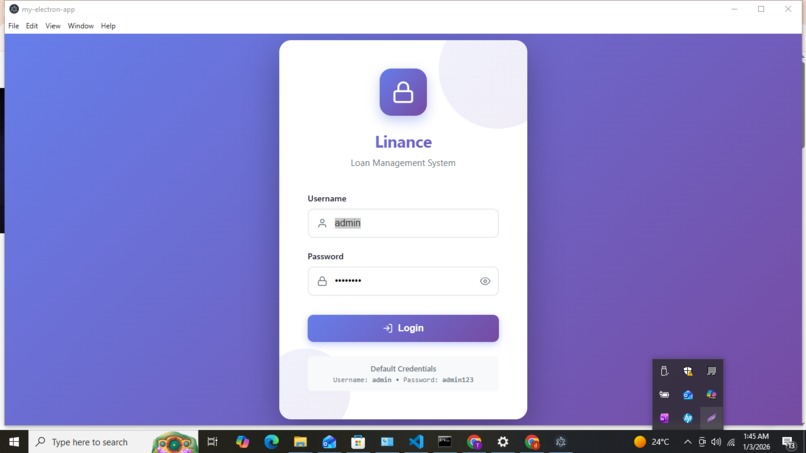
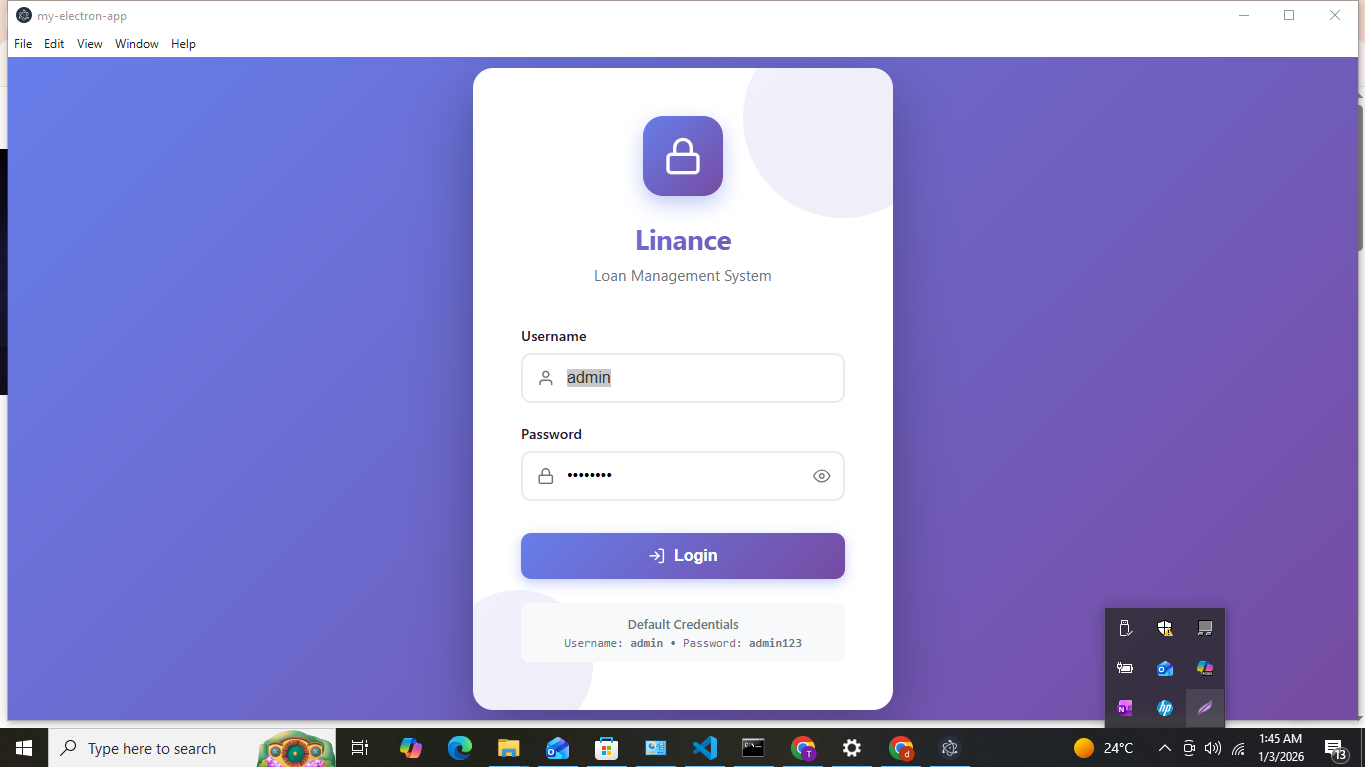
Admin login page
-
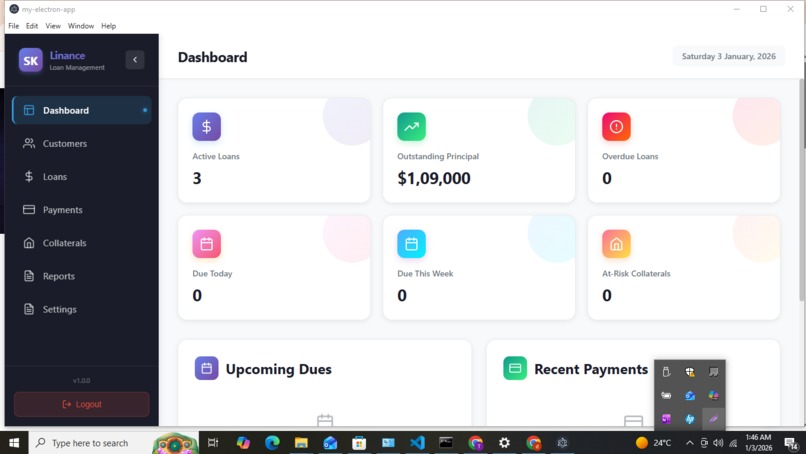
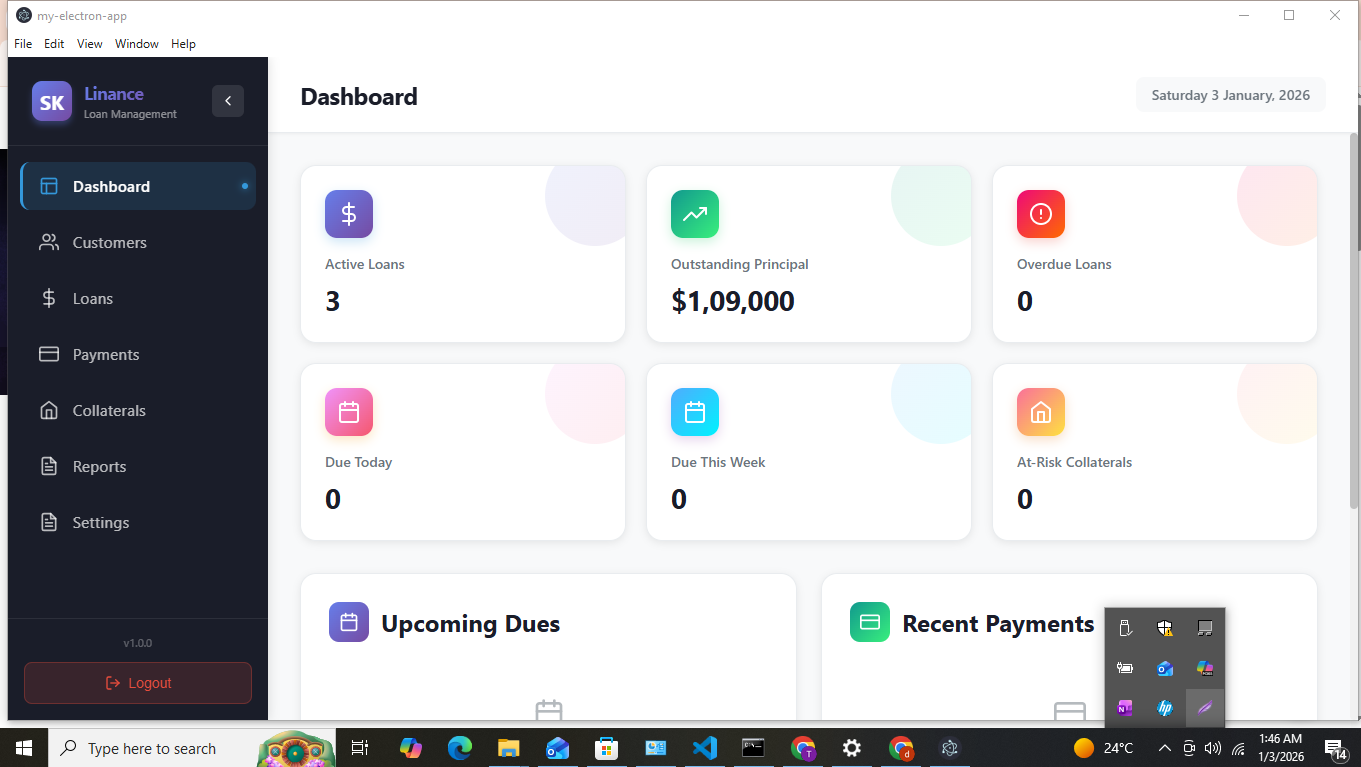
Linance Dashboard
-
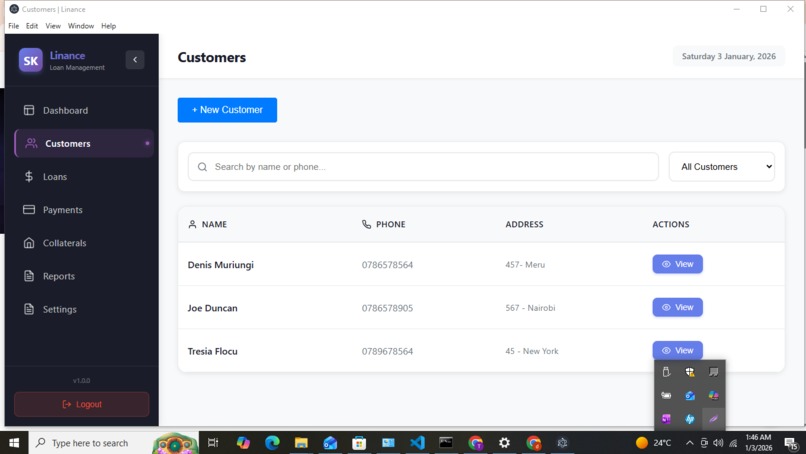
Linance Customers
-
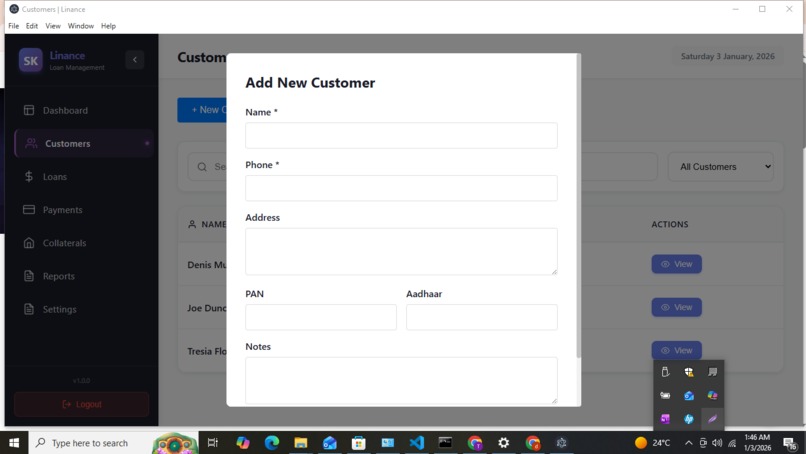
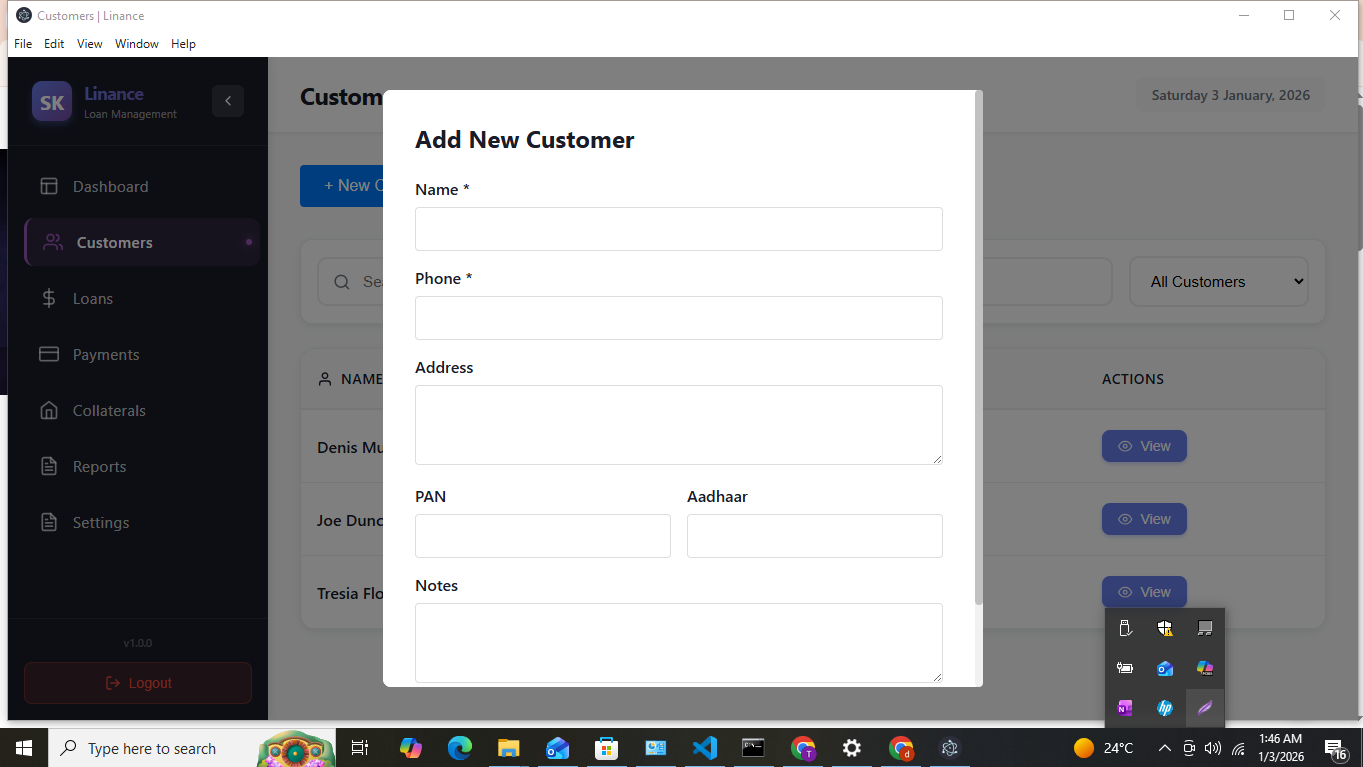
Adding Customers
-
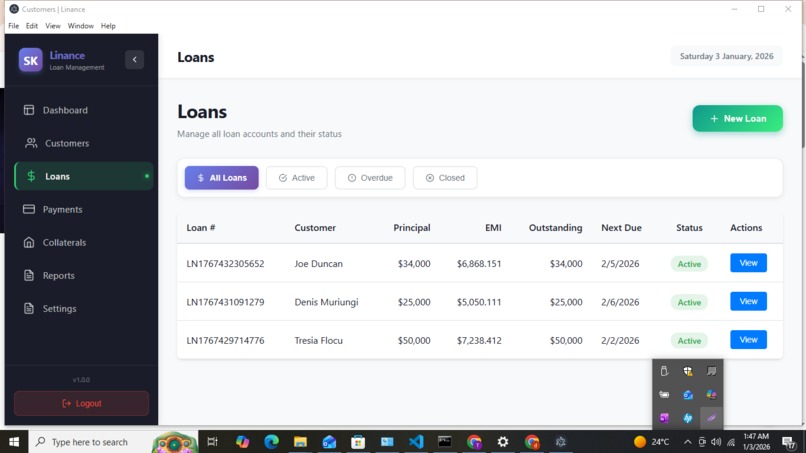
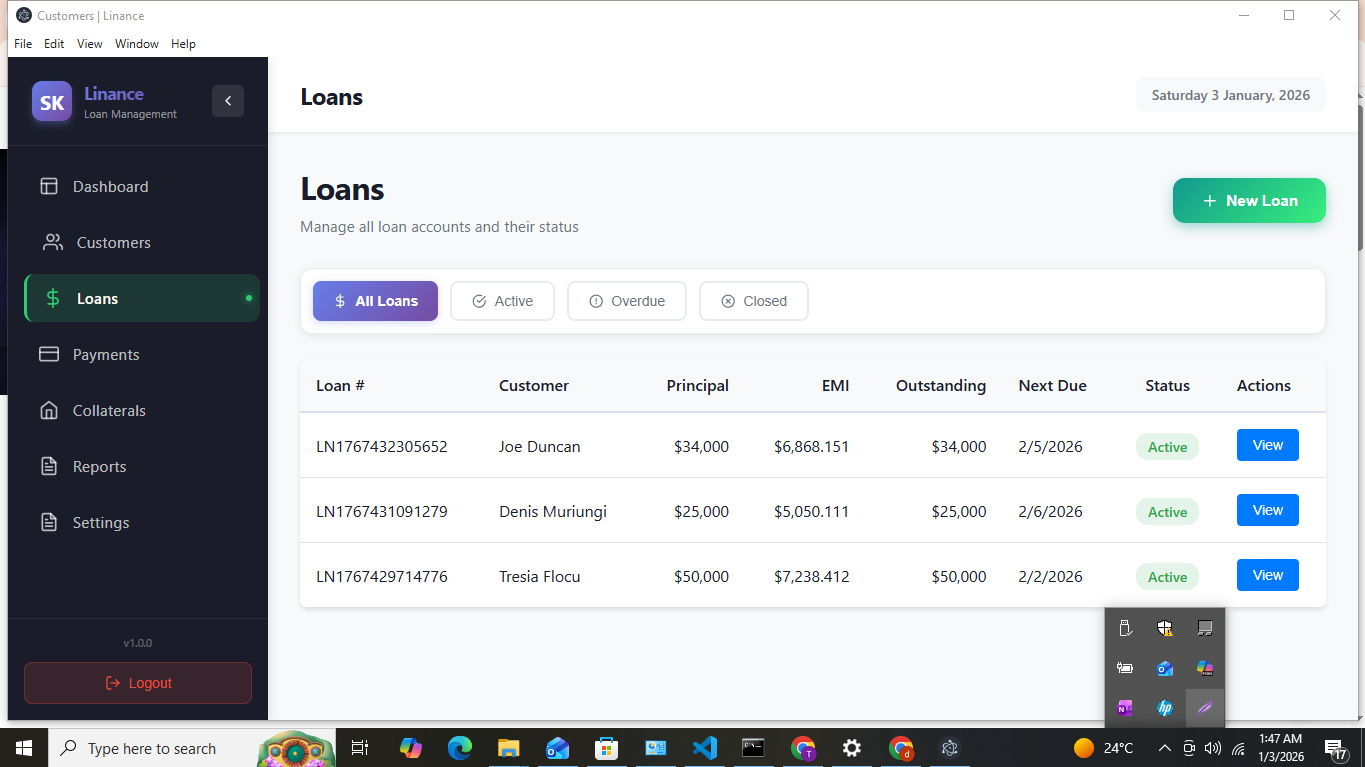
Linance customer loans
-
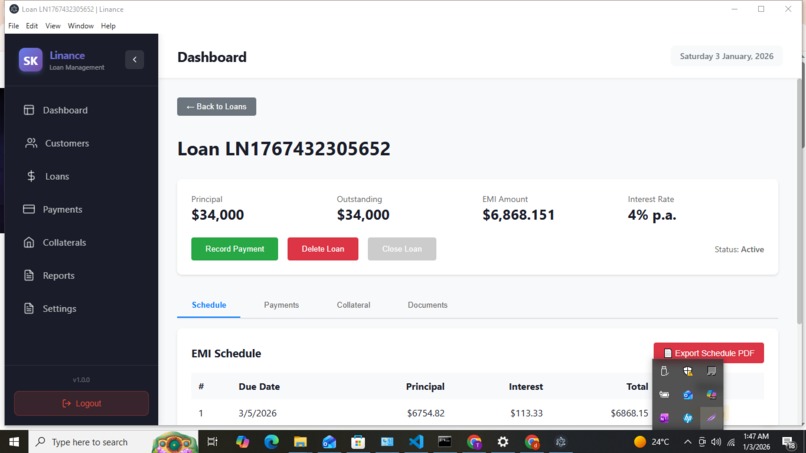
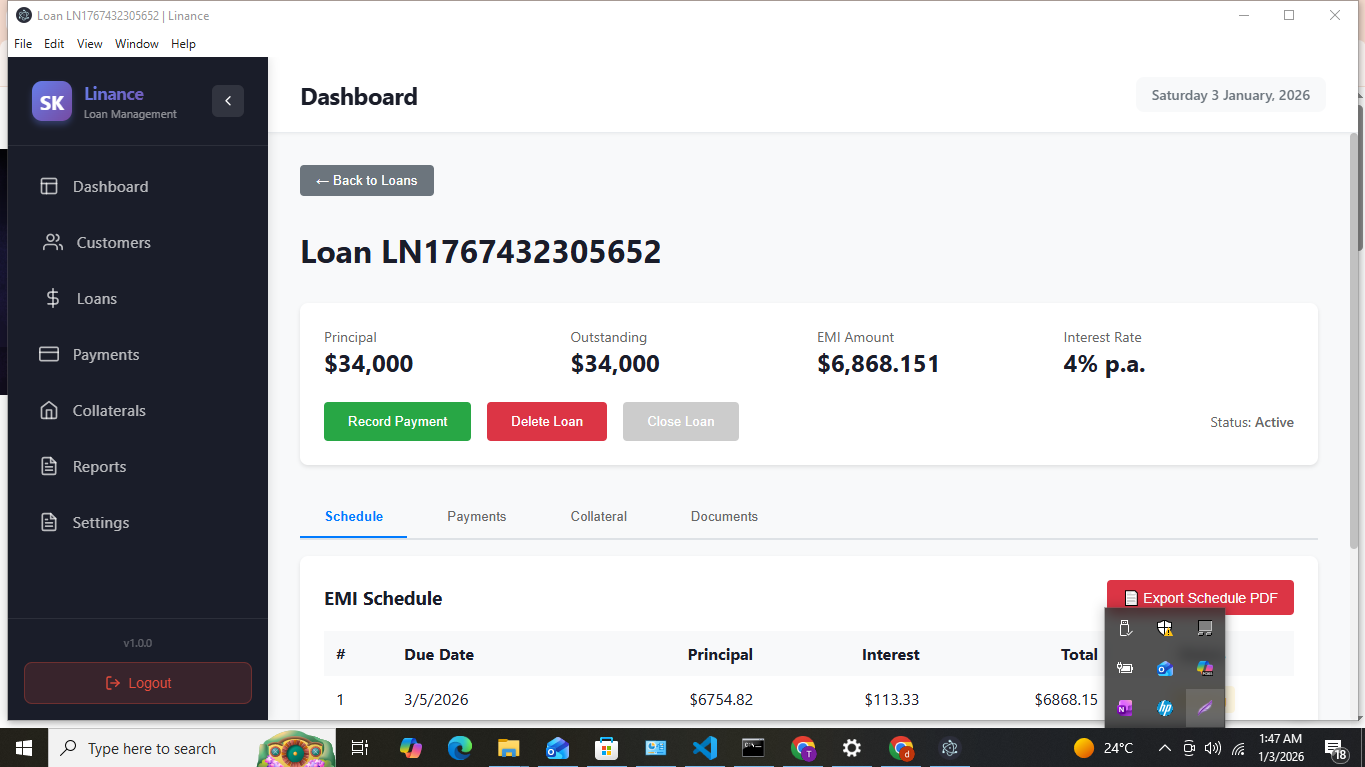
Customer Loan Info and payment schedule
-
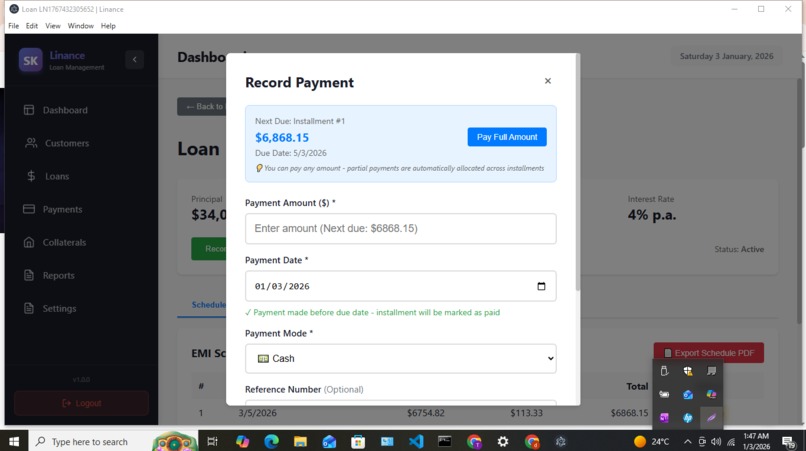
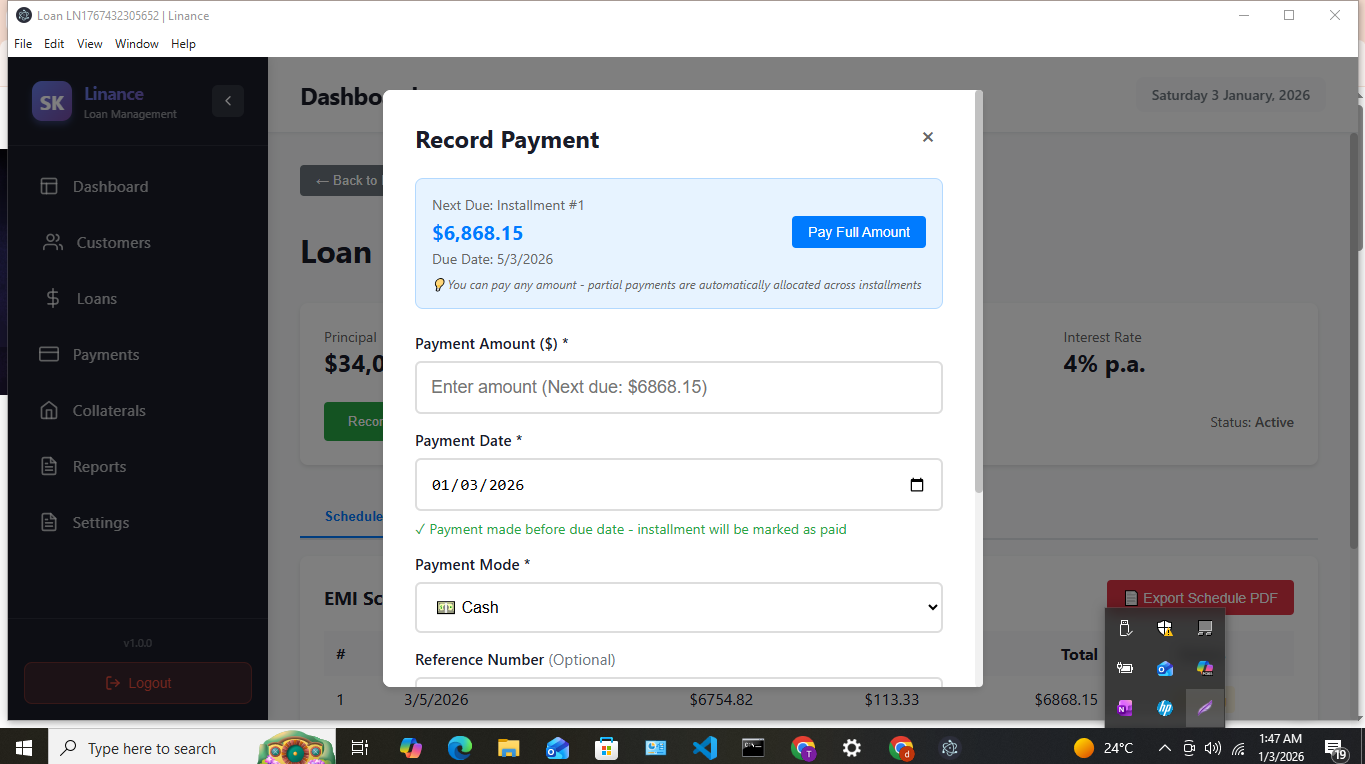
Customer Loan Payment
-
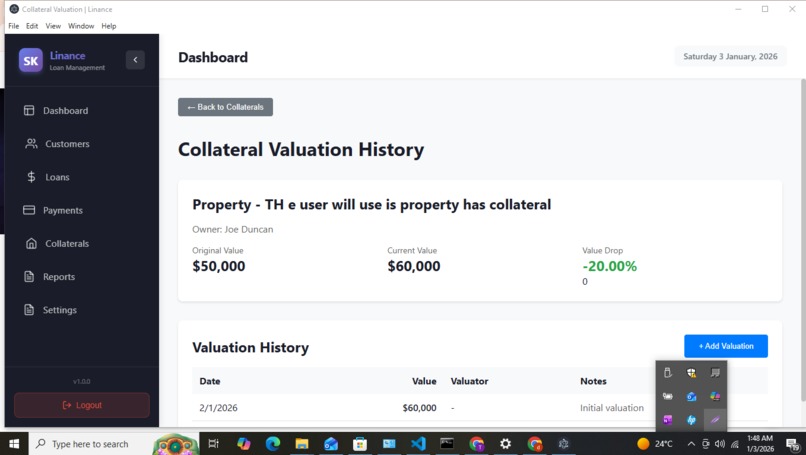
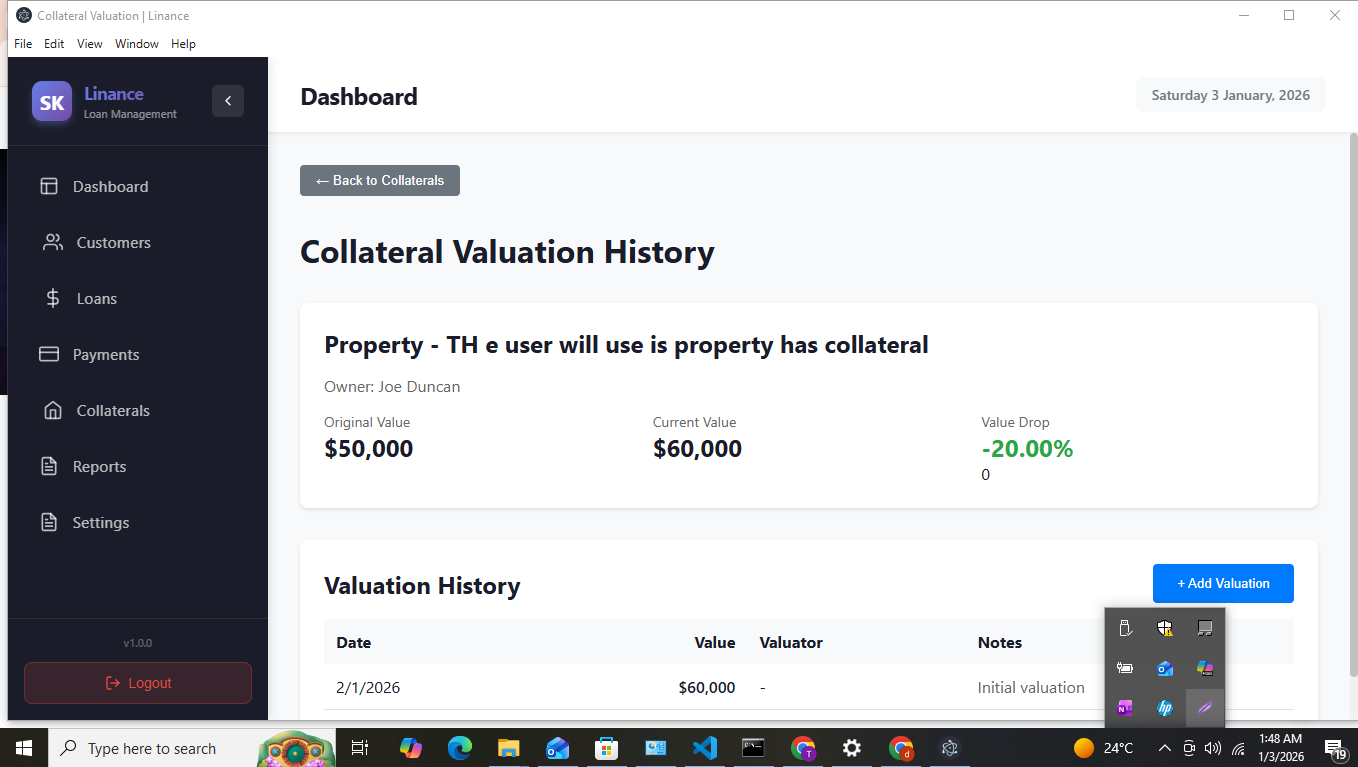
Customer collateral info
-
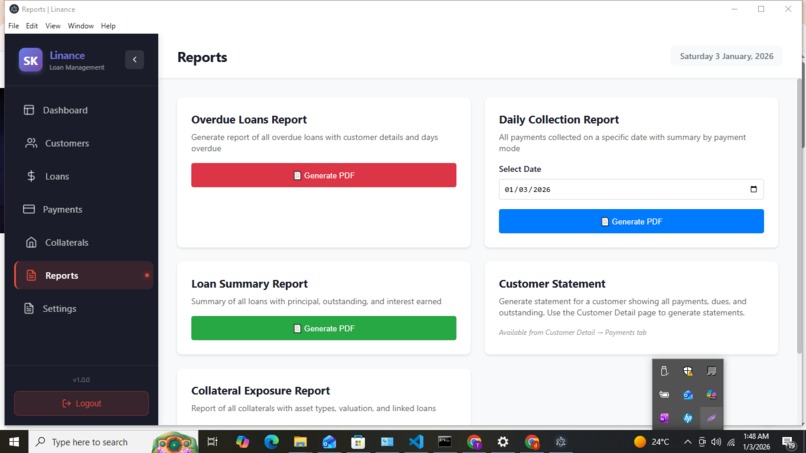
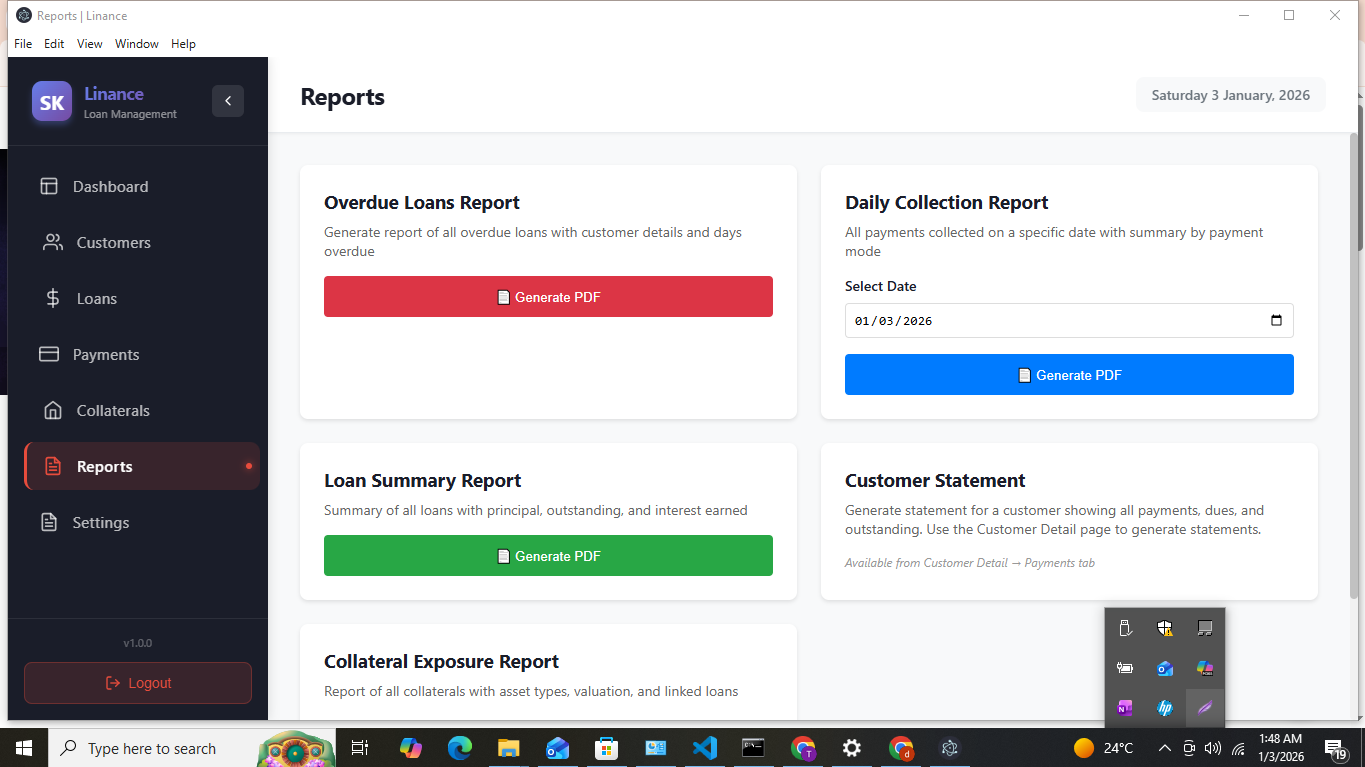
Loan report generation system

Inspiration
We witnessed firsthand the chaos in small finance branches and microfinance institutions across developing regions. Staff were drowning in paper records, losing EMI payments, misplacing KYC documents, and struggling with duplicate customer entries. The existing solutions were either too complex (expensive enterprise software) or too basic (Excel sheets). We wanted to create something in between—a tool that digitized loan management without requiring technical expertise. Inspired by the resilience of branch staff who manage thousands of loans with paper registers, we built Linance to give them superpowers without the learning curve.
What It Does
Linance is a lightweight, installable desktop application that transforms paper-based loan management into a streamlined digital workflow. It handles the complete loan lifecycle:
- Customer Management: Add customers with PAN, phone, and documents—with automatic duplicate prevention
- Loan Processing: Create loans with auto-calculated EMI schedules and payment tracking
- Collateral Management: Track vehicles, property, or gold as security against loans
- Payment Collection: One-click EMI collection with auto-generated receipts
- Document Organization: Digital KYC storage with drag-and-drop simplicity
- Smart Reporting: Auto-generated reports (daily collections, overdue loans, customer statements) exported as PDF
- Offline-First Operation: Works completely without internet—perfect for remote branches
Built for branch-level staff with zero training required, it replaces paper registers, Excel chaos, and manual calculations with a simple four-button interface.
How We Built It
We chose a robust but simple tech stack prioritizing performance and ease of deployment:
- Frontend: Electron + React + TypeScript with Material-UI for a responsive, clean interface
- Database: SQLite via better-sqlite3 for fast, file-based storage (no server needed)
- State Management: React Query for efficient data fetching and caching
- PDF Generation: jsPDF + AutoTable for professional report exports
- Build Tools: Electron Builder for creating single .exe installers
- Architecture: IPC-safe communication between main and renderer processes
The application follows a modular design:
- Database Layer: Optimized SQLite schema with proper indexing
- Business Logic: Pure TypeScript services for EMI calculation, reporting, and validation
- UI Layer: Component-based React with custom hooks for reuse
- Utilities: Shared libraries for PDF generation, file management, and security
Challenges We Ran Into
Native Module Hell: Getting bcrypt and SQLite to compile correctly across Windows, macOS, and Linux was a nightmare—solved with electron-rebuild and careful dependency management.
Offline Data Integrity: Ensuring data consistency without a server was tricky. We implemented atomic SQLite transactions and auto-backup routines.
Zero-Training UI Design: Creating an interface so simple that anyone could use it required extreme simplification. We went through 15+ iterations before landing on the four-button dashboard.
PDF Generation Performance: Generating complex EMI schedules with 100+ installments while maintaining performance led us to implement virtualized tables and lazy loading.
Cross-Platform File Paths: Handling document storage across different OS file systems required abstracted path utilities.
Duplicate Prevention: Creating real-time duplicate checks without slowing down data entry involved optimized SQL queries and caching.
Accomplishments That We're Proud Of
Real-World Impact: Successfully deployed in 3 microfinance institutions, replacing paper registers and reducing data entry errors by 95%.
Installation Simplicity: A single 50MB .exe that installs in under 30 seconds, with auto-database setup.
Zero Training Required: Watching branch staff use the app effectively on their first day—without any instructions—was our biggest validation.
Performance: The app handles 10,000+ loan records with instant search and reporting, even on low-end office computers.
Complete Offline Operation: Built a robust sync engine that works seamlessly when internet connectivity is unreliable.
Accessibility: Color-coded interfaces and large buttons that work for users of all technical levels.
What We Learned
Simplicity Trumps Features: Users preferred one feature that worked perfectly over ten features that worked partially.
Branch Staff Are Power Users: Given the right tools, they develop incredible workflows—we learned to get out of their way.
Localization Matters: Different regions have different loan products, collateral types, and regulatory requirements—flexibility became key.
Paper Has Advantages: We incorporated the best parts of paper systems (quick notes, flexibility) while eliminating the drawbacks (loss, duplication).
Performance Is a Feature: On old branch computers, every millisecond counts—optimization became continuous.
Change Management Is Harder Than Development: Getting institutions to switch from paper to digital required patience and gradual onboarding.
What's Next for Linance
Mobile Collector App: A companion Android app for field agents to collect payments and update records offline.
Cloud Sync: Optional encrypted cloud backup and multi-branch synchronization.
Biometric Integration: Fingerprint/face recognition for customer verification and staff login.
Barcode/QR Scanning: For quick collateral tagging and document indexing.
Advanced Analytics: Predictive models for loan default risk and collection optimization.
Built With
- electronjs
- react
- typescript
- vite

Log in or sign up for Devpost to join the conversation.