-
-

Liminal Sin: An innovative fusion of live-action cinema and Gemini Live AI agent technology.
-

Total immersion. The player uses natural voice commands to help Jason navigate a pitch-black environment.
-

Narrative exploration. Every corridor is a new opportunity for Jason to react to your voice and surroundings.
-

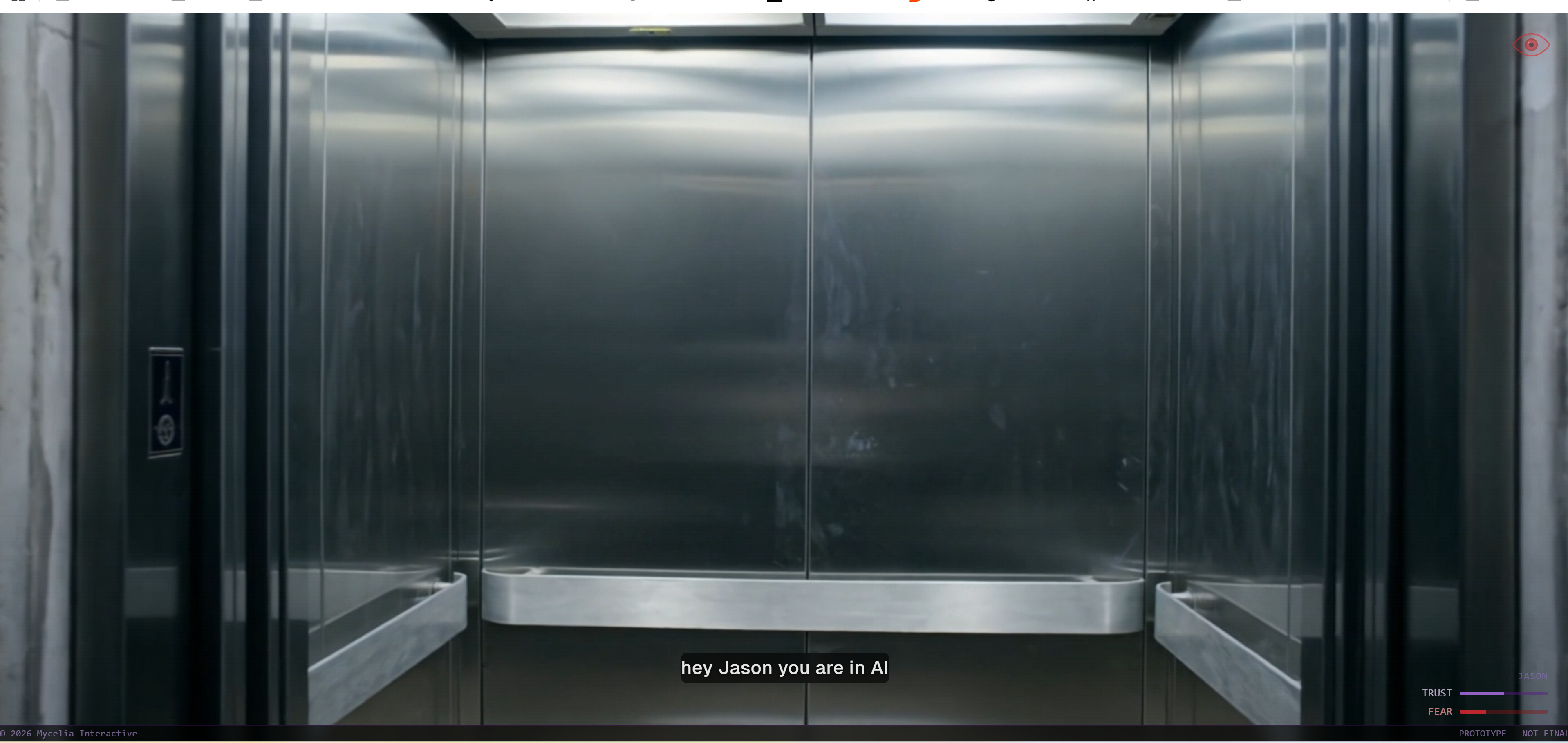
Direct interaction. Guiding Jason through the maintenance levels to restore power to the lift.
-

The Liminal Vegas Underground. Environmental storytelling where locations feel hauntingly out of place and time.
-
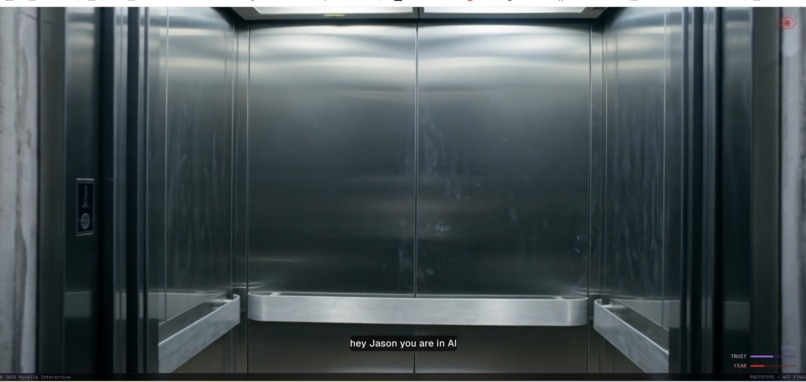
High-tension decision points. Jason’s survival depends on the trust you build through real-time voice dialogue.
-

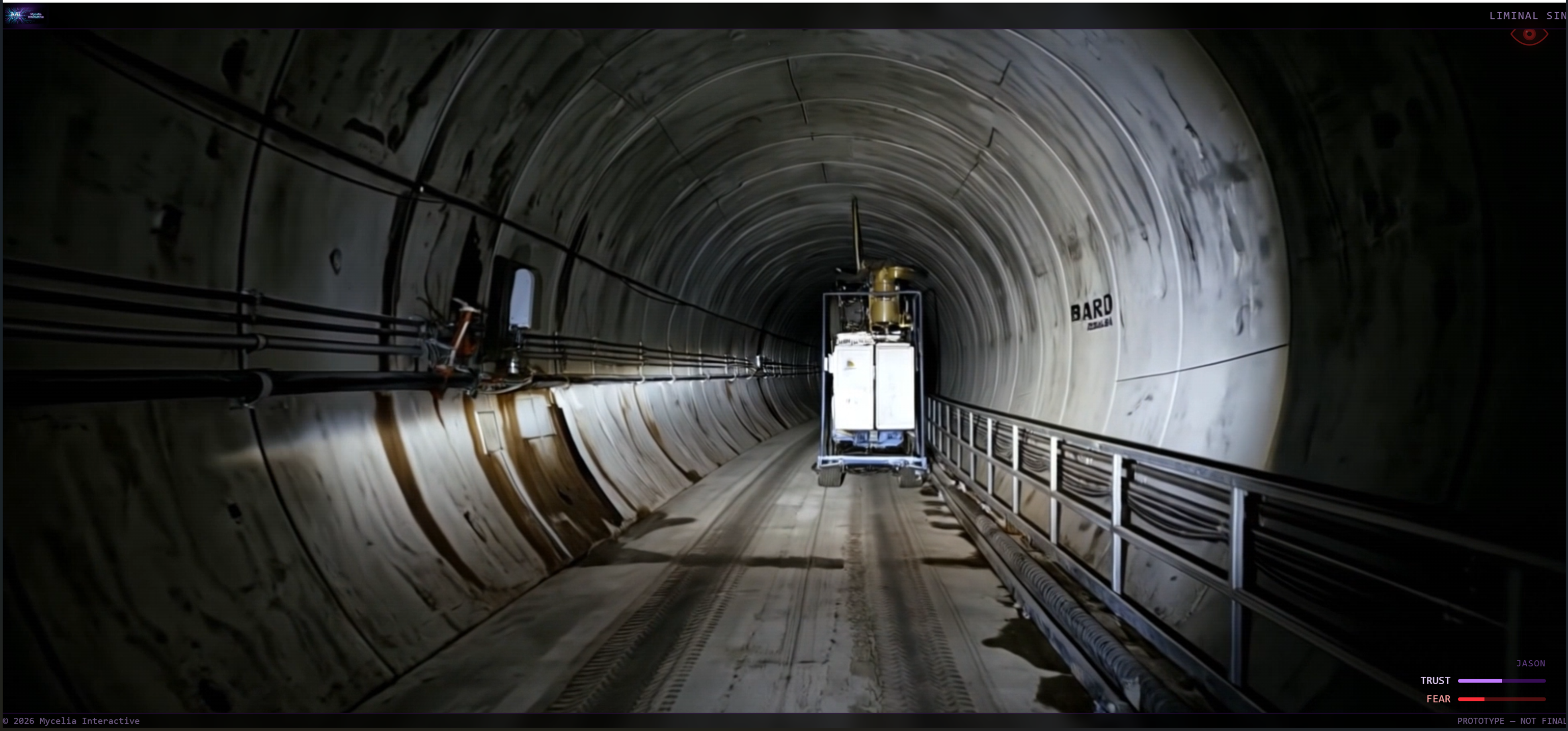
Dynamic pathfinding. Instructing Jason to search for clues while navigating the labyrinthine underground complex.
-

Windows into Worlds. Utilizing FMV to create a visceral, cinematic sense of isolation and psychological dread.
-

High stakes. Failure to manage Jason's fear or coordinate his movements leads to a permanent end for your companion.







Inspiration
Liminal Sin was born from a simple and terrifying question: What if the characters in a horror movie could actually hear you? We wanted to bridge the gap between passive FMV (Full Motion Video) and active AI agency. By utilizing the Gemini Live API, we created a "Windows into Worlds" experience where the player’s voice is the primary mechanic for survival.
What it does
Liminal Sin is a voice-controlled psychological horror prototype. Players interact with Jason, an explorer trapped in a haunting, liminal underground beneath Las Vegas.
- Real-time Voice Interaction: Speak naturally to Jason to guide his path and influence his state of mind.
- Dynamic AI Agency: Jason isn't just following a script. He processes your input via the Gemini Live Agent to react, respond, and adapt to your commands.
- Immersive FMV: High-quality live-action footage creates a visceral sense of reality that heightens the psychological tension.
How we built it
The core engine is built with a modern web stack optimized for low-latency AI interaction:
- Frontend: React and Tailwind CSS for a seamless, responsive UI.
- AI Backbone: Integration with the Gemini Live API to handle real-time voice-to-agent processing.
- Backend: A Node.js server hosted on Google Cloud Run utilizing WebSockets (WSS) for persistent, real-time communication between the player and the AI agent.
- Media Pipeline: Dynamic HTML5 video and audio node management to allow for fluid agent interrupts and seamless scene transitions.
Challenges we ran into
The biggest hurdle was managing the race conditions inherent in real-time AI video. Handling the AbortError during rapid scene changes and maintaining a stable WebSocket connection on serverless infrastructure required custom keep-alive logic and robust Promise handling to prevent the game state from freezing during intense interactions.
The Tech Stack & Third-Party Tools
Liminal Sin was built using a hybrid approach to blend real-time AI logic with high-fidelity cinematic assets.
- Asset Creation (Morphic Studio): Apart from two bespoke live-action sequences, all environmental and character assets were pre-generated using Morphic Studio to maintain a consistent, unsettling liminal aesthetic.
- Live Generation (Gemini Live API): Our "WILDCARD" events utilize live generation to break the fourth wall and adapt the game state in real-time.
- Media & Development: Edited with Adobe Premiere Pro and DaVinci Resolve; built on a stack of React, Node.js, and Google Cloud Run.
Gameplay Mechanics: The Wildcard Triggers
To push the boundaries of multimodal interaction, we implemented "Wildcard" events that trigger based on specific AI agent states:
- WILDCARD 1 (The Breach): A live-generation event where the game "sees" the player. It captures a frame of the player's feed and uses AI video generation to manifest a shadow entity within their actual physical space.
- WILDCARD 2 (The Abyss): A dynamic trigger that forces a Game Over sequence when the agent's fear threshold is breached.
- WILDCARD 3 (The Light): Triggers the positive ending sequence based on successful trust-building through voice dialogue.
Accomplishments that we're proud of
We successfully created a proof of concept that proves AI can drive a narrative without sacrificing the cinematic quality of FMV. Seeing Jason react in real-time to a player's voice, especially during the high-tension elevator and hallway sequences, is a glimpse into the future of interactive storytelling.
What we learned
Building for AI agents requires a shift in game design. You have to account for the chaos of natural language. We learned how to balance rigid game triggers with the fluid nature of AI conversation to keep the player immersed in the liminal world.
What's next for Liminal Sin
This is only a vertical slice. The full vision for Mycelia Interactive involves a complete multiverse lore, expanded interactive environments, and deeper psychological branching where the AI learns from your fears across multiple playthroughs.
Built With
- adobe-premiere-pro
- css3
- davinci
- gemini-live-api
- google-cloud-run
- html5-video
- javascript
- node.js
- react
- resolve
- tailwind-css
- websockets


Log in or sign up for Devpost to join the conversation.