-
-
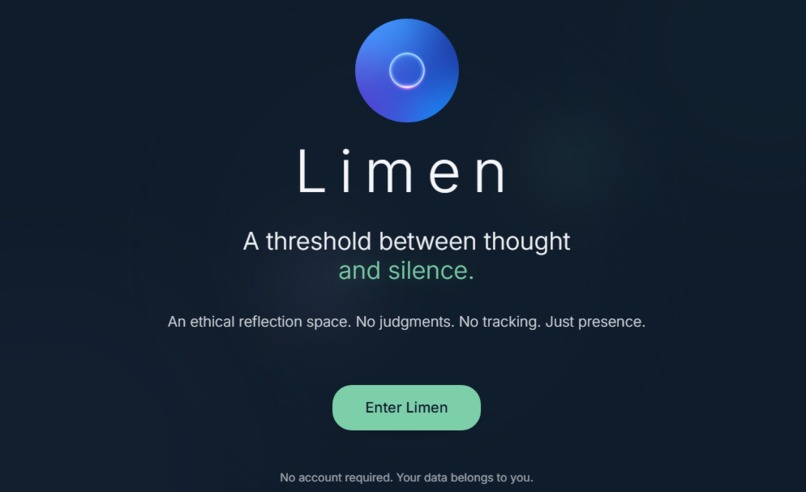
Landing Page
-
-
-
-
-
-
-
-
-
-
-
-
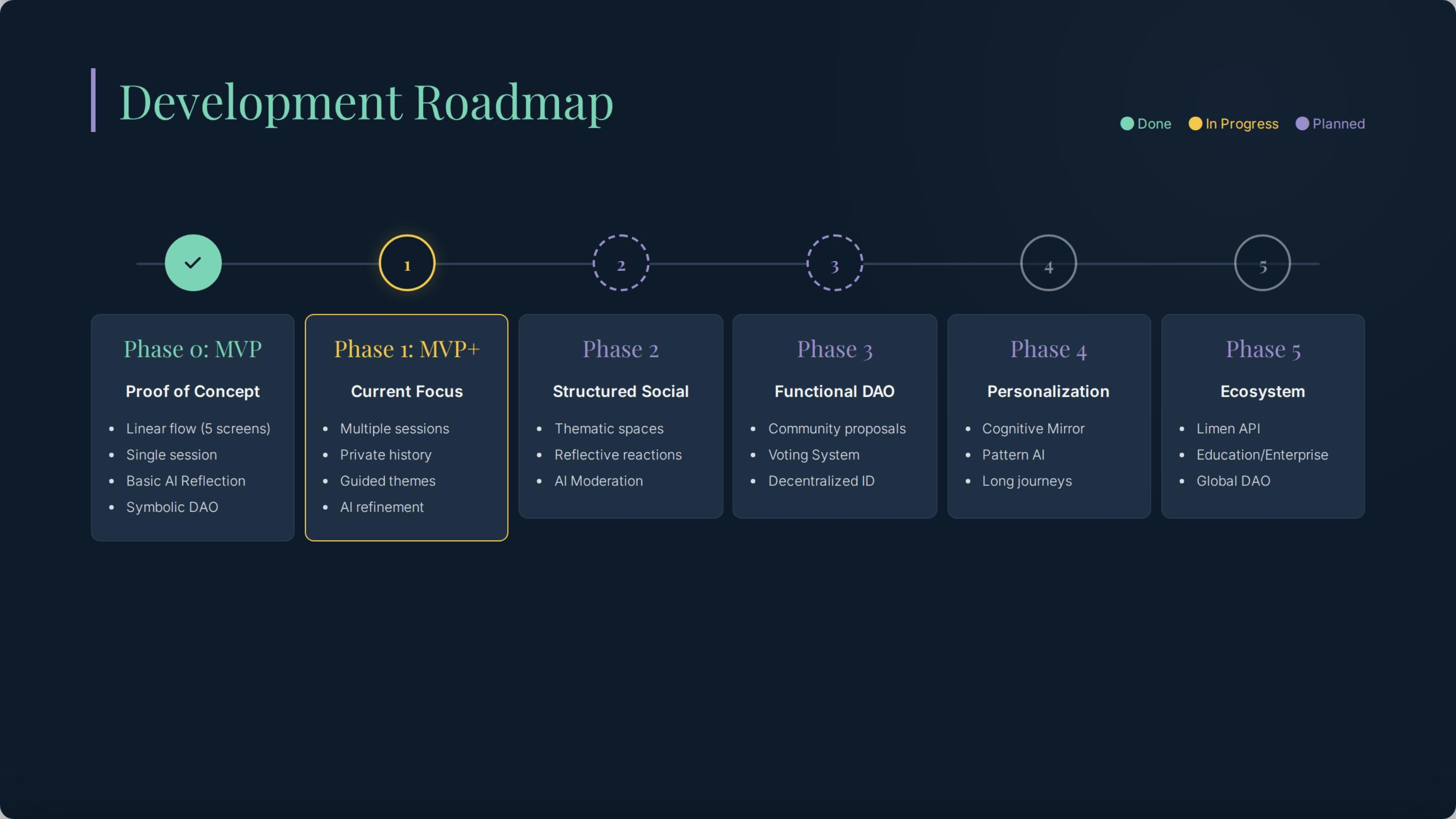
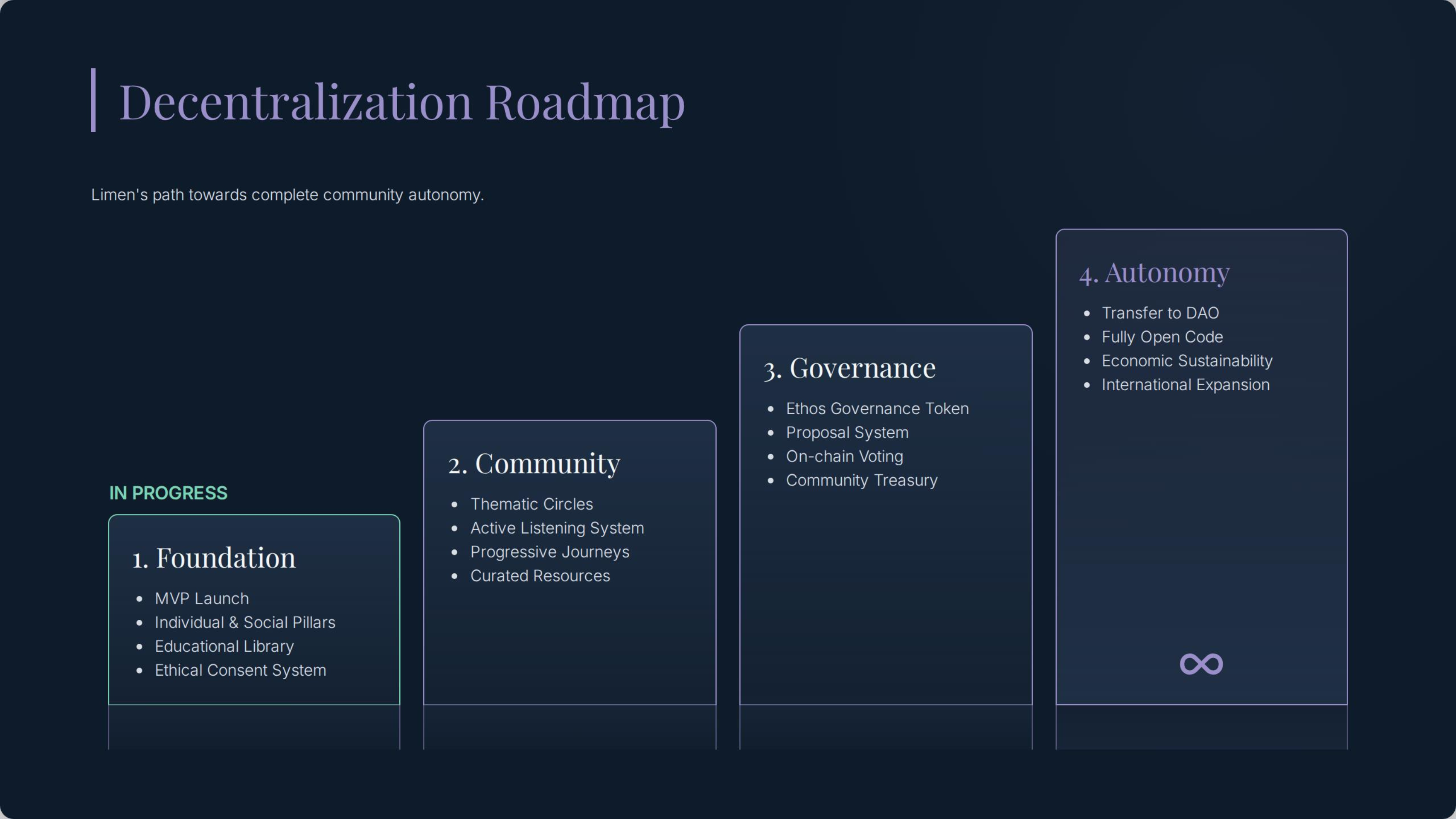
About the project (Project Description)
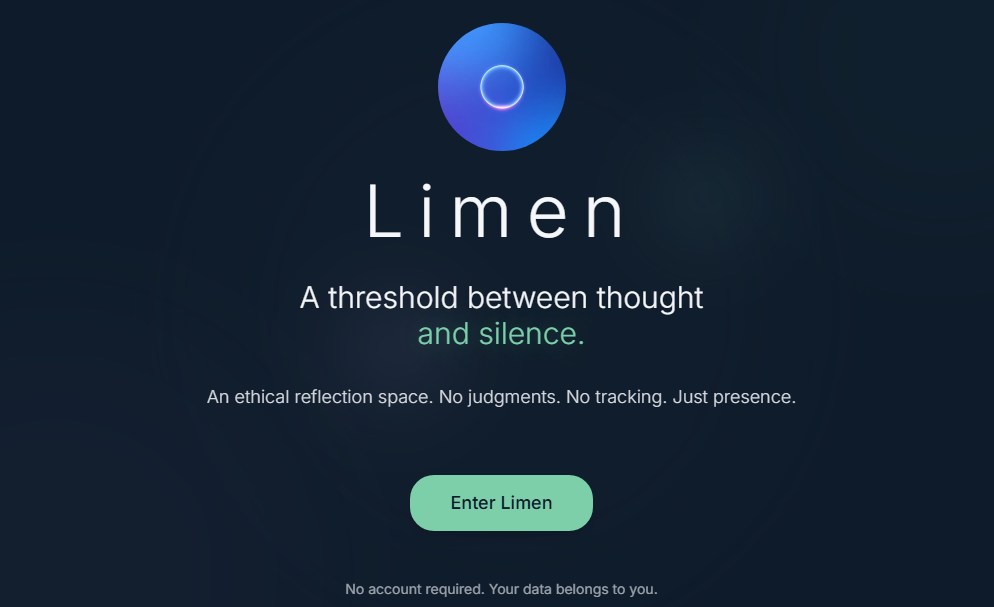
Objective Limen-Ethos (from the Latin limen, “threshold”) is an ethical digital reflection platform, designed to offer a safe and non-judgmental space for emotional processing, encouraging the development of narrative autonomy and ethical consciousness.
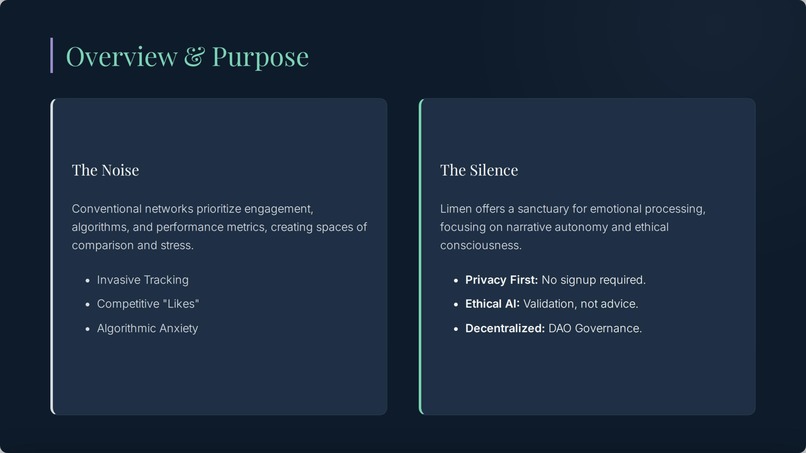
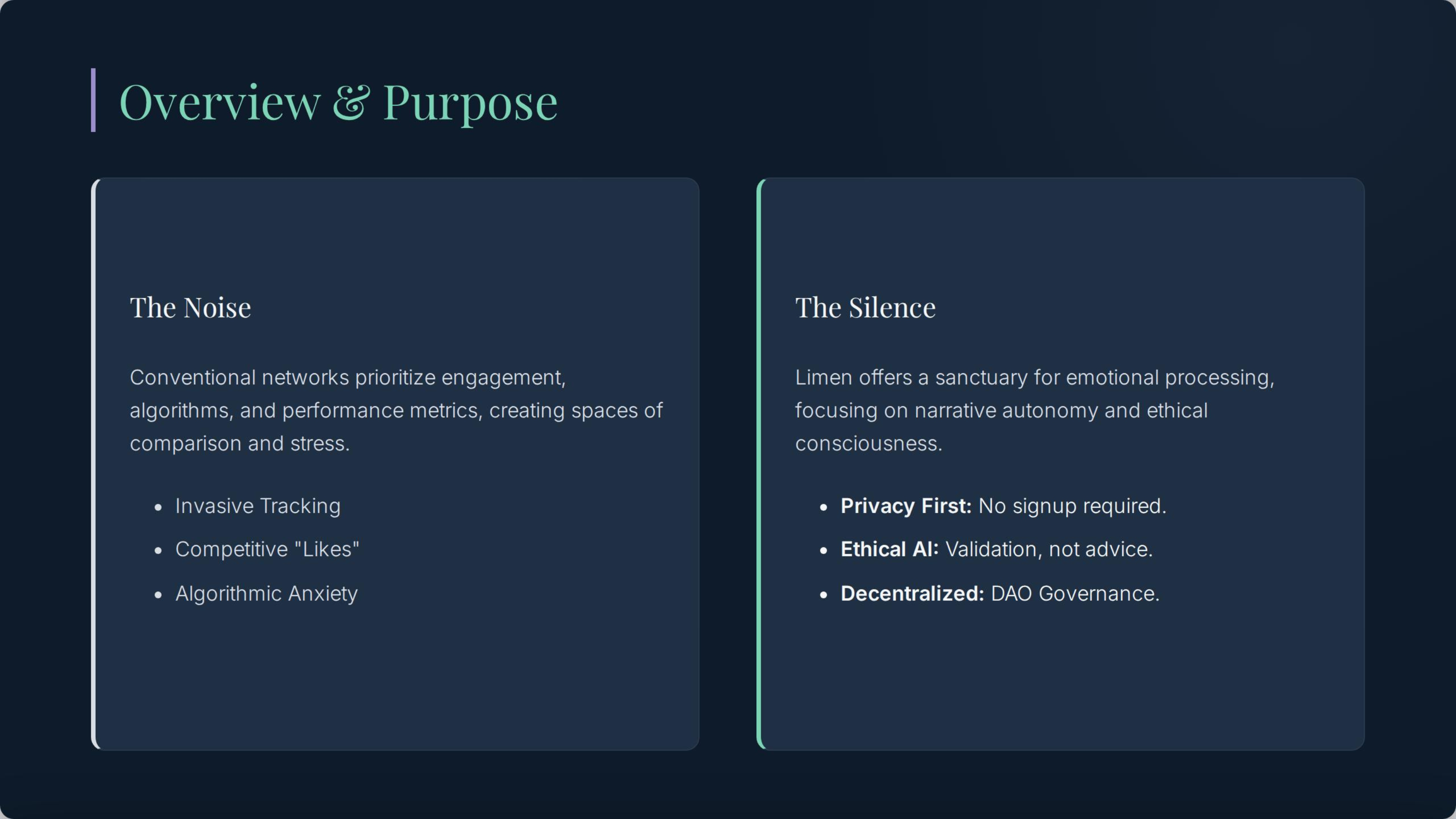
Unlike conventional social networks and mental health apps that prioritize engagement or performance metrics, Limen-Ethos focuses on individual liminal experiences, reflective learning, and ethical social sharing, without algorithmic feeds, competitive likes, or invasive tracking.
Limen focuses on:
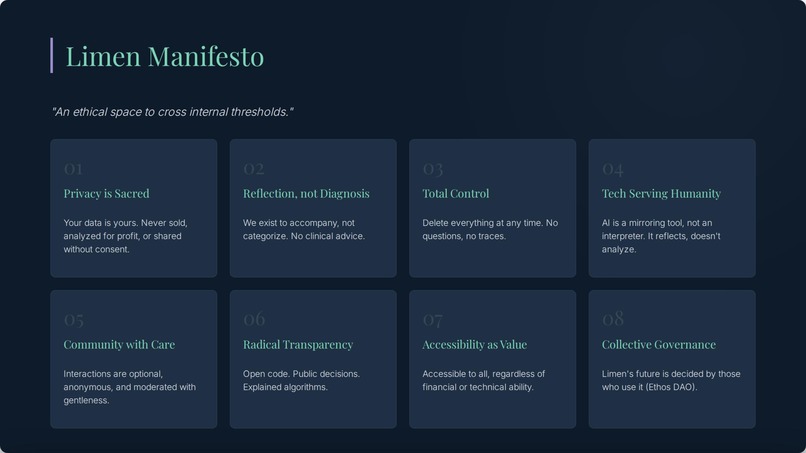
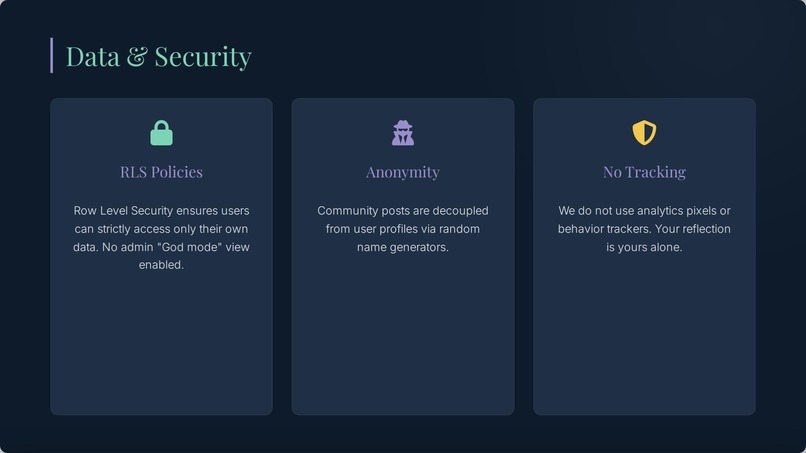
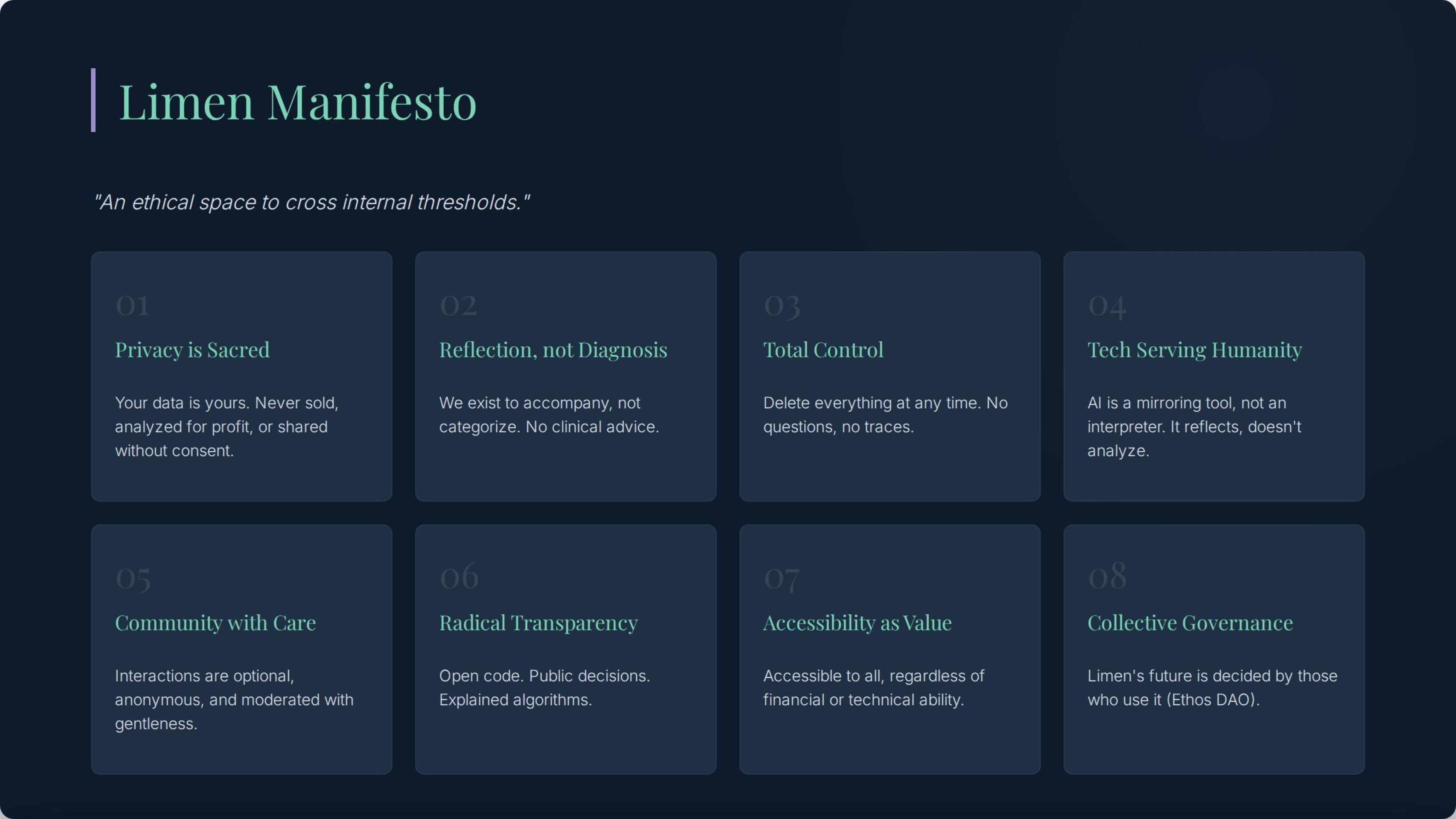
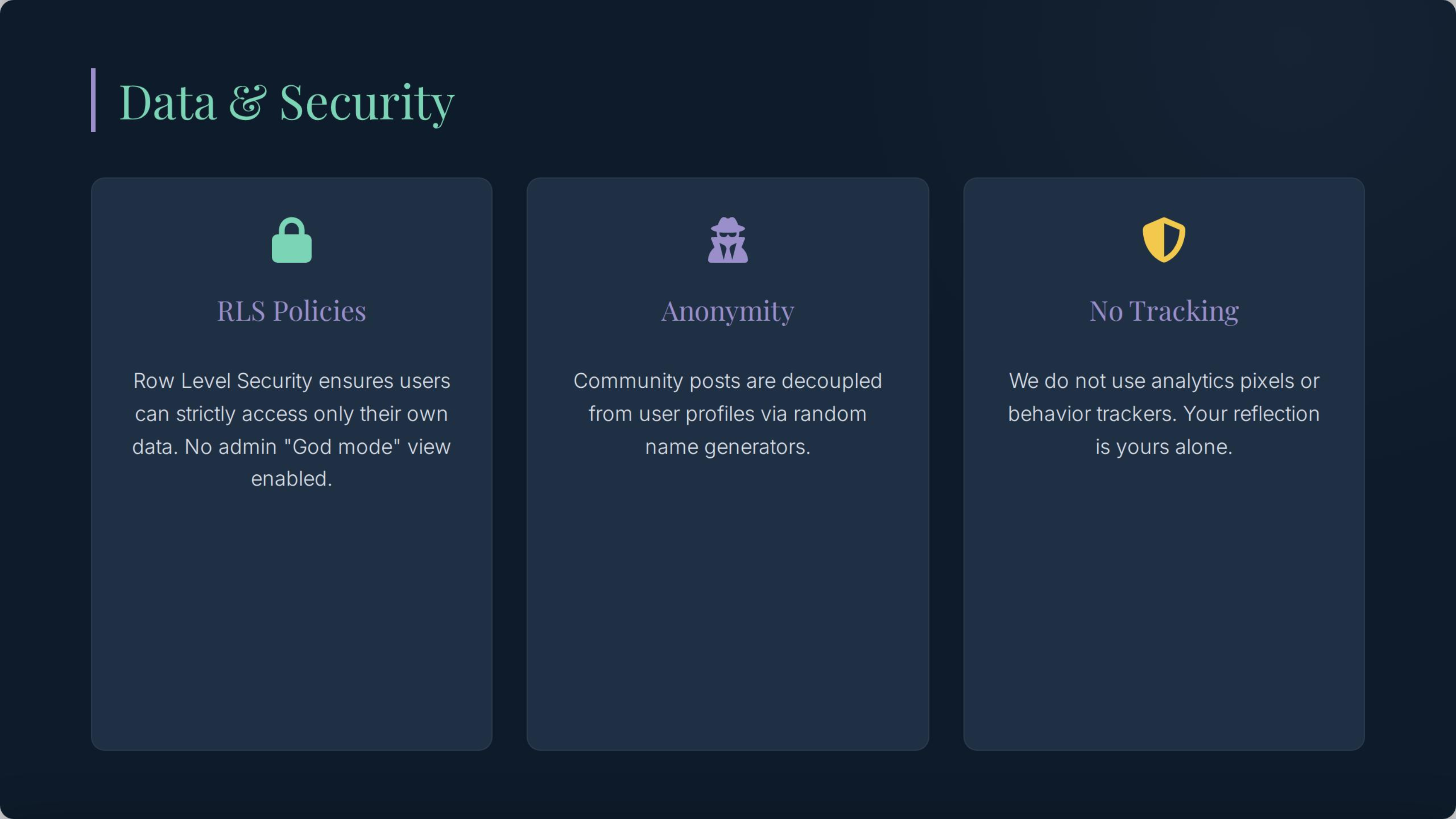
- Privacy first: Anonymous reflection without mandatory sign-up.
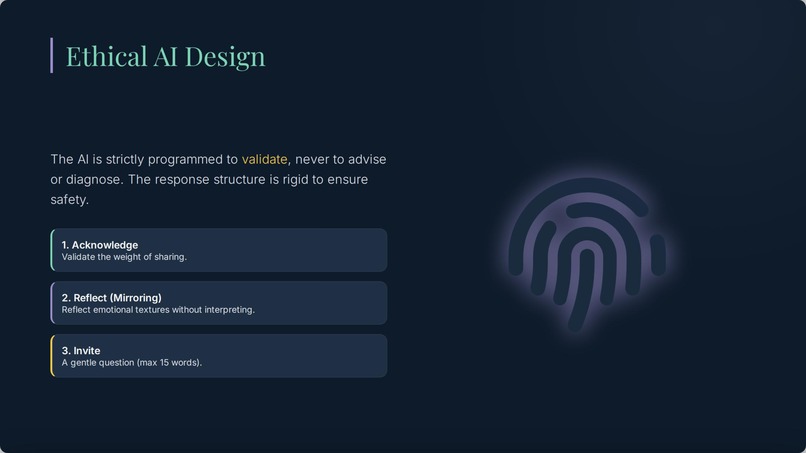
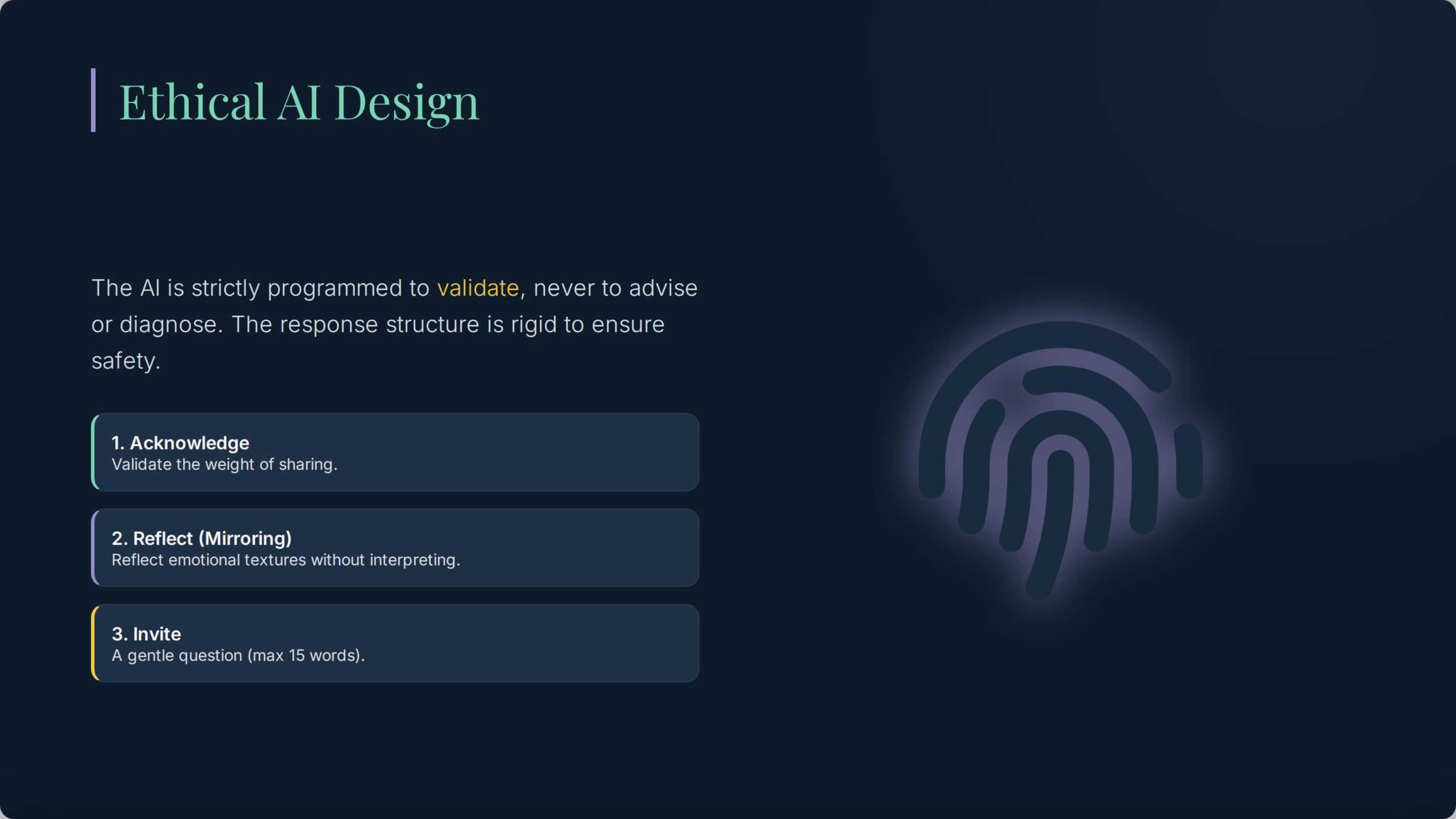
- Ethical AI: Questions and answers that validate experiences without offering advice.
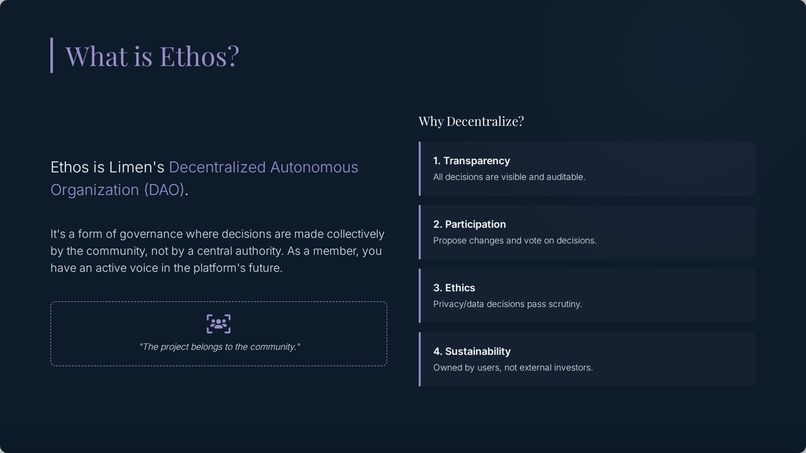
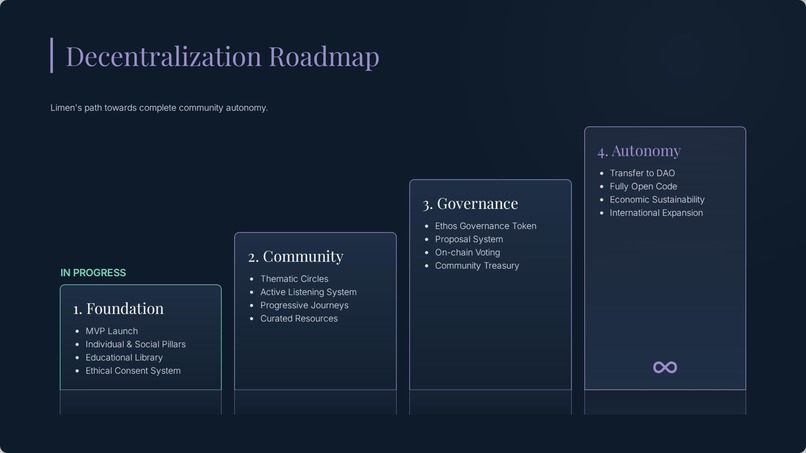
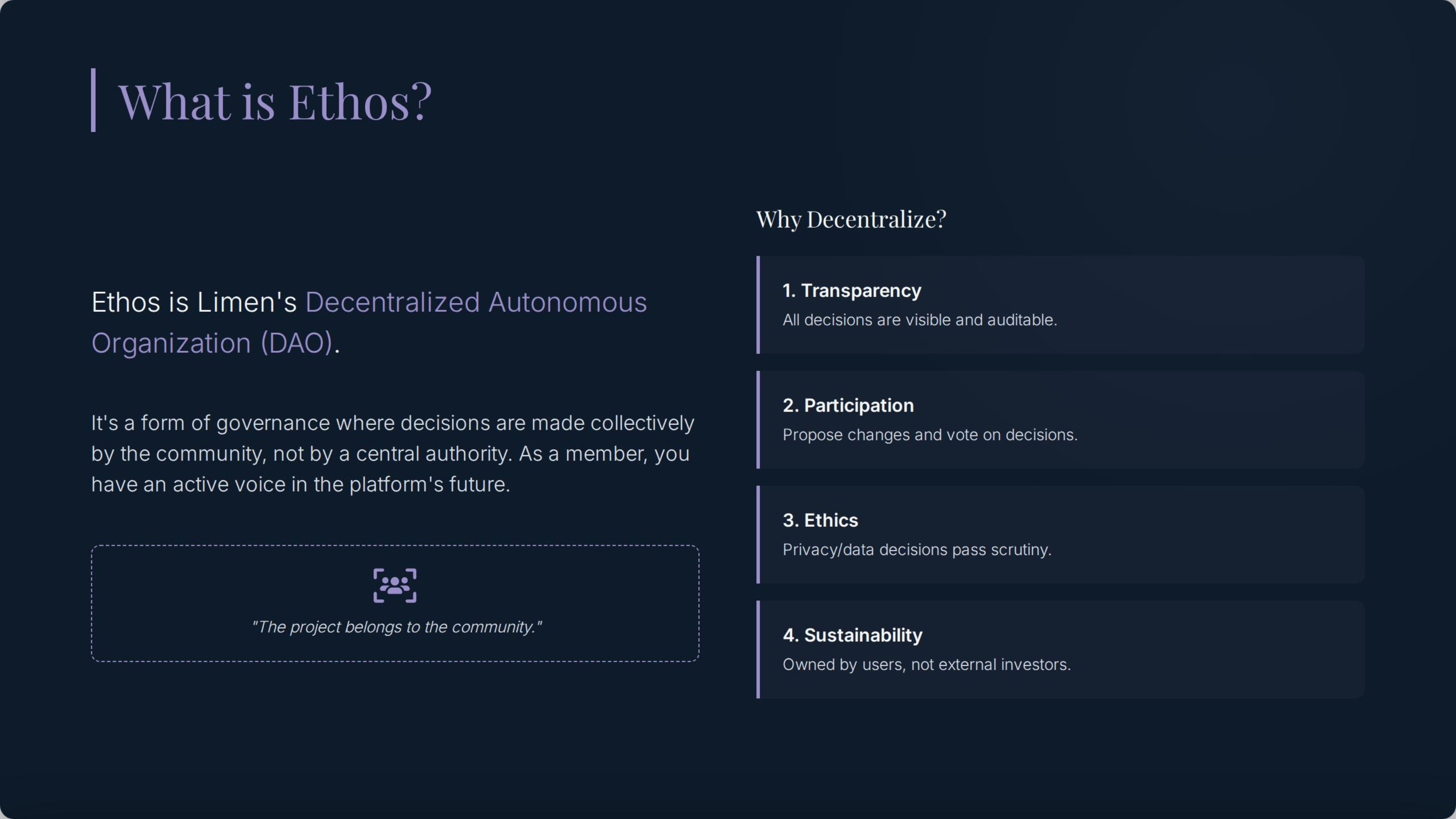
- Decentralized Governance: DAO for community decisions and a transparent roadmap.
- Absence of competitive metrics: No likes, followers, or algorithmic feeds.
Limen resolves problems such as:
- Lack of safe digital spaces for personal and social reflection.
- Absence of ethical learning regarding emotions and well-being.
- Exposure to metrics and algorithms that may generate comparison or stress.
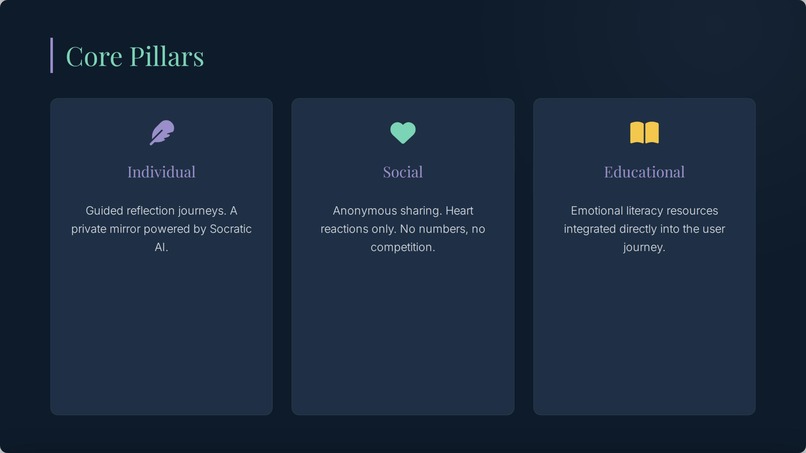
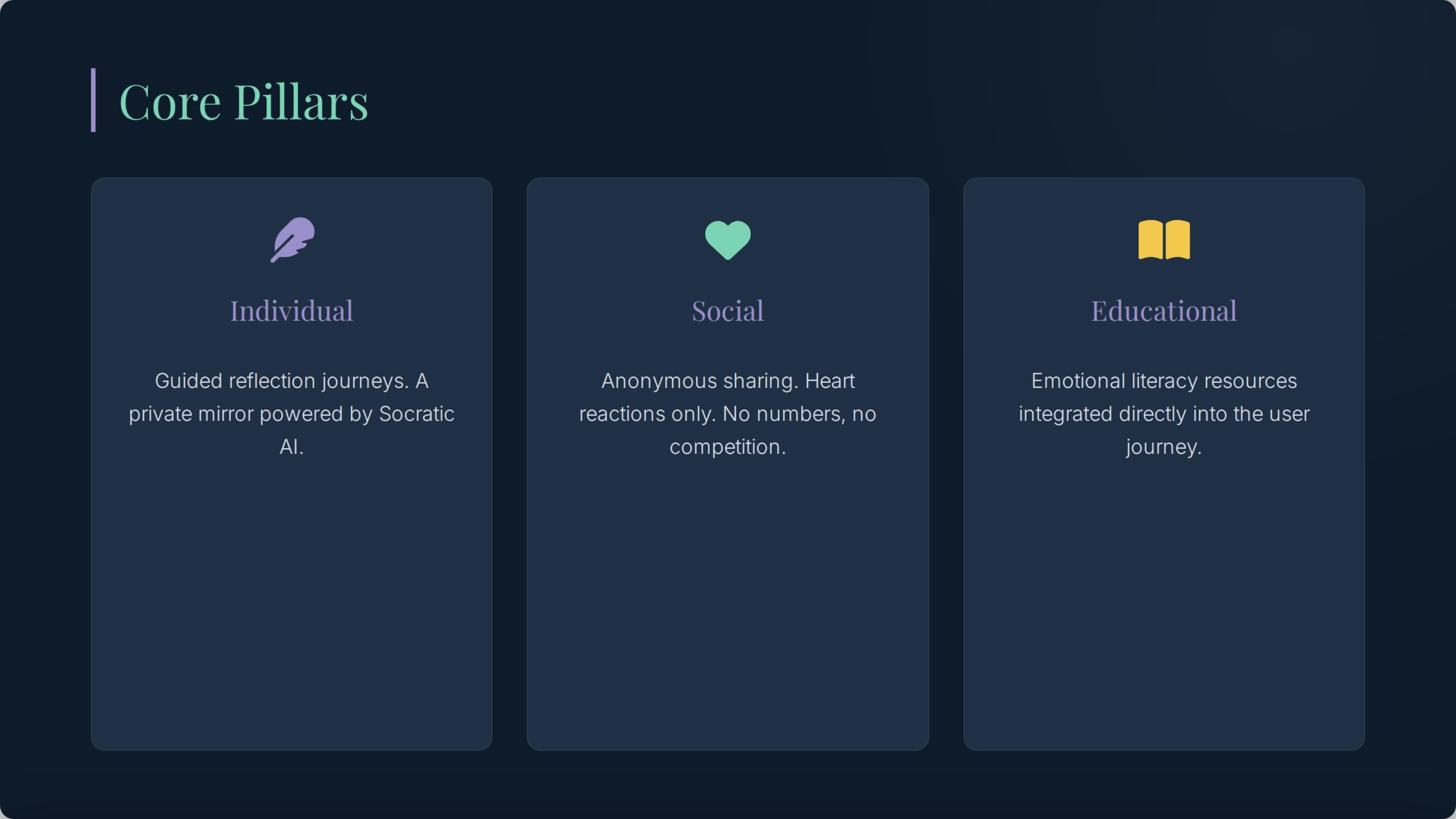
Key Features Limen serves three main pillars (Individual, Social, Educational), alongside transversal governance and technology features:
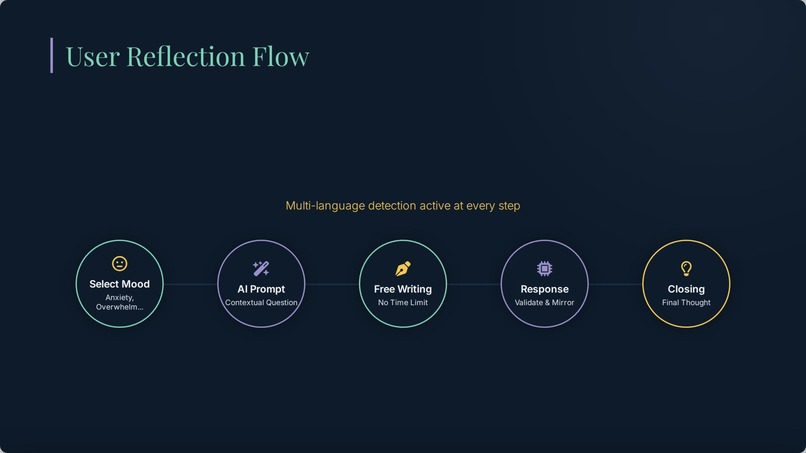
1. Individual - Guided Reflection
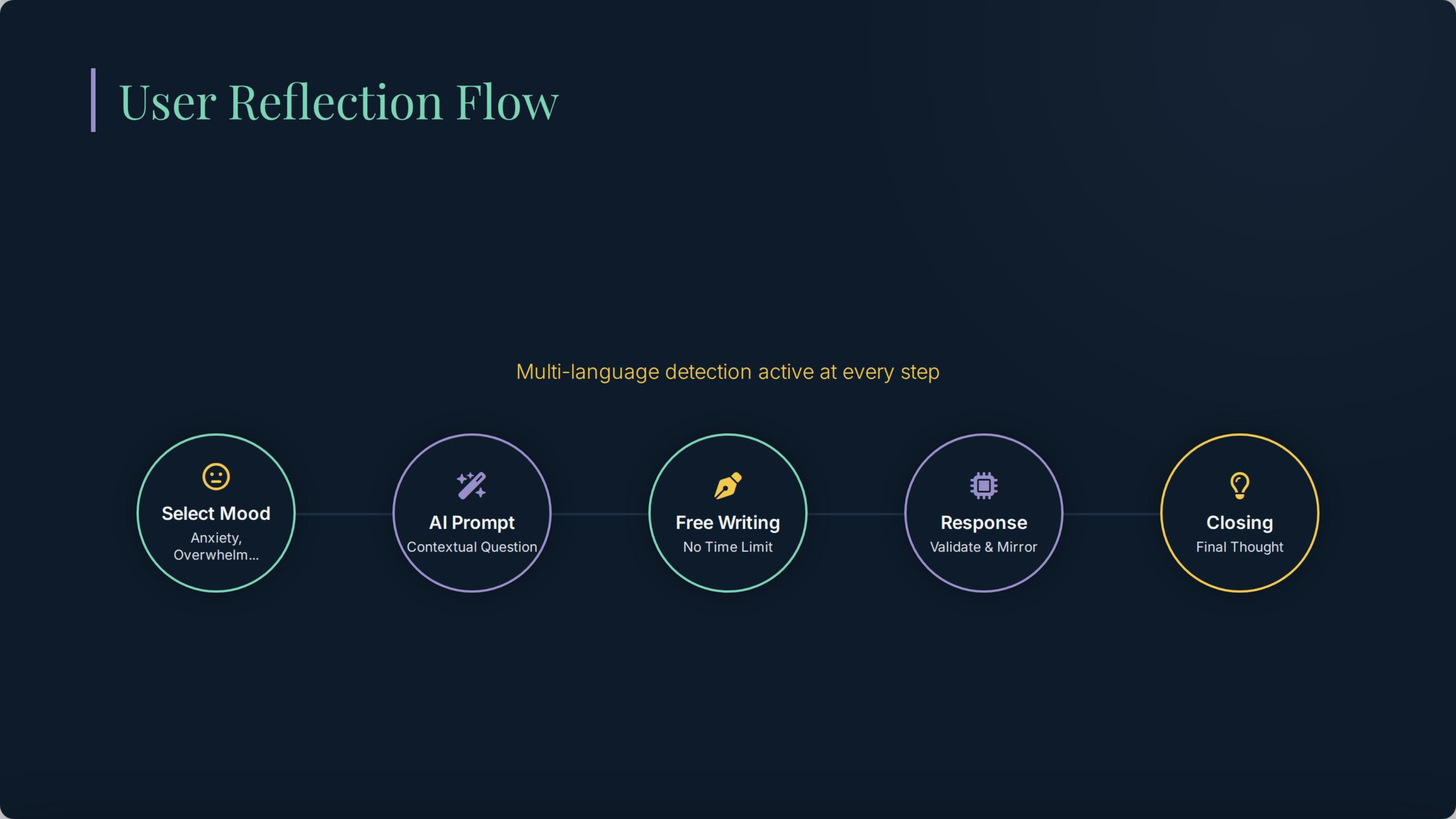
- Choice of emotional state: The user selects their current state (e.g., anxiety, overwhelm, confusion, or open).
- AI Stimulus: The system generates short, open-ended questions that invite reflection without advising.
- Processing: Free writing space, without time pressure.
- Empathetic Response: The AI returns a response rigidly structured in four paragraphs:
- Acknowledges the weight of sharing.
- Reflects themes or emotions without invasive interpretation.
- Validates the courage to express feelings.
Closes with a short reflective question (max. 15 words).
Contemplation: A final question inviting the continuity of thought.
Persistence: Option to save reflections (requires authentication).
2. Social - Ethical Sharing
- Anonymous posts identified by random names.
- Emotional state tags associated with each post.
- “Heart” type reactions that are non-competitive (no numeric counters).
- No algorithmic curation, promoting pure empathy and organic collective learning.
3. Educational - Learning Resources
- Curated content on emotional well-being and emotional literacy.
- Organization by categories with estimated reading time.
- Direct integration with individual and social reflections, encouraging continuous learning.
4. DAO - Decentralized Governance
- Community proposals and transparent voting.
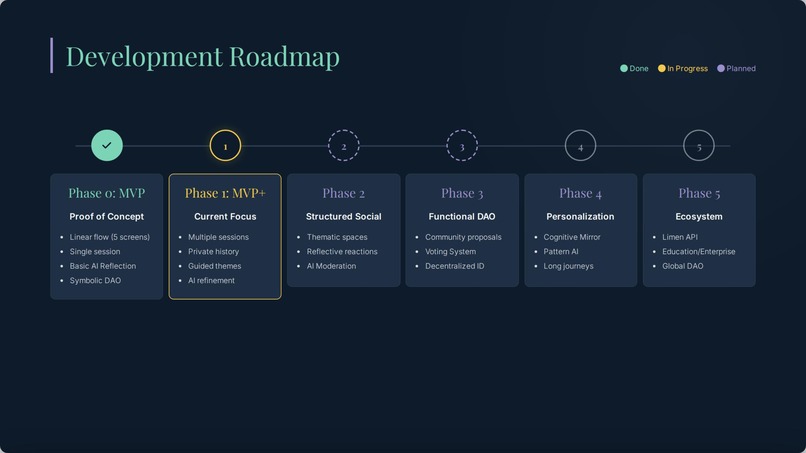
- Visibility of the roadmap and community decisions.
- Ethical participation in the platform's evolution.
5. Multilingual and Contextual AI
- AI responds in the user's language (Portuguese, English, Spanish, etc.).
- Ethical and culturally contextualized automatic responses.
What Limen is NOT To avoid confusion and align expectations, it is crucial to clarify that Limen does not behave as:
- Traditional social network: There are no likes, followers, or algorithmic feeds that encourage competitive engagement.
- Psychological counseling app: The AI validates emotions but does not diagnose, advise, or prescribe solutions.
- Emotional performance metrics tool: There is no ranking, comparison, or evaluation of “which emotion is better or worse.”
- Indiscriminate public space: All social interactions are anonymous, respectful, and without exposure of personal data.
- Gamification or competition platform: There are no scores, badges, or rewards that stimulate comparison between users.
These counter-examples highlight Limen’s ethical, safe, and educational approach, reinforcing its mission to provide a space for individual and collective reflection without external pressure.
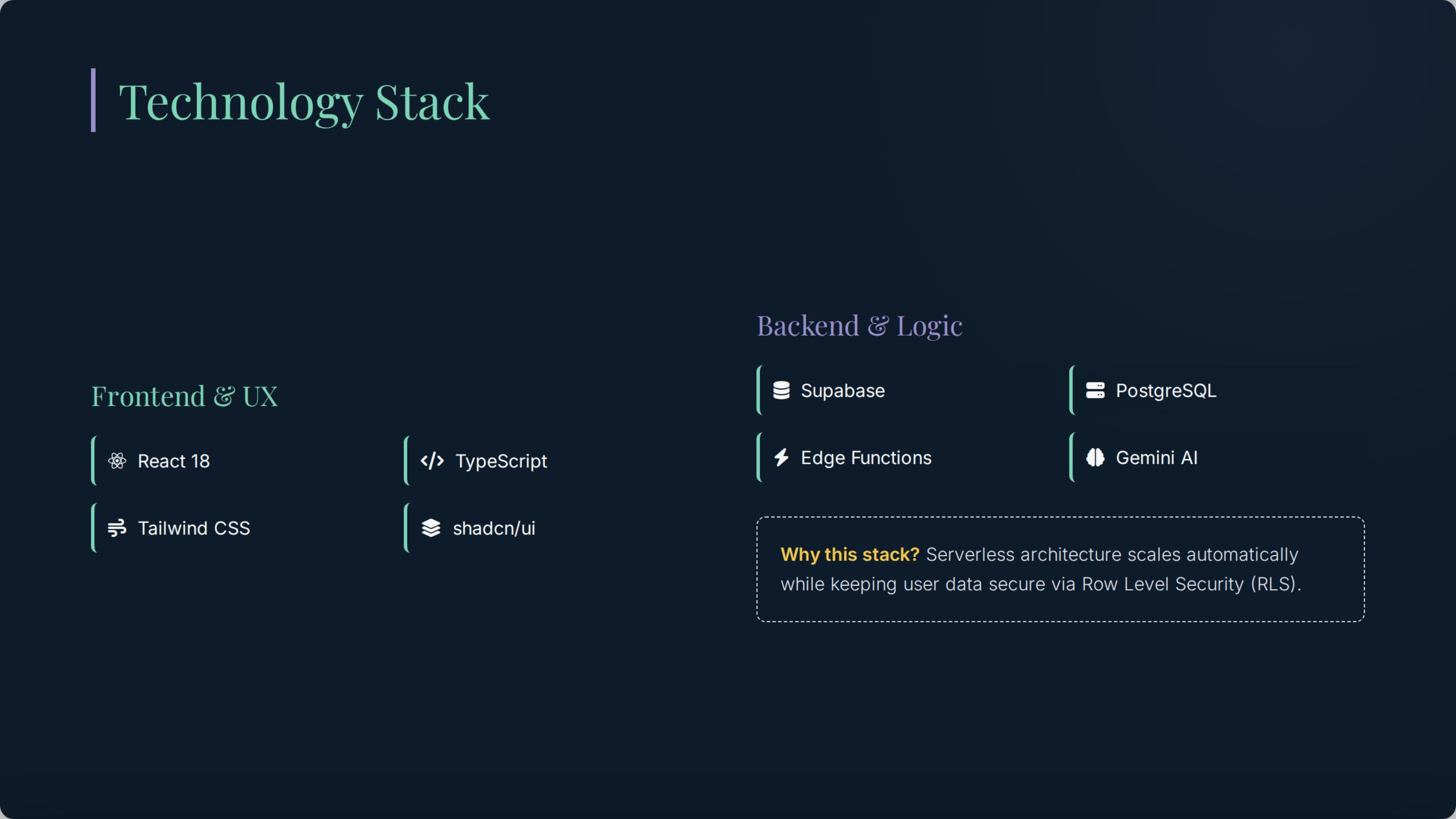
Technologies Used
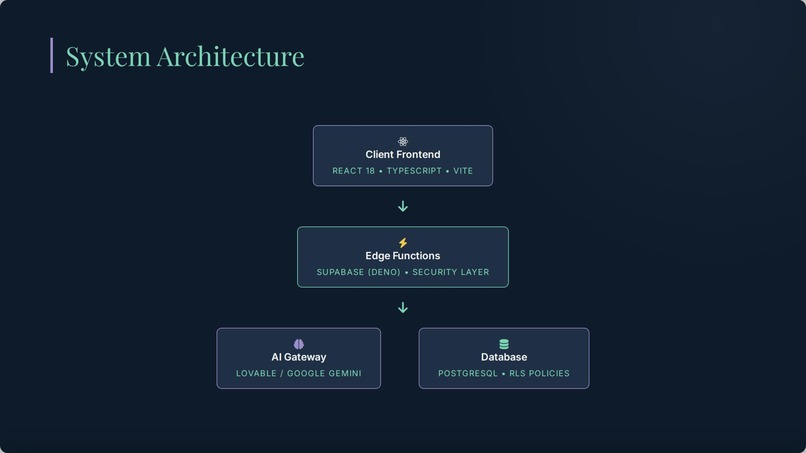
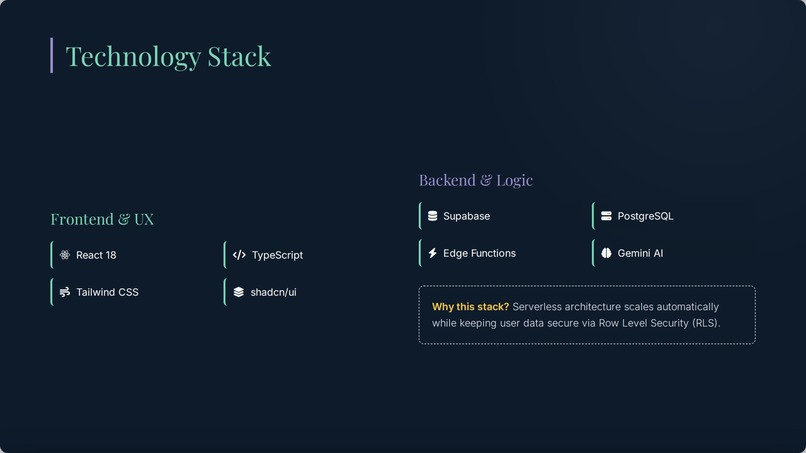
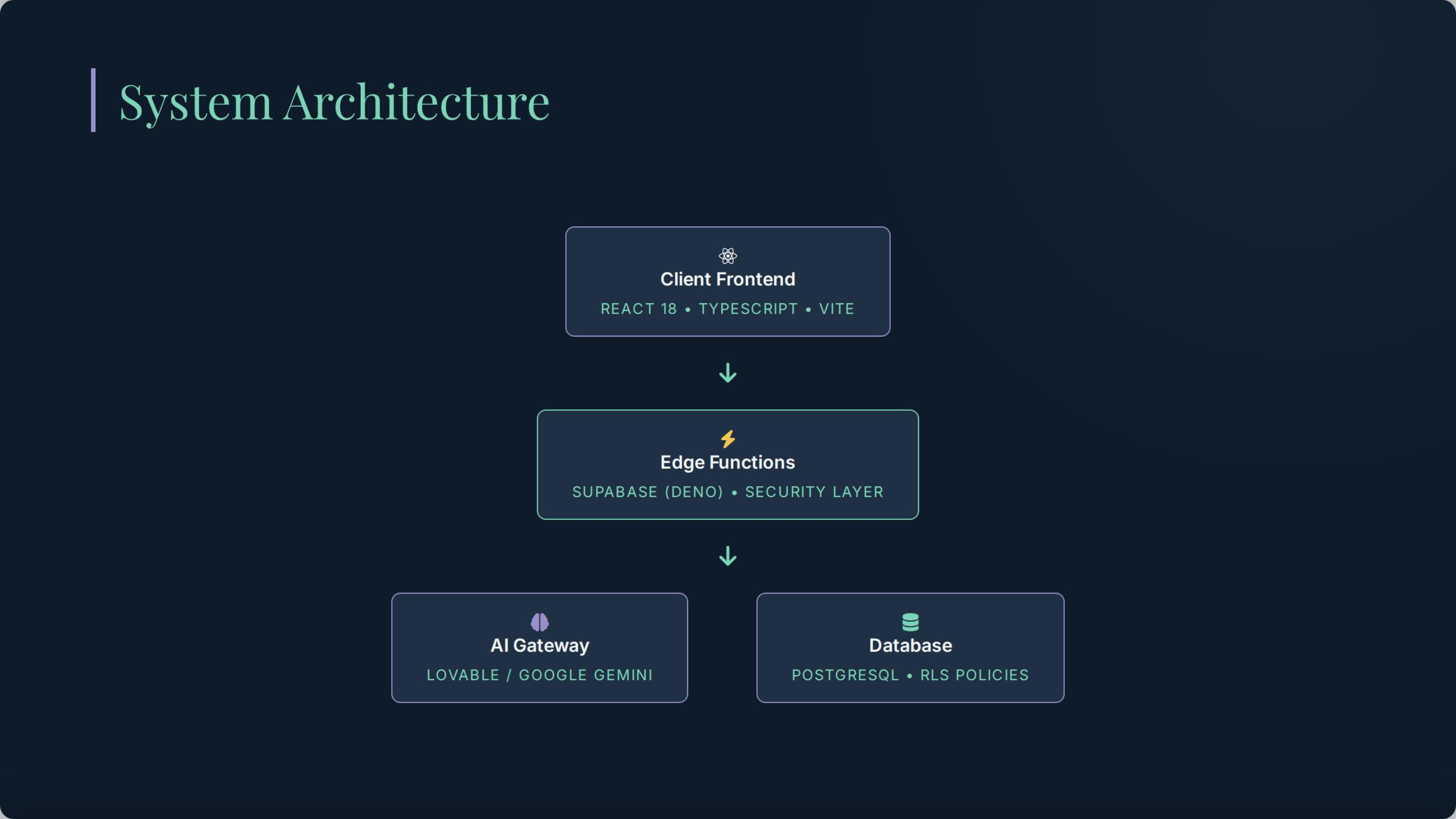
- Frontend: React 18, TypeScript, Vite.
- Styling: Tailwind CSS, shadcn/ui.
- State Management: React Context, TanStack Query.
- Routing: React Router DOM v6.
- Backend: Supabase (via Lovable Cloud).
- Database: PostgreSQL (Supabase).
- AI: Lovable AI Gateway (Google Gemini).
- Authentication: Supabase Auth.
- Edge Functions: Deno (Supabase Functions).
Cultural, Psychological, and Educational Impact Limen promotes:
- Subjective clarity and narrative autonomy, respecting diverse cultural contexts.
- Ethical learning and critical reflection, focusing on mental well-being.
- Non-competitive social integration, encouraging empathy and peer support.
- Practical education in self-analysis and safe emotional management.
The target audience includes students, young adults, neurodiverse users, and diverse cultural communities seeking refuge from digital hyper-stimulation.
Links to experiment (Source Code)
Repository Link: Limen-Ethos
Content Description:
- Complete project structure, including front-end, back-end, and AI functions.
- Detailed README with step-by-step instructions for installation and local execution.
- Code prepared for secure persistence and future integrations.
Built With
- css
- deno
- dom
- gateway
- postgresql
- query.
- react
- react-18
- router
- supabase
- tailwind
- tanstack
- typescript


Log in or sign up for Devpost to join the conversation.