-
-
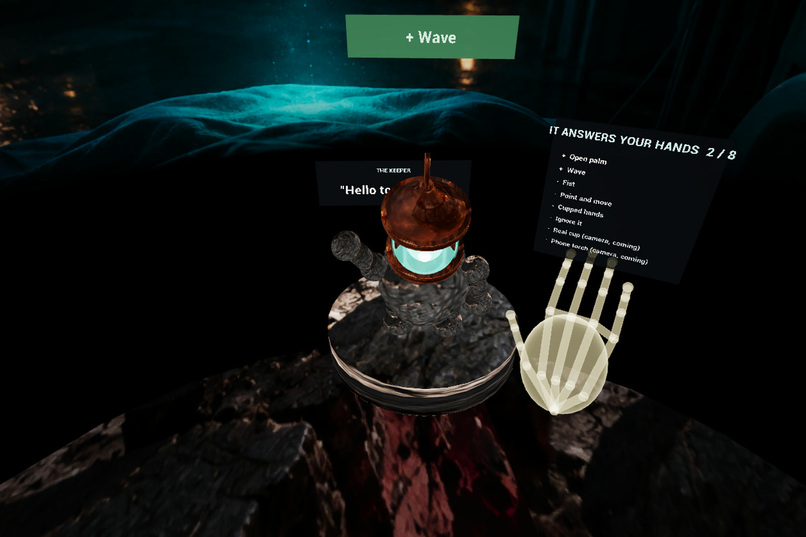
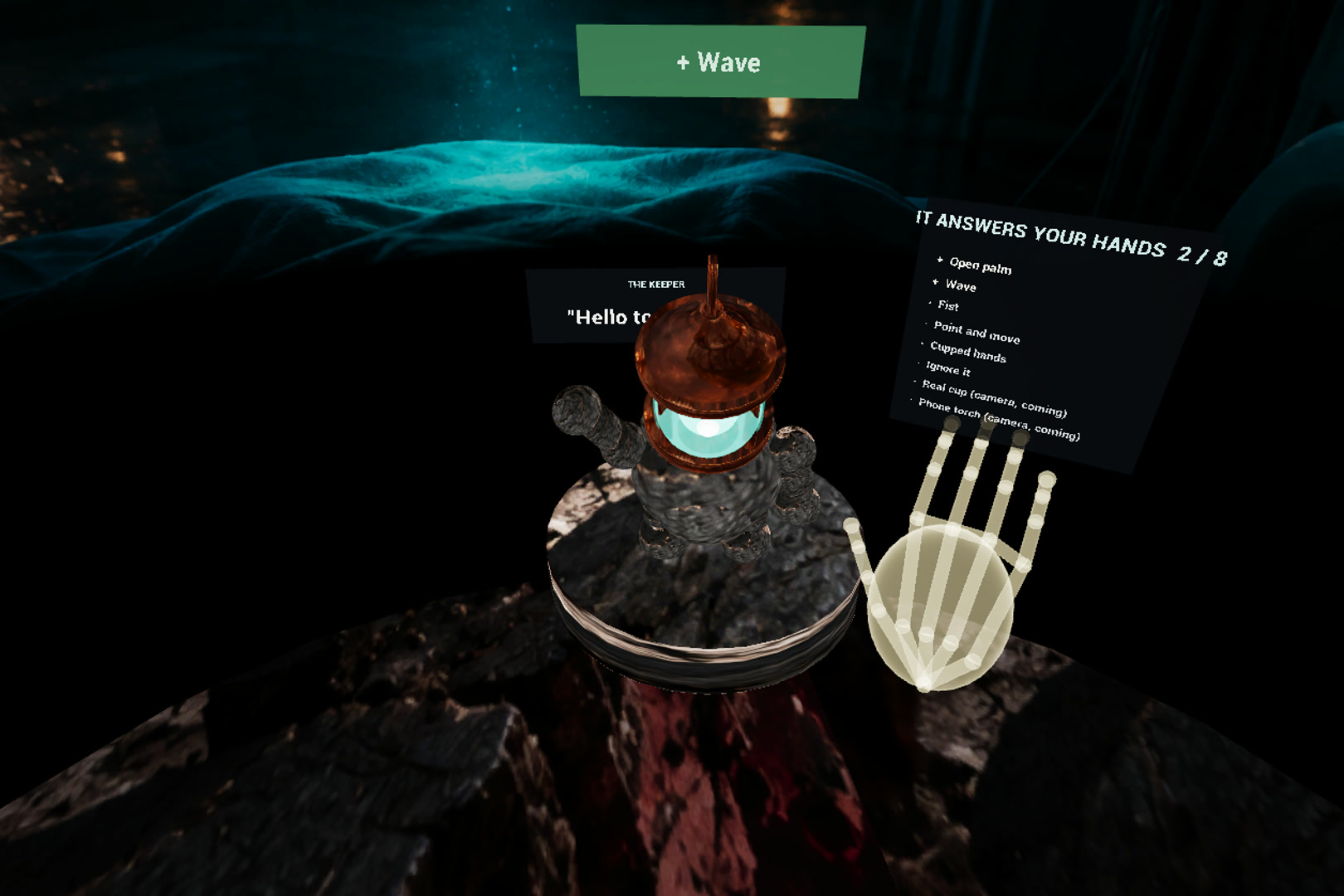
The Keeper: “The Keeper answers your hands: here it bows to a wave. On Quest it stands on your real desk. Development build.”
-
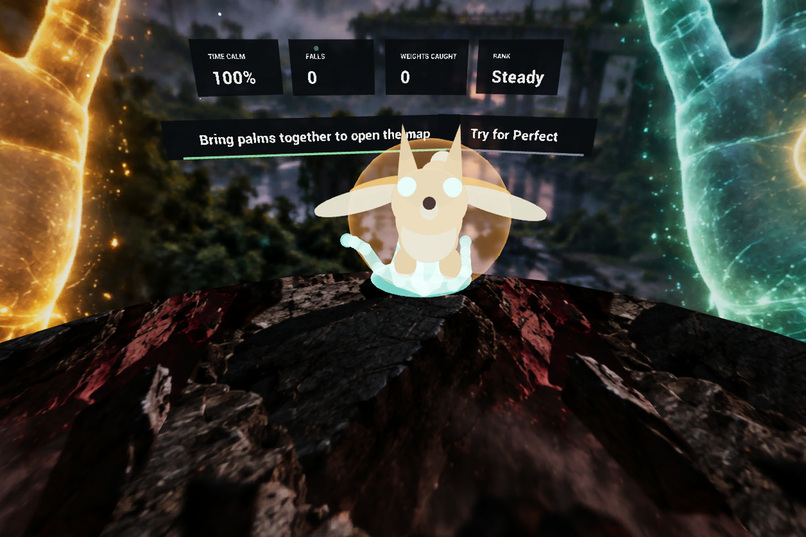
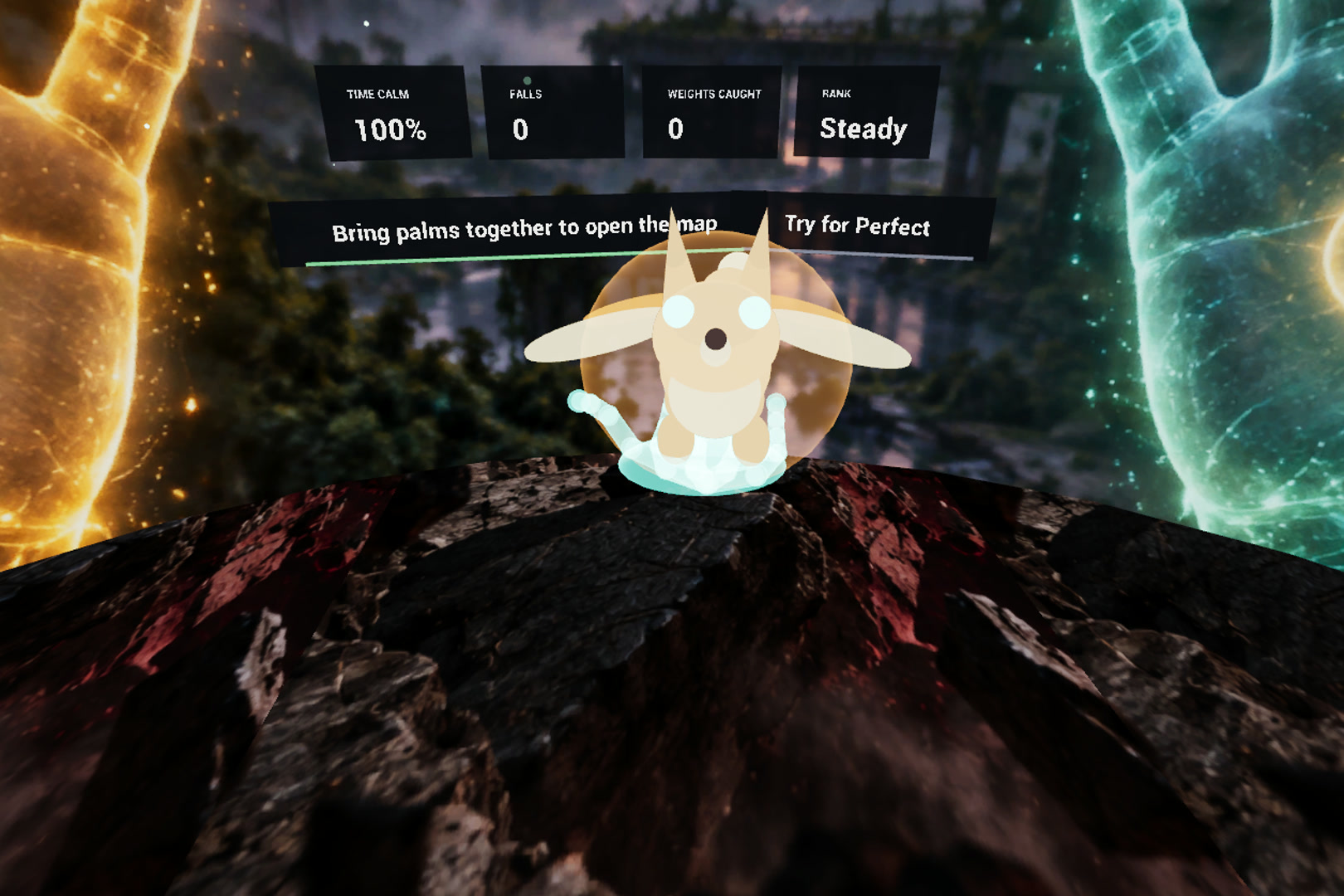
The Mark of Balance: “Balance held: your hands turn to light and your Kin hatches. Development build.”
-
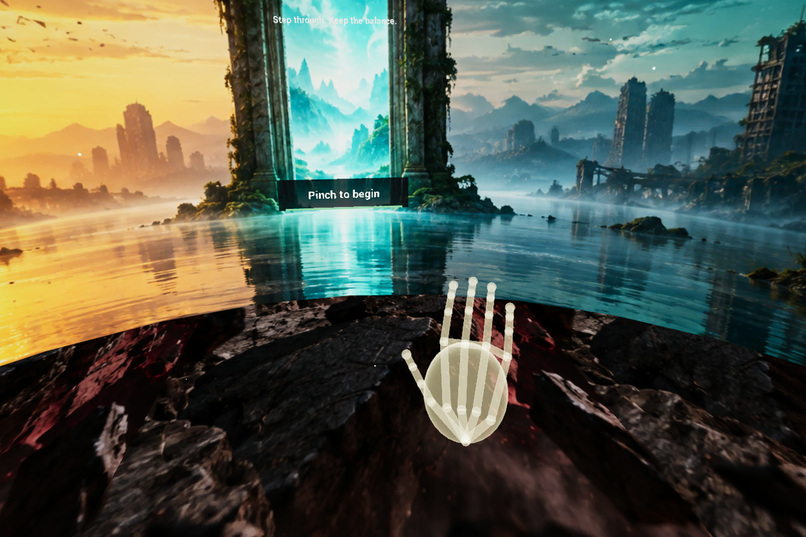
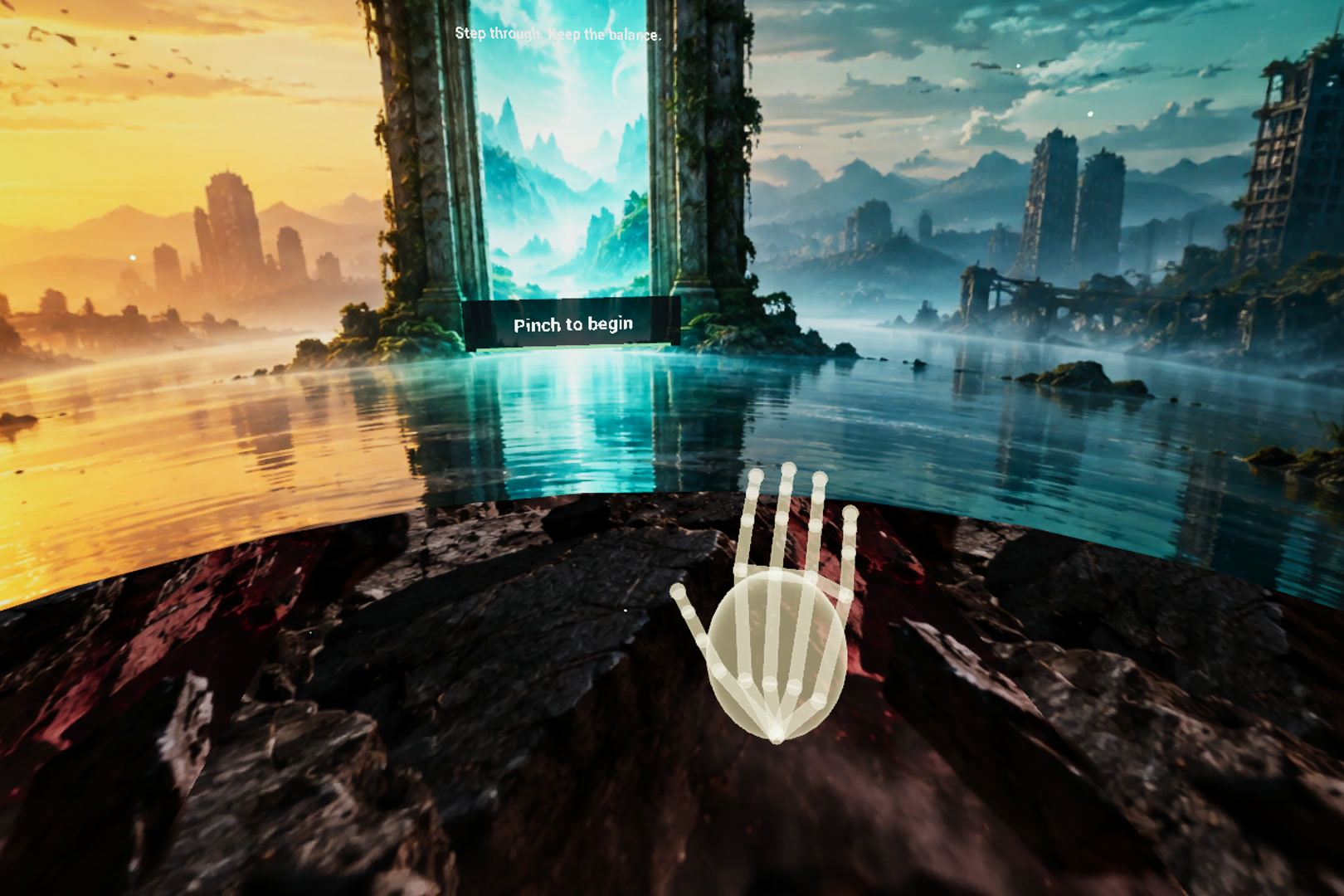
Title: “The first thing you see: a doorway in the water. Development build.”
-
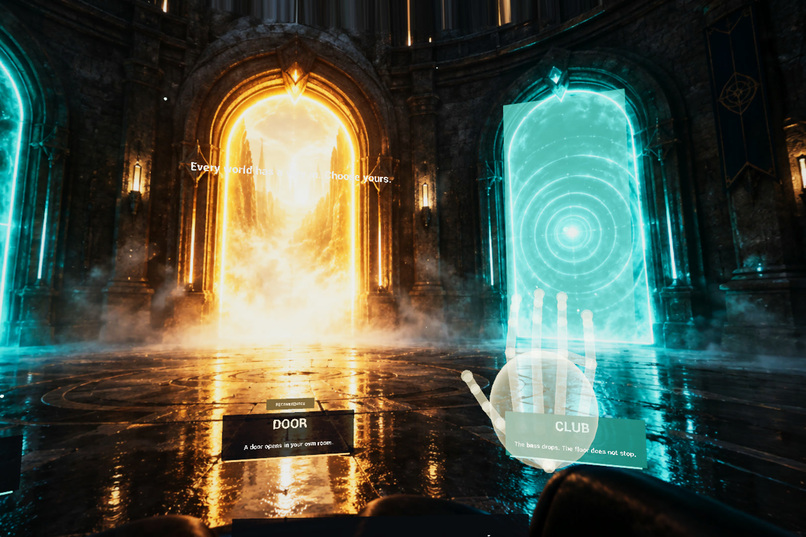
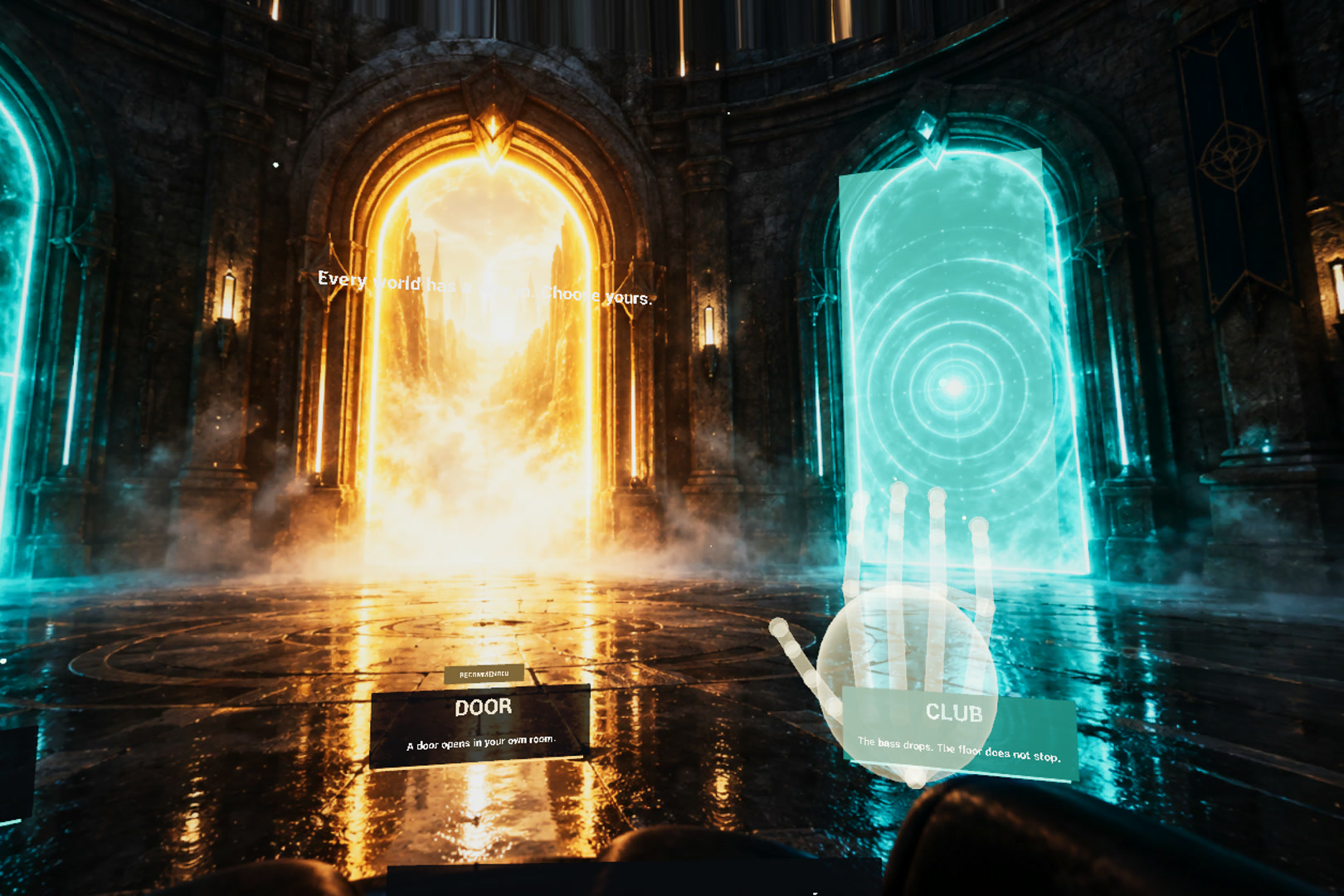
Choose your way in: “Three doors open now: Coma, Door and Club. Development build.”
-
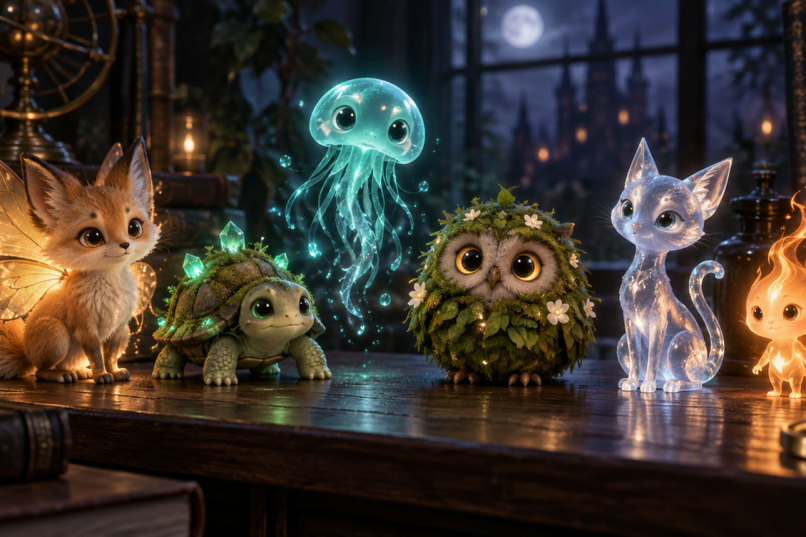
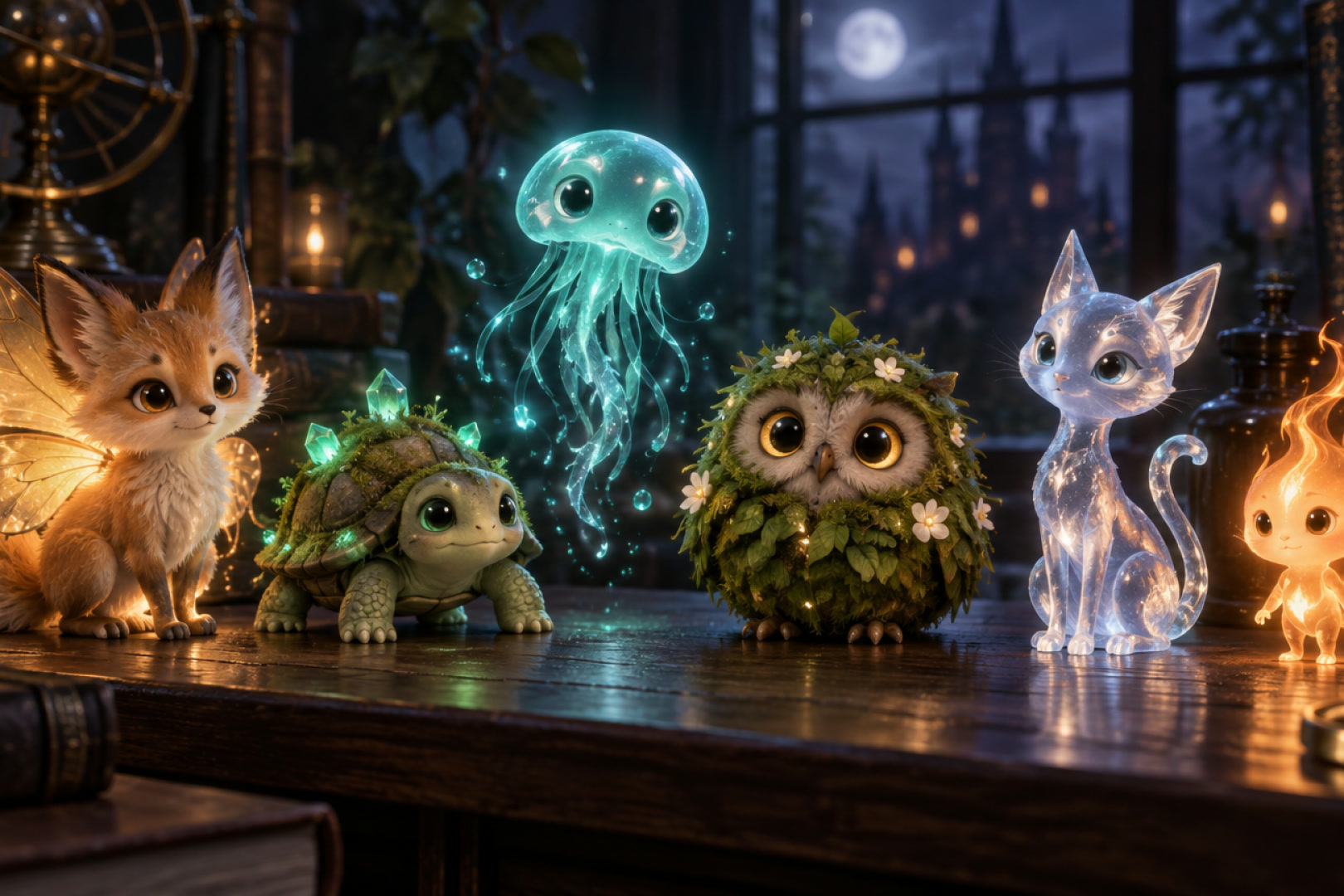
Concept_Kin: “Concept art: the six Kin forms, coming next.”
-
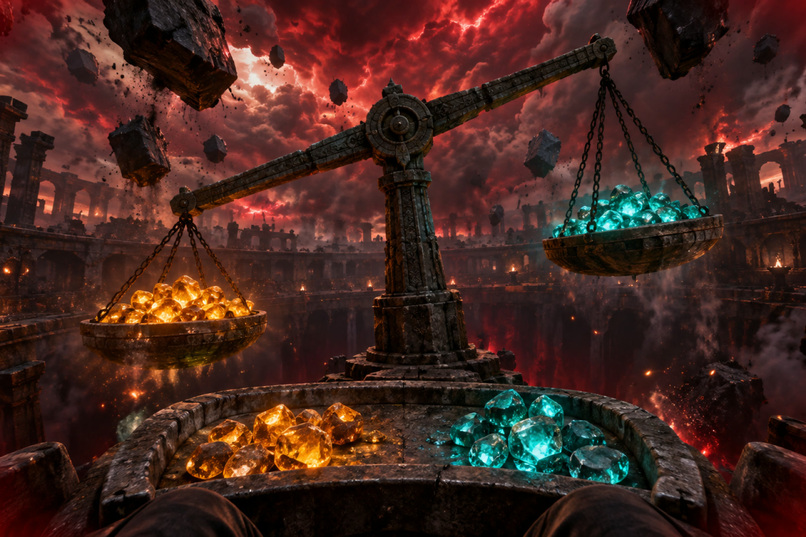
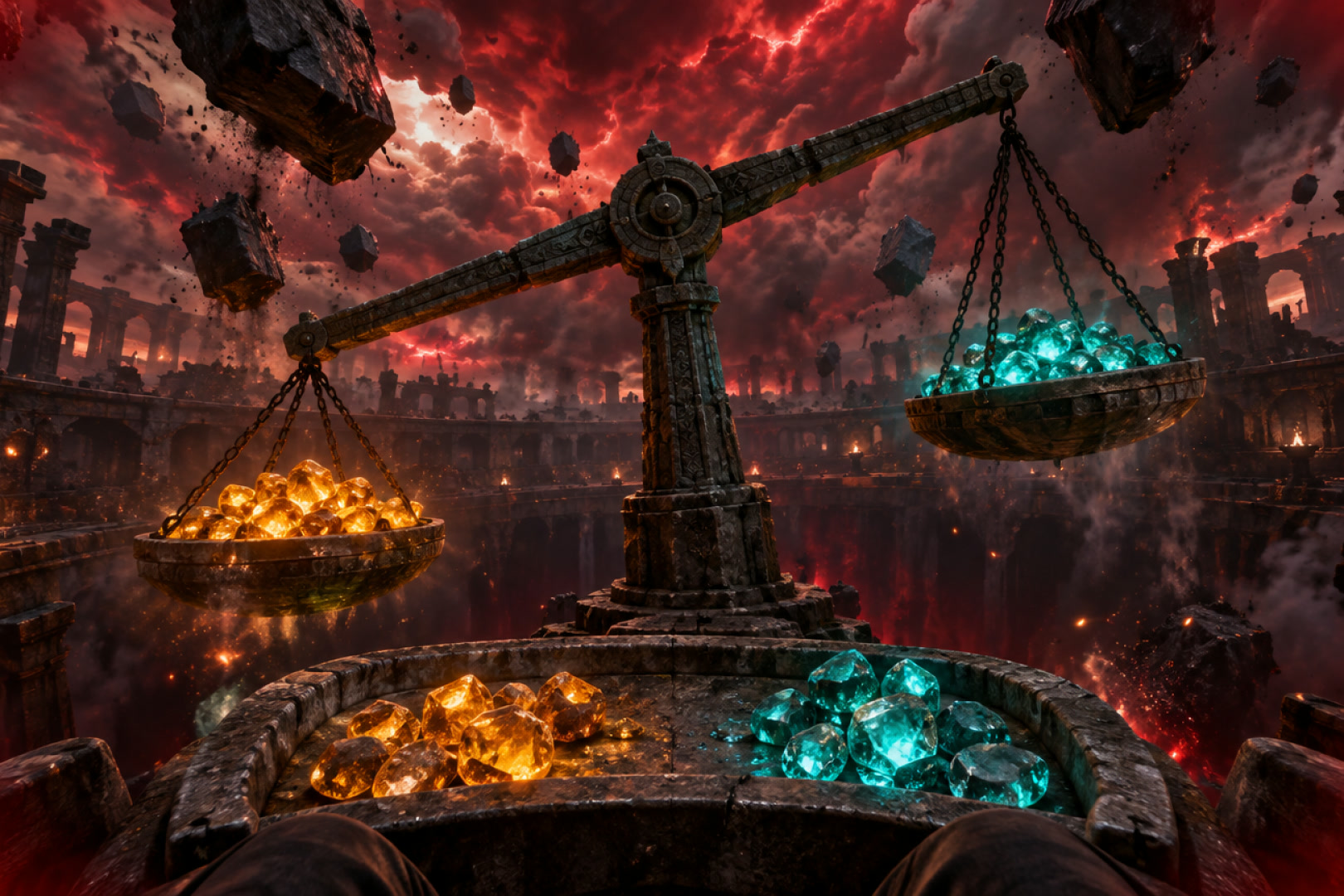
Concept_Scale: “Concept art: the colossal Scale over the pit.”
-
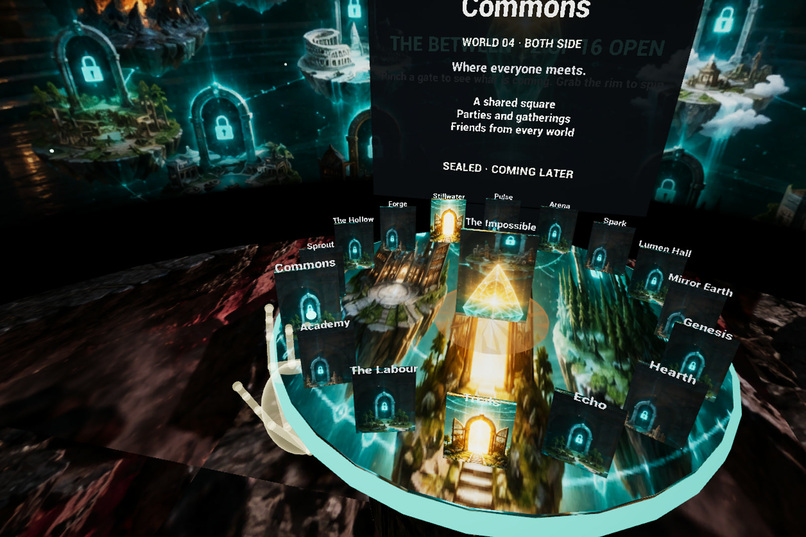
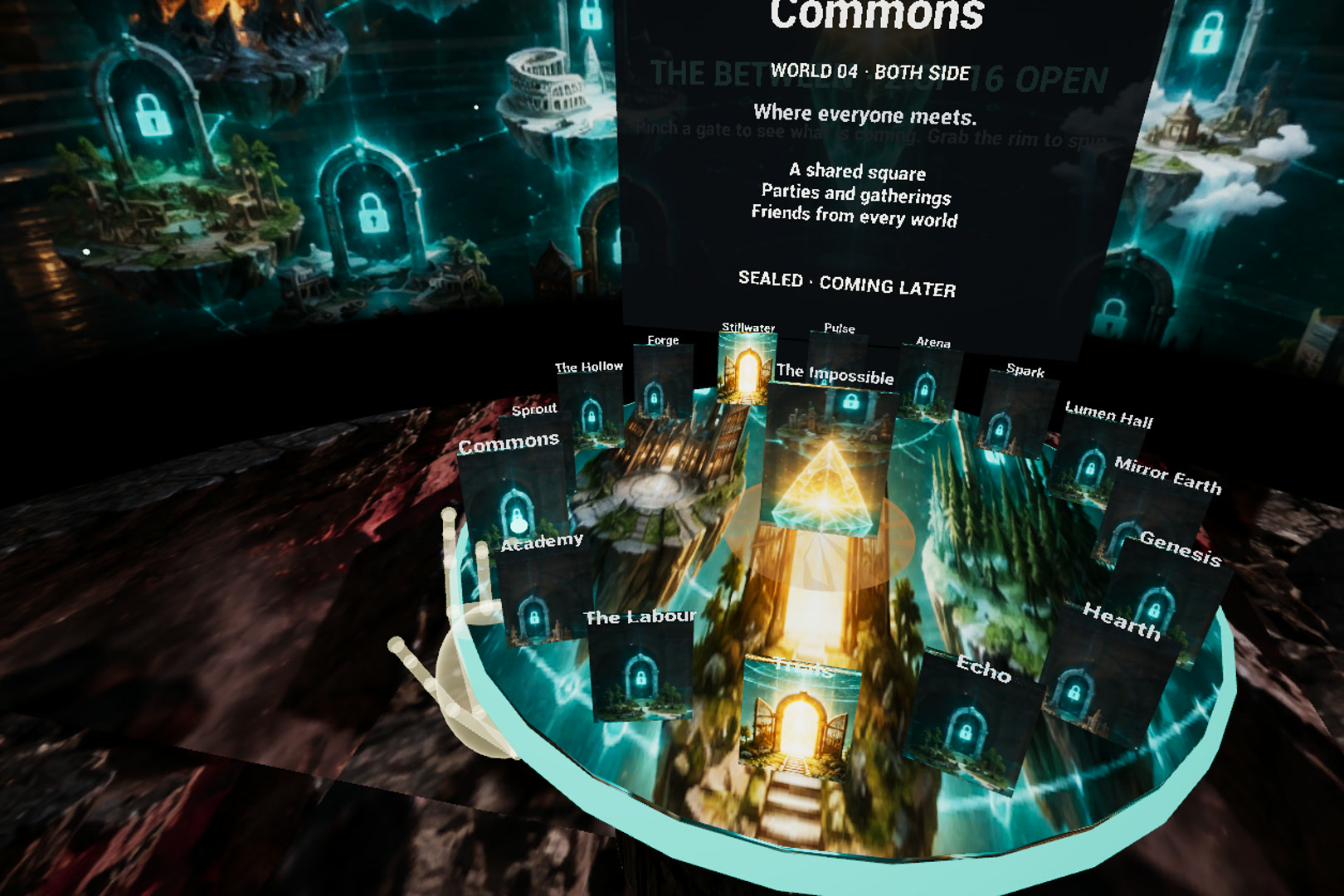
The Map: “Sixteen worlds around a beacon; two open now. Development build.”
-
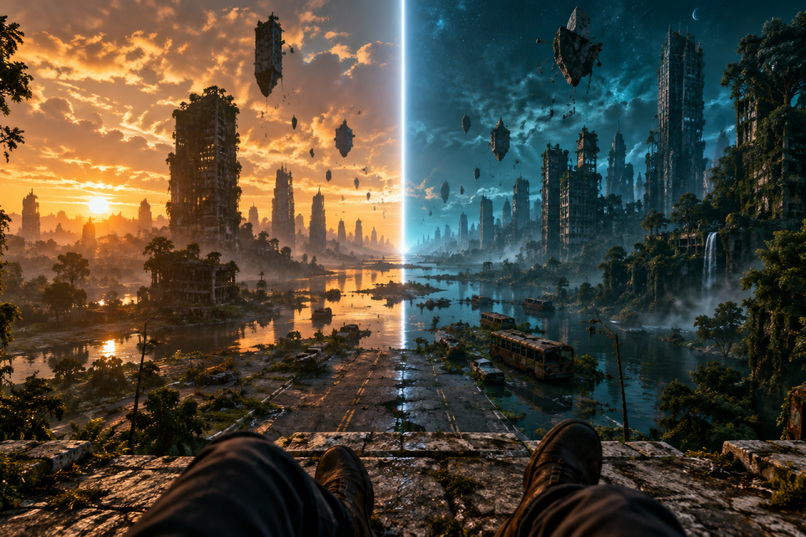
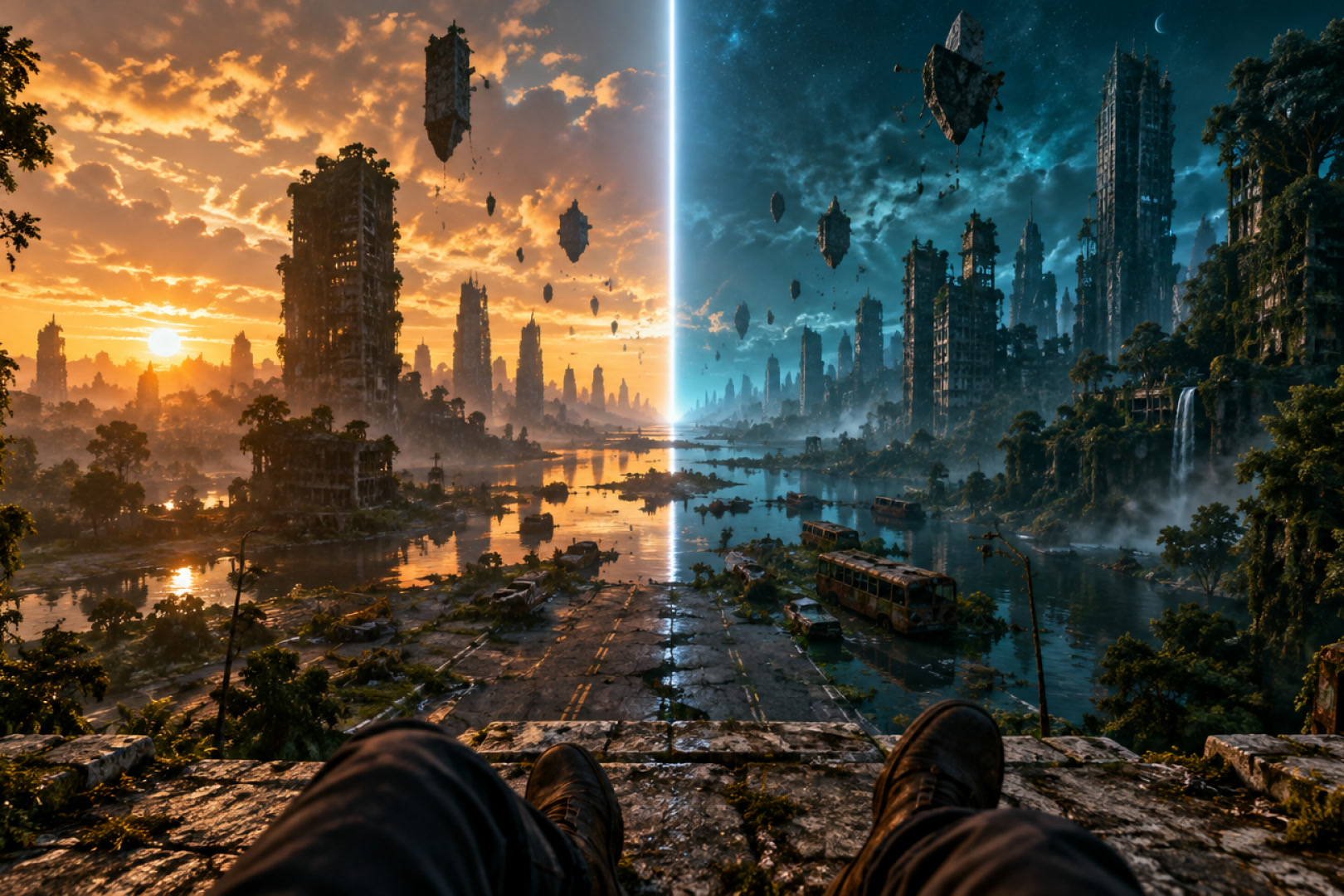
Concept_Between: “Concept art: the Between, a drowned city under a split sky.”
-
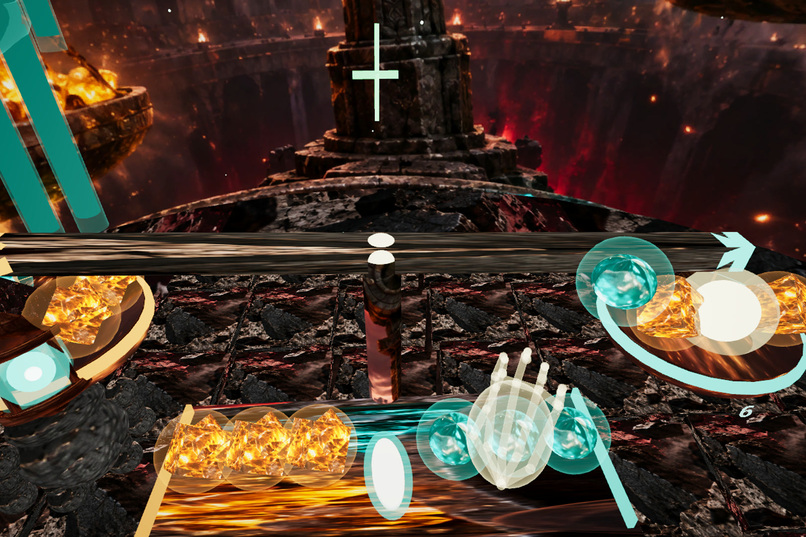
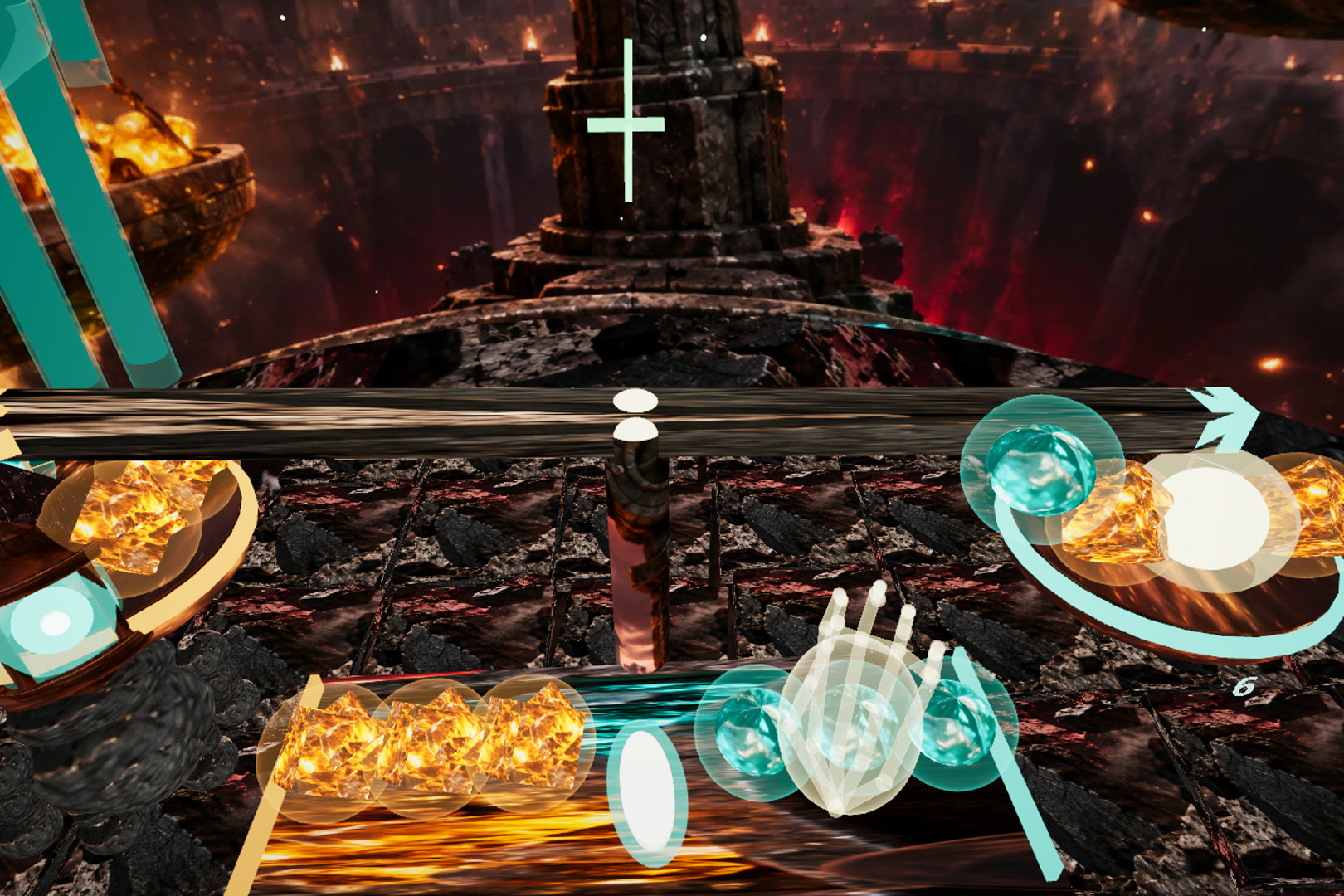
The Scale: “Feed the high side with amber and tide stones before the floor breaks. Development build.”
Inspiration
We kept asking one question: what if the line between our world and another one ran right through your room? Most VR asks you to leave your space behind. LIMEN starts in it. Your desk, your hands and your chair become the doorway.
LIMEN is Latin for threshold. The game is about crossing one, and about balance: our world (amber) and the Between (tide) only survive while someone holds them level.
What it is
LIMEN is a seated, hands-only mixed reality survival game for Meta Quest 3 and 3S. One session is under ten minutes and fits an airplane seat.
- Choose your way in. Three doors open now: Coma (a silent room where the monitor flatlines and a drop of light rises), The Door (a door of light tears open in your real room, seen through passthrough), and The Club (the bass drops and a ring of light sinks you through the floor). Eight more ways in are shown, sealed, with what unlocks each.
- Meet the Keeper. A rift opens above your real desk and a small stone creature with a brass lantern head tumbles out. It answers your hands: it climbs onto an open palm, bows when you wave, hides from a fist, follows your pointing finger and drinks light from cupped hands.
- The Scale. A colossal scale over a pit. Weights fall on one side; you pick amber and tide stones from a tray and feed the high side. Three rounds: Learn, Pressure and Nobody to trust, where a shadow hand points the wrong way and steals stones until you slap it away. Each round ends with the Hold: ten seconds where nothing falls and you must keep it level. Tip past 30 degrees for three seconds and the floor breaks beneath you.
- The Mark of Balance. Win and your hands become light, one amber and one tide. The Keeper gives you an egg; keep it warm in your hands and your Kin hatches, a fox of light with moth wings that is yours alone. It rides your palm, chases what you point at, naps when you ignore it and follows you into the trials.
- The Map of the Between. A stone table with sixteen worlds. Two are open: Trials (the Scale, and the Run, where you swing your arms to outrun the Dark across a collapsing bridge) and Stillwater (breathe with a ring of light). The rest are sealed and show what is coming.
The storyline
There are two worlds: ours, and the Between. A crack of light runs between them, and some of us cross, through a coma, a door or a dance floor. The Between is a drowned city under a split sky, kept alive by balance. The Keeper guides every crosser. Sable, another crosser, has fallen at the Scale before and runs the bridge beside you. Each world you open tips the balance toward amber (work, danger, industry) or tide (rest, learning, wonder). The seventeenth gate, The Impossible, is built to stay unsolved for years.
How we built it
- Unreal Engine 5.8 with the Meta XR plugin v207, packaged for Quest as an Android APK (arm64, Vulkan, multiview, fixed foveated rendering, sustained-high performance levels).
- All gameplay in C++, built from code at runtime: the journey director, hand gestures, the Keeper, the Scale's torque model, the Run, the Kin and the map.
- Hand tracking: we read all 26 joints per hand and derive pinch (with hysteresis), open palm, fist, point, wave, cupped hands, palm up (pause) and palms together (open the map). Nothing needs a controller.
- Passthrough (persistent layer) for The Door crossing and the Keeper scene; MR Utility Kit scene data to find your real desk, with a floating-stone fallback when no desk is scanned.
- Art: every environment is painted concept art we created for LIMEN, wrapped around the player as 360-degree panoramas with real 3D pieces in front, the way standalone VR keeps big vistas cheap.
- Sound: 20 original effects generated from code (no samples), and character voices made with ElevenLabs Multilingual v2.
- Design: a 46-page Figma file covering every screen, all sixteen worlds and the roadmap.
Challenges
- Building for Quest from a Mac: Meta's editor tools are Windows-only, so Meta features are wrapped in C++ that compiles into the Android build.
- We had no headset during development. We built to a strict budget instead: the busiest scene draws about 120 meshes, every environment is unlit, and the sky is one textured ring.
- Making a survival game that works seated in a two-foot circle: the world moves, you never do.
What we learned
Hands are the best controller when the game reacts to them like a living thing would. The Keeper and the Kin taught us that a small creature answering your palm sells mixed reality faster than any spectacle.
What's next
The Map is our roadmap. Next: sculpted Keeper and Kin models, the remaining Kin forms, The Labour (deadly jobs for big rewards), Academy (learn with your hands), Arena (seated sport), multiplayer through Commons, Kin hatching and growth, and the eight sealed ways in. We are aiming for a Meta Horizon Store launch in Q2 2027.
Built With
- android
- c++
- elevenlabs
- ffmpeg
- figma
- hand-tracking
- meta-quest
- meta-xr-sdk
- mr-utility-kit
- openxr
- passthrough
- python
- unreal-engine
- vulkan

