Inspiration
The increasing adoption of IoT and edge computing has made ARM-based embedded devices attractive targets for ransomware attacks. Most existing cybersecurity solutions are designed for desktop systems, require significant computational resources, or rely on cloud connectivity. We wanted to build a lightweight, standalone cybersecurity solution that could detect ransomware in real time and actively protect embedded systems using hardware-assisted responses.
What it does
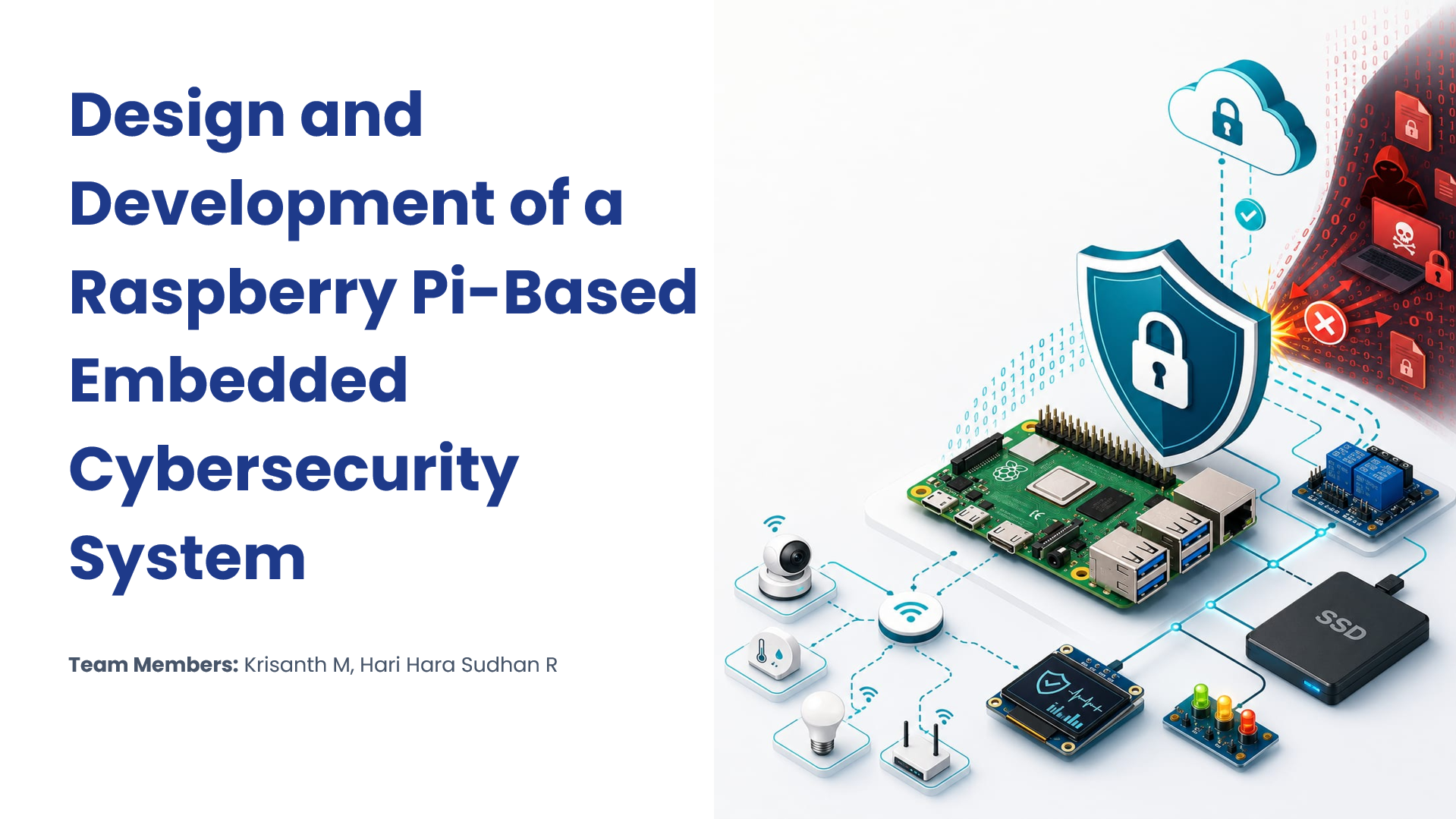
Our Lightweight ARM-Based Cybersecurity System continuously monitors file-system activity on a Raspberry Pi to detect ransomware using behavioral analysis. When suspicious behavior is identified, the system automatically:
Calculates a threat score and classifies the attack. Isolates storage using a relay module to prevent further encryption. Alerts users through an OLED display, buzzer, and LED indicators. Creates a secure backup of important files for recovery. Provides a lightweight, real-time defense without relying on cloud services. How we built it
The project was developed using a Raspberry Pi 4 running Raspberry Pi OS and Python 3.
Key technologies and components include:
Watchdog for real-time file-system monitoring. psutil for collecting system metrics. GPIO libraries to interface with hardware components. Relay module for storage isolation. OLED display, buzzer, and LEDs for local notifications. USB SSD for automatic secure backups. VS Code, GitHub, SSH, and Raspberry Pi Imager for development and deployment.
The workflow consists of file monitoring, behavioral analysis, threat scoring, attack classification, automated hardware response, backup, and recovery.
Challenges we ran into Designing a lightweight ransomware detection mechanism suitable for ARM-based hardware. Distinguishing malicious file activity from legitimate user operations to reduce false positives. Integrating multiple hardware modules with software for synchronized real-time responses. Ensuring fast backup and storage isolation before ransomware could encrypt critical files. Optimizing performance to run efficiently on limited embedded hardware resources. Accomplishments that we're proud of Successfully built a working Raspberry Pi-based embedded cybersecurity prototype. Implemented real-time ransomware detection through behavioral monitoring. Developed automated hardware-assisted protection using relay-based storage isolation. Integrated OLED notifications, buzzer alerts, and automatic backup into a single security platform. Created a lightweight solution specifically designed for ARM edge devices, addressing a gap in existing cybersecurity solutions. What we learned
Through this project, we gained practical experience in embedded cybersecurity, Raspberry Pi development, Linux-based system programming, and hardware-software integration. We also learned how behavioral analysis can effectively detect ransomware without relying on traditional signature-based antivirus methods. Most importantly, we understood the importance of designing security solutions that are efficient enough for resource-constrained embedded devices.
What's next for Lightweight ARM-Based Cybersecurity System
We plan to enhance the system by:
Integrating AI and edge machine learning for predictive threat detection. Detecting zero-day ransomware attacks using advanced behavioral heuristics. Developing a mobile application for remote alerts and device management. Building a cloud dashboard for centralized monitoring of multiple devices. Supporting secure over-the-air (OTA) updates for continuous protection. Expanding compatibility to a wider range of ARM-based IoT and embedded platforms.
These enhancements will transform the prototype into a scalable cybersecurity solution for next-generation edge computing environment
Built With
- arm
- behavioral-analysis
- embedded-security
- ransomware-detection
- raspberry-pi

Log in or sign up for Devpost to join the conversation.