-
-
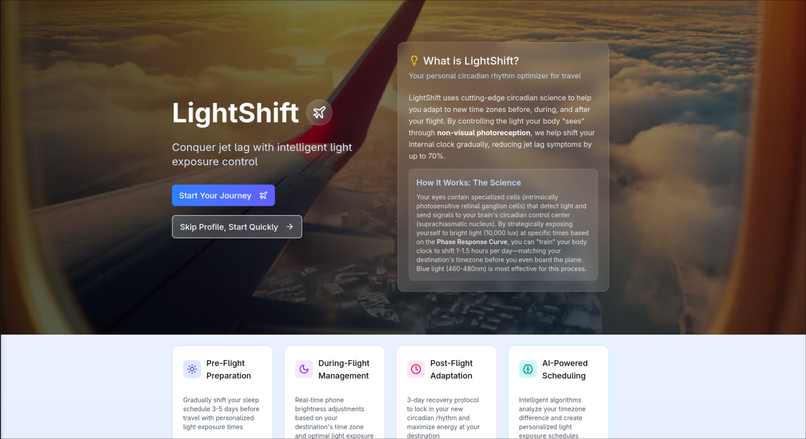
Homepage
-
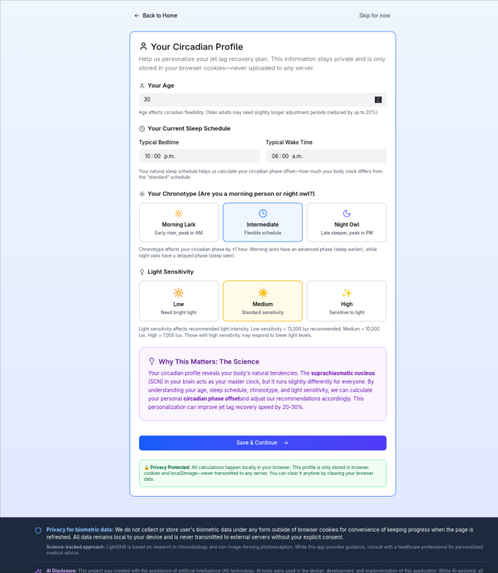
Figuring out user characteristic for custom schedules
-
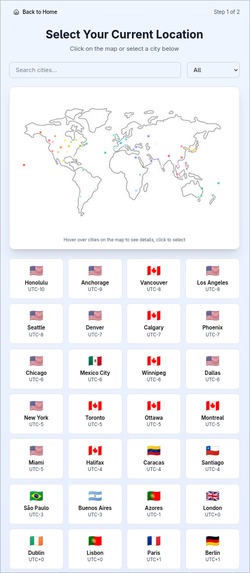
Select Origin / Select destination
-
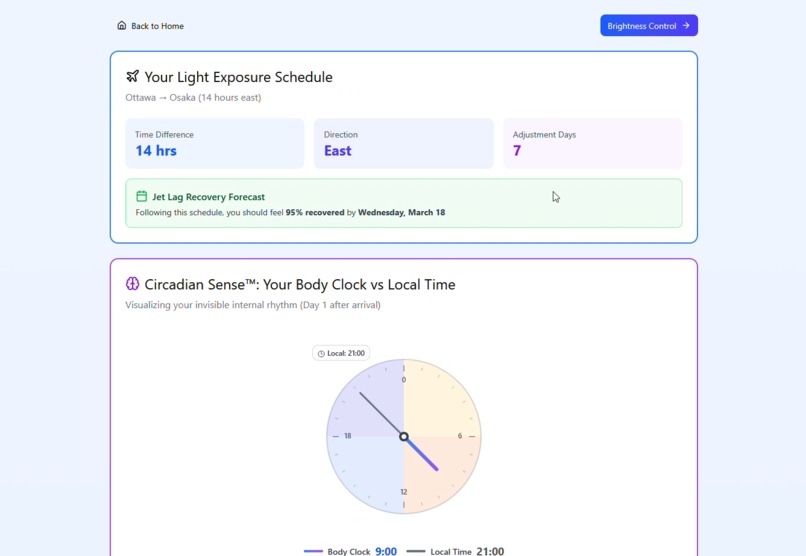
Results page
-
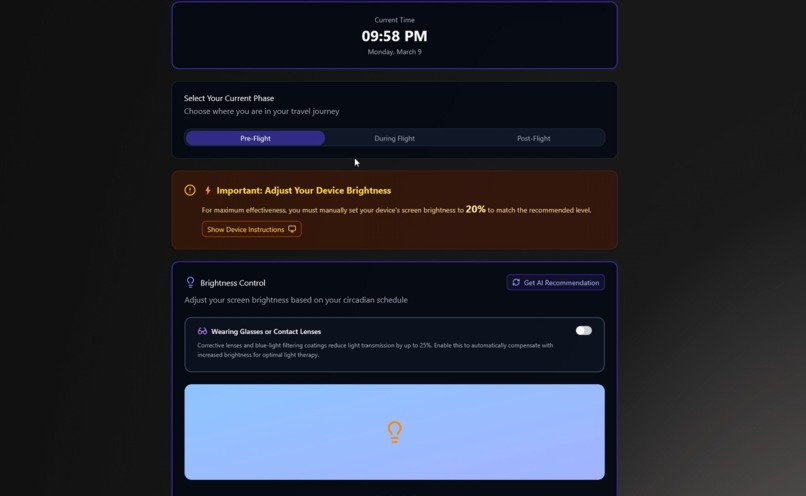
Brightness control


Inspiration
After experiencing Jet Lag so many times during vacations, we wanted to figure out a way to properly prepare for them to be able to experience as much as possible when we travel.
What it does
LightShift generates a sleep schedule based on the timezone of the user and their desired destination to slowly and recommend a device brightness to trick the human eye and their non-visual photoreception, which is often tied to their internal clock.
How we built it
As students with no background in software or website development, we've learned to use the tools provided with Figma by prompting the AI to both build the website and learn how to code in the provided Typescript instead of the HTML/CSS/JS we're used to.
Challenges we ran into
We've never really built a proper website nor used Figma before, so doing a hackathon with no prior experience was the largest challenge we had.
Accomplishments that we're proud of
We're proud to get something that is somewhat functional, even though we had to rely a lot on Artificial Intelligence.
What we learned
We've gotten a good starting perspective of what it is like to be a web development and what goes through the mind of someone who's an expert at this.
What's next for LightShift
LightShift is currently a very simple website that requires minimal user interaction. Perhaps to have a more precise system, which would include sensors to detect bodily functions to accurately determine what to do to prepare for Jet Lag would be a significant improvement to our current website.
Built With
- css
- figma
- javascript
- supabase
- tsx


Log in or sign up for Devpost to join the conversation.