-
-
Poster
-
-
-
Inspiration
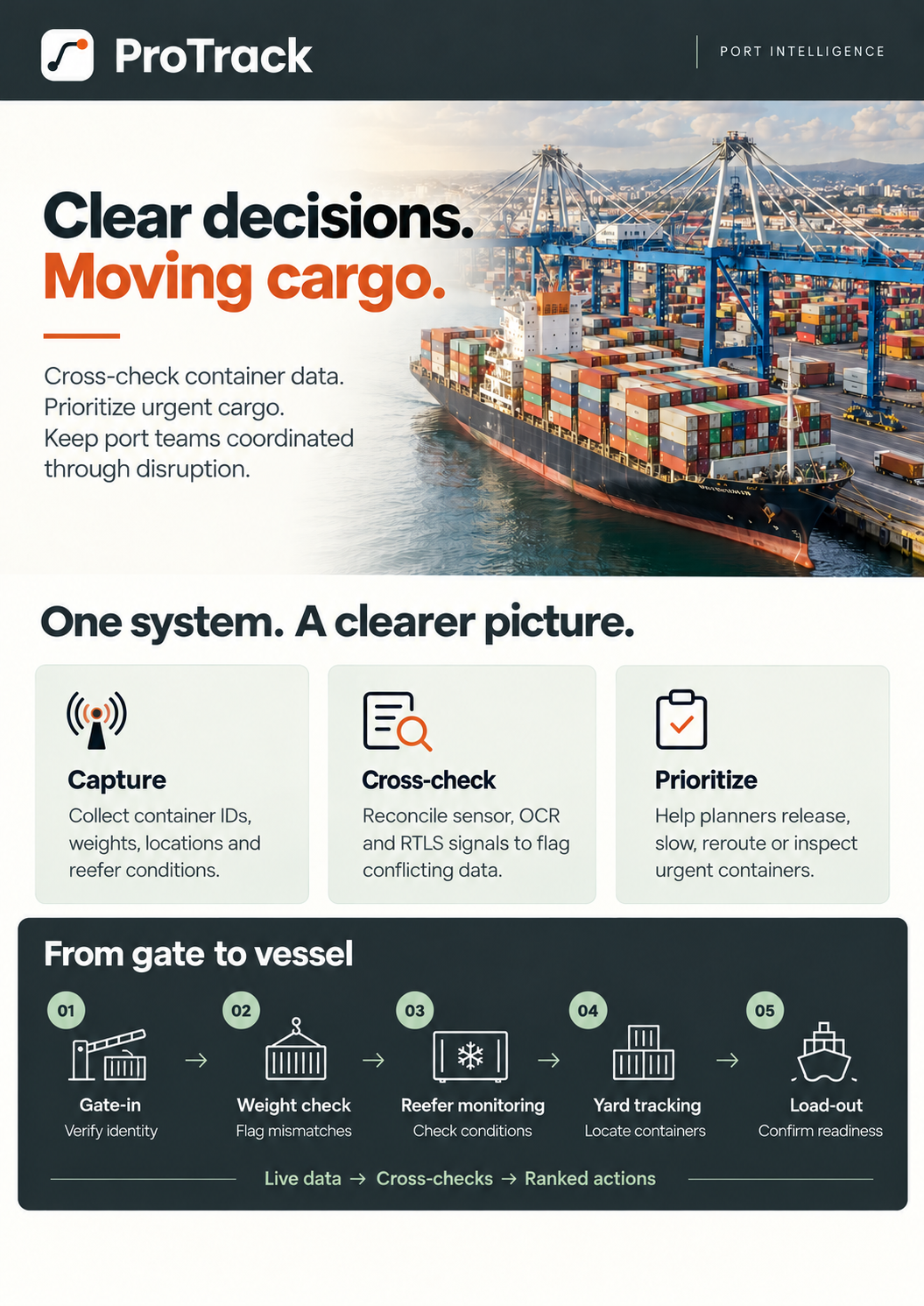
Ports handle millions of containers, and information about each one can conflict. A container might have a weight mismatch, a customs hold, a damaged label, or a reefer that is warming. We wanted to help port teams identify which information to trust and which cargo needs attention first, especially when operations are disrupted.
What it does
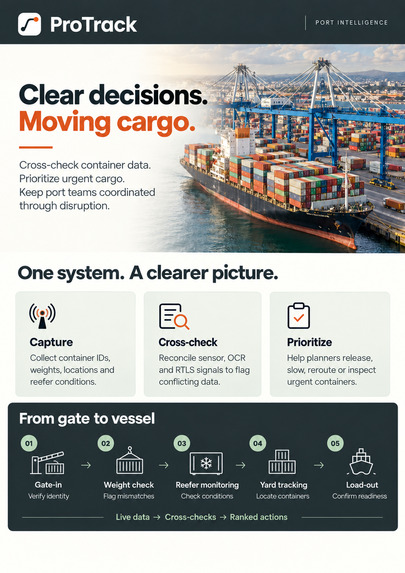
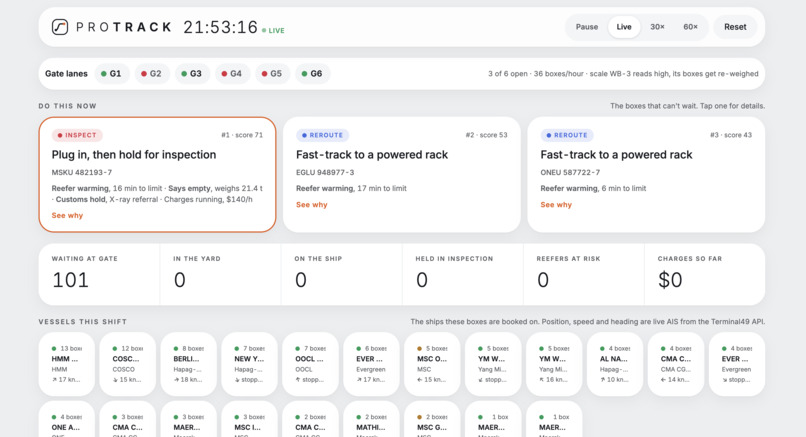
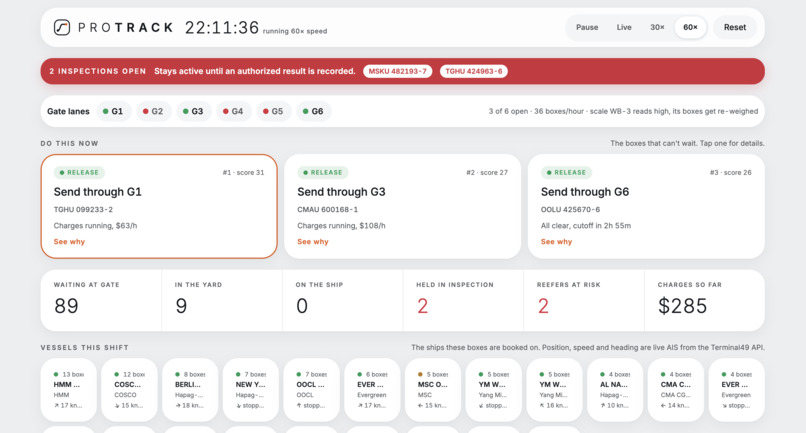
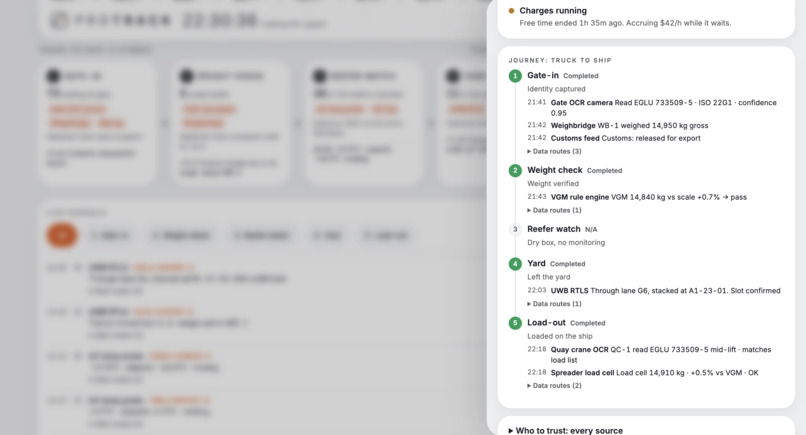
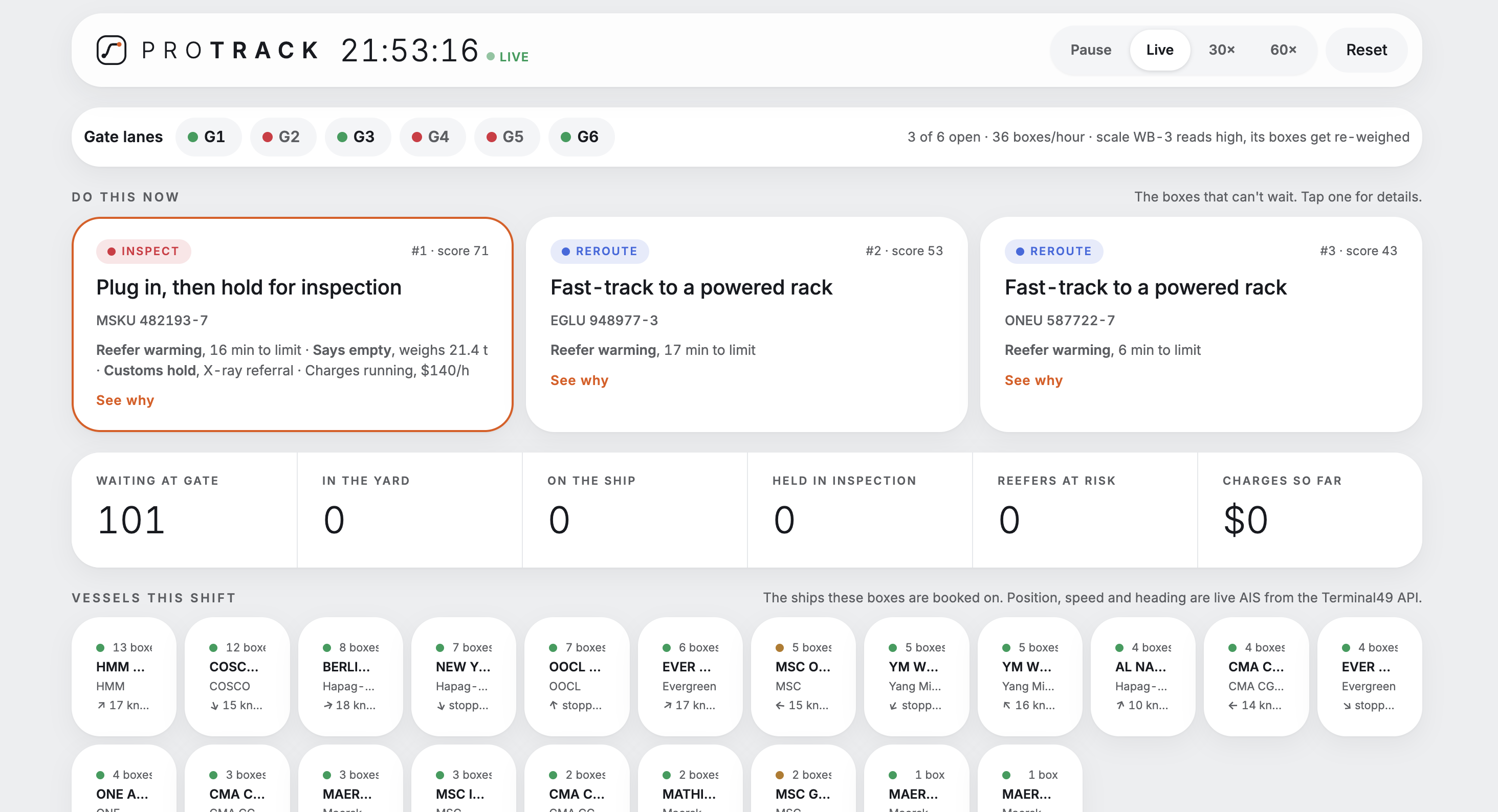
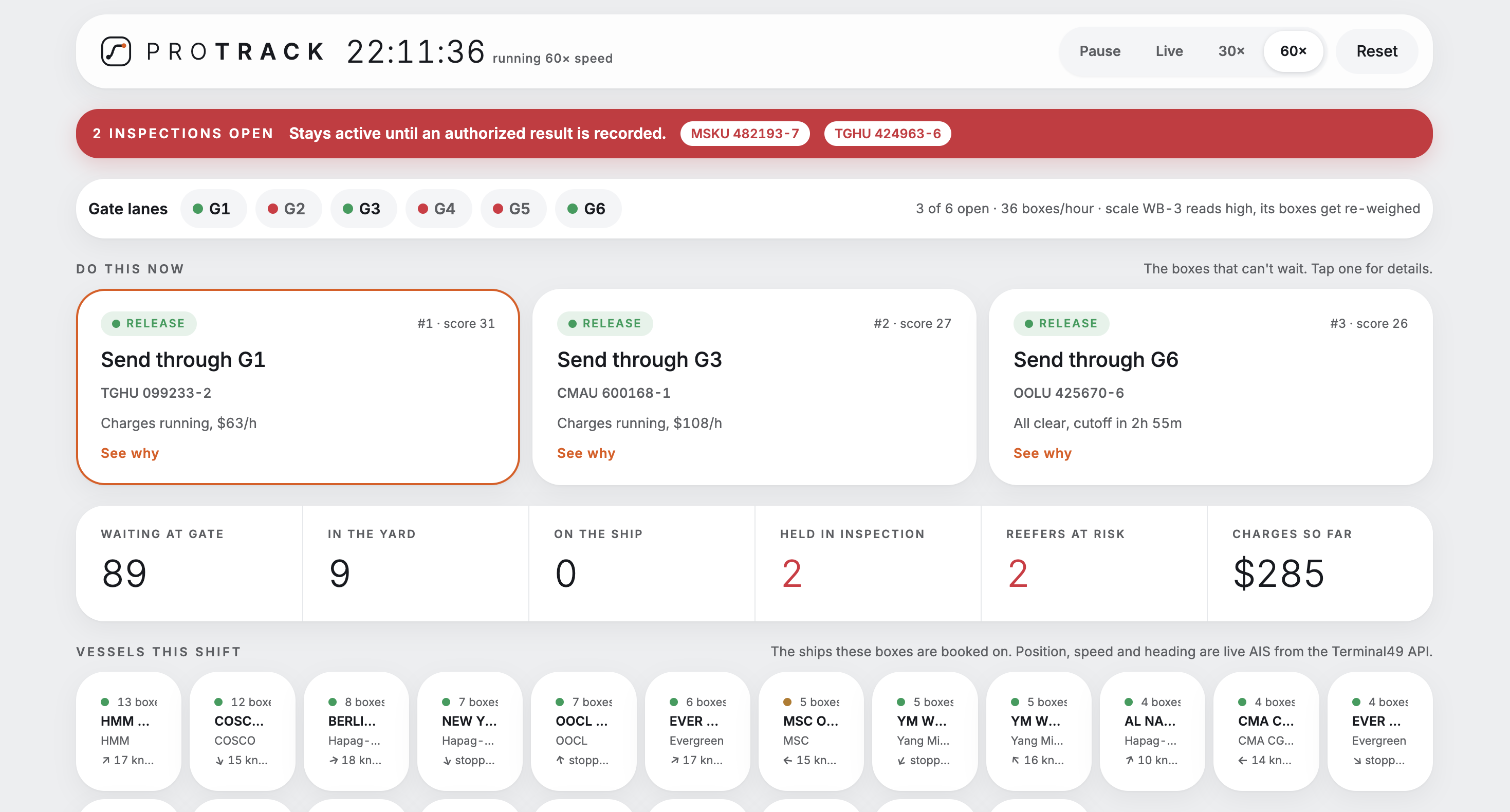
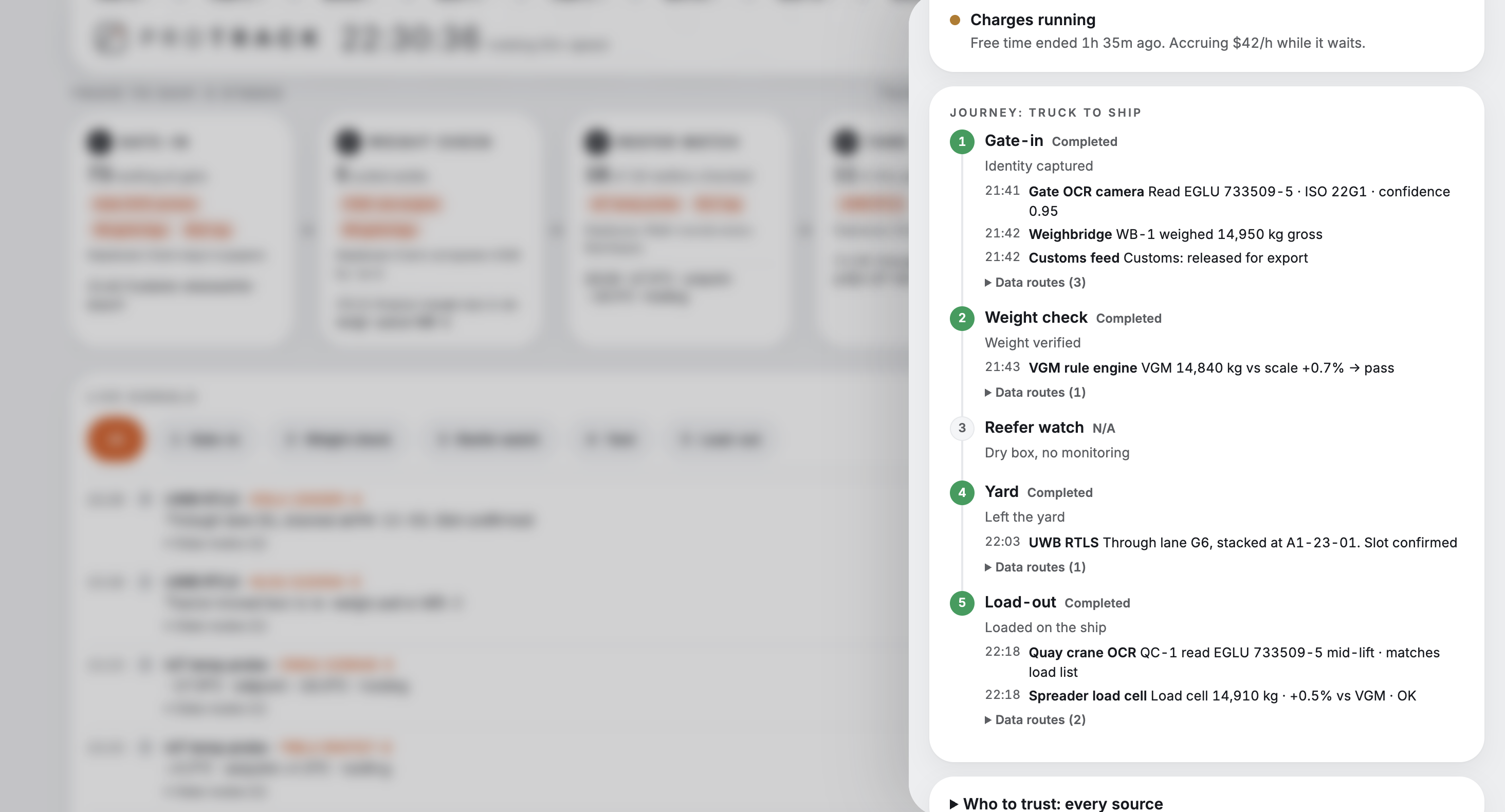
ProTrack is a port decision-support concept that combines container identity, weight, location, customs, and reefer information. It flags conflicting readings, ranks urgent containers, and recommends an action: release, slow, reroute, or inspect. Planners can trace each recommendation back to its source readings and compare a proposed plan with holding all cargo. The priority score combines four factors: P = R_s + U_d + U_c + F_i where R_s is spoilage risk, U_d is demurrage urgency, U_c is cutoff urgency, and F_i is an integrity flag. The total score P ranges from 0 to 100. A customs hold still prevents release, regardless of the score.
How we built it
We mapped the container journey from gate-in to vessel loading and designed a system around OCR cameras, weighbridges, reefer telemetry, BLE and UWB tracking, and crane load cells. We defined trust rules for conflicts such as customs holds, low-confidence OCR, and weight mismatches, then outlined how the Terminal Planner would display lane capacity, priority scores, recommended actions, and a 60-minute simulation. The project is at the concept and design stage; it is not yet a field-tested product.
Challenges we ran into
A central challenge was deciding how to handle conflicting information without relying on one sensor as the source of truth. We also had to balance sensor accuracy and cost, since precise UWB tracking is more expensive than broad BLE coverage. Another challenge was designing a response to disruptions that keeps urgent cargo moving while accounting for uncertain or unverified information.
Accomplishments that we're proud of
We turned a broad port-operations problem into a specific workflow that follows a container from the gate to vessel loading. We defined the sensor roles, trust rules, priority score, planner actions, and traceability approach. We also designed a demo scenario showing how a lane closure could change capacity and affect the plan.
What we learned
We learned that reliable decisions depend on combining independent readings and showing planners why the system recommends an action. We also learned that the system needs to account for both cargo urgency and data reliability, while keeping human review available for uncertain cases.
What's next for ProTrack
Next, we plan to build a prototype, find a pilot site in Los Angeles or Long Beach, and test the sensor workflow with terminal data. A pilot can help us evaluate the mismatch rules, priority scoring, and 60-minute simulation, then refine the product based on feedback from port teams.
Built With
- ais
- css3
- html5
- javascript
- json-api
- node.js
- rest-api
- terminal49
- vercel


Log in or sign up for Devpost to join the conversation.