Inspiration:
We wanted to capture the moment when a difficult game makes you tense—and that tension makes the next jump feel even harder.
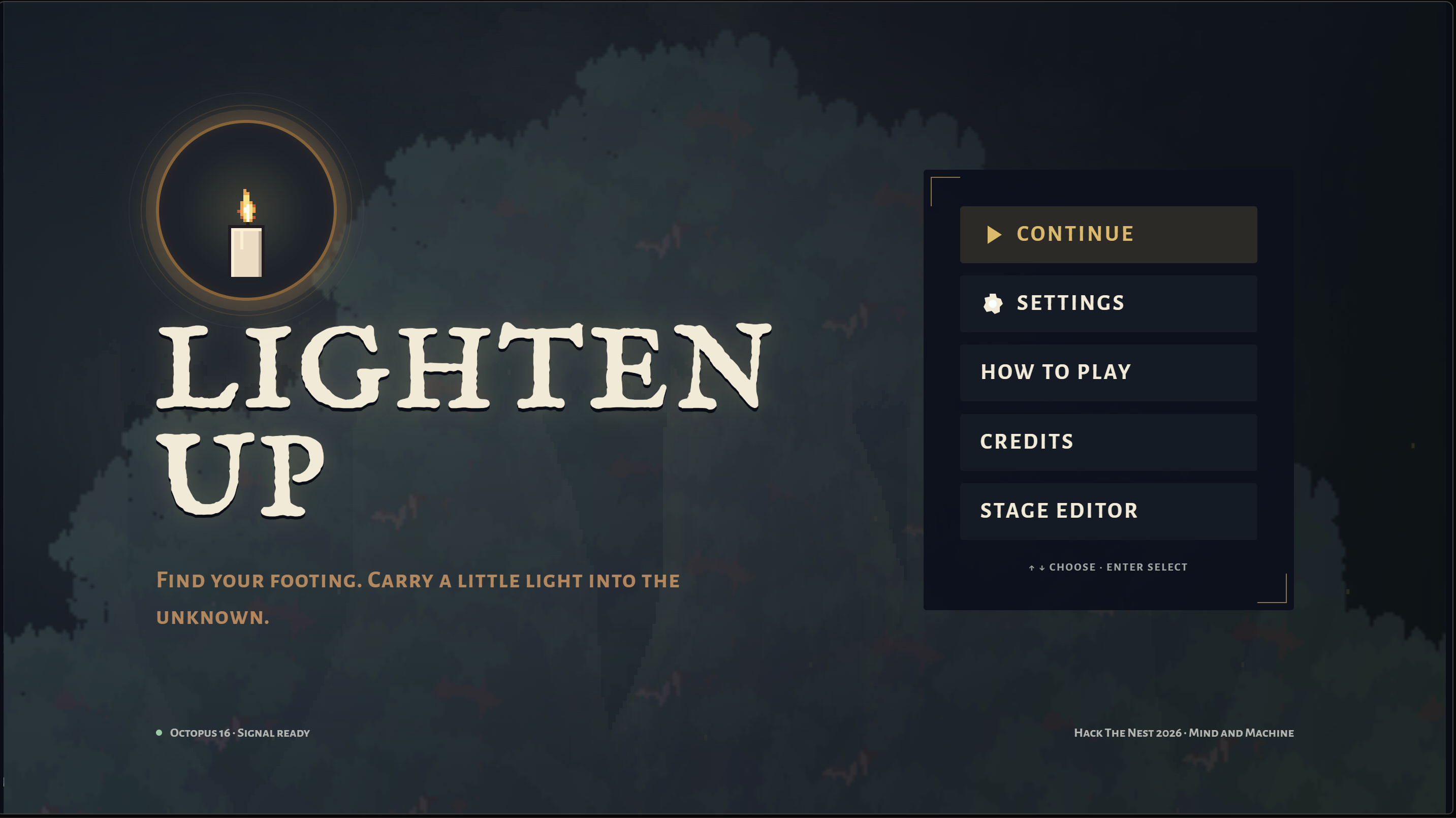
That became Lighten Up: a climbing game where you are a small candle carrying your light through a forest that changes with your composure.
For the Mind and Machine track, we used the PiEEG Octopus 16 to connect real biosignal input to the game’s atmosphere. We kept one principle throughout development: the signal changes the world around you, while your controls remain consistent.
What it does:
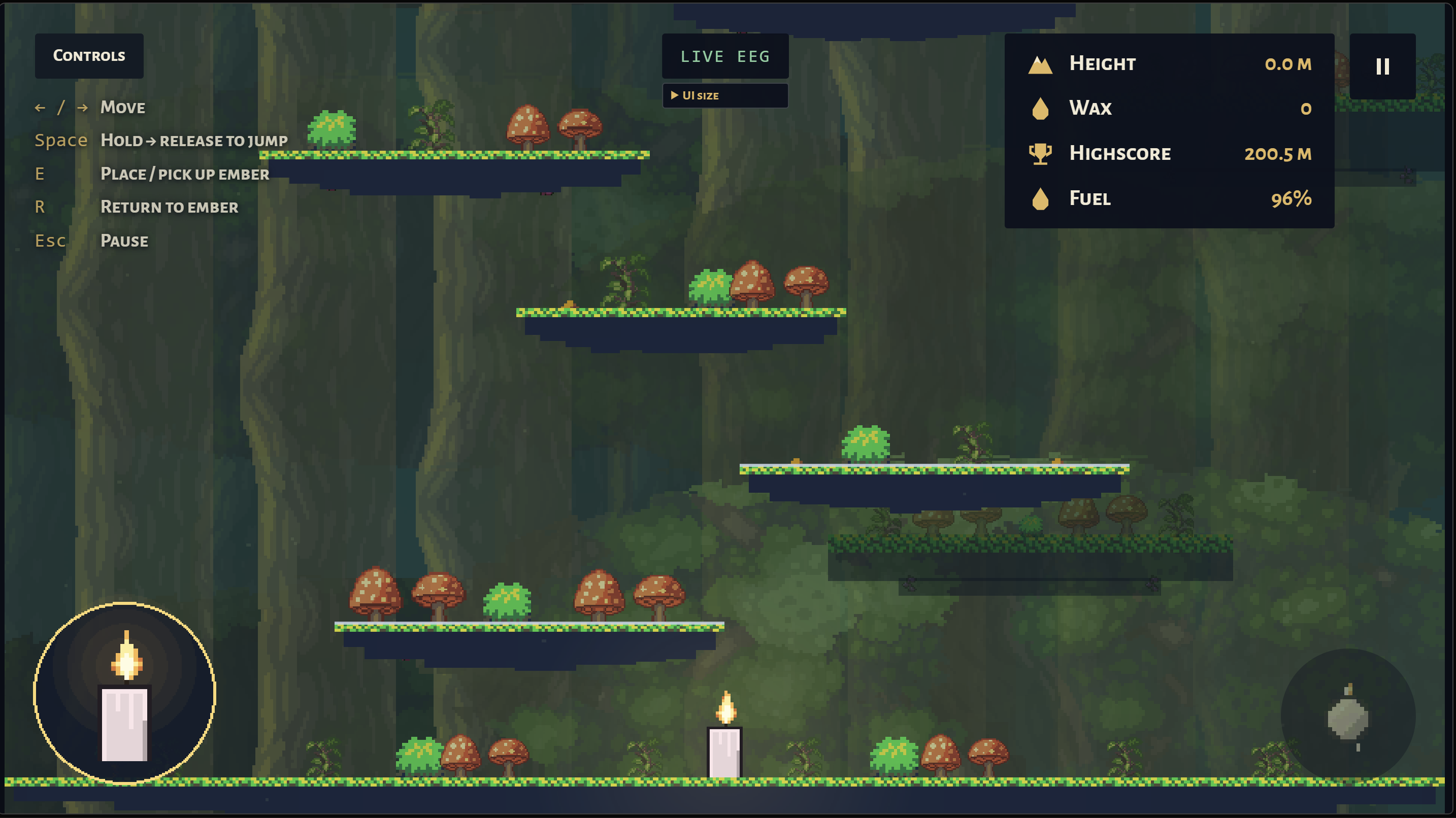
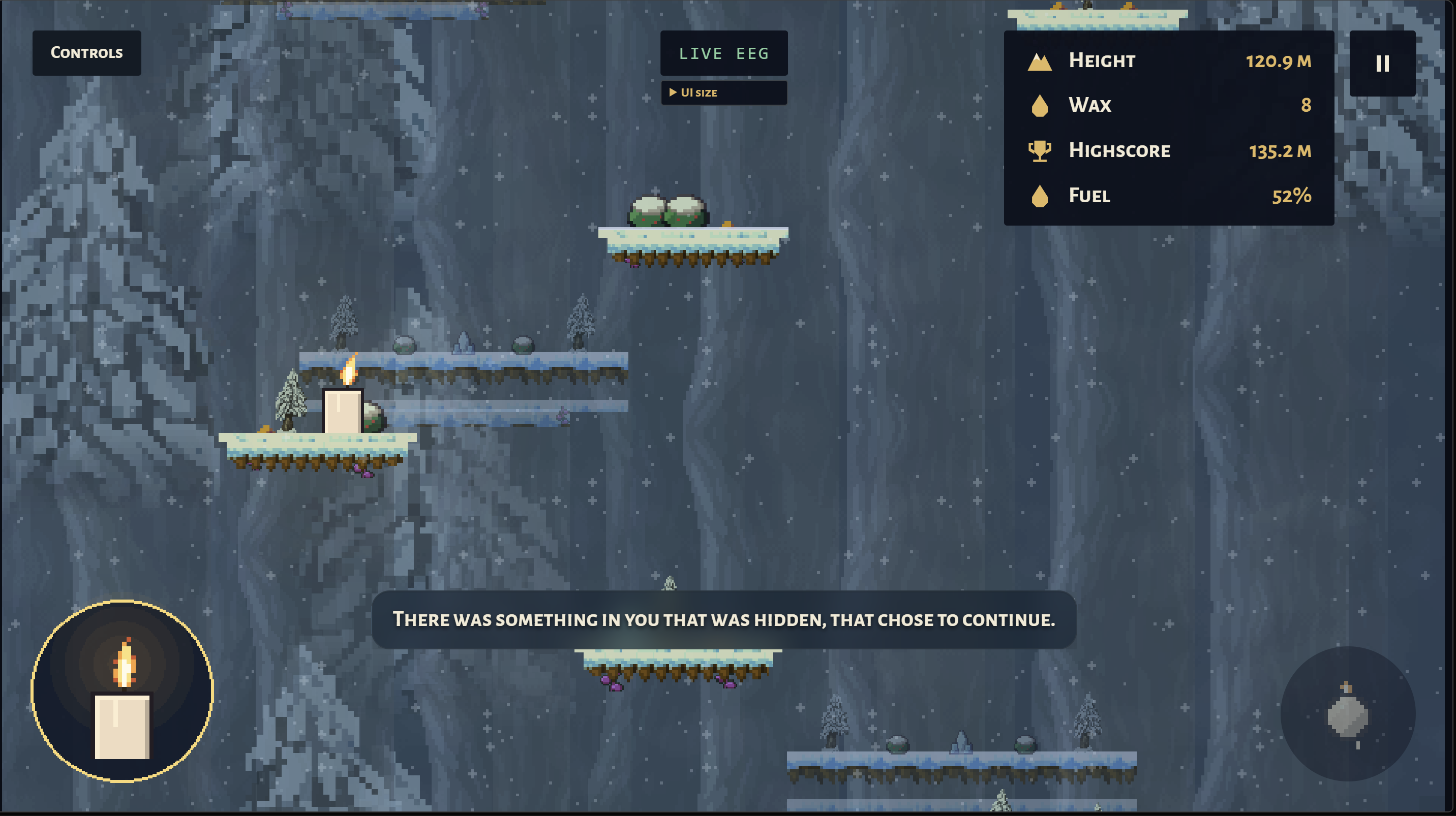
Lighten Up is a pixel-art platformer built around charged jumps, careful landings, and the challenge of recovering from a fall.
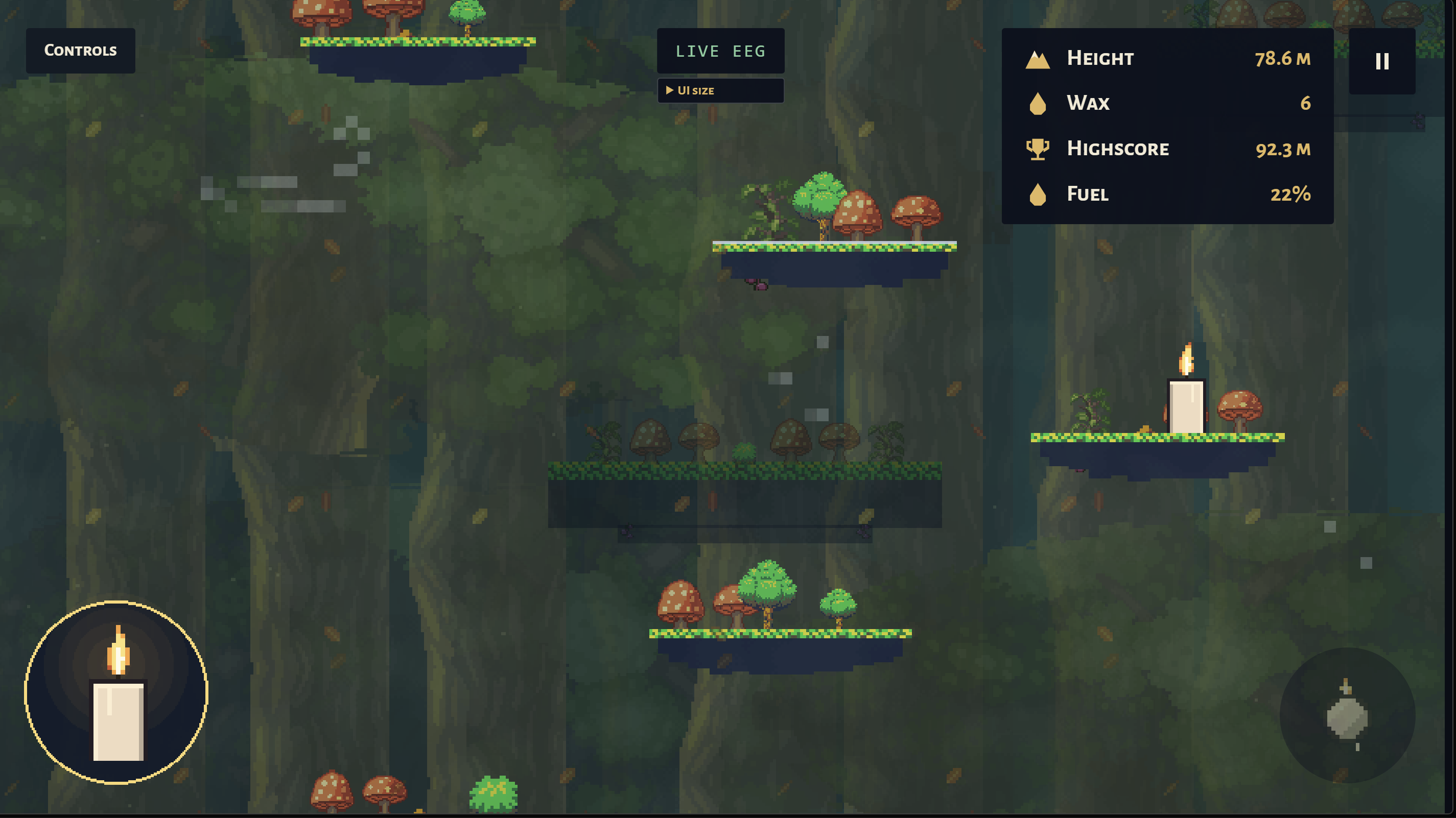
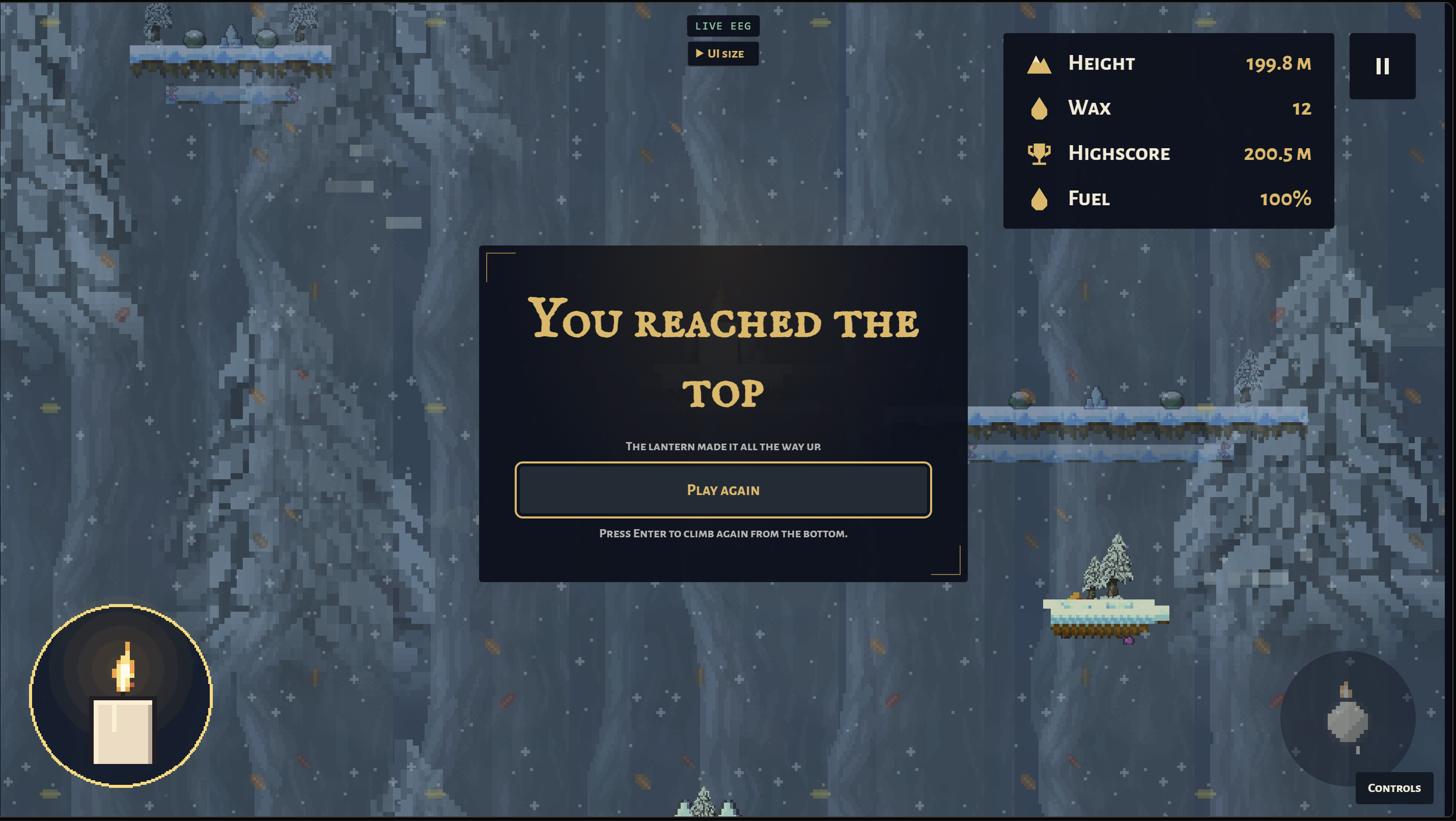
You climb through a tutorial, a forest stage, wind, snow and ice, and a final stage combining wind and snow. Platforms become narrower and farther apart, while moving ledges add timing challenges. There is no death screen—a missed jump costs height.
The PiEEG Octopus 16 streams data over Bluetooth. After a short active calibration, the game uses a personalised composure input to shape the environment. Muscle activity contributes to this signal; it is not a direct measurement of thoughts or emotions.
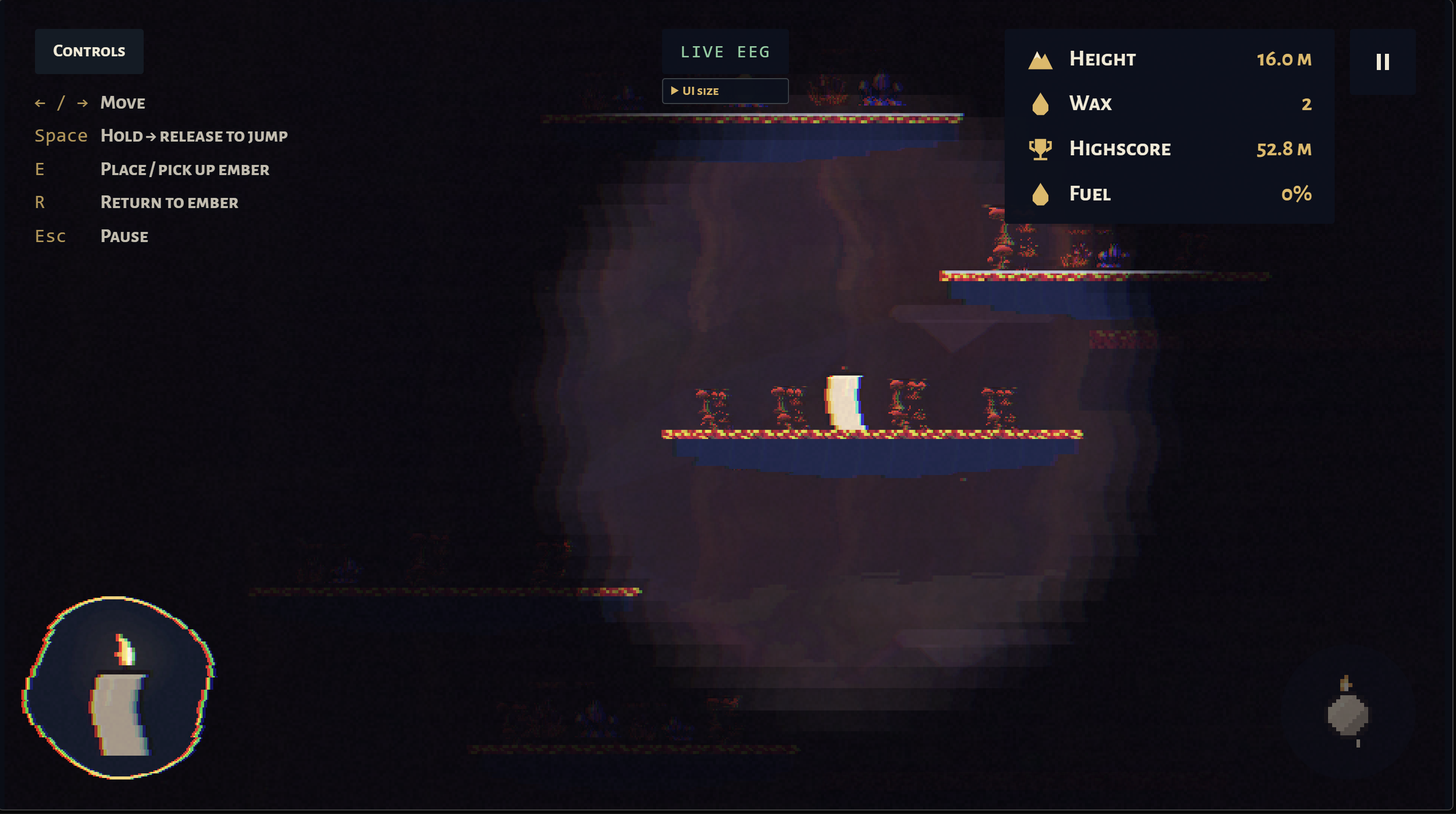
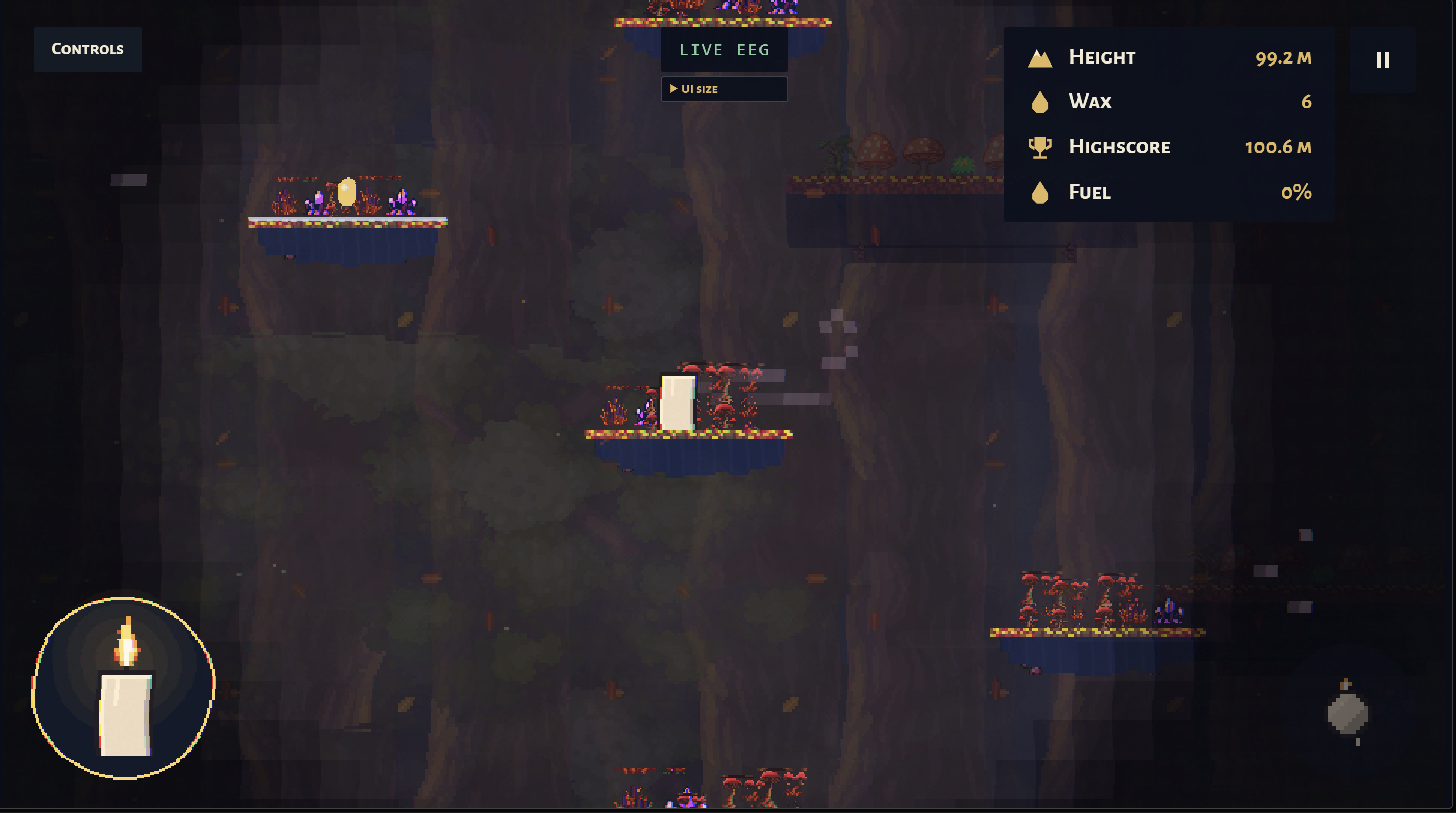
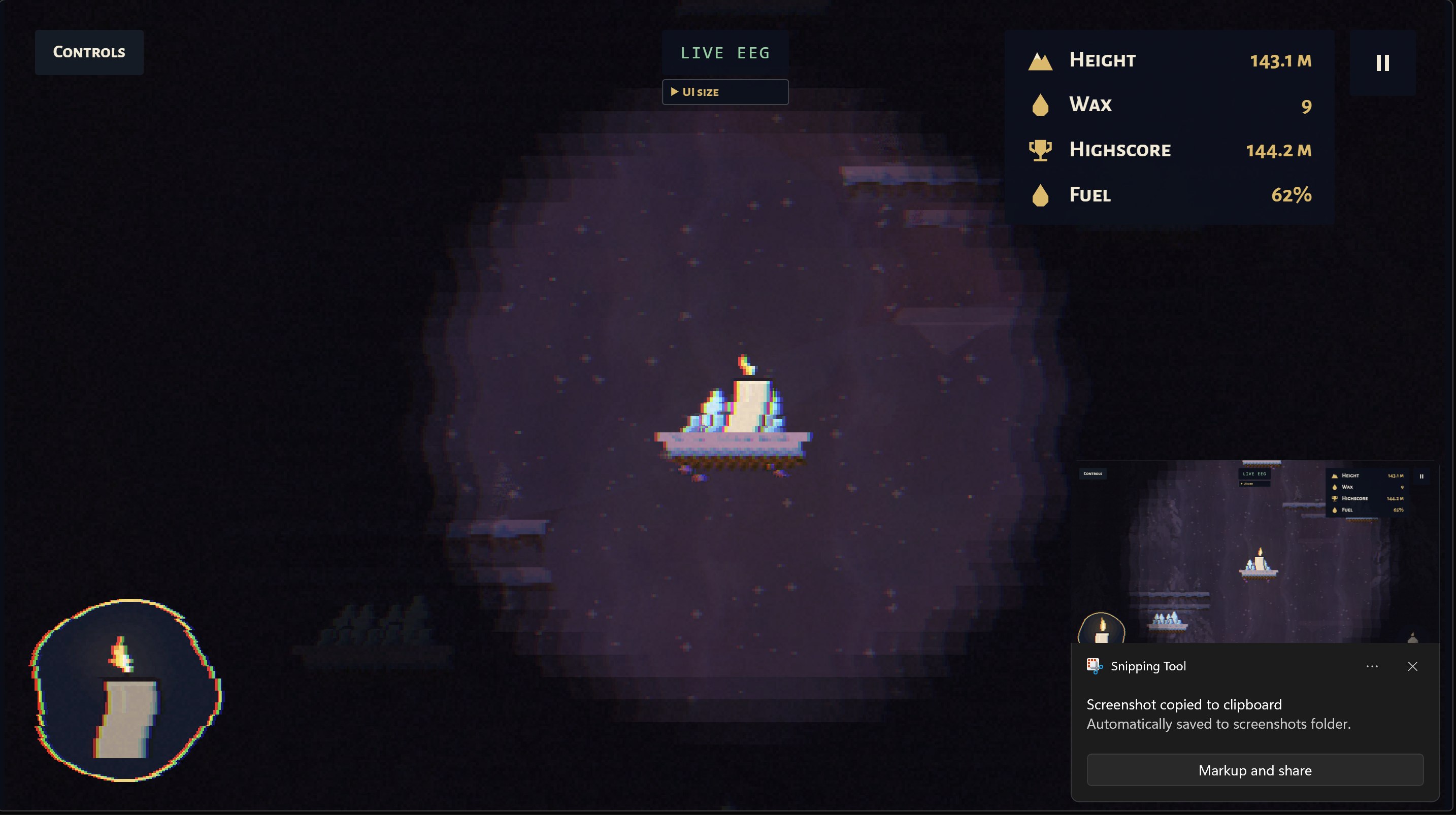
In the normal world, you can see the map clearly through soft candlelight. As activity rises, corruption brings crimson grass, decaying foliage, fog, glitches, and screen shake. Fuel burns faster, and lower fuel narrows your field of view specifically in the corrupted world.
Wax replenishes fuel in the normal world. If fuel runs out, your flame becomes a tiny ember. You can place a recovery ember on a safe ledge, and finishing requires returning to the normal world with a lit candle.
Music reinforces the transformation: peaceful forest ambience gives way to a gothic transition and then heavy metal at full corruption. Seasonal landing sounds, wind, birds, icy creaks, wax cues, and low-fuel sputters bring the world to life.
Simulator and replay modes also make the game playable without the board.
How we built it:
We built Lighten Up with TypeScript, Phaser, Vite, and the PiEEG JavaScript SDK.
Our architecture separates movement, signal processing, rendering, UI, and audio. The signal pipeline checks freshness and contact quality, applies personal calibration, and smooths the response before publishing it to the game.
The forest combines layered parallax, seasonal scenery, seeded foliage arrangements, animated weather, and custom corruption effects. A procedural candle character, animated portrait, and small soil or snow puffs add personality.
The audio system uses locally bundled tracks and effects, adaptive crossfades, captioned narration, and separate volume controls. An integrated stage editor supports level design.
We collaborated through GitHub branches, pull requests, automated tests, and repeated playtesting.
Challenges we ran into:
Our biggest challenge was balancing atmosphere with readability. Early darkness effects either hid too much or barely changed the experience. Some platform outlines and collectibles even rendered above the darkness, revealing things that should have been obscured.
Working with real hardware introduced different challenges: Bluetooth discovery, battery power, electrode contact through hair, and calibration that varied between sessions.
The eyes-open and eyes-closed calibration did not always produce enough separation. We changed the design so successful active calibration can drive corruption independently, while eye-closure recovery remains unavailable until its own calibration passes.
Integrating several teammates’ changes also required careful conflict resolution, especially around lighting, fuel, narration, and UI.
Accomplishments that we're proud of:
We connected a physical Octopus 16, observed live data, and tested calibrated active input in the game.
We’re proud of making the normal and corrupted worlds feel distinct through visuals, visibility, fuel, and music without changing the player’s movement physics.
The smaller details matter to us too: hanging vines, varied plant clusters, seasonal scenery, moving platforms, landing particles, and a candle portrait that mirrors the character’s movement.
Our final sensitivity update passed 557 automated tests and a production build.
What we learned:
We learned that receiving data is different from receiving useful data. Contact quality, freshness, calibration, and the interaction signal need separate checks.
We also learned that a failed optional input should not block a working one. Separating active calibration from resting recovery made the experience more practical without pretending an uncalibrated feature worked.
Most importantly, atmosphere needs restraint. Darkness, glitches, music, and motion are effective when players can still understand what is happening.
What's next for Lighten Up:
We want to test with more players and tune sensitivity using real sessions, particularly the response to subtle activity during ordinary play.
We also want to improve electrode-fitting guidance, make calibration feedback clearer, and validate optional eye-closure recovery more thoroughly.
Beyond that, we would expand the climb with more authored stages, refine musical transitions and sound balance through listening tests, and continue improving accessibility and the stage editor.


