Inspiration
We wanted to create an intuitive, touch-free light based game. When looking for ideas for the hackathon, we found that we already owned a couple of ultrasonic sensors, and the idea developed further as we discussed what we could do with them. As the conversation continued, we looked into different kinds of sensors and games, and eventually decided on LightBall.
What it does
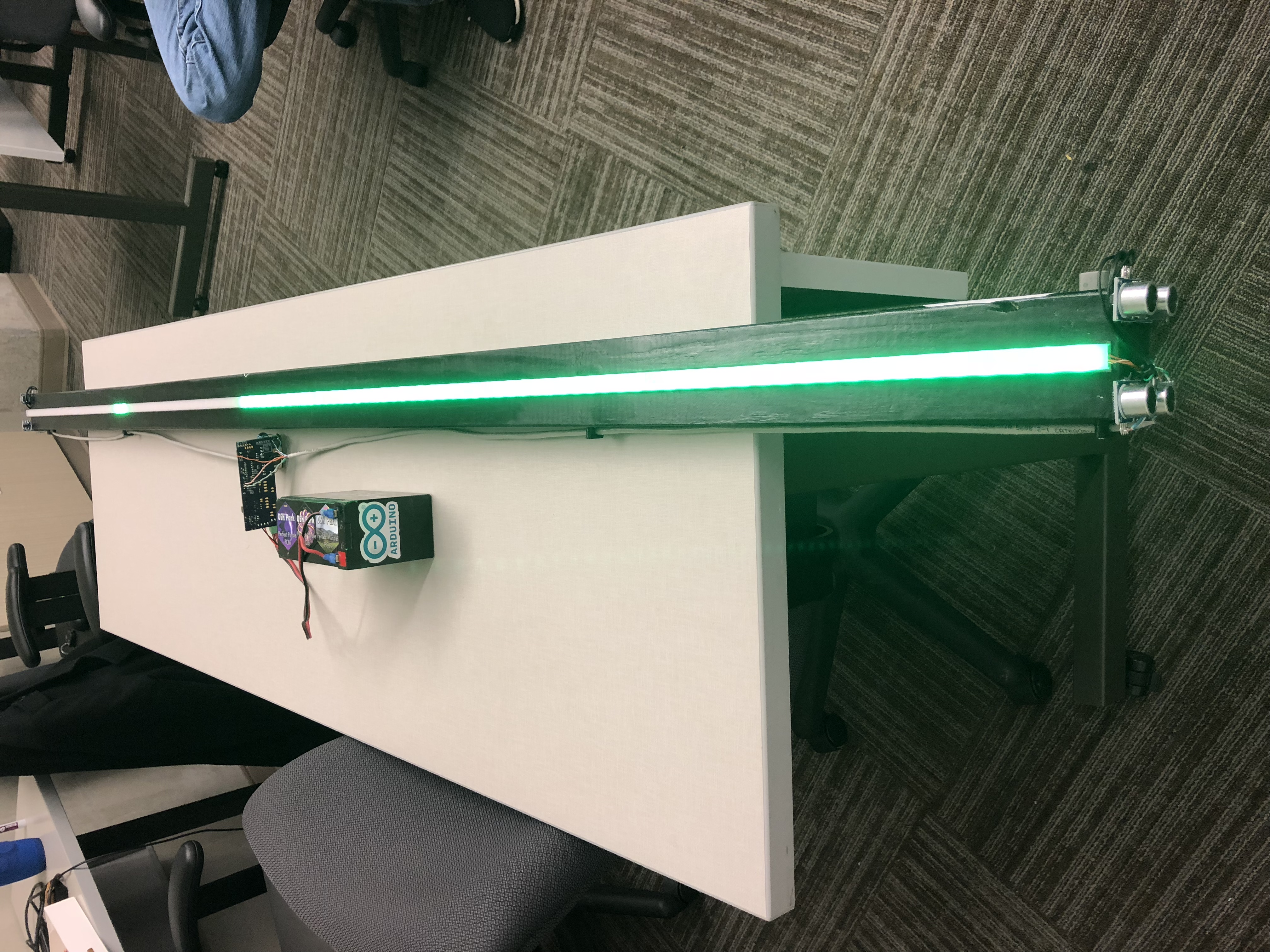
This simulates a game of pong, where instead of using controllers, you can swing your hand to hit the ball.
How we built it
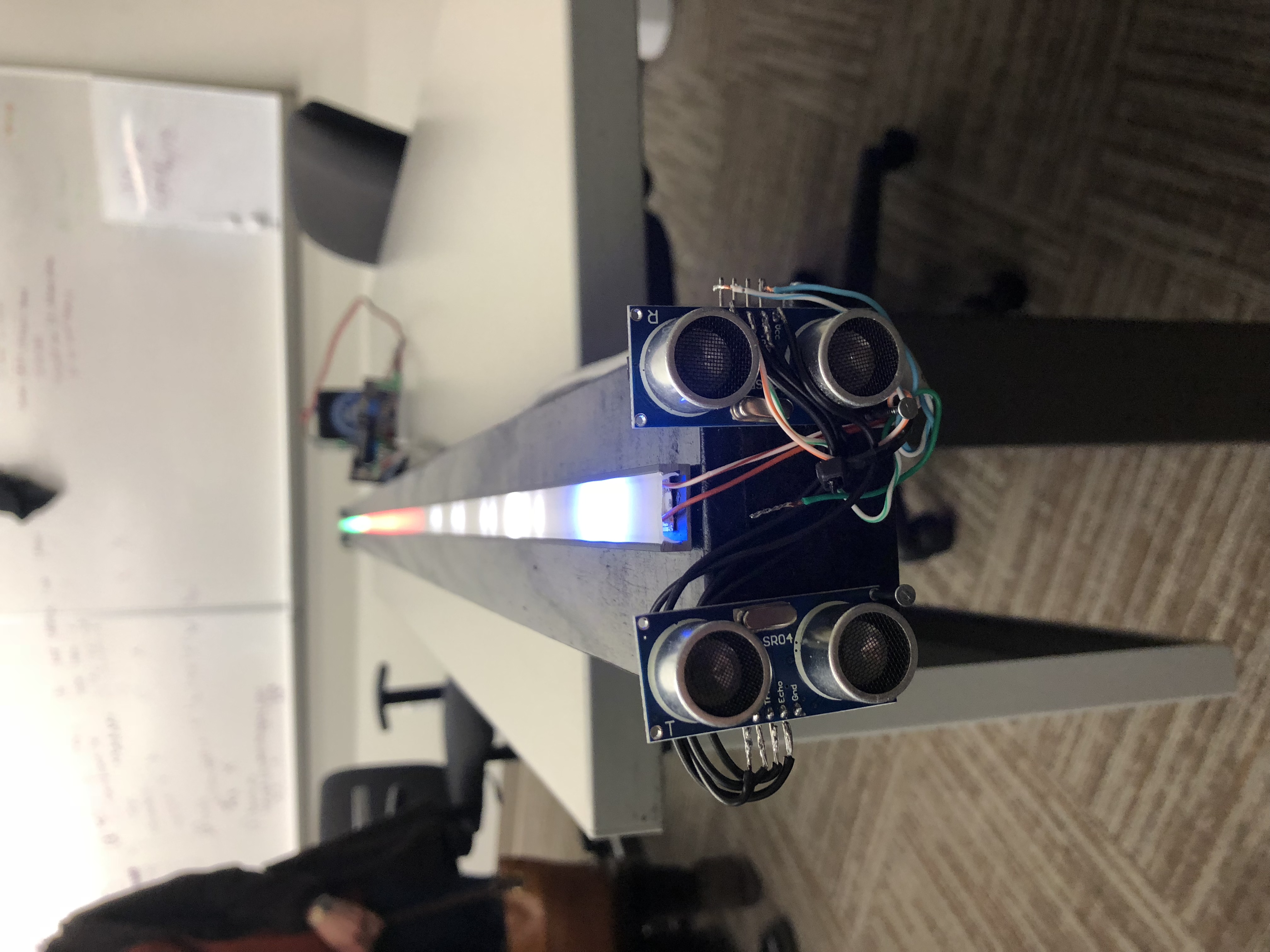
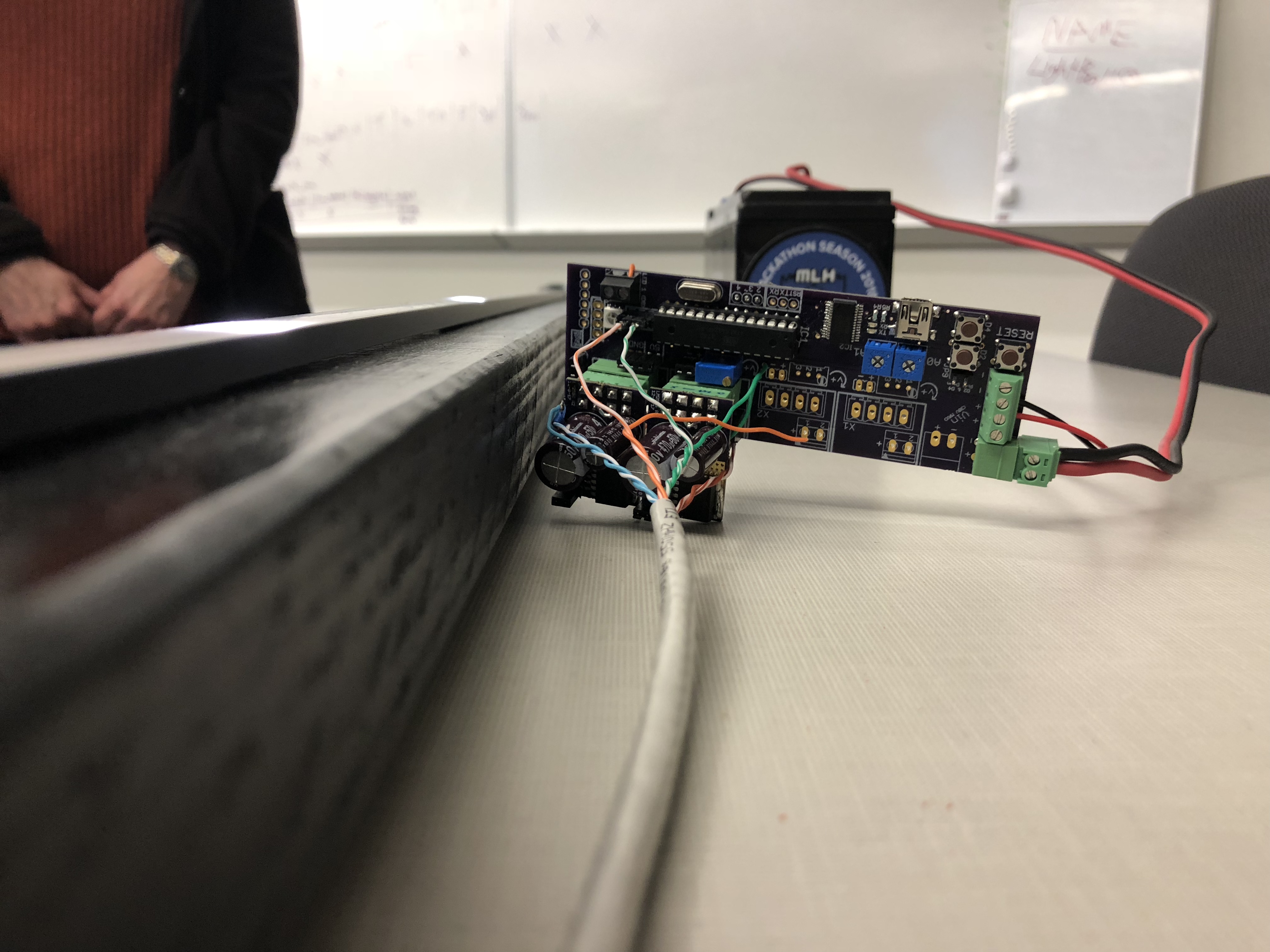
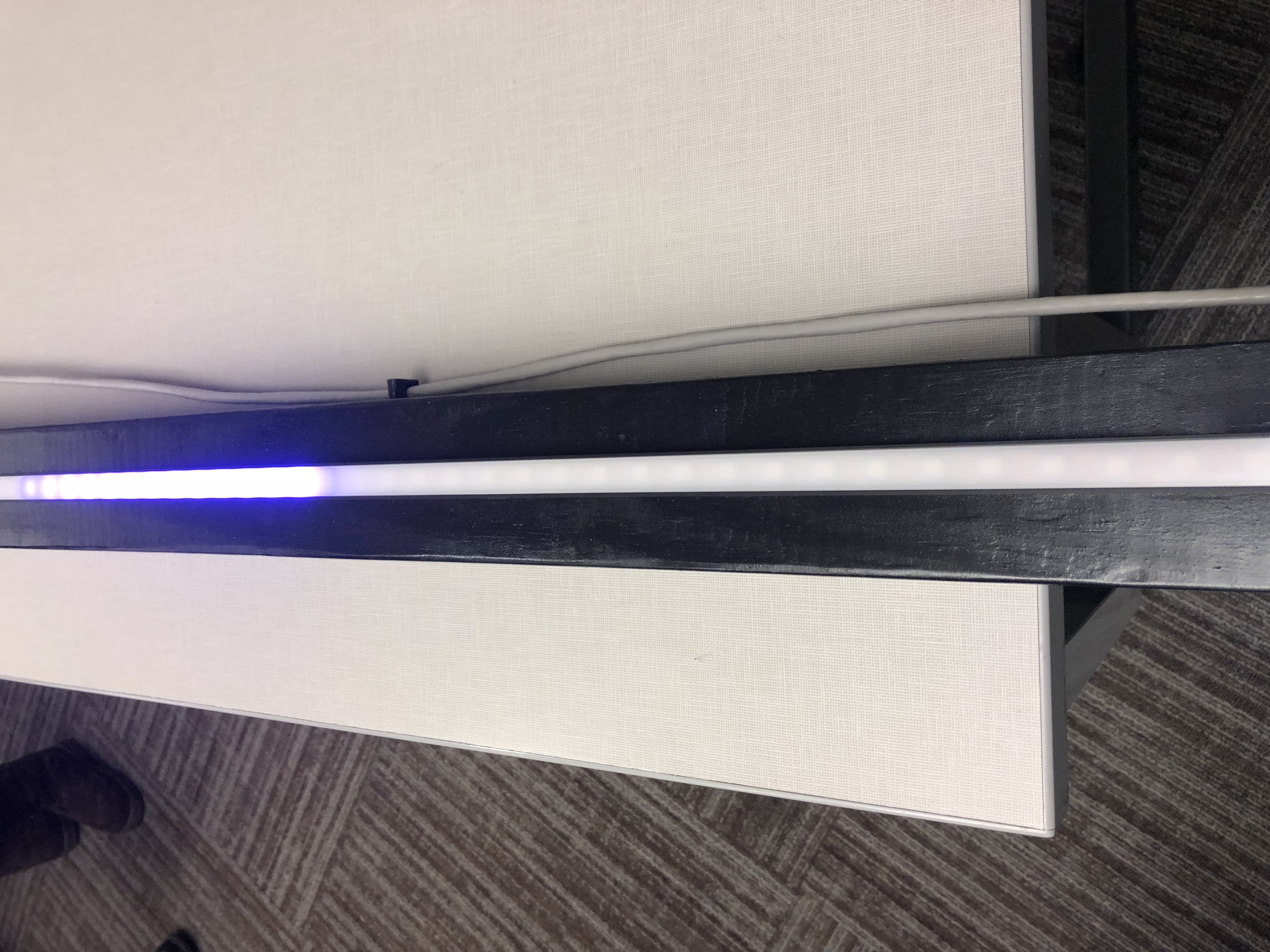
We used a homemade Arduino, combined with ultrasonic sensors and a RGBW LED strip in order to create a one-dimensional game screen.
Challenges we ran into
The sensors that we would have preferred to use burned out early in our development stages, so we were forced to use ultrasonic sensors, which had more noise in the data. However, we were able to create a method to filter through the noise well enough to generate reliable velocity data to use for gameplay.
Accomplishments that we're proud of
We were able to successfully implement several varieties of animations for different stages of the game. This made the device look better and more professional, and made the game more fun to play as a whole.
What we learned
We learned that there are many hidden challenges that present themselves when implementing functionality that is conceptually simple. We learned to quickly adapt to changing circumstances, and how to be able to change our plans if necessary in order to adjust to those complications.
What's next for LightBall
We would like to replace the ultrasonic sensors with the infrared sensors that we originally intended to use. Additionally, the data could always be better refined to make motions feel more responsive. Finally, more game functionality would make the device more fun to play and work with.

Log in or sign up for Devpost to join the conversation.