-
-
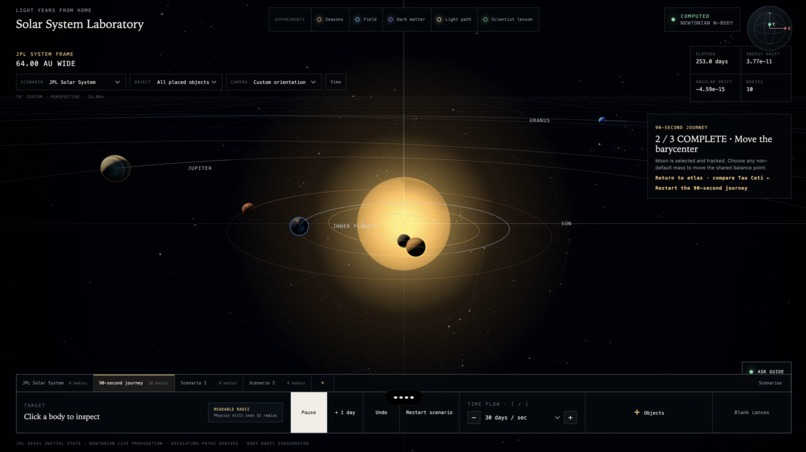
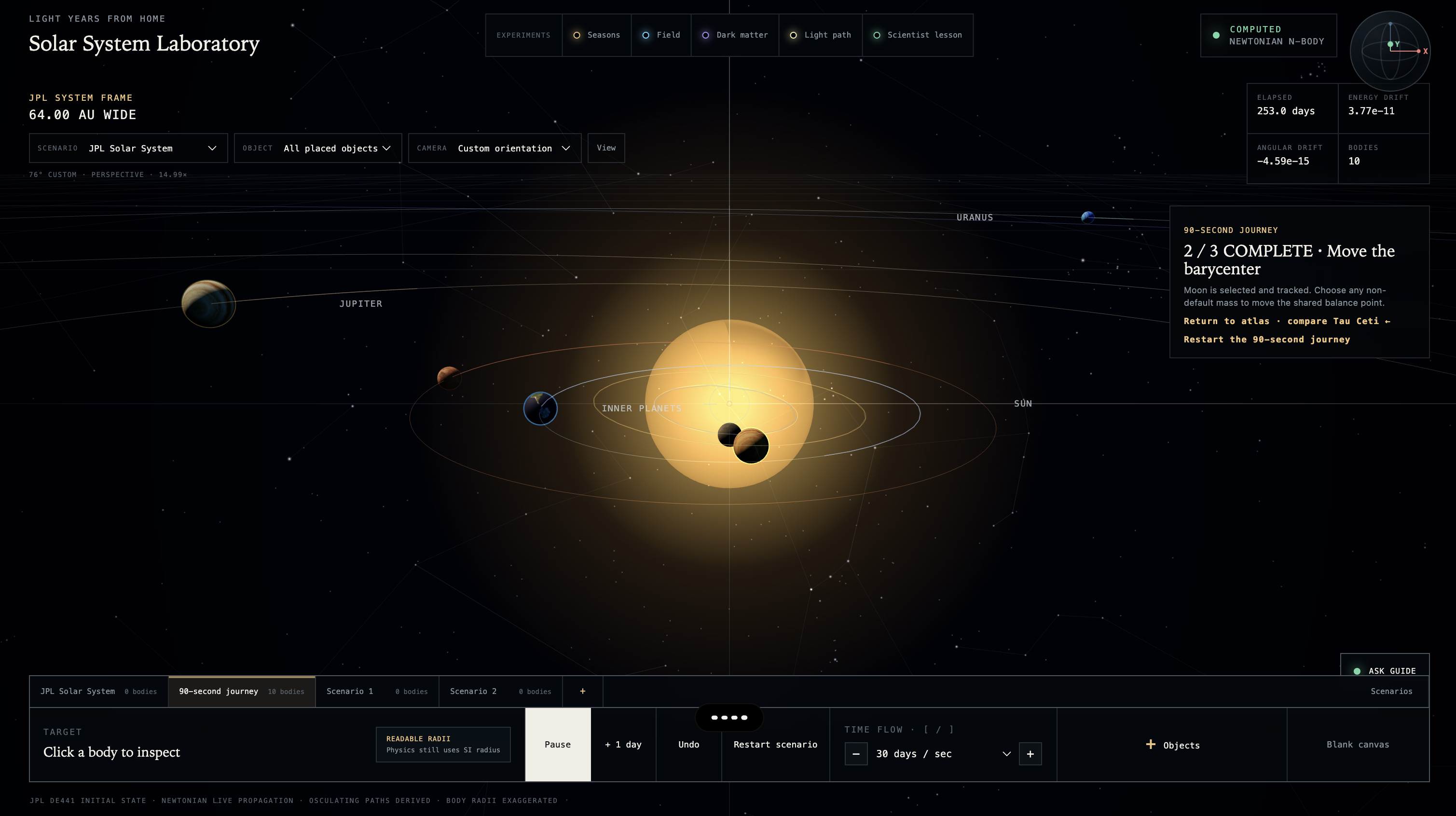
Solar System
-
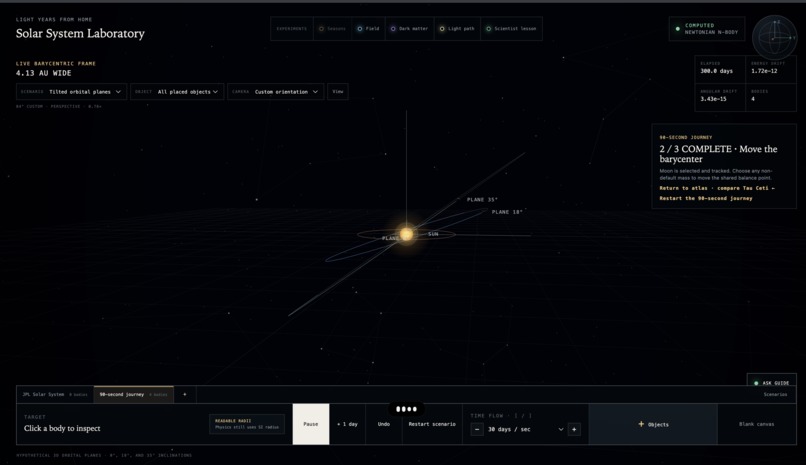
Tilted Orbital Planes
-
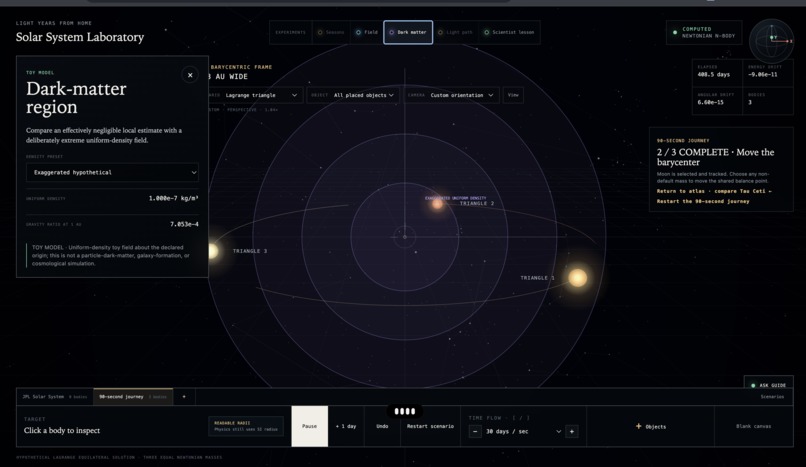
Lagrange Triangle System (In Dark Matter Region)
-
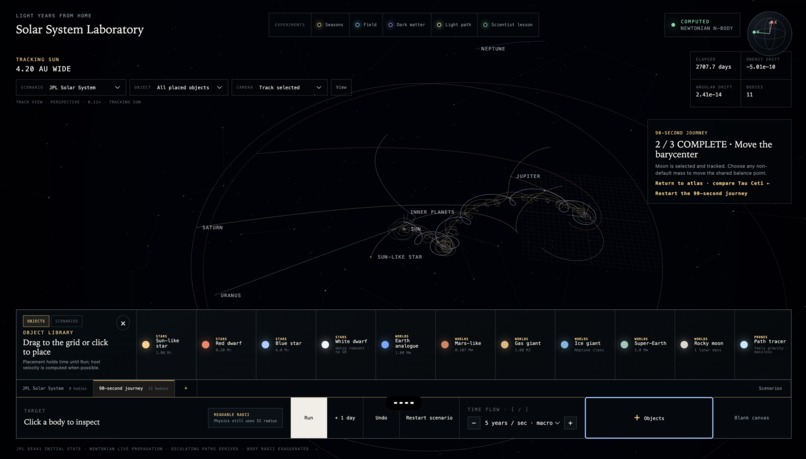
Introducing another Sun-like Star in the Solar System (with content drawer to drag and drop celestial objects)
-
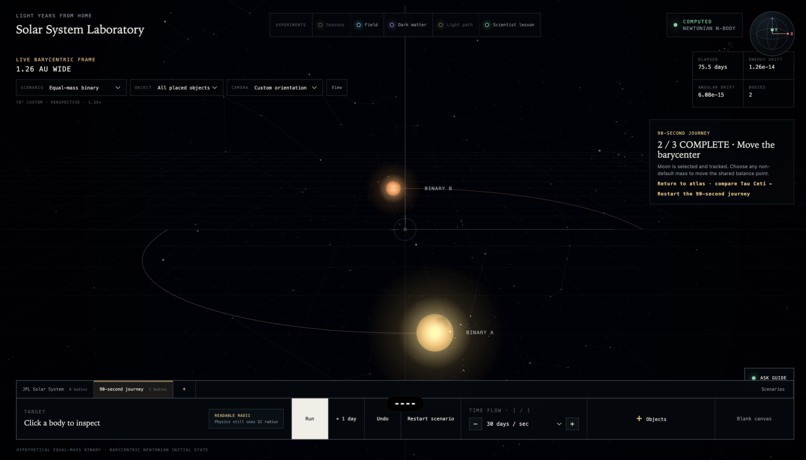
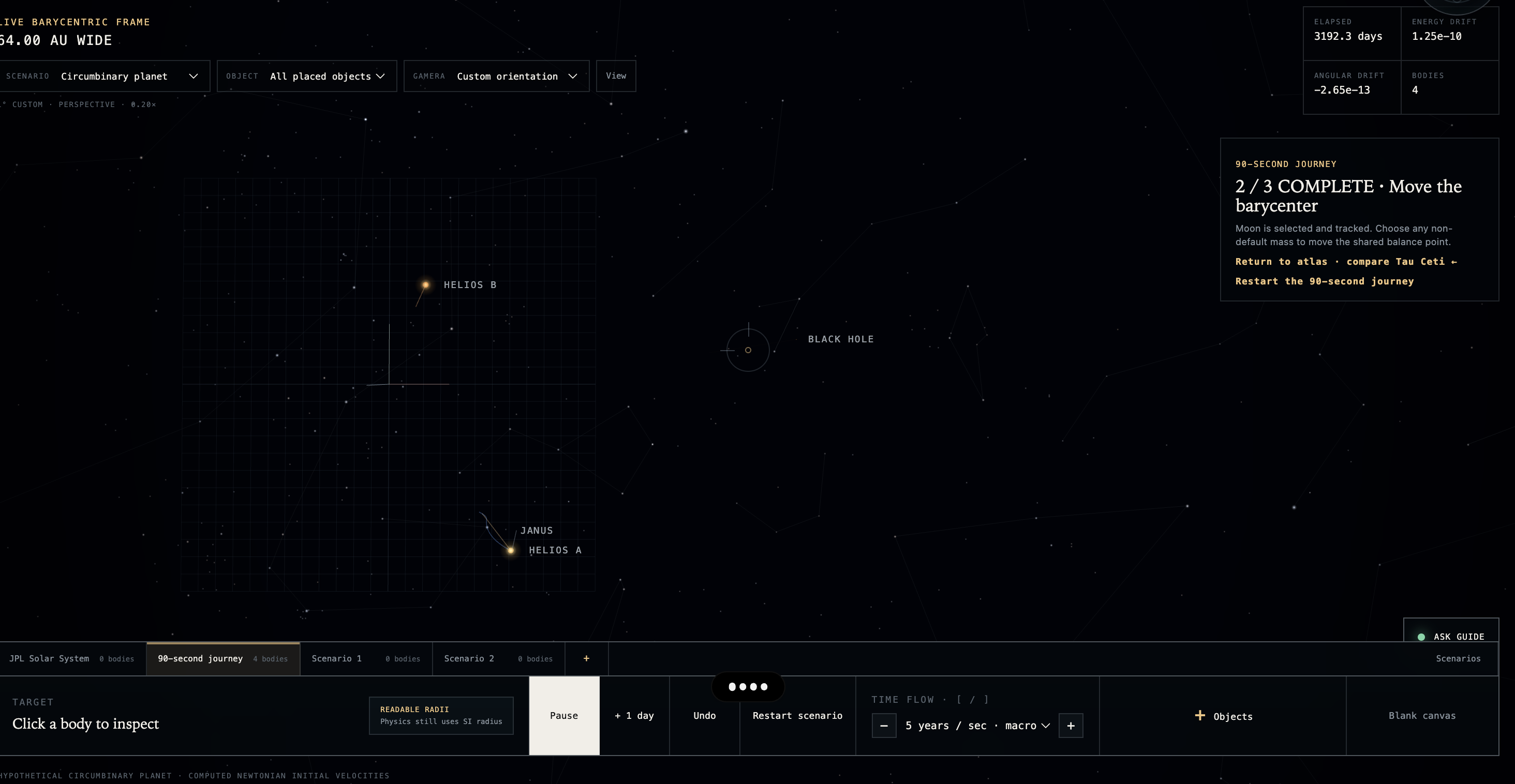
Binary Star System Experiment
-
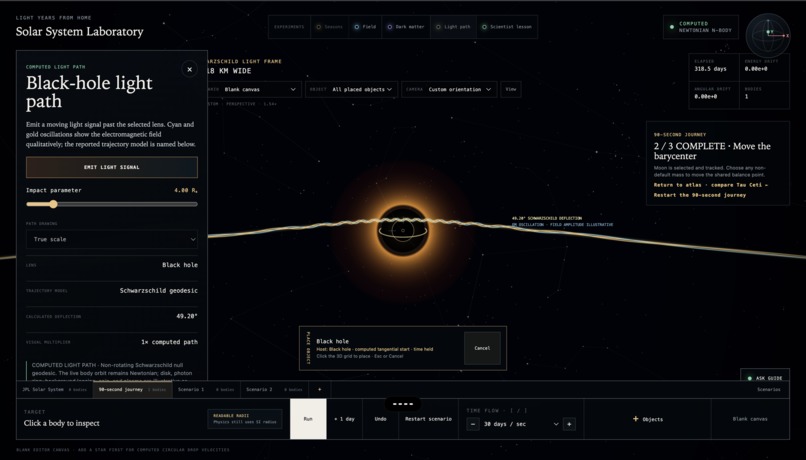
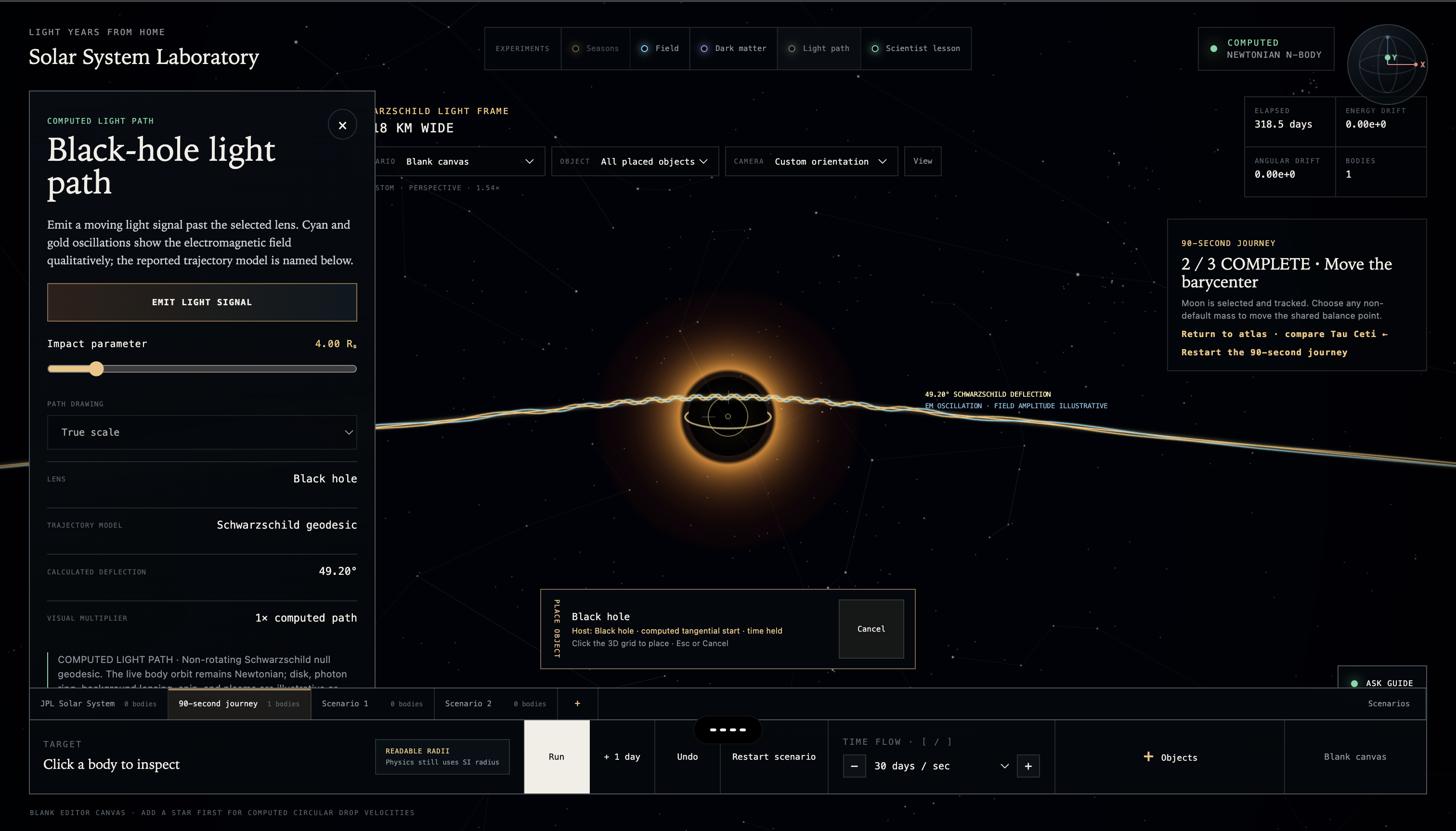
Black Hole Bending Path of light (Similar to an Einstein Ring)
-
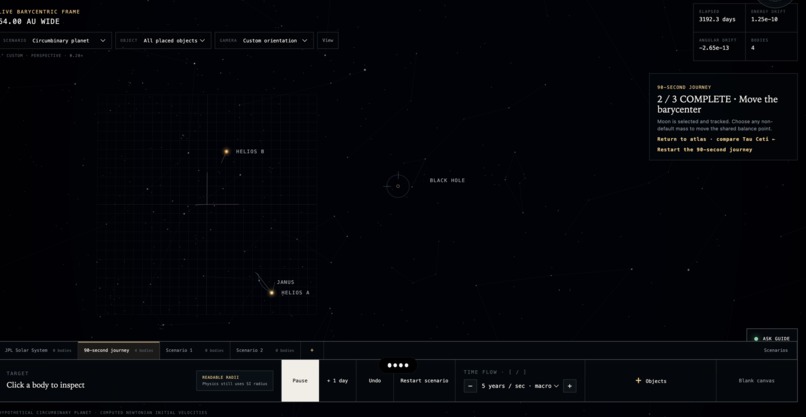
Top Planar View of a Black Hole
-
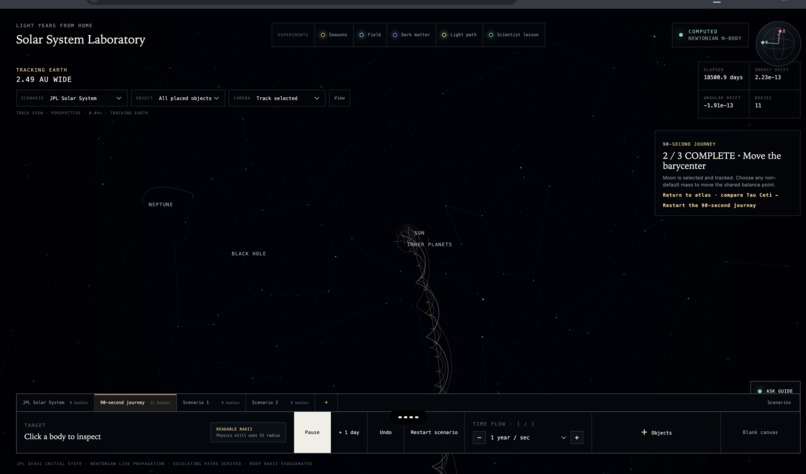
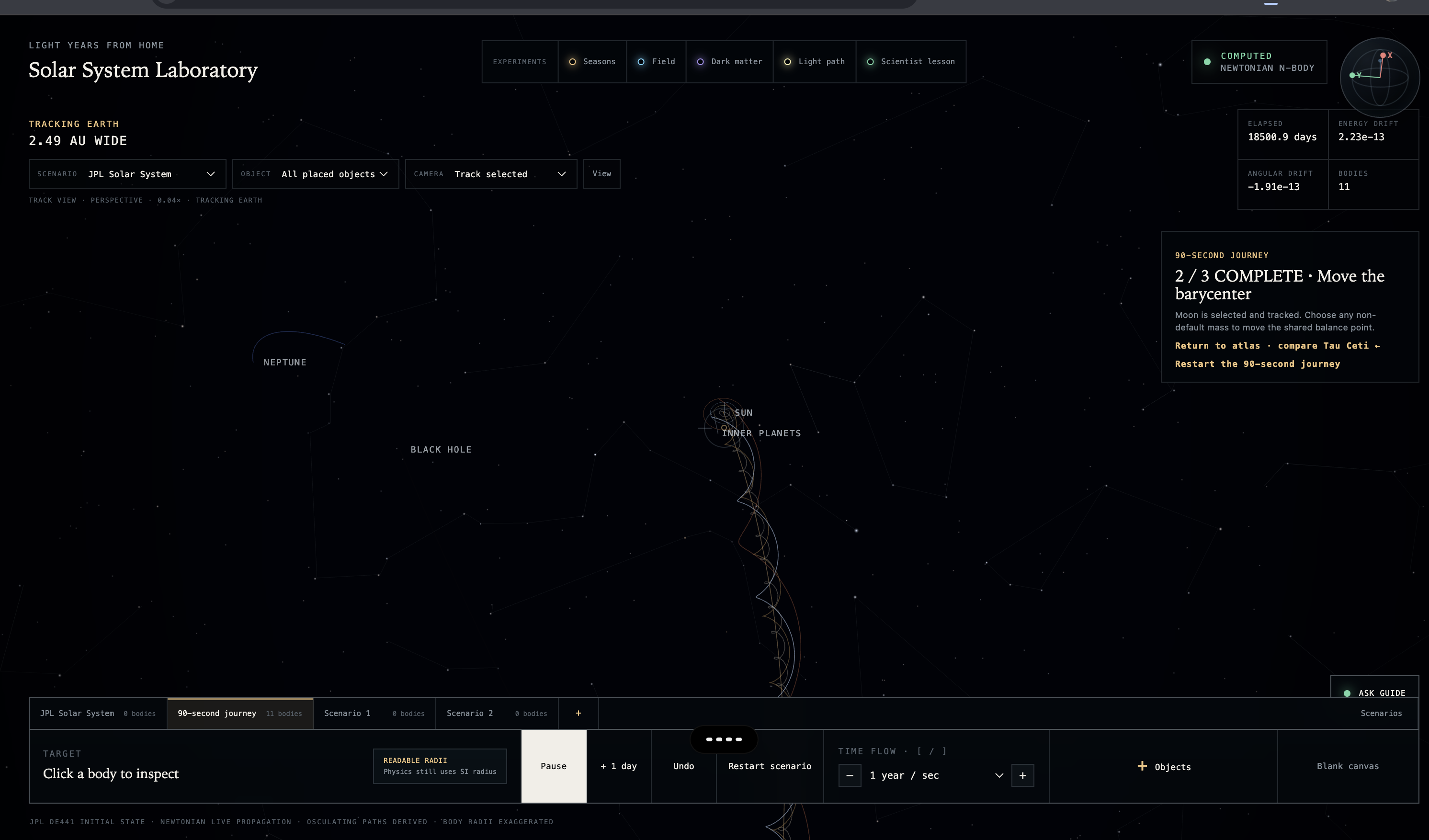
Solar System Under the Influence of a Black Hole
-
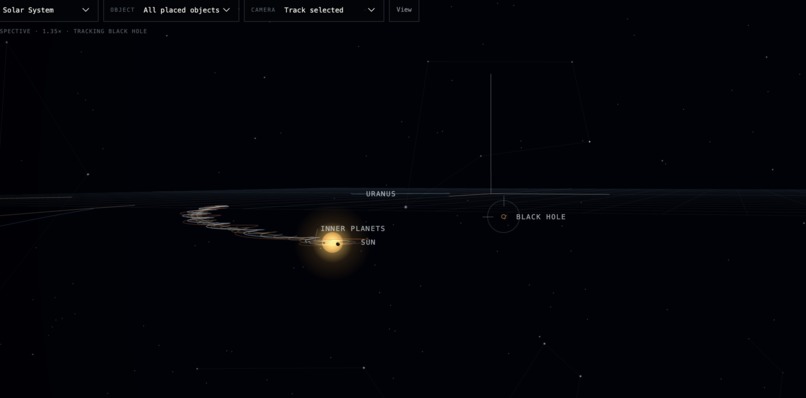
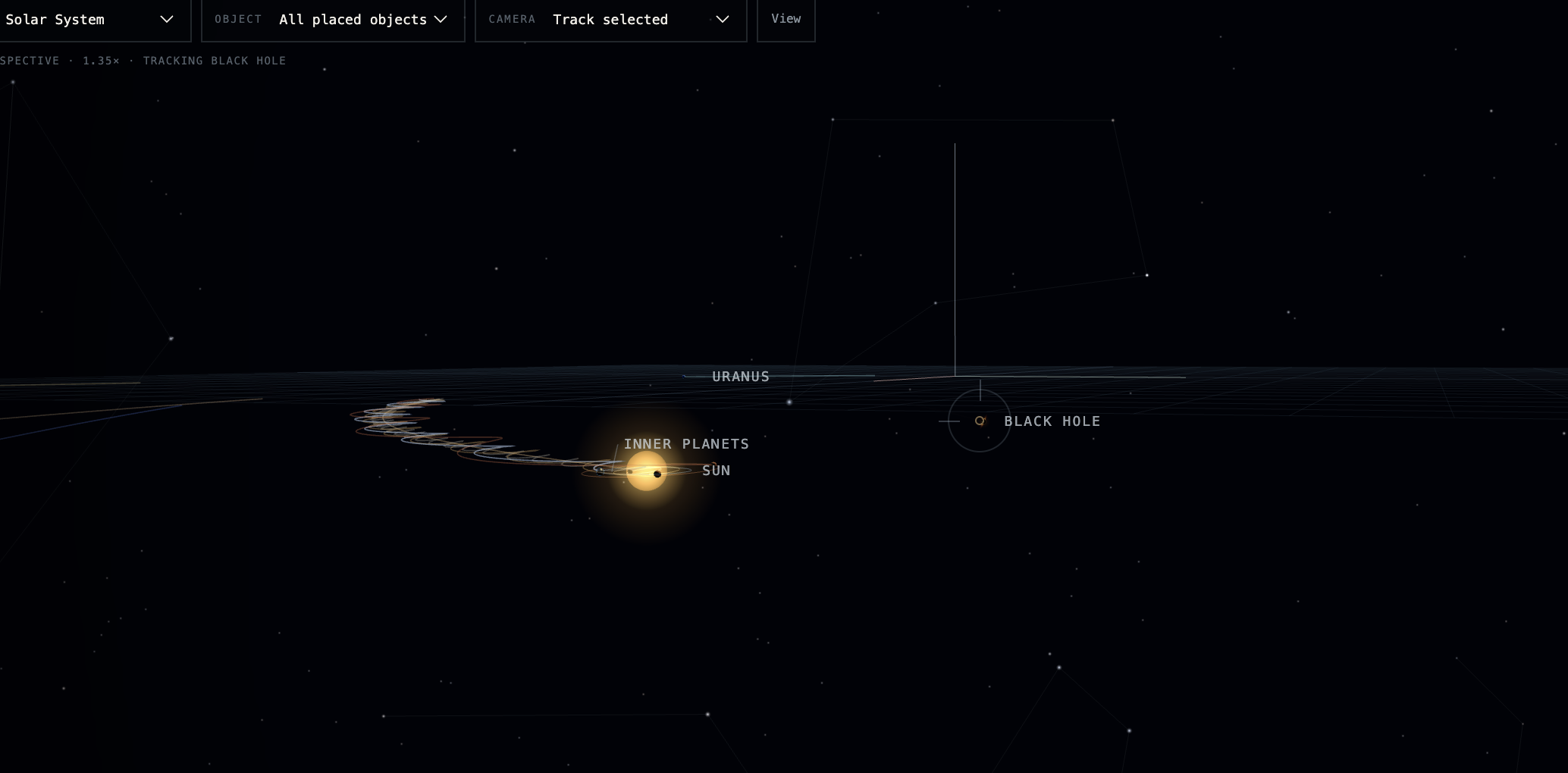
Solar System Under the Influence of a Black Hole (Alternate Frame)
-
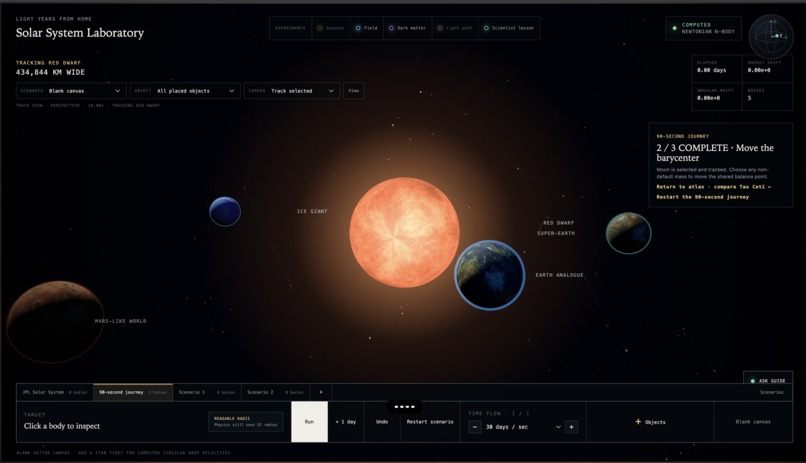
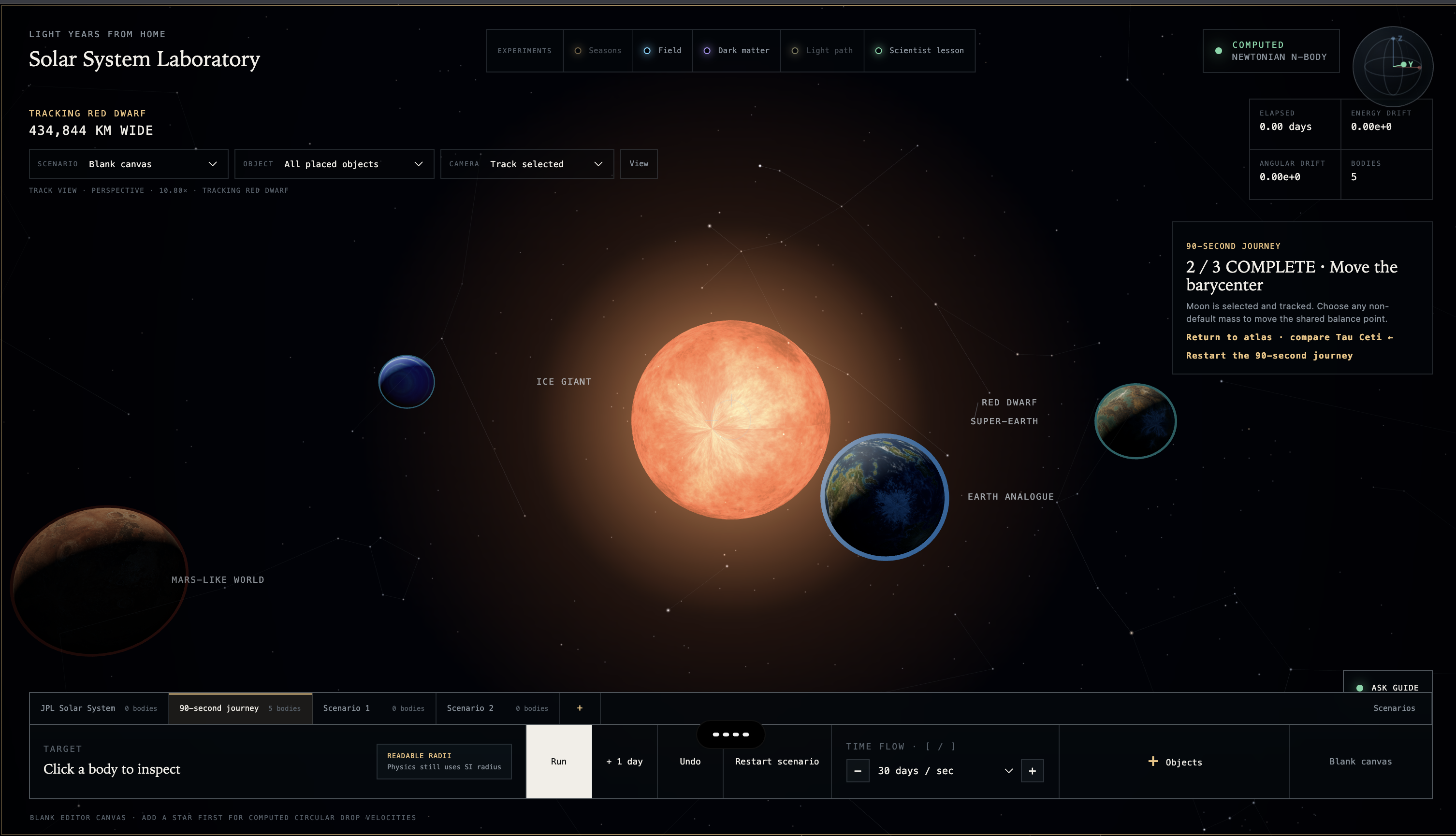
Display of Planetary Bodies (GPT IMAGE 2 for Textures)
-
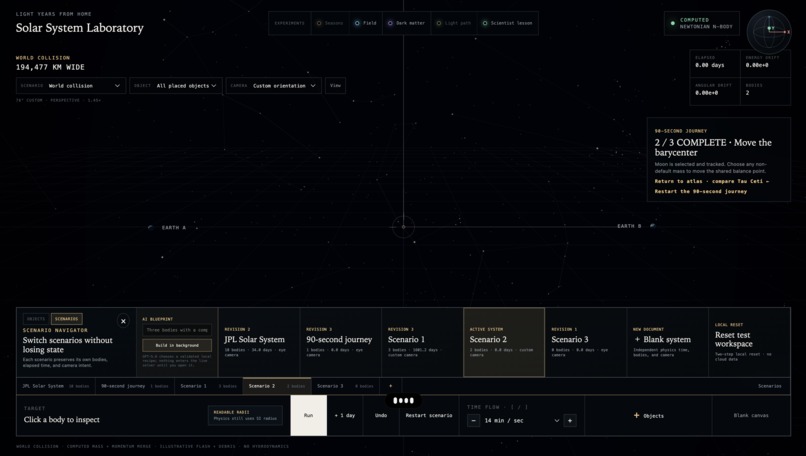
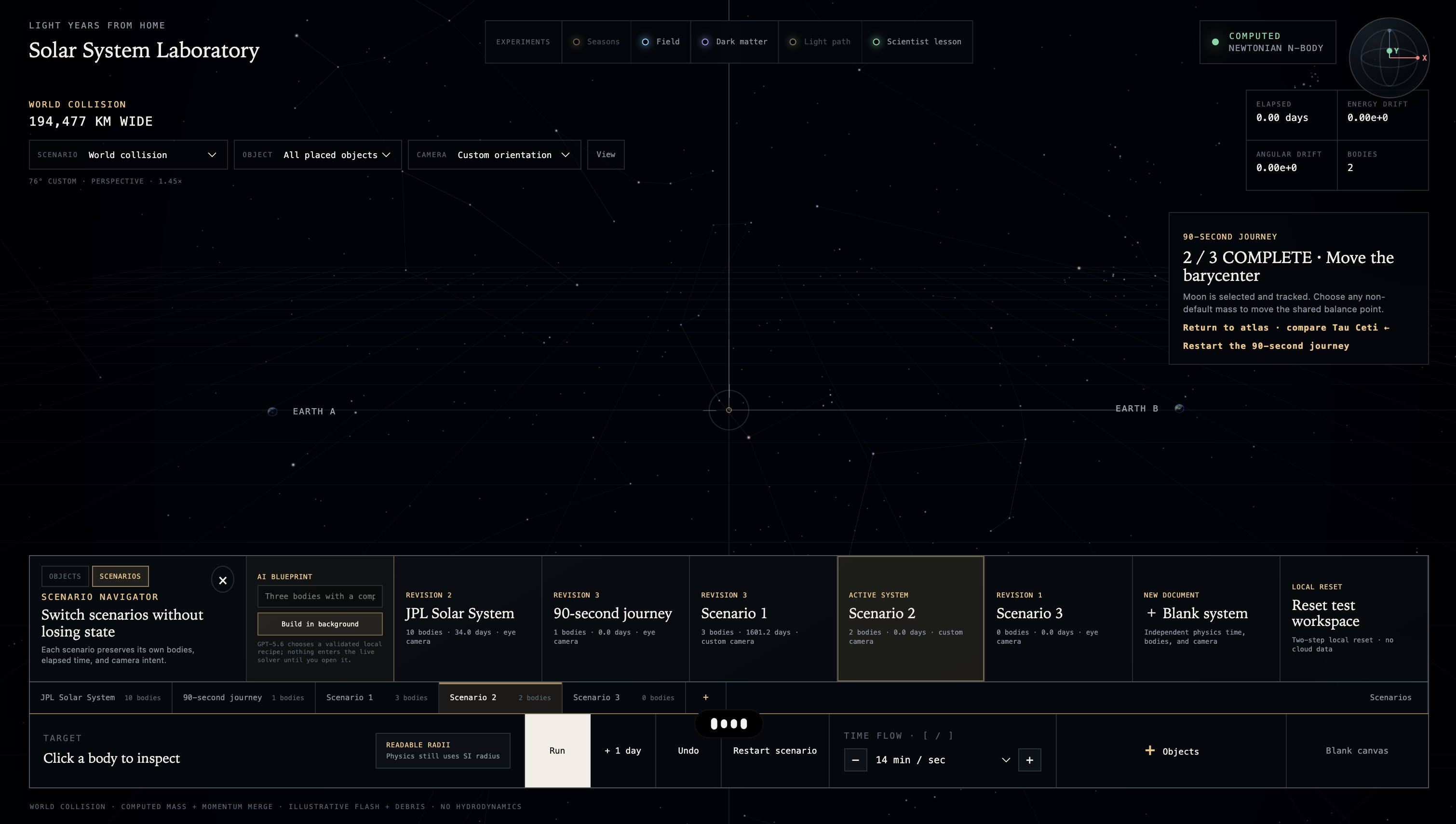
Multi-Scenario Parallel Exploration!
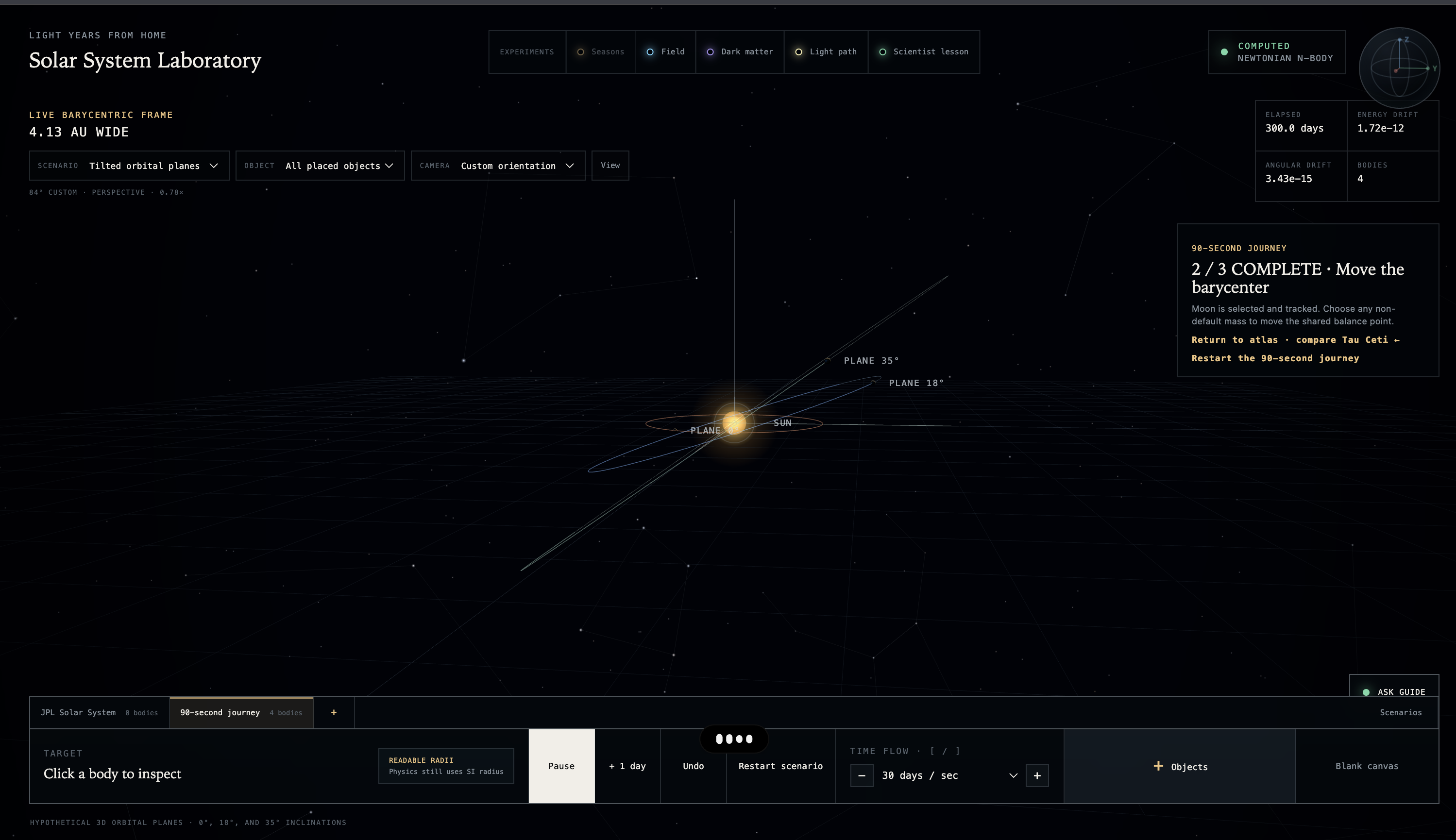
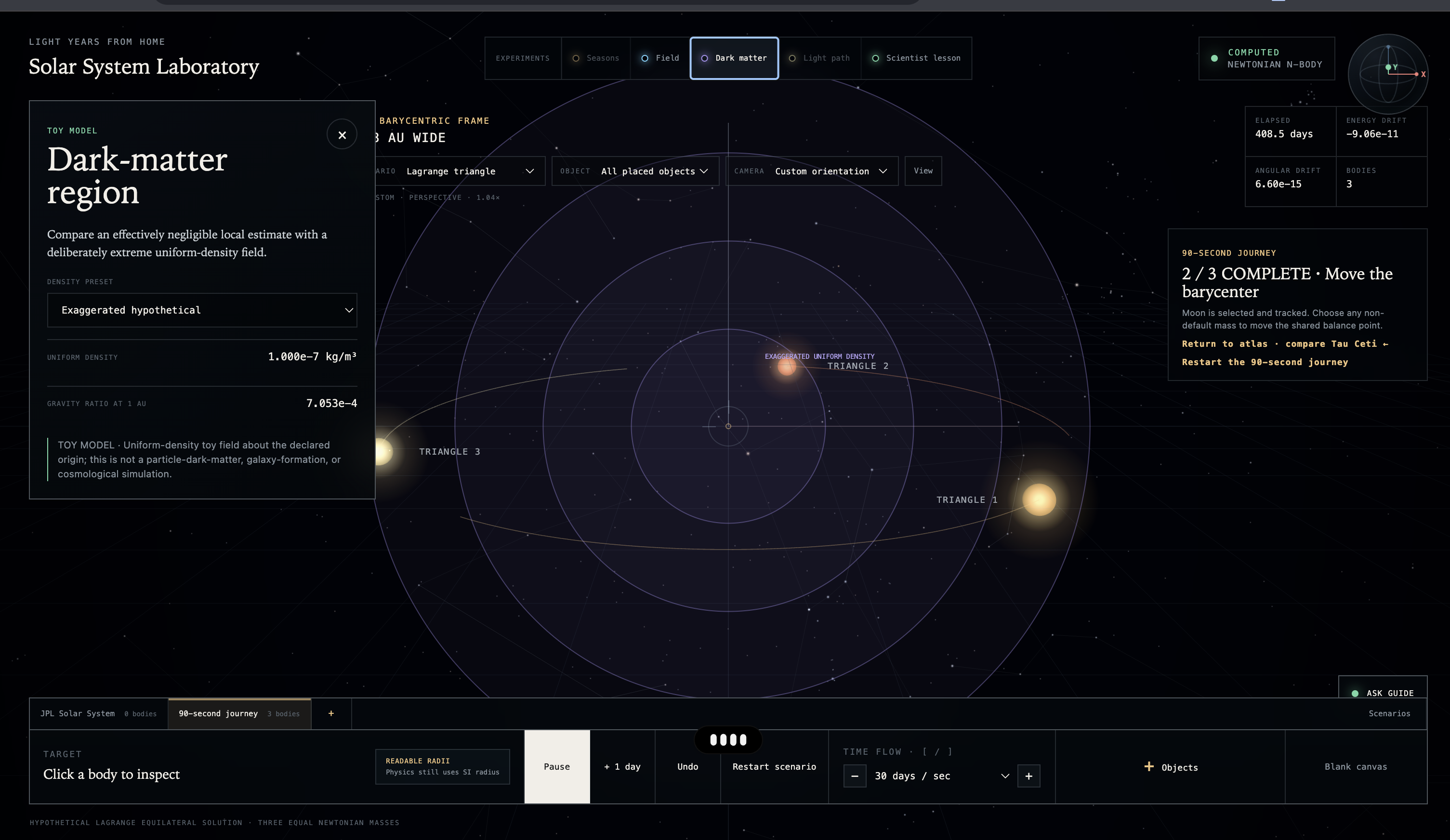
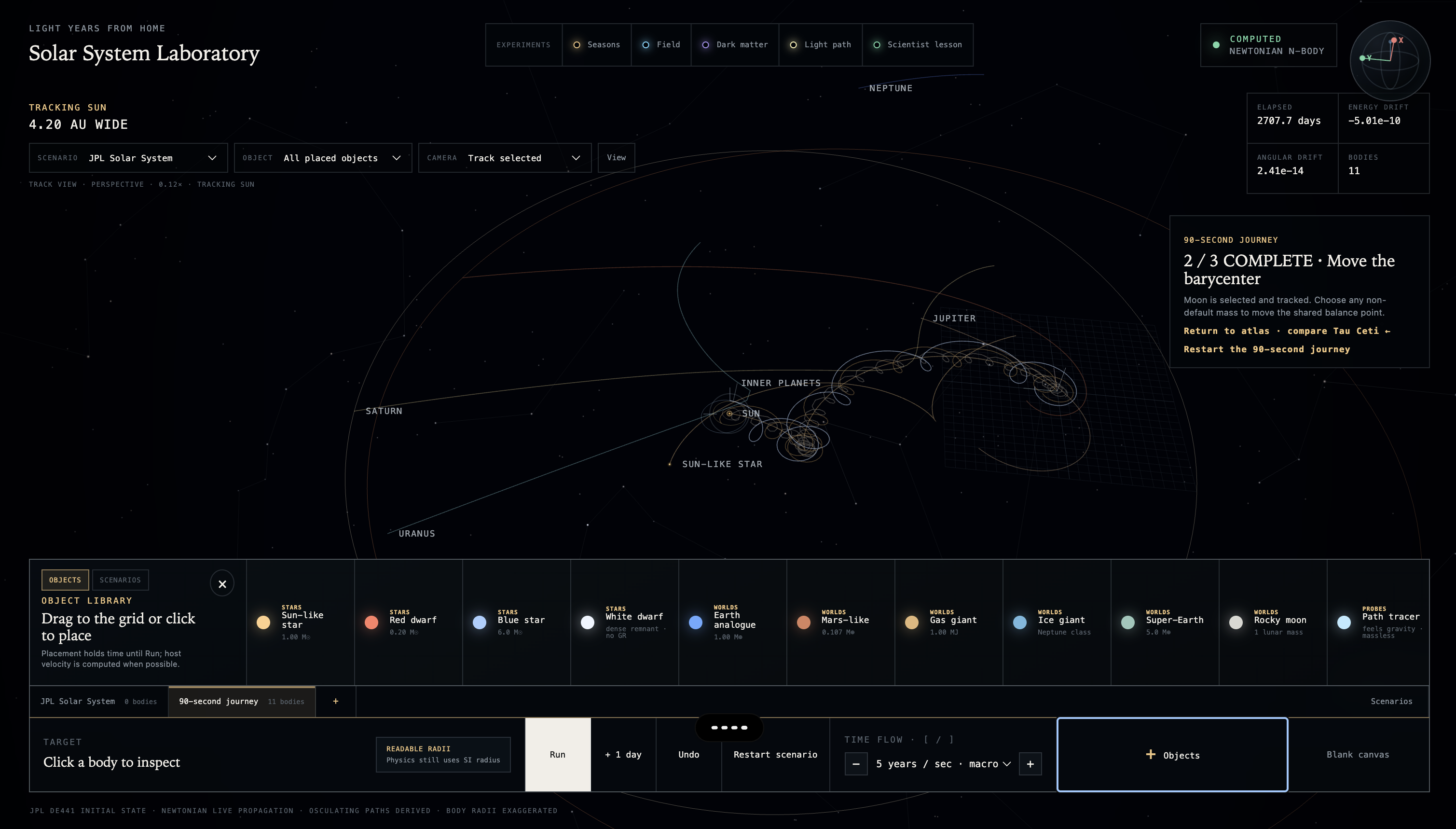
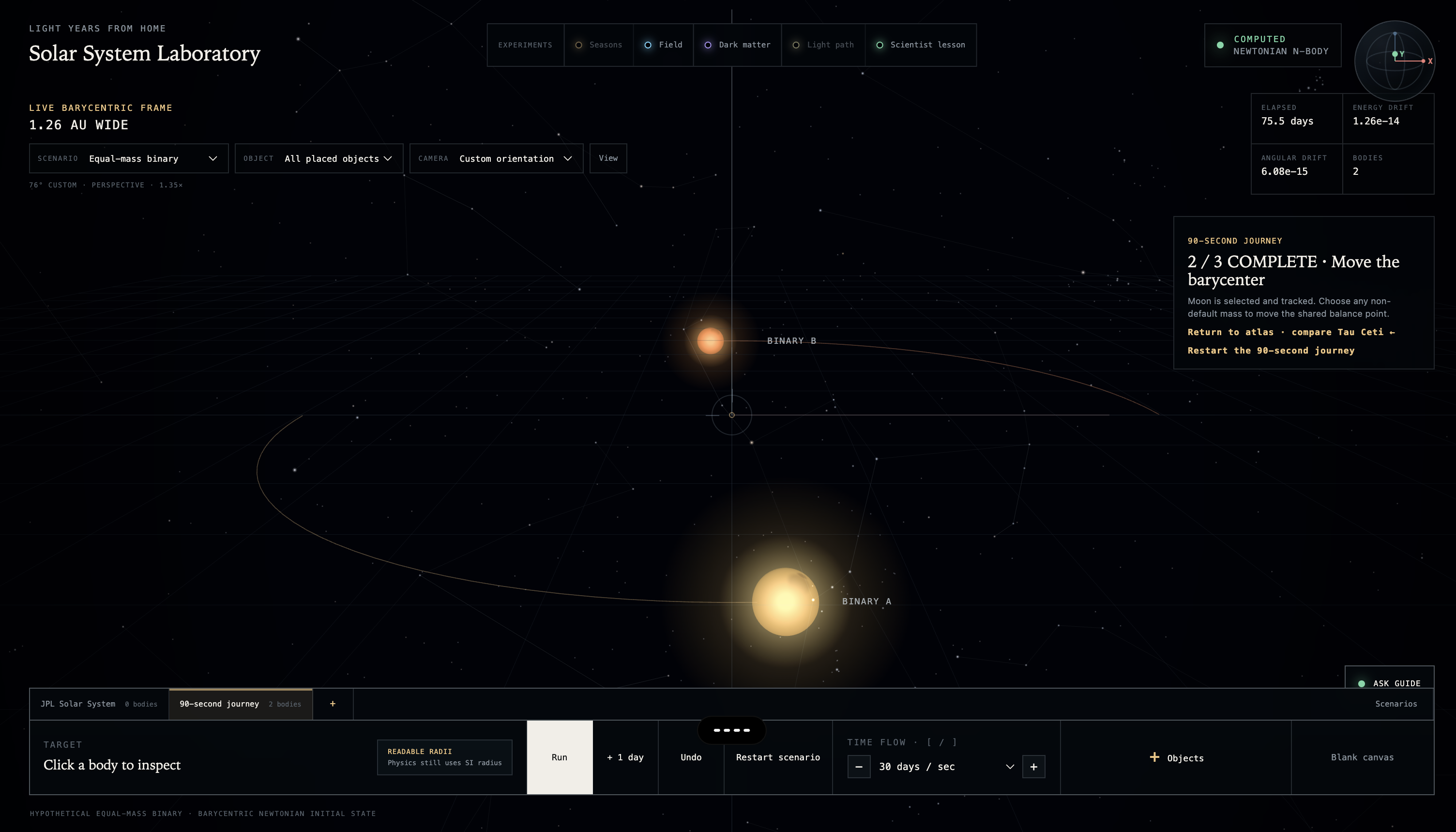
Track: Education
Why I built it
Physics is often taught by introducing equations first and intuition second. I always felt that was backwards.
Einstein did not have modern simulations or computational tools, yet through thought experiments he transformed our understanding of space, time, and gravity. Today, many students learn how to solve equations well enough to score highly on exams without ever developing an intuitive feel for what those equations actually describe. They can calculate time dilation, orbital motion or gravitational attraction without ever truly experiencing why those ideas are so remarkable.
I built Light Years From Home: Spacetime Lab to bring that way of learning back.
Instead of beginning with equations, learners begin with curiosity. A learner can change a speed, mass, event position or reference frame and watch the consequence before returning to the mathematics. OpenAI Codex was used as an engineering collaborator rather than a physics engine. The complete development history is preserved through the primary Codex build session (019f64f3-2a7b-79f3-b2e3-199704c8843c), providing a transparent record of the engineering process.
What it does
The project combines three connected experiences:
- an animated nearby-star atlas with real distance records and relativistic travel-time comparisons;
- a deterministic orbital laboratory for building, changing, and replaying multi-body systems;
- guided experiments for barycentres, resonances, collisions, light paths, fields, and relativity of simultaneity.
The entrance now makes one decision at a time: reveal the ten-star local cluster, choose a destination to learn through the atlas or enter a blank physics workspace directly.
The laboratory keeps bounded persistent trajectory trails, supports multiple scenario workspaces, and separates computed values from derived teaching layers and illustrative effects.
The relativity experiment
Opening Relativity automatically loads a deterministic Sun-Earth-Mars setup and anchors the Earth and Mars explosion events at t = 0 in the Sun frame.
A five-step wizard then shows only one idea at a time:
- Setup.
- Sun frame: both explosion events are simultaneous.
- Launch the rocket.
- Rocket frame: Mars is assigned the earlier coordinate time, followed by Earth.
- Compare the two frames.
Sun and Rocket frame controls stay visible throughout. Signal-arrival rings and EM detail are hidden by default behind “Show signal travel,” so event order is not confused with light reaching the observer. Playback and pause use the same state as the main simulator.
The result is calculated with the Lorentz transform. It is not explained as the rocket merely moving toward one signal.
The dark-matter comparison
The Dark Matter panel compares the same deterministic setup with the extra field switched OFF and ON. Both sides show the target body, total acceleration, uniform-density term, and ratio against ordinary gravity.
The limitations are explicit: this is a uniform-density teaching model, not a particle-dark-matter, galaxy-formation, cosmological, or computed dark-matter-lensing simulation. Halo rings are illustrative geometry only.
Compact-binary demonstrator
A compact-binary scenario shows Newtonian compact-mass proxies with an illustrative grid-ripple overlay. The app explicitly states that it does not solve general relativity or compute gravitational-wave radiation.
What judges can try
- Open the atlas, reveal the local cluster, and choose Alpha Centauri or Tau Ceti.
- Enter the lab and increase the Moon’s mass to watch the Earth-Moon barycentre move.
- Open Relativity and follow the five-step Sun/Rocket frame wizard.
- Add a massless tracer and leave persistent trails on to inspect its path.
- Open Dark Matter and compare OFF versus ON using the same solver state.
- Load the compact-binary scenario and inspect its toy-model caveat.
Live project: https://light-years-from-home.vercel.app
How AI was used
The simulation is the source of truth.
Gravity integration, trajectories, collisions, barycentres, event separation, Lorentz transforms, and diagnostic values are computed deterministically in code. GPT-5.6 does not invent or override those results.
Codex was used throughout development to:
- design and refactor the simulation architecture;
- build the event and state pipelines that keep physics, interface state, and lessons synchronized;
- implement the nearby-star atlas and guided experiments;
- isolate and validate numerical helpers;
- trace interface and runtime failures;
- create deterministic replay and verification workflows;
- test scientific labels and prevent illustrative effects from being presented as computed physics.
The current verification suite contains 131 passing tests, including deterministic replay, conservation checks, relativity ordering, reference-frame interface state, persistent trajectory bounds, dark-matter comparison behavior, and compact-binary toy-model labeling.
GPT-5.6 teaching layer
GPT-5.6 operates above the deterministic simulation rather than inside its numerical solver. When a learner asks a question, the application prepares a bounded state snapshot containing the selected object, active scenario, current reference frame, measured quantities, experiment status, fidelity labels, and the learner’s question.
That snapshot is sent through the server-side teaching endpoint. API credentials remain on the server and are never exposed to the browser.
GPT-5.6 can:
- explain relationships visible in the current simulation state;
- compare measured values or reference frames;
- identify an interesting consequence of the learner’s change;
- clarify the distinction between computed, derived, toy-model, and illustrative layers;
- suggest one relevant follow-up experiment.
GPT-5.6 cannot:
- modify masses, velocities, events, or solver state;
- replace the Newtonian integrator or Lorentz-transform calculations;
- invent missing measurements;
- silently reinterpret an illustrative effect as computed physics;
- prevent the deterministic laboratory from running when AI configuration is unavailable.
Every numerical result remains owned by the simulation. GPT-5.6 receives those results as evidence and turns them into contextual teaching language. This separation keeps the experience conversational without making the language model the authority on what physically occurred.
Primary Codex build session: 019f64f3-2a7b-79f3-b2e3-199704c8843c
Potential impact
Many students leave physics courses able to manipulate equations but unable to picture what those equations actually mean.
Spacetime Lab turns those equations into interactive thought experiments. Instead of memorising results, learners build intuition by changing the universe, observing what happens, and only then returning to the mathematics.
The project aims to revive the style of exploration that inspired many of the greatest discoveries in physics: curiosity first, equations second.
Current status
The nearby-star atlas, orbital laboratory, relativity lessons, trajectory analysis, deterministic scenarios, dark matter comparison, and public deployment are fully operational.
GPT-5.6 powered tutoring depends on server-side OpenAI configuration and should be evaluated separately from the deterministic simulation environment.
Spacetime Lab is educational software and is not intended for scientific research, engineering, navigation, mission planning, or other safety-critical applications.
Built With
- codex
- glsl
- gpt-5.6
- javascript
- node.js
- openai-realtime-api
- three.js
- webgl

Log in or sign up for Devpost to join the conversation.