-
-
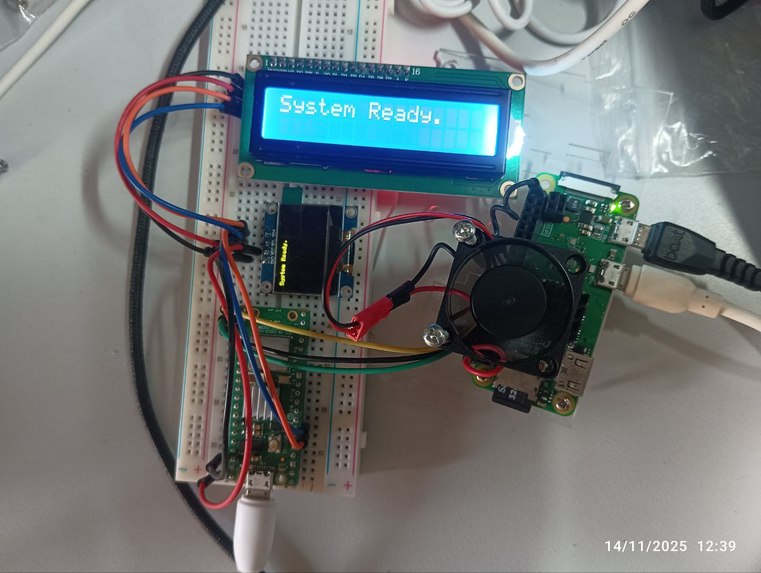
System Information
-
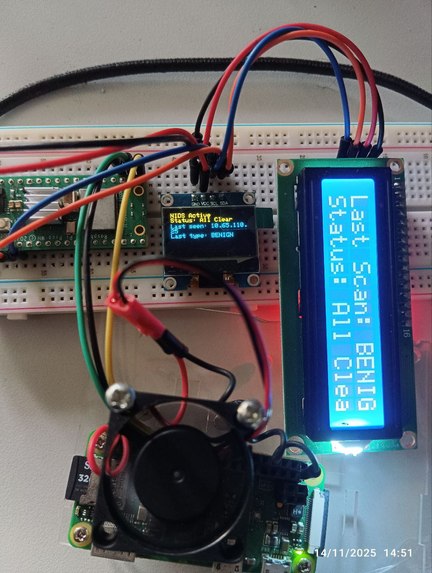
IP address of attacker with criticality
-
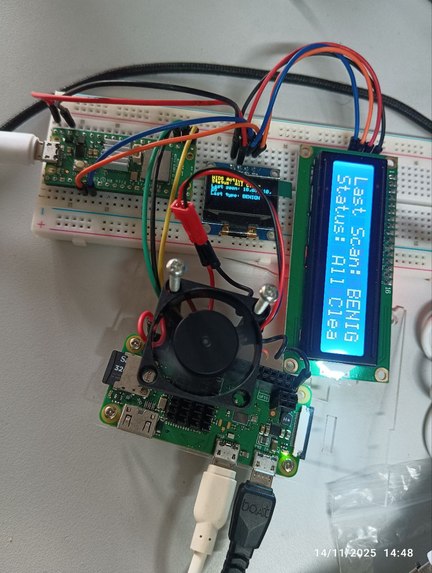
label of the attack classified


Inspiration
The complete idea came from the knowledge I had about cybersecurity during my college degree. I had very less hardware with me, but I had optimized every line of code to be usable on the single board computer hardware I had.
What it does
This project is a demonstration of a network intrusion detection system, as soon as this setup is connected to a network it can dissect the packets and classify it its normal traffic or an attack has been attempted.
How we built it
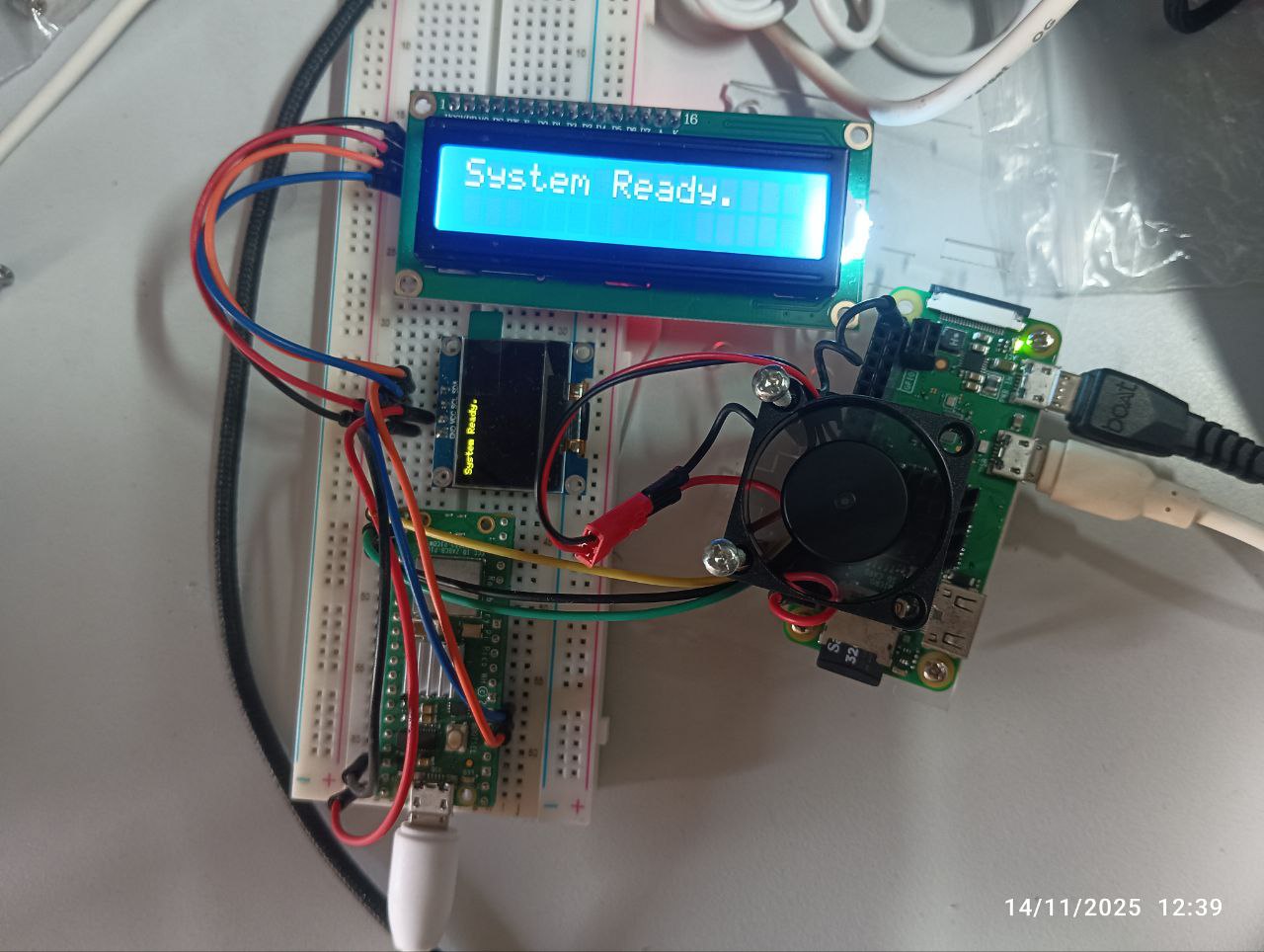
I have used a raspberry pi pico wh which is running the classifier trained on the Edge Impulse platform using Neural Networks. The raspberry pi zero w runs a python script which has python-scapy module for packet dissection and capturing. The zero board sends data to the pico via USB for classification. The pico is connected to two displays, one displays the alerts, attack label and the other displays attack criticality and IP address of the potential attacker.
Challenges we ran into
With limited hardware, a raspberry pi zero w (has a 32-bit processor) and a pico wh, with this limited hardware I had to optimize the model as well as the script to minimize the workload.
Accomplishments that we're proud of
I was able to run a classifier on the pico board, which was the most difficult part. But the zero w, a 32-bit processor single board computer always got to its 1 GHz clock speed which significantly impacted most of the working. But an attempt was made to optimize the script and develop the final project.
What we learned
I was able to learn some machine learning concepts that was out of my domain. I also learned to optimize data cleaning for the initial development of the project.
What's next for Light Weight Intrusion Detection System (NIDS)
The next steps for me would be getting a more powerful single board computer for more prototyping and eventually develop an actual pcb that can do all that.


Log in or sign up for Devpost to join the conversation.