-
-
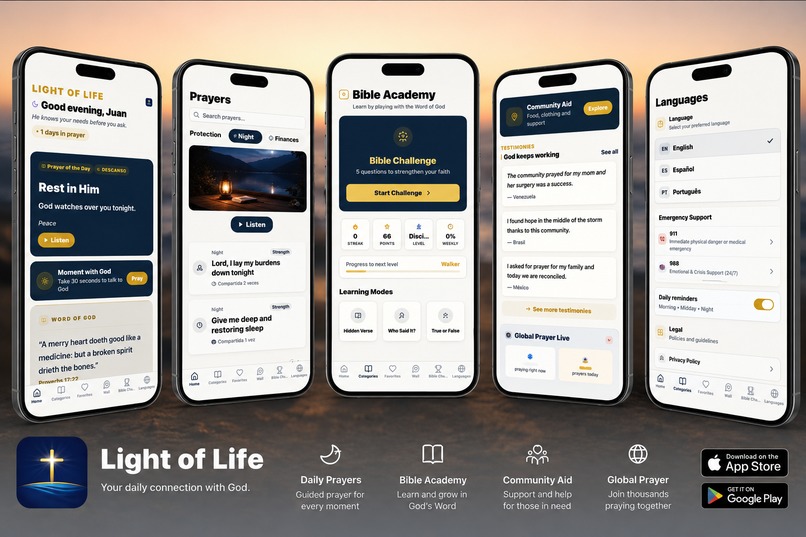
Light of Life Humanitarian Platform
-
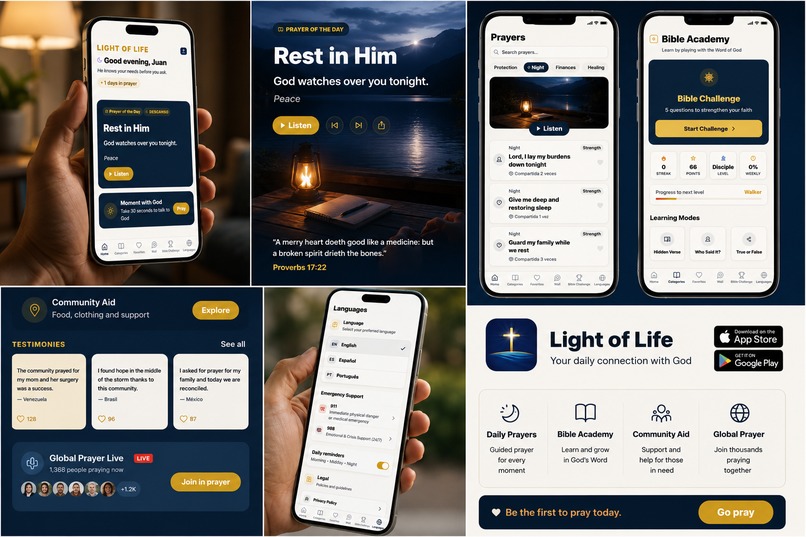
AI-Powered Humanitarian Experience
-
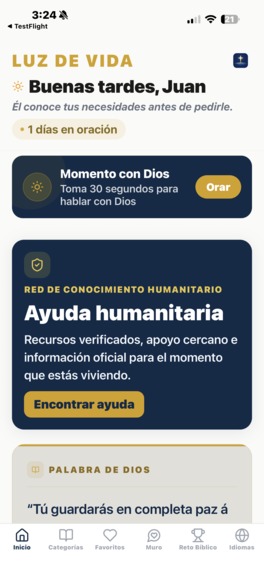
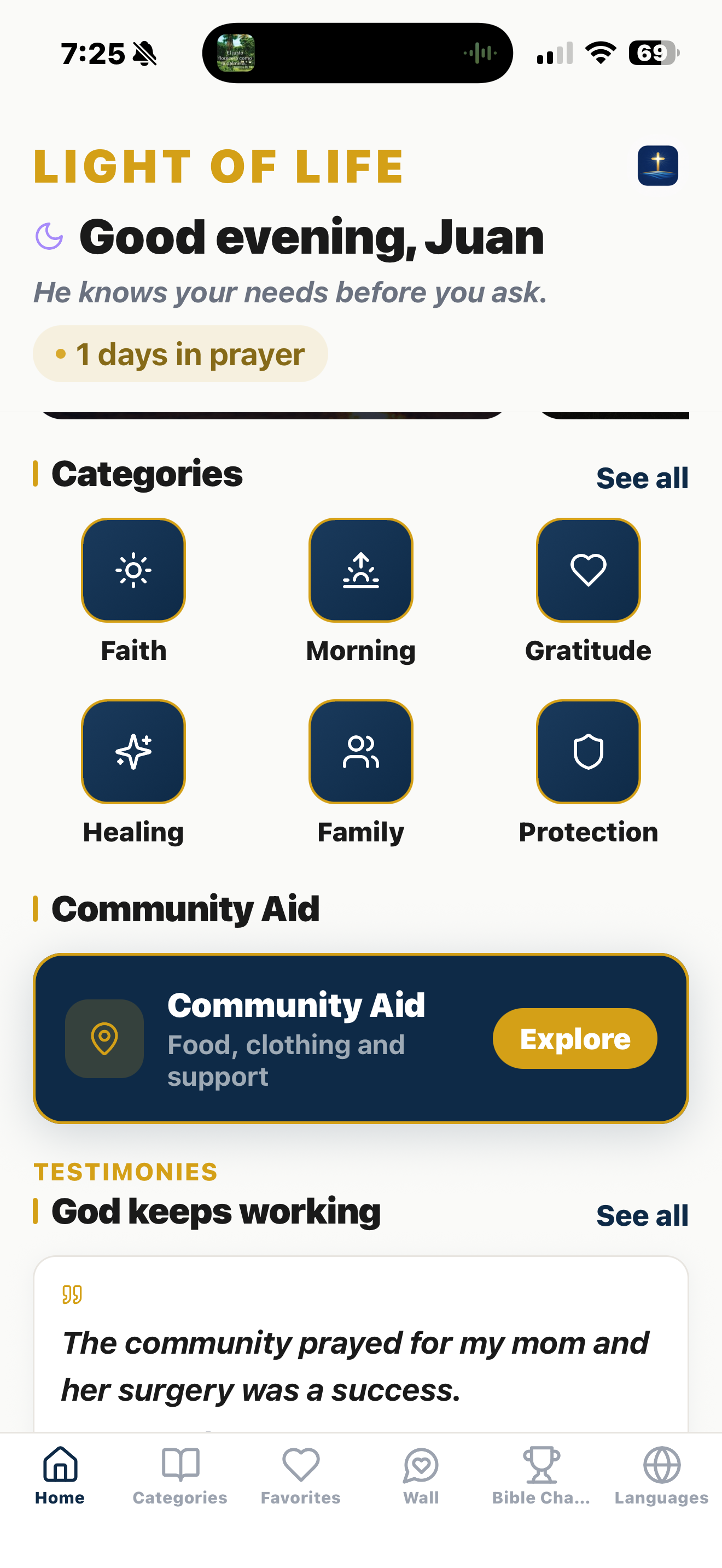
Community Aid
-
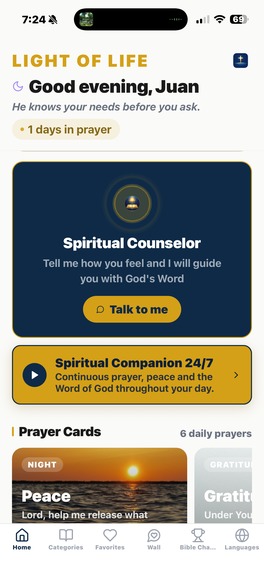
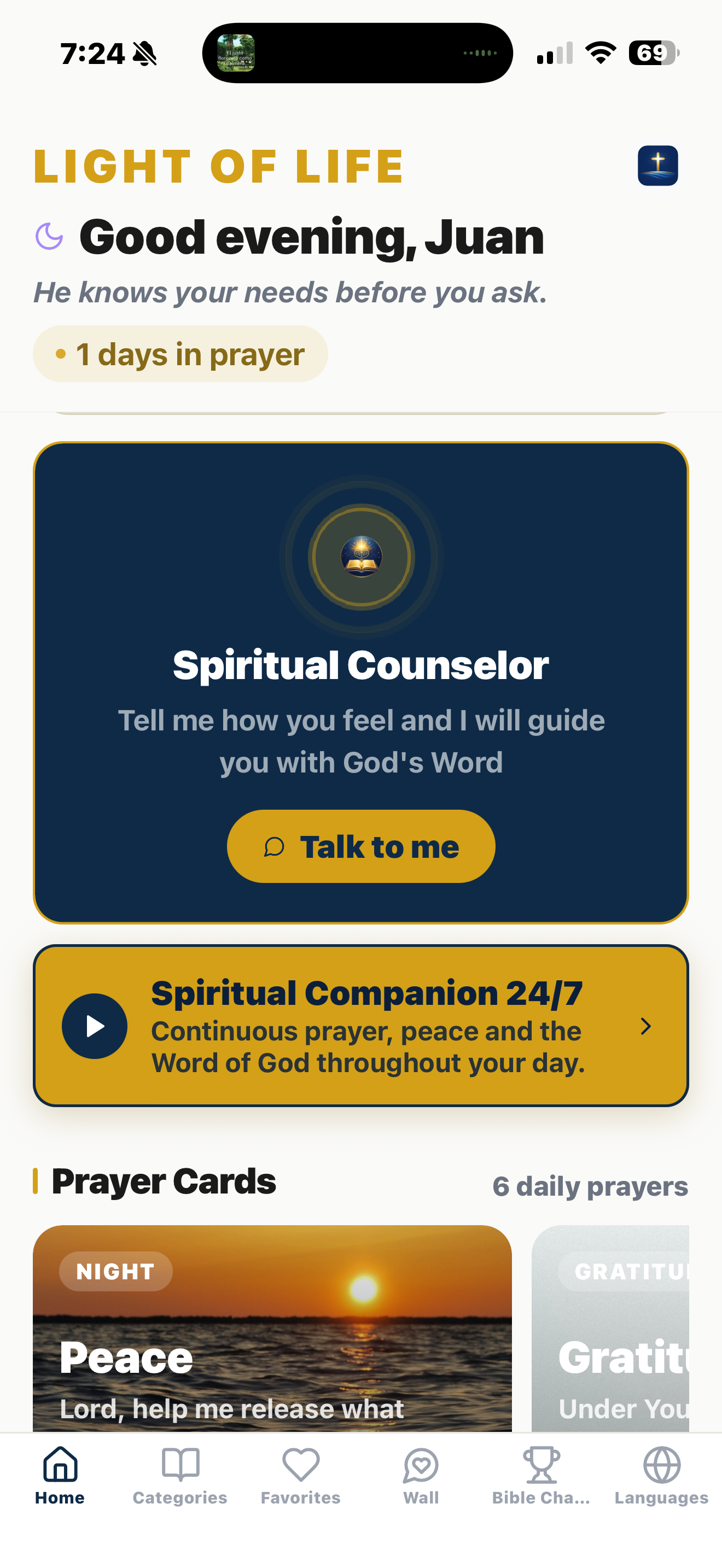
Spiritual Counselor
-
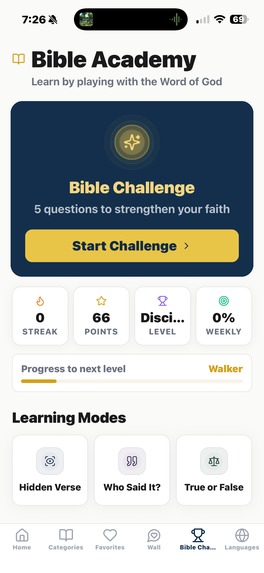
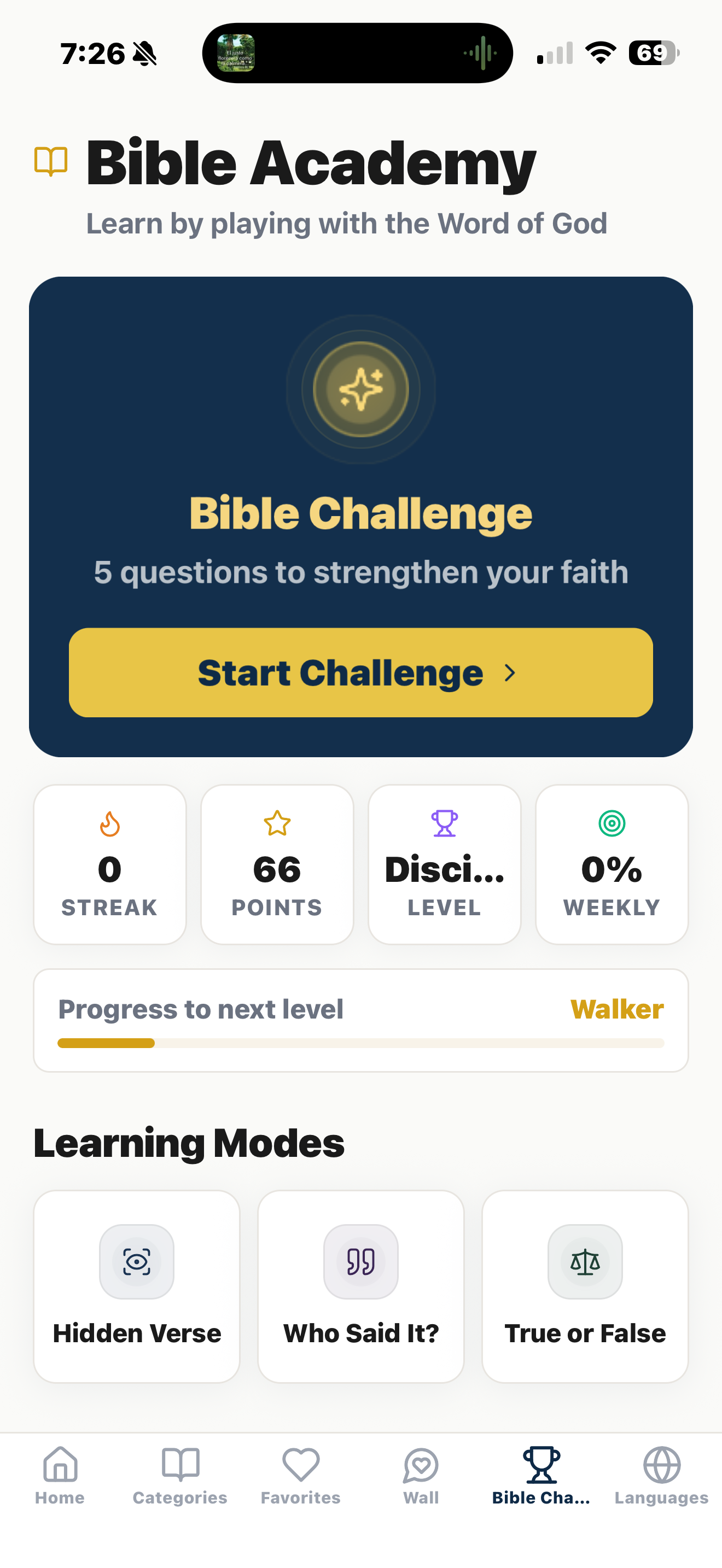
Bible Challenge
-
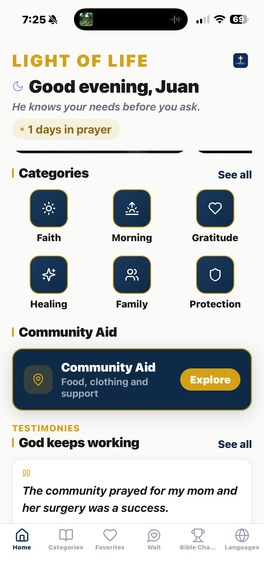
Categories
Inspiration
I'm Venezuelan, and much of my family, including my mother and other relatives, still lives in Venezuela. Seeing how difficult it can be for people to find reliable information, humanitarian assistance, and community support during challenging times inspired me to build something that could genuinely help. Light of Life was already available on the Apple App Store before OpenAI Build Week. During Build Week, I decided to transform it into something much bigger: an AI-powered humanitarian platform focused on helping people find verified assistance during difficult times. It would evolve into an AI-powered humanitarian platform, starting with Venezuela and later expanding across the United States and Latin America.
While many applications focus on information or AI conversations alone, we wanted to combine both into a platform that helps people during real-life emergencies.
As development progressed, it became clear that the greatest immediate humanitarian need was Venezuela. Millions of people continue searching for verified information about food assistance, shelters, churches, NGOs, medical support, immigration resources, and disaster recovery. That became the first region we chose to serve.
What it does
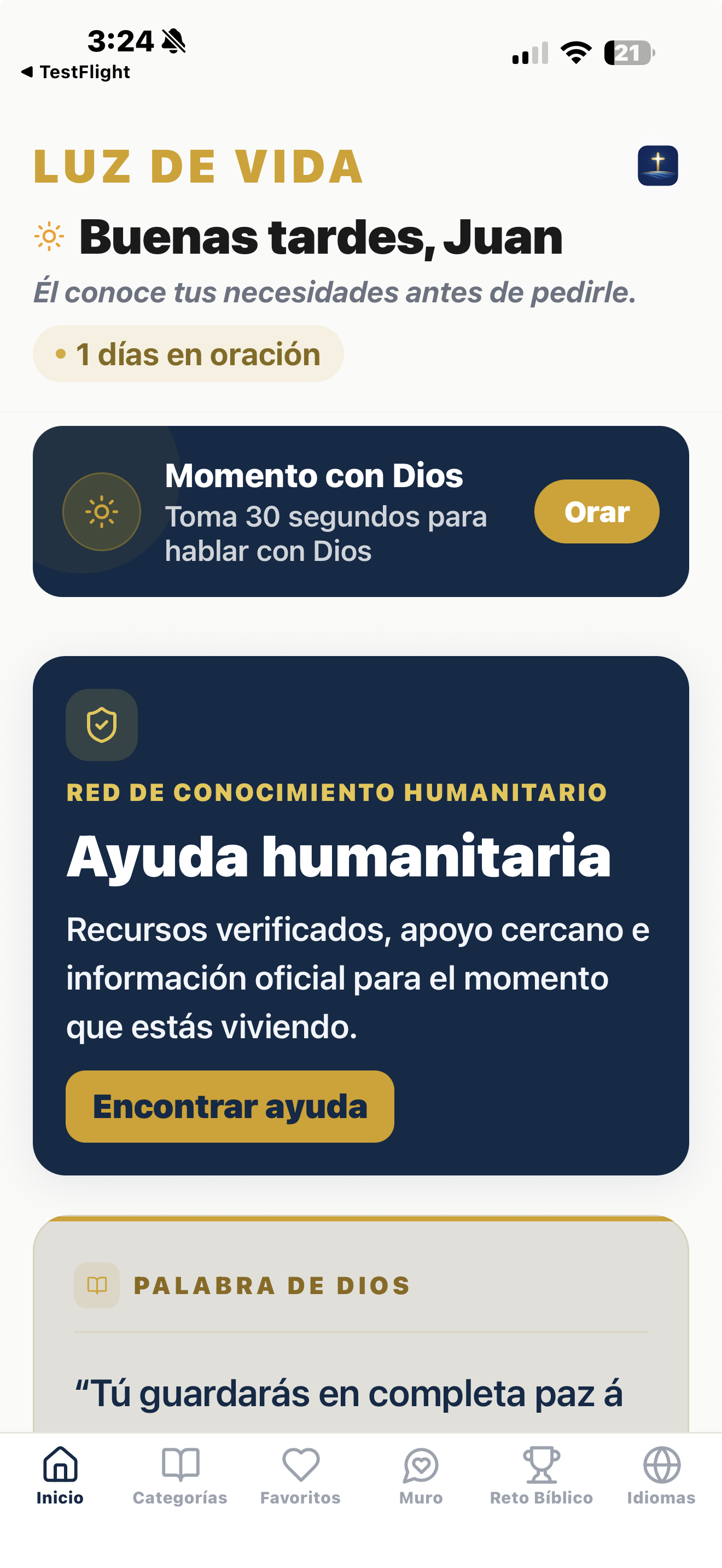
Light of Life is an AI-powered humanitarian platform designed to connect people with real, verified assistance.
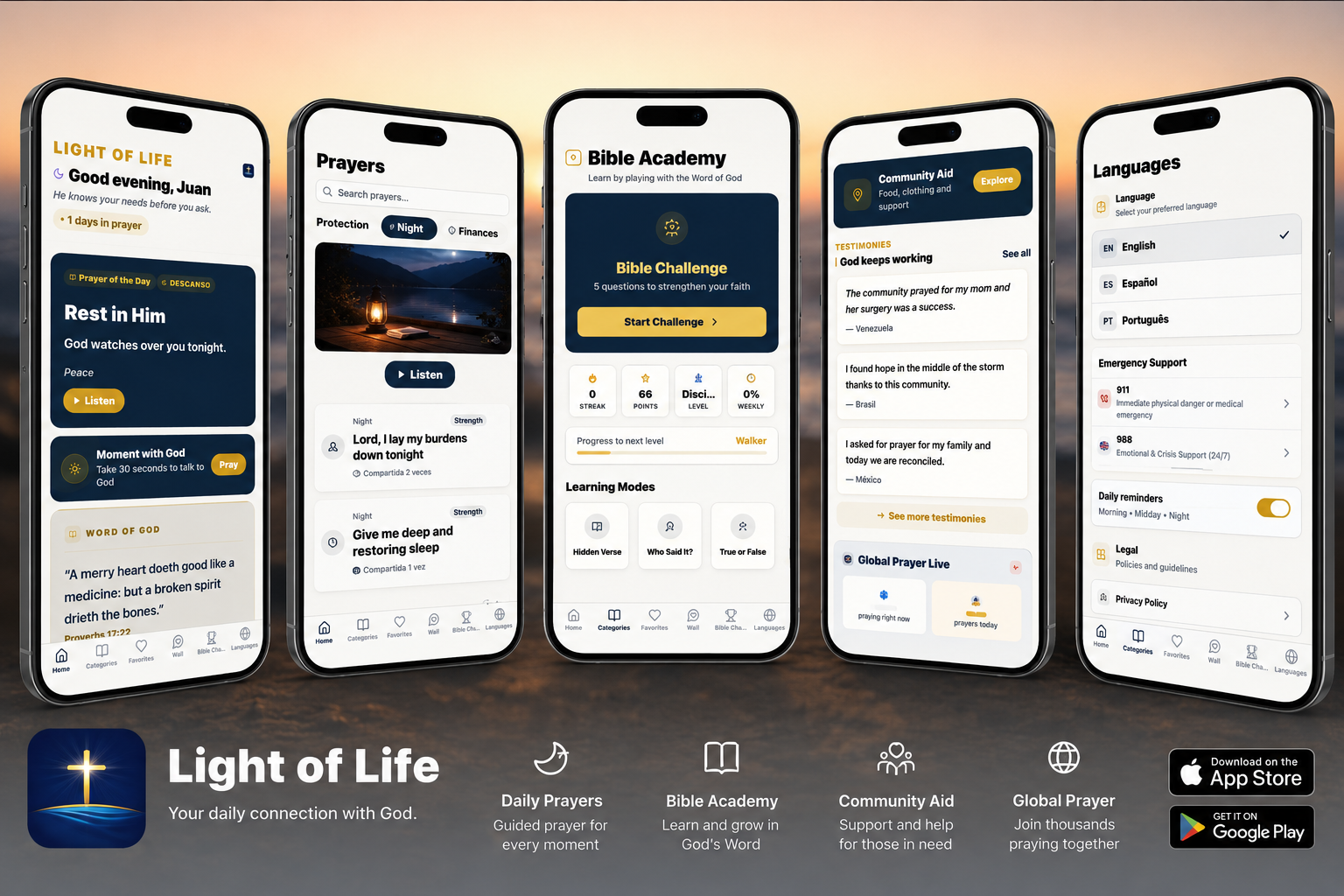
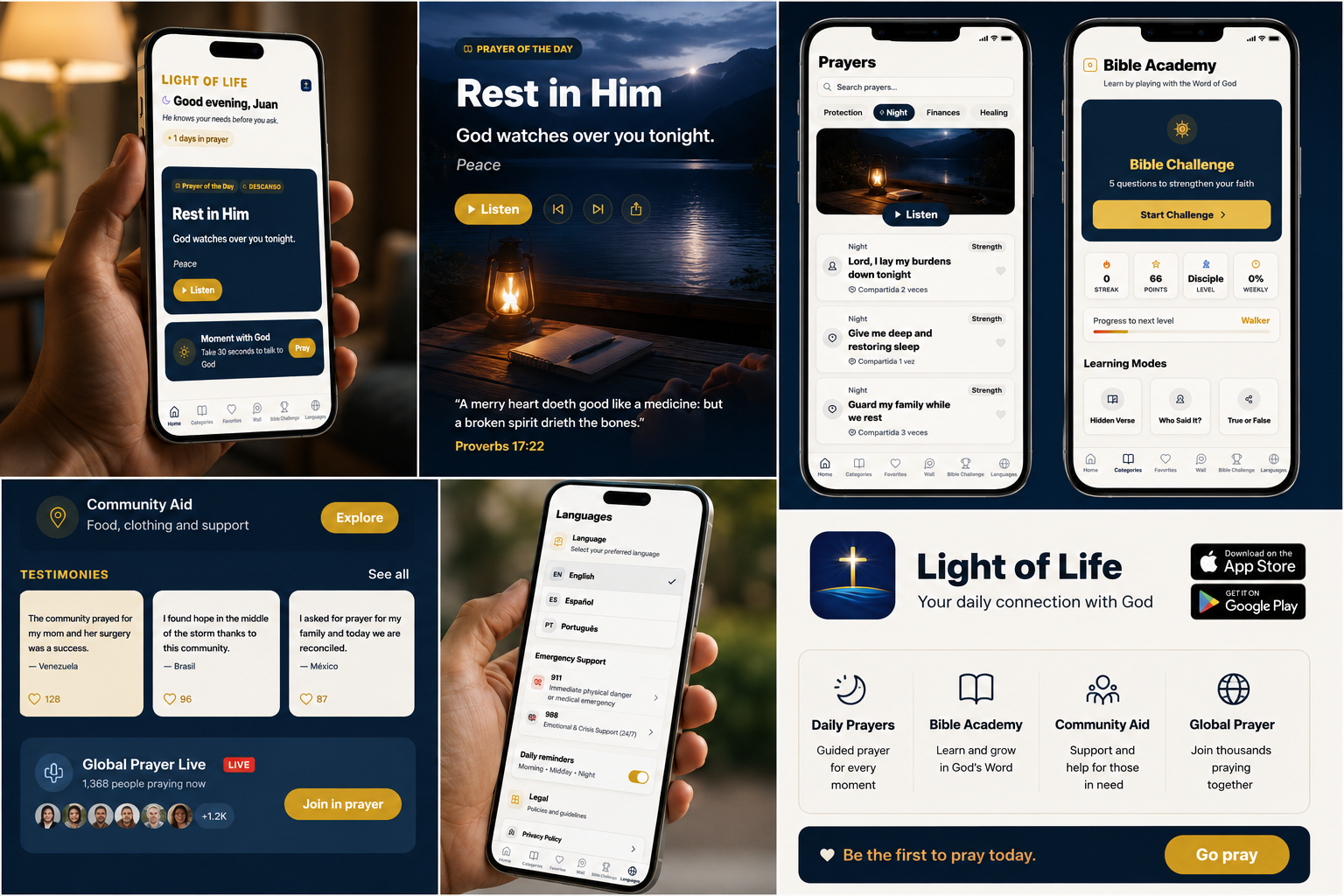
The platform currently includes:
- AI humanitarian guidance
- Verified community assistance
- Emergency and disaster recovery resources
- Community Prayer Wall
- Spiritual encouragement
- Multilingual support (English, Spanish and Portuguese)
Our long-term vision is to become a trusted humanitarian intelligence platform that expands from Venezuela to the United States and Latin America.
How we built it
During OpenAI Build Week we significantly expanded and redesigned Light of Life using Codex as our primary development environment.
We added new humanitarian capabilities, redesigned major workflows, expanded multilingual support, improved the AI experience, and prepared the application for its next stage of growth.
Rather than starting from scratch, we chose to evolve an existing application already serving users on the Apple App Store. Build Week gave us the opportunity to rethink its mission, redesign key features, and transform it into an AI-powered humanitarian platform.
Development during Build Week started with GPT-5.6. After our GPT-5.6 credits were exhausted, we continued using GPT-5.5 while remaining inside the Codex workflow.
Codex became our engineering partner throughout the project, helping us design new features, refactor existing code, debug issues, generate tests, improve architecture, and accelerate development while keeping every implementation under our review.
Challenges we ran into
The biggest challenge was building something that could eventually earn people's trust during difficult moments.
Instead of creating another AI chatbot, we focused on organizing verified humanitarian information, improving multilingual support, designing intuitive recovery workflows, and ensuring the experience remained simple enough for people under stress.
Accomplishments that we're proud of
During OpenAI Build Week we transformed Light of Life into a production-ready humanitarian platform.
Key accomplishments include:
- Humanitarian AI Guide
- Verified community assistance
- Community Prayer Wall
- Emergency recovery resources
- Multilingual experience
- Apple App Store production build
- Humanitarian expansion strategy beginning with Venezuela
What we learned
We learned that AI becomes significantly more valuable when paired with verified real-world information.
Codex dramatically accelerated our development process, allowing us to spend more time improving the user experience instead of repetitive engineering tasks.
Most importantly, we learned that humanitarian technology should prioritize trust before intelligence.
What's next for Light of Life
Our immediate priority is expanding verified humanitarian assistance across Venezuela.
After that, we plan to expand throughout the United States and Latin America while continuing to improve AI guidance, multilingual support, and verified humanitarian intelligence.
Our long-term goal is to build one of the world's most trusted humanitarian assistance platforms powered by AI.
Built With
- app
- apple
- cloudflare
- codex
- expo.io
- gpt-5.5
- gpt-5.6
- native
- openai
- react
- store
- typescript

Log in or sign up for Devpost to join the conversation.