Inspiration
Every heist movie has the laser corridor scene. I always wanted to be the one getting through it. Then I realized that with hand tracking, your palm can literally be the mirror. Tilt it into a security laser and bend the beam where you need it. "Light-fingered" is an old word for a thief. In this game, it's literal.
What it does
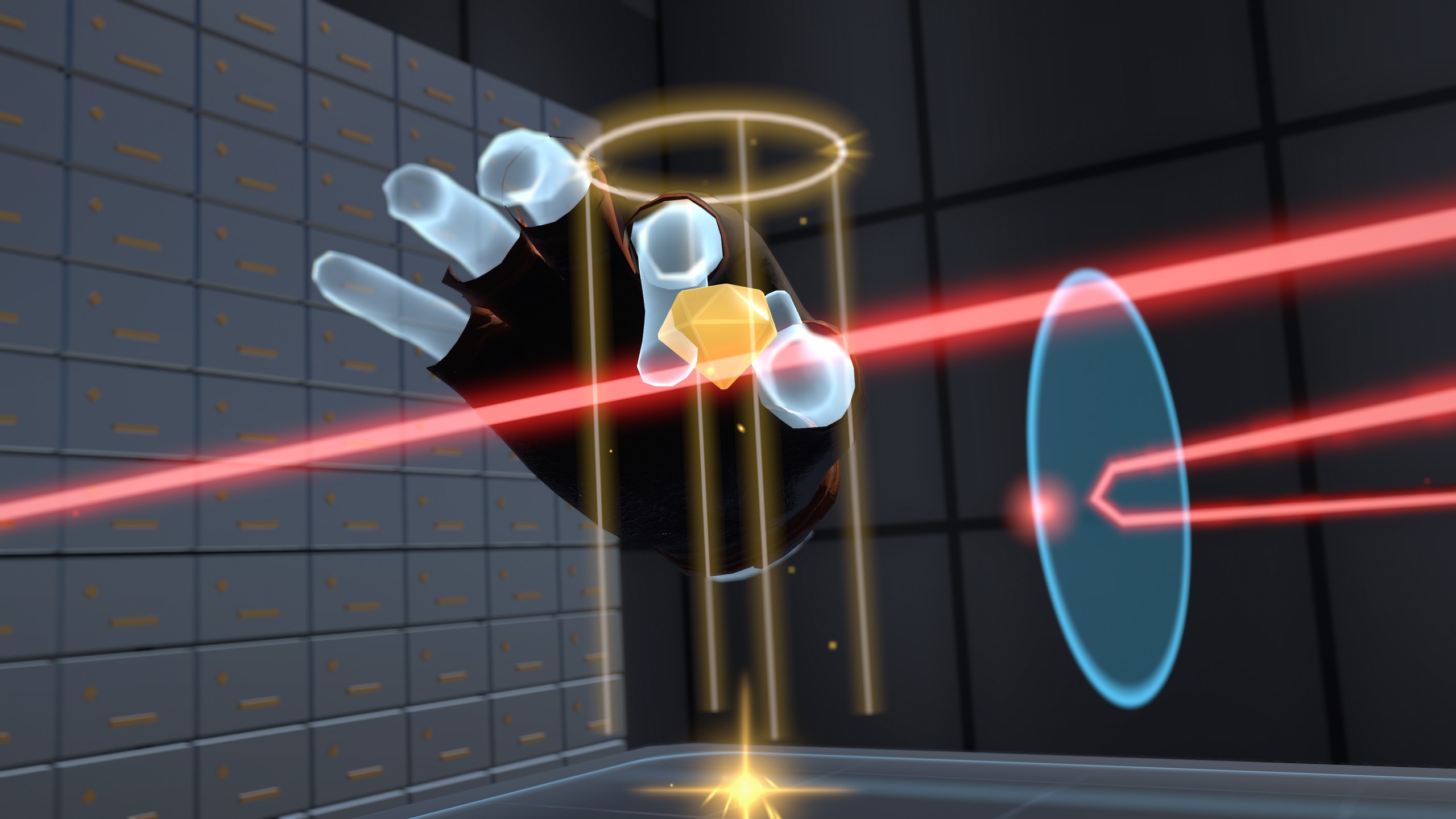
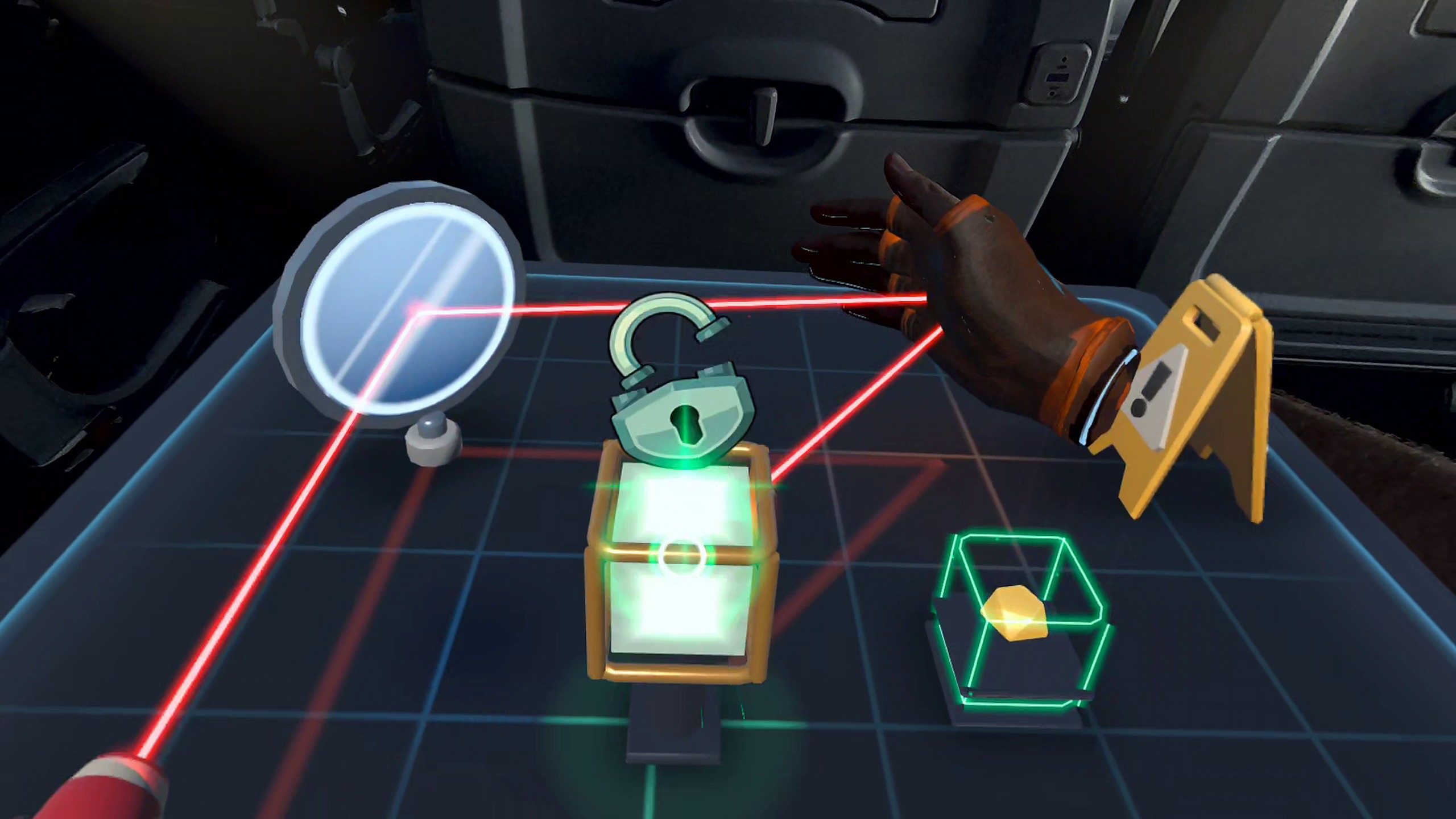
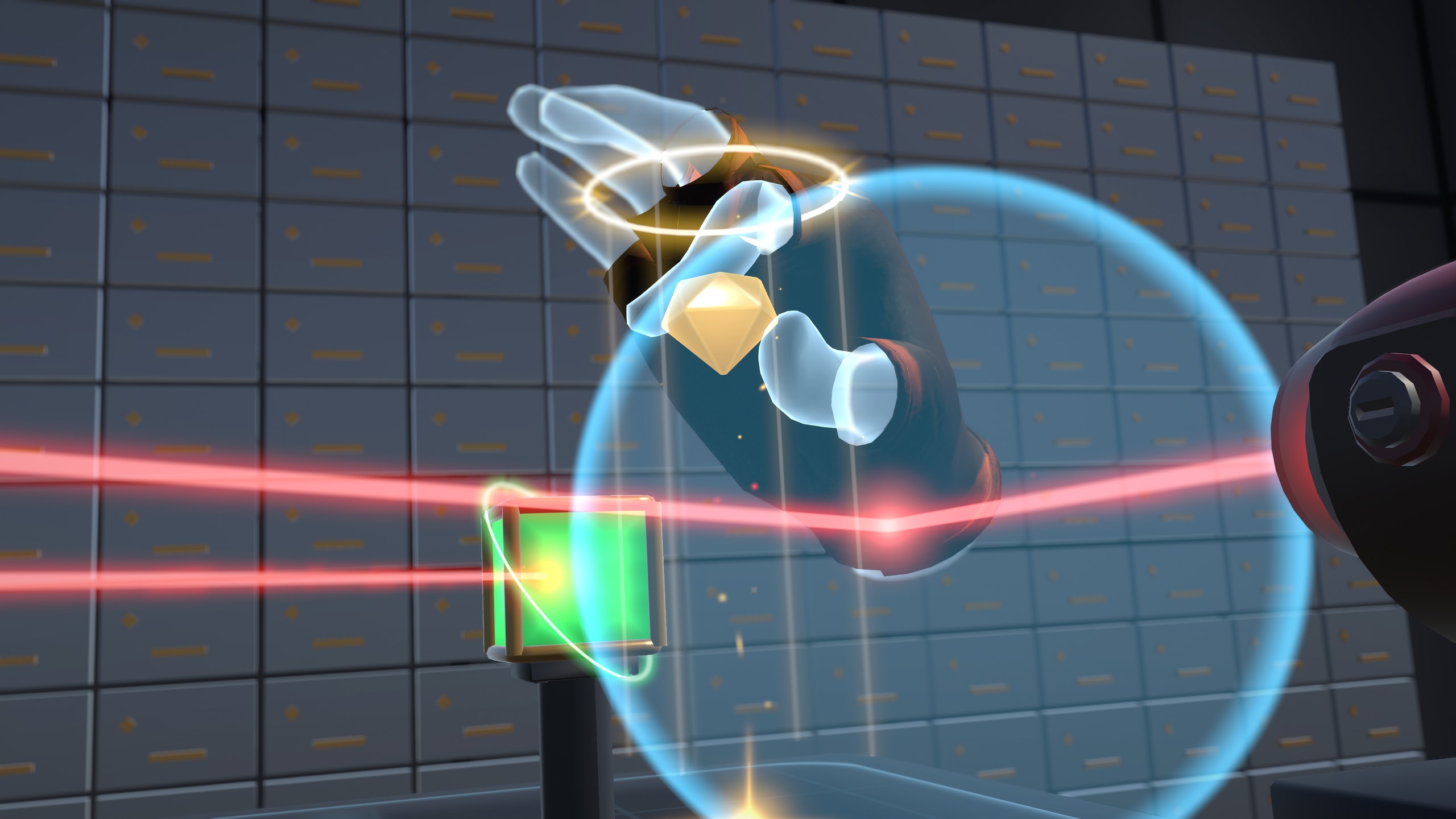
You're a giant thief. The vault is a glass display case sitting on your table, crisscrossed by security lasers. You bend a laser onto the lock with your bare hands to open the case, then lift the gem out without crossing a guard beam.
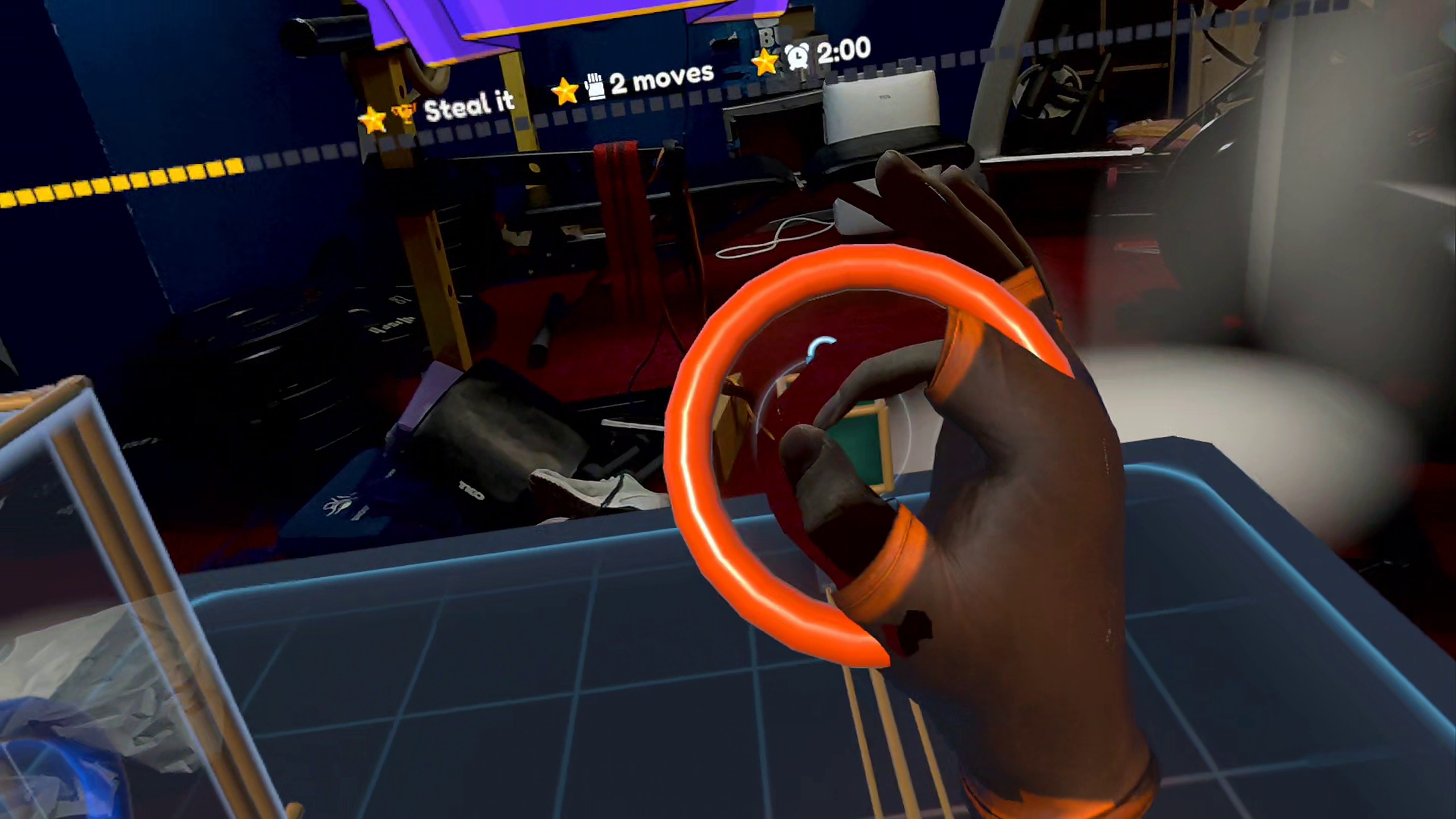
Your hands are the whole toolkit. An open hand is a mirror that tips as you bend your fingers. A closed hand blocks a beam. Tapping your thumb to your middle finger leaves a frozen "ghost" mirror hanging in the air, which frees that hand for the next move. An OK sign drops a portal, blue from your left hand and orange from your right. A fist or a pinch grabs the gem.
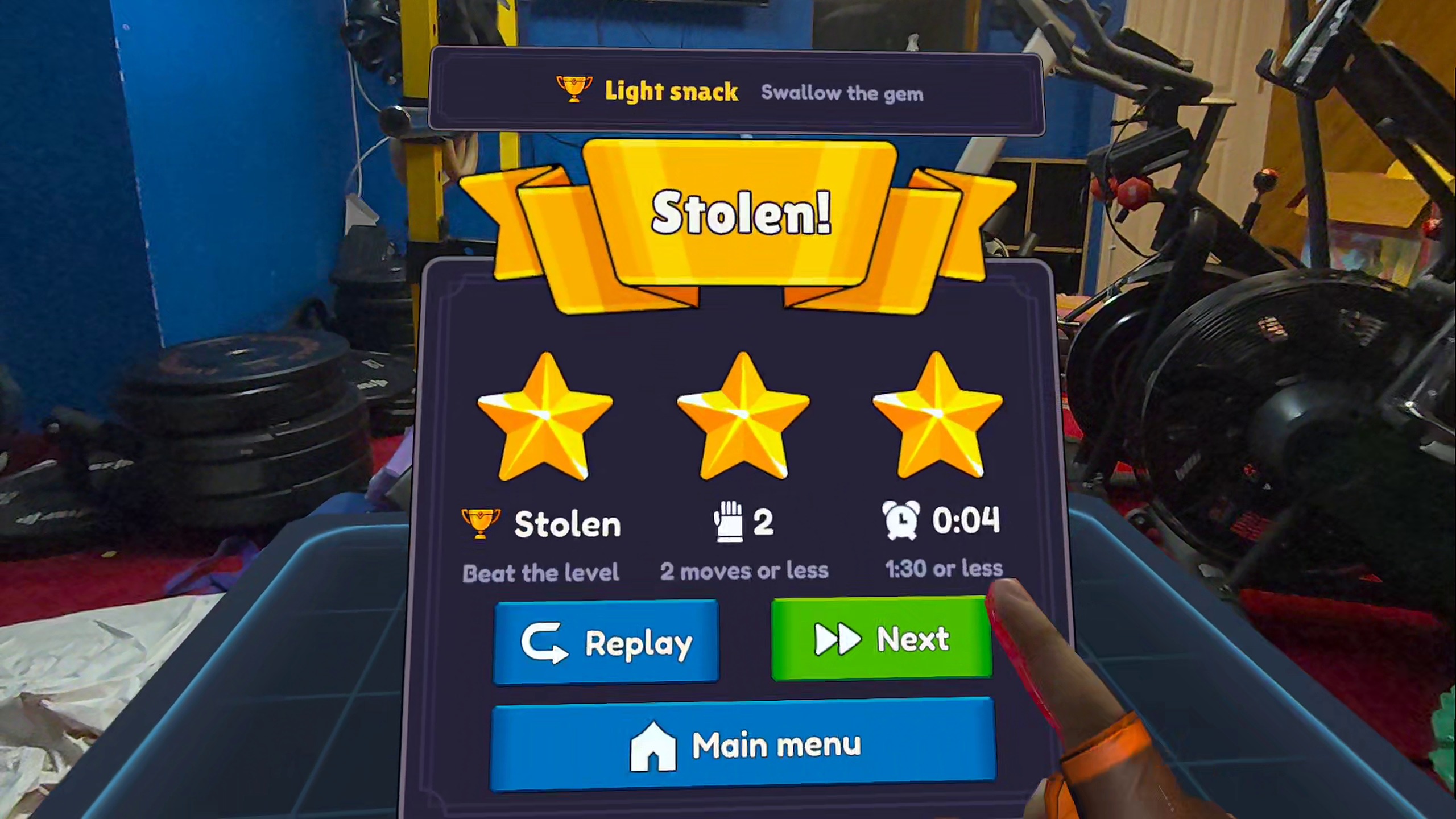
There are 75 vaults across several chapters, each one adding a new piece. Every vault has three stars to earn: steal the gem, match the par number of moves and beat the par time. There's also a daily challenge that replays a beaten vault with a twist, plus 26 achievements.
Your room is the museum. Searchlights sweep across your actual walls while the lights dim like it's after hours. Trip the alarm and the whole room floods red.
How I built it
I built it solo in Unity 6 with the Meta XR SDK, using the Interaction SDK for the hands-only menus and MRUK to understand the room. The laser is a ray traced on the CPU that bounces off a plane built from your hand joints. A One Euro filter smooths that plane so the beam follows your hand without jittering.
Early on I started recording the hand tracking from every playtest so I could replay it exactly in the editor. That ended up being the most important tool in the project. "The freeze didn't work that one time" became something I could actually reproduce and fix.
I also had an AI playtester play the game as a total beginner. It only saw the headset view and moved with human-limited hands. Watching where it got stuck changed how the game teaches itself.
Challenges I ran into
The biggest one was making your hand feel like a mirror you can actually control. My first version reflected the laser off every finger bone. That sounds realistic, but the beam jumped around even when your hand was still. I ended up treating the whole open hand as one mirror that tips as you bend your fingers. It finally felt good.
Gestures were another fight. The headset reserves an index pinch with your palm facing you for its own system menu, so the freeze had to move to a thumb-to-middle-finger tap. Then the headset's own middle-pinch detection missed a lot of real taps. I added a fallback based on fingertip distance and tuned it against my recorded playtests. I also found that freeze taps near the gem were accidentally grabbing it and setting off the alarm. Now only a fist, an index pinch or a full grasp can pick things up.
I didn't want any text tutorials. Instead, a ghost hand shows each new gesture once, in a vault that can't be solved without it. Everything also had to work seated: every lock, gem and demo stays inside a comfortable field of view, every solution is within arm's reach and nothing asks you to bend your wrist too far.
Finally, I wanted it running at 144 Hz on Quest 3 without dropping resolution. In mixed reality that meant cutting a lighting effect I liked because it caused stale frames.
Accomplishments that I'm proud of
Your hands are the only input, even in the menus. If you pick up a controller, the game politely asks you to put it down.
Every one of the 75 vaults has a scripted solution, played back with real recorded hands, that has to hit exactly par. Cheat attempts have to fail too, so I know every puzzle is fair.
It holds 144 Hz on Quest 3. It really does play anywhere you can sit: I've stolen gems at home and on a plane, on a tray table.
What I learned
Hand tracking is finally good enough for your hand to be an instrument instead of just a pointer. You just have to design around what it can't do: system gestures, fingers hiding each other and noise. Recording real hands and replaying them was worth more than any amount of guessing. Mixed reality is at its best when your actual room becomes part of the moment, like when the alarm turns your own walls red.
What's next for Light-Fingered
A hands-only level editor with share codes, more chapters and a full store launch.


