-
-
Benefits
-
-
Introduction
-
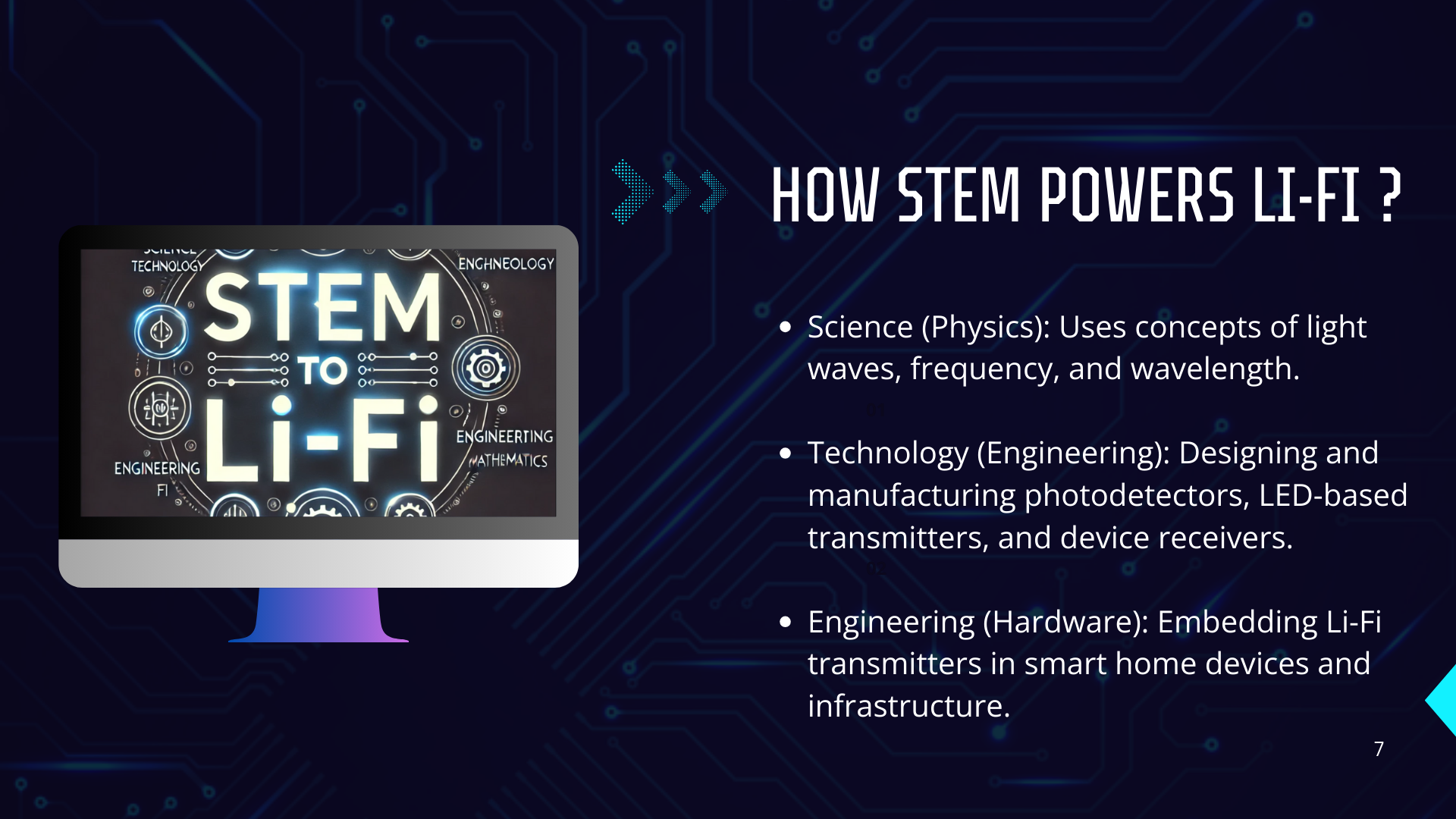
STEM integration
-
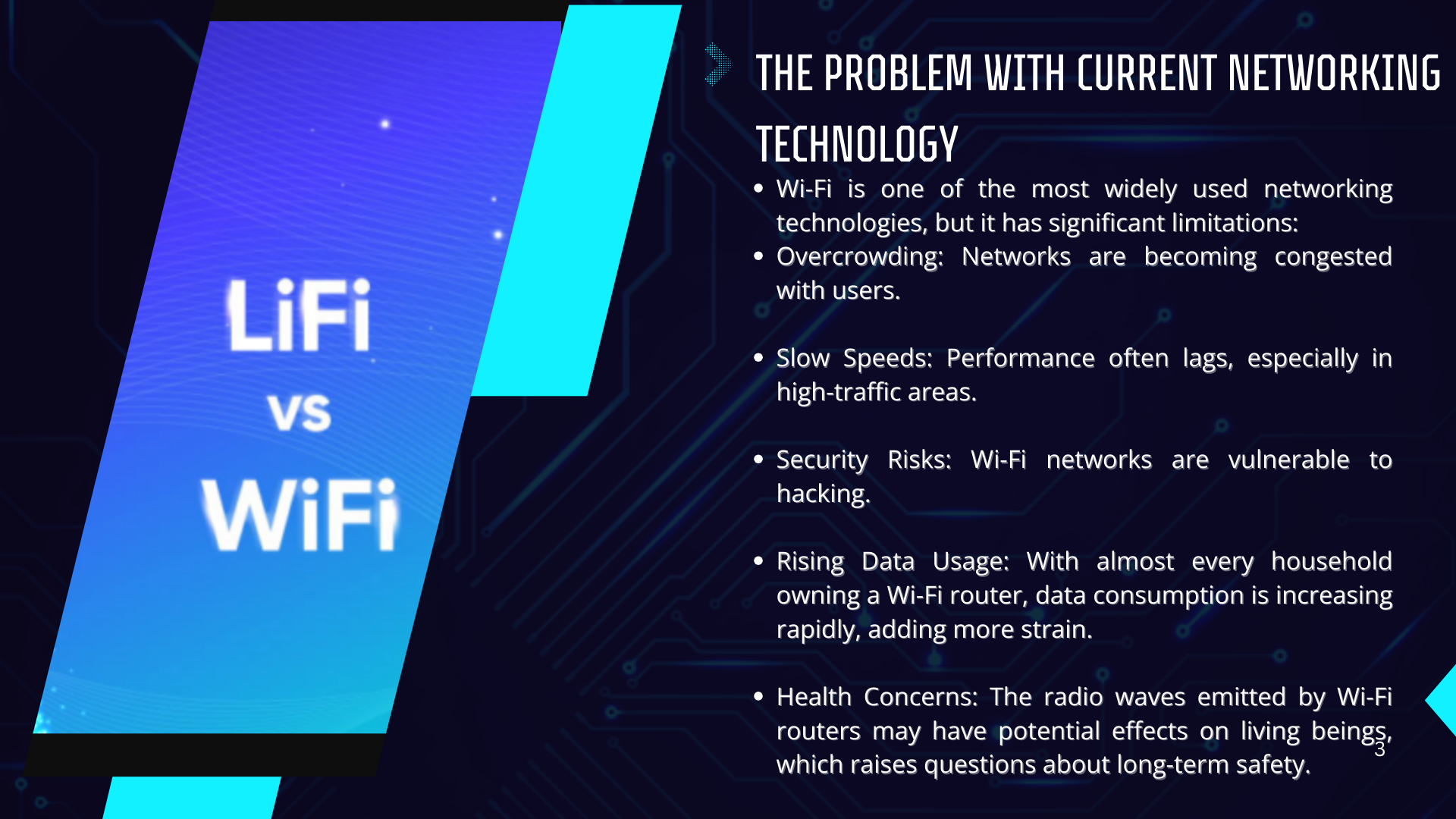
Problem Statement
-
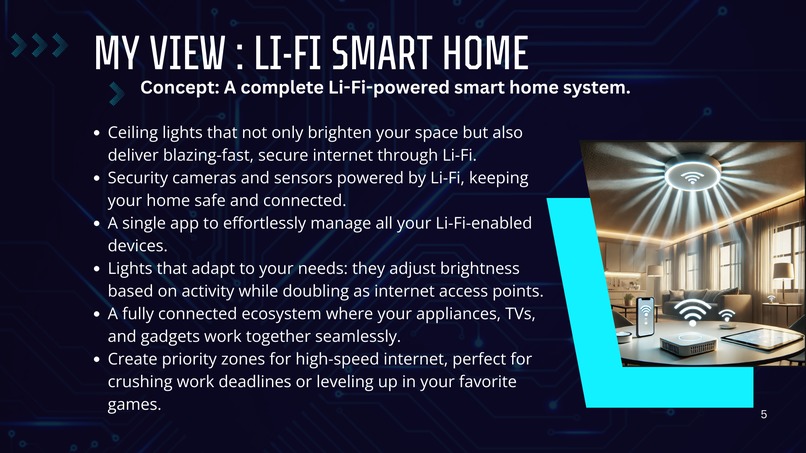
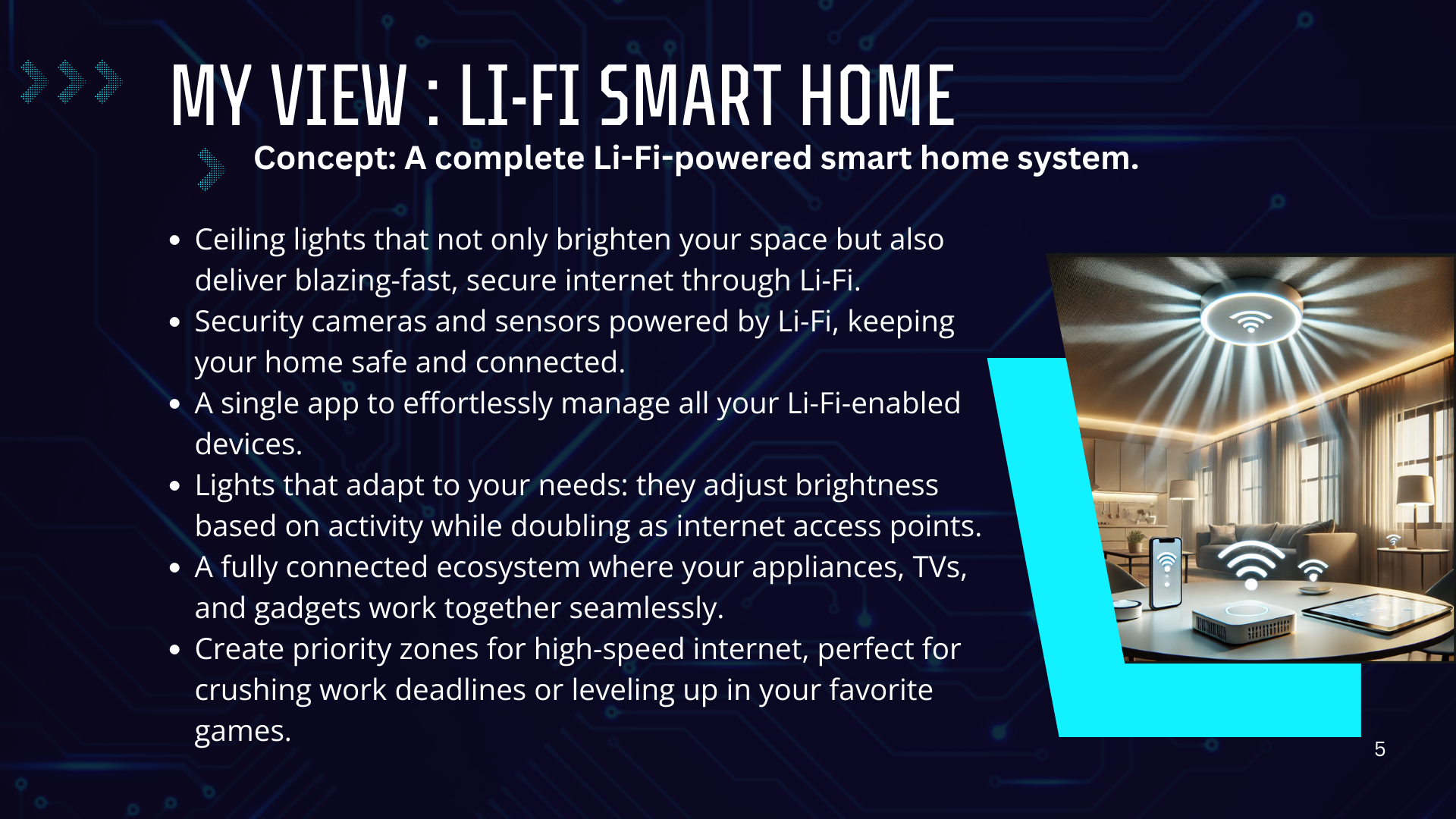
My Unique Idea
-
-

-
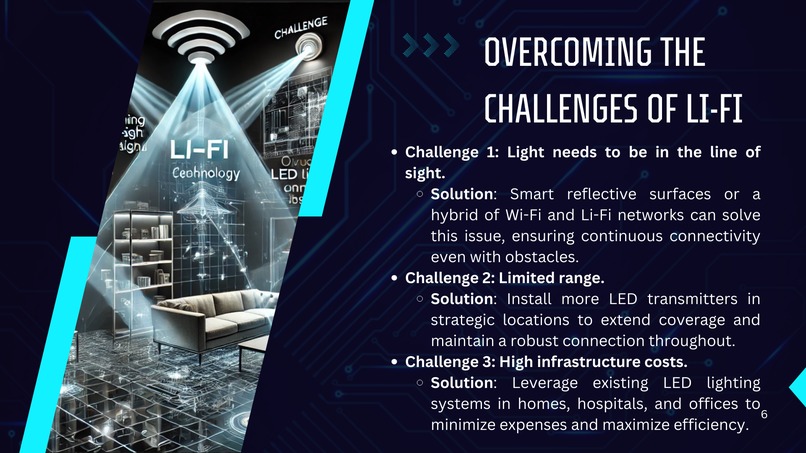
Challenges
-
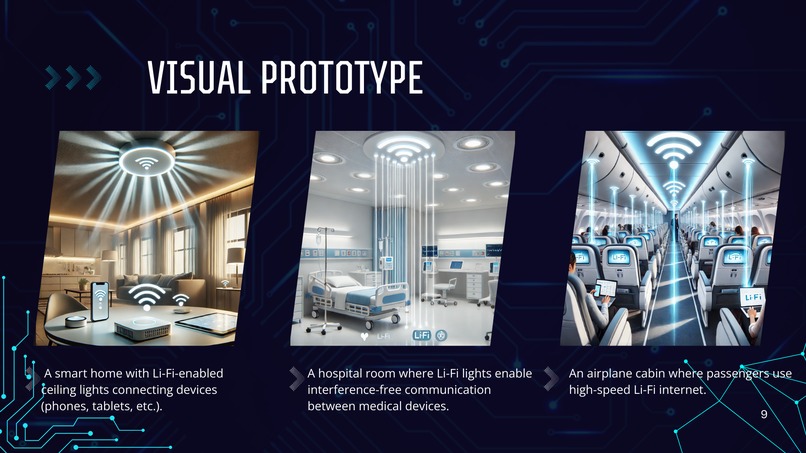
Visual protoytype
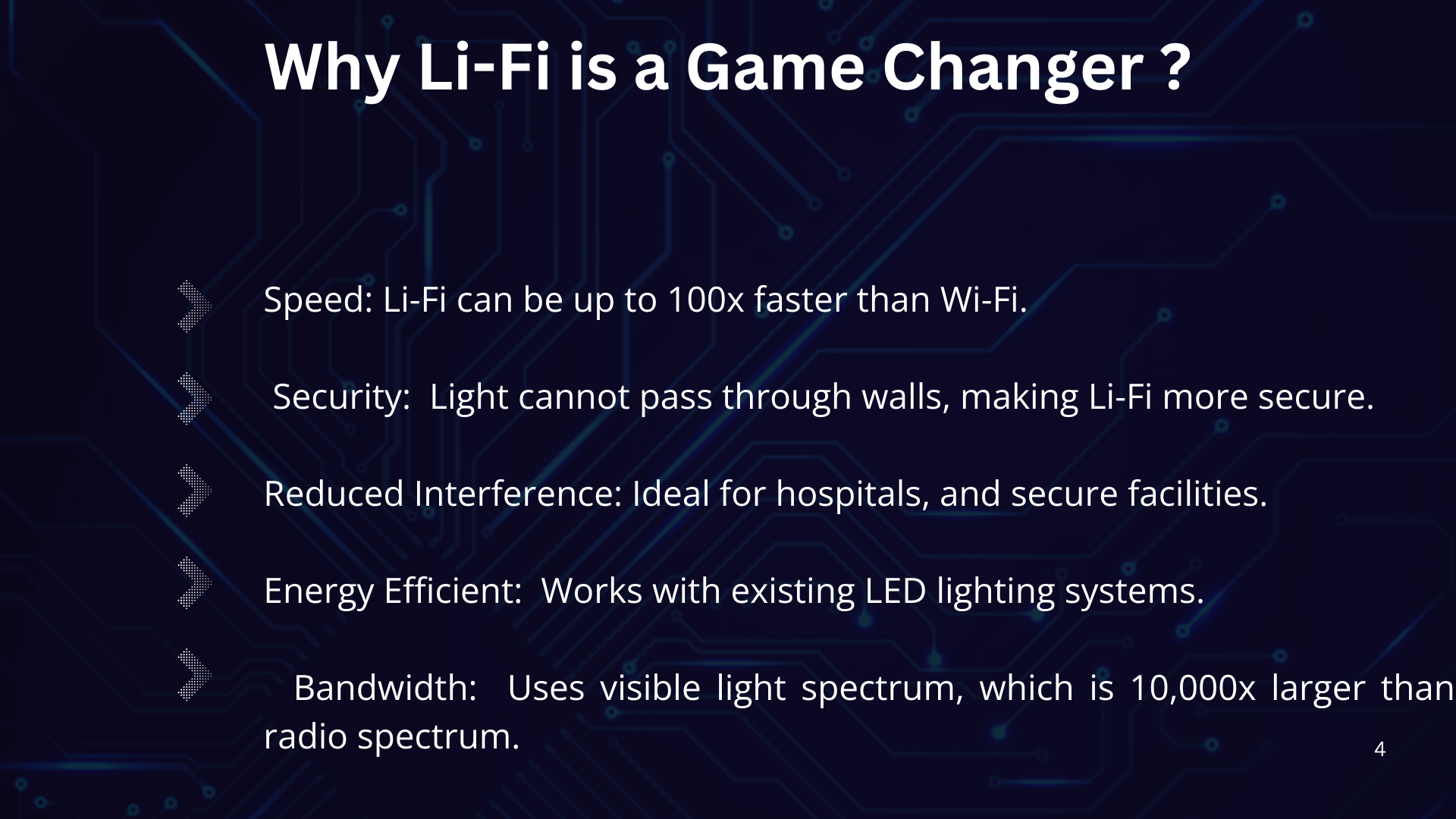
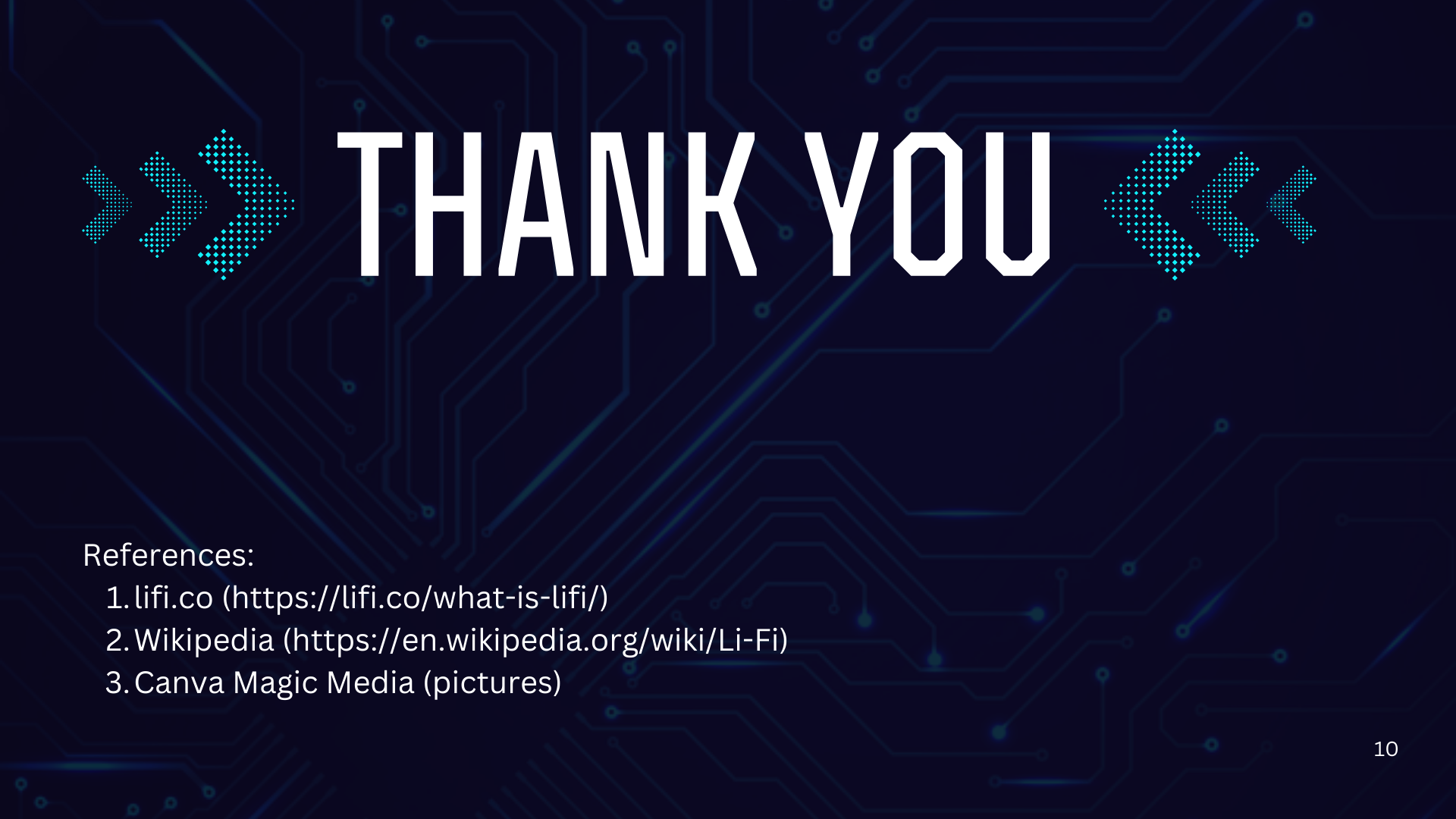
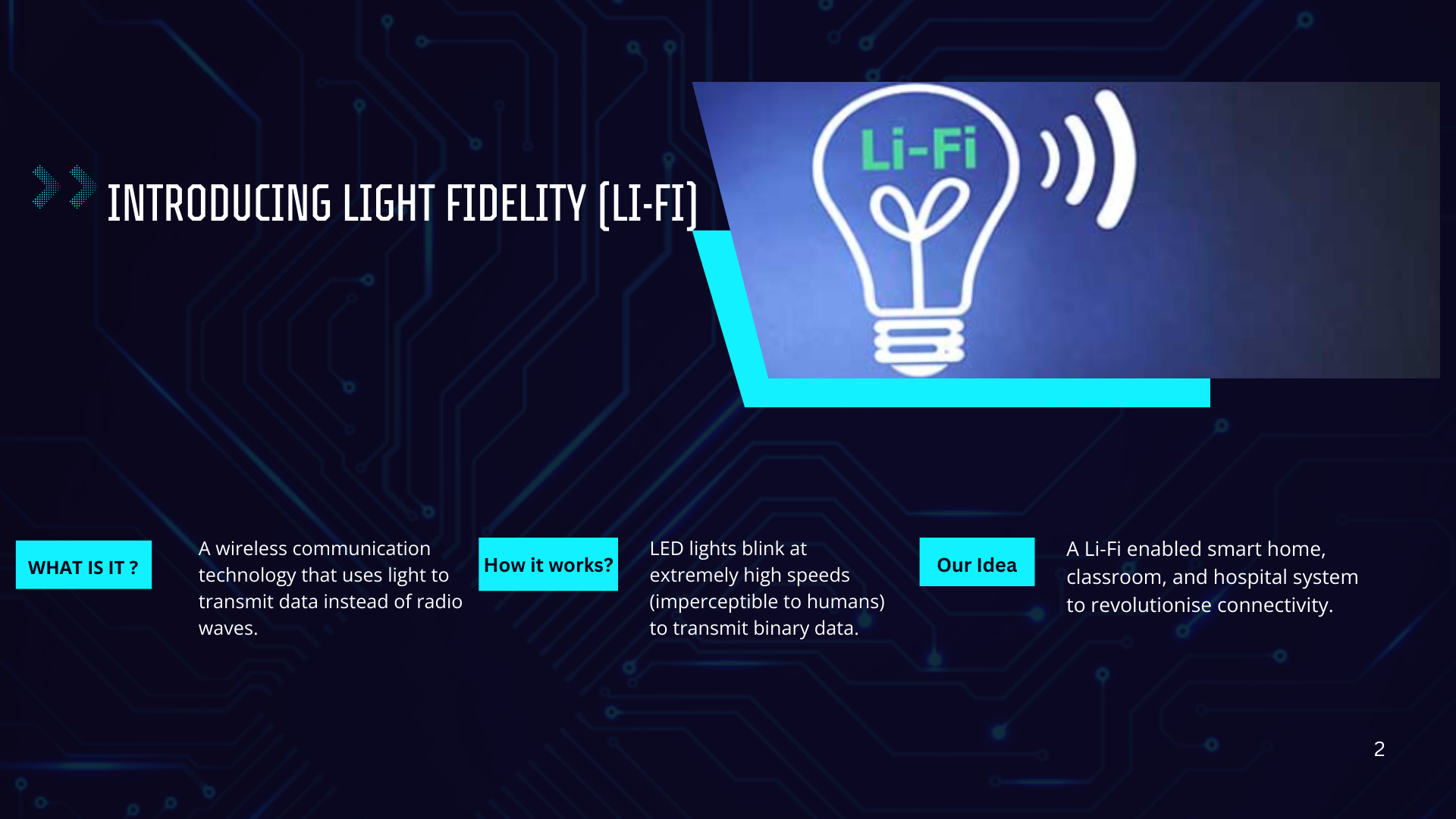

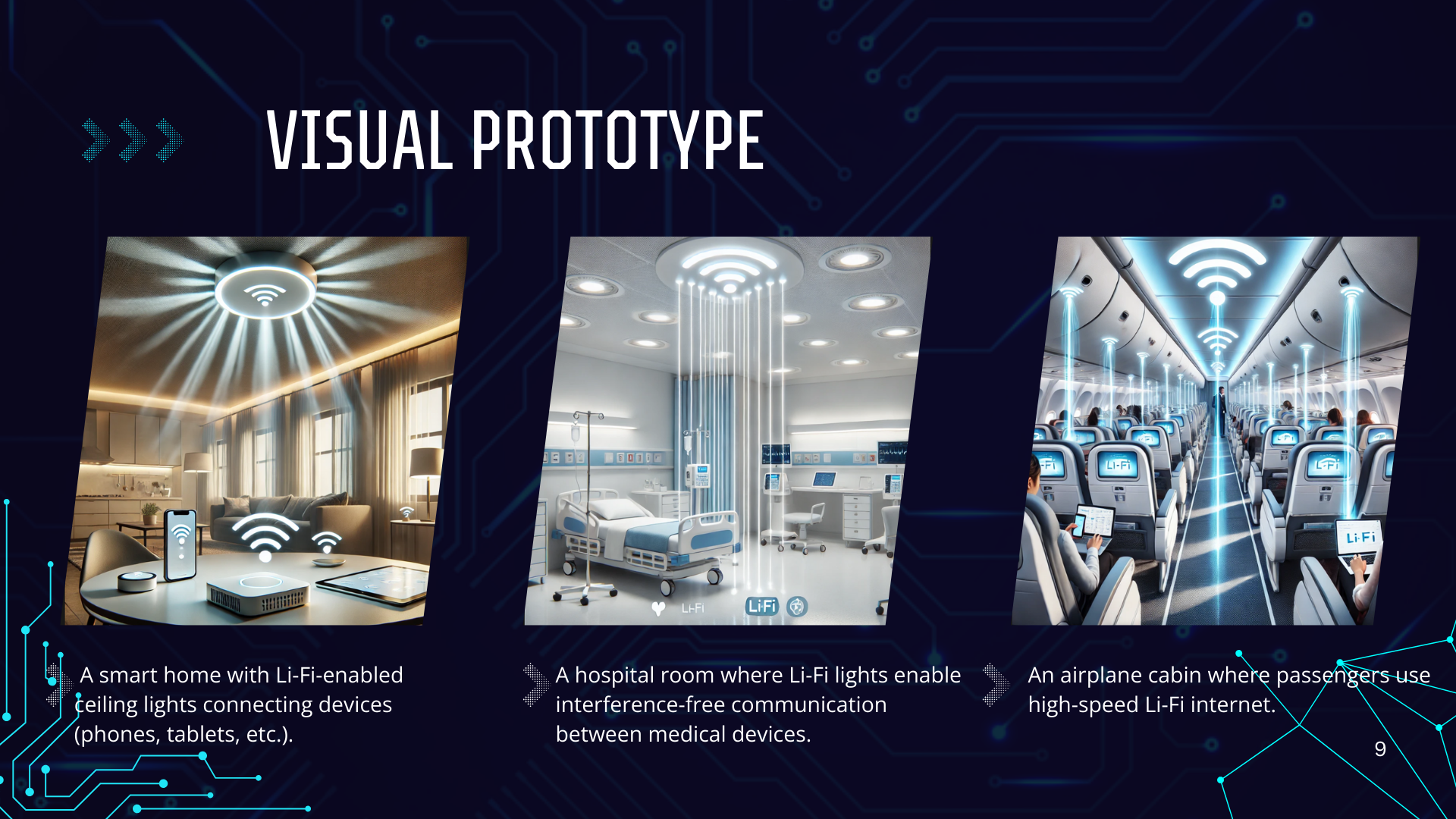
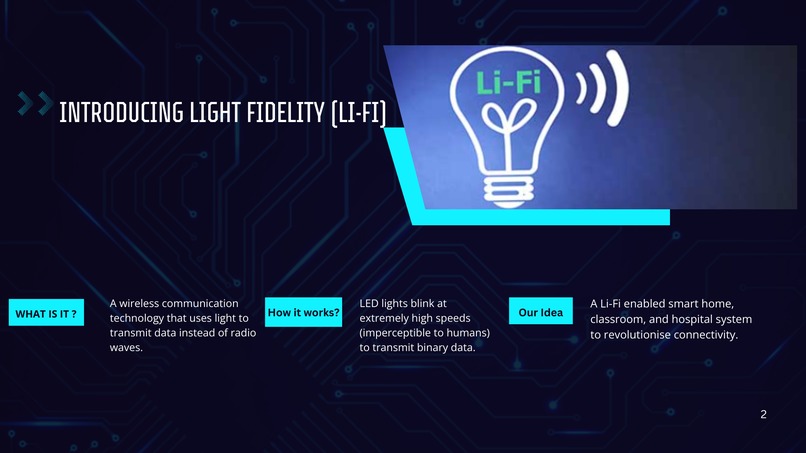
boldInspiration I wanted to work on something that solves real-life issues, like slow and overcrowded Wi-Fi. The idea of using light for internet felt so futuristic and exciting, especially since it’s faster and safer. Plus, I’m really into STEM, and Li-Fi combines physics, technology, and engineering in such a cool way. It felt like the perfect idea to explore for the Ideathon! boldWhat it does Li-Fi is a wireless communication technology that uses LED lights to transmit data through rapid light modulation. It delivers faster speeds, enhanced security, and reduced interference, making it ideal for smart homes, hospitals, and airplanes, all while utilizing existing lighting infrastructure. boldHow did i built it
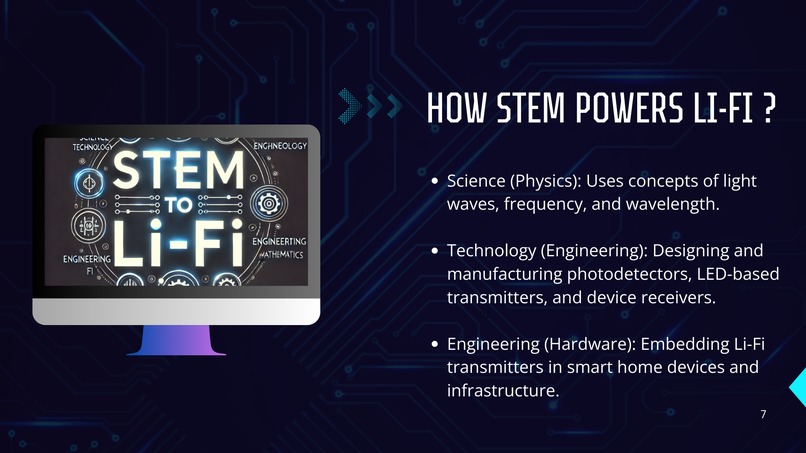
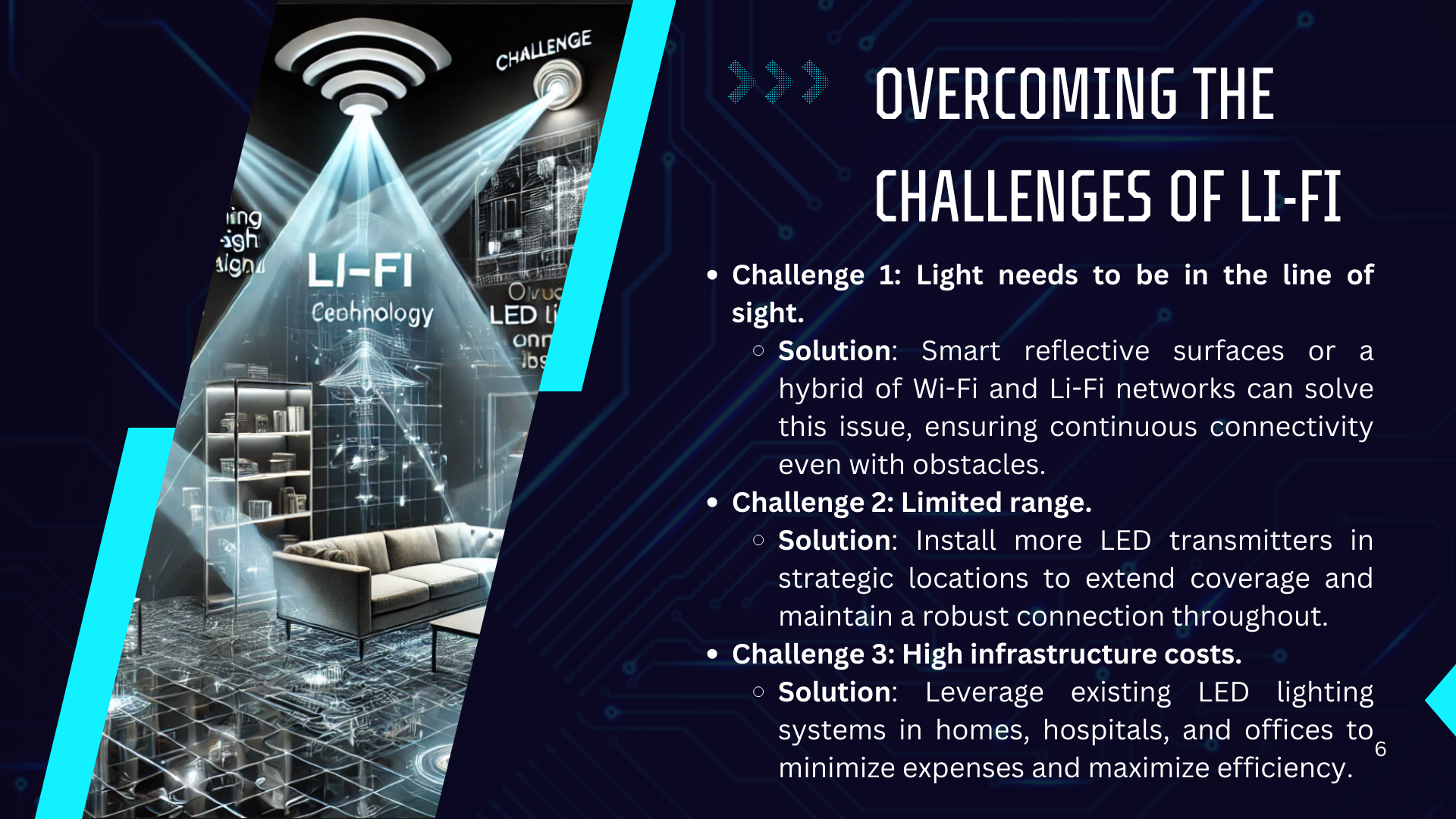
- Researched Li-Fi technology and its applications to address Wi-Fi limitations. 2.Designed a concept for a Li-Fi-powered smart home with adaptive lighting and high-speed zones. 3.Created mockups showcasing Li-Fi in smart homes, hospitals, and airplanes. 4.Integrated STEM principles to solve challenges like line-of-sight and range limitations. 5.Developed a clear presentation with visuals and refined the idea for practical use. boldChallenges we ran into We faced challenges like Li-Fi's need for a clear line of sight, limited range, and the cost of upgrading existing infrastructure. Overcoming these required innovative solutions like reflective surfaces, strategic LED placement, and leveraging current lighting systems. bold Accomplishments that we're proud of We’re proud of creating a clear vision for a Li-Fi-powered smart home, designing practical solutions to overcome challenges, and developing compelling prototypes that showcase the potential of Li-Fi in real-world scenarios. bold What we learned LiFi (Light Fidelity) uses light to transmit data wirelessly, offering faster speeds and better security than Wi-Fi. It works by modulating light signals, typically from LEDs, and decoding them with photodetectors. LiFi is ideal for environments where radio-frequency interference is a concern but requires line of sight and can’t work through walls. Its potential lies in providing high-speed, secure, and energy-efficient wireless communication, especially for IoT and smart city applications. boldWhat's next for LiFi
Built With
- canva
- lifi.co
- wikipedia

Log in or sign up for Devpost to join the conversation.