-
-
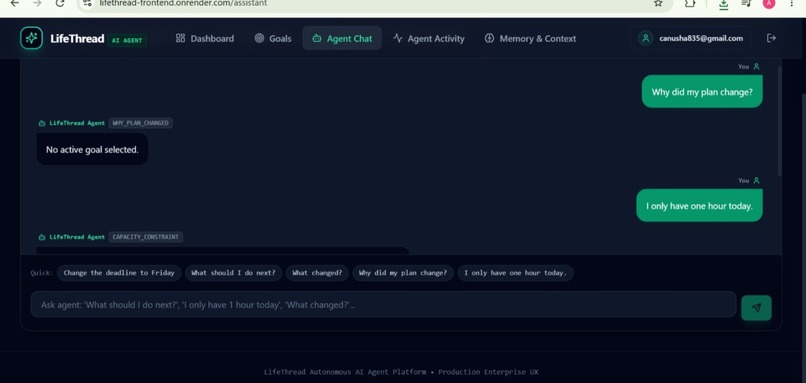
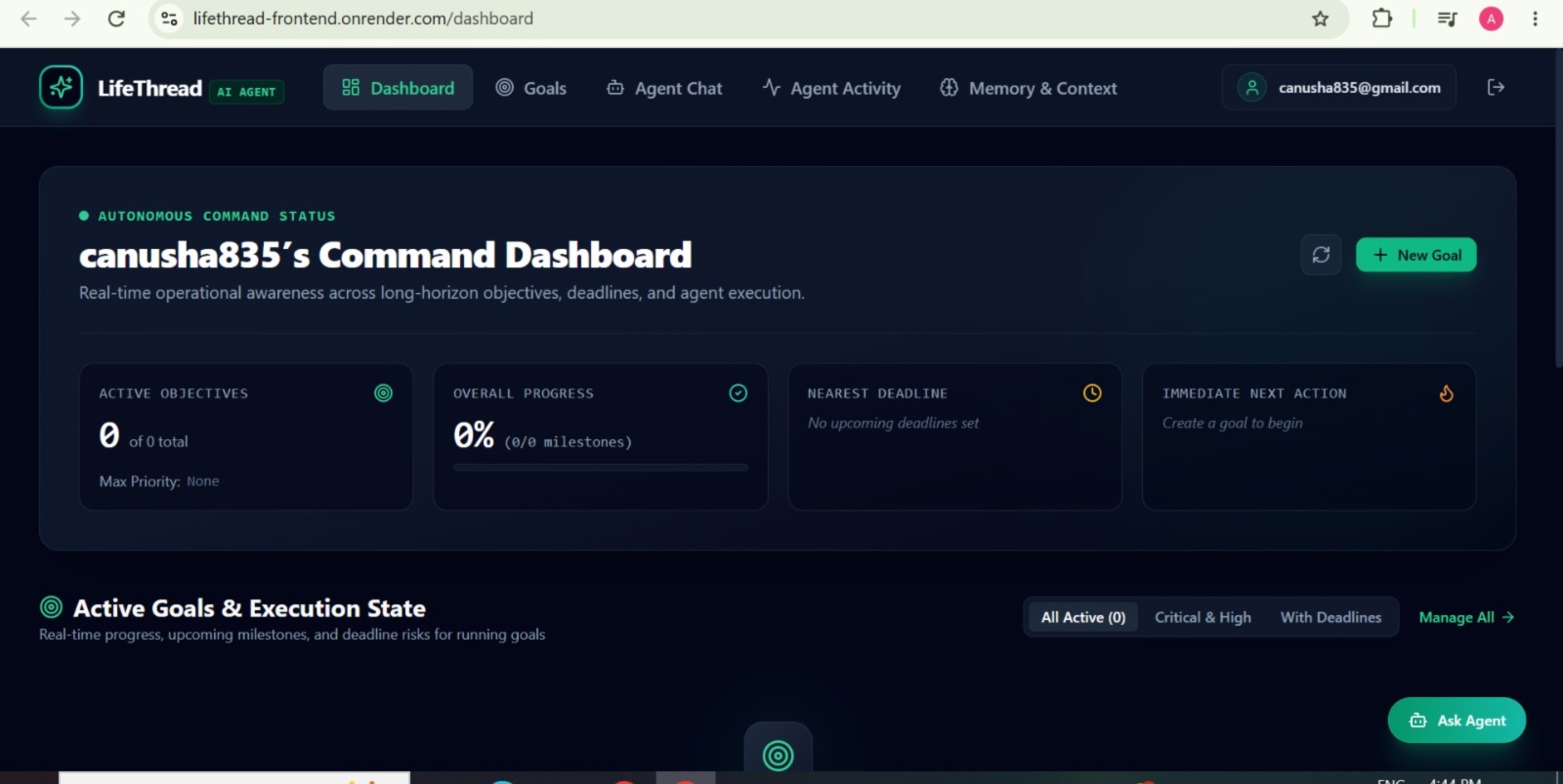
Context-Aware Agent Chat — Adaptive Planning and Real-Time Goal Assistance
-
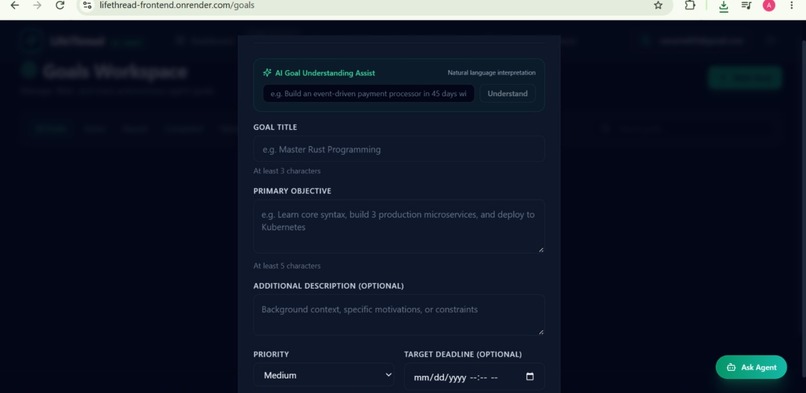
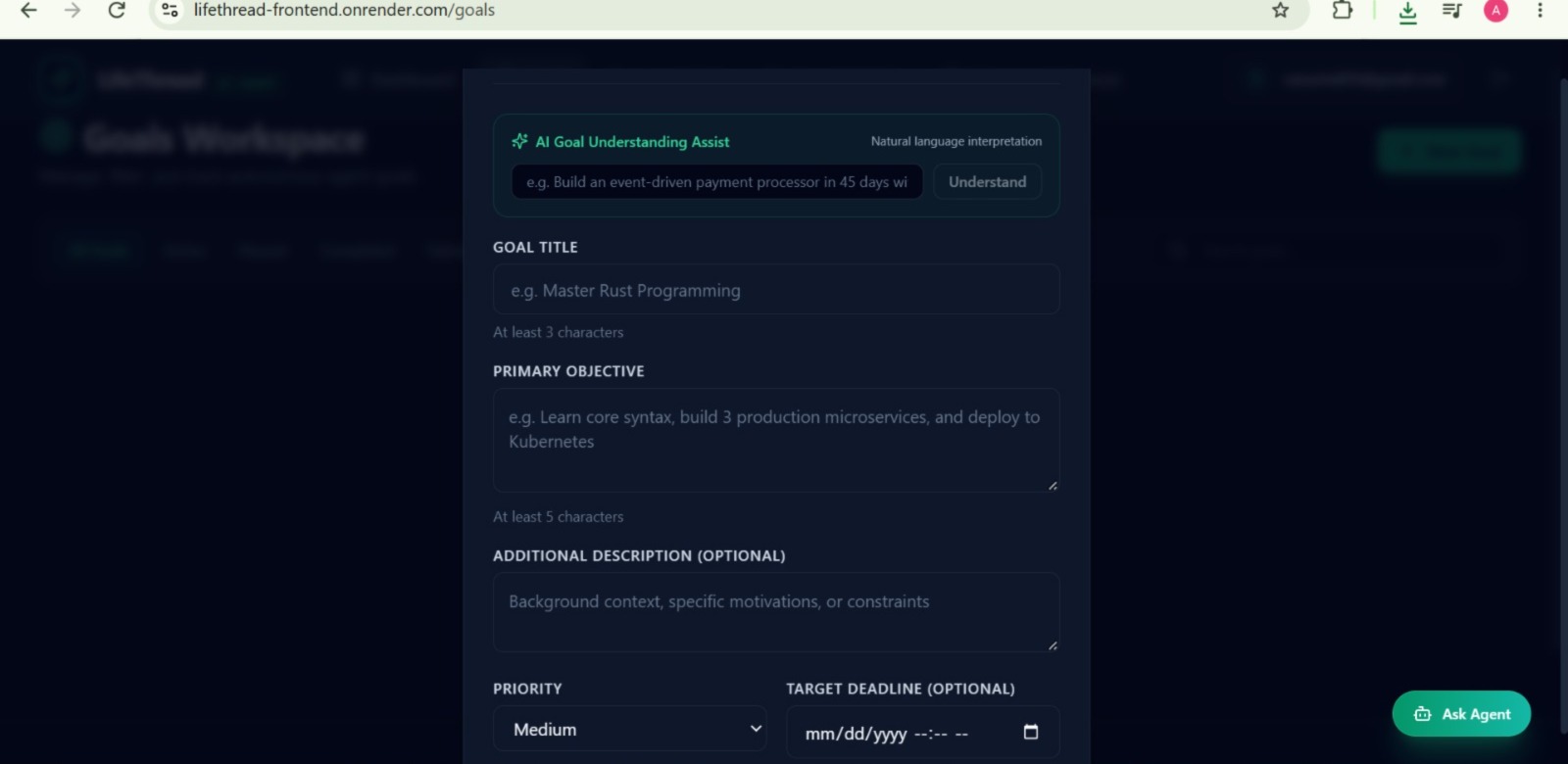
AI Goal Understanding — Transforming Natural-Language Goals into Structured Objectives
-
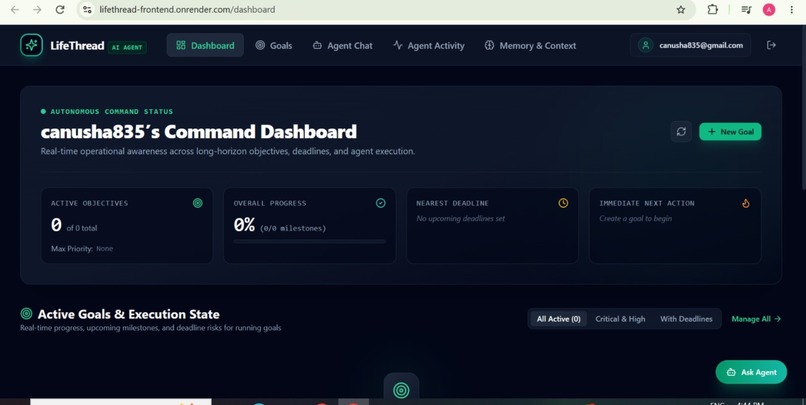
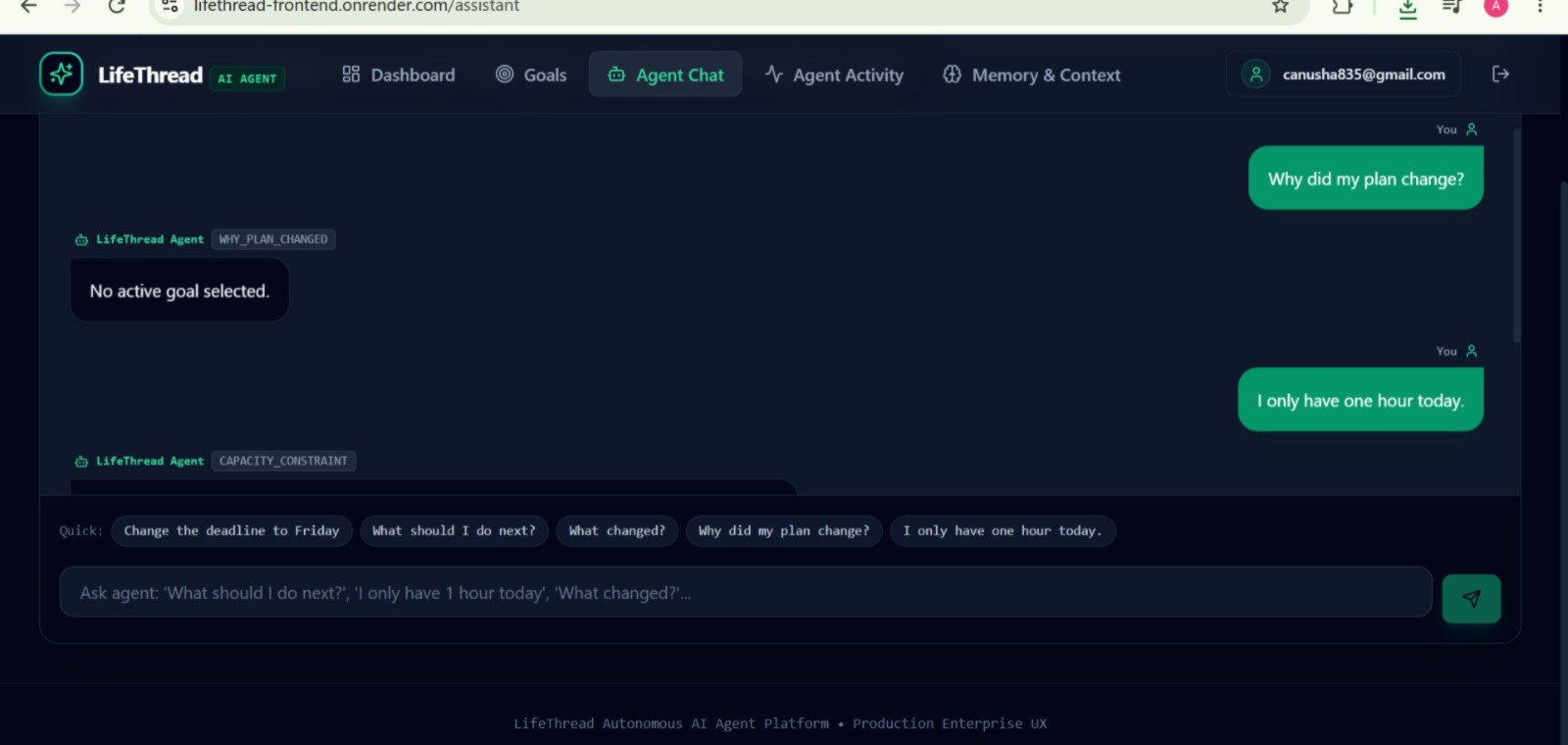
Agent Chat — Ask, Adapt, and Replan in Real Time
-
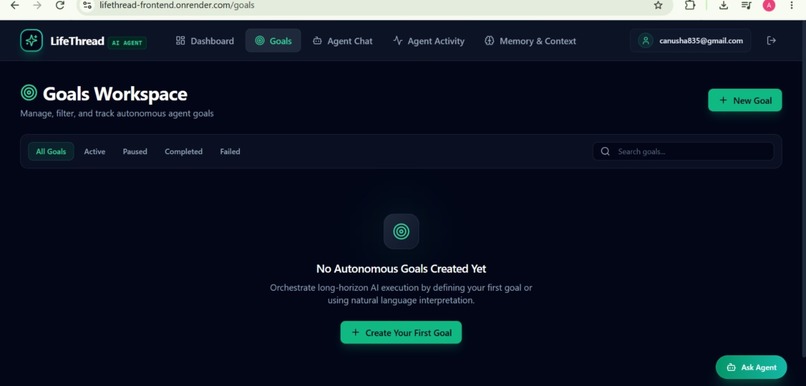
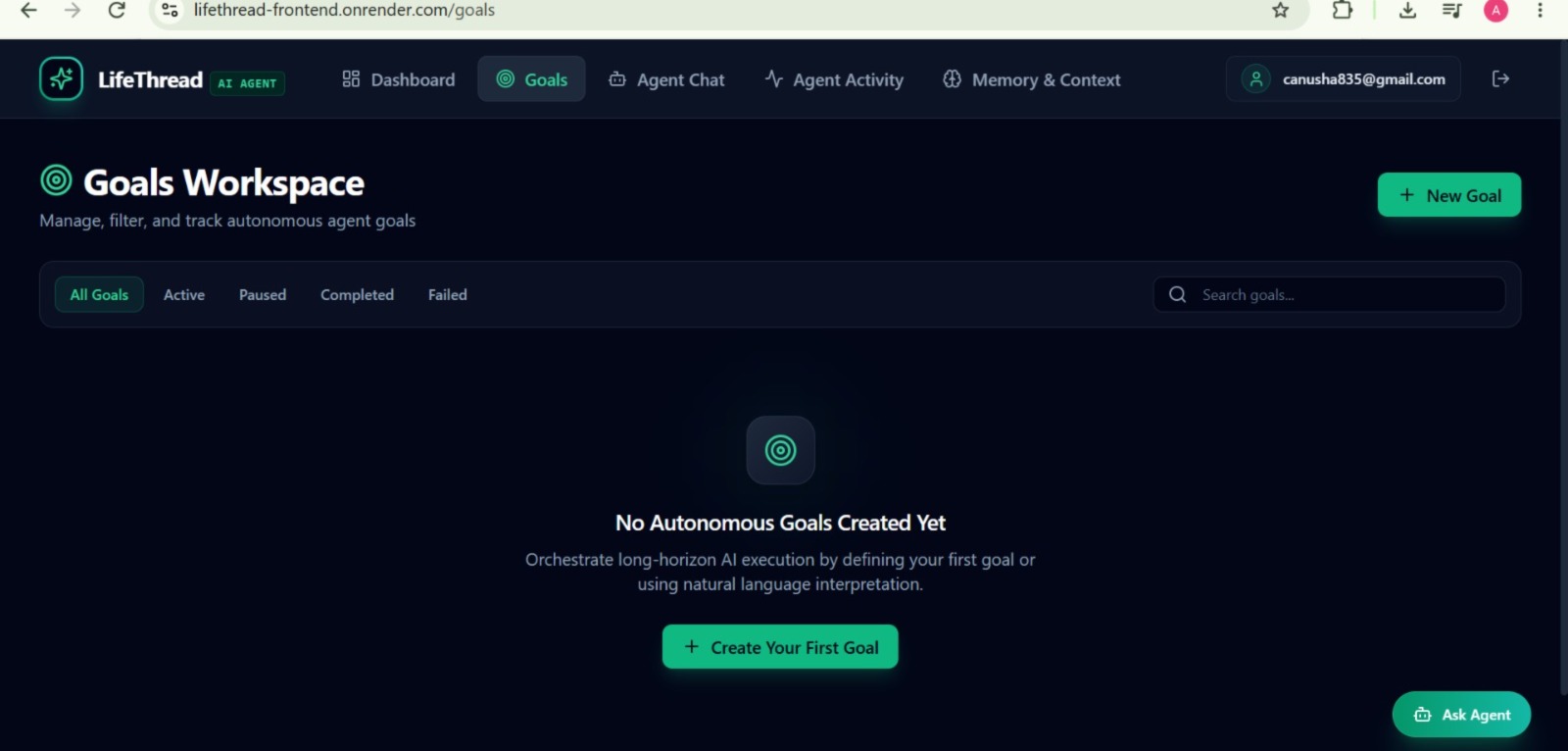
Goals Workspace — Monitor, Filter, and Manage Autonomous Long-Term Goals
The Problem
Most AI assistants are designed around individual conversations. They can answer questions, generate plans, and perform individual tasks, but long-running goals are different.
When a goal takes days or weeks, circumstances constantly change. Deadlines move, tasks fail, priorities change, new information appears, and users may discover weaknesses along the way. A static checklist or one-time AI response cannot reliably manage this evolving state.
We wanted to build an AI system that does more than generate a plan — it continuously understands the goal, acts on it, learns from outcomes, and adapts the plan when reality changes.
The Idea
This led us to LifeThread — Persistent AI Goal Agent.
LifeThread treats a user's goal as a living state rather than a single prompt.
A user can provide a goal such as:
"I need to become interview-ready for an AI Engineer role in 10 days."
LifeThread transforms that goal into structured objectives, milestones, tasks, dependencies, deadlines, and priorities.
The agent then follows an execution loop:
Understand → Plan → Act → Evaluate → Remember → Replan
As progress changes, LifeThread updates the goal state and determines the next best action.
For example, if an important task is blocked or the available preparation time is reduced, LifeThread analyzes the impact on the existing plan and generates a new plan instead of simply continuing with an outdated schedule.
How We Built It
We designed LifeThread as a modular agentic AI platform.
The frontend provides the goal workspace, progress visualization, agent activity, memory, and plan changes.
The backend provides APIs, authentication, goal management, planning, evaluation, memory, and persistence.
The agent layer coordinates the complete execution lifecycle:
- Goal Understanding — converts natural language into structured objectives, constraints, deadlines, and success criteria.
- Goal Decomposition — breaks objectives into milestones, tasks, and dependencies.
- Planning Engine — creates schedules based on deadlines, priorities, dependencies, and available time.
- Agent Orchestrator — coordinates observation, decisions, actions, evaluation, and state updates.
- Tool Execution — provides controlled execution of agent actions.
- MCP Integration — exposes capabilities through structured tools that the agent can discover and use.
- Persistent Memory — stores meaningful goals, preferences, outcomes, weaknesses, and experiences.
- RAG — retrieves relevant information from user-provided documents and long-term knowledge.
- Evaluation Engine — measures progress, identifies weaknesses, and calculates goal risk.
- Autonomous Replanning — detects changes and creates a new plan when the existing plan is no longer appropriate.
The system maintains a persistent goal state containing information such as progress, milestones, completed tasks, blocked tasks, weaknesses, risks, constraints, and the next best action.
Previous plans are preserved so that users can understand what changed rather than silently losing the original plan.
Agent Architecture
At the core of LifeThread is an iterative execution loop:
OBSERVE
   ↓
UNDERSTAND
   ↓
PLAN / DECIDE
   ↓
ACT
   ↓
EVALUATE
   ↓
UPDATE STATE
   ↓
REPLAN WHEN NECESSARY
   ↺
Built With
- agent/tool
- agents
- backend
- css
- fastapi
- framework
- frontend
- generative
- github
- javascript
- jwt
- llm
- mcp
- pgvector
- postgresql
- protocol
- python
- rag
- react
- rest
- tailwind
- tooling
- typescript
- ui
- vite

Log in or sign up for Devpost to join the conversation.