-
-
-
-
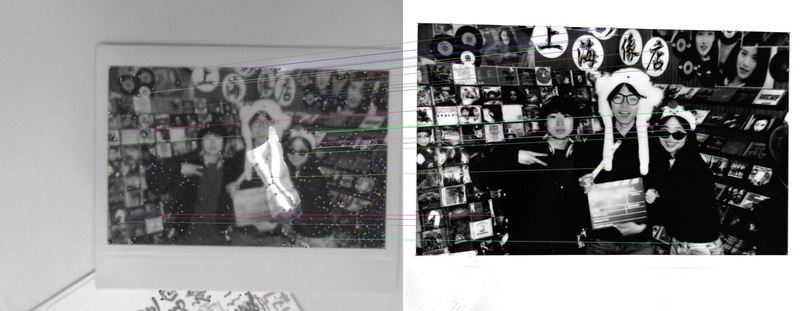
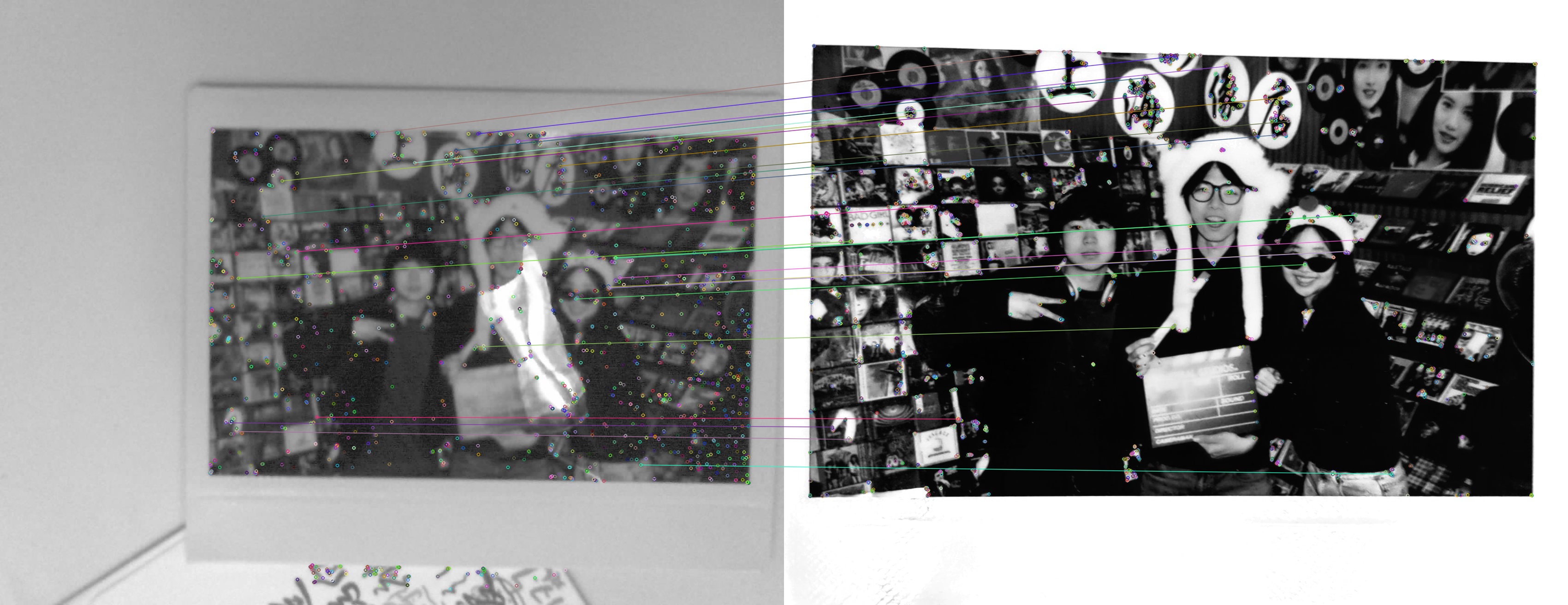
Physical to Digital Match using ORB
LifeStory
_For families living with Alzheimer's. So the people you love never feel like strangers.
Inspiration
At 16, our teammate Justin watched his grandmother slowly lose pieces of her memory to Alzheimer's disease. Some days she recognized everyone in the room. Other days, she looked at the people she loved most and no longer knew who they were.
We realized Alzheimer's doesn't just affect one person, it was a real social issue that creates a growing disconnect between entire families, their histories, and the relationships that once held them together.
One moment especially stayed with us: dementia patients often ask the same question dozens of times a day: "Who are you?" or "Where's my daughter?" By the fortieth time, even the most loving caregiver is emotionally exhausted. Not because they don't care, but because grief and repetition are overwhelming.
That became our lightbulb moment: what if we could use technology to help those with memory loss remember their LifeStory.
What It Does
LifeStory is a mobile, tablet, and desktop experience designed for people living with Alzheimer's and memory loss.
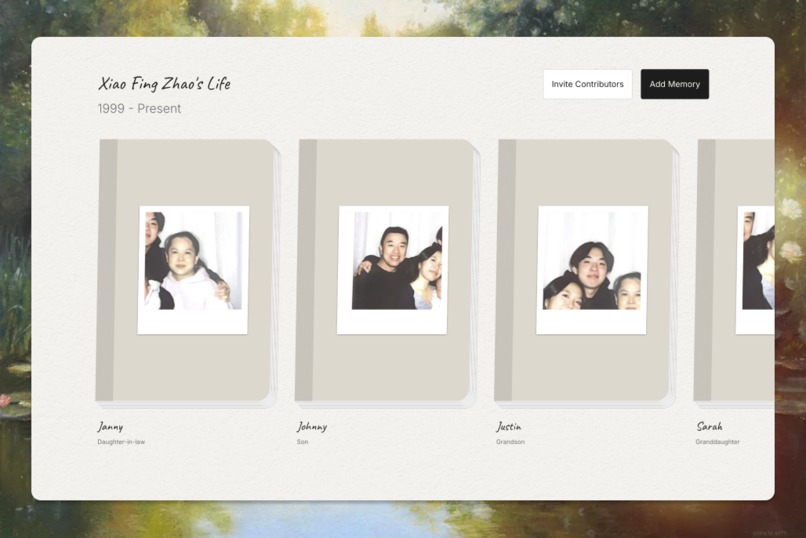
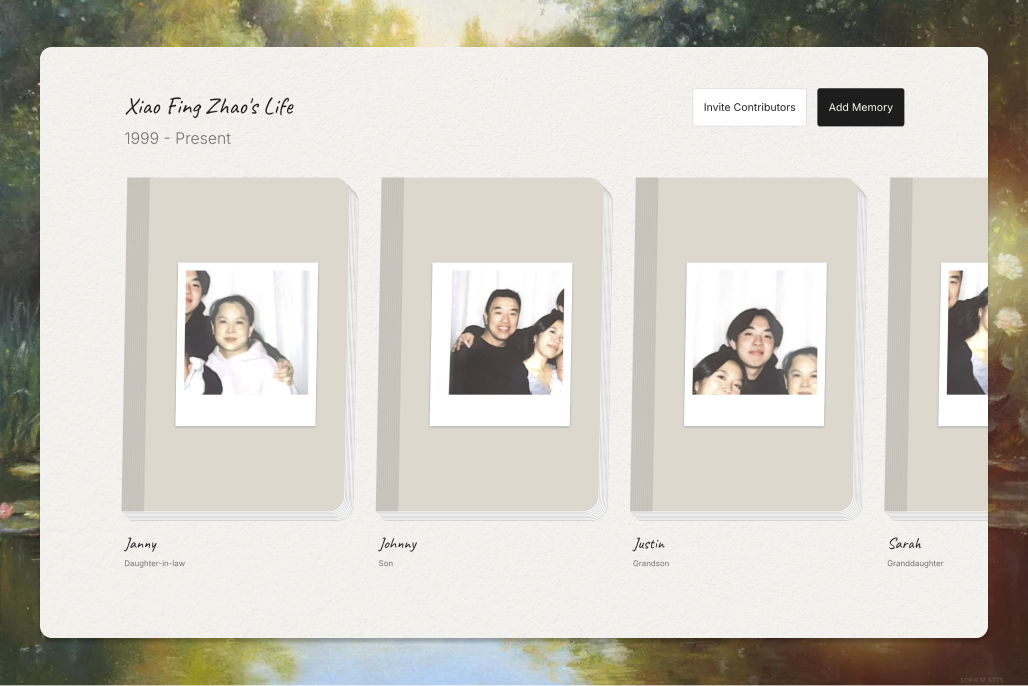
The platform allows caregivers, friends, and family members to collaboratively build a "living memory journal" using photos, stories, and voice narration. Patients can then explore familiar faces and moments through calm, guided experiences centered around recognition, emotional comfort, and consistency.
When viewing a photo, the patient hears warm, factual narration such as: "This is Sarah, your daughter. In this photo, you were taking her to the park." Patients can tap on people in photos to learn who they are and hear additional memories and context.
Unlike many memory-focused applications, LifeStory never quizzes or tests the patient. It does not ask "Do you remember who this is?" — instead, it gently supplies information and lets recognition happen naturally, without pressure or failure.
Why It Matters
$$ \text{7 million Americans living with Alzheimer's} \xrightarrow{\text{by 2050}} \text{~14 million} $$
- 55 million+ people worldwide live with dementia
- Approximately 60–70% of dementia cases originate from Alzheimer's disease
Every memory lost affects not just one person, but entire families, histories, and relationships.
How We Built It
We built LifeStory using:
- Next.js for the frontend
- Supabase for authentication, storage, and backend infrastructure
- ElevenLabs for conversational voice narration and emotionally consistent speech generation
- Object/person detection models to identify human figures in photos without using facial recognition
Our contributor workflow:
1. Upload family photos
2. The application auto-detects the people
3. Record short factual narrations
4. Validate all information before it reaches the patient
We deliberately constrained the AI system to use only family-supplied facts. The narration system never improvises or hallucinates stories.
One of the most important design choices was using voice and storytelling as the therapeutic experience itself. The same calm voice can answer repetitive questions indefinitely with warmth and patience — something that becomes emotionally difficult for exhausted caregivers over time.
How Memory Record Player Works
But what if we can make it even easier? What if we made it so that the patient could directly interact with our app, with something familiar to them - like an album photo? Memory Record Player aims to make it even more immersive since all the patient has to do is slide a picture underneath a camera, and the memories start flooding back.
The Memory Record Player uses a physical photo as an input trigger. An ESP32-S3 camera captures the printed photo, and an OpenCV/Pytorch matching pipeline compares it against digital memories in the database.
The system first uses DINOv2 to rank the most visually similar images in the dataset and shortlists them. Then, it runs ORB/RANSAC feature matching on the top DINOv2 candidates to check local keypoint alignment and identify strict feature matches. This helps balance high-level visual similarity with low-level geometric verification.
Final matching logic:
- DINOv2 filters for visually similar photos
- ORB/RANSAC verifies feature-level matches
- If DINO scores are close, ORB inliers help decide the best match
- If ORB finds matches but DINO similarity is too low, the result is rejected as a false positive
Checks and Balances algorithm between DINO and ORB
This hybrid approach was used because ORB alone produced false matches, especially with glare, blur, angled photos, and partial crops. DINOv2 helps verify that the image is visually similar, while ORB/RANSAC checks whether the local features actually line up.
Challenges We Ran Into
The biggest challenge wasn't technical — it was ethical.
A challenge was designing an experience that helps patients without making them feel confused, tested, or distressed. We redesigned our entire interaction model around one principle: never put the patient in a position to fail. This changed everything from our narration style to our UI flow.
We also had to balance personalization with safety by ensuring no facial recognition, no hallucinated AI responses, no unverified information, explicit consent for voice usage, and human validation before any content is shown. Lastly, we made sure that any conversation from Elevenlabs is done in third-person.
Accomplishments That We're Proud Of
We're proud that LifeStory evolved from "an AI scrapbook" into something much deeper and more human-centered:
- Creating a voice-first experience centered around emotional safety
- A UI that stands out and truly flows between screens like a real book on the table.
- Designing around dementia-care best practices instead of novelty
- Building an AI system that is intentionally constrained and ethically bounded
- Reframing repetition not as a limitation, but as therapy
- Building a product that supports caregivers as much as patients
What We Learned
We learned that good AI design is not about making systems feel more human, sometimes it's about knowing where to place limits.
- Consistency can matter more than intelligence
- Calm repetition can be therapeutic
- Ethical constraints often improve products instead of weakening them
- Designing for vulnerable users requires emotional sensitivity, not just technical ability
We also learned how important caregivers are in the Alzheimer's journey. Many existing solutions focus only on memory retention, while ignoring the emotional exhaustion caregivers experience every day.
What's Next for LifeStory
Our next steps focus on making LifeStory more accessible, safer, and more supportive for real families:
- Guided caregiver onboarding
- Better distress-detection and calming conversation flows
- Expanded conversational interactions with stronger safeguards
- Accessibility improvements for low-vision and low-dexterity users
- Physical integrations for non-technical patients
- Clinical and caregiver feedback partnerships
- Secure family-sharing and moderation systems
Long term, we hope LifeStory becomes a tool that preserves connection, identity, and emotional comfort for families navigating Alzheimer's together.
Because even when memories fade, love should still feel familiar.
Built With
- elevenlabs
- figma
- mcp
- nextjs
- react
- supabase
- tailwindcss

Log in or sign up for Devpost to join the conversation.