-
-

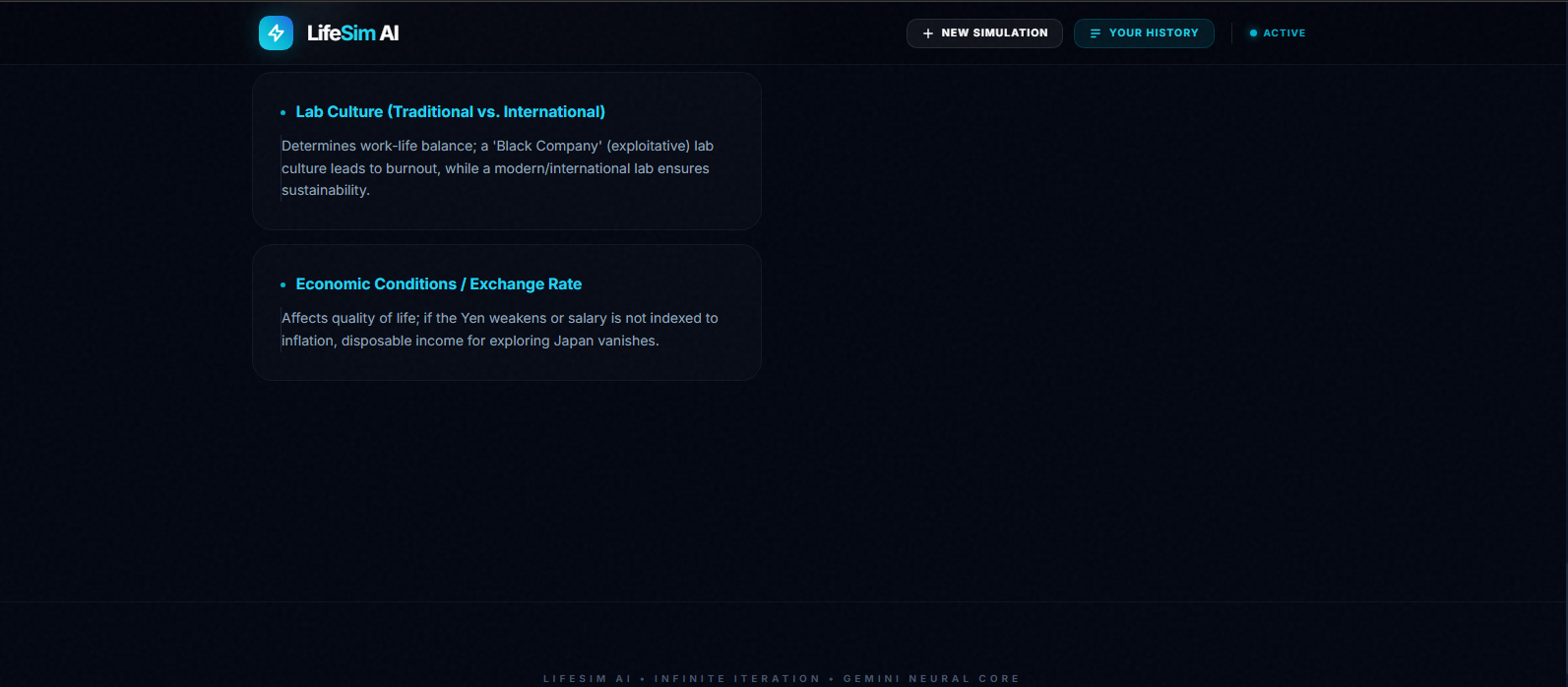
Lab culture and exchange rates aren't just background noise they shape your lifestyle, well-being, and career sustainability.
-
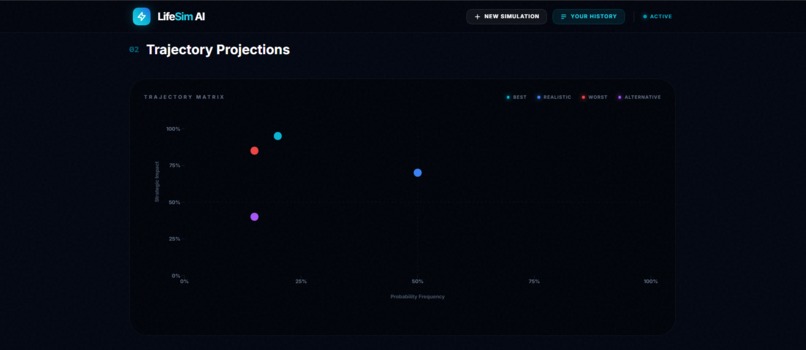
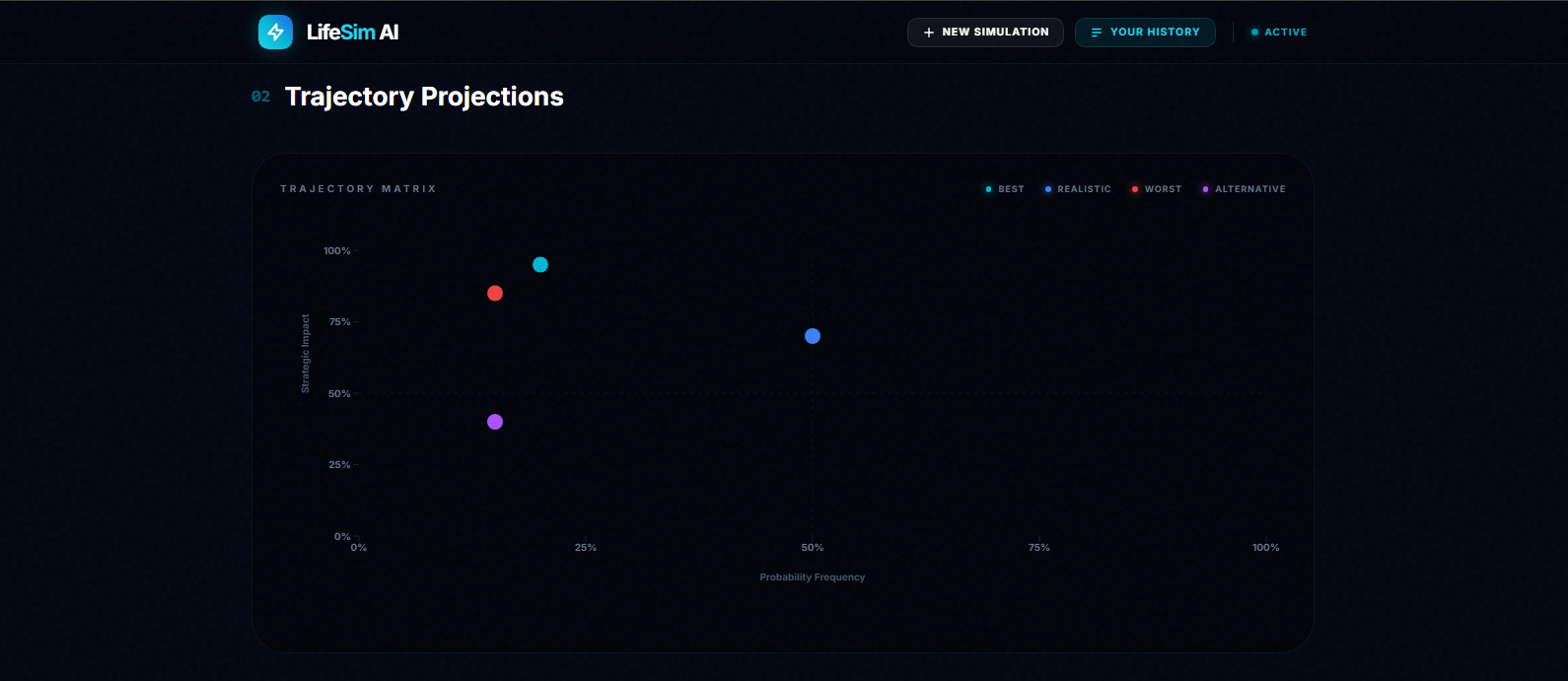
From BEST to WORST, each path is plotted by strategic impact and likelihood. Your future, visualized.
-
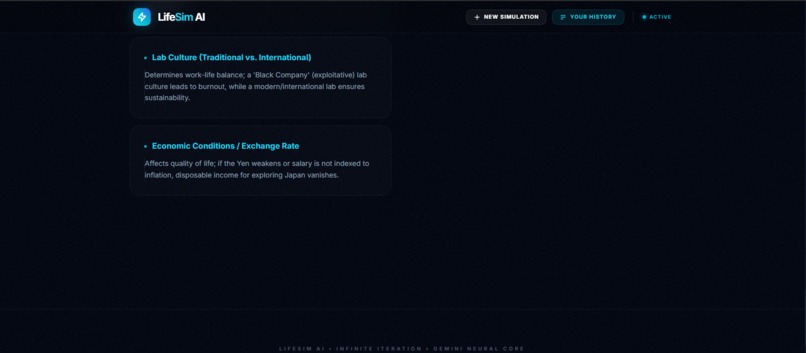
LifeSim AI helps you weigh what truly matters.
-
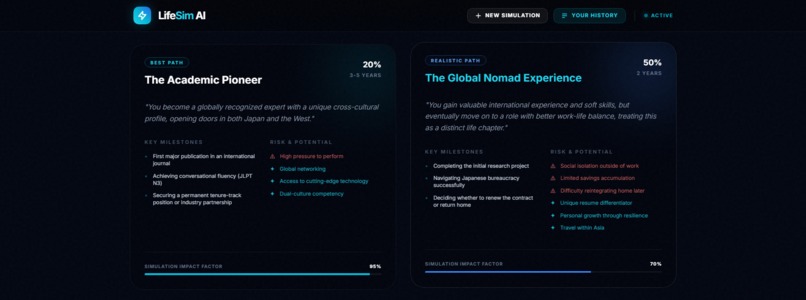
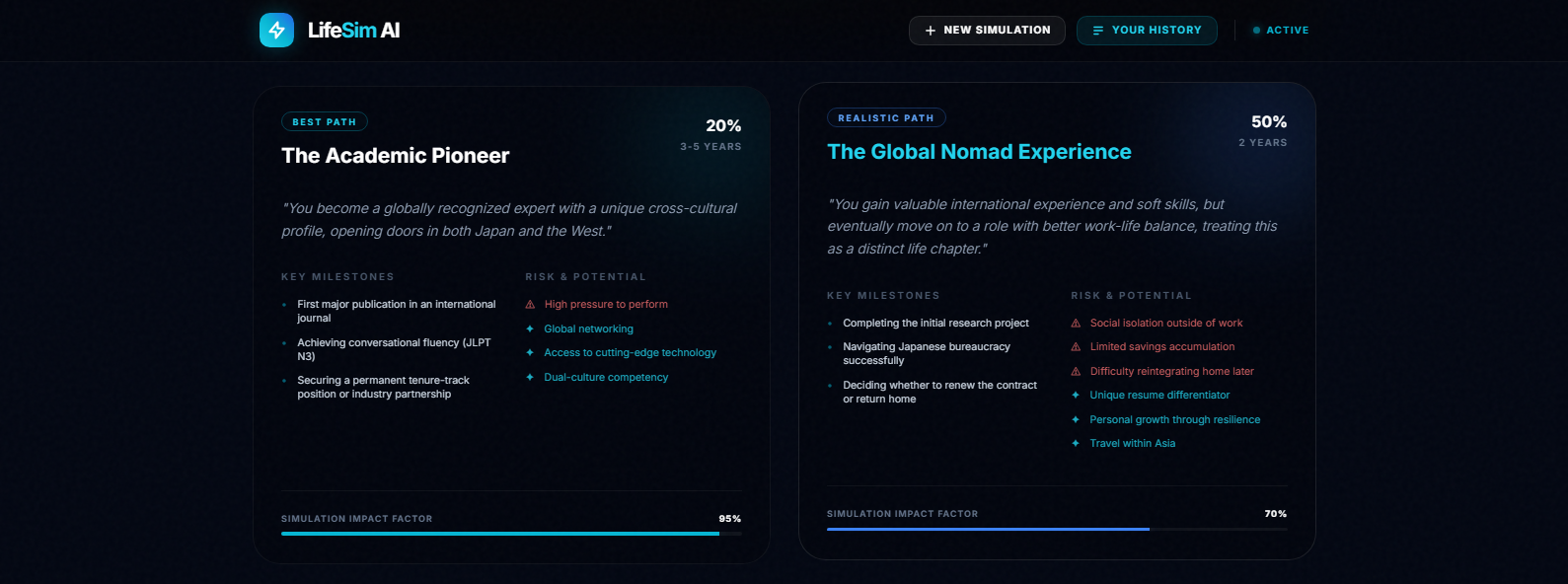
Academic Pioneer or Global Nomad? Prestige and pressure vs. growth and balance. Which life chapter speaks to you?
-
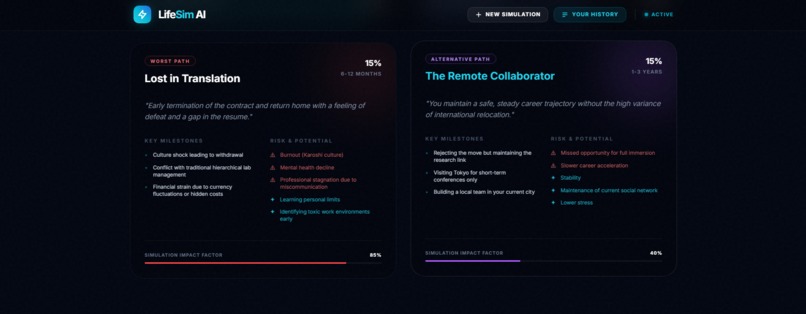
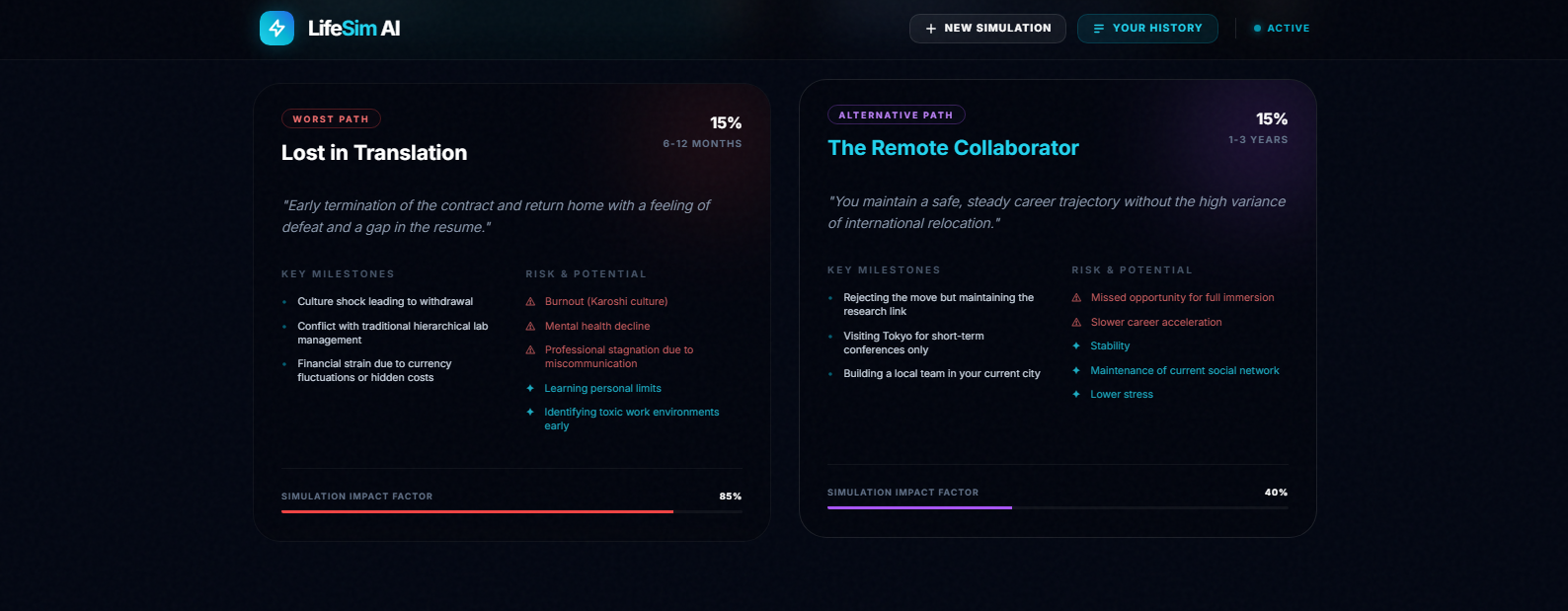
Burnout or stability? LifeSim AI reveals the cost of misalignment—and the quiet power of choosing differently.
-
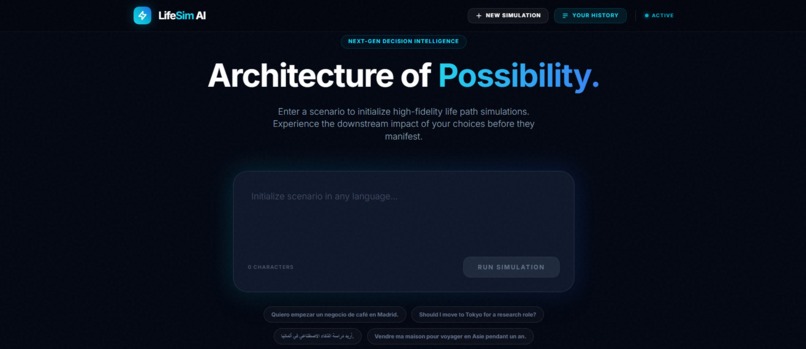
Enter your scenario. Simulate your future. LifeSim AI lets you preview the ripple effects of your choices before they unfold.
-
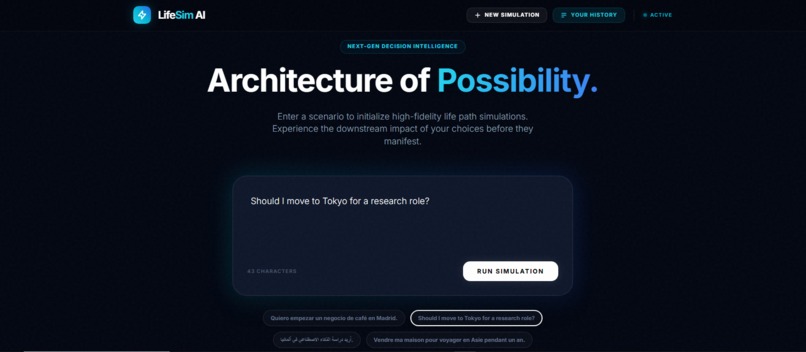
One question. Infinite trajectories. LifeSim AI begins here.
-
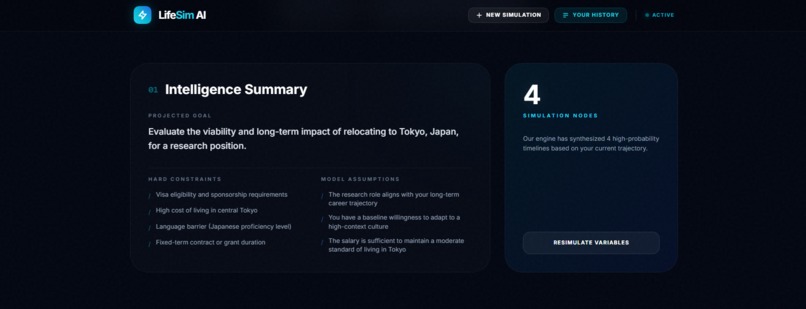
Visa hurdles, language barriers, and salary constraints—LifeSim AI maps the hard realities against your aspirations.
-
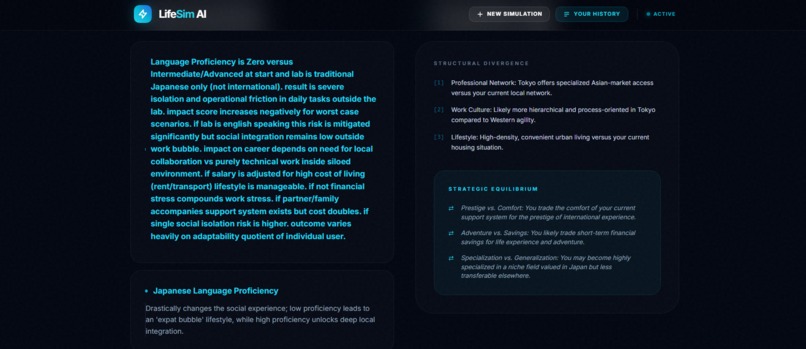
Strategic tradeoffs await.

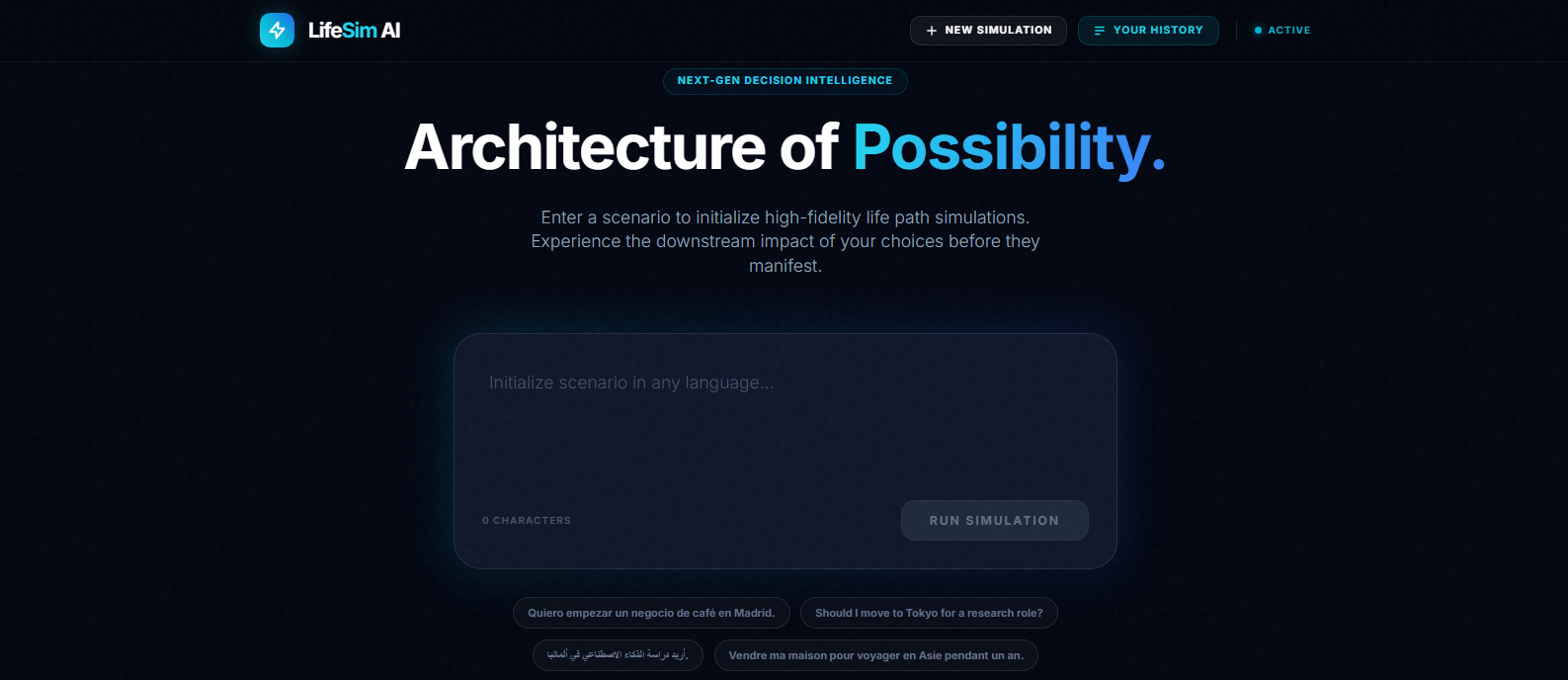
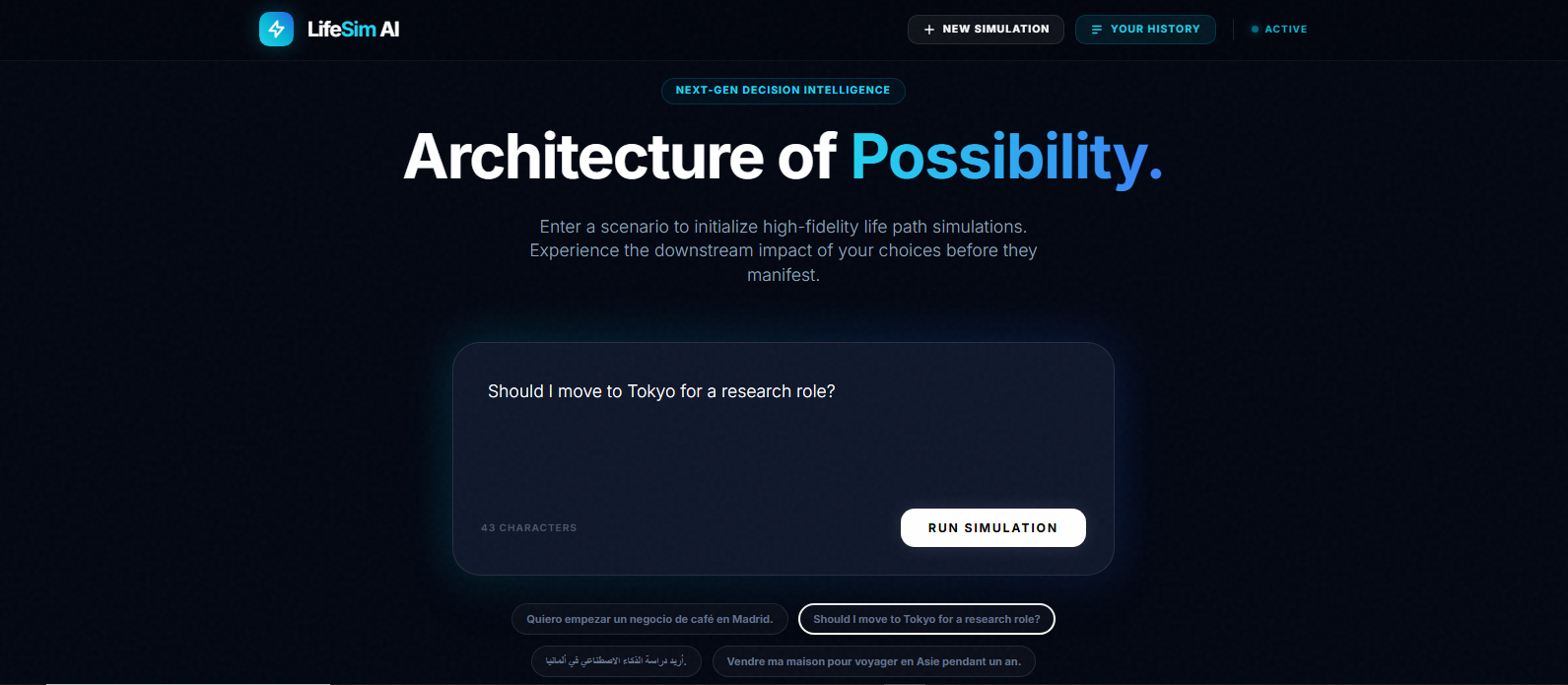
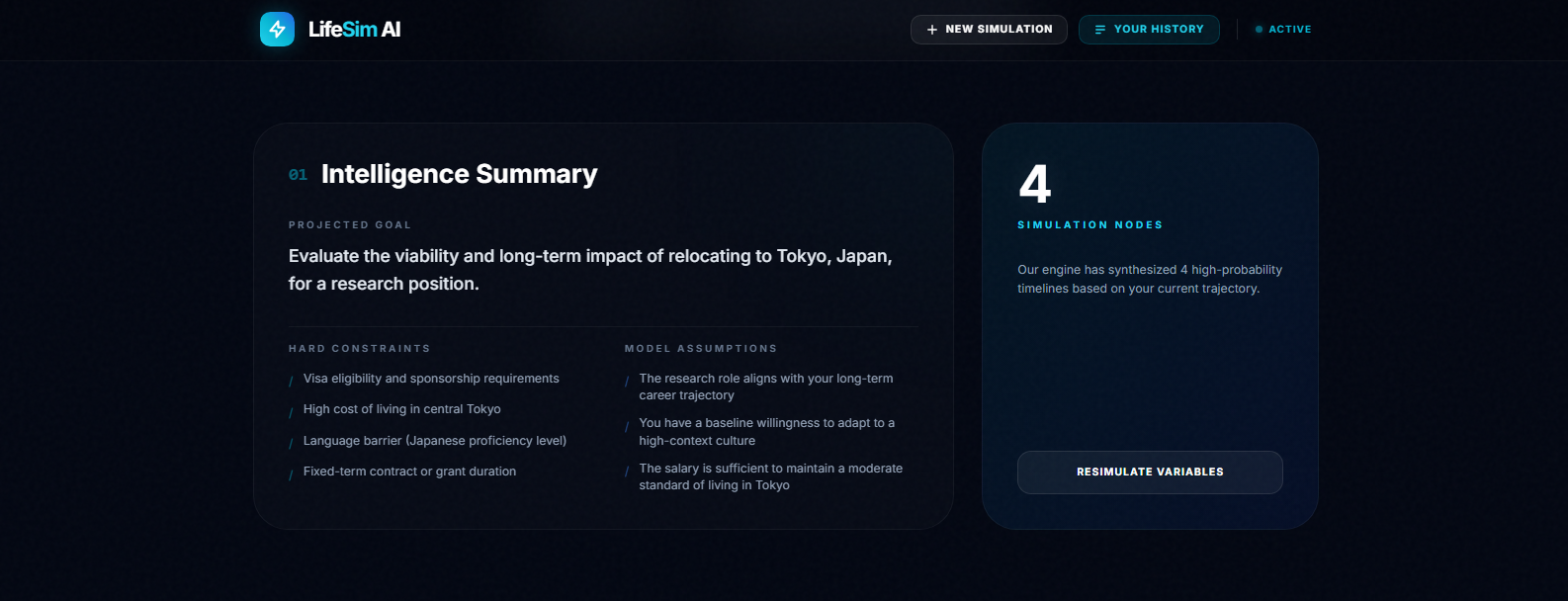
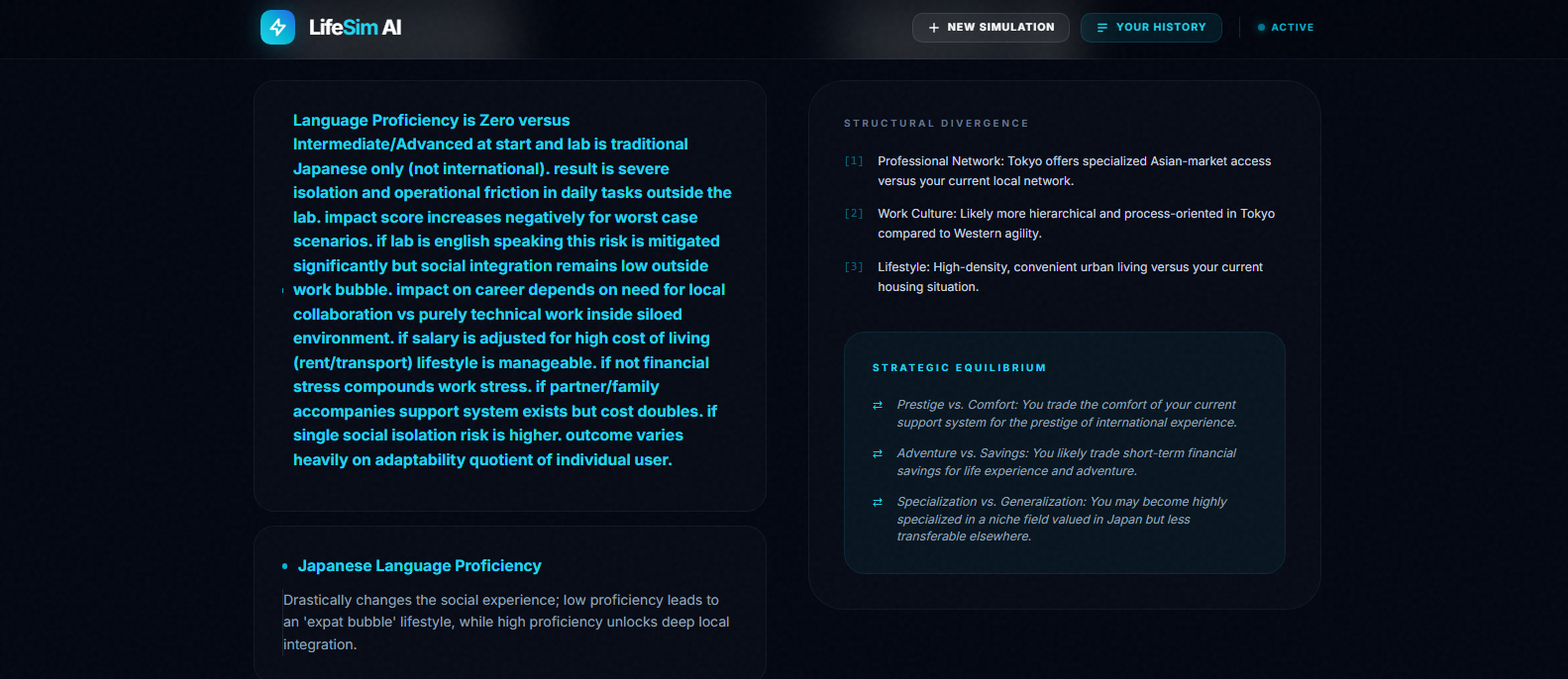
Life decisions often involve uncertainty, incomplete information, and emotional pressure. I was inspired by how people frequently ask “What if I choose differently?” yet have no safe way to explore possible outcomes. I wanted to build a tool that doesn’t give advice, but instead helps users simulate futures and understand trade offs before committing to a decision. This idea led to LifeSim AI.
What I Built
LifeSim AI is an interactive decision simulation application that allows users to describe real life choices such as career moves, learning paths, or financial plans and explore multiple possible futures. Instead of a single answer, the system generates several outcome paths (best case, realistic, worst case, and alternatives), each with timelines, risks, and key turning points.
The core feature is the what if interaction, where users can modify constraints (time, money, risk tolerance) and instantly see how outcomes change.
How I Built It
The project is built around the Gemini 3 API , which powers the reasoning and simulation engine. User input is first structured into goals, constraints, and assumptions. Gemini 3 then performs multi step reasoning to generate future scenarios and explain them in clear, structured outputs.
The architecture is intentionally simple:
A lightweight frontend for user input and visualization A backend layer that orchestrates prompts and simulations using Gemini 3 Dynamic re simulation triggered by user what if changes
Challenges & Learnings
One of the main challenges was avoiding generic advice and instead focusing on simulation and explanation . I learned how to design prompts that encourage reasoning over long term outcomes and how to use Gemini 3’s low latency responses to create an interactive experience.
This project taught me how powerful AI can be when used not just to answer questions, but to help people think better about their decisions.

Log in or sign up for Devpost to join the conversation.