-
-
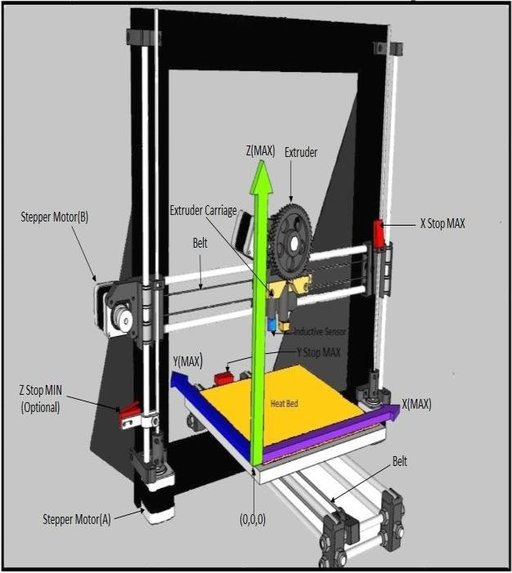
3d machine

During the last few days, a wide range of initiatives has emerged across the world to face the current health crisis, as hospitals are suffering from a lack of equipment. Given that 20% of people with coronavirus classified as serious viral pneumonia need respiratory support and artificial respiration for a period that is not short, that may extend for weeks. We tried to think differently and saw the latest technology that could help save lives and found out that. We think about designing the 3D printed respirator that can develop the 3D model behind this emergency breathing device. We can produce 100 respirator valves in 24 hours using 3d printers and it is a large number comparing with other ways. We built it by designing a 3D object on an ordinary home PC, connect it to a 3D printer, press ‘print. This process turns a whole object into thousands of tiny little slices, then makes it from the bottom-up, slice by slice. Those tiny layers stick together to form a solid object. Each layer can be very complex, meaning 3D printers can create moving parts like hinges and wheels as part of the same object. We faced a lot of difficulties until we came up with this idea. One of these difficulties was to stick to the economic situation that the country is going through currently due to the stalled labor market and find what helps humanity at the lowest cost. The other one was in fulfilling the project's requirements, and we were faced with a lack of information about the virus for the lack of research confirmed about it and the beginning of its appearance. But we were able to face that and find a solution that we hope that it will save the lives of many people. After finishing this project, we gain a lot of skills about teamwork research and suggestion solutions. We work as a team as we were so cooperative .in addition to making good discussion to get the best results. We recommend new ideas include Better Patient interfaces: The interface between a modern ventilator and the patient is a piece of plastic tubing, that is, the “patient circuit,” whose design has not changed much in several decades. Certainly, humidification systems using heated wires and automatic-temperature control have evolved, but we still are not capable of measuring and directly controlling a primary variable of gas conditioning: humidity. Indeed, after all this effort at evolving humidification systems, there are data to show that simple, unheated circuits provide better humidification of inspired gas. Also, the compliance of the patient circuit degrades the accuracy of flow delivery and must be “compensated” for by complex mathematical algorithms.


Log in or sign up for Devpost to join the conversation.