-
-
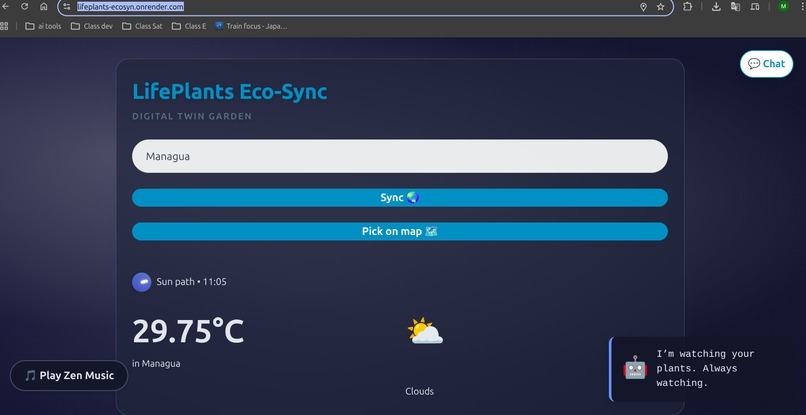
demo
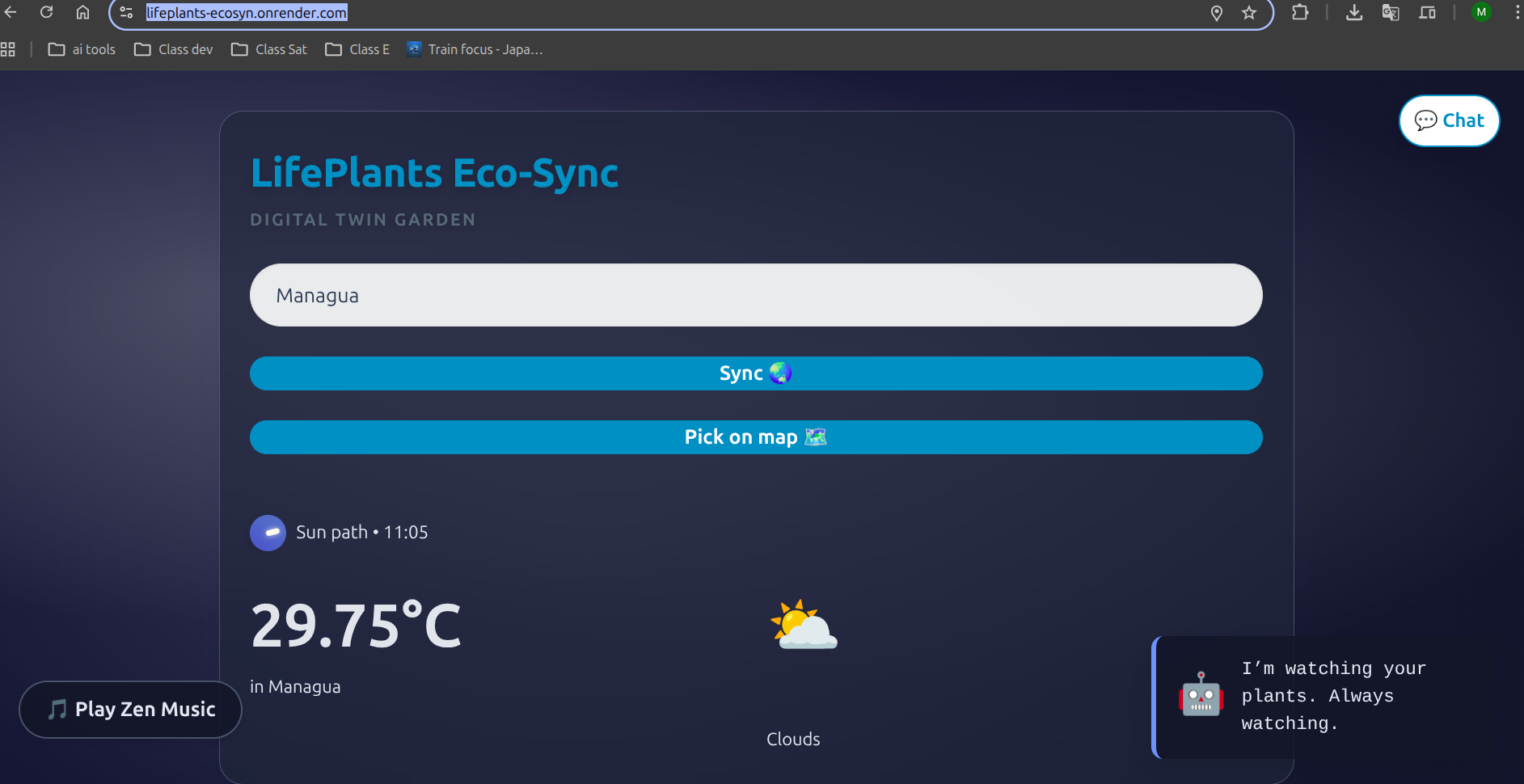
Inspiration
What it does
How we built it
LifePlants Eco-Sync is like a mirror for your garden, only this mirror reflects the real-time effects of climate on plant health. It’s rooted in a curious question: What if your plants could show you how they’re feeling based on the weather in your city? This app brings virtual plants to life by syncing them with real-world weather data. When a heatwave hits, they droop and wilt. When it rains, they thrive. If nothing else, it’s a reminder that climate isn’t just numbers—it’s something we can feel.
Built for United Hacks V6, this project aligns with the event’s focus on Human Interaction. LifePlants invites people to experience a deeper connection with their environment by showing how even small things, like your plants, are affected by the climate you inhabit.
Inspiration Behind the Project Managua, Nicaragua, where this idea was conceived, is infamous for its scorching heat. Summers here often cross the 35°C mark—days when stepping outside feels like walking into an oven. This makes keeping plants alive particularly challenging. A single day of neglect in these conditions means withered leaves and dehydrated soil. But imagine how different the challenges must be for someone living in Stockholm or Vancouver, where cold or excess rain often does more harm than good.
This project was born from a simple question: How can we visually convey how differently the climate shapes life for people around the world? LifePlants was an attempt to answer this, to bring awareness to the challenges plants—and people—face in vastly different environments.
Lessons Learned Bringing Science to Life Writing a formula to simulate water evaporation based on temperature and time felt like turning raw science into something almost poetic. It taught me how to transform dry numbers into tangible, relatable experiences.
The Art of Full-Stack Development Building this project required weaving together tools like Flask, APIs, and CSS into one cohesive application. The process has made me more confident in creating projects from scratch that are functional, responsive, and visually appealing.
The Human Side of Design Crafting an app isn’t just about clean code; it’s about creating an experience. Every design choice was driven by one question: How will it feel for someone to see their virtual plant wilt or thrive in response to weather?
Building LifePlants LifePlants was brought to life with a rich mix of tools and technologies:
Backend: Powered by Flask, it handles routing, logic, and data management. Real-World Data: The OpenWeather API feeds the app accurate, live weather data, while OpenAI’s GPT acts as a plant expert, giving actionable climate-smart tips. Frontend: A visual masterpiece created using Jinja2 templates, LeafletJS for the interactive map, and sleek CSS Glassmorphism for a polished aesthetic. Hosting: It’s all deployed on Render, with Gunicorn ensuring reliability. Challenges Along the Way Juggling Multiple Data Sources Merging OpenWeather APIs with GPT and the plant simulation required careful thought. Creating a smooth connection between these systems wasn’t easy, but the result felt worth it.
Keeping it Fast Animating plants, updating real-time weather changes, and running a physics-based model for hydration? It's a lot to handle! Scaling this while keeping it efficient was one of the trickiest parts.
Designing for Everyone Whether you're in Managua or Montreal, LifePlants needed to work seamlessly. Testing UI responsiveness across different browsers, devices, and regions was a grind, but now? It just works.

Log in or sign up for Devpost to join the conversation.