
LifePilot — Your Day, Actually Handled
An agentic AI assistant that turns "plan my day" into real action.
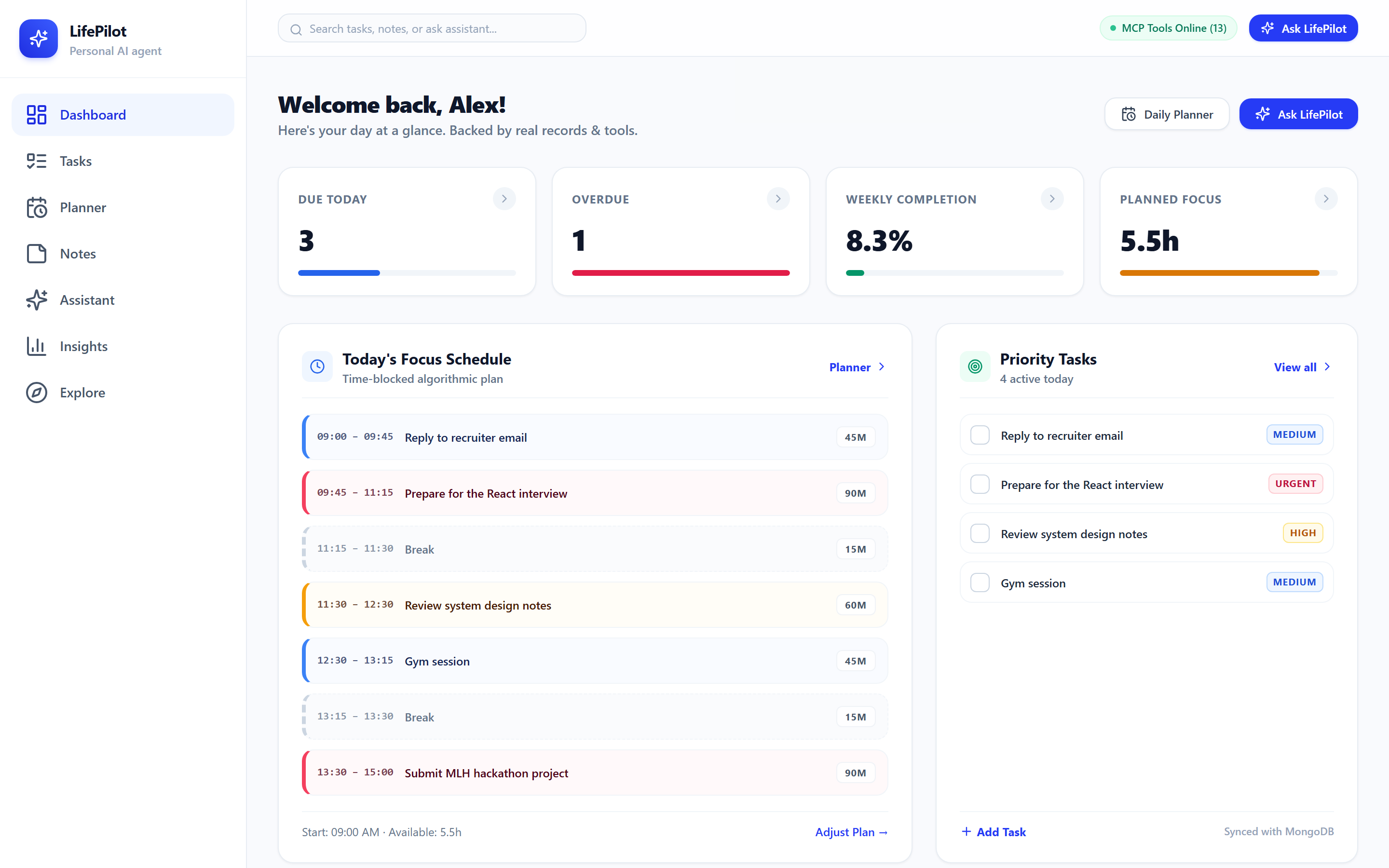
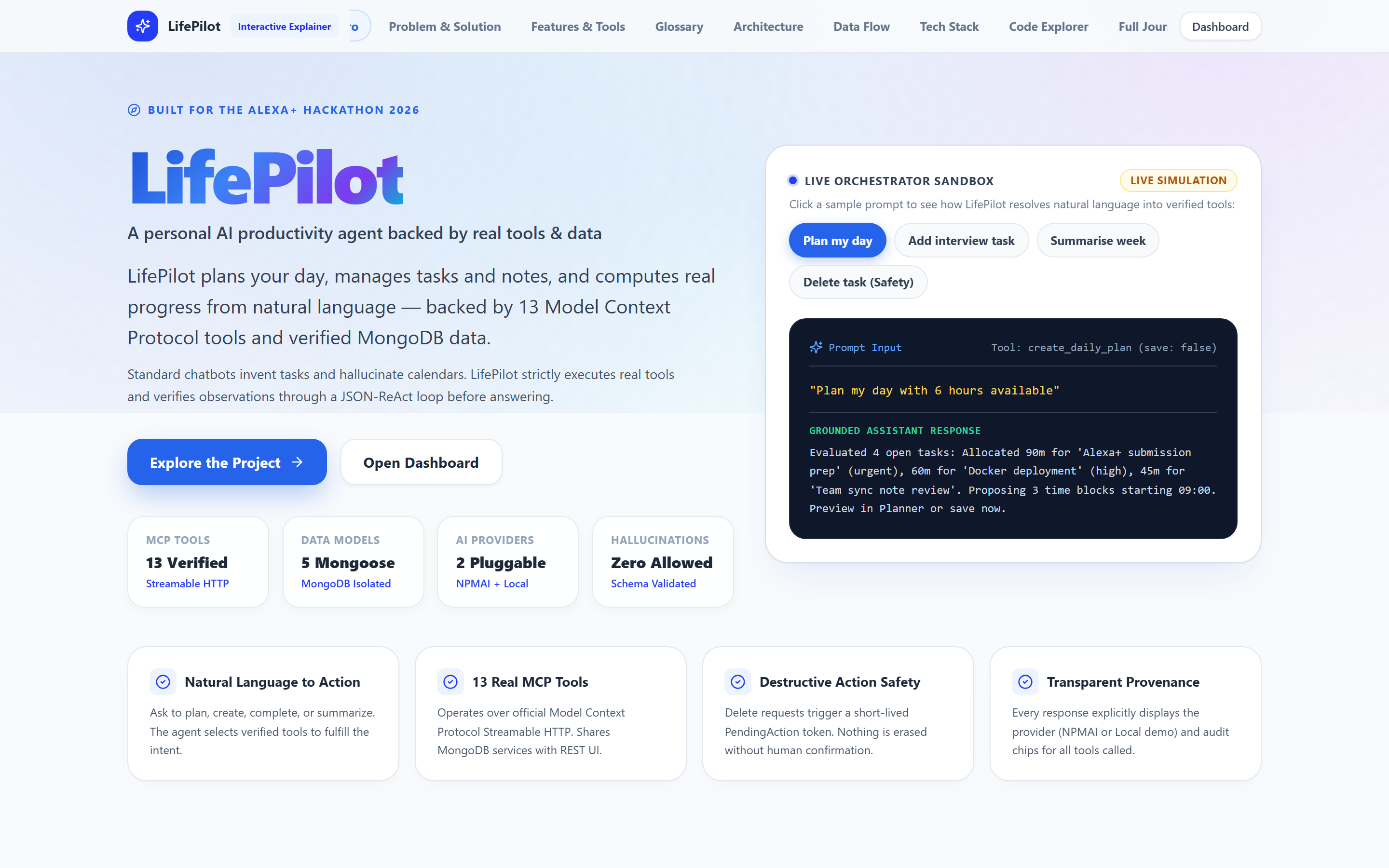
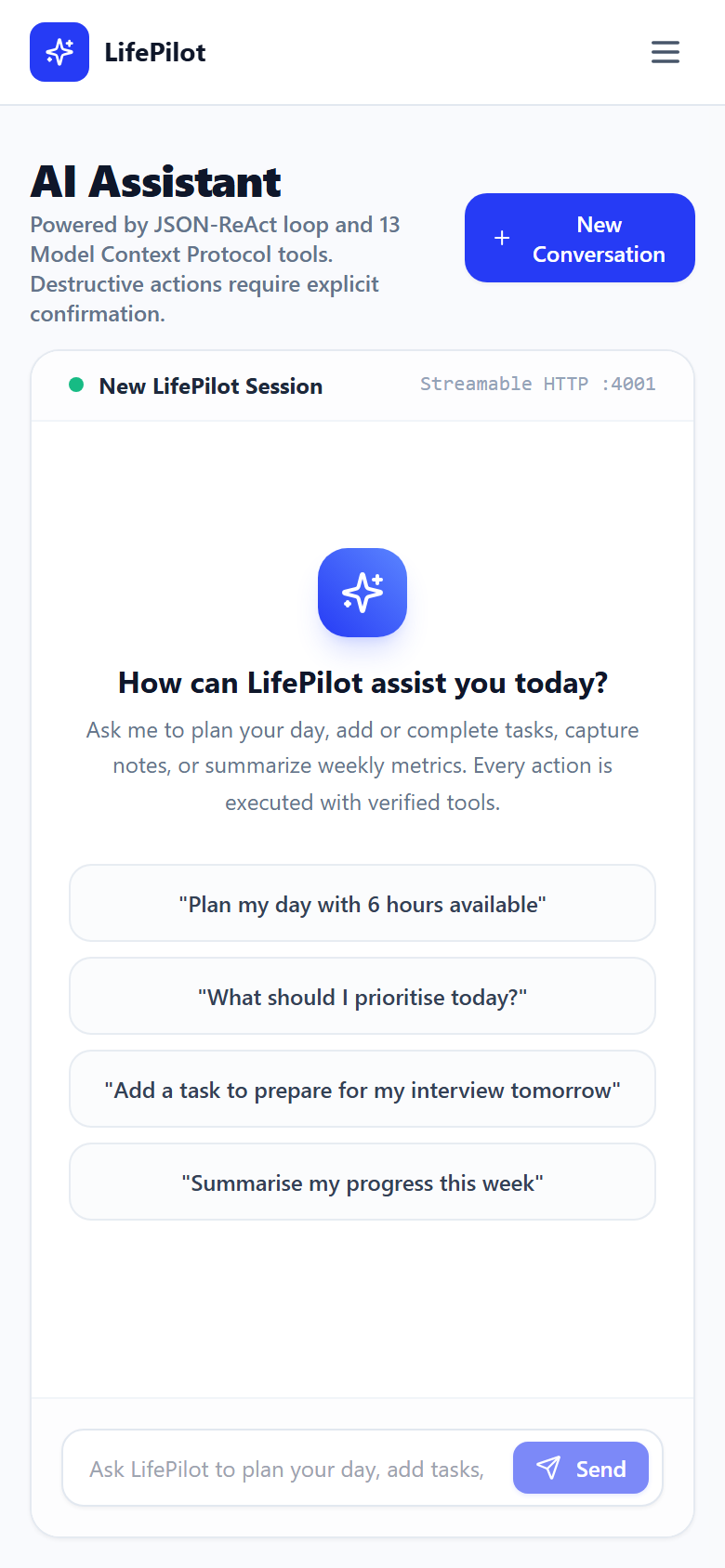
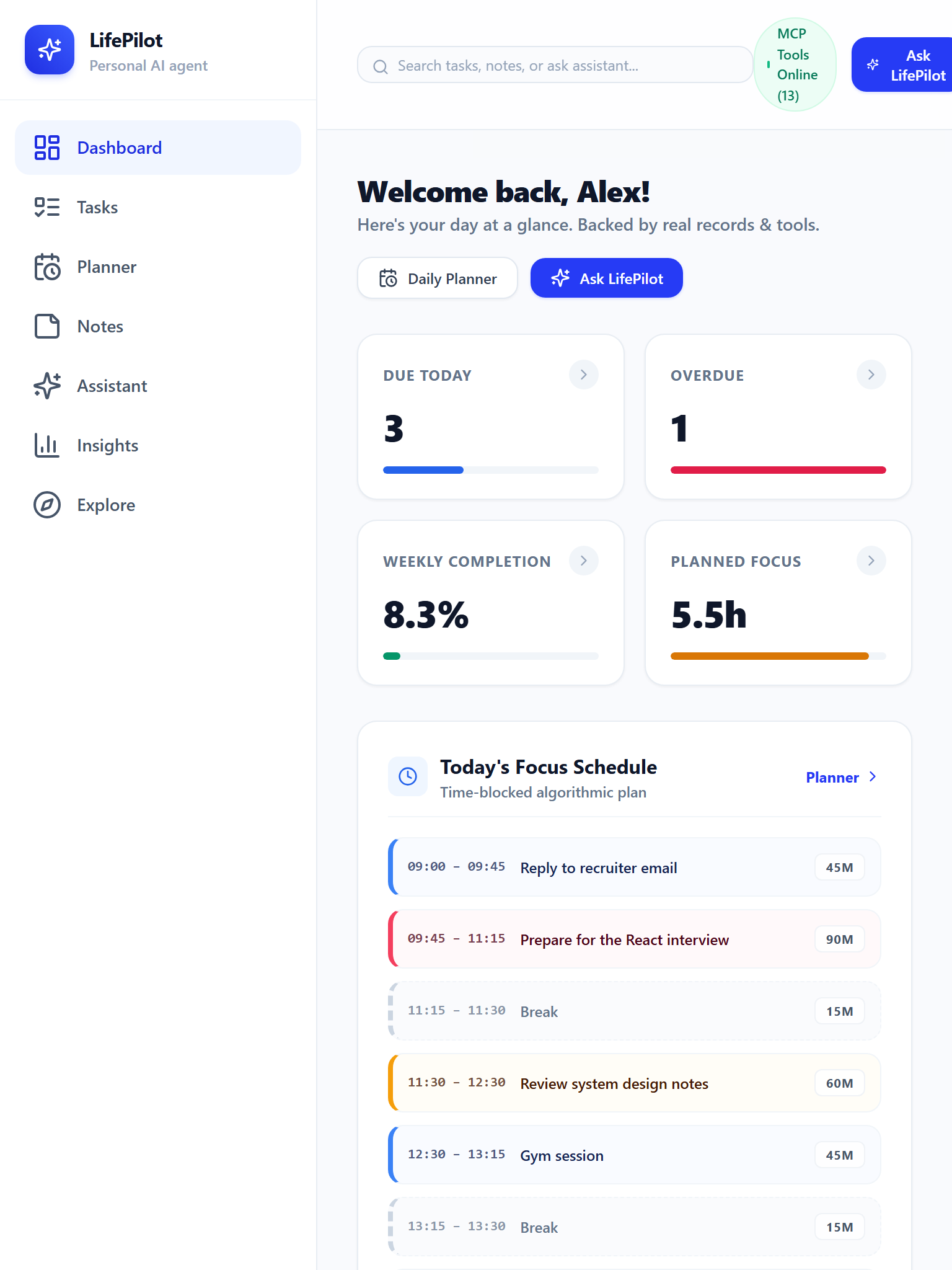
Most assistants talk about your day. LifePilot runs it — reading your real tasks, building time-blocked plans, managing notes, and computing your progress from actual data, then confirming before it ever deletes anything.
Inspiration
Chatbots are great at sounding helpful and terrible at the follow-through: they describe a plan instead of saving it, suggest a task instead of creating it. We wanted the opposite — an assistant whose every sentence is backed by a real, observable action against real data.
What it does
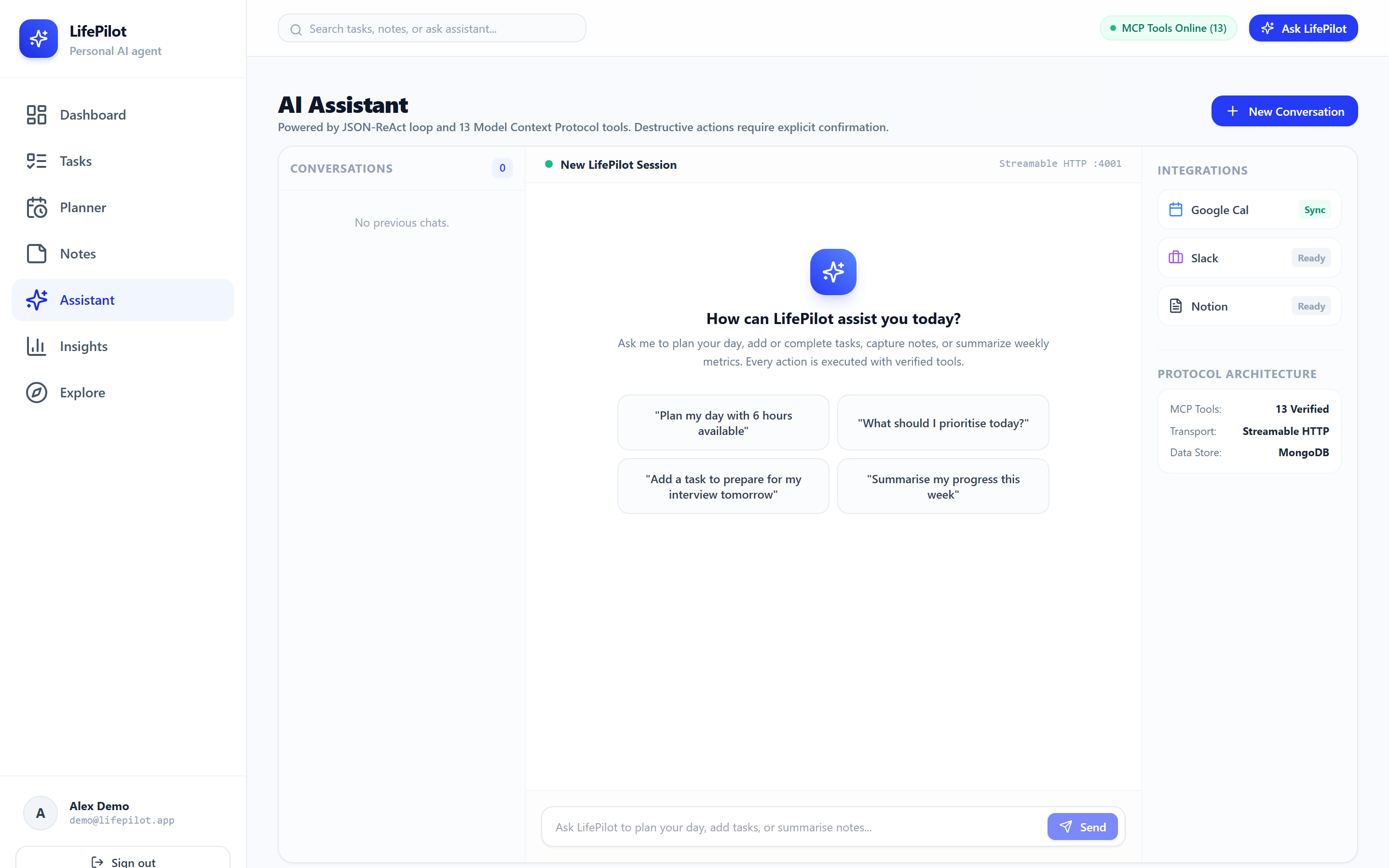
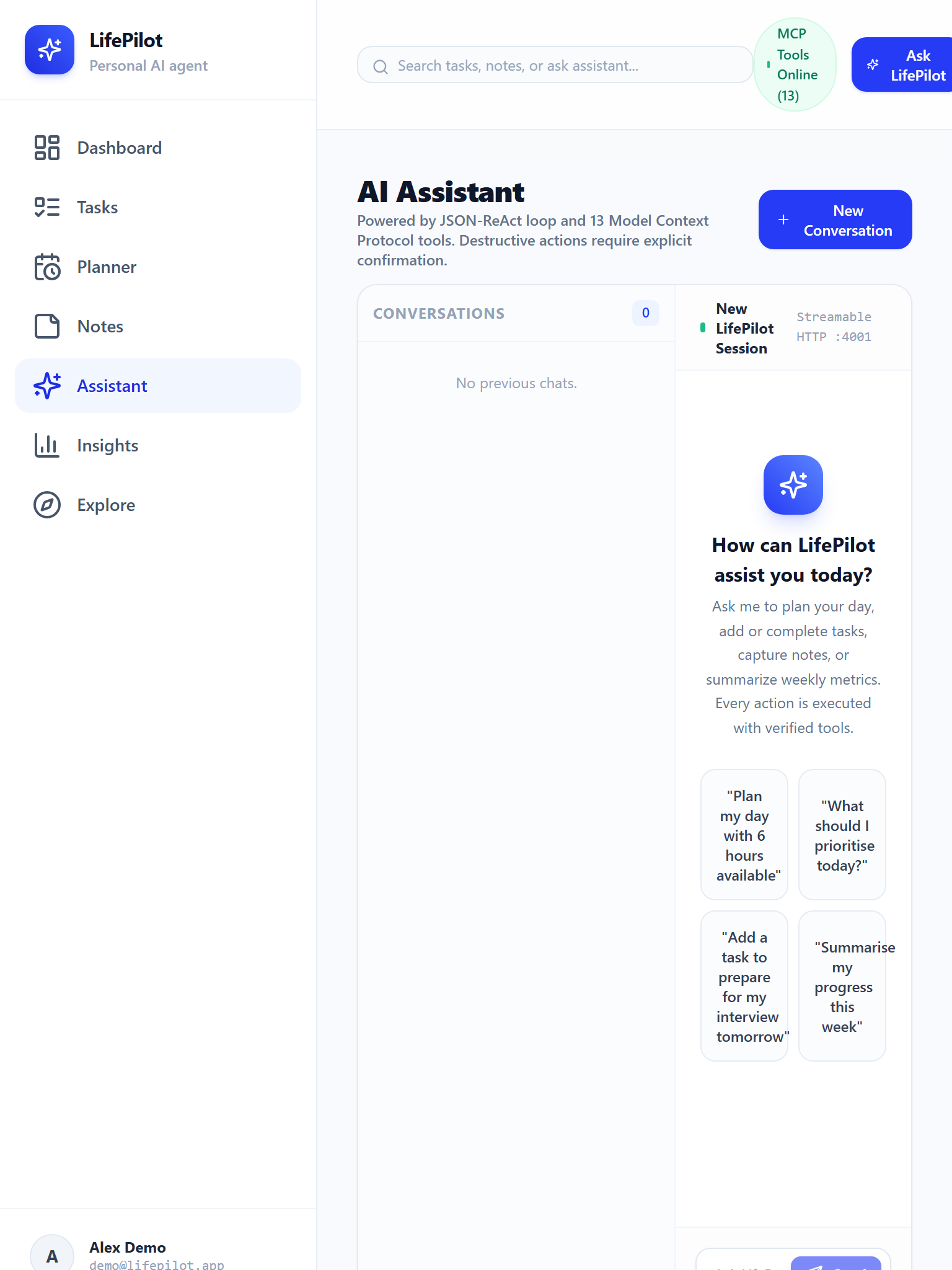
You talk to LifePilot in plain language, and it calls real tools to get the job done:
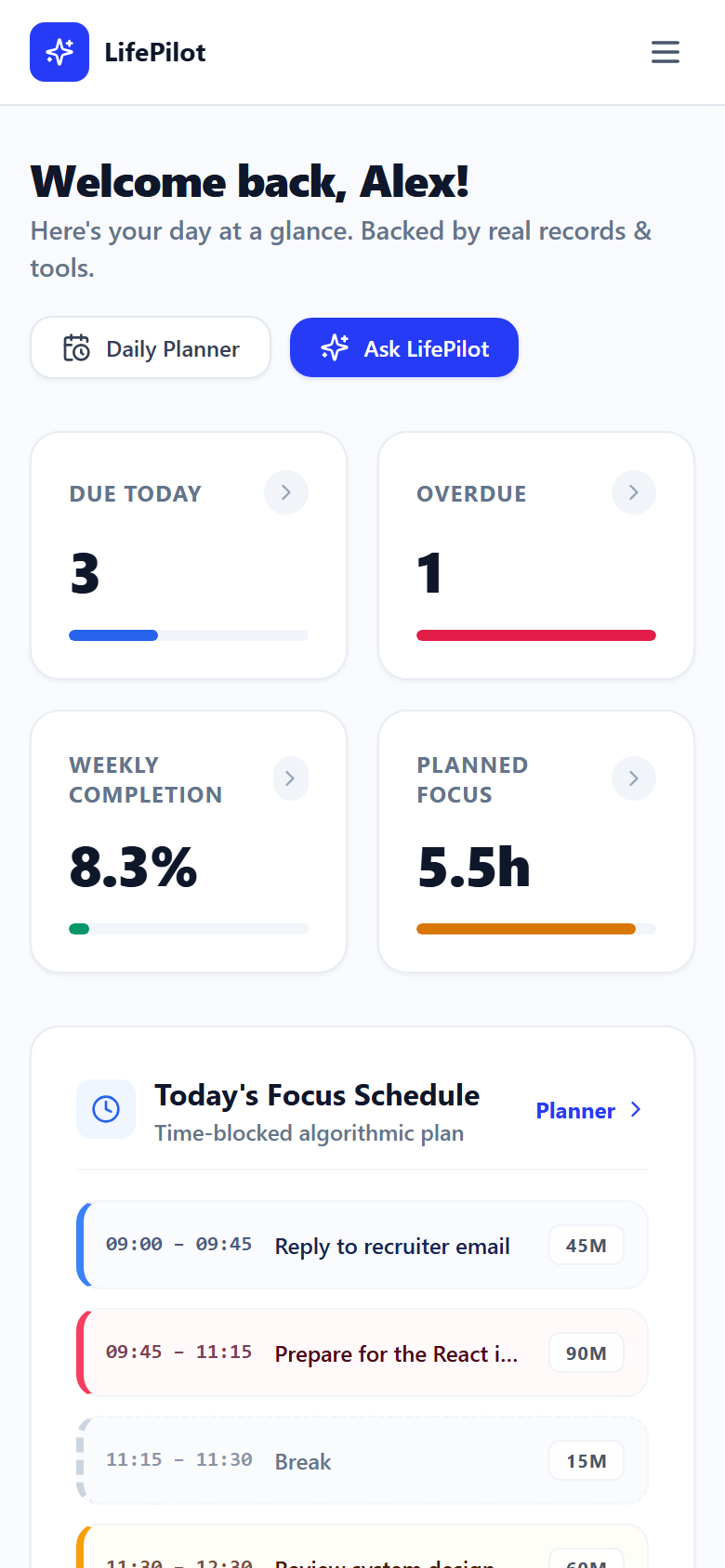
"Plan my day"                                 -> reads today's tasks, proposes a time-blocked plan
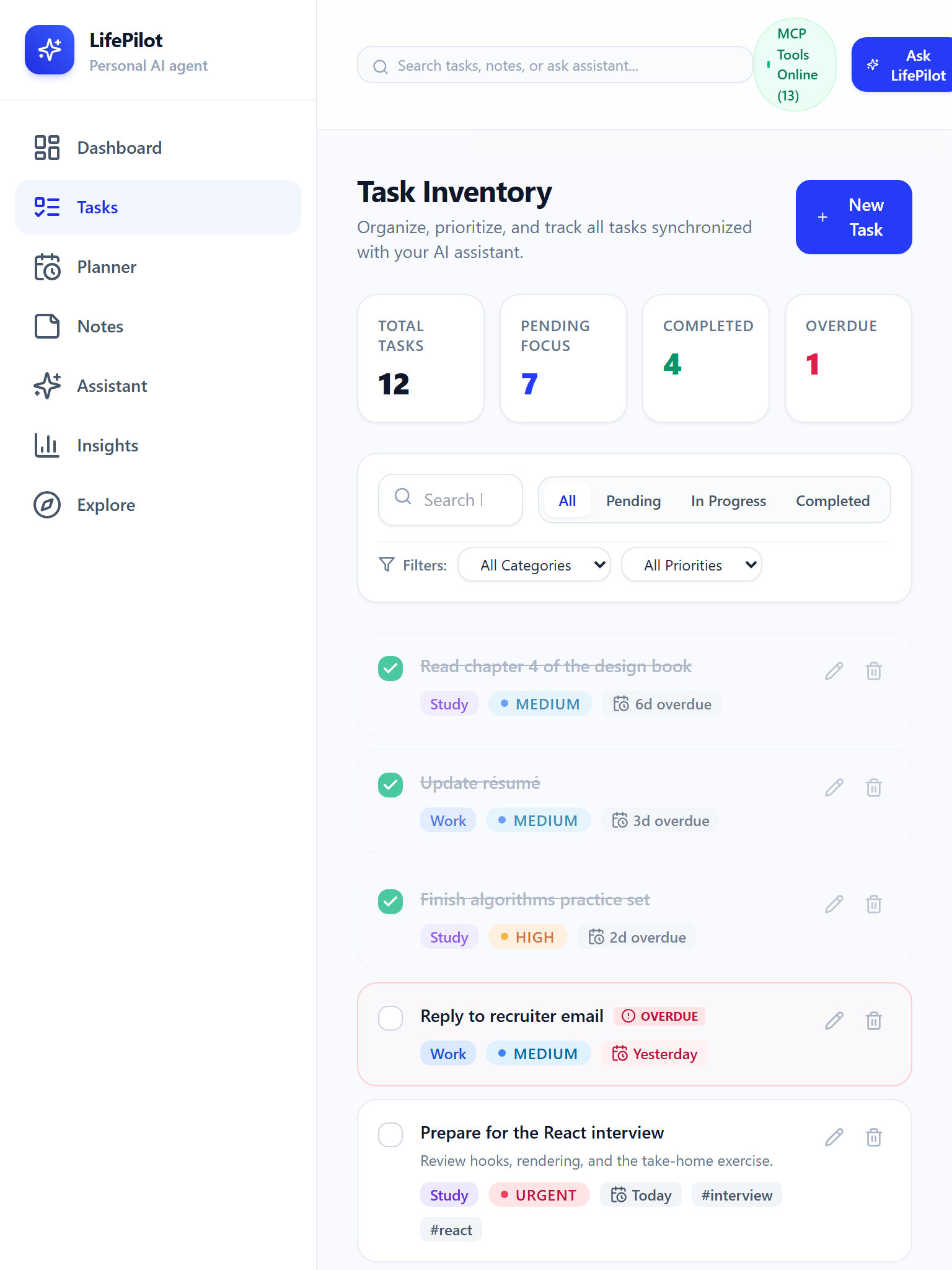
"Add a task to prepare for my interview tomorrow" -> creates the task
"I completed the React interview prep"        -> finds the task and completes it
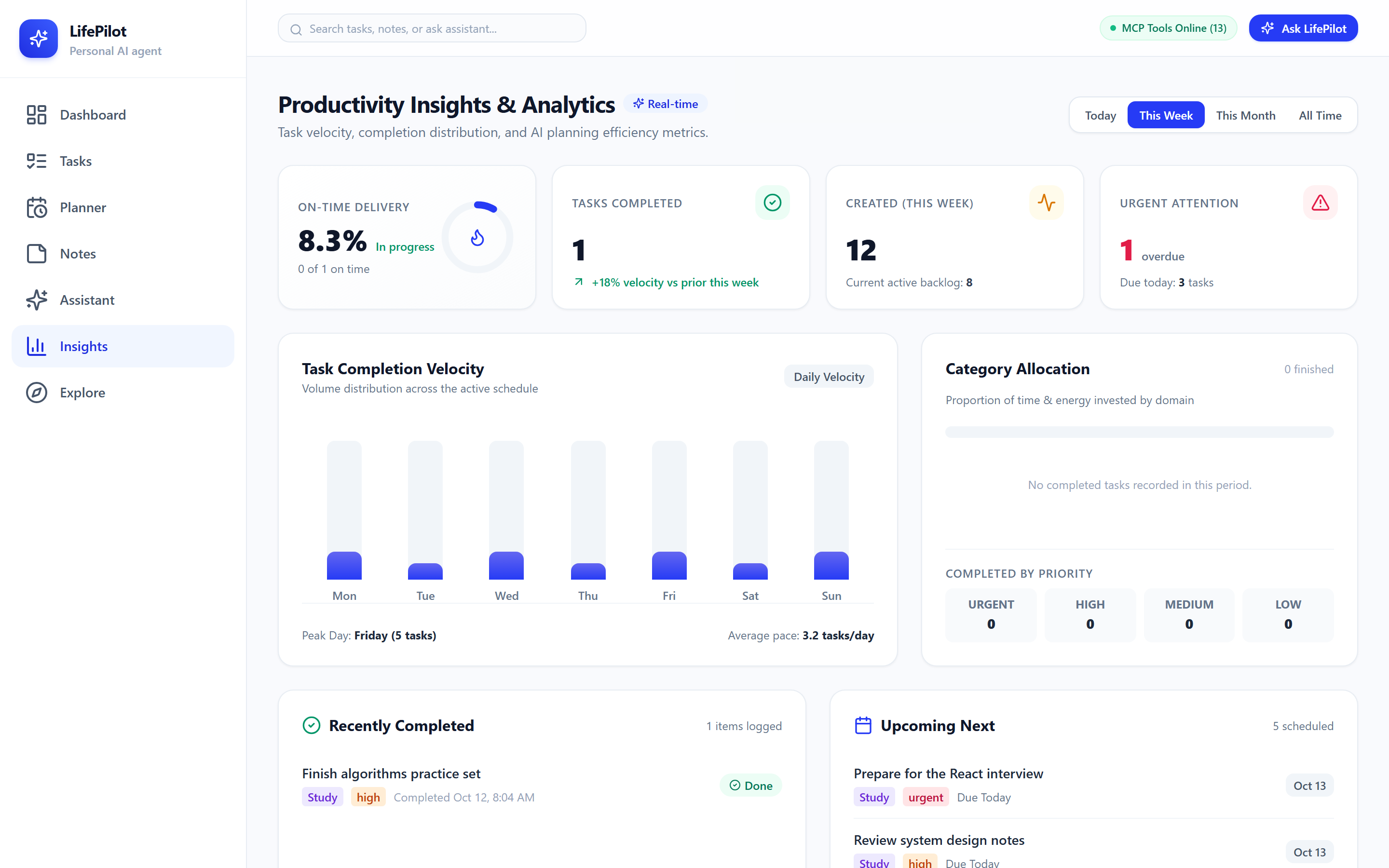
"Summarise my progress this week"             -> computes real completion statistics
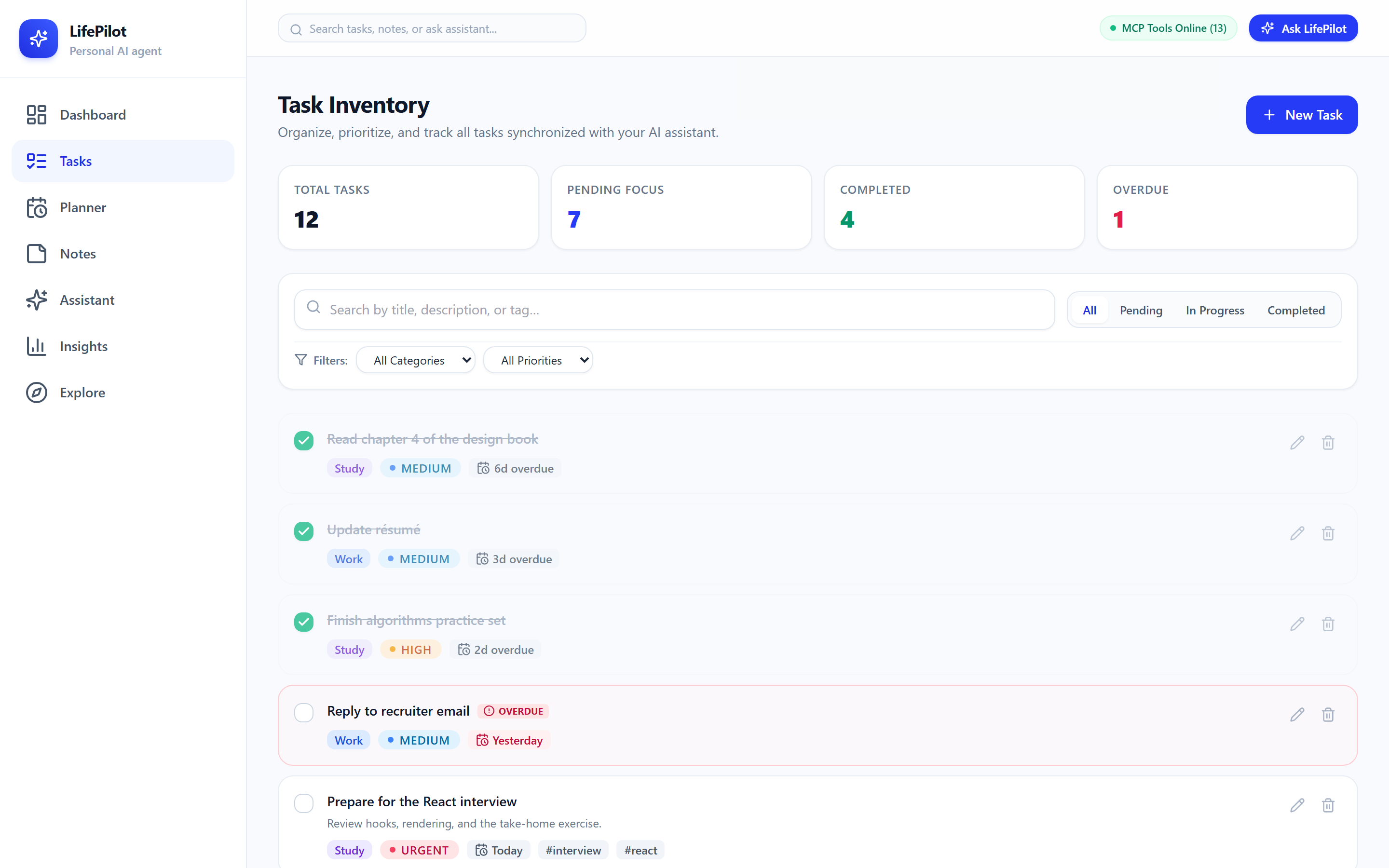
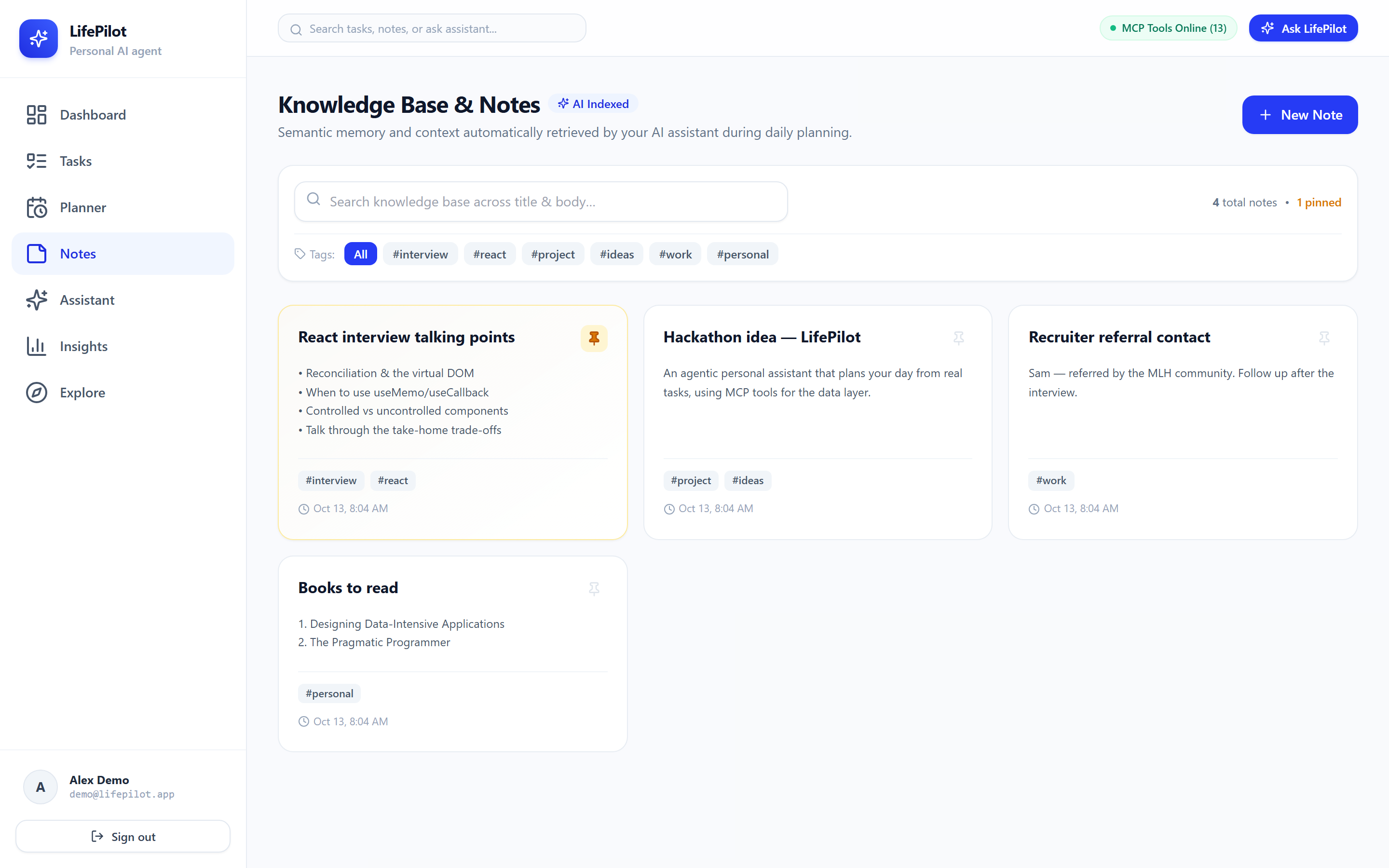
It manages tasks, notes, daily plans, and progress summaries across a full web app — and it distinguishes a genuine tool call from a plausible-sounding sentence.
How we built it
LifePilot is a four-workspace TypeScript monorepo with one shared data layer:
| Workspace | Role | Stack |
|---|---|---|
client |
Web UI | React 18, Vite, Tailwind, React Router |
server |
REST API + AI orchestrator | Express, JWT, Zod, rate limiting |
mcp-server |
Tool layer over MCP (Streamable HTTP) | @modelcontextprotocol/sdk |
shared |
Models, services, tool schemas | Mongoose, Zod |
The heart of the system is a bounded JSON-ReAct loop. Each turn, the model proposes either a tool call or a final answer as strict JSON:
{ "type": "tool", "tool": "get_today_tasks", "arguments": {} }
The orchestrator executes the call against the MCP server, feeds the observation back, and repeats — up to a fixed iteration cap — so the loop is deterministic, inspectable, and safe.
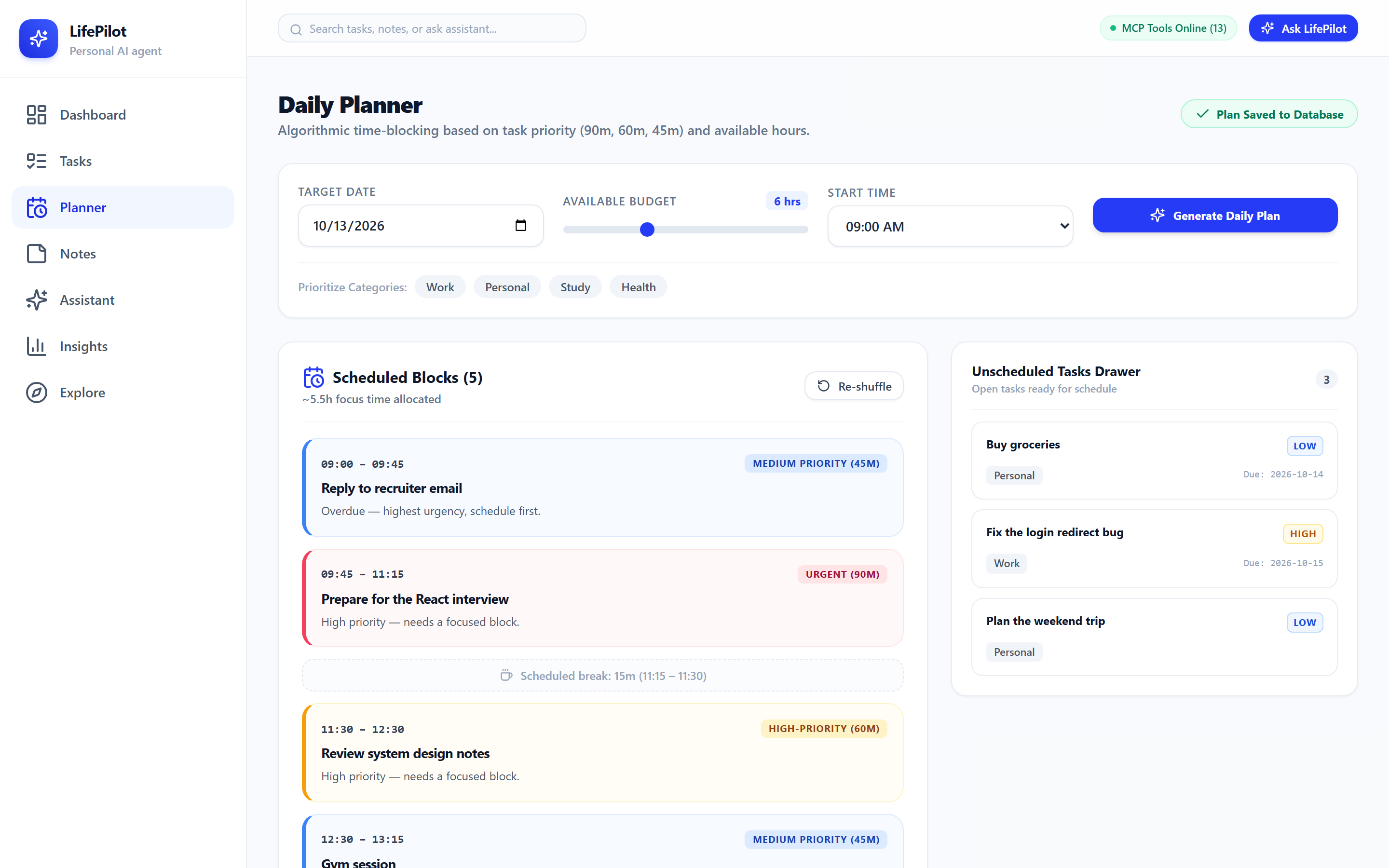
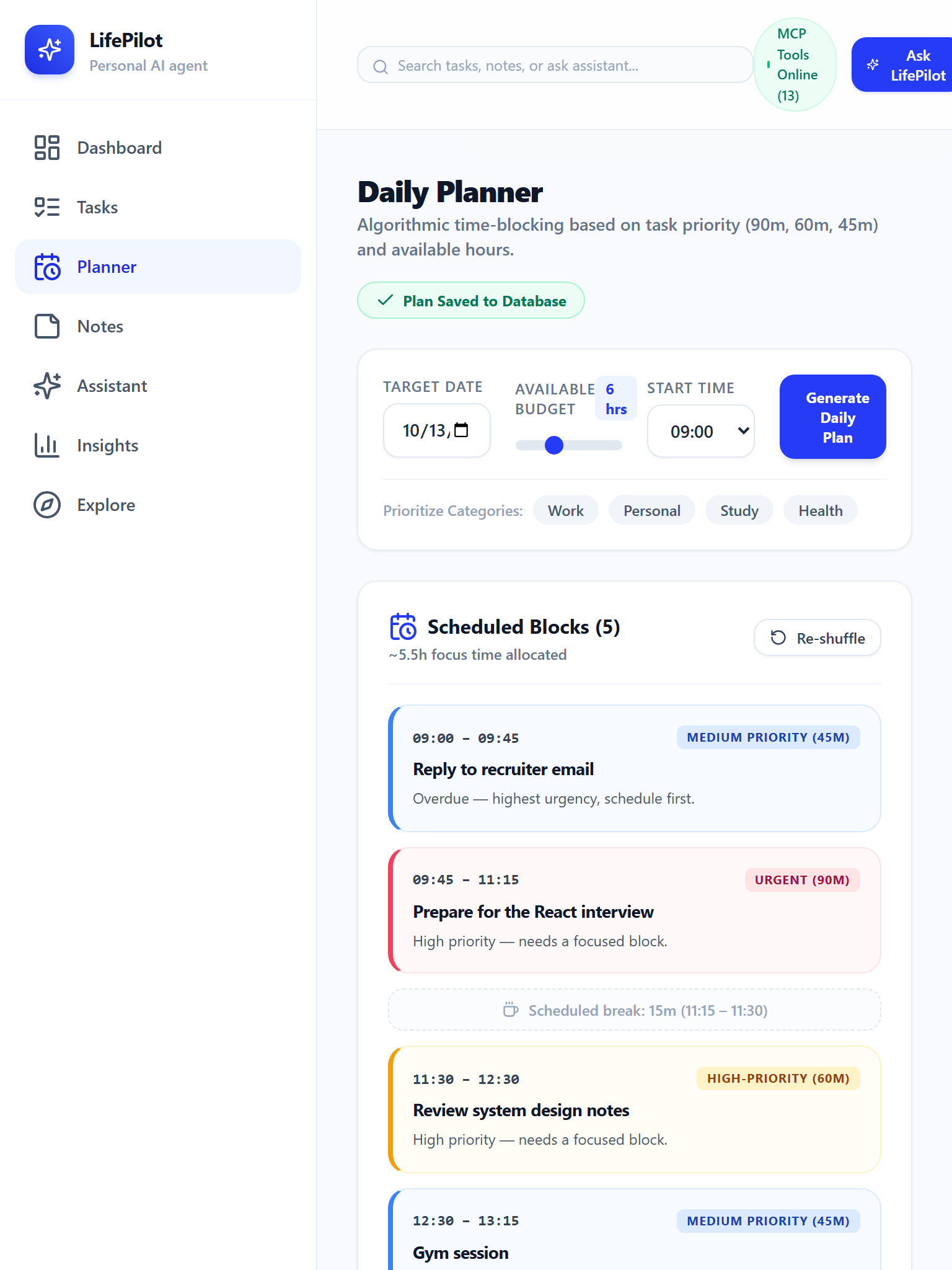
The planner is a real scheduler, not a prompt. It fills an available-hours budget with focus blocks sized by priority:
| Priority | Block length |
|---|---|
| urgent | 90 min |
| high | 60 min |
| medium | 45 min |
| low | 30 min |
Tasks are packed greedily while the schedule respects the daily budget \(\sum_i d_i \le H\), where \(d_i\) is a block's duration and \(H\) is the user's available hours, inserting short breaks between focus blocks.
Progress is computed from the database, not invented:
$$ \text{completionRate} = \frac{\text{tasksCompleted}}{\text{tasksCreated}} \times 100 $$
The AI engine is pluggable. LifePilot runs a local, deterministic engine behind an AIProvider interface that makes the same real tool calls a hosted model would — so the app works offline, in tests, and on stage without a flaky network. Every reply is labelled with the provider that produced it, and the UI shows exactly which tools fired.
Ambient AWS state. Pending destructive-action confirmations are persisted in Amazon DynamoDB (always-free tier) with a native TTL, and consumed with a single atomic delete — so an approval survives restarts and works across instances, without a database to run.
Safety by design
- Identity flows as an
x-user-idheader from the API into the MCP server — a user can never inject someone else's id through tool arguments. - The MCP endpoint requires a shared internal token and binds to
127.0.0.1. - Destructive tools never fire directly. The orchestrator intercepts
delete_task/delete_note, creates a short-lived PendingAction, and asks the user to confirm. Deletion happens only on explicit confirmation.
Challenges we ran into
- Text-completion models that narrate instead of act. Some models will happily say "Search get_today_tasks" as their final answer. Fixing it meant hardening the protocol (must start
{, end}, concrete examples) and writing a forgiving parser that accepts OpenAI-style shapes, nested{function:{...}}payloads, and alternate keys likefinal/answer. - Getting MCP right. Origin validation, protocol-version checks, and stateless transports each needed careful handling — including a fresh server + transport per request and unwrapping Zod effects so optional tool fields were advertised correctly.
- Faithful summaries. Computing real statistics (on-time completion, category/priority breakdowns) meant writing aggregation logic rather than asking a model to guess.
Accomplishments we're proud of
- A genuine agent -> MCP -> MongoDB pipeline, end to end, behind a clean REST + web UI.
- A platform-independent demo mode that makes identical real tool calls, so the product never depends on a live model to be convincing.
- 39 tests (integration over HTTP, parser, and provider) with a clean typecheck across all four workspaces.
What we learned
- A bounded agent loop plus a strict output contract beats a "clever" prompt for reliability.
- Separating the tool layer (MCP) from the orchestration layer makes both testable and lets the same services power REST and the agent with zero duplicated logic.
- Honest UI signalling — which provider produced this, which tools ran — builds far more trust than hiding the machinery.
What's next
- A marketplace of additional MCP tool packs (calendar, email, notes sync).
- Streaming agent traces directly into the UI.
- Voice-first entry points.
Built With
typescript · node.js · react · vite · express · mongodb · mongoose · amazon dynamodb · zod · model context protocol · json-reAct · tailwindcss · jwt · vitest
Built With
- amazon-dynamodb
- express.js
- jwt
- mcp
- mongodb
- mongoose
- node.js
- react
- talwindcss
- typescript
- vitest
- zod

Log in or sign up for Devpost to join the conversation.