-
-
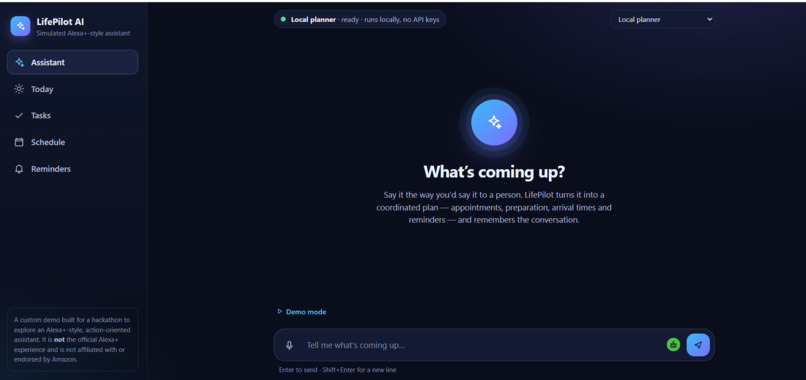
LifePilot AI — Intelligent Personal Life Assistant
-
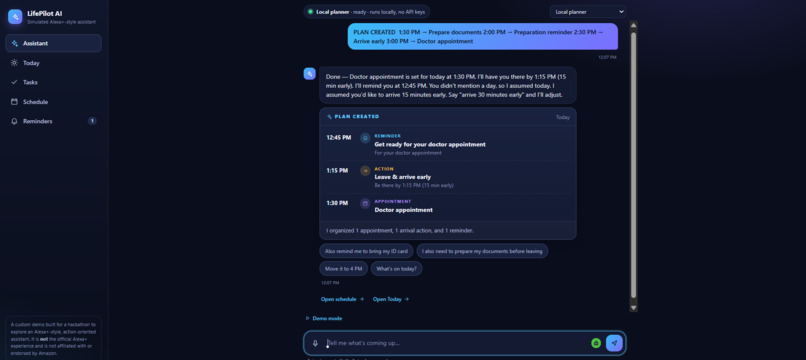
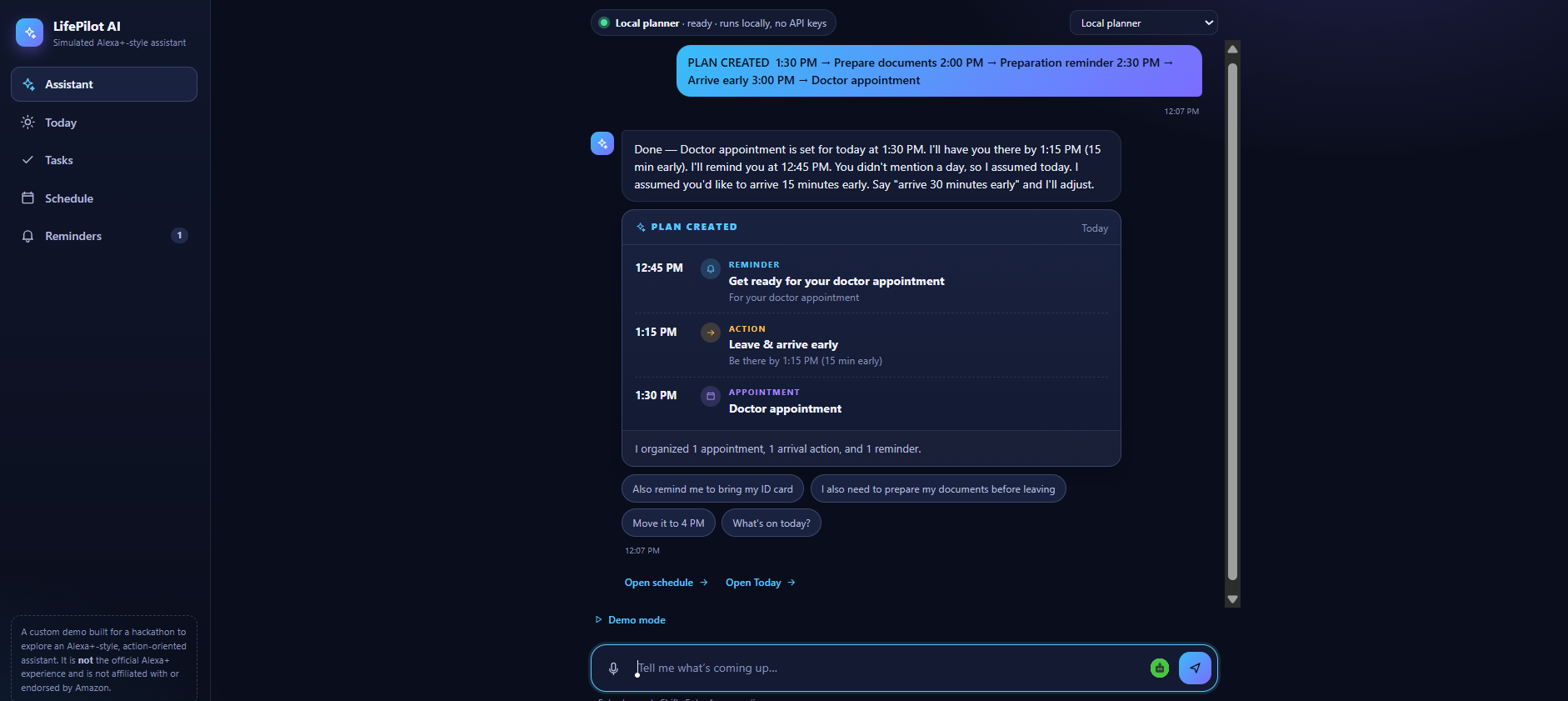
A natural-language request becomes a coordinated plan: a doctor appointment with a reminder, an arrival action, and a 15-minute early buffer
-
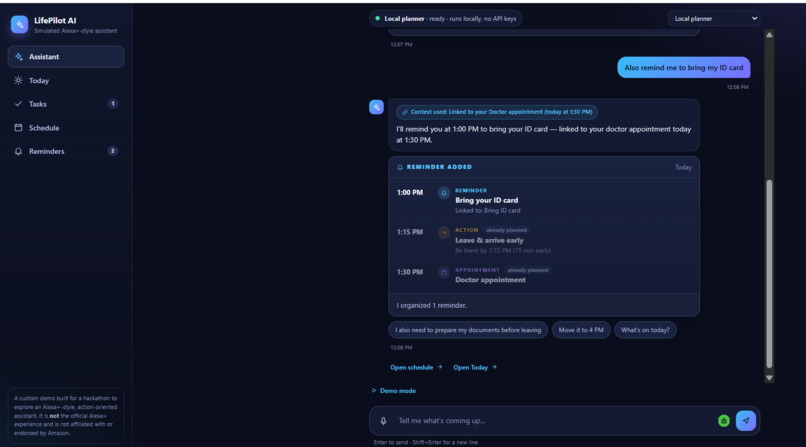
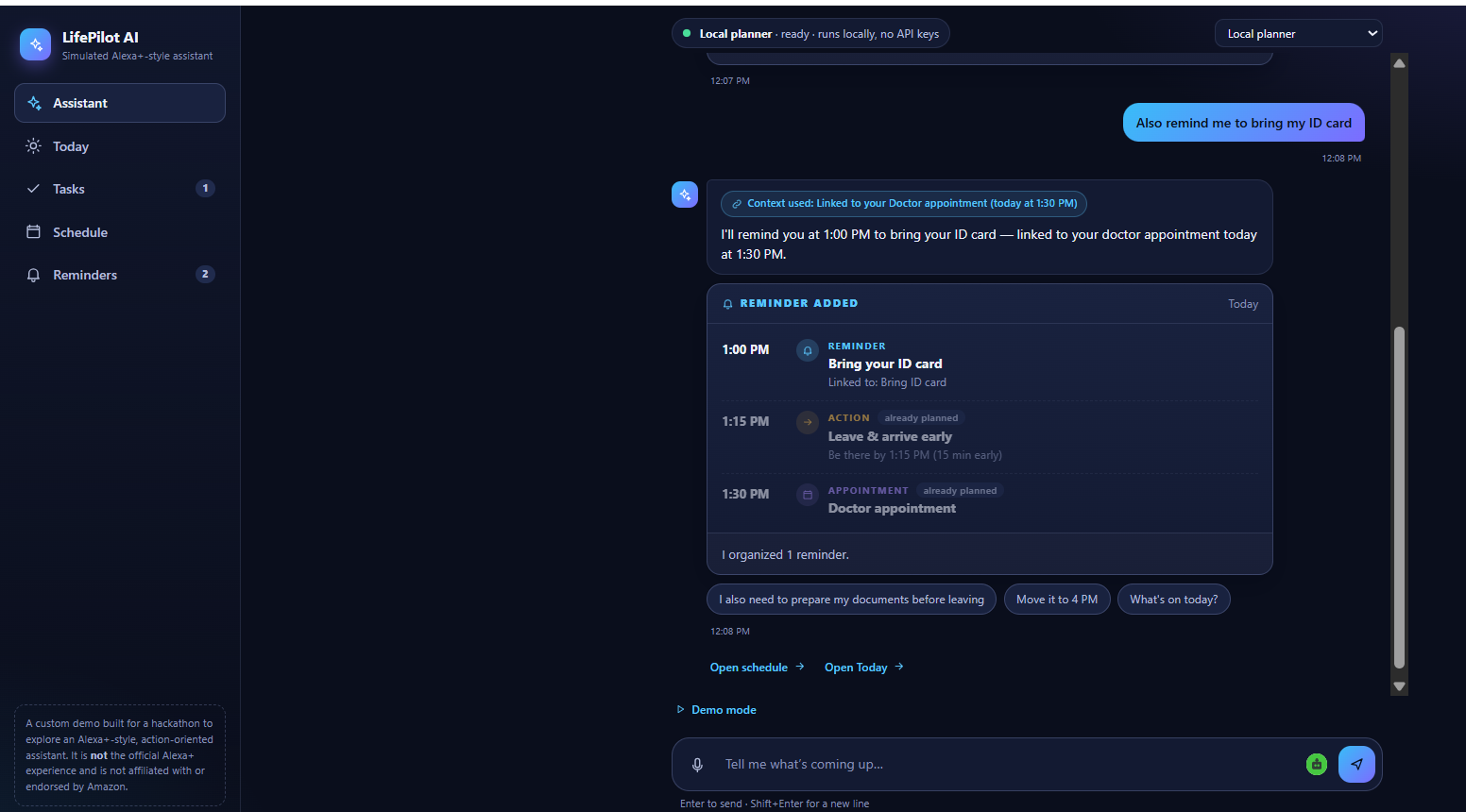
Context-aware follow-up: the assistant links an ID card reminder at 1:00 PM to the existing doctor appointment without restating details.
-
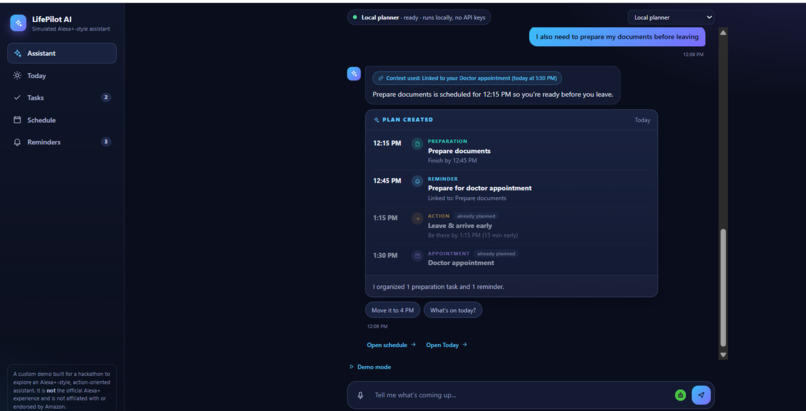
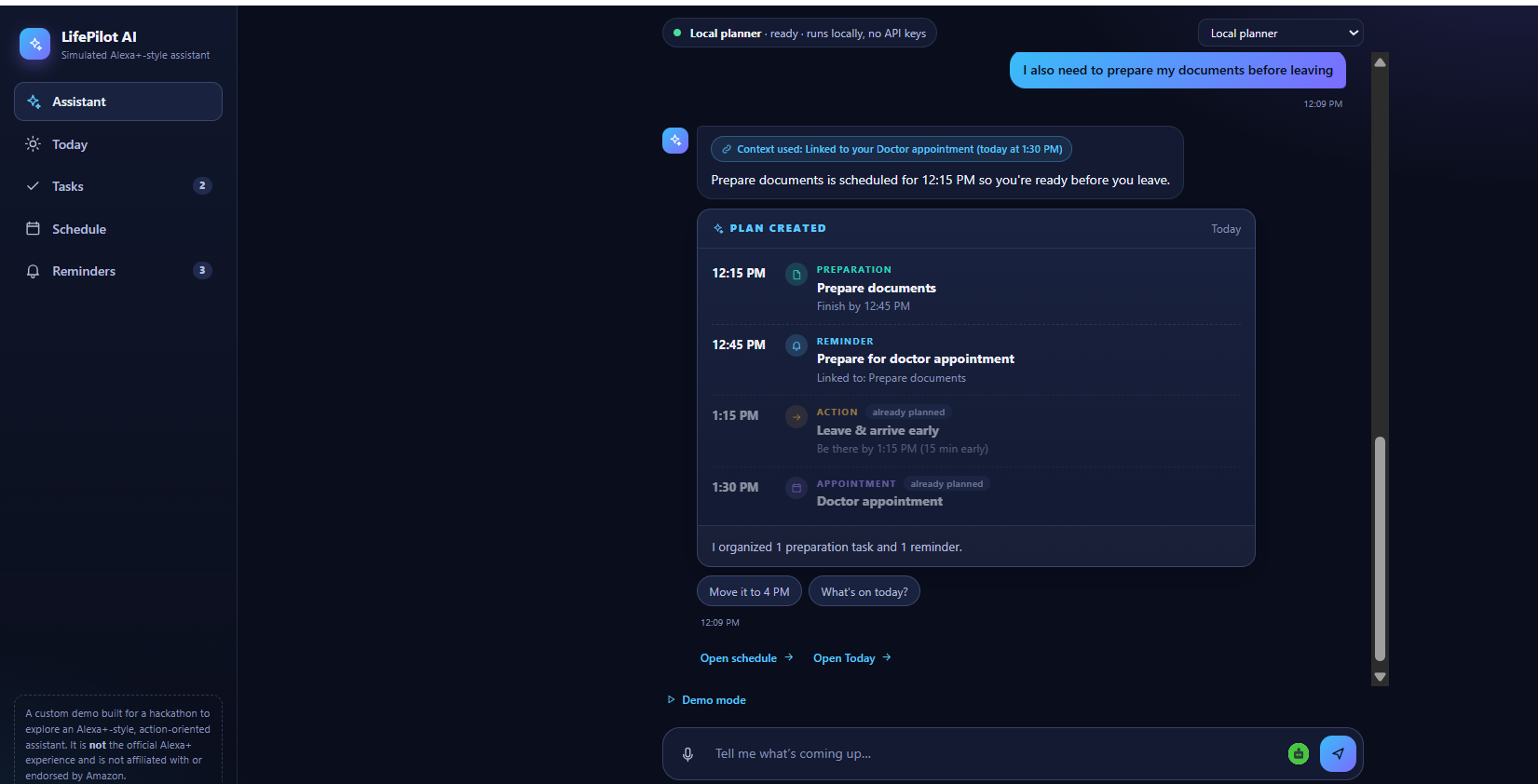
Preparation is scheduled backward from departure: documents are due by 12:45 PM, with a linked reminder added to the existing plan.
-
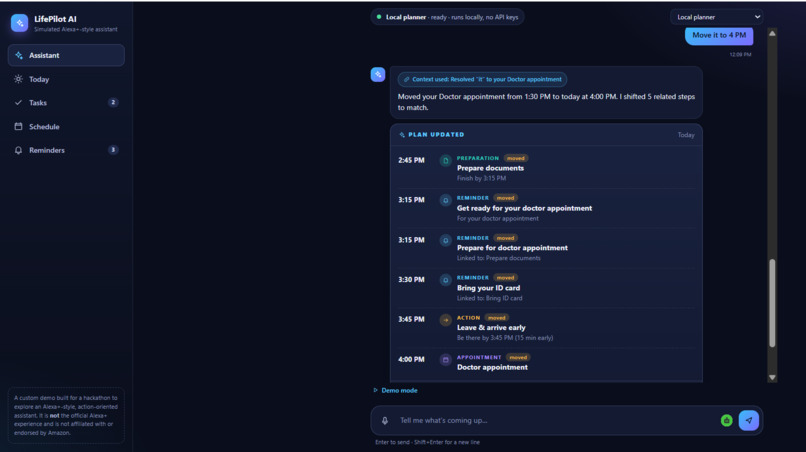
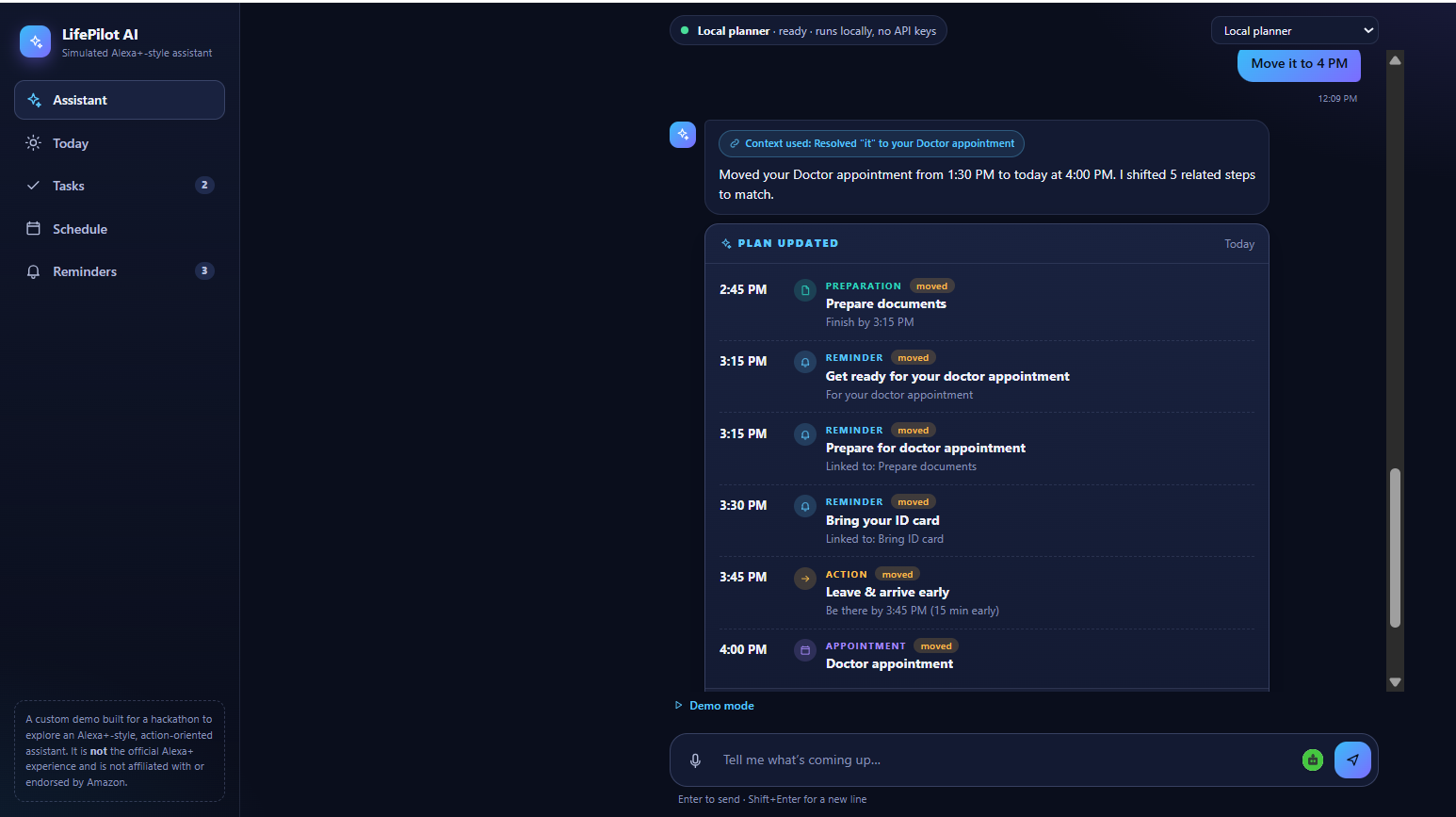
Rescheduling by pronoun: "Move it to 4 PM" resolves to the appointment and shifts five related steps to stay consistent.
-
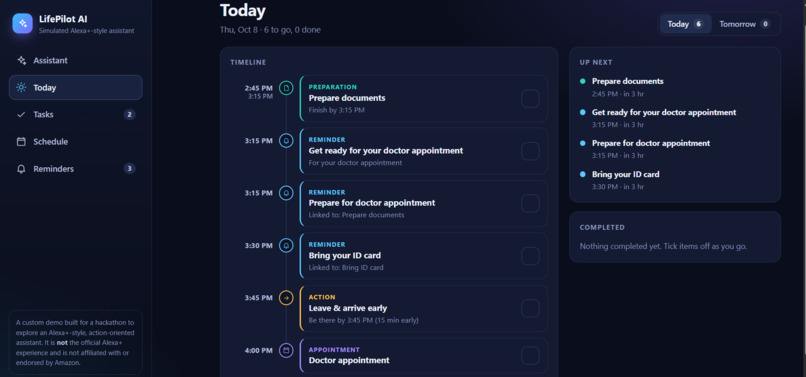
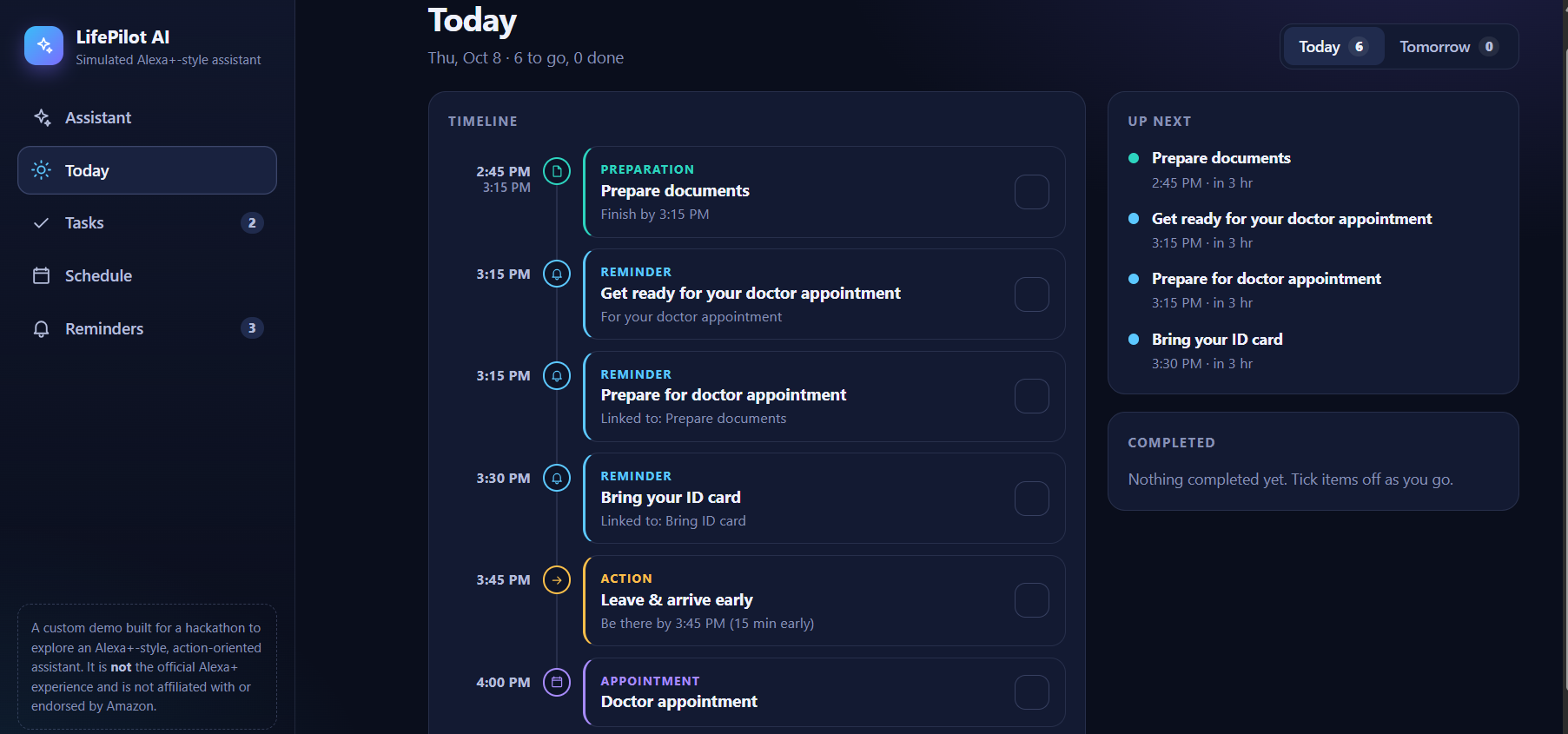
Today view: a live timeline of preparation, reminders, actions, and the appointment, with an Up Next panel and completion tracking.
-
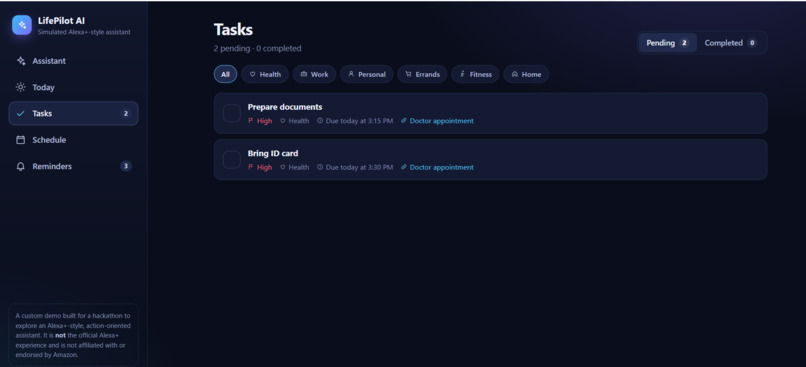
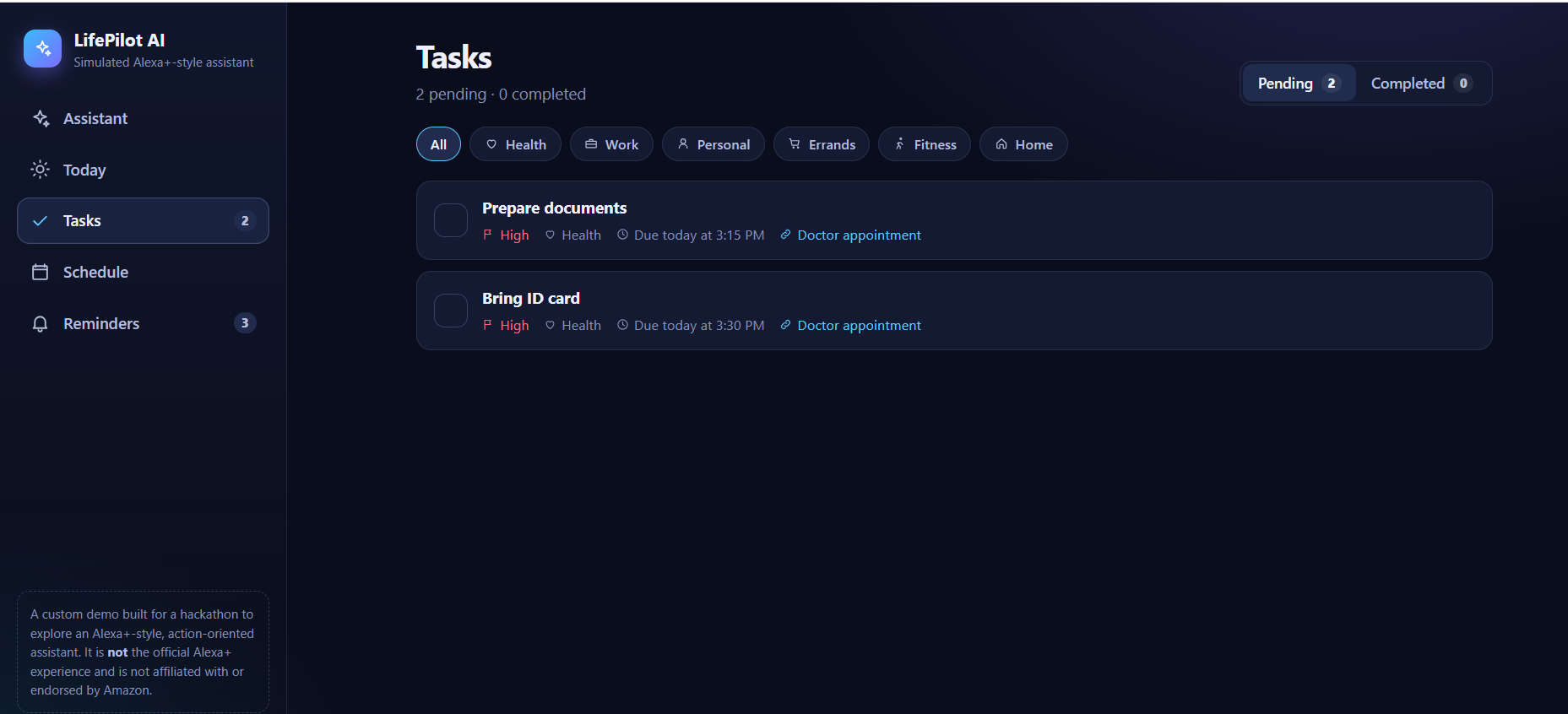
Tasks view: auto-generated to-dos with priority, category, due time, and a link back to the related doctor appointment.
-
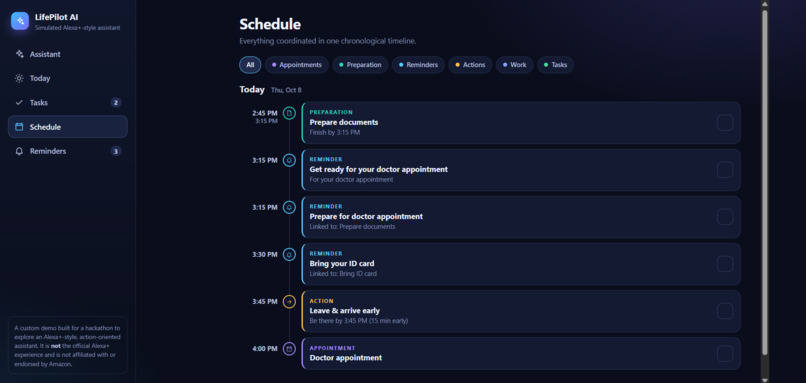
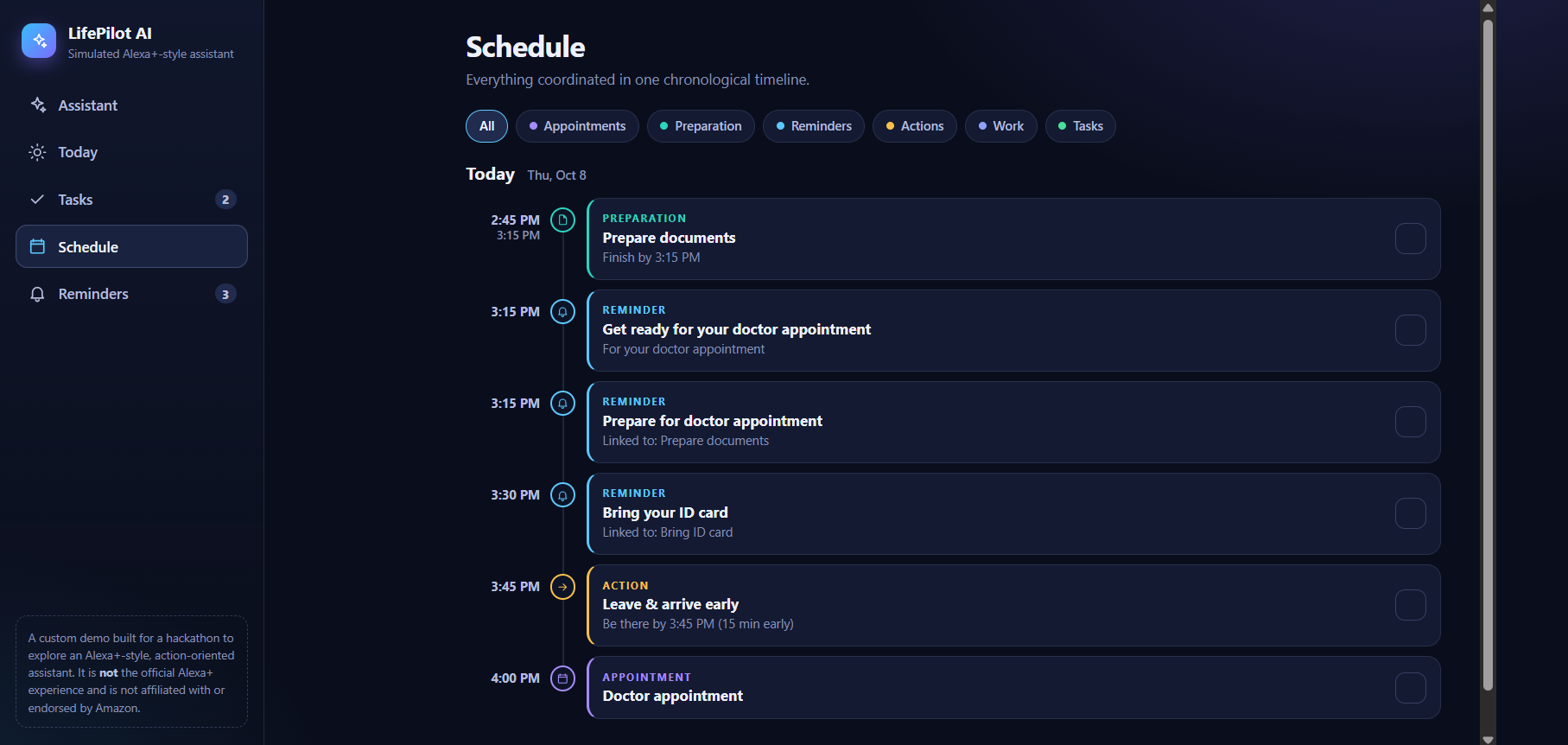
Schedule view: appointments, preparation, reminders, and actions in one chronological timeline with category filters.
-
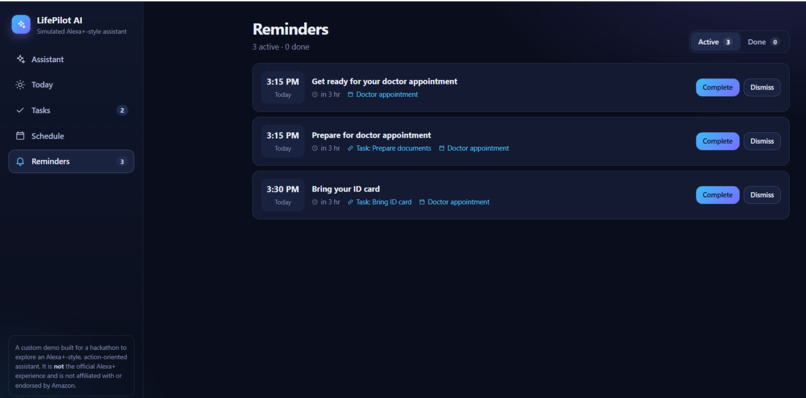
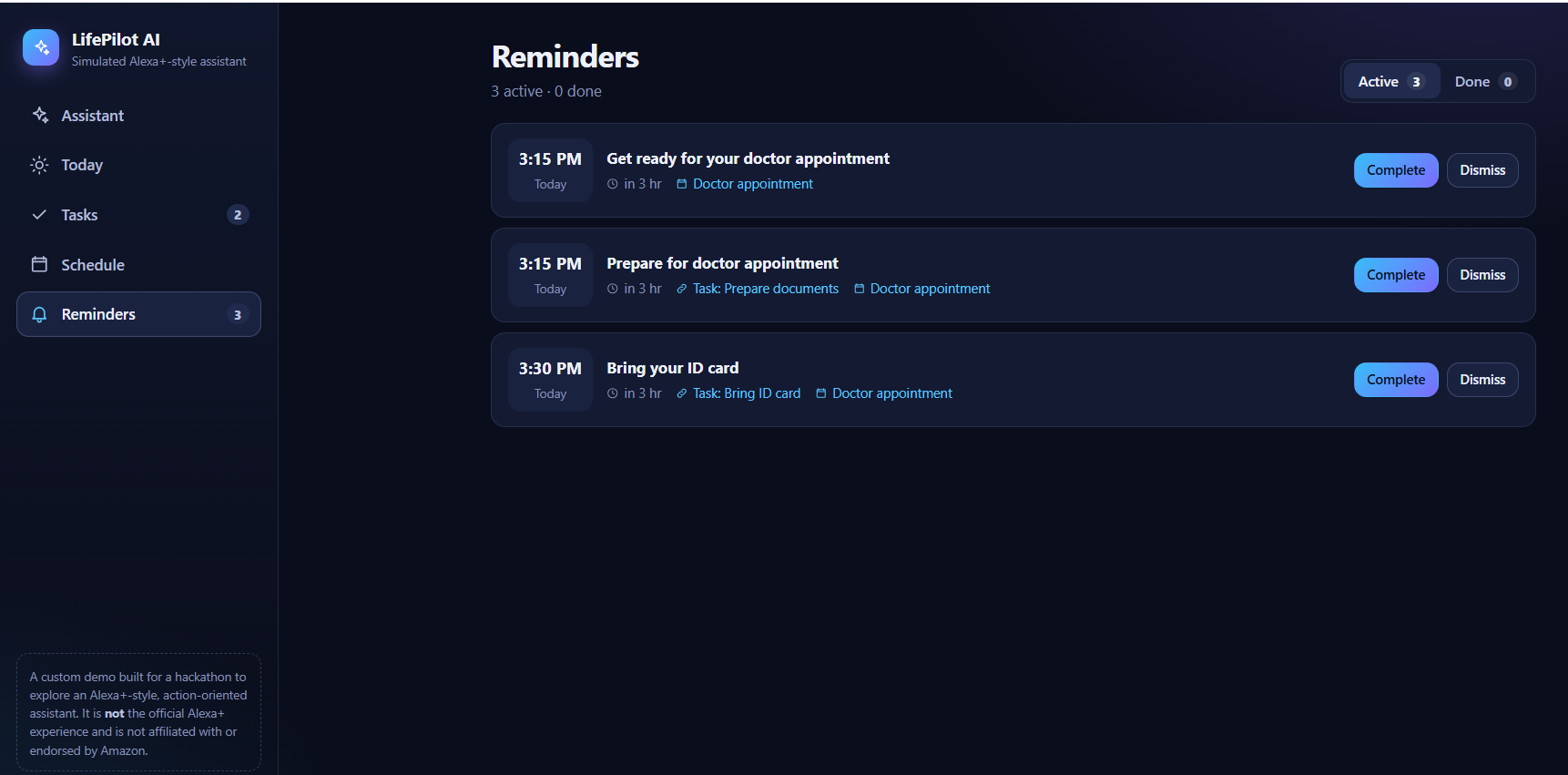
Reminders view: active reminders tied to their parent tasks and appointment, with Complete and Dismiss controls.
-
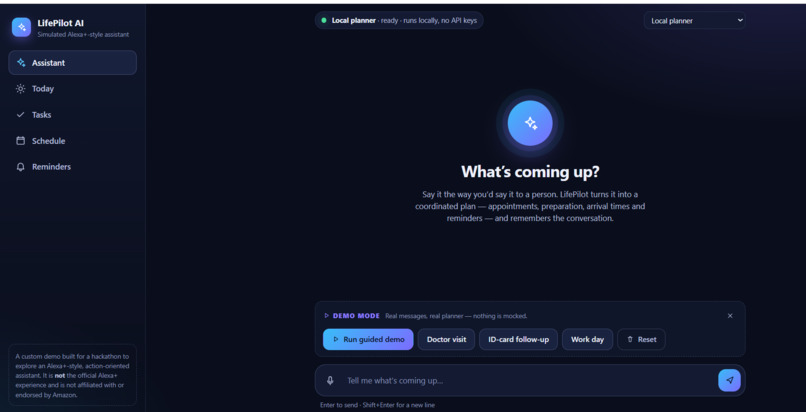
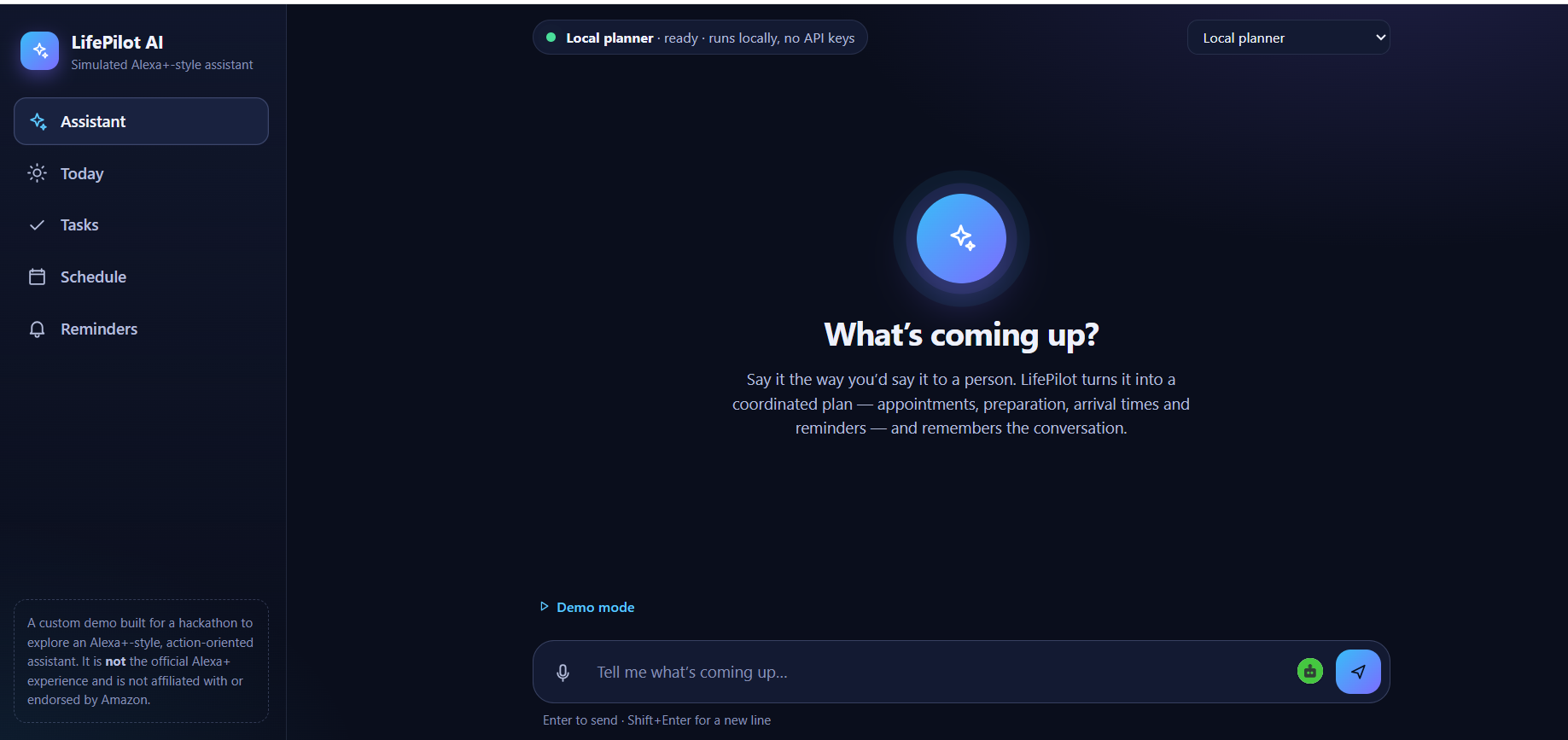
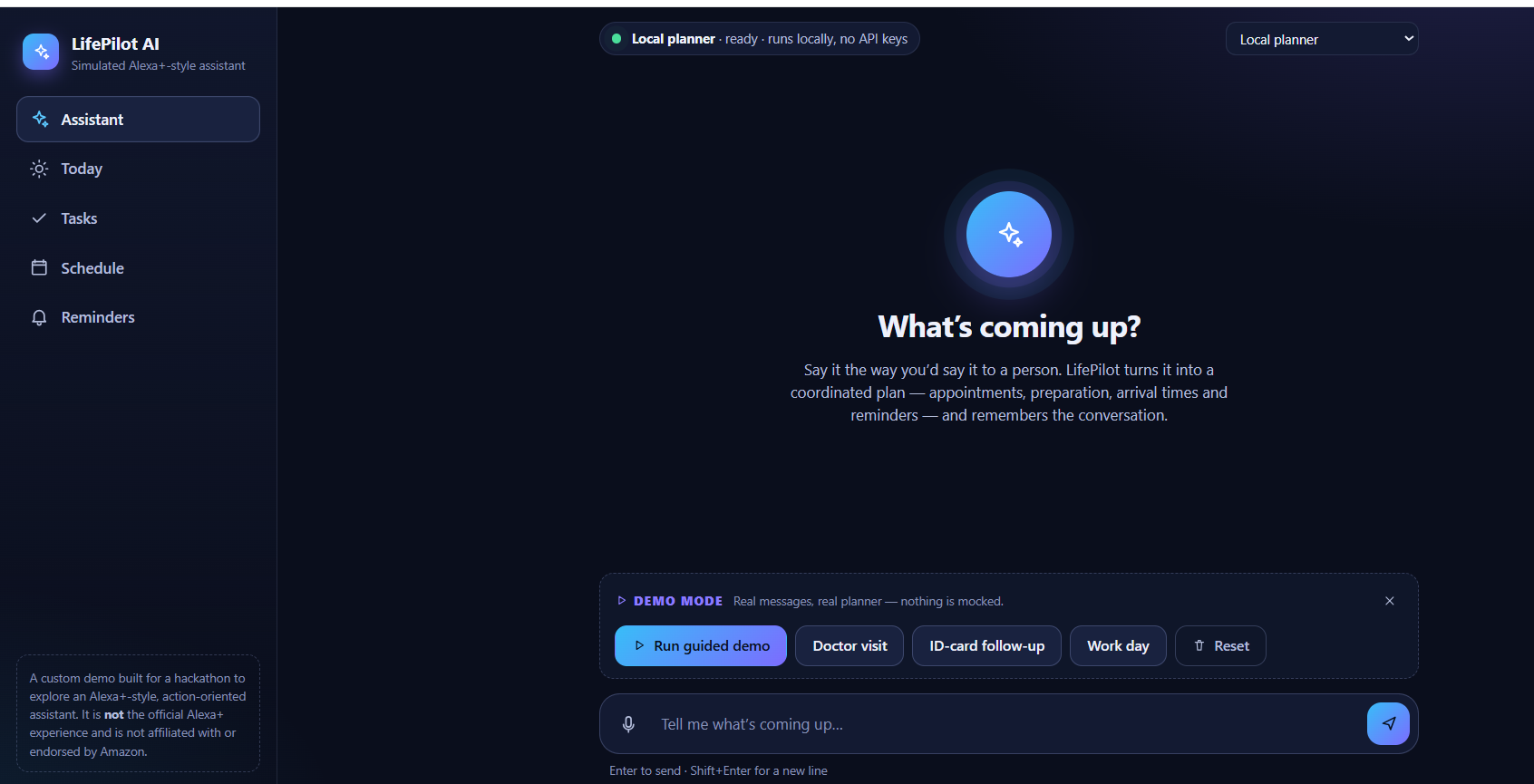
Start screen: a local planner that needs no API keys, with guided demo scenarios for doctor visit, ID-card follow-up, and work day.
What is LifePilot AI?
LifePilot AI is a conversational planning assistant that turns everyday requests into coordinated actions such as appointments, preparation tasks, schedules, and reminders.
It is built as a custom simulated Alexa+-style experience, exploring how an action-orientated assistant could understand a natural-language request, connect related actions, and maintain context across follow-up messages.
The Problem
Real-life requests rarely contain just one action.
For example:
"I have a doctor appointment tomorrow at 3 PM. I need to arrive 30 minutes early, and I need to prepare my documents before leaving."
This single request contains an appointment, an arrival requirement, a preparation task, and a reminder.
Traditional task tools often make users create each item separately. LifePilot AI turns the request into one coordinated plan.
The Solution
LifePilot AI converts natural-language requests into a structured plan and keeps related actions connected.
Example
User:
"I have a doctor appointment tomorrow at 3 PM. I need to arrive 30 minutes early. I also need to prepare my documents before leaving."
LifePilot AI creates:
- 1:30 PM — Prepare documents
- 2:00 PM — Appointment preparation reminder
- 2:30 PM — Arrive early
- 3:00 PM — Doctor appointment
The user can then continue naturally:
"Also remind me to carry my ID card."
LifePilot AI uses the existing conversation context and adds the new reminder without requiring the appointment details to be repeated.
Key Features
- Multi-step planning from natural-language requests
- Context-aware follow-ups linked to the active appointment or plan
- Automatic scheduling around fixed commitments
- Tasks and reminders generated from one request
- Rescheduling that updates related actions together
- Clarifying questions when required information is missing
- Five connected screens: Assistant, Today, Tasks, Schedule, and Reminders
- Local persistence using browser storage
- Responsive desktop and mobile experience
- Guided demo mode for quickly demonstrating the complete workflow
How We Built It
LifePilot AI uses React, TypeScript, Vite, Node.js, and Express.
The planning engine is modular and deterministic. A PlannerProvider interface separates the planner logic from the user interface, while the current LocalPlannerProvider handles:
- Natural-language clause extraction
- Date and time parsing
- Appointment and task detection
- Arrival-buffer calculations
- Reminder generation
- Flexible task scheduling
- Conversation-context resolution
- Structured plan generation
The application stores conversation and plan state locally so the experience works without external API credentials.
Why Alexa+?
The project explores an interaction model suited to a conversational assistant: users describe what they need naturally, and the system turns that request into coordinated actions.
Rather than presenting a simple text response, LifePilot AI produces a visual plan that can be reviewed, changed, and extended through follow-up conversation.
This project is a custom simulated Alexa+-style experience. It is not the official Alexa+ interface, Alexa+ service, or an Amazon application.
What We Learned
The main challenge was turning ambiguous natural-language requests into structured actions while keeping related actions synchronised.
We learned that context is especially important for conversational planning. A follow-up such as "move it to 4 PM" or "also remind me to bring my ID" should resolve against the user's existing plan instead of forcing the user to repeat the original request.
Challenges
The biggest implementation challenges were the following:
- Parsing different date, time, duration, and arrival-buffer expressions
- Maintaining context between messages
- Keeping appointments, tasks, reminders, and schedules synchronised
- Handling invalid or ambiguous input without silently failing
- Creating a useful experience that remains fully runnable without external credentials
Future Improvements
Future versions could connect the modular planner to a hosted AI model, add real voice input/output, cloud synchronisation, push notifications, and integrations with external calendars and reminder services.
Built With
- css3
- express.js
- html5
- javascript
- localstorage
- node.js
- react
- typescript
- vite

Log in or sign up for Devpost to join the conversation.