-
-
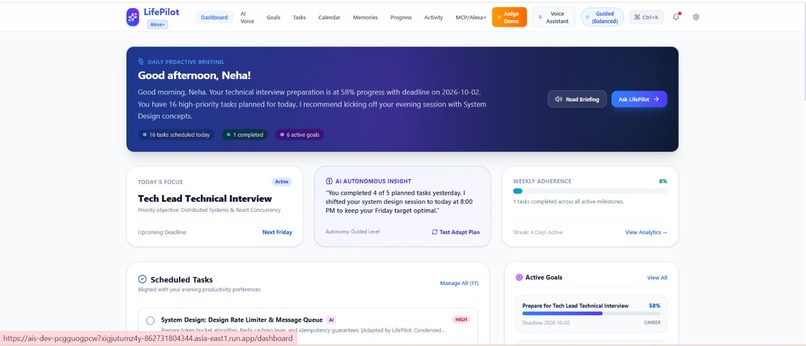
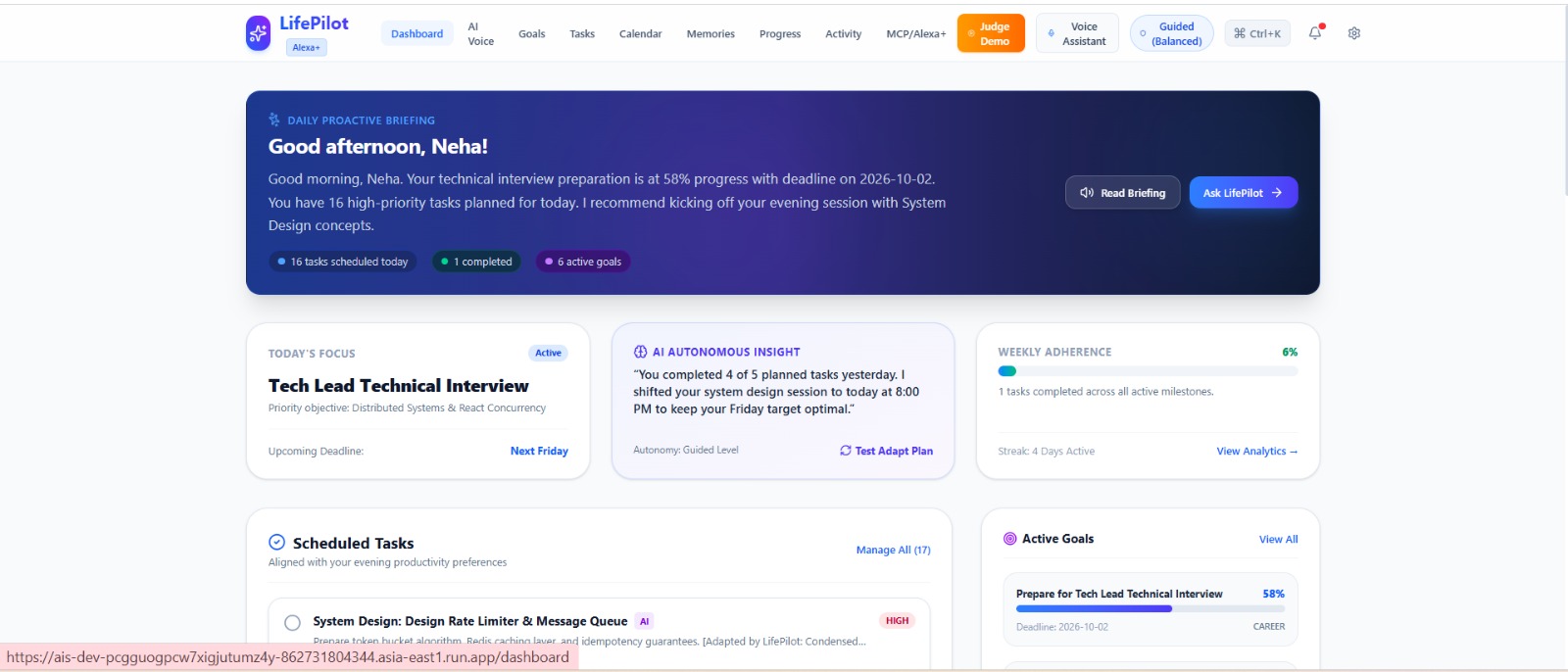
dashboard view
-
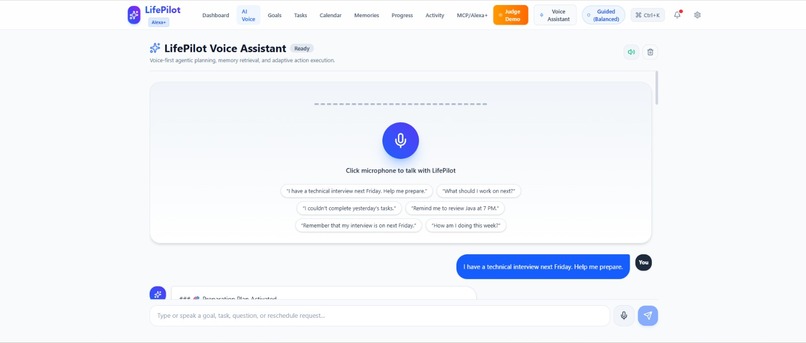
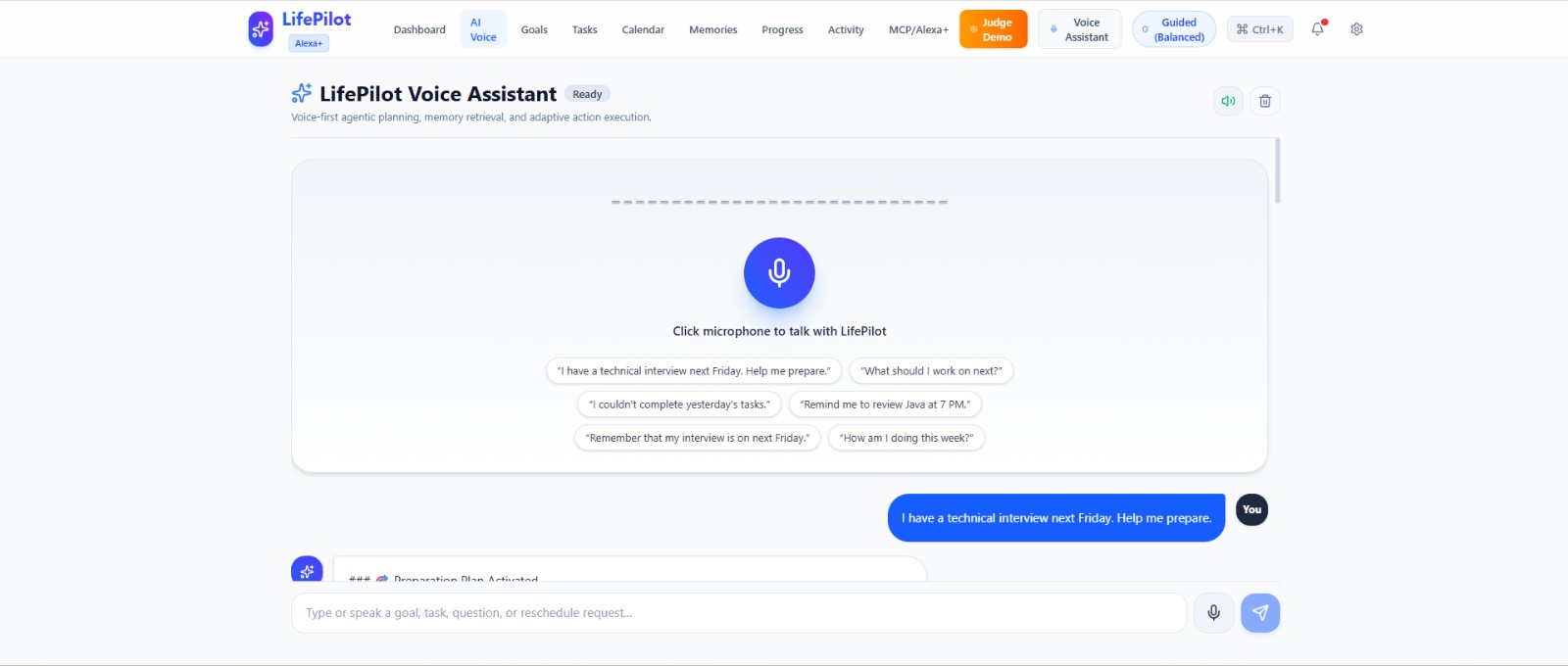
AI voice
-
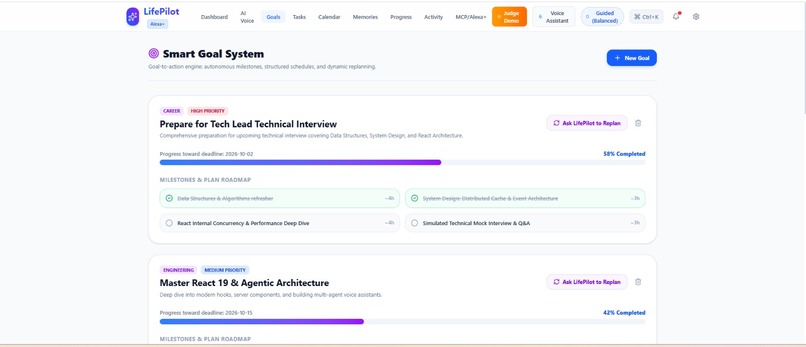
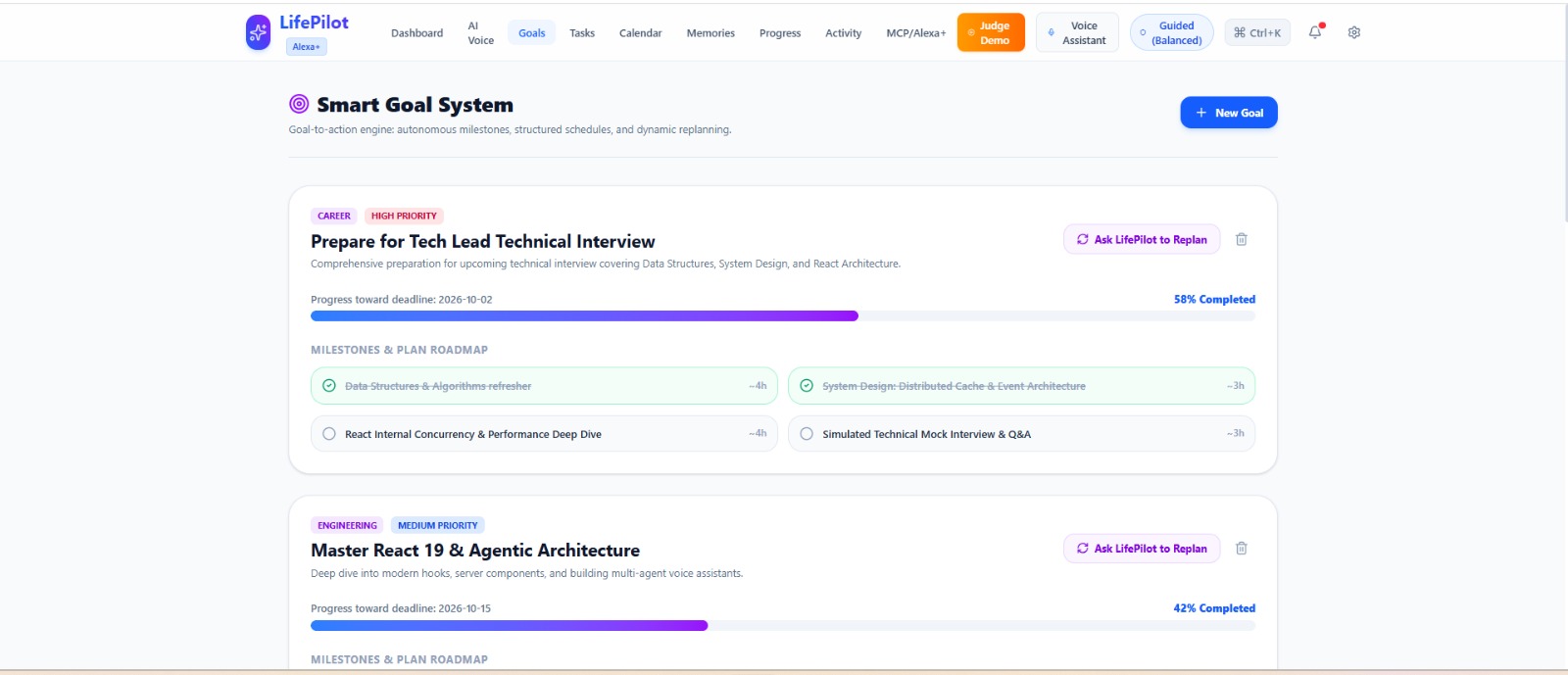
goals
-
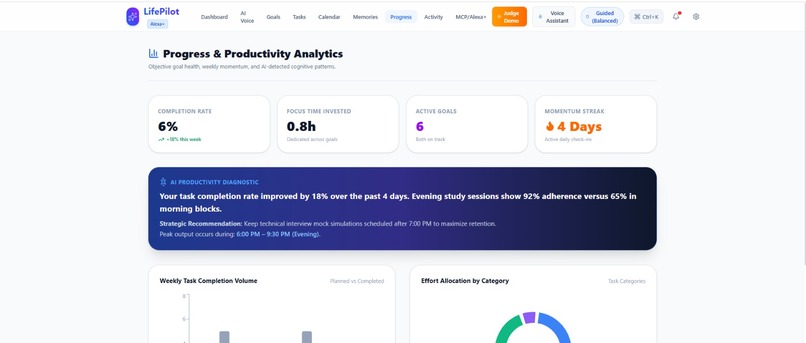
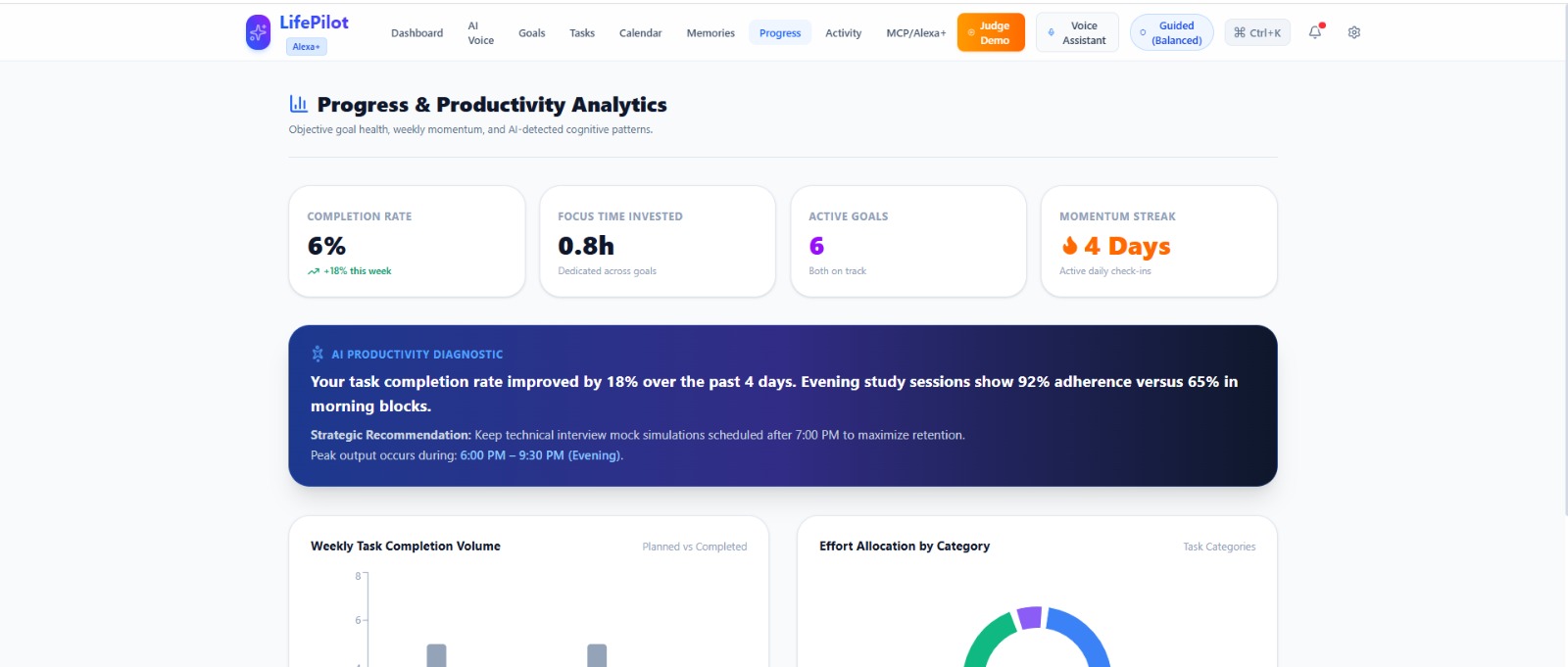
progress
-
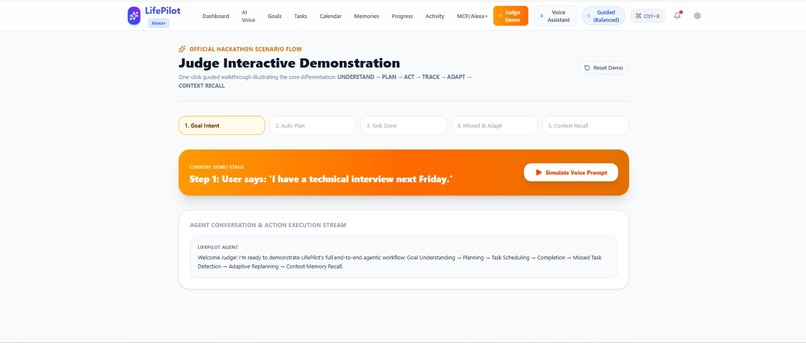
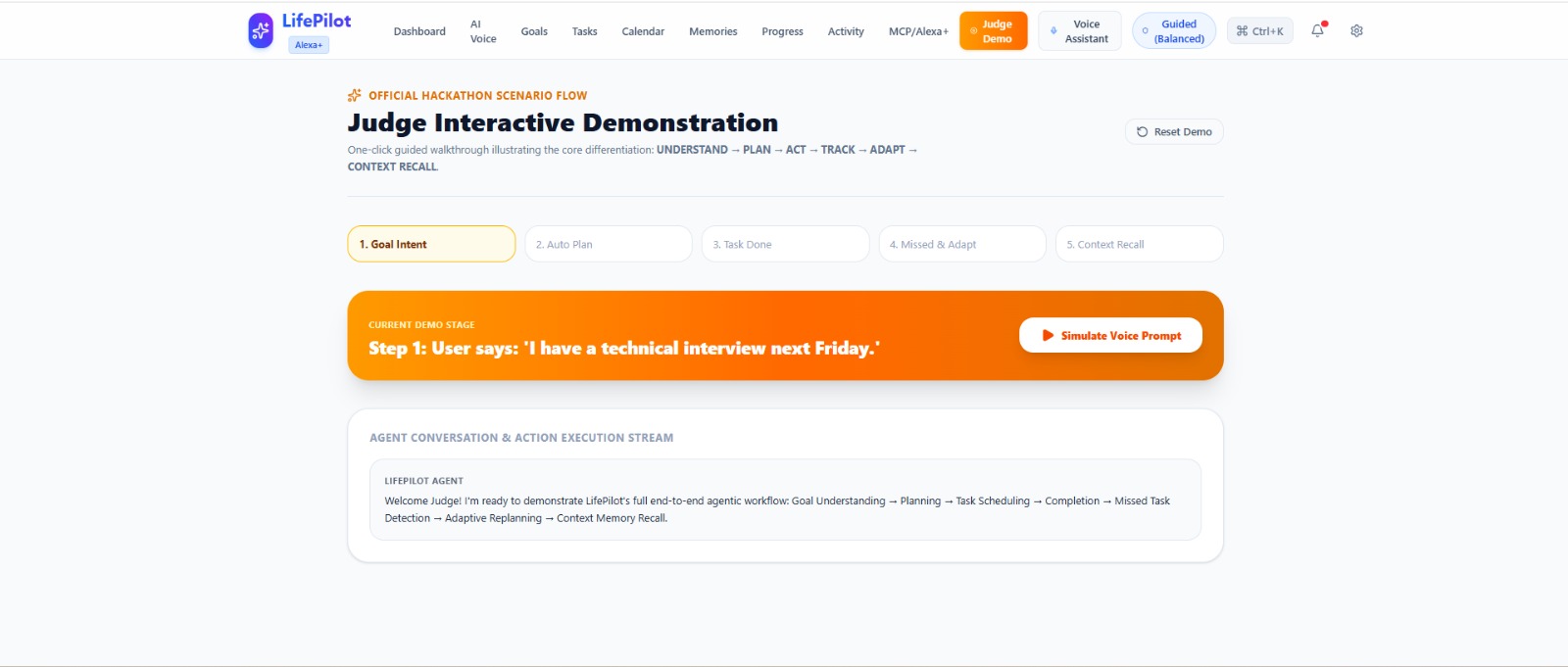
Judge Interactive demo
-
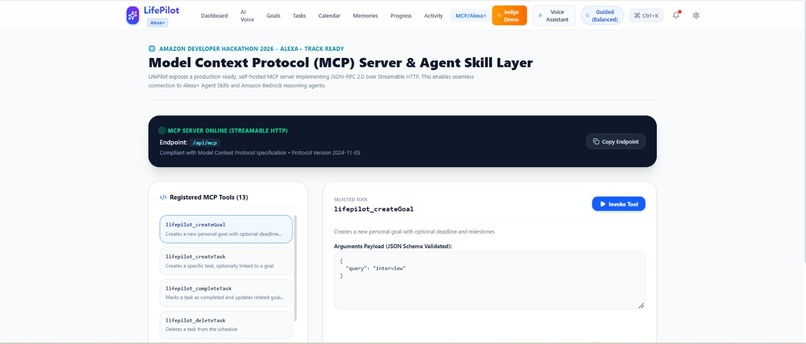
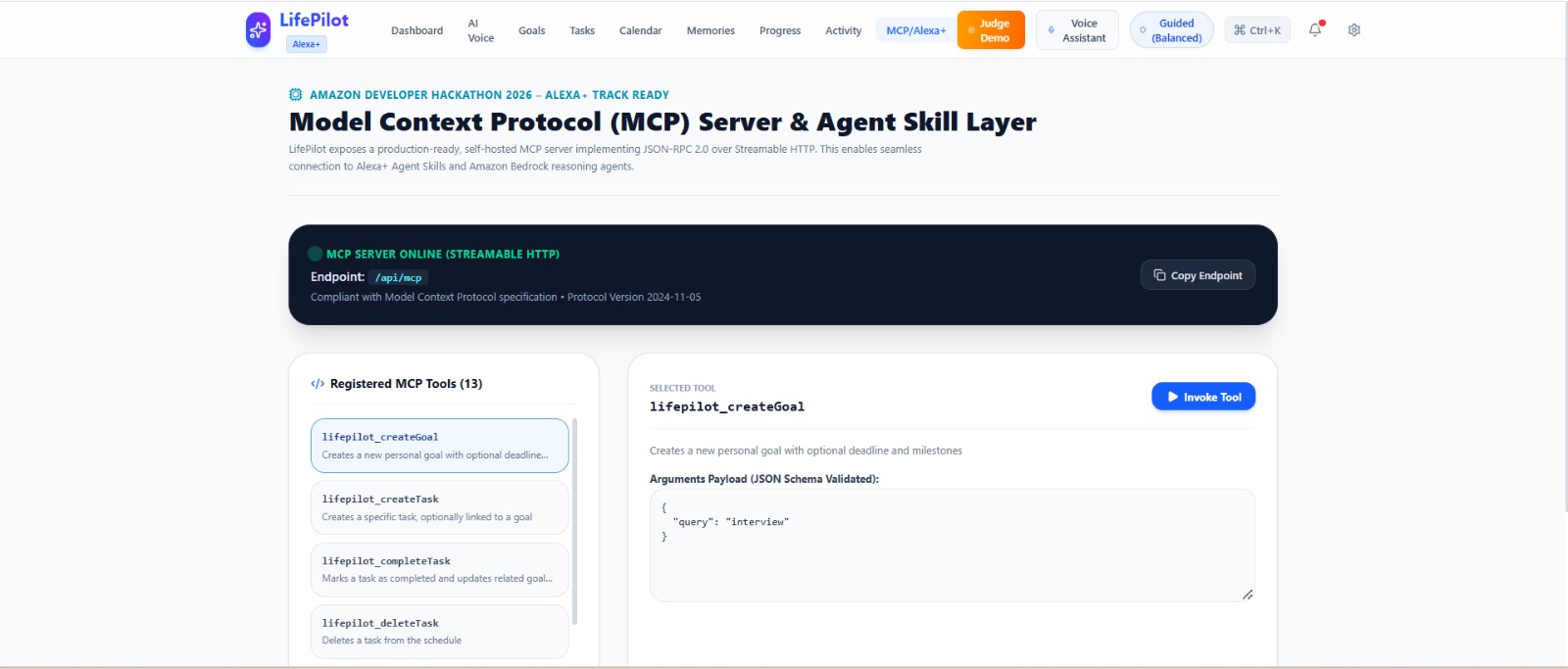
MCP
-
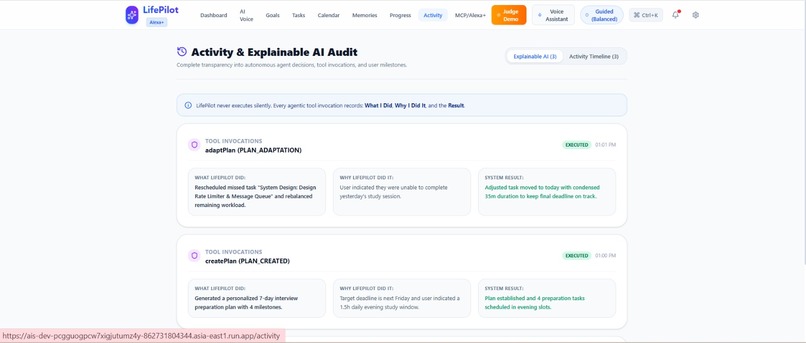
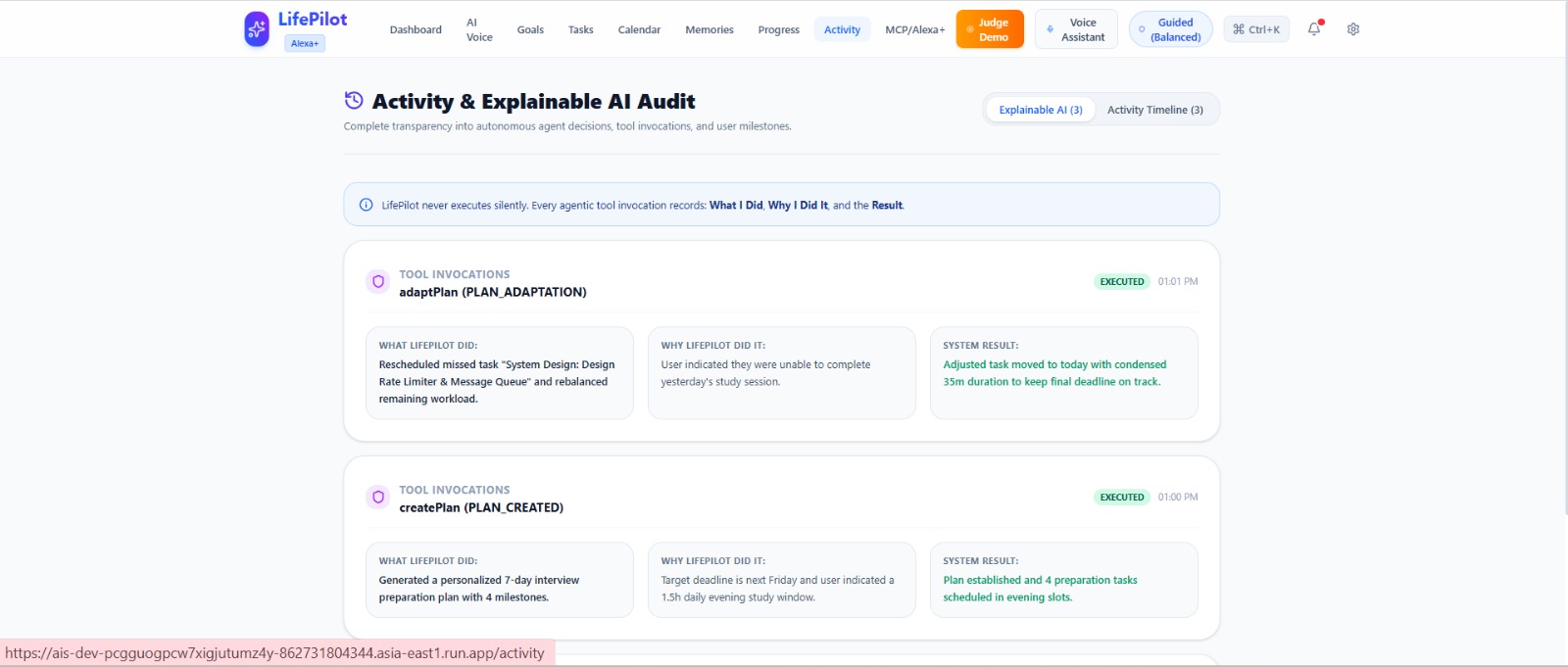
Activity
-
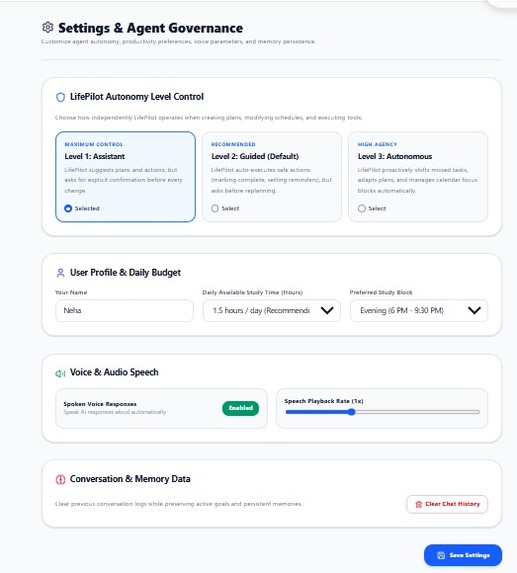
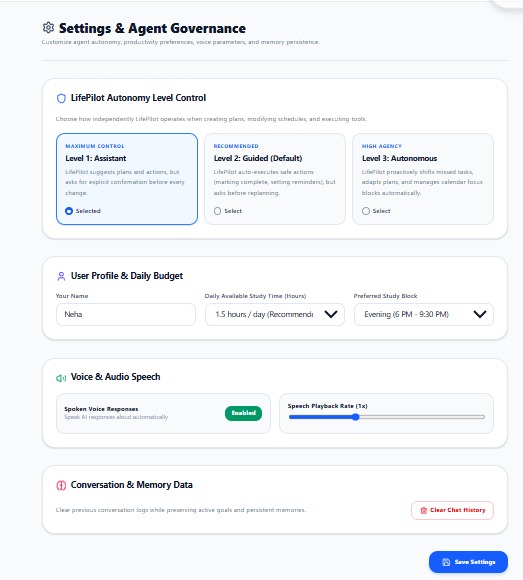
settings
Inspiration
We noticed that people often know what they want to achieve, but struggle with deciding what to do next, staying consistent, and adjusting when their plans change. Traditional assistants mainly provide answers, but they do not always help users turn a goal into a complete action plan.
This inspired us to build LifePilot AI, an intelligent agentic assistant that goes beyond answering questions. It understands a user's goal, creates a personalized plan, remembers important context, helps execute tasks, tracks progress, and adapts the plan based on the user's situation.
Our goal was simple: help users move from "What should I do?" to "It's done."
What it does
LifePilot AI acts as a personal AI productivity and planning assistant.
Users can interact with LifePilot AI using natural language or voice and describe goals such as preparing for an interview, learning a new technology, completing a project, or managing an important deadline.
LifePilot AI can:
- Understand user goals and intentions
- Break large goals into smaller actionable tasks
- Create personalized plans
- Remember important information from previous interactions
- Create and manage reminders
- Track task and goal progress
- Provide personalized recommendations
- Adapt plans when tasks are missed or priorities change
- Ask for confirmation before important actions
- Provide daily progress summaries and actionable next steps
For example, a user can say:
"I have a technical interview next Friday. Help me prepare."
Instead of simply giving advice, LifePilot AI can create a preparation plan, divide it into tasks, track the user's progress, and adapt the remaining plan when the user falls behind.
How we built it
We built LifePilot AI as a full-stack intelligent assistant with a responsive web interface, backend services, database, AI agent layer, memory management, and tool-based actions.
The system follows an agentic workflow:
UNDERSTAND → PLAN → REMEMBER → ACT → TRACK → ADAPT
The AI analyzes the user's request, identifies the goal, creates a structured plan, retrieves relevant context from memory, and uses available tools to perform application actions.
The application includes separate components for goal understanding, planning, long-term memory, action execution, progress tracking, and adaptive planning.
We designed the architecture to support AI agent technologies and voice-based interaction, while keeping the system modular so additional tools and integrations can be added in the future.
Challenges we ran into
One of our biggest challenges was managing long-term context. Simply sending the entire conversation history to the AI can make the system inefficient and can introduce unnecessary information.
We addressed this by separating short-term conversation context from important long-term memories and retrieving relevant information when required.
Another challenge was adaptive planning. A plan that works today may not work tomorrow if the user misses tasks, changes priorities, or has less available time.
We designed LifePilot AI so that plans can be updated based on actual progress rather than remaining fixed.
We also had to consider user control when an AI assistant performs actions. To address this, we designed confirmation mechanisms for important actions and made AI-generated actions visible to the user.
Accomplishments that we're proud of
We are proud of building LifePilot AI as more than a traditional chatbot.
Our main accomplishment is connecting natural-language conversation with planning, memory, task management, progress tracking, and adaptive decision-making in one application.
We are especially proud of the Understand → Plan → Remember → Act → Track → Adapt workflow because it demonstrates how an AI assistant can continuously work with a user's goals instead of treating every conversation as a separate question.
We also built the system with a modular architecture so that new AI tools, integrations, and capabilities can be added without redesigning the entire application.
What we learned
This project taught us that building an effective AI assistant requires much more than generating accurate responses.
We learned how important structured planning, context management, long-term memory, tool calling, state management, user confirmation, and progress tracking are when developing agentic AI systems.
We also learned that an AI assistant should understand the user's previous context and current progress before deciding what to recommend next.
Most importantly, we learned how AI can move from simply generating answers to helping users accomplish goals through continuous interaction and adaptation.
What's next for LifePilot AI
We plan to expand LifePilot AI with more real-world integrations and intelligent capabilities.
Future improvements include:
- Deeper calendar and productivity integrations
- More powerful voice-based interactions
- Expanded long-term memory
- More autonomous agent workflows
- Additional productivity tools and integrations
- Smarter plan adaptation based on user behavior
- Personalized daily and weekly planning
- More advanced AI-powered progress analysis
- Support for additional platforms and devices
Our long-term vision is to make LifePilot AI a practical personal agent that does not just tell users what to do, but continuously helps them plan, act, learn, and adapt until their goals are completed.
Built With
- agents
- ai
- amazon
- amazon-web-services
- api
- bedrock
- css
- express.js
- javascript
- mcp
- mongodb
- mongoose
- node.js
- react
- rest
- speech
- tailwind
- typescript
- vite
- web

Log in or sign up for Devpost to join the conversation.