LifePilot AI — An Intelligent Personal Productivity Assistant
Inspiration
In today's busy world, managing tasks, deadlines, and personal goals can feel overwhelming. People often know what they need to accomplish but struggle to decide what to prioritize and how to use their time effectively.
I wanted to build a personal assistant that goes beyond answering questions. My goal was to create an application that understands natural-language requests and turns them into practical actions, helping people organize their day and focus on what matters most.
This idea inspired LifePilot AI, a productivity assistant designed to make daily planning simpler, smarter, and more accessible.
What It Does
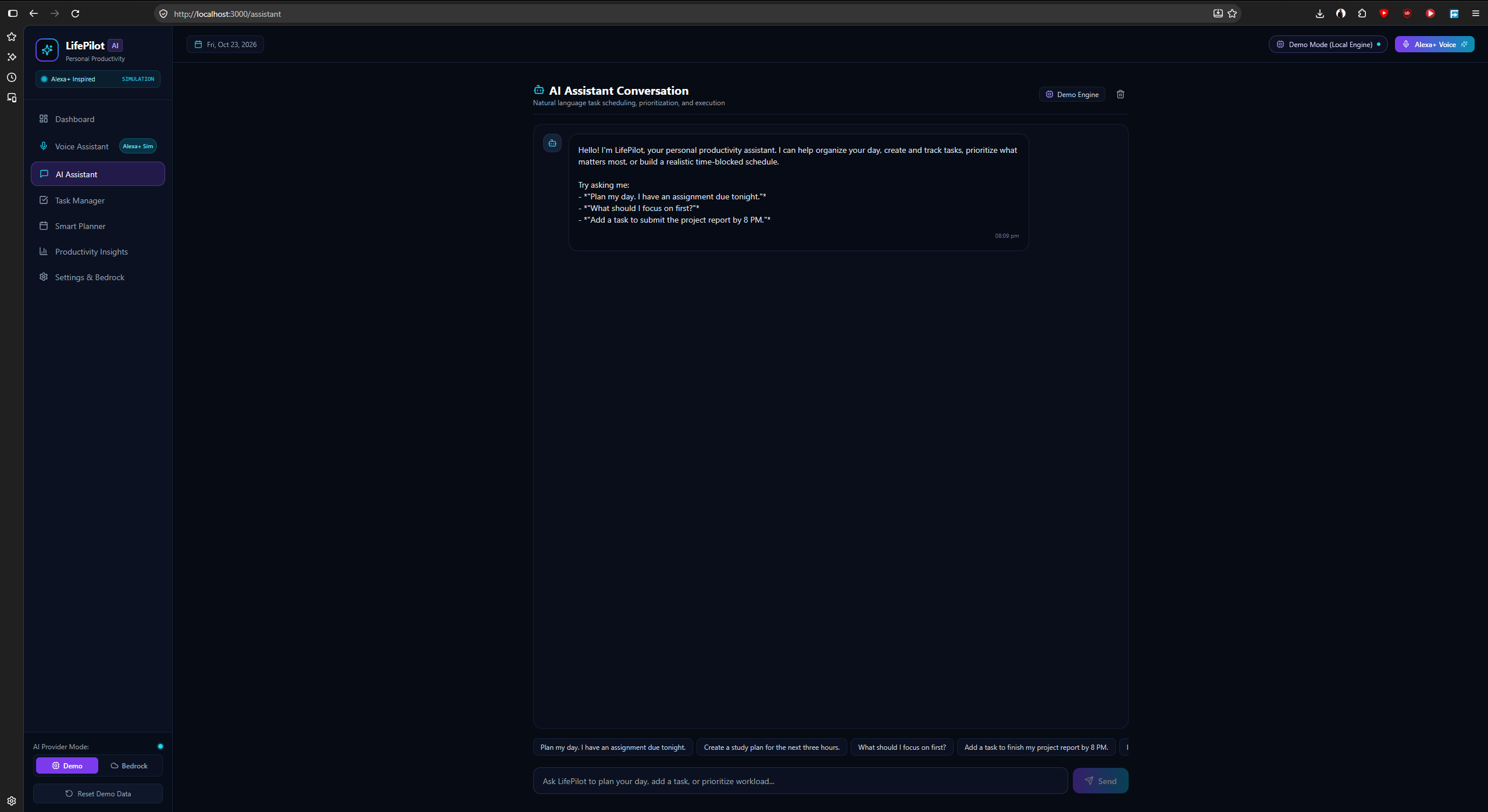
LifePilot AI helps users organize their work through a conversational AI experience. Its intended core features include:
AI-powered assistance: Understands natural-language requests and helps users manage their work.
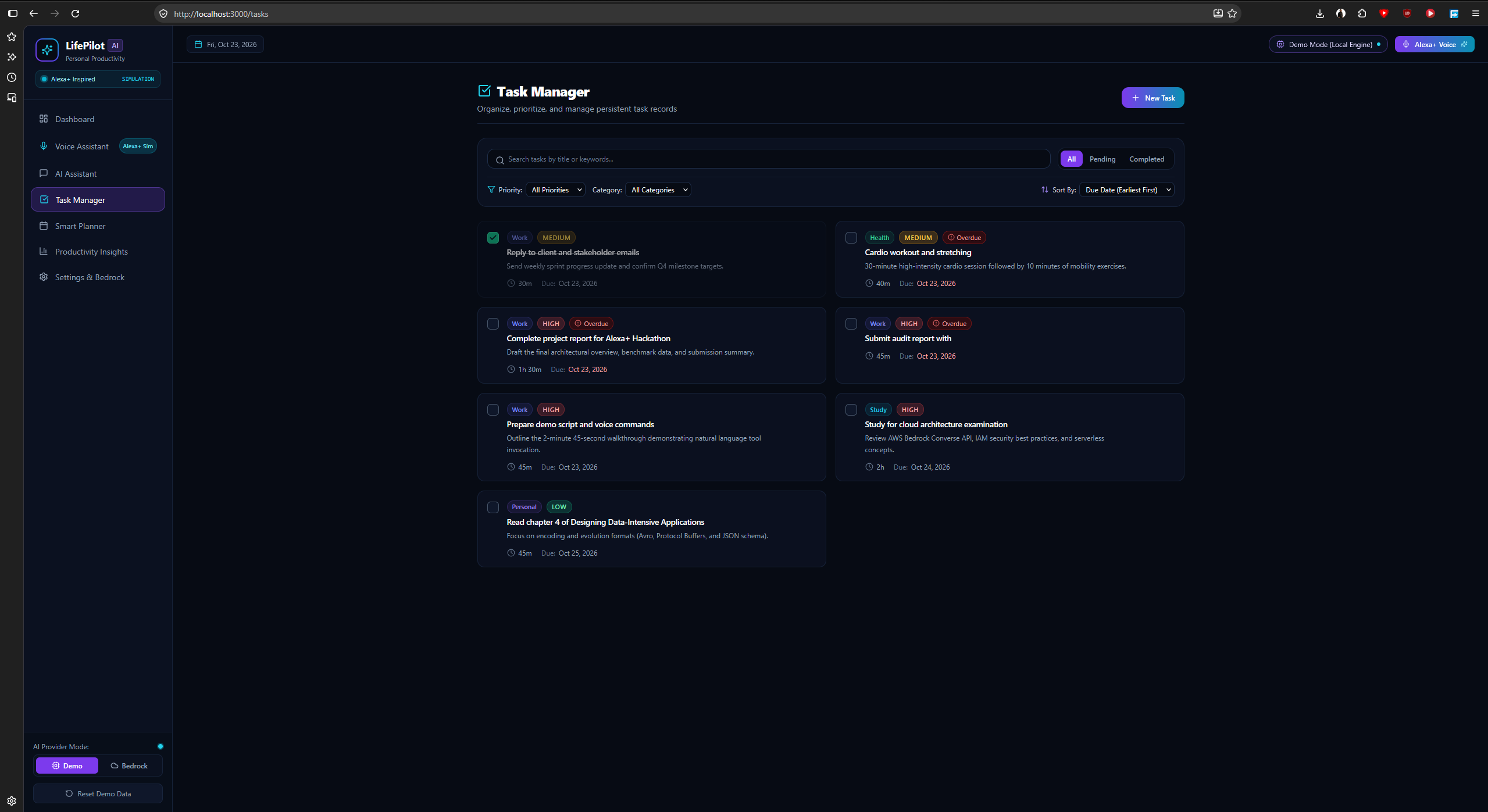
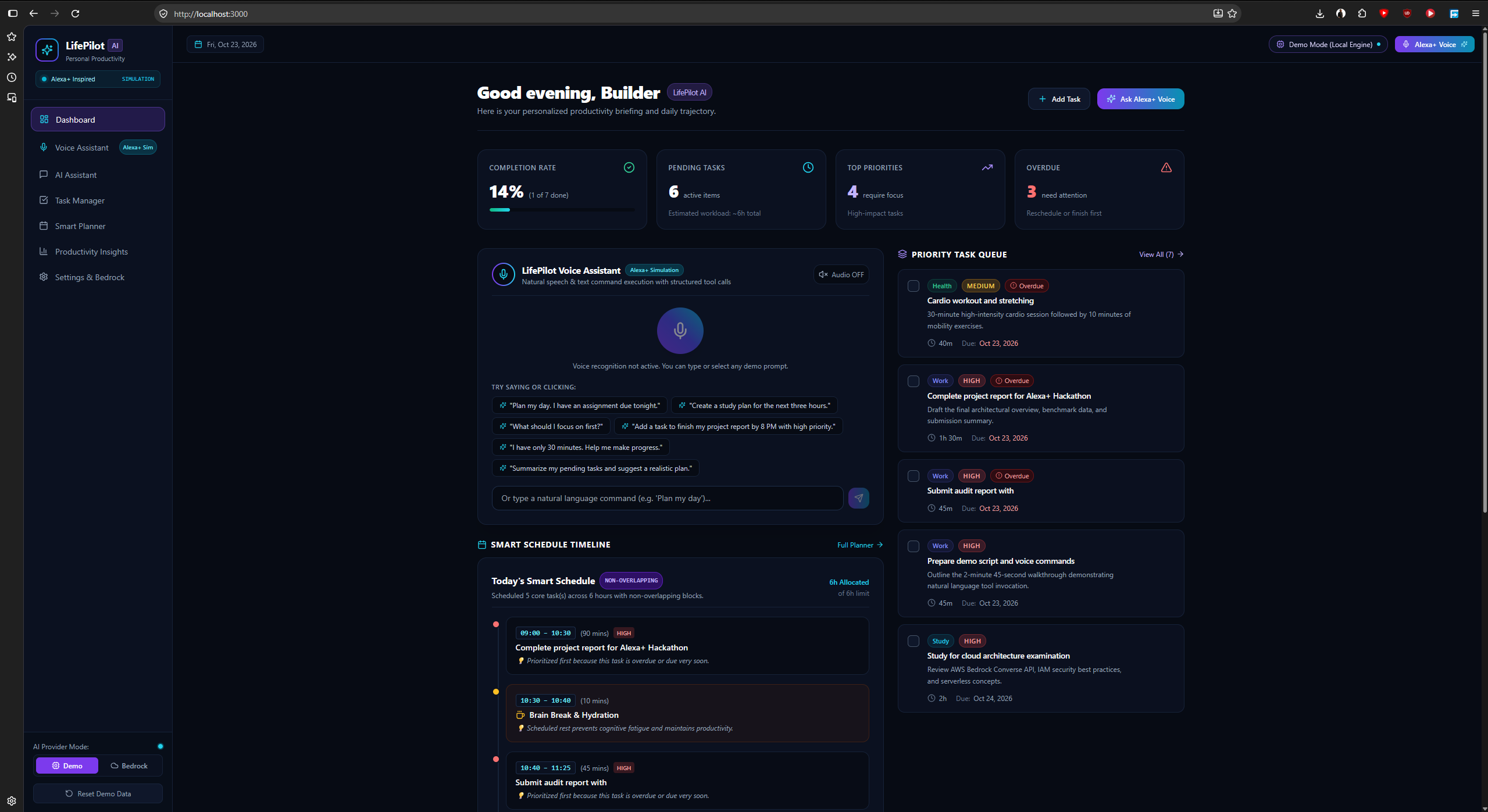
Smart task management: Organizes tasks, priorities, deadlines, and completion status.
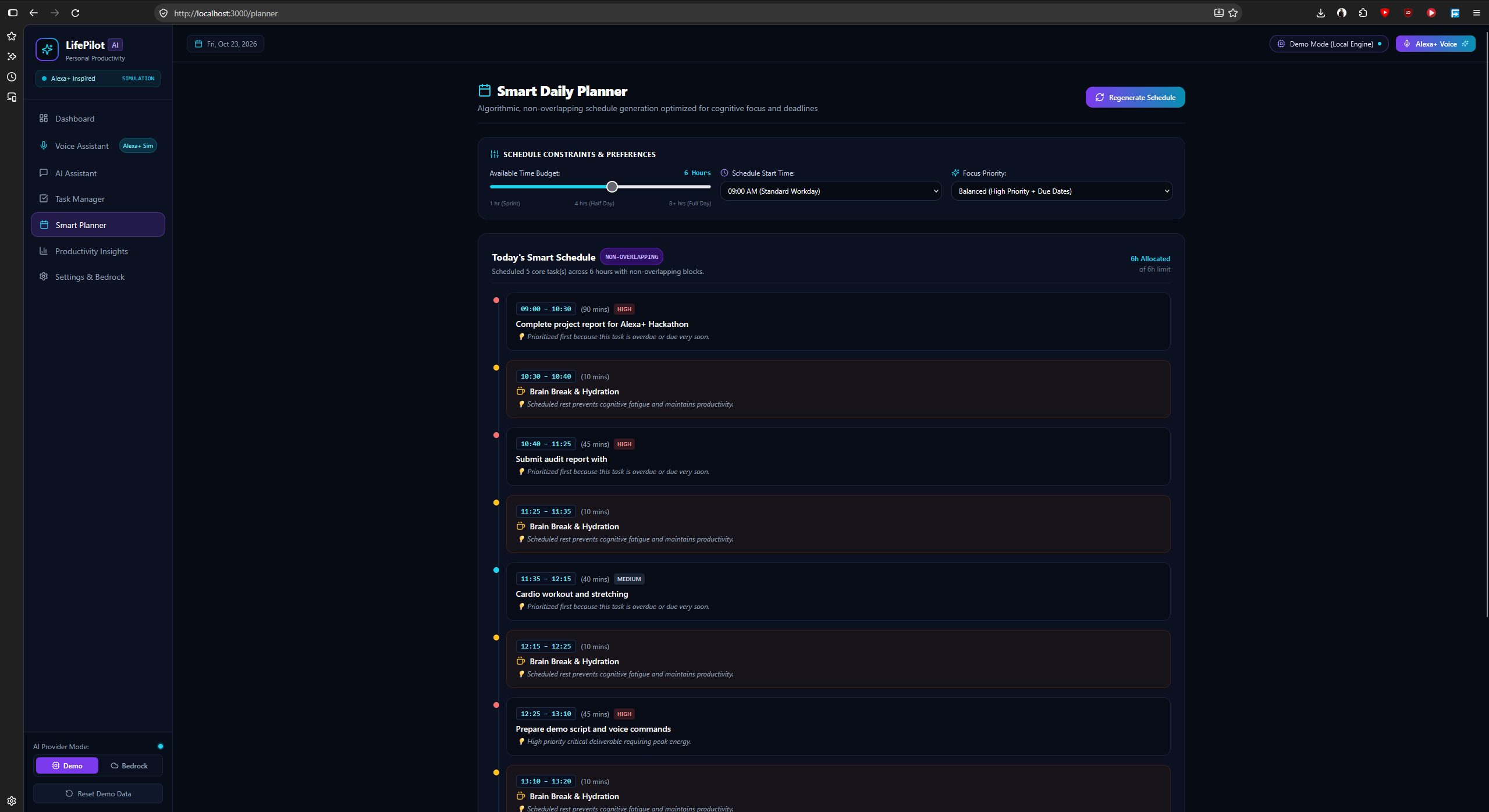
Daily planning: Helps users create realistic schedules based on their tasks and available time.
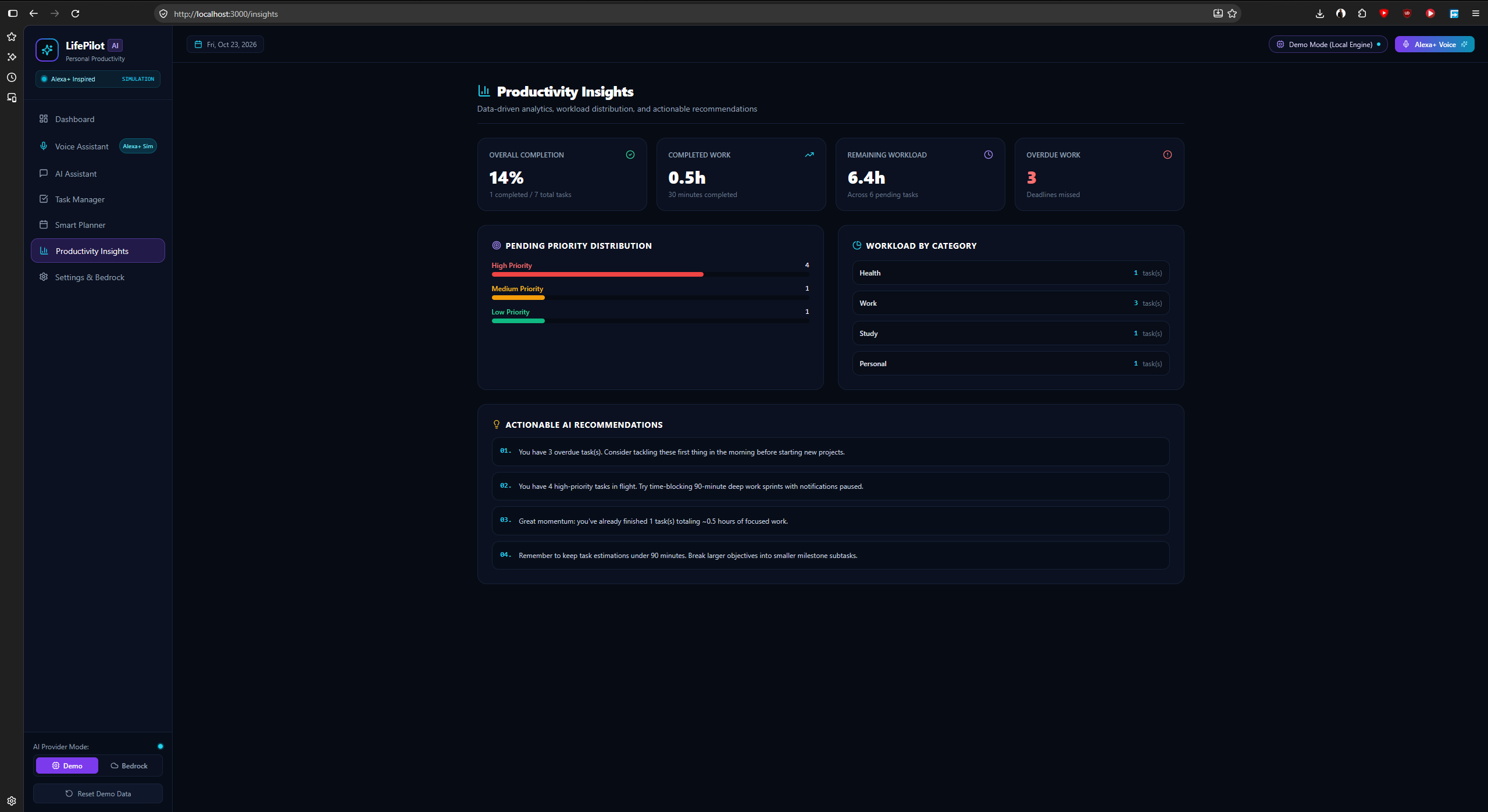
Productivity insights: Provides an overview of completed tasks, outstanding work, and progress.
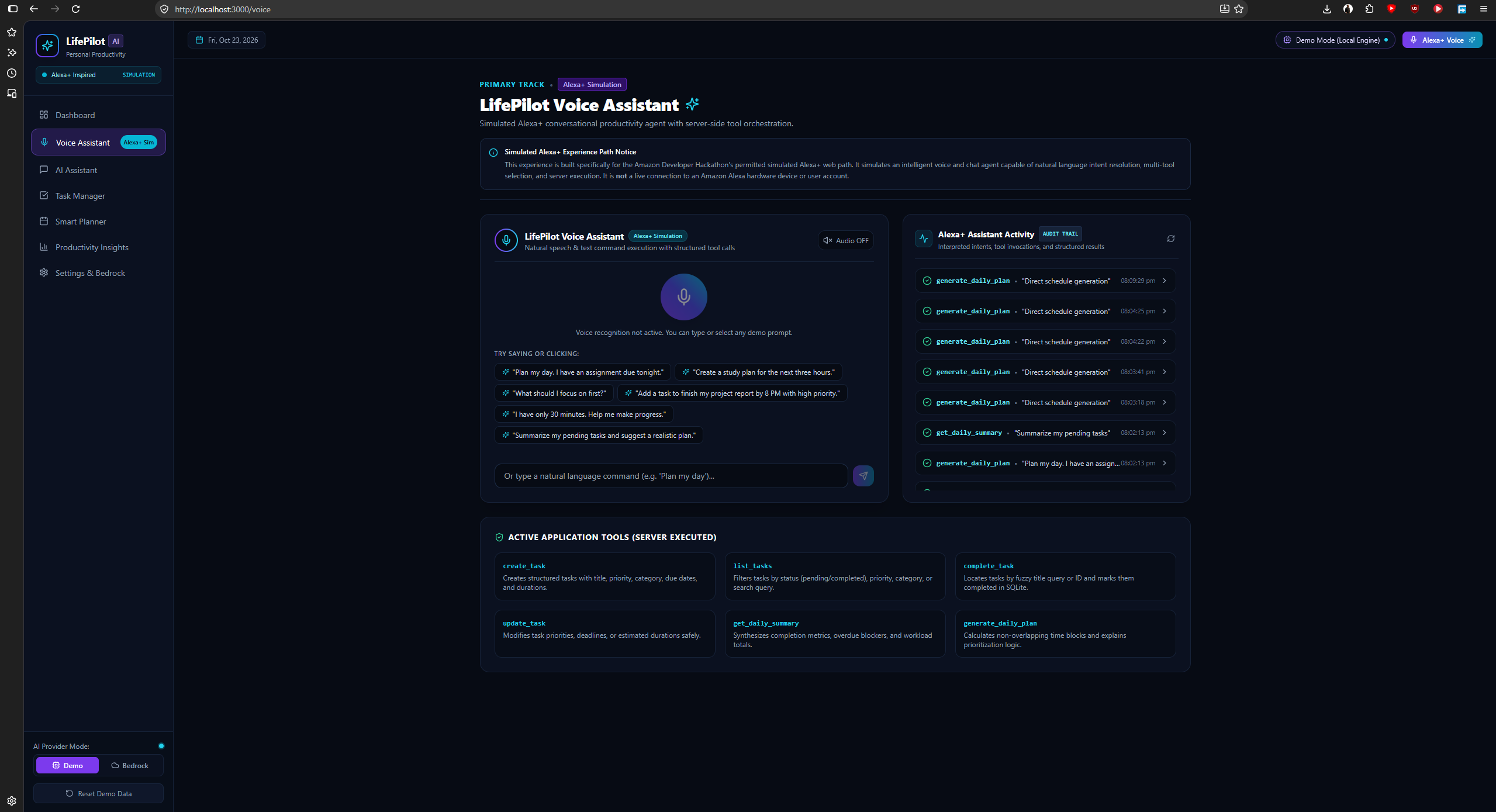
Conversational experience: Demonstrates an Alexa+ inspired assistant that can interpret requests and invoke application tools.
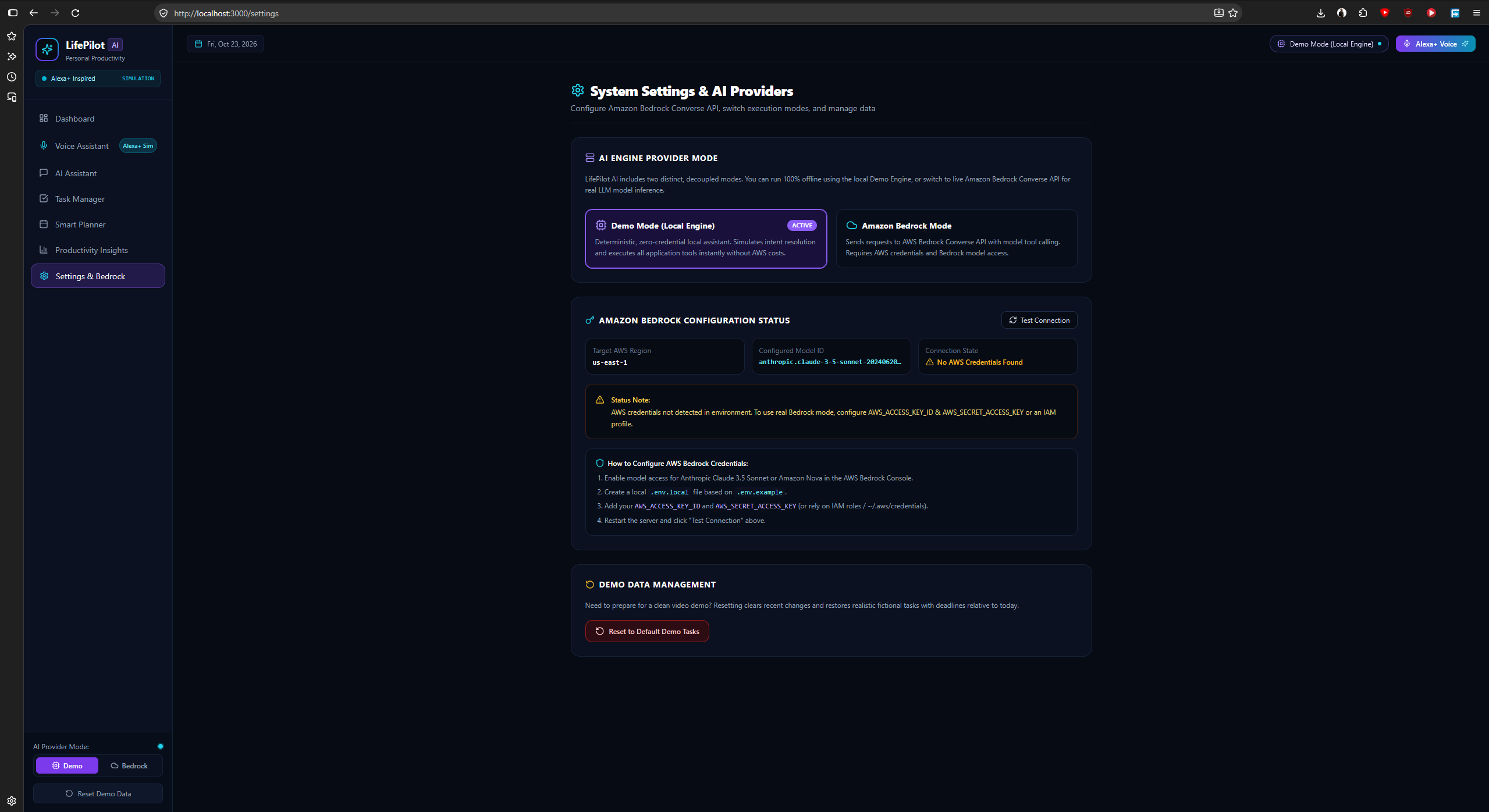
Amazon Bedrock integration: Supports a path to real AI-powered conversations through AWS, alongside a demo mode for testing without AWS credentials.
The project explores how conversational AI and practical application tools can work together to turn intentions into meaningful actions.
How I Built It
I used Google Antigravity as my AI-assisted development environment to build the application and develop its core workflows.
The planned technology stack includes Next.js, React, TypeScript, and Tailwind CSS for the user interface; server-side API routes for application logic; persistent storage for task management; and the AWS SDK for JavaScript to integrate Amazon Bedrock.
The application separates its conversational assistant, task-management tools, data handling, and user interface so that the different components can be tested and improved independently.
A key design goal was to distinguish a simulated Alexa+ inspired experience from an actual Alexa+ integration. The project uses the simulated-experience approach permitted by the hackathon, while Amazon Bedrock provides a separate AWS integration when configured.
Challenges Faced
One of the main challenges was designing an assistant that does more than generate conversational responses. A useful productivity assistant must be able to interpret a request, select an appropriate tool, validate the input, perform the requested action, and communicate the result clearly.
Another challenge was balancing a polished user interface with reliable application functionality. Task persistence, error handling, secure credential management, and the distinction between demo mode and real AI requests are important parts of making the application dependable.
Integrating an external AI service also introduces configuration requirements, including AWS credentials, model access, permissions, and network availability. Keeping the application useful in demo mode while making the real integration explicit was an important architectural consideration.
What I Learned
This project helped me explore how AI-assisted development can accelerate the process of turning an idea into an application. It also reinforced that a successful AI product requires more than a good interface or a language model.
Reliable tool execution, input validation, data persistence, clear feedback, and honest handling of errors are essential to creating an experience users can trust.
I also learned to think about AI assistants as systems that connect natural-language understanding with practical actions, rather than as chat interfaces alone.
What's Next
Future improvements could include voice interaction, calendar integration, personalized scheduling, recurring reminders, and additional productivity tools. The longer-term vision is to make LifePilot AI a dependable personal assistant that adapts to a user's goals and daily routine.
LifePilot AI represents my exploration of a simple idea: AI should not only help people decide what to do next — it should help them turn that decision into action.
Built With
- amazon-web-services
- amazonbedrock
- css
- next.js
- react
- sqlite
- tailwind
- typescript

Log in or sign up for Devpost to join the conversation.