LifeOS Project Story
The Problem That Started Everything
I'm a developer, and like most people today, I was drowning in digital chaos. Every morning I'd open my laptop to find 47 browser tabs, switch between Gmail, Slack, Calendar, Drive, and Spotify dozens of times, and spend more time managing my productivity tools than actually being productive.
The irony wasn't lost on me. I build software that's supposed to make life easier, but I was exhausted by my own digital tools.
The Moment of Clarity
Last month, I tried showing my mom my elaborate Notion setup with its databases, templates, and automation. She's a teacher, so she understands learning curves. After watching for two minutes, she pulled out a simple sticky note and asked, "Why can't technology just work like this?"
That question broke me. And changed everything.
She was right. The best technology disappears. You don't think about using a sticky note, you just use it. No cognitive overhead, no learning curve, no manual.
The Vision
I decided to build something different. Something that felt invisible and natural but could handle our entire digital lives. If my mom couldn't use it instantly, I'd failed.
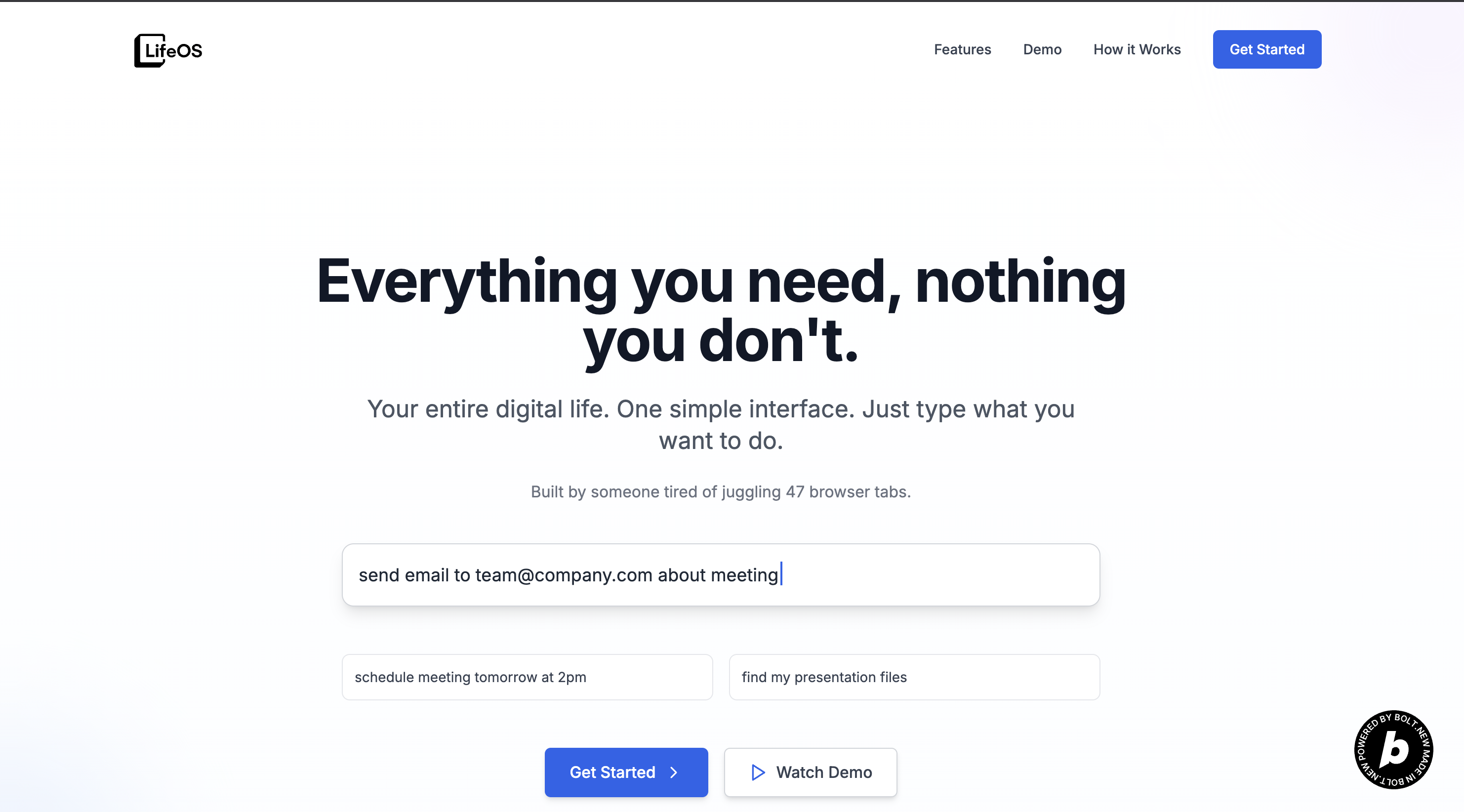
LifeOS was born from this simple idea: productivity as simple as a sticky note, but for everything digital.
Building the Solution
I wanted to create where beautiful meets effortless. Using Bolt, I built an interface that's gorgeous because I believe when you're making something simple, it better be beautiful too.
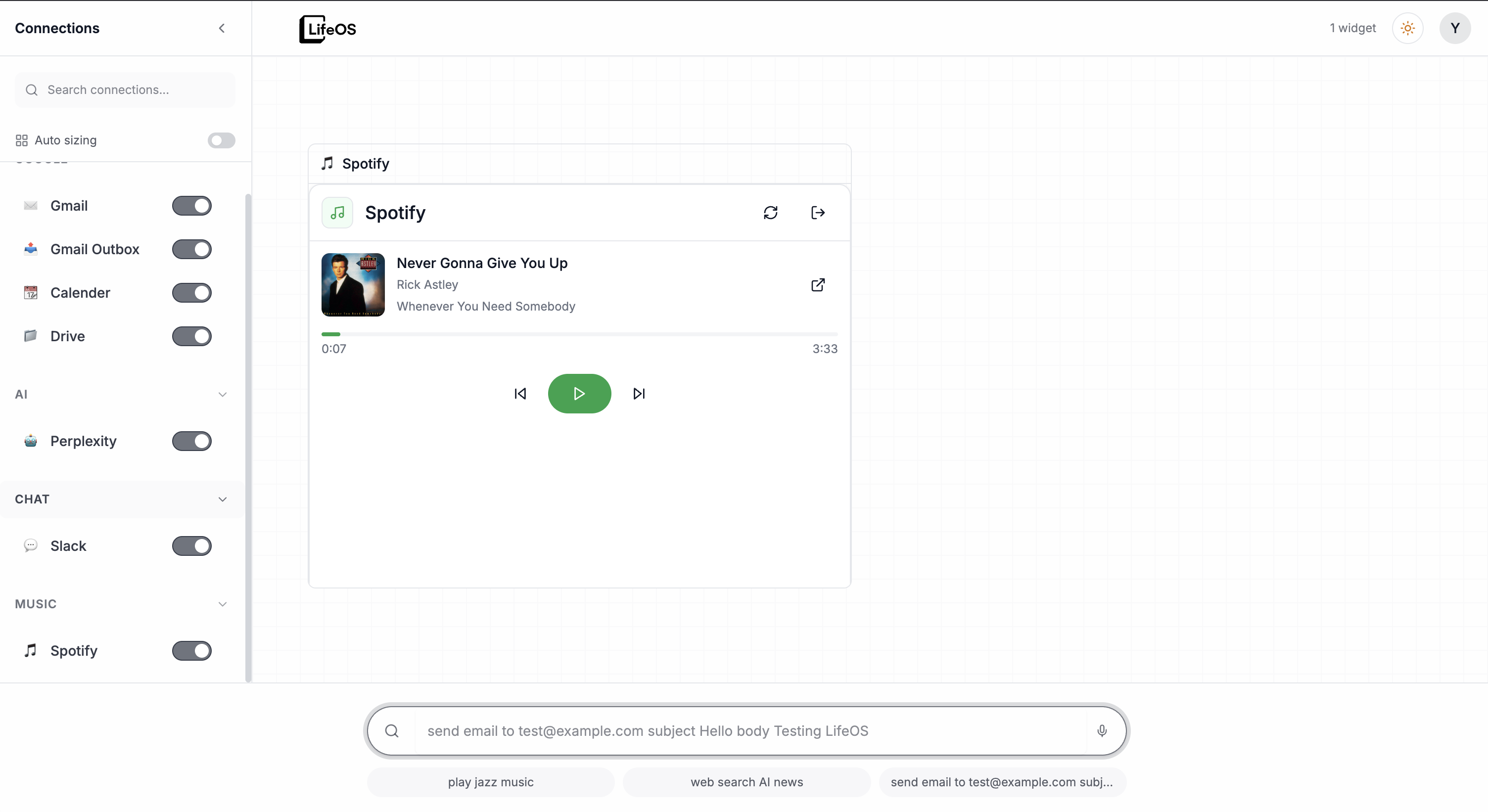
LifeOS combines two powerful approaches:
- Natural language control: Just type what you want in plain English
- Dashboard canvas: Drag and drop widgets to see all your services in one place
The magic happens when these come together. Instead of hunting through Gmail, then switching to Calendar, then opening Spotify, you just tell LifeOS what you need: "Schedule meeting with Sarah tomorrow at 2pm and play focus music."
The Technical Foundation
Everything was designed, built, and scaffolded using Bolt's ecosystem. Pica powers the integrations, giving LifeOS access to 1000+ services that users rely on daily. Supabase handles authentication, database, and edge functions for lightning-fast performance.
But the real achievement isn't the technical stack. It's that none of that complexity shows to the user.
The Human Test
The real validation came when my mom tested LifeOS. Instantly. Tools she'd never used became frictionless, and I didn't have to train her at all.
That's when I knew we'd succeeded. Technology that finally feels invisible.
The Impact
LifeOS isn't just another productivity tool. It's technology that gets out of your way so your creativity can shine. It's proof that the most advanced capabilities can hide behind the simplest interactions.
We're building a world where your grandmother and your CTO can both feel like experts on day one. Where productivity disappears so human potential can emerge.
What's Next
This is just the beginning. LifeOS represents a fundamental shift in how we interact with technology. Not through complex interfaces and steep learning curves, but through natural conversation with our digital lives.
The future of productivity isn't more features. It's making powerful things feel effortless.
The best tools disappear. LifeOS is an attempt to make all of technology feel that invisible, that natural, that human.
This is productivity that disappears, so your creativity can shine.
Built With
- bolt.new
- netlify
- nextjs
- openai
- pica
- supabase
- tailwindcss
- typescript


Log in or sign up for Devpost to join the conversation.