Inspiration
Important parts of our lives are spread across notes, conversations, task apps, and memories. When we need to make a difficult decision, we often have to rebuild the full context from scratch.
I created LifeOS around one simple idea: externalise memory so your mind can think.
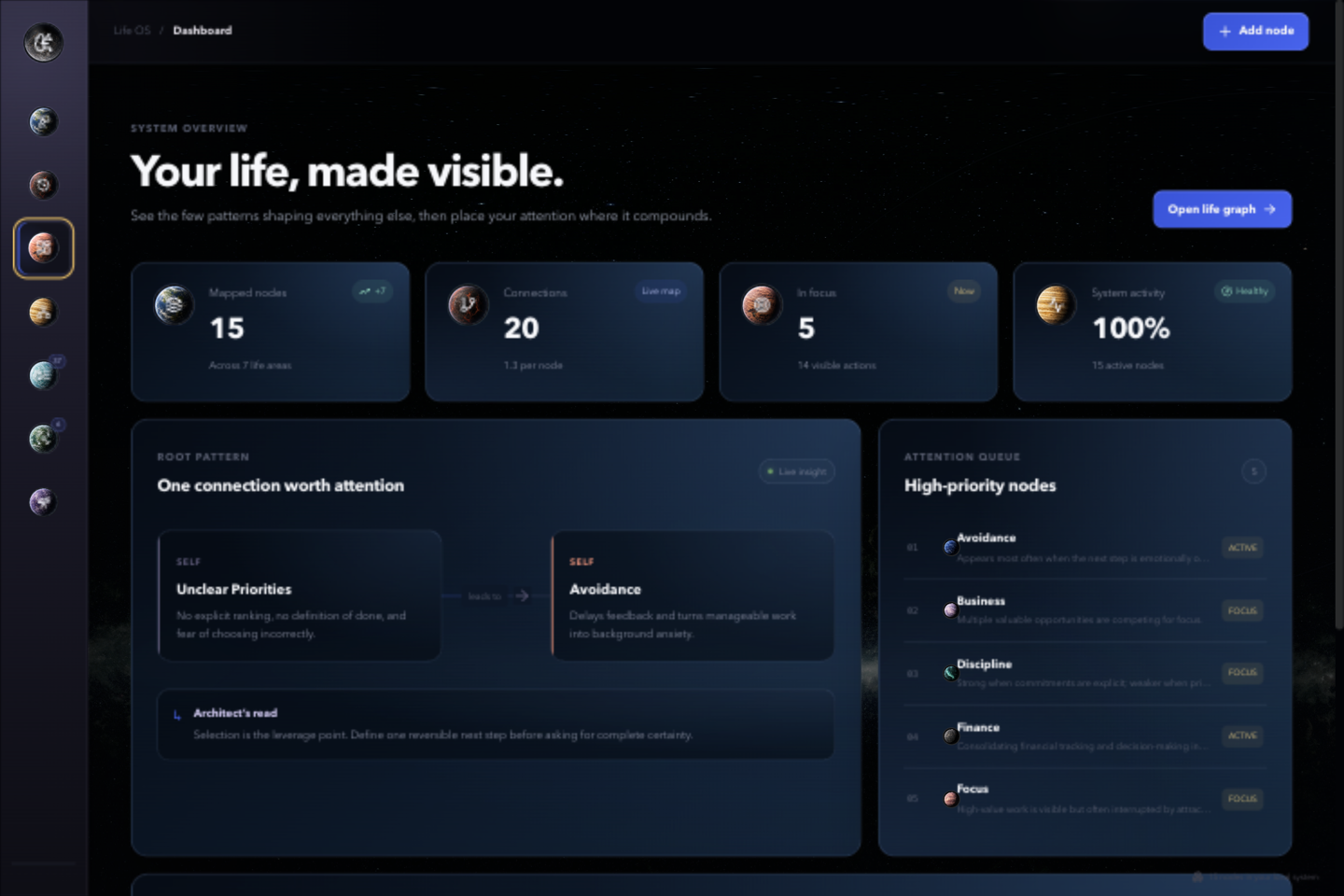
LifeOS brings your memories, beliefs, priorities, decisions, and actions together so they can help you understand your life and make better choices.
What it does
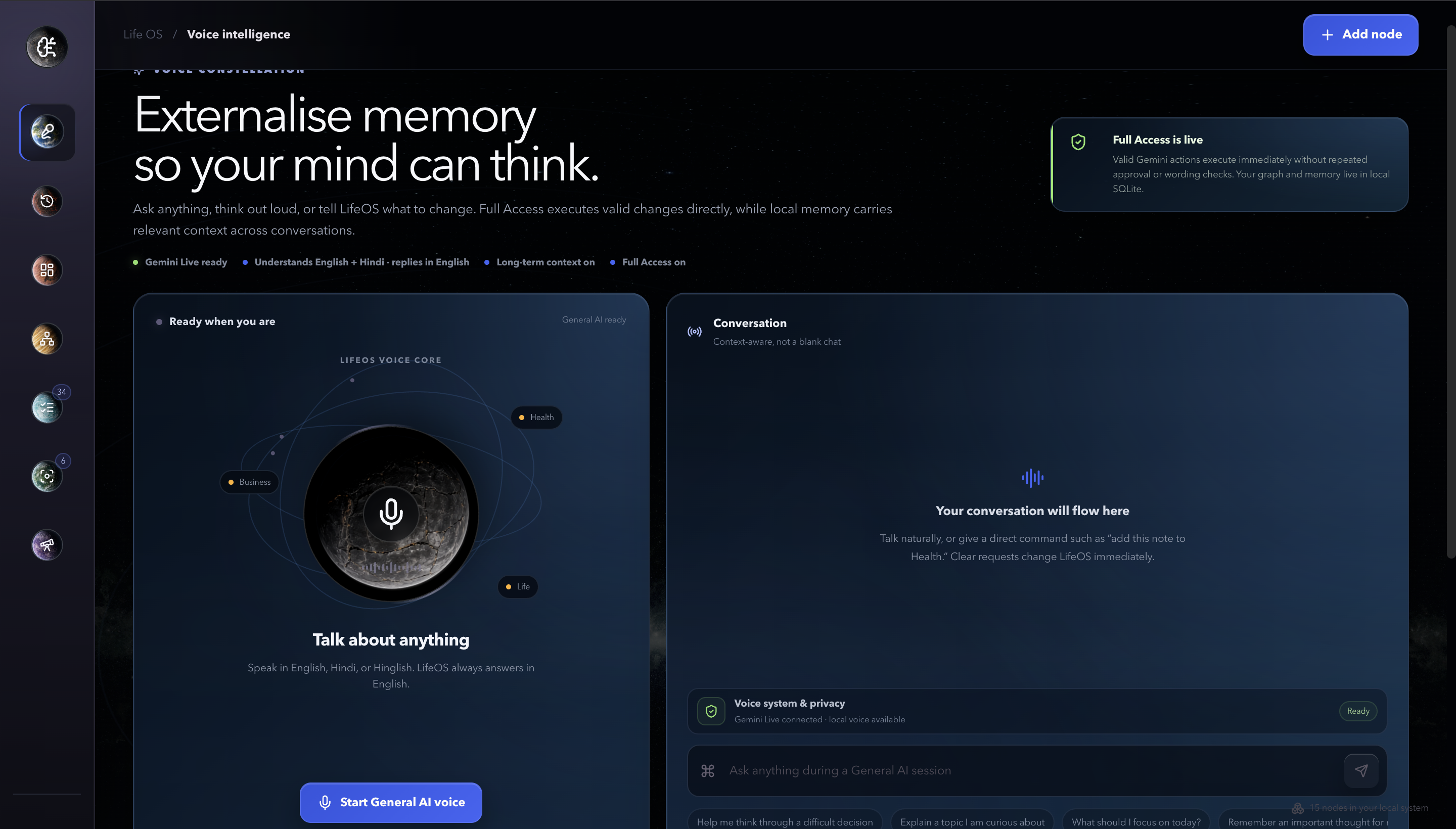
LifeOS is a voice-first personal decision system.
You can speak to it naturally, ask questions, explore past experiences, and tell it to update your information. It remembers approved information and connects related parts of your life.
For example, LifeOS can connect:
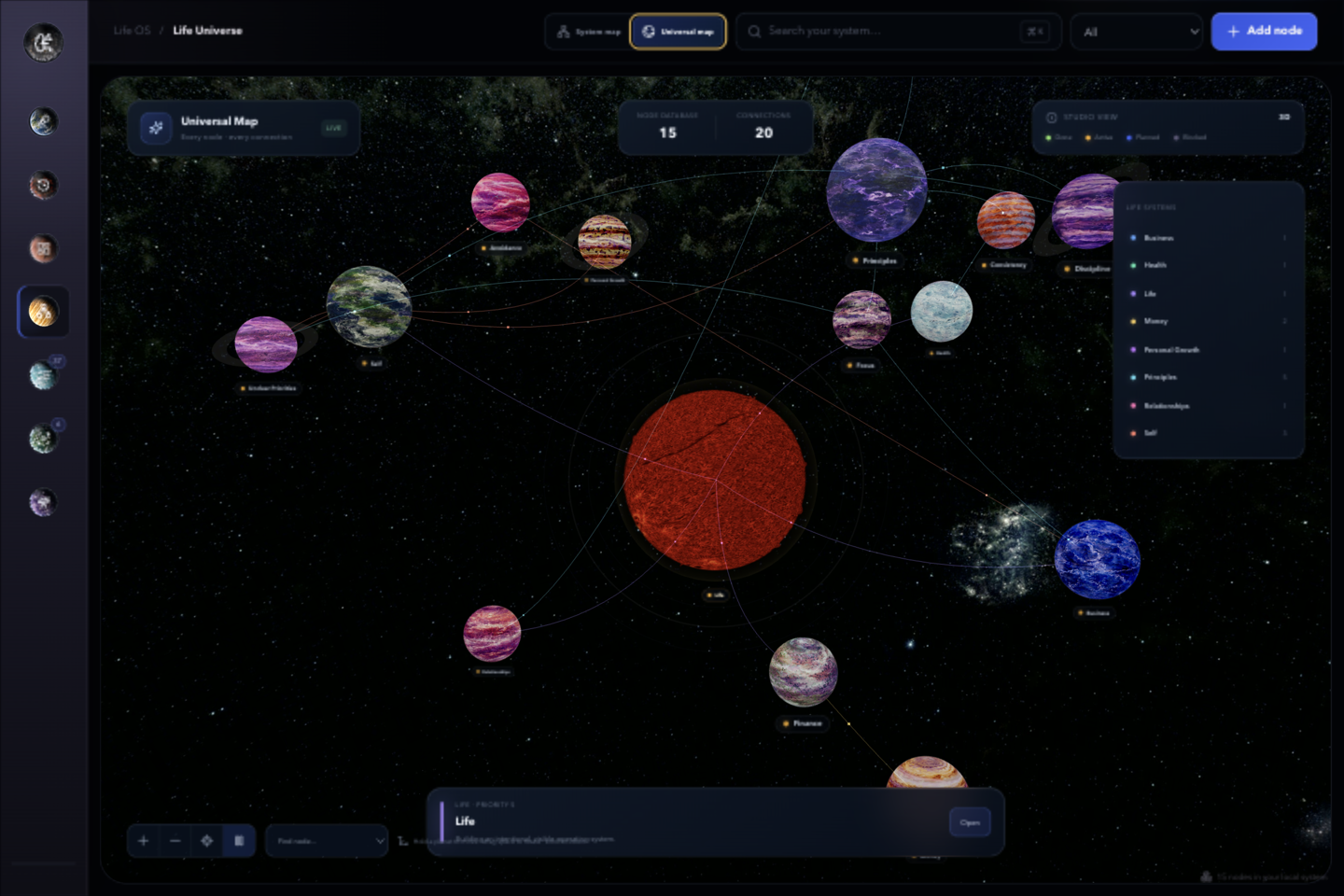
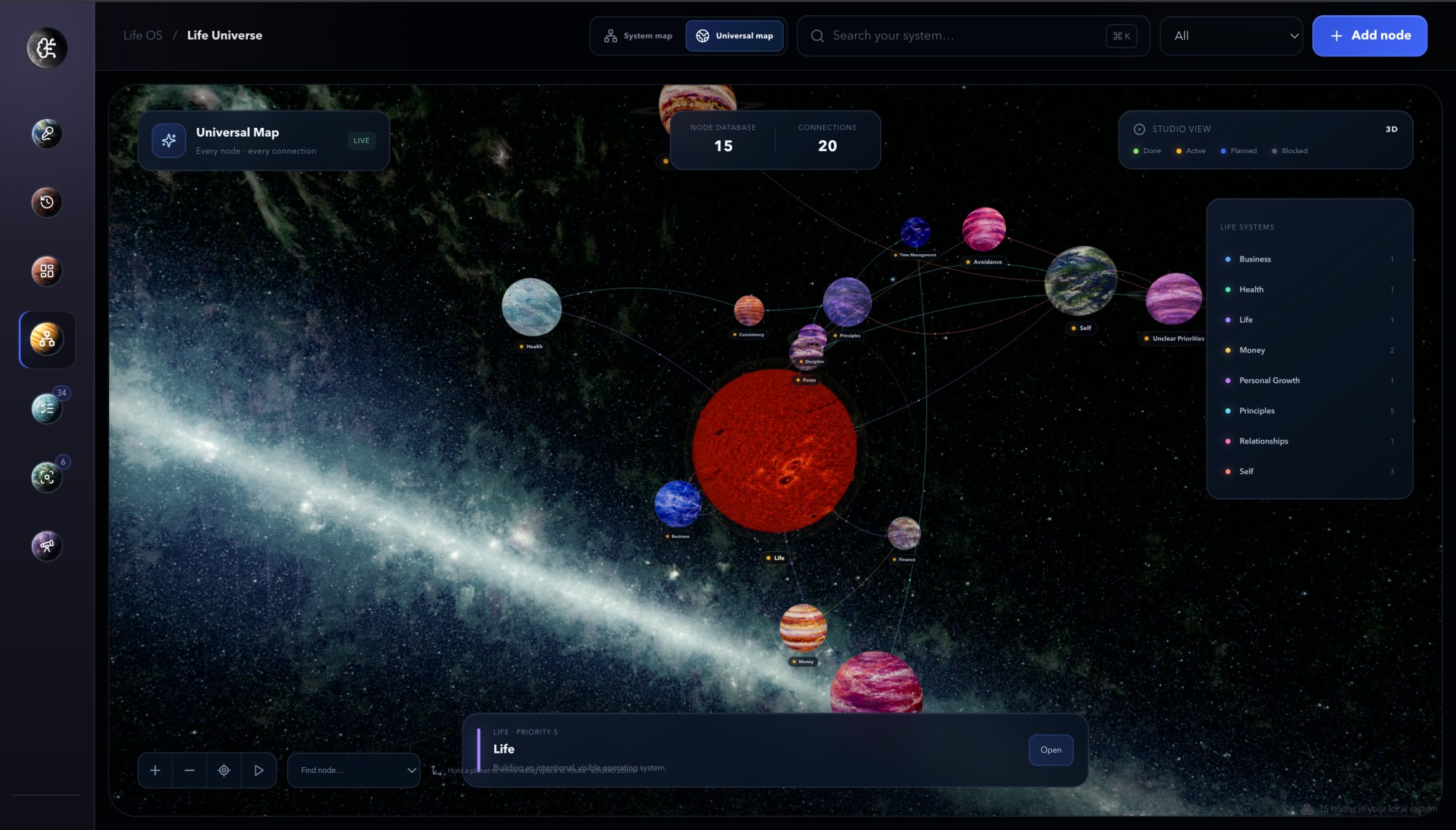
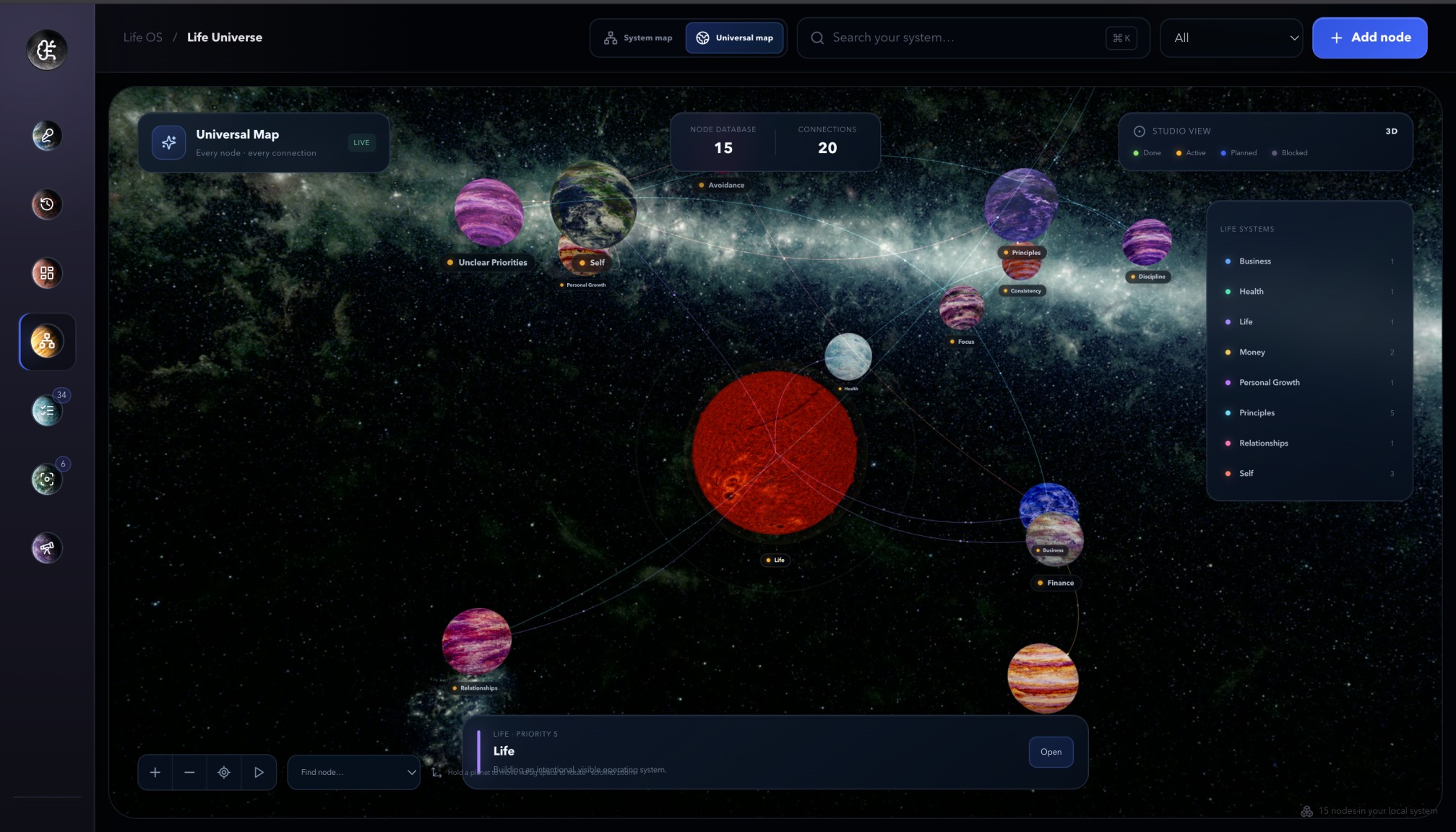
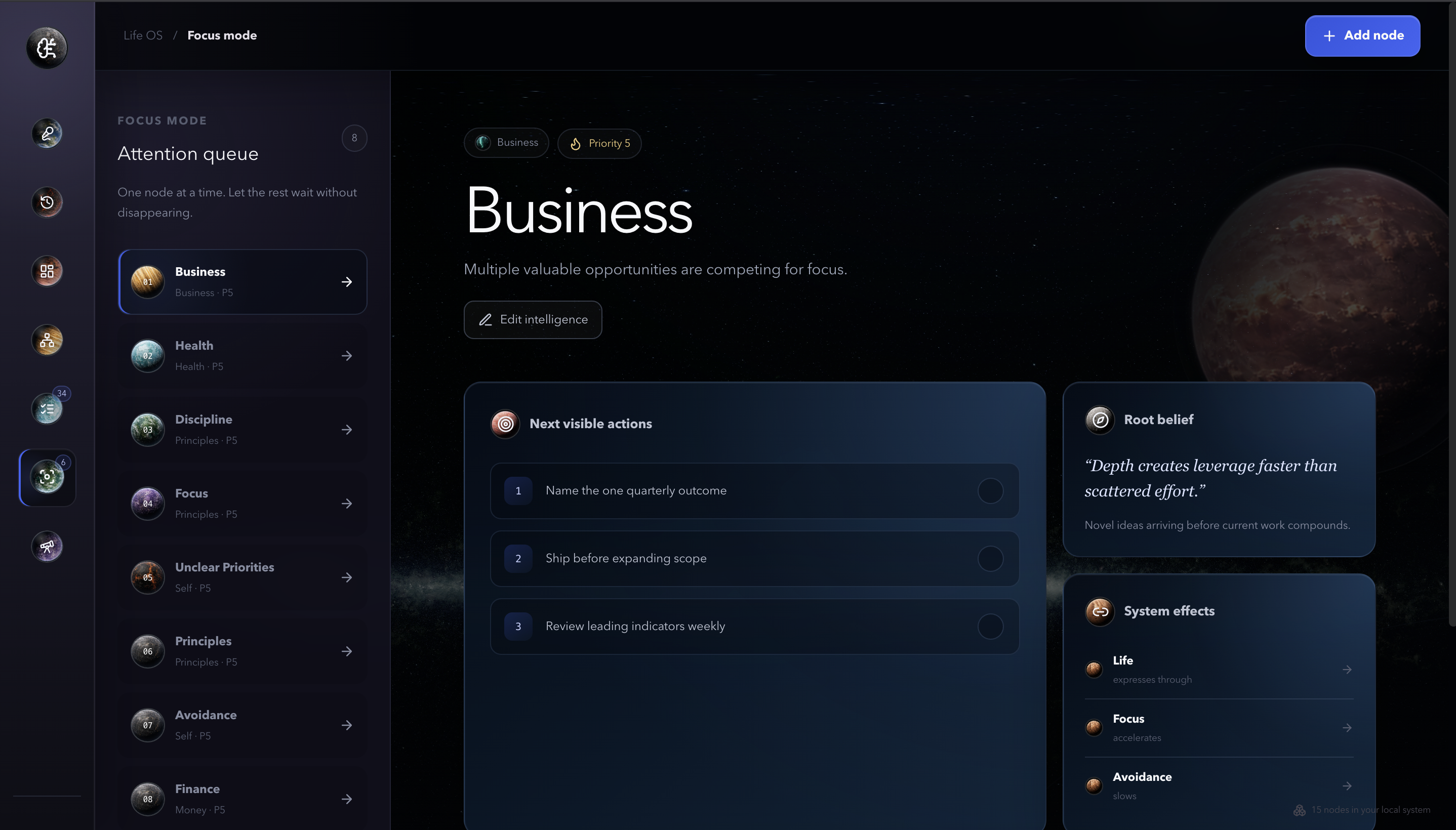
Focus → Unclear Priorities → Avoidance → Business
Instead of giving generic advice, it can use this personal context to explain what may be happening and suggest a practical next step.
LifeOS includes:
- Natural voice conversations with live transcripts
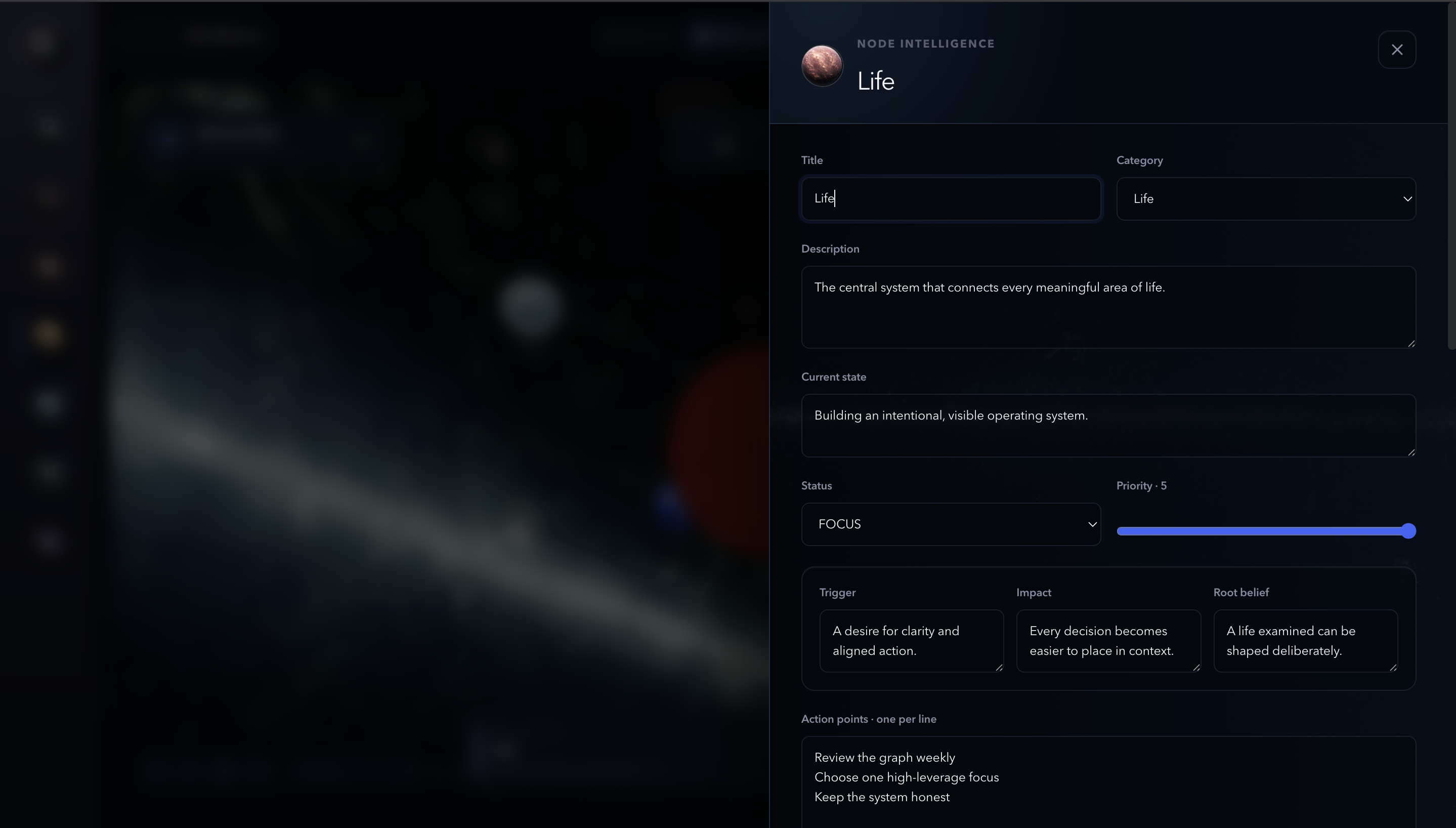
- Connected memories, principles, decisions, and experiences
- Voice commands for creating and updating information
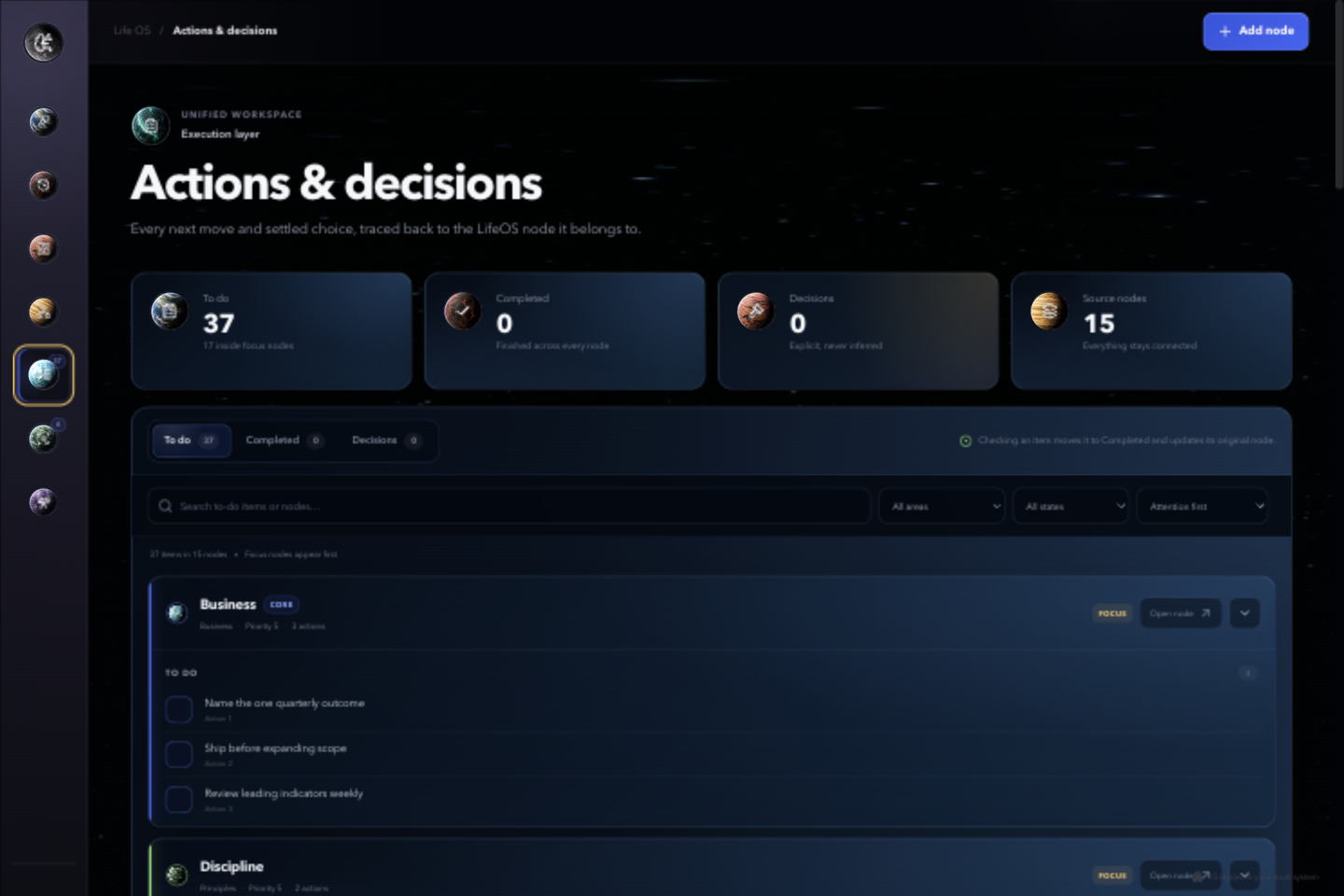
- A unified to-do list connected to the original nodes
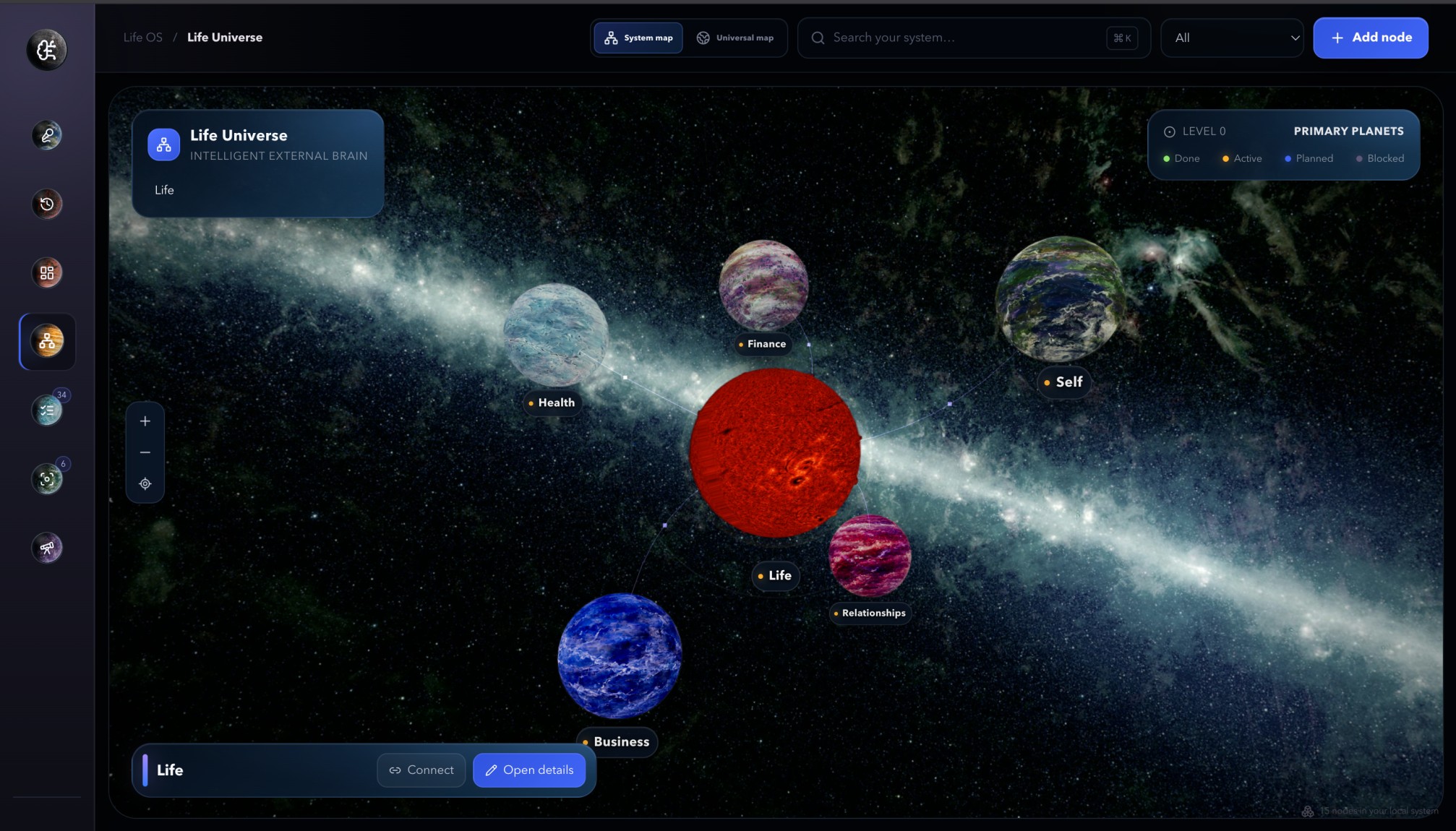
- A System Map for exploring one area of life
- A Universal Map showing the complete connected graph
- Conversation history and memory version history
- Memory review and revalidation
- JSON import and export
The user always remains in control. Normal conversation does not silently change information. LifeOS only makes changes when the user clearly asks it to.
How I built it
I built LifeOS using Next.js, React, TypeScript, Prisma, and SQLite.
SQLite keeps the application local-first, while Prisma manages the structured data. Three.js and React Three Fiber power the interactive 3D maps and planets.
Gemini Live powers the real-time voice experience. It supports live audio, interruption, transcripts, and natural conversation.
I used Codex throughout development to understand the codebase, plan features, write and improve the code, debug voice and 3D problems, and test the application.
I also used GPT-5.6 in Codex during the final submission work. It helped me create a privacy-safe project copy, replace personal information with fictional demo data, improve security checks, prepare the Railway deployment, and verify the final project.
Challenges I ran into
The biggest challenge was making voice feel natural and reliable. Live transcripts can arrive in the wrong order, users can interrupt responses, and network problems can break a conversation.
I added transcript handling, reconnection support, saved conversation turns, and protection against repeated actions.
Another challenge was allowing voice to update LifeOS safely. I created specific tools for supported actions instead of giving the AI unrestricted database access. Every change is checked, recorded, and protected against accidental duplication.
The 3D maps were also challenging. I wanted them to feel immersive without becoming confusing or slow. I used progressive detail, shared 3D assets, and performance-based rendering to keep the maps clear and responsive.
What I am proud of
I am proud that LifeOS brings voice, memory, decisions, actions, and visual maps into one connected system.
A user can talk about a problem, explore related memories, create an action, and later see that action inside both the to-do list and its original node.
I am also proud that the product keeps the user in control. Changes are visible, versioned, and reviewable.
What I learned
I learned that useful memory is not about saving everything. It is about finding the right information at the right moment.
I also learned that a good voice experience depends on the whole system. Audio quality, transcripts, context, permissions, recovery, and response timing all need to work together.
What's next
Next, I want to build a Decision Room that gathers the most relevant memories, principles, constraints, and previous choices for one important decision.
I also want to add a Priority Compass for understanding what deserves attention and a Future Path Lab for comparing possible choices and outcomes.
The long-term goal is not to let AI make decisions for the user. It is to help people understand their own lives more clearly and make better decisions with all the right context available.
Built With
- codex
- gemini-live-api
- gpt-5.6
- next.js
- prisma
- react
- react-three-fiber
- sqlite
- three.js
- typescript

Log in or sign up for Devpost to join the conversation.