-
-
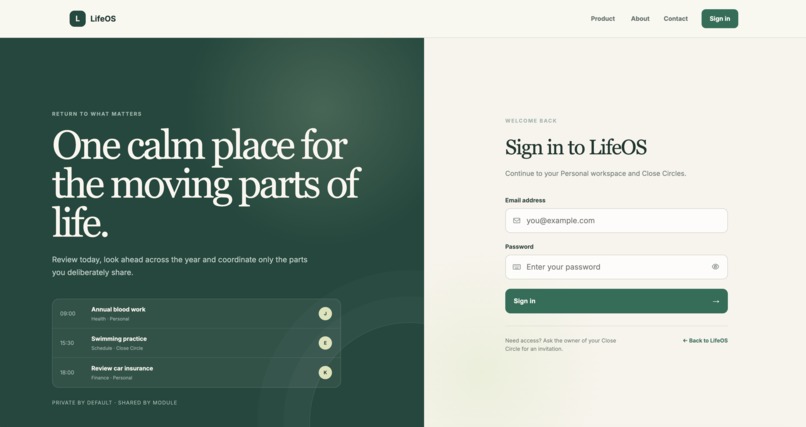
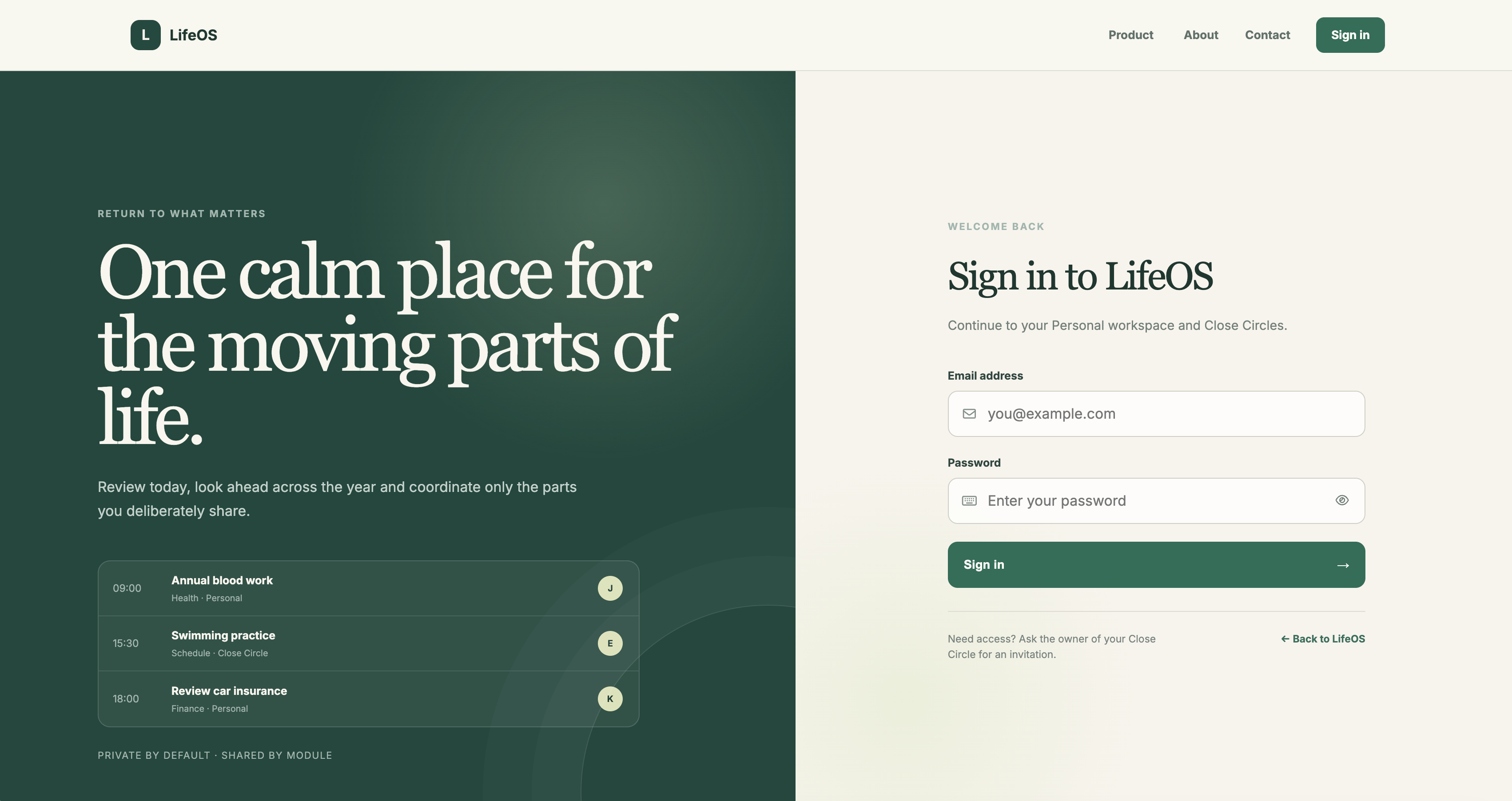
Landing page and login
-
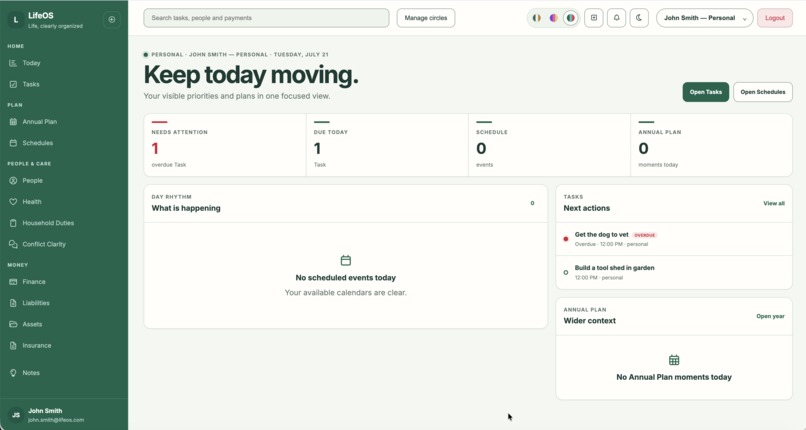
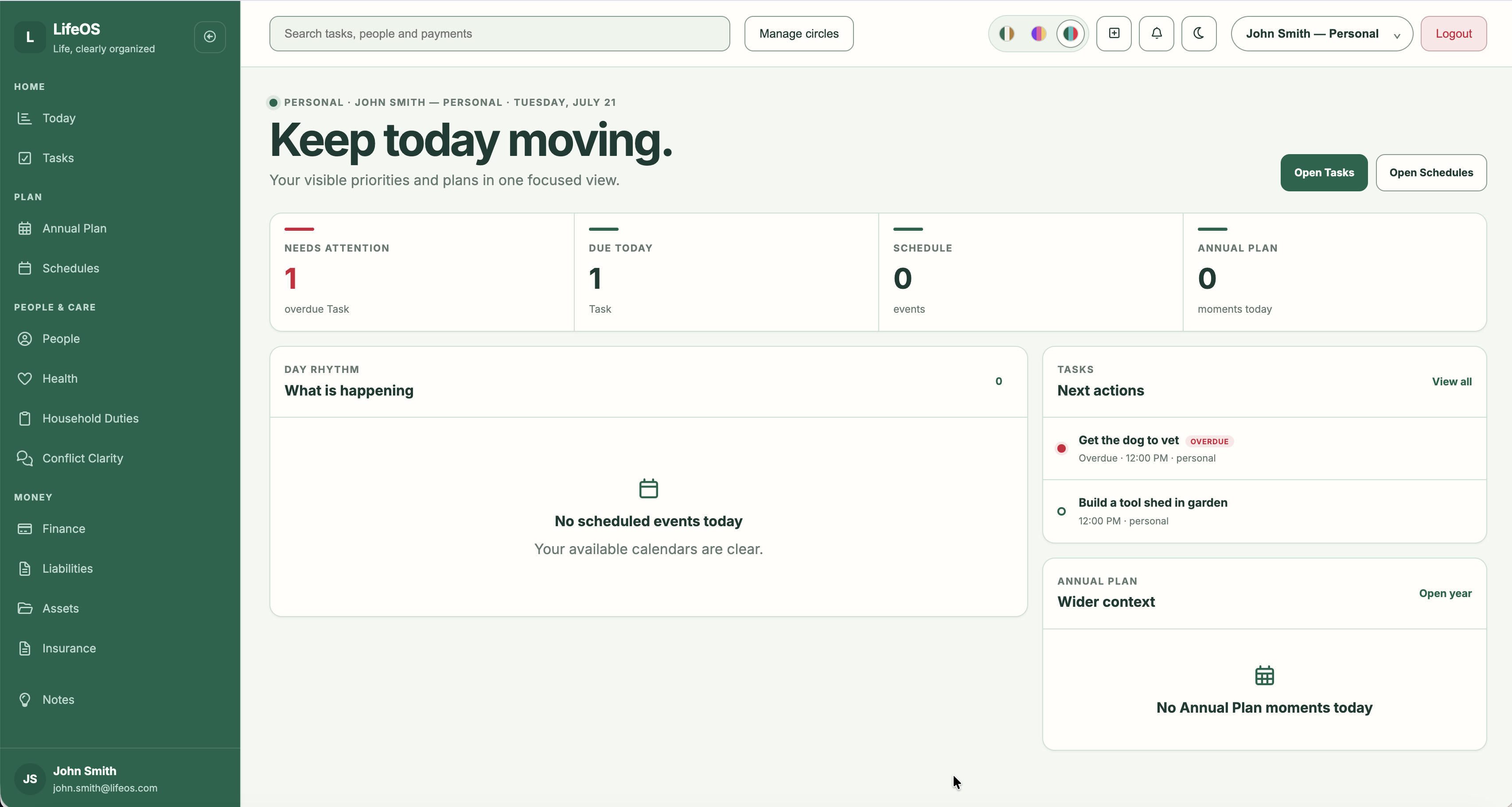
Today
-
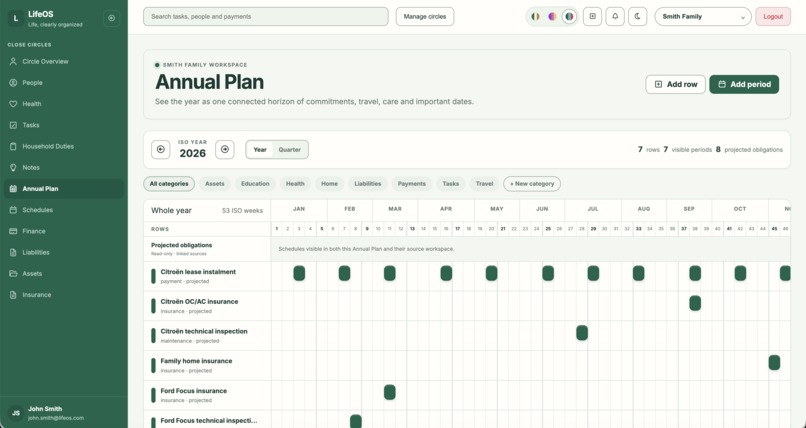
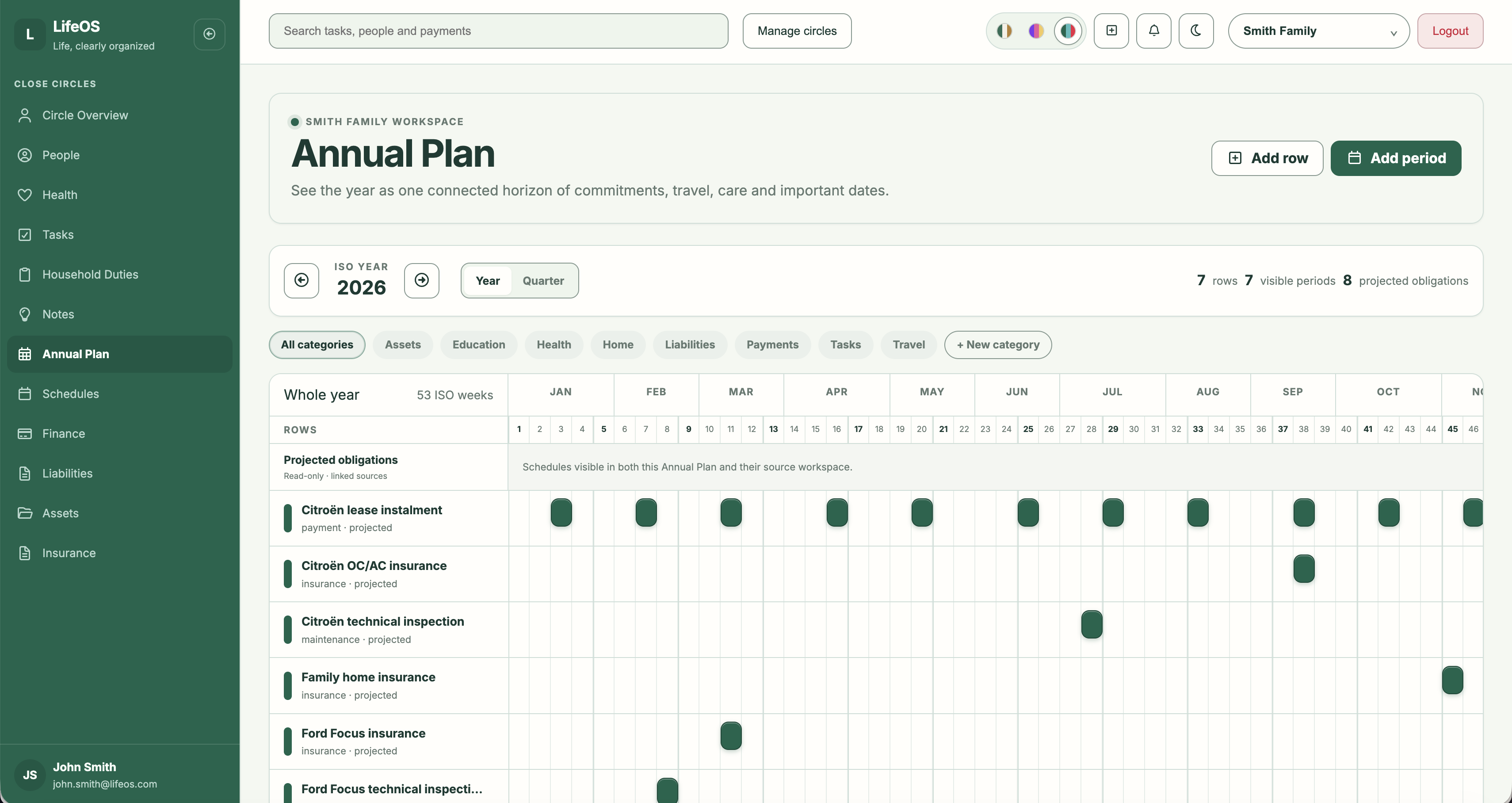
Annual Plan
-
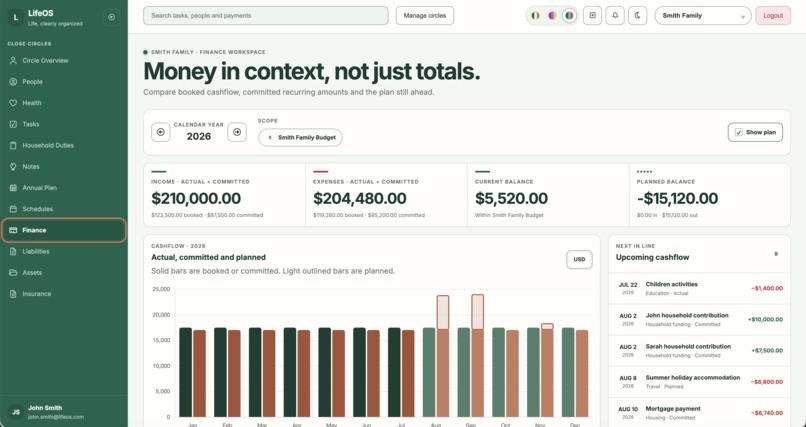
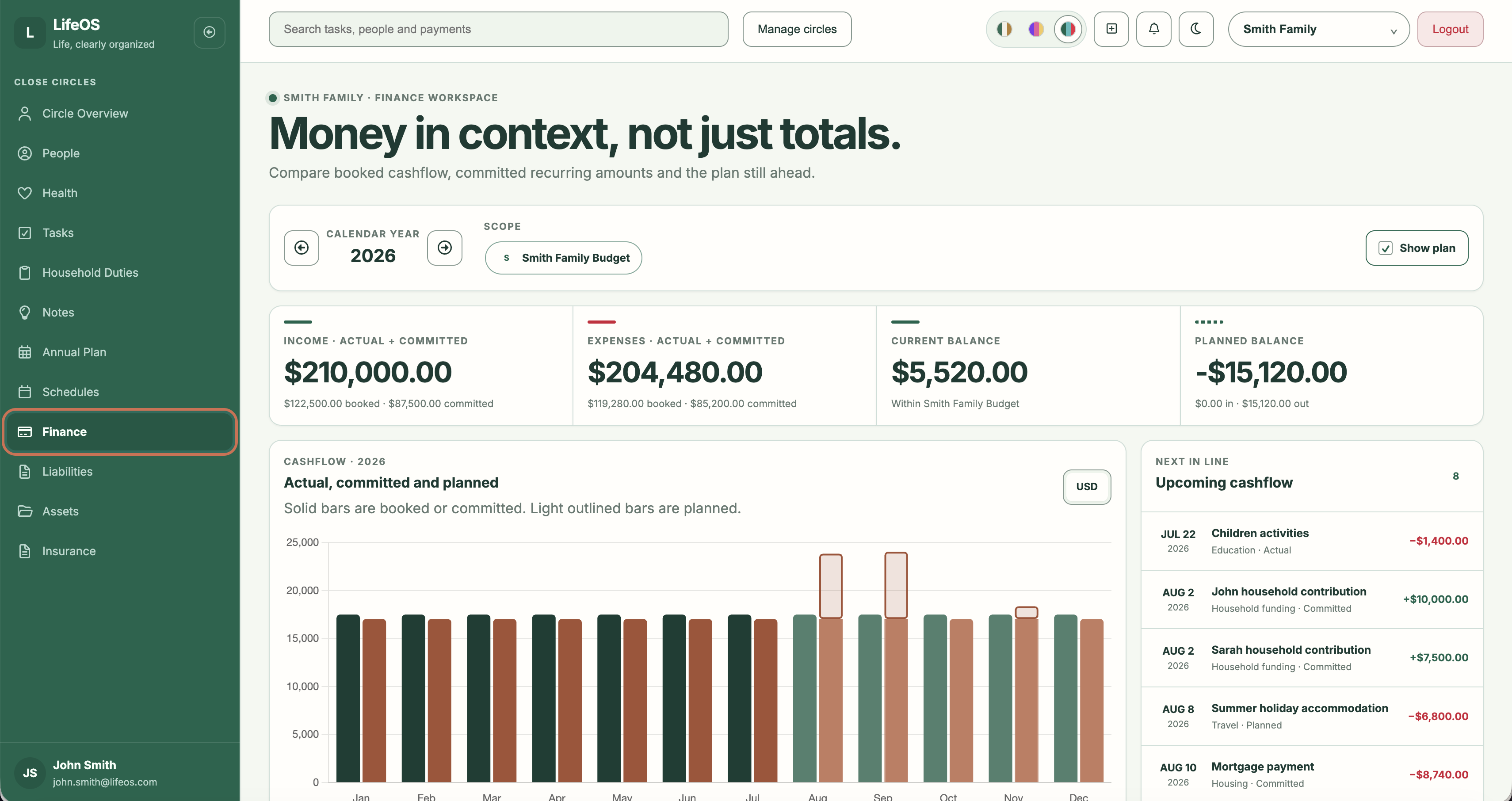
Financials
-
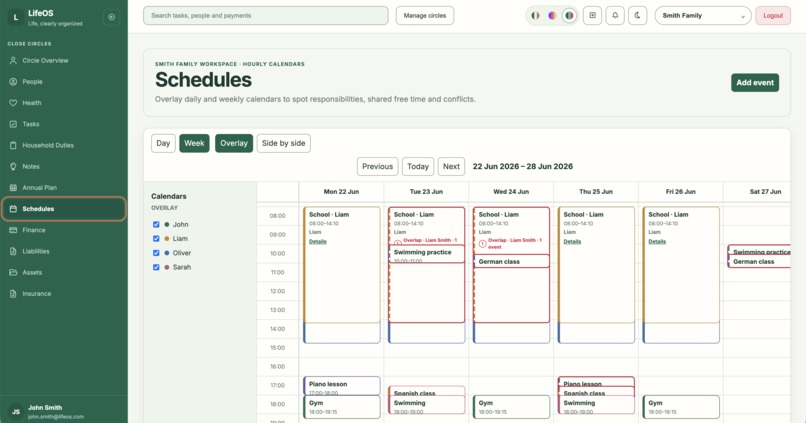
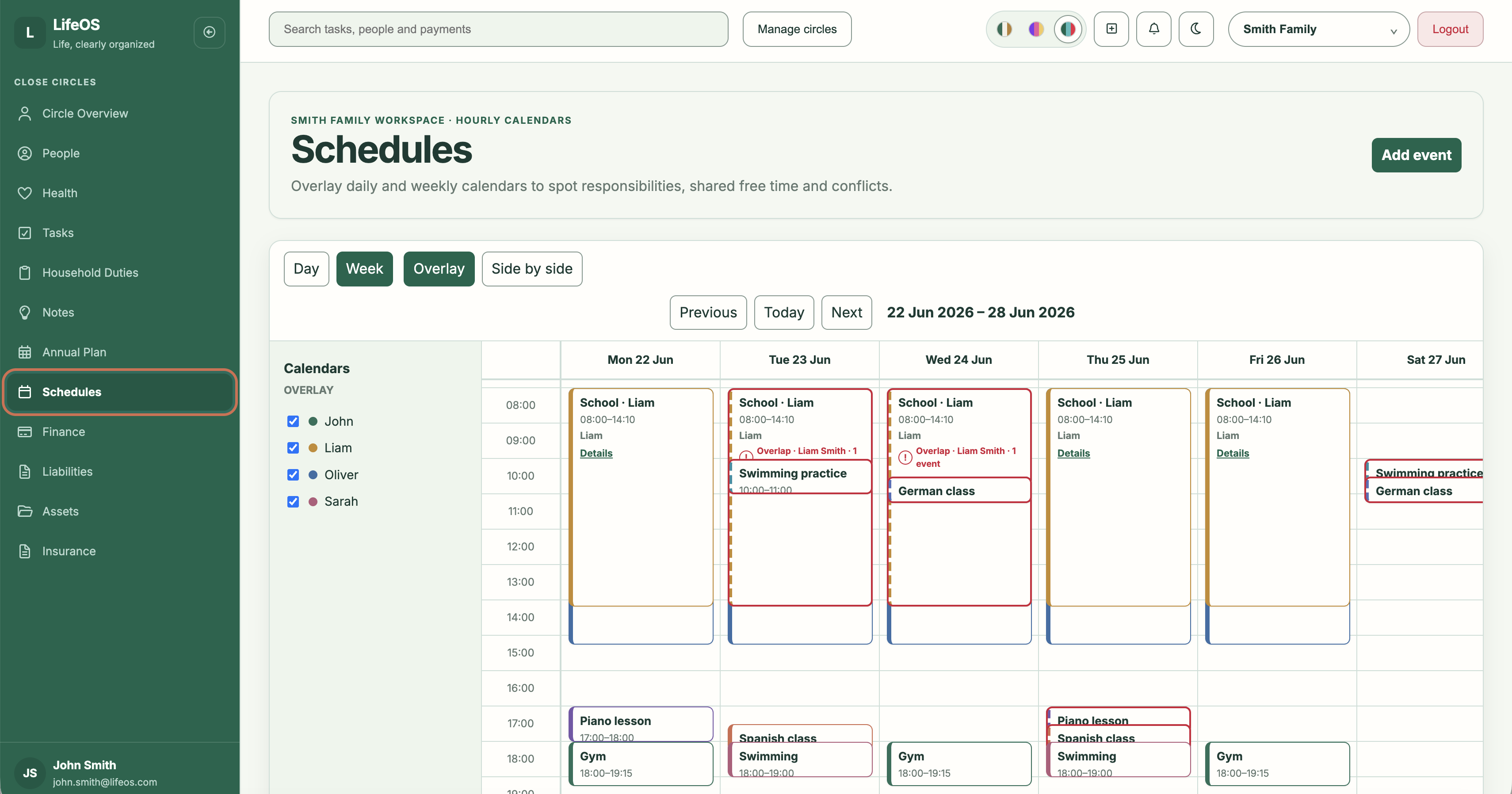
Schedule
-
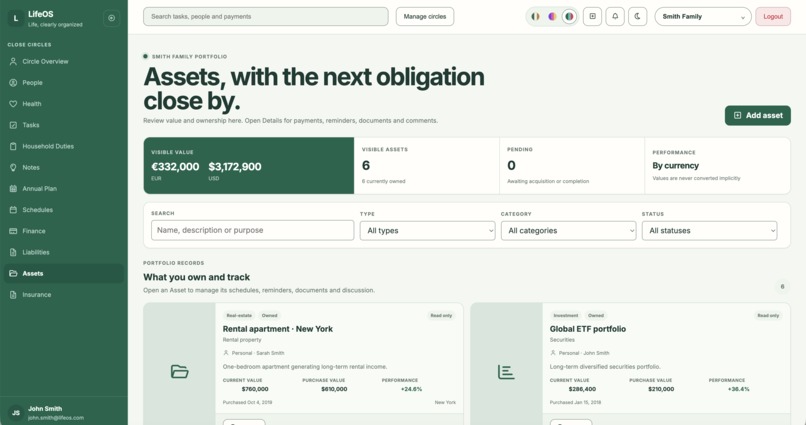
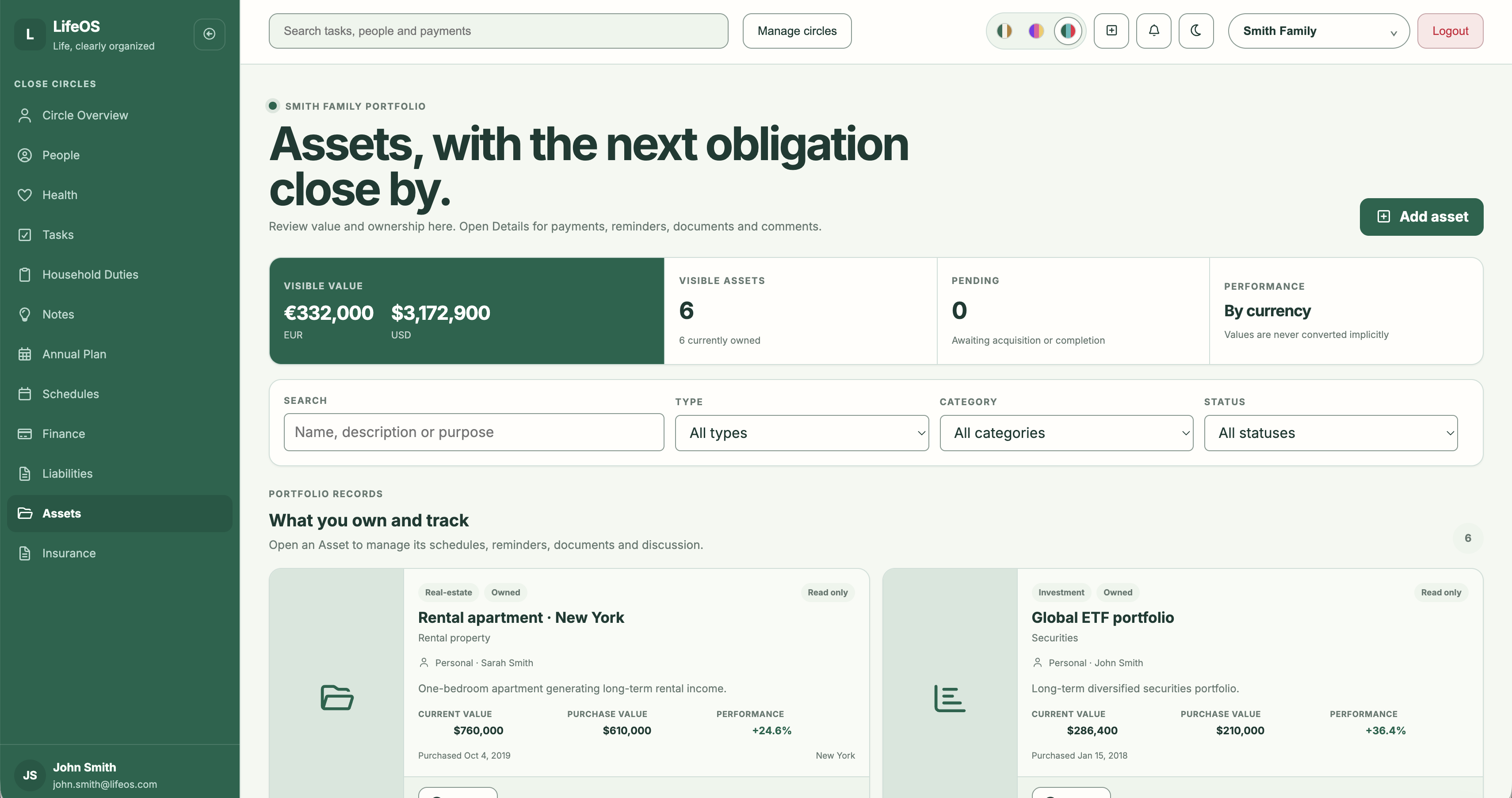
Assets
-
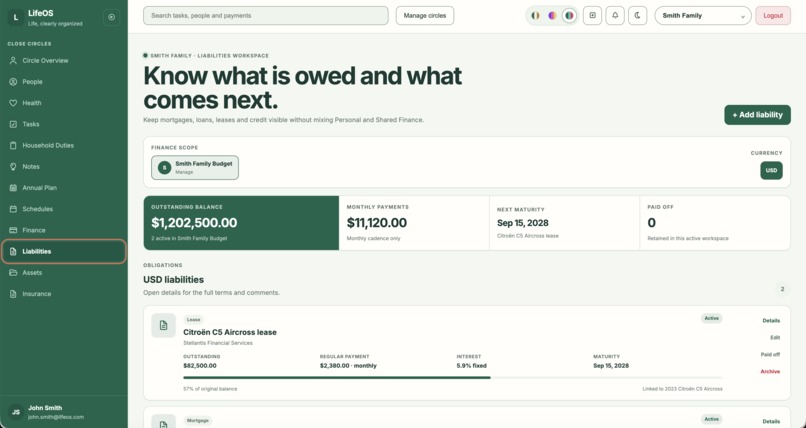
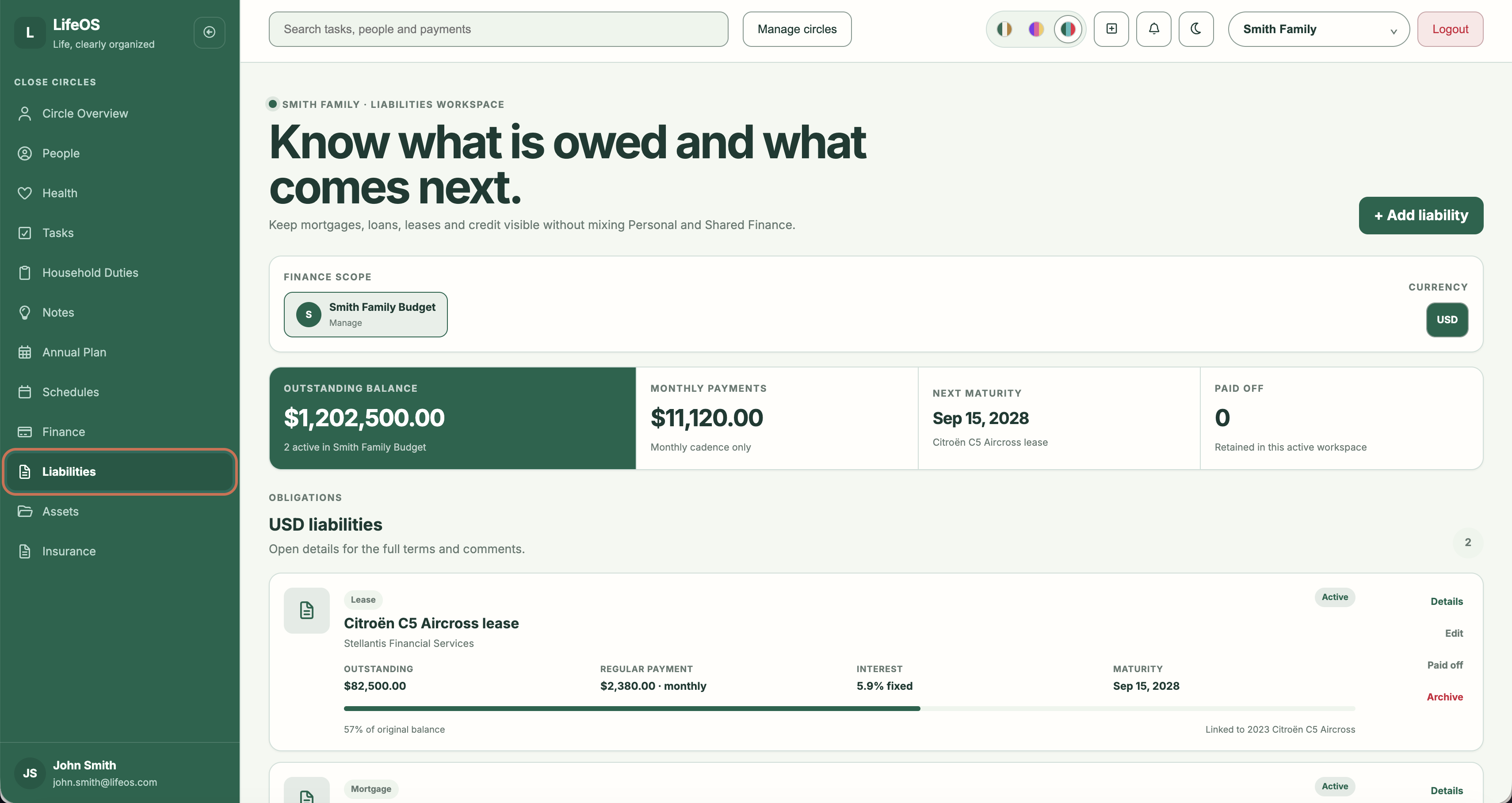
Liabilities
-
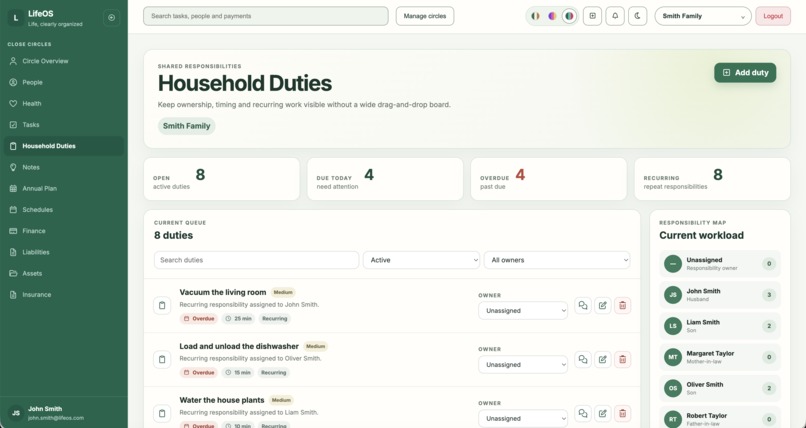
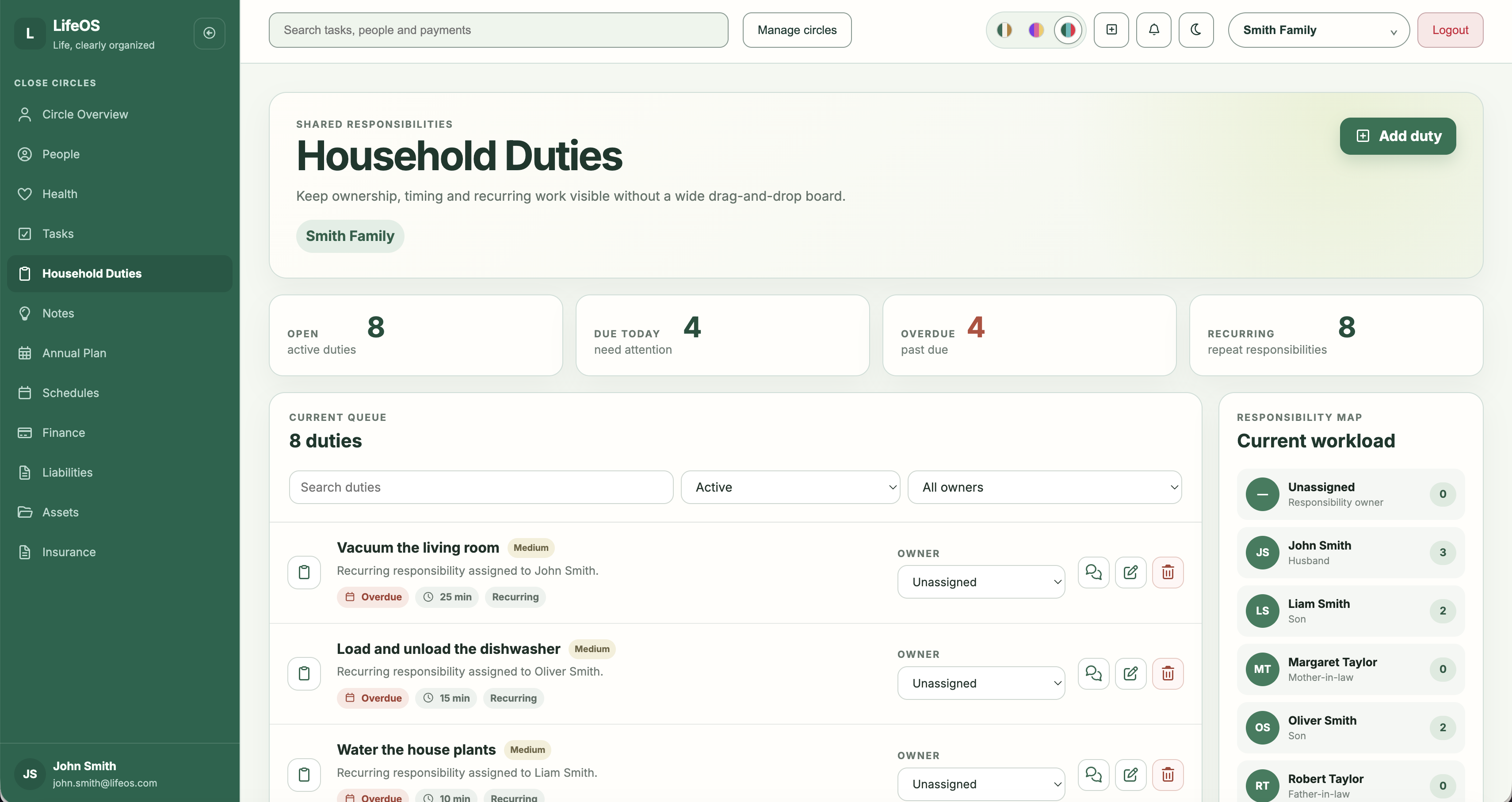
Household duties
-
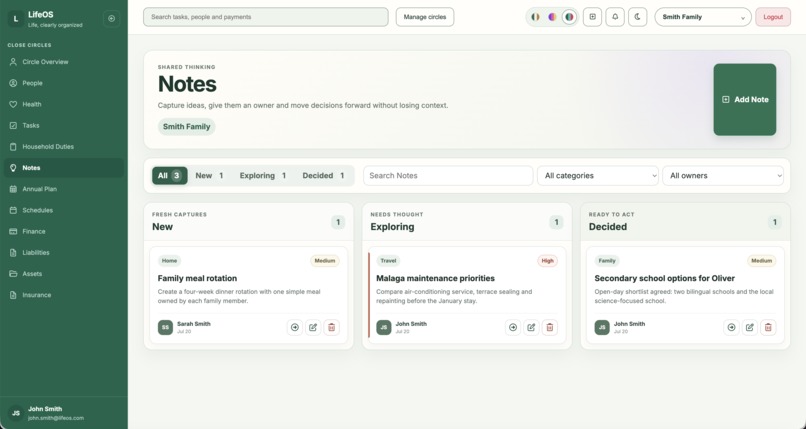
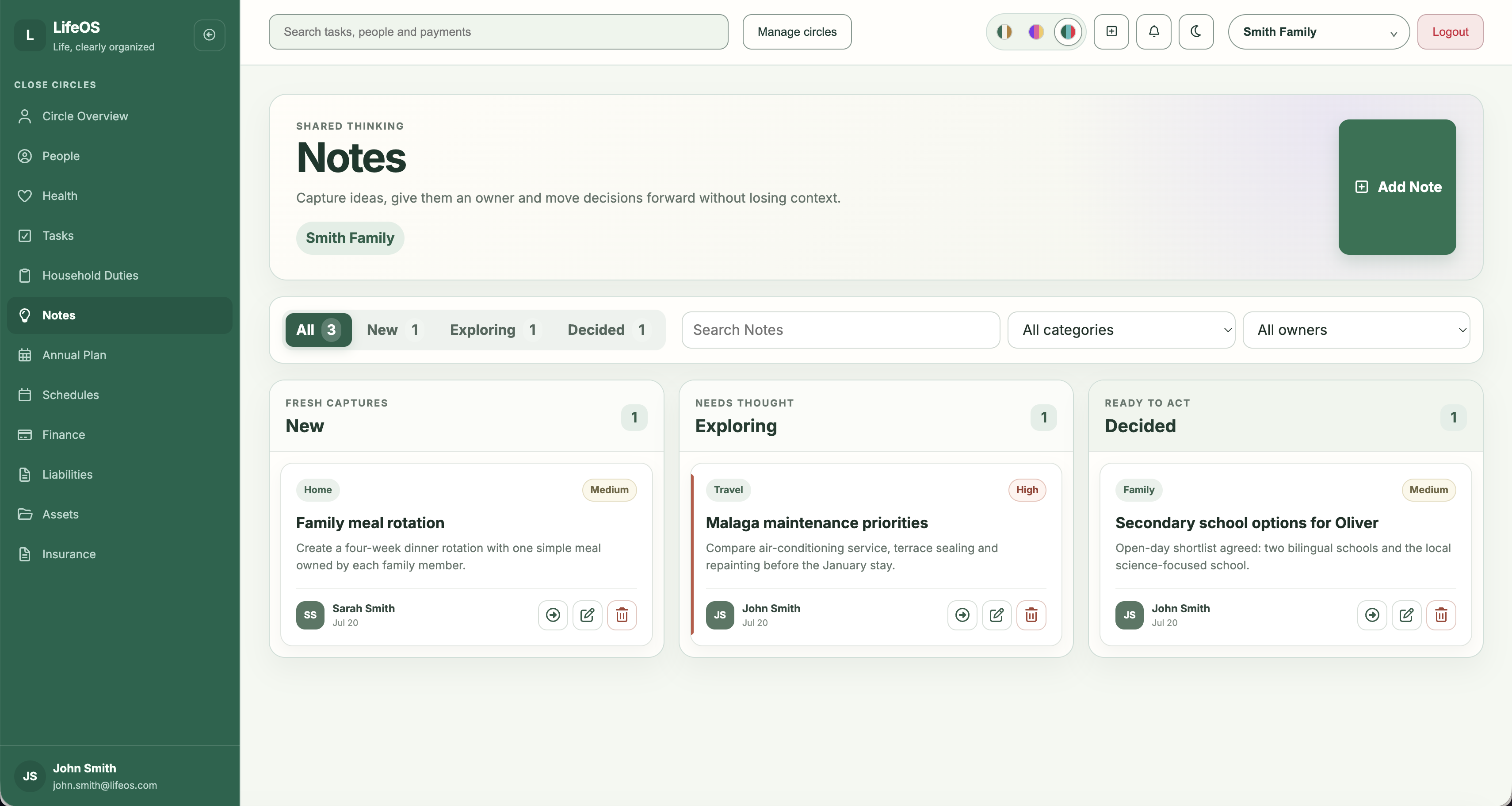
Notes
-
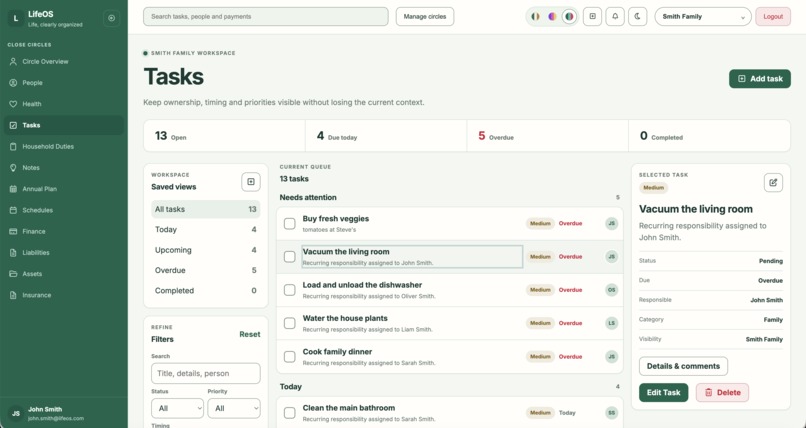
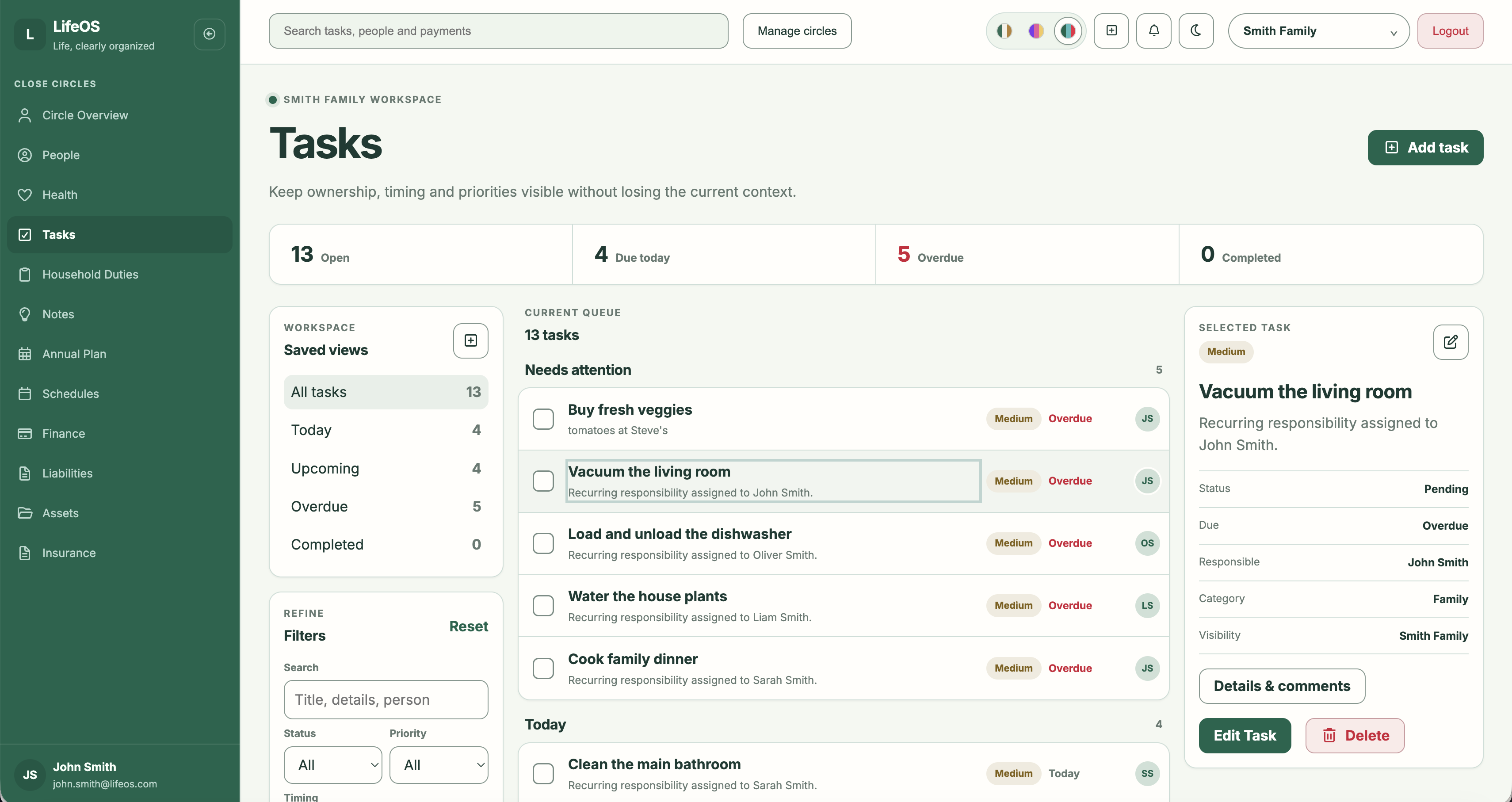
Tasks
-
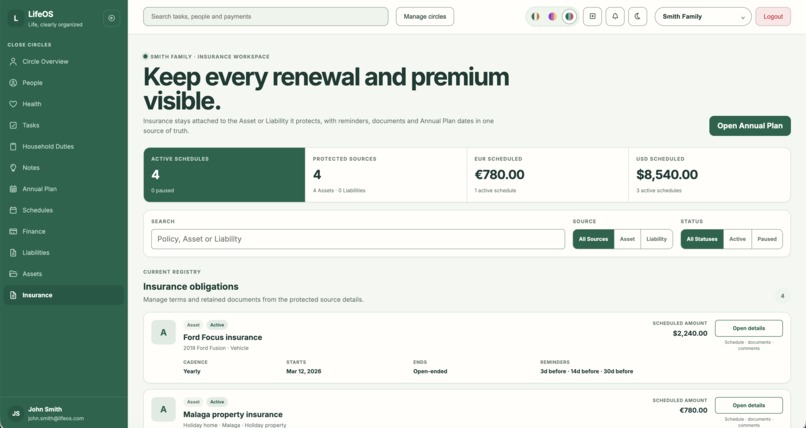
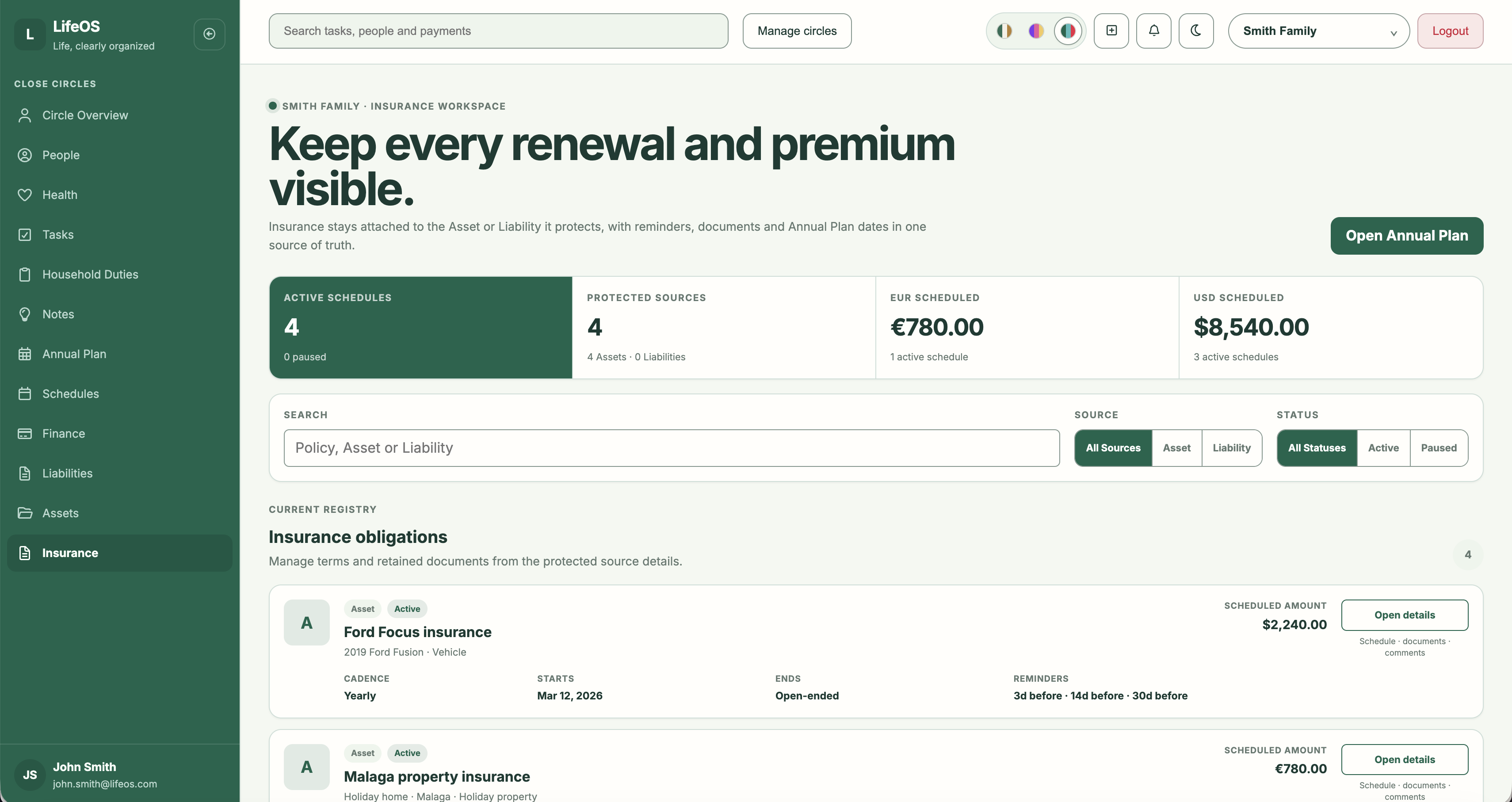
Insurance
-
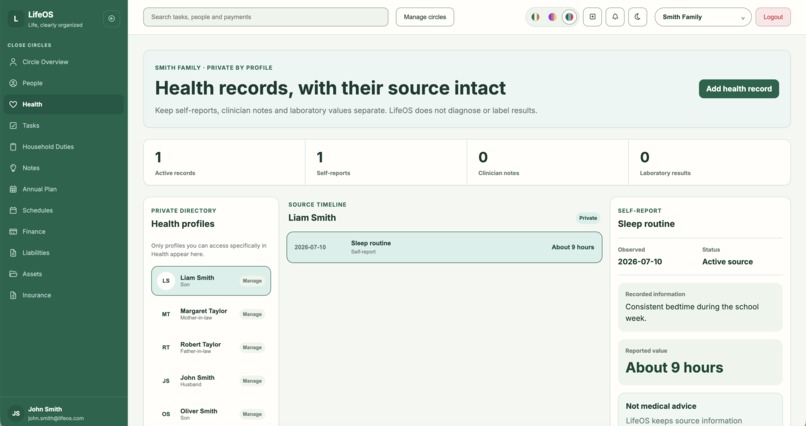
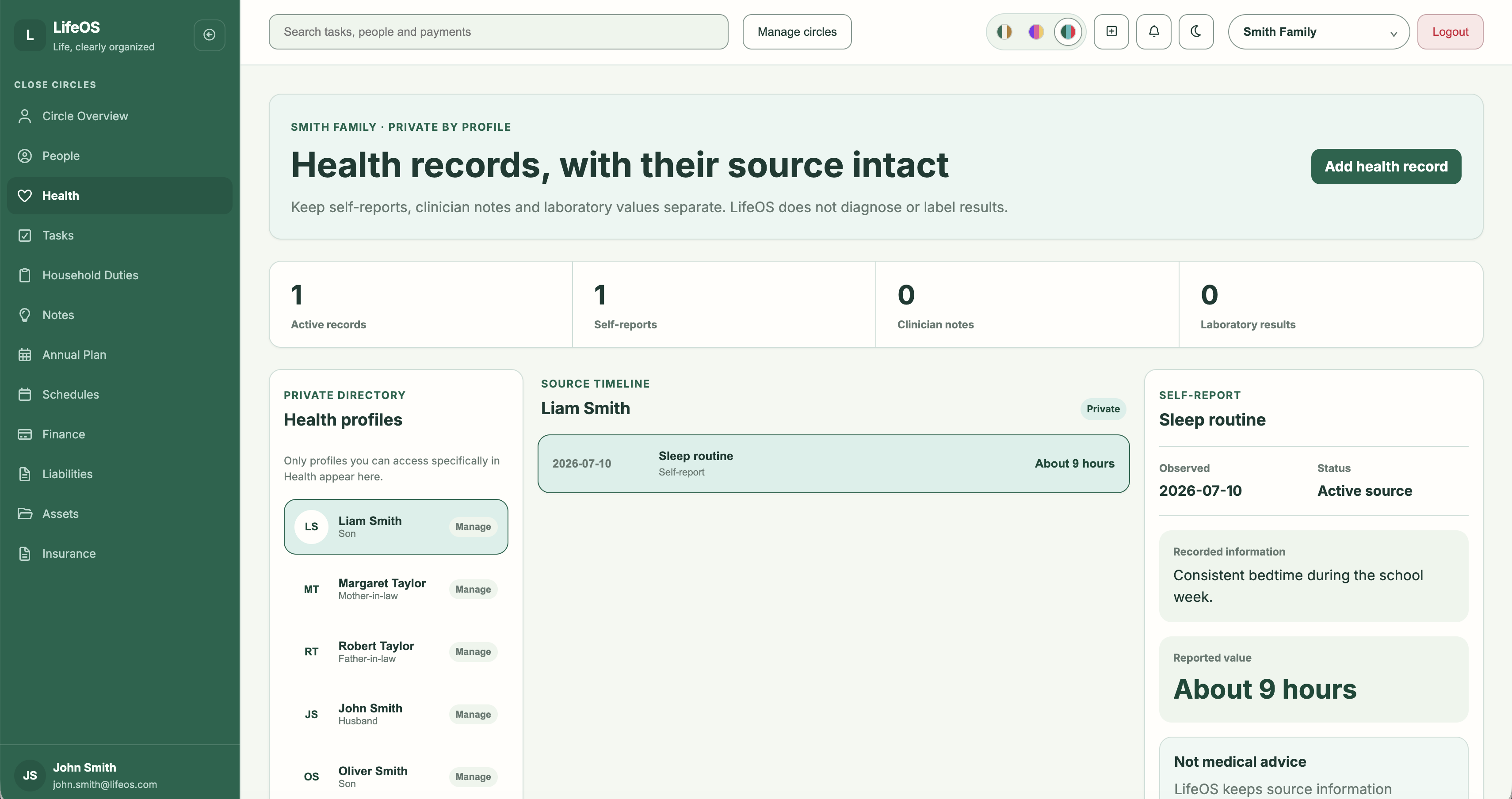
Health
-
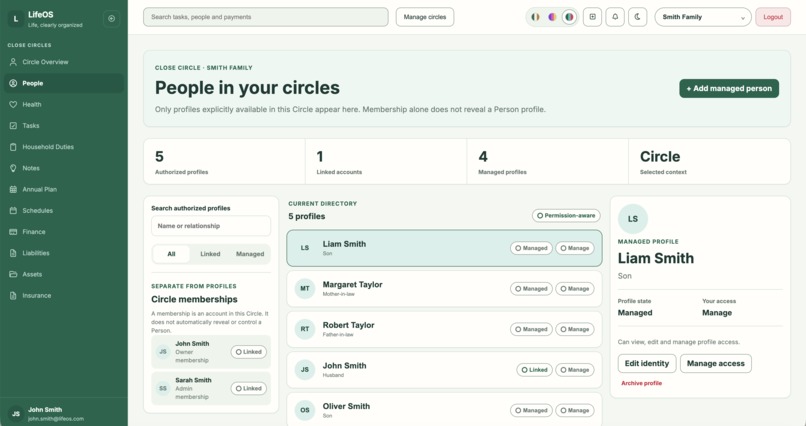
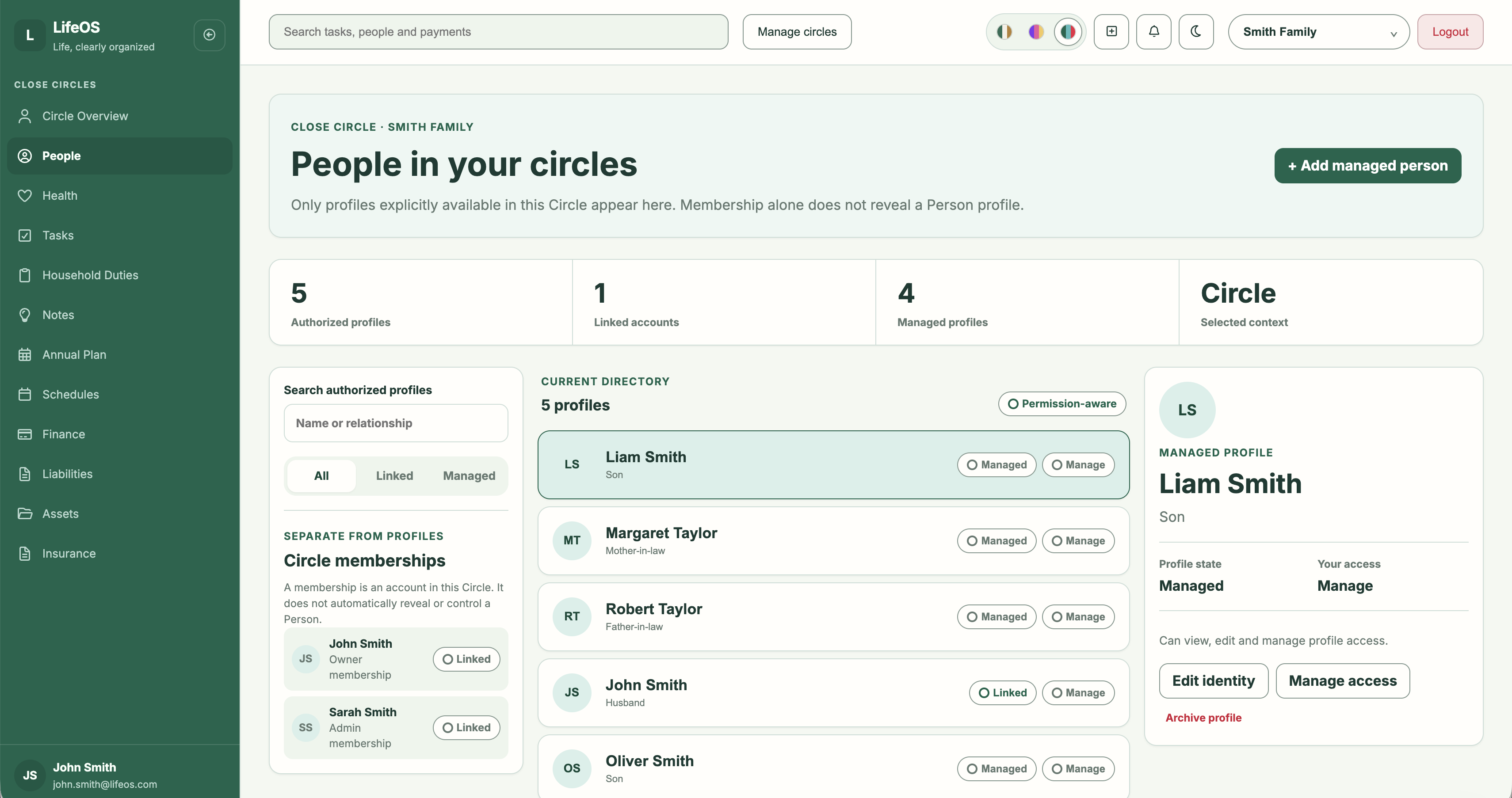
People
Inspiration
LifeOS grew out of my experience as a parent trying to keep my family organized, financially stable, and emotionally connected in a life that often felt too demanding.
I live in Warsaw with my wife and our two sons, now aged 8 and 5. When our first son was born in 2017, I was working at a Big Four company and giving most of my time and energy to work. At the same time, my family had almost no support nearby.
I am an only child. My mother passed away in 2014, while my elderly father lived around 300 km from Warsaw. My wife's parents also lived about 300 km away. Later, as my father's health declined, my wife and I brought him closer to Warsaw, arranged professional care, and visited him regularly. He passed away in 2025 at the age of 85.
This is becoming a common reality for modern families. In previous generations, parents, grandparents, and extended families often lived close to one another. Today, many couples raise children largely on their own while also building careers, paying mortgages, managing childcare, and trying to meet growing social expectations.
For my generation in Poland, born during the final years of communism, there has also been a strong desire to catch up with the Western standard of living. Ambitious young people competed for careers, apartments in good districts, reliable cars, and good schools for their children. Then came Covid, followed by the war in Ukraine, adding even more uncertainty and pressure.
Over several years, my wife and I had to make many major decisions. I completely changed my career from tax lawyer to programmer. My family moved from a 36-square-meter apartment that had become too small for two children and later moved to a house. At the same time, I was helping to take responsibility for the care of my elderly father.
After the war in Ukraine began, I also started thinking differently about long-term safety. My wife and I sold a small apartment and bought one in Spain. Each decision affected many other parts of our lives and required balancing risk, security, family needs, and limited resources.
My wife is a financial modeller, so she created a model of our family life covering income, expenses, mortgage rates, childcare, and different future scenarios. It helped us understand our limits, evaluate risks, and make important decisions with greater confidence.
That model became the first inspiration for LifeOS.
Initially, I wanted to create an application focused on personal finance and long-term family planning. However, I soon realized that financial planning was only one part of modern life.
Family information is fragmented across calendars, spreadsheets, health applications, school messages, task lists, documents, and countless chat conversations. Parents still have to connect all of it mentally, remember what matters, and notice problems before they become urgent.
LifeOS evolved from a financial tool into something much broader: an AI-native operating system for everyday life.
What it does
LifeOS is a prototype of an intelligent family and personal operating system: one application designed to become the central brain and AI interface for everyday life.
The current version brings different areas of family life into one connected environment, including:
- family finances and long-term planning,
- household decisions and responsibilities,
- children's organization,
- health-related information,
- family tasks and important events,
- communication support inspired by Nonviolent Communication programme,
- and the foundation for a private, context-aware AI agent.
The goal is not to create another application that people must remember to check. LifeOS is intended to connect information, understand its broader context, and make it accessible through a natural AI interface.
The long-term core of LifeOS is a private, personal AI agent with access to the information that a person or family chooses to connect or store. Instead of searching through separate applications, screens, and dashboards, family members will be able to talk to the agent through chat.
The agent could answer questions, explain the family's current situation, prepare users for upcoming events, remind them about important matters, and identify connections between different areas of life.
For example, it could understand that a medical appointment affects the family calendar, that an upcoming expense influences the monthly budget, or that several stressful events are accumulating at the same time. Instead of producing isolated notifications, it could explain what is happening in the broader context.
My vision goes beyond a chatbot that waits for instructions. The LifeOS agent should become a proactive digital helper: a personal AI robot and, in some situations, a kind of digital guardian angel. It could remember what people forget, notice when something requires attention, and offer support at the right moment.
Living under pressure also taught me that communication is one of the most important systems in a family. Exhaustion, financial uncertainty, and unequal expectations can easily turn small misunderstandings into serious conflicts. I have also seen friends separate mainly because they were unable to communicate through years of accumulated stress.
For this reason, LifeOS incorporates ideas inspired by Nonviolent Communication. In the future, the AI agent could help people prepare for difficult conversations, distinguish observations from judgments, and communicate their feelings and needs more constructively.
LifeOS should not control people's lives or make important decisions for them. Its role is to connect fragmented information, reduce mental load, provide relevant context, and help people notice what deserves their attention.
The current Build Week demo is the first working layer of this broader vision. It demonstrates the data structures, workflows, features, and interface on which the personal LifeOS agent can be built.
How I built it
I started developing the first parts of LifeOS almost a year ago. Progress was slow because I was combining the project with a full-time job and family responsibilities.
OpenAI Build Week gave me the motivation to accelerate the work. My children are now a little older, so I was able to spend a week in my apartment in Tenerife.
I originally planned to use the time to redesign the application and catch up with recent AI developments. When I arrived, I started experimenting with Hermes. Then I received the Build Week email and became fully absorbed in building LifeOS.
I was still working my regular 9-to-5 job throughout the week, so most development happened outside working hours.
I used GPT-5.6 Sol as my lead AI development partner, supported by multiple subagents handling different parts of the workflow. I turned the product vision into a backlog, divided it into smaller tasks, and worked through them in a structured way with the agents.
I had already deployed early parts of the project using the free tiers of Netlify, Render, and Supabase. Codex helped me move between local and deployed environments, redesign the application, inspect problems, implement changes, and keep track of progress.
The process started with explaining the product idea and providing access to the repository. From there, I discussed the redesign with Codex, translated the vision into tasks, reviewed the proposed solutions, and moved into implementation.
It felt less like using an autocomplete tool and more like leading a small AI development team. I remained responsible for the product vision, priorities, reviews, and final decisions, while the agents helped me move much faster through implementation.
Challenges I ran into
The biggest challenge was time. I was building the project while working full-time, which meant using evenings and every available break. I also needed to review the agents' work carefully and make the key product and technical decisions myself.
Observability was essential. Clear logs and structured progress tracking allowed me to understand what the agents were doing, inspect their decisions, and intervene when necessary.
I also experimented with running Hermes through Telegram so that I could continue working while away from my computer. I tried cloud-based Codex workflows as well. These experiments were not fully successful, mainly because I did not have enough time to configure and test them properly.
Nevertheless, they revealed something important: a truly useful personal AI agent must be available wherever life happens, not only when someone is sitting in front of a computer. That lesson directly influenced the direction of LifeOS.
Another major challenge was deciding what could realistically be completed during Build Week. The full vision—an AI agent that understands connected life data, acts proactively, and securely cooperates with other agents—is much larger than a one-week project.
I therefore focused on building a credible foundation and making the direction tangible without pretending that the entire vision was already complete.
A further challenge was combining different areas of life without making the product overwhelming. Finances, health, family organization, communication, and AI assistance are deeply connected, but each could become a separate product. LifeOS needs to bring them together through one clear interface while still giving users control over their data.
Accomplishments that I'm proud of
I am proud that an idea shaped by years of real family experiences became a working product foundation during Build Week.
In particular, I am proud that I:
- transformed LifeOS from a financial planning concept into a broader AI-native life operating system,
- redesigned and developed the application while continuing to work full-time,
- created a structured backlog and completed tasks through a multi-agent development workflow,
- successfully worked across local, Netlify, Render, and Supabase environments,
- established the data and product foundations for a context-aware personal AI agent,
- connected practical family organization with support for healthier communication,
- and created a demo that communicates a much larger long-term vision.
I am also personally proud of how far I have come since changing careers from tax lawyer to programmer. LifeOS combines my family's real needs, my wife's financial modelling experience, and the technical skills I developed after making that career change.
The current prototype is not the finished LifeOS. However, it proves that the concept can become something real.
What I learned
Build Week taught me a great deal about multi-agent development workflows, model differences, task decomposition, orchestration, and the importance of reviewing AI-generated work.
I learned that there is a significant difference between asking a model to generate code and organizing AI agents around a product goal. The latter still requires clear priorities, good context, verification, and human judgment, but it can dramatically accelerate the journey from an idea to a working product.
I also learned that AI development needs strong observability. When several agents are contributing, it is essential to understand what they changed, why they changed it, and how their work contributes to the wider product vision.
Most importantly, I learned that the most valuable AI products may not be separate tools that demand even more of our attention. They may be trusted agents that understand the context people choose to share and quietly help manage the complexity already present in their lives.
Modern parents—and increasingly all of us—are expected to manage too much fragmented information, often with too little support. Technology should not add another dashboard to that burden. It should help carry part of it.
What's next for LifeOS
My next step is to turn LifeOS from a connected family application into a true AI interface for everyday life.
Rather than replacing every specialized tool, LifeOS will integrate information from the applications people already use. With explicit user permission and where integrations are technically available, this could include services such as Apple Health, Calendar, Flo, financial and budgeting applications, and other personal tools.
Health information could come from Apple Health or Flo, events from calendars, financial information from budgeting services, and family context from information stored directly in LifeOS. The system would connect these separate signals and turn them into useful context.
At the center of this system will be the personal LifeOS agent. I plan to develop it from a reactive chat assistant into a proactive AI companion that can:
- answer questions using the family's connected data,
- provide relevant reminders at the right moment,
- recognize relationships between health, finances, schedules, and family responsibilities,
- identify situations that may require attention,
- help family members prepare for difficult conversations,
- and support planning without taking control away from the user.
With the users' permission, LifeOS agents could eventually communicate securely with the agents of other people. They might coordinate family visits, shared responsibilities, appointments, or plans without requiring endless messages and manual scheduling.
Privacy and user control will be fundamental. Families must decide what information the agent can access, what it may remember, when it may act proactively, and whether it may communicate with anyone else.
Ultimately, I do not see LifeOS as simply an application.
I see it as an AI-native operating system and interface for everyday life, with a personal digital robot at its center: a trusted helper that can organize information, connect the dots, remind people at the right moment, and act as a kind of digital guardian angel when life becomes too complex to hold entirely in their own heads.
The goal is not to let AI live our lives for us. It is to let AI carry part of the mental load—so people can spend less time managing life and more time actually living it.
Built With
- codex
- hermes
- netlify
- render
- supabase


Log in or sign up for Devpost to join the conversation.