💡 Inspiration
Modern digital life gives us more information and more tools than ever, but not necessarily better decisions.
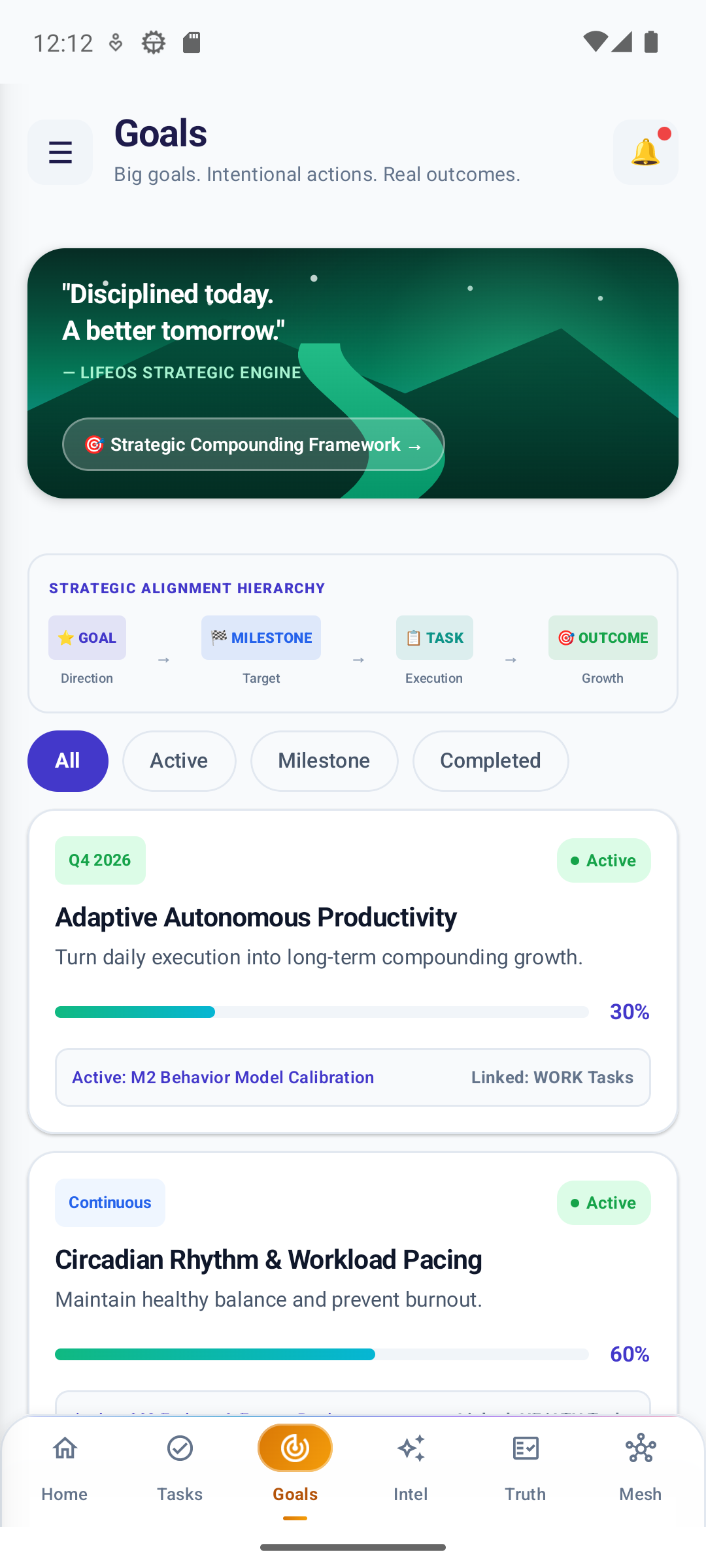
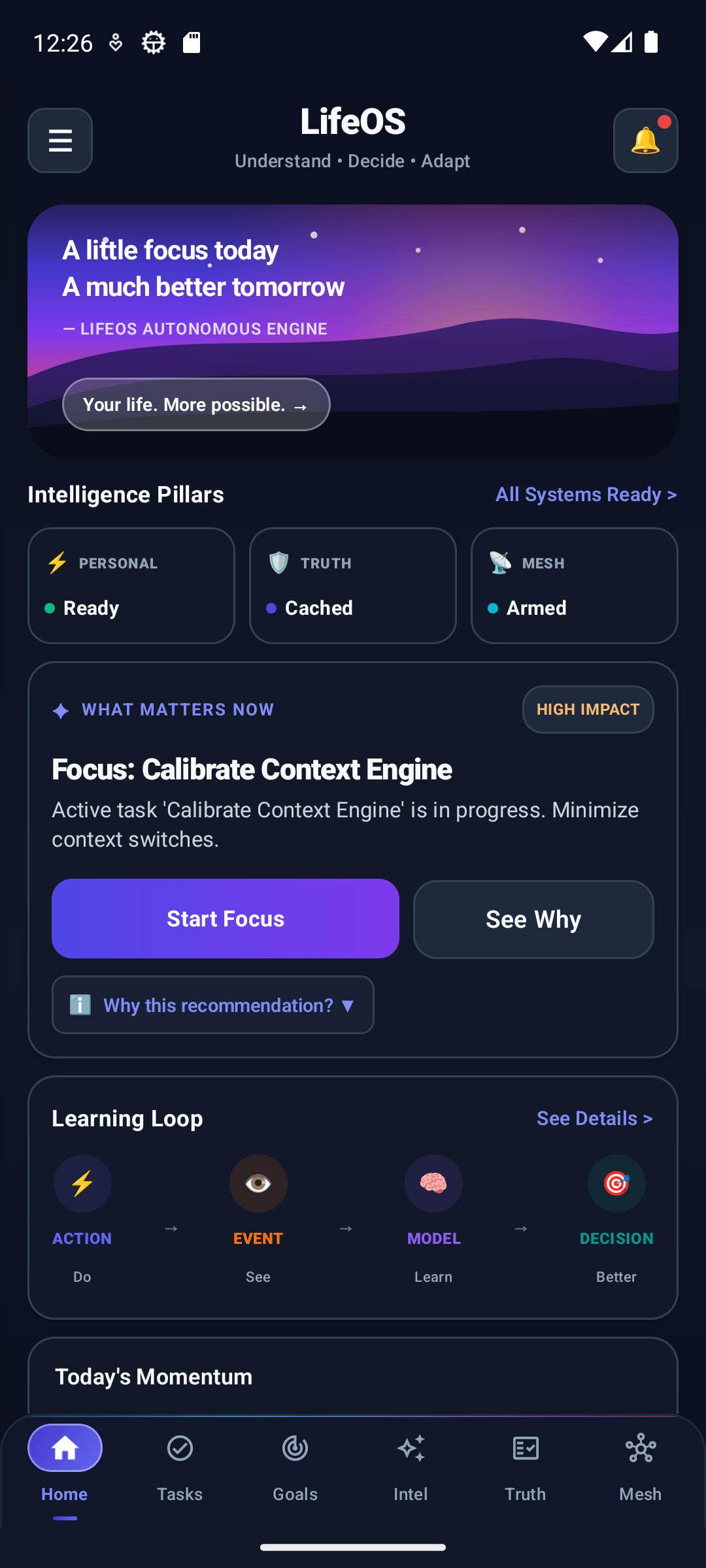
We wanted to build something that could help a person understand their current context, decide what deserves attention, verify information before trusting it, and remain resilient when connectivity becomes unreliable.
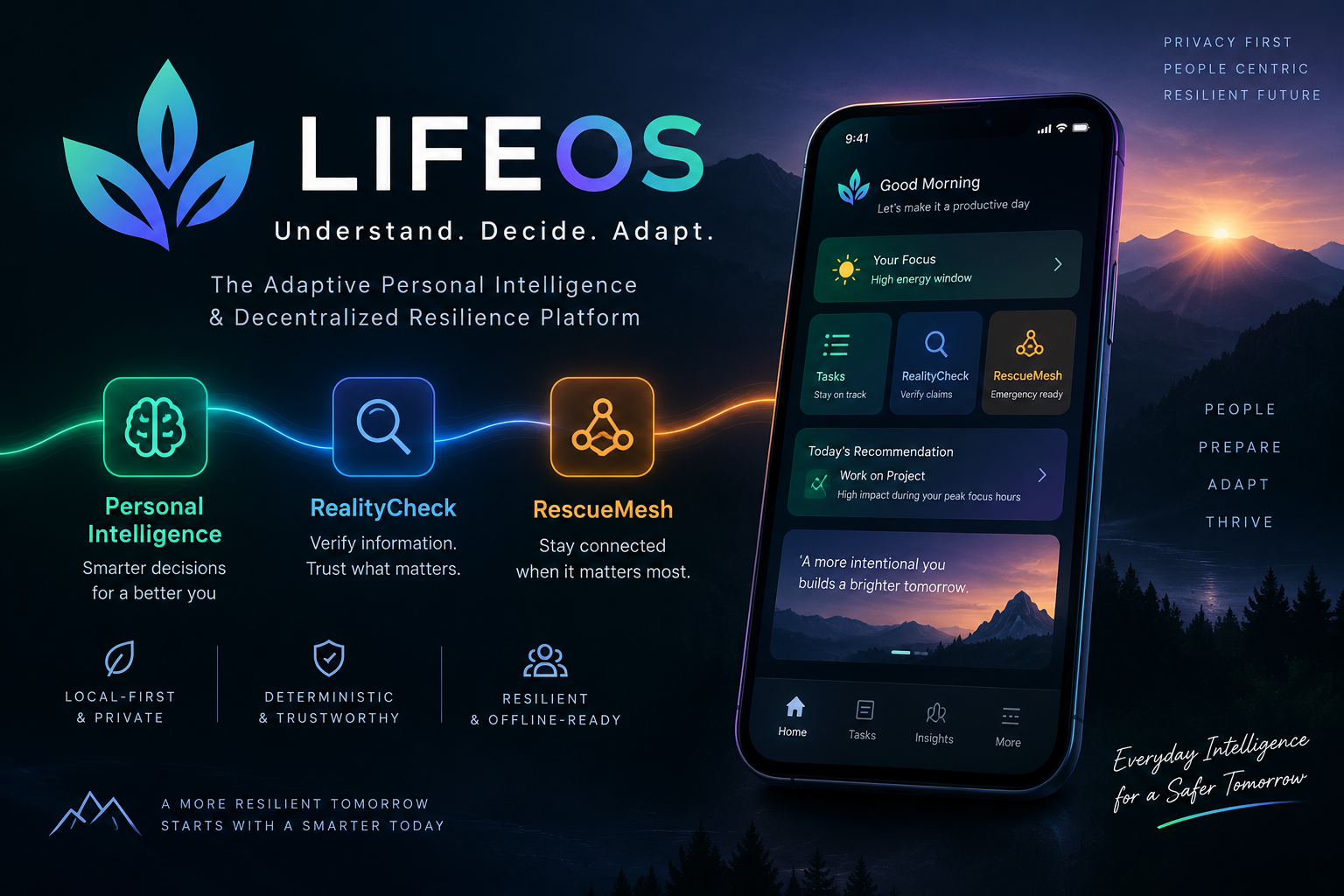
That idea became LIFEOS — Understand. Decide. Adapt.
Instead of building another chatbot or traditional productivity app, we designed LIFEOS around a continuous loop:
Observe → Understand → Decide → Act → Measure → Adapt
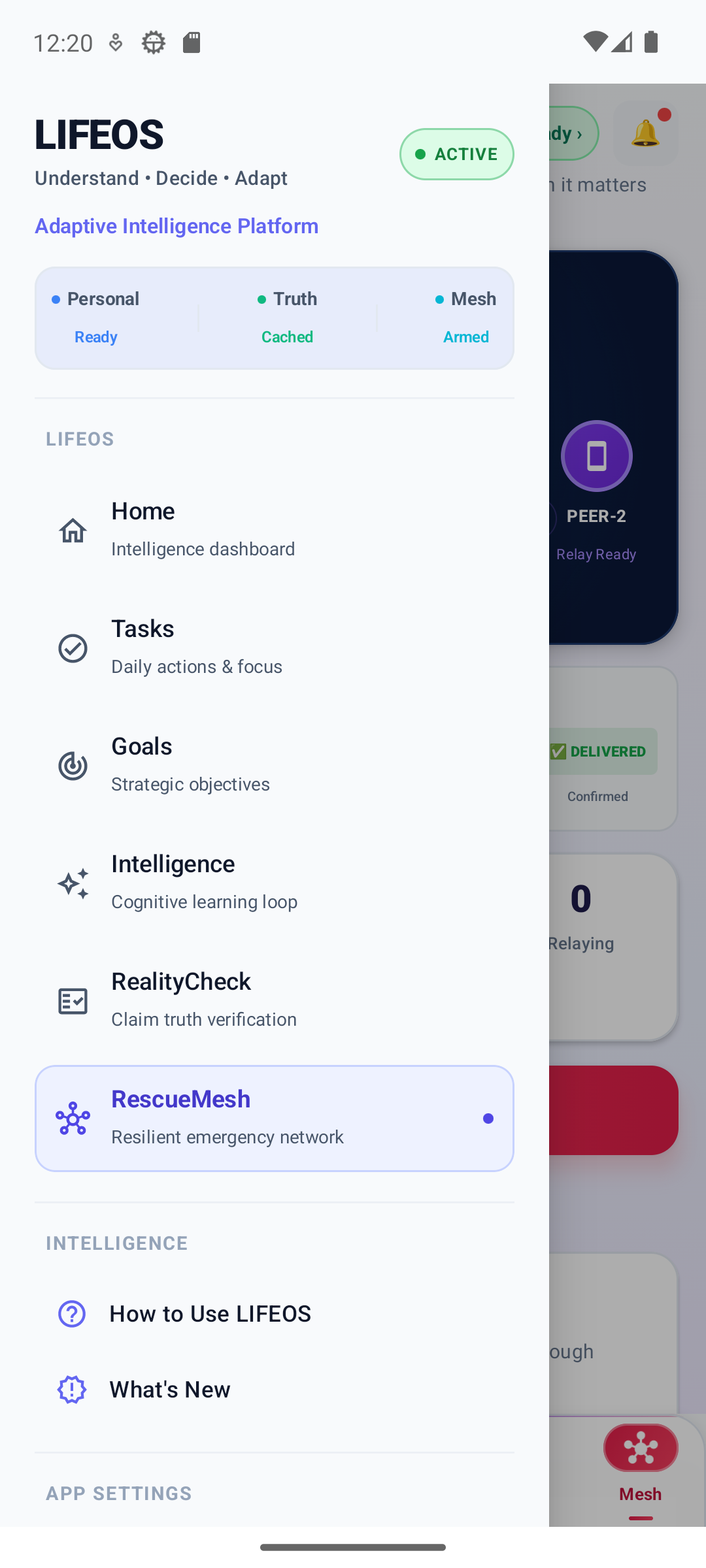
This became the foundation for three connected intelligence pillars:
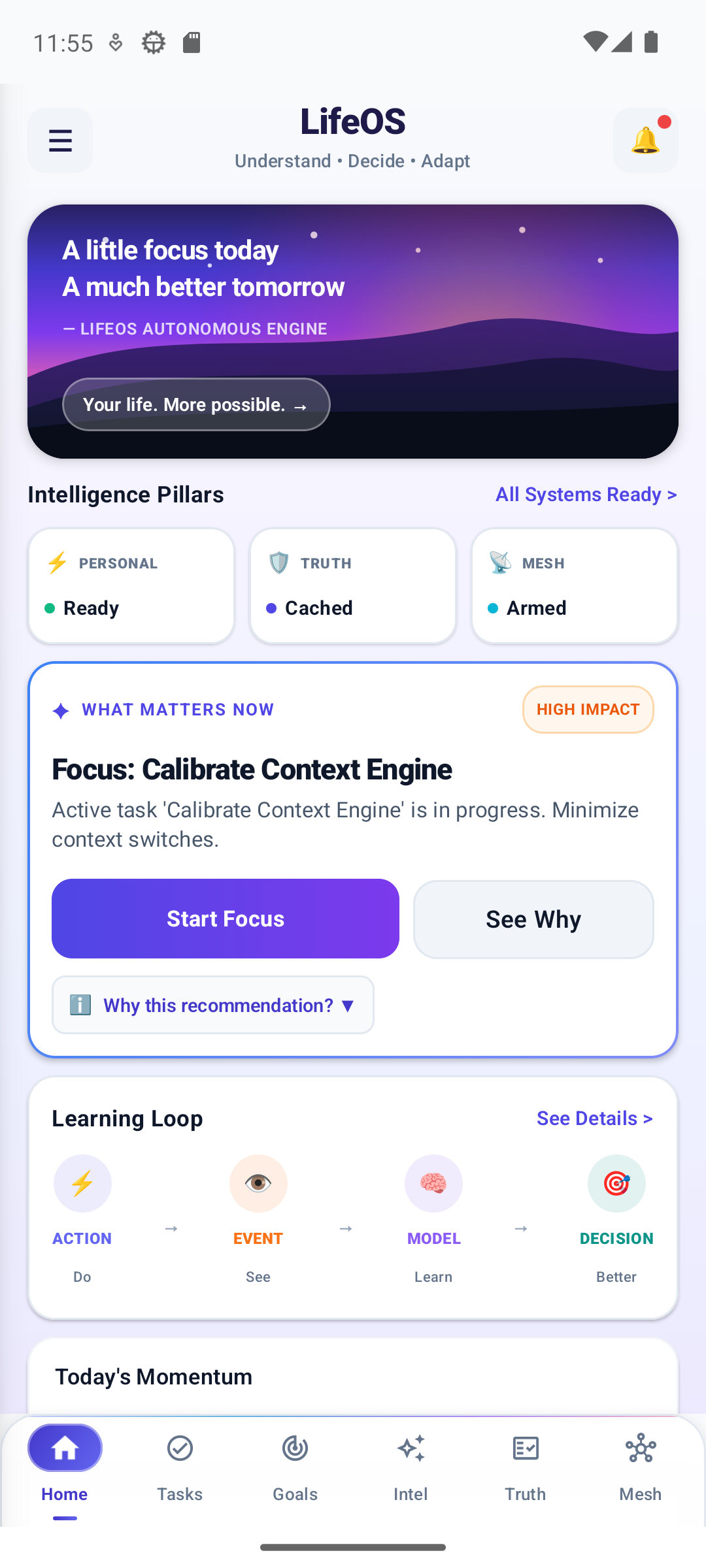
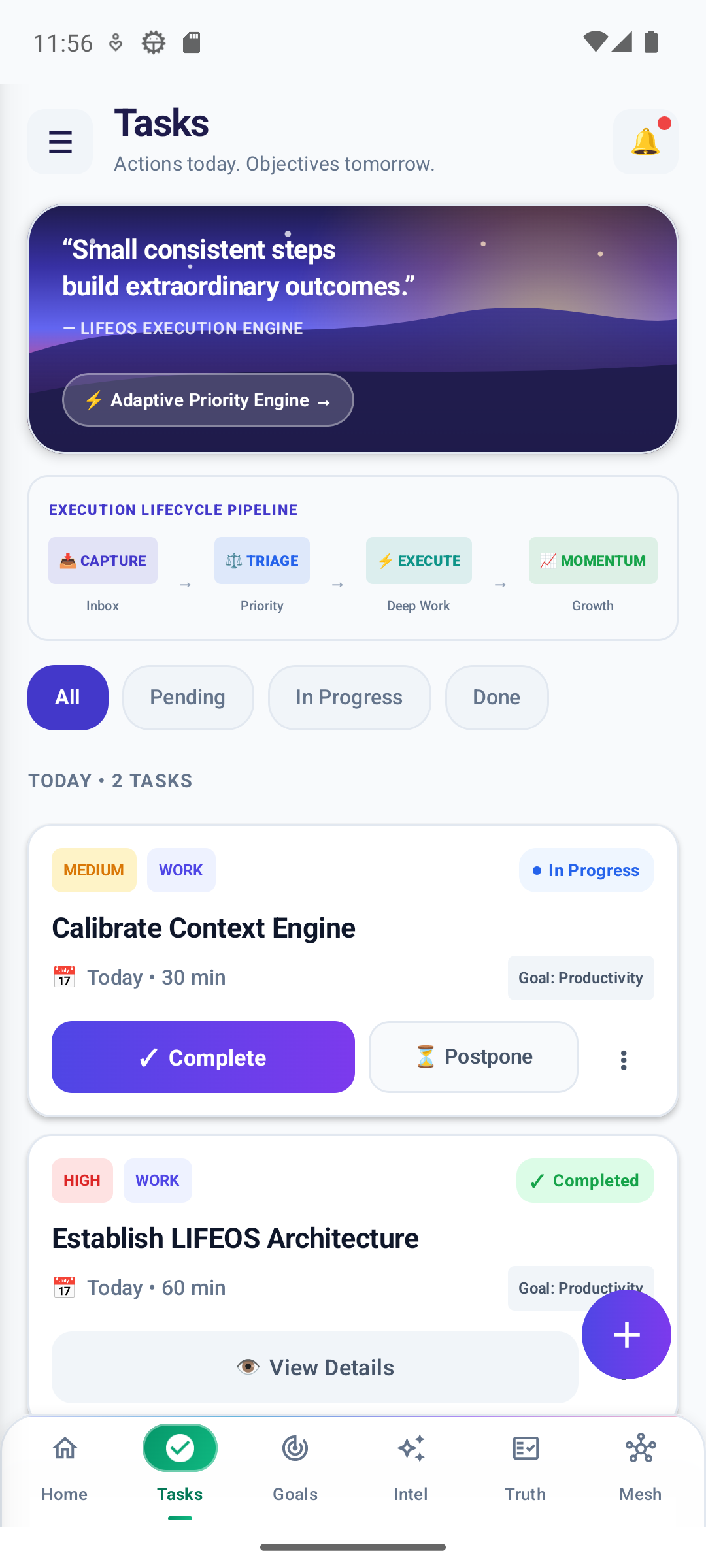
- 🧠 Personal Intelligence — understand tasks, goals, workload, focus patterns, and context to provide explainable recommendations.
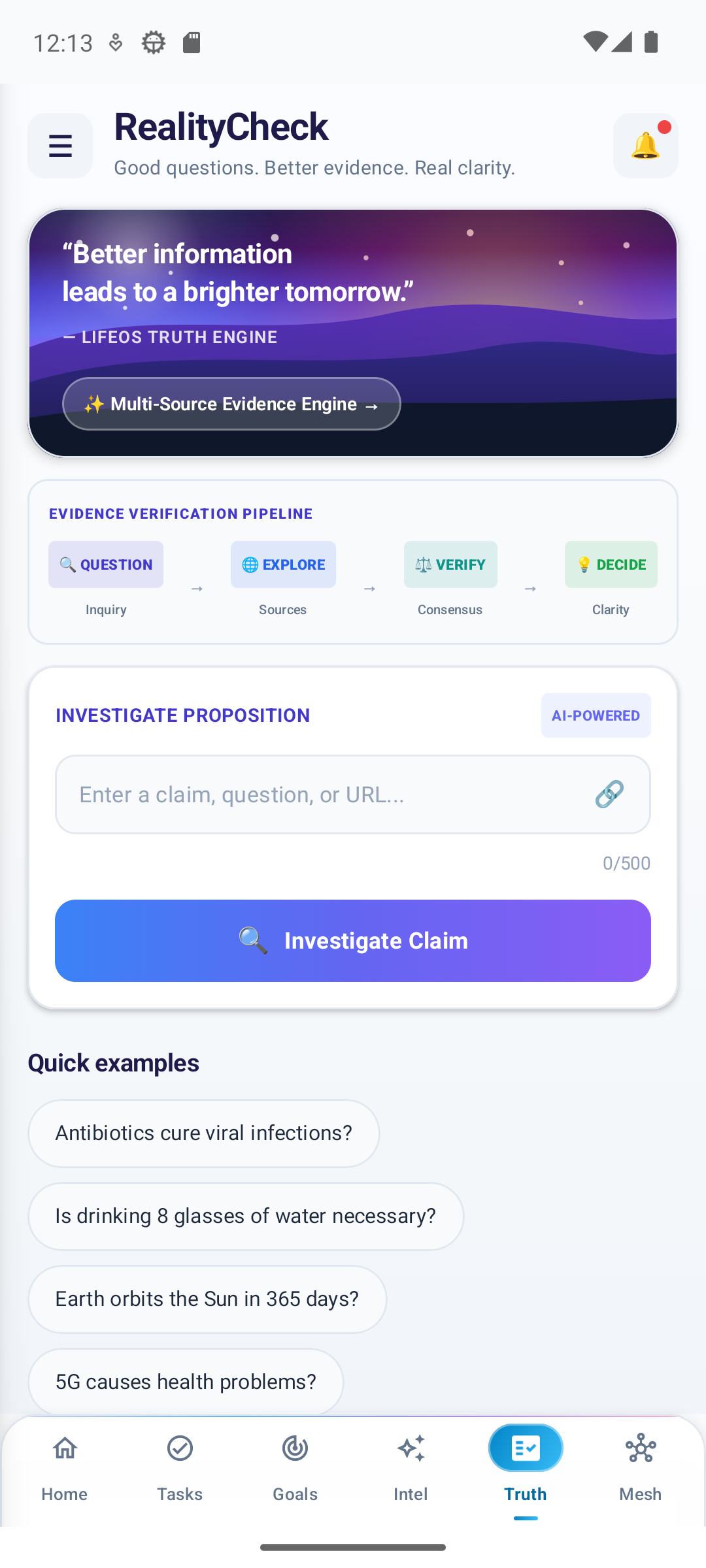
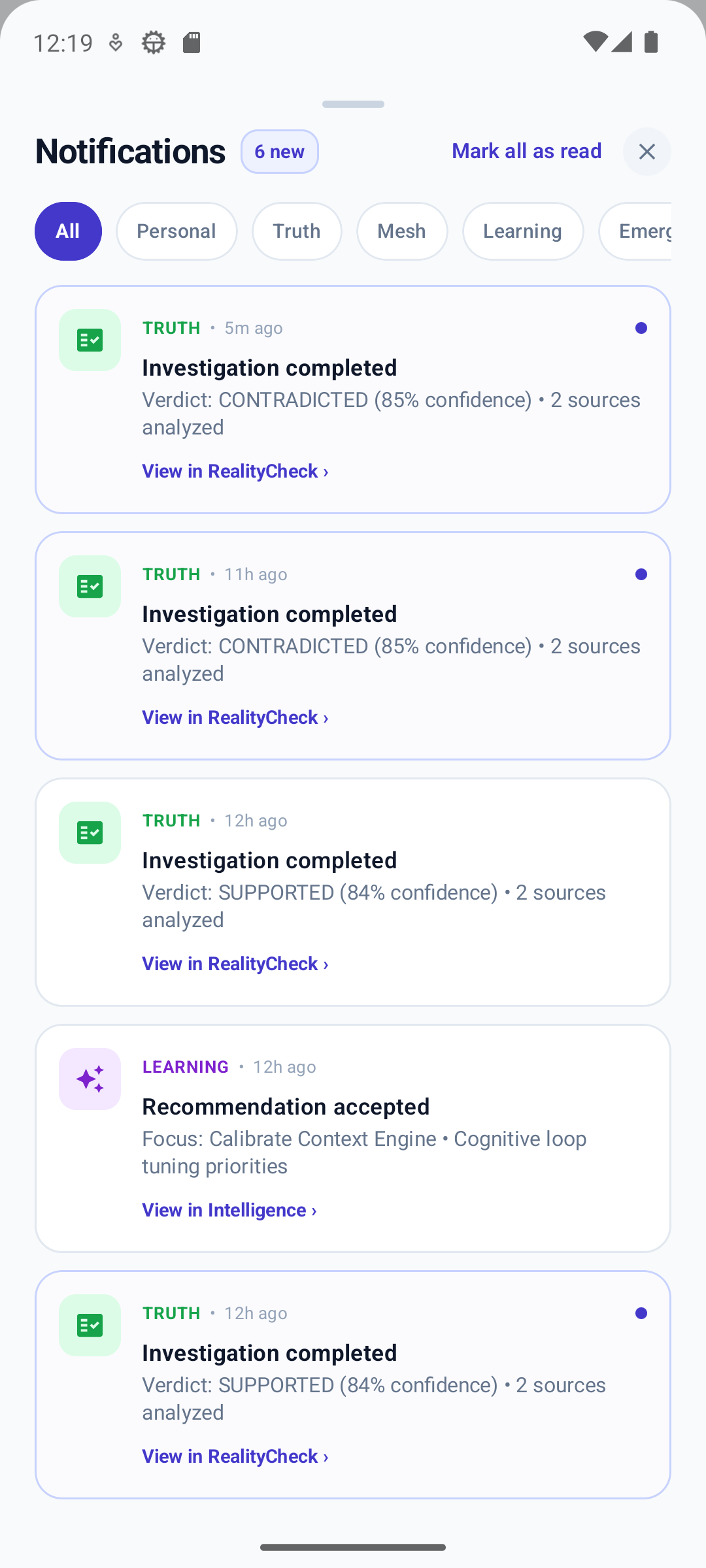
- 🔎 RealityCheck — investigate claims using deterministic evidence and institutional sources instead of simply generating an answer.
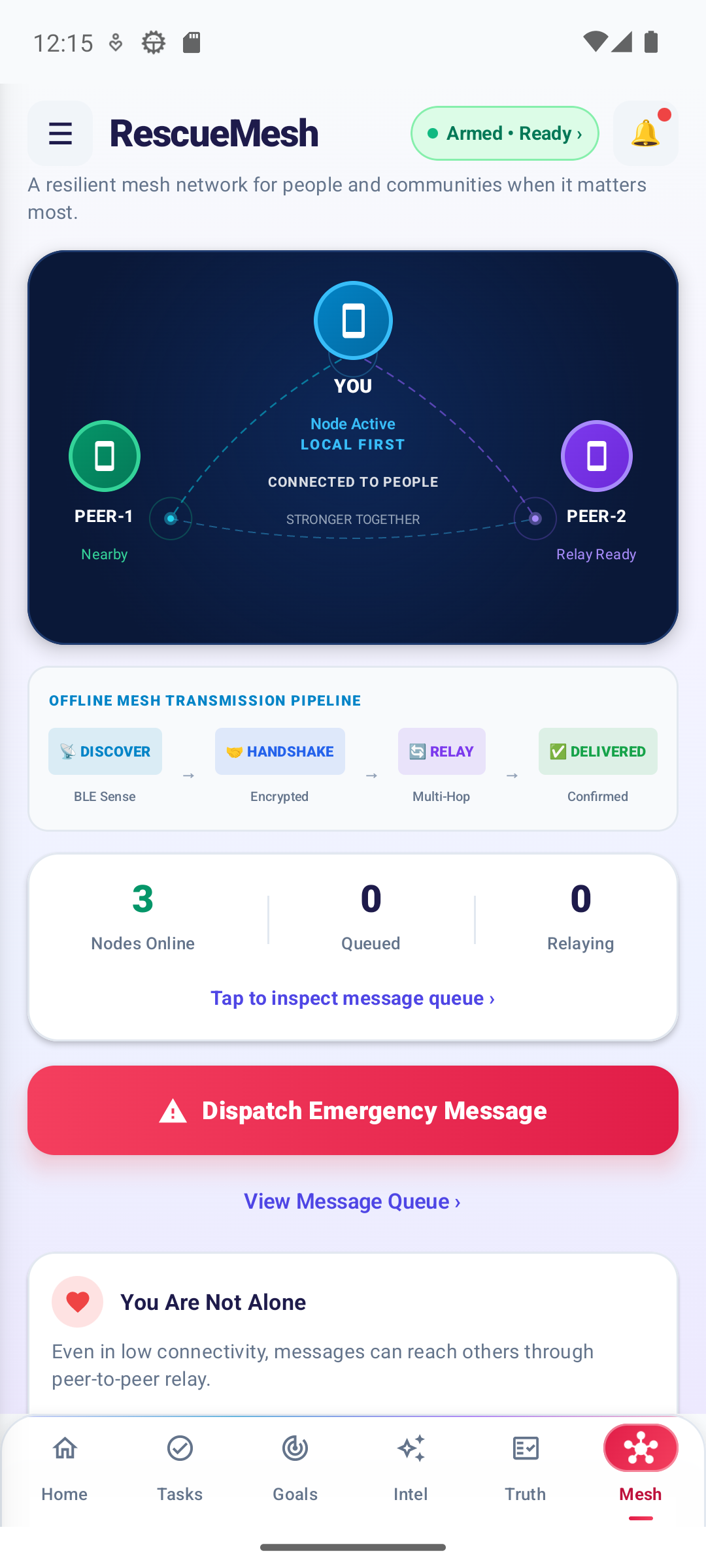
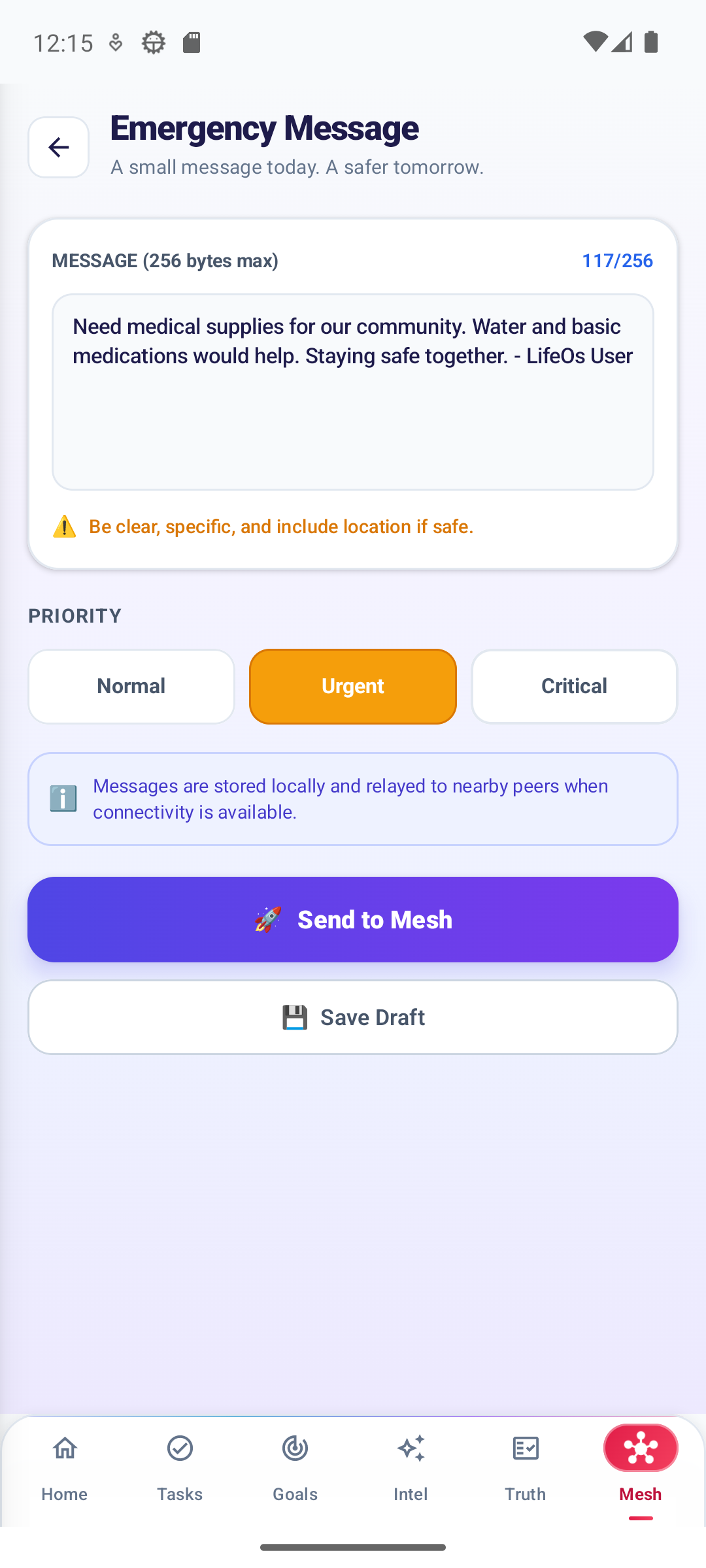
- 🛟 RescueMesh — preserve emergency communication through local store-and-forward routing when normal connectivity is unavailable.
Our central principle was simple:
Intelligence should help people understand their situation and make clearer decisions, not replace their judgment.
🛠️ How We Built It
LIFEOS was built as an Android-first, local-first platform using Kotlin, Jetpack Compose, Room SQLite, DataStore, Coroutines, and a Clean Architecture structure.
The Android application contains the core intelligence and remains functional without depending on a network connection.
🧠 Personal Intelligence
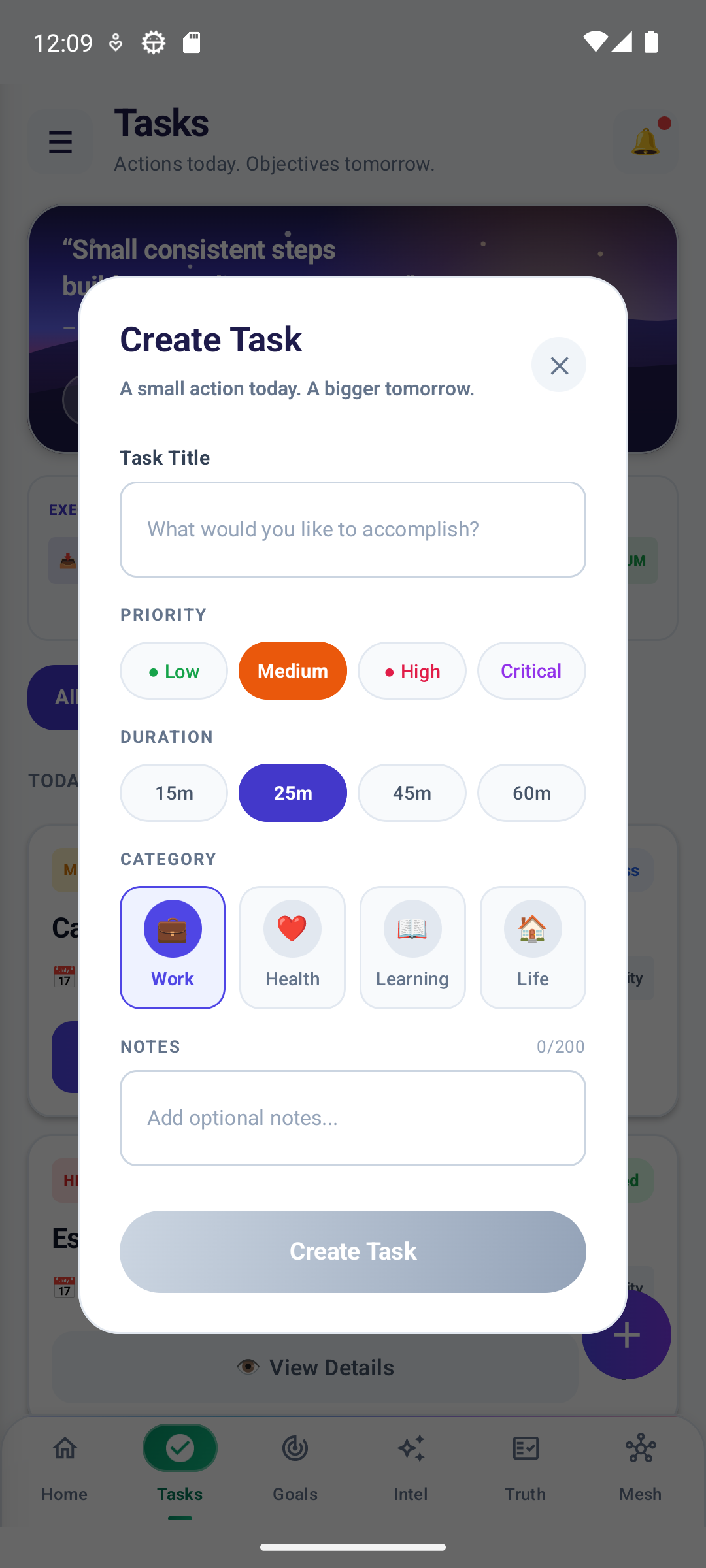
The Personal Intelligence layer models context using signals such as:
- task urgency
- deadlines
- cognitive category
- completion history
- momentum
- workload
- fatigue
- circadian timing
An explainable heuristic scoring system combines these factors to determine which action should receive attention.
The system also records behavioral outcomes such as task completion and postponement so that the recommendation model can adapt over time.
🔎 RealityCheck
RealityCheck was designed as an investigation system rather than a conversational chatbot.
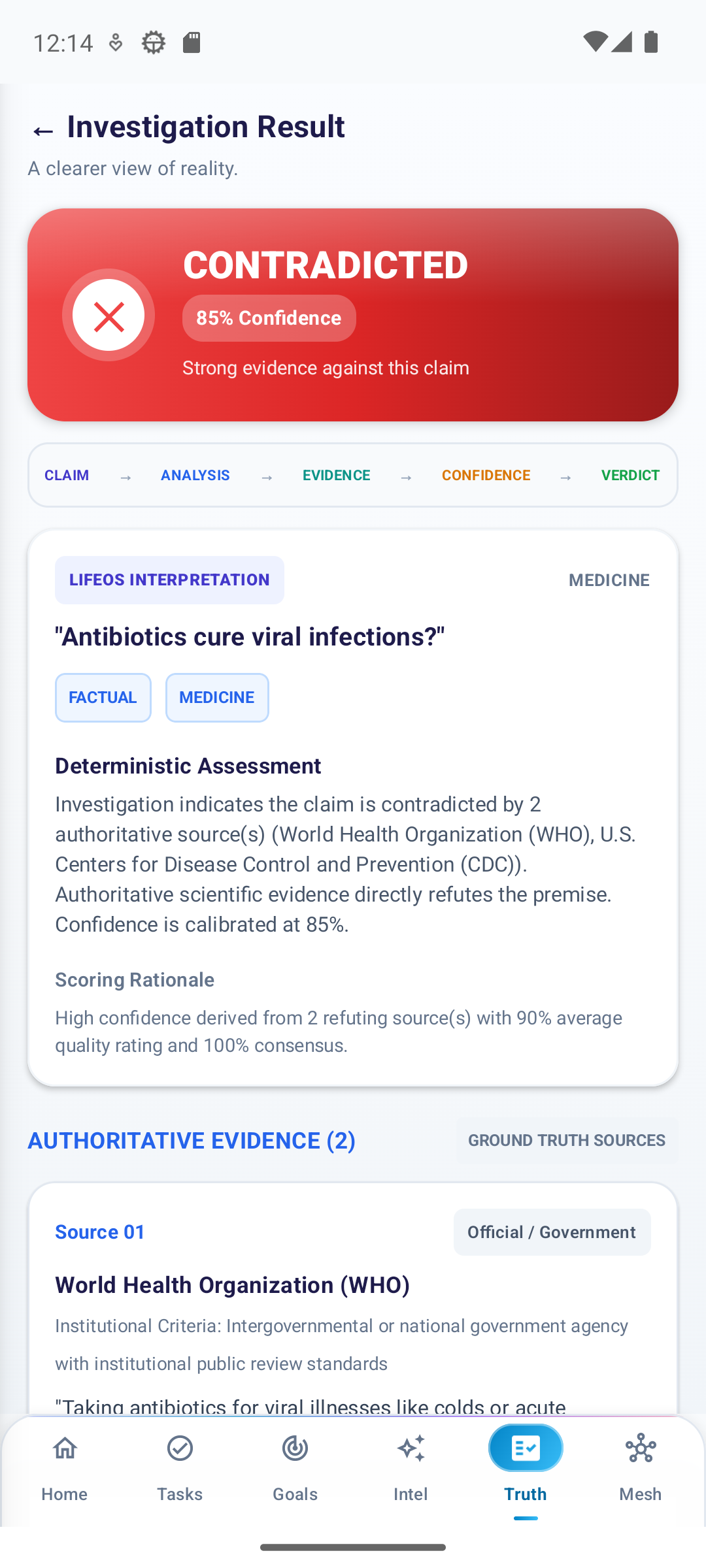
A claim is normalized, classified, compared against the local evidence corpus, and evaluated using deterministic corroboration logic.
The result can be:
SUPPORTEDCONTRADICTEDMIXEDINSUFFICIENT_EVIDENCE
The interface exposes the reasoning, confidence, and supporting institutional sources instead of hiding the decision behind a generated response.
🛟 RescueMesh
RescueMesh focuses on resilience when conventional connectivity is unavailable.
Emergency messages are stored locally and managed through a bounded store-and-forward queue. The routing layer includes:
- SHA-256 packet fingerprinting
- duplicate detection
- priority-based queuing
- TTL expiration
- bounded hop propagation
- emergency message persistence
- retry and synchronization logic
The current project implements the routing and persistence engine while the physical BLE/Wi-Fi transport layer is represented through a software transport abstraction. This keeps the prototype technically honest while providing a foundation for future hardware transport integration.
☁️ Cloud Gateway
We also developed an optional FastAPI gateway for synchronization and network-connected operations.
It includes:
- asynchronous API endpoints
- bounded concurrency
- rate limiting
- circuit breakers
- idempotency
- structured observability
- health/readiness endpoints
- Prometheus metrics
- resilient Android-side network transport
The current gateway is a development prototype. Production-scale deployment is documented separately using PostgreSQL, Redis, and horizontal infrastructure rather than being presented as already deployed.
🧩 What We Learned
The biggest lesson from building LIFEOS was that adaptive intelligence is not just about adding an AI model.
We learned that useful intelligence can come from carefully designed context, deterministic rules, feedback loops, persistence, and explainability.
We also learned how important it is to design for failure.
Instead of assuming that the network, backend, or cloud will always be available, LIFEOS treats offline operation as a first-class state.
Building the project also pushed us deeper into:
- Android Clean Architecture
- Jetpack Compose UI systems
- Room database migrations and indexing
- reactive state management
- deterministic decision systems
- cryptographic hashing
- resilient network transport
- FastAPI asynchronous services
- backend load shedding
- automated testing
- scalability benchmarking
- security hardening
- technical documentation
The final system contains 177 automated tests, covering the Android intelligence and resilience layers as well as the FastAPI gateway.
🚧 Challenges We Faced
One of our biggest challenges was balancing ambitious functionality with technical honesty.
We wanted LIFEOS to demonstrate personal intelligence, factual verification, emergency resilience, and cloud synchronization without pretending that a hackathon prototype was already a globally deployed production system.
Challenge 1 — Adaptive recommendations
A recommendation system can easily become an unexplained priority list.
We addressed this by making the decision process deterministic and exposing the factors behind recommendations.
Challenge 2 — Offline resilience
Emergency communication cannot depend entirely on a functioning internet connection.
We therefore built local persistence, bounded queues, TTL handling, packet fingerprinting, and store-and-forward routing into the core architecture.
Challenge 3 — Backend scalability
Our local stress testing revealed an important engineering reality: SQLite write contention becomes a bottleneck under very large bursts.
Rather than hiding this result, we documented the measured behavior and separated the current local implementation from the production scale-out architecture using PostgreSQL, Redis, and horizontal infrastructure.
Challenge 4 — Keeping the system explainable
We deliberately avoided making the entire system dependent on an opaque generative model.
Important decisions are based on deterministic logic, while the architecture leaves room for future intelligent interpretation where it provides genuine value.
🌱 What We Would Build Next
LIFEOS is designed as a foundation rather than a finished endpoint.
Future work could include:
- real BLE / Wi-Fi Aware transport for RescueMesh
- distributed Redis-based rate limiting
- PostgreSQL production deployment
- production authentication and authorization
- multi-device synchronization
- richer adaptive learning models
- additional evidence sources for RealityCheck
- larger-scale real-world resilience testing
- hardware-level emergency communication experiments
The goal would remain the same:
Understand the situation. Make a clearer decision. Adapt to what happens next.
🌌 Final Thought
LIFEOS started with a simple question:
What if a personal intelligence platform was designed around the person, rather than the platform?
The result is an Android-first system that combines personal intelligence, trustworthy information verification, and emergency resilience into one adaptive architecture.
LIFEOS
Understand. Decide. Adapt.
Built With
- android
- clean-architecture
- coroutines
- datastore
- docker
- fastapi
- github
- jetpack-compose
- kotlin
- material-3
- postgresql
- prometheus
- python
- rest-api
- room
- sha-256
- sqlalchemy
- sqlite

Log in or sign up for Devpost to join the conversation.