-
-
Insights
-
Activity Log
-
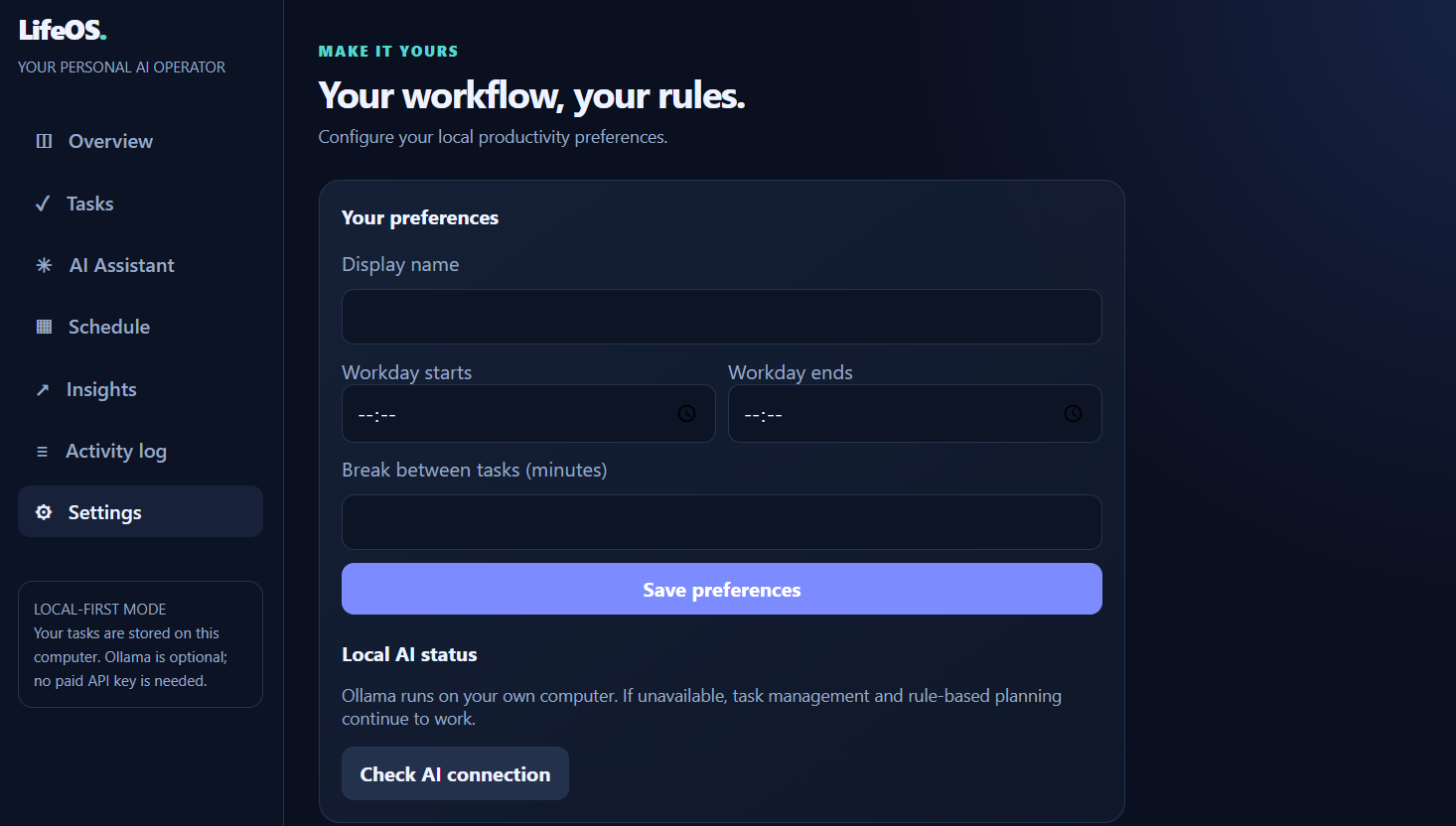
Settings
-
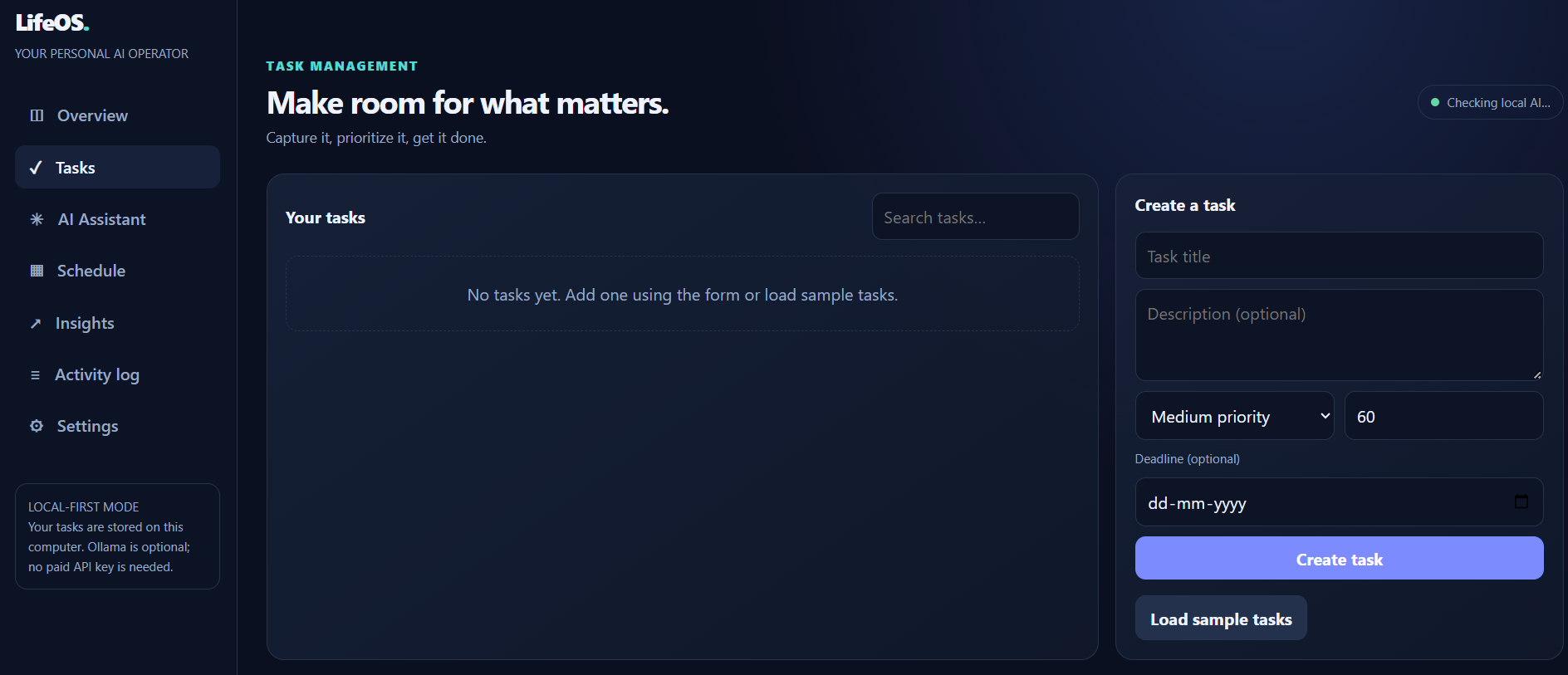
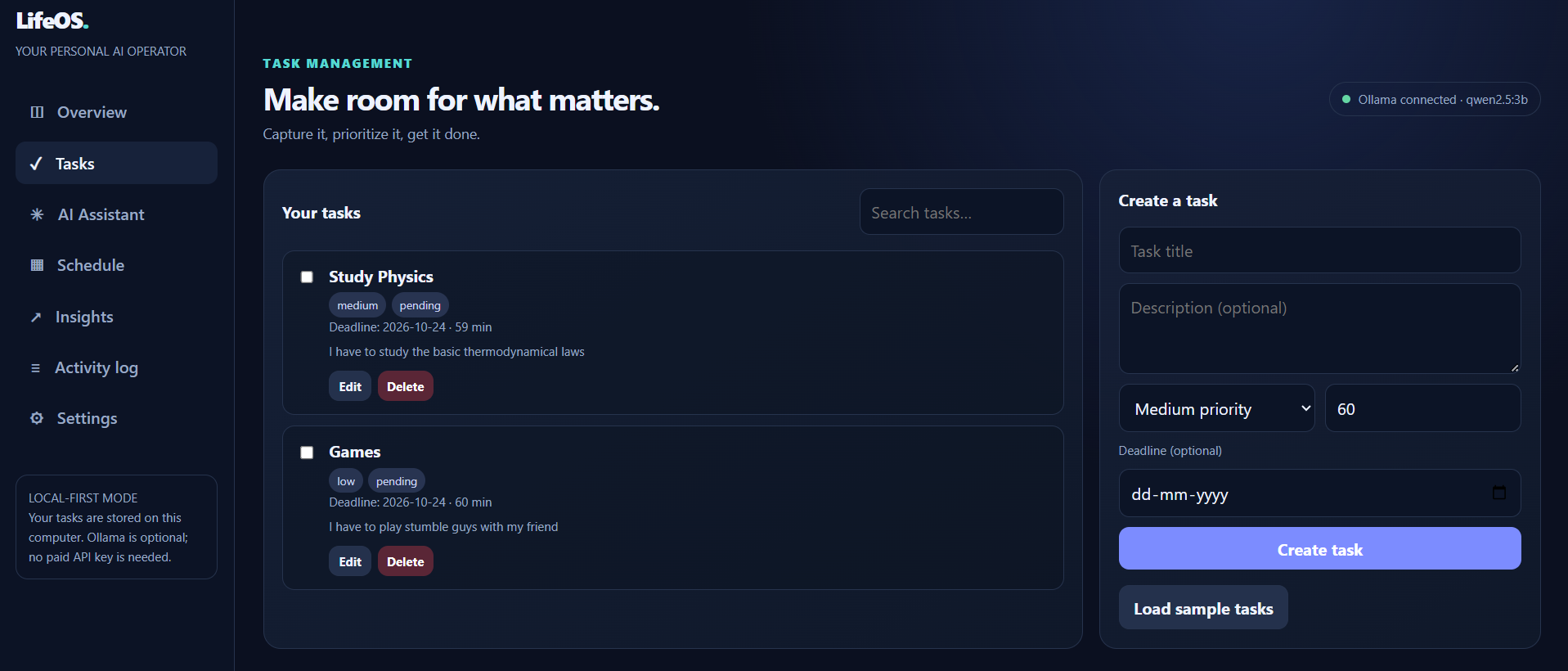
Tasks
-
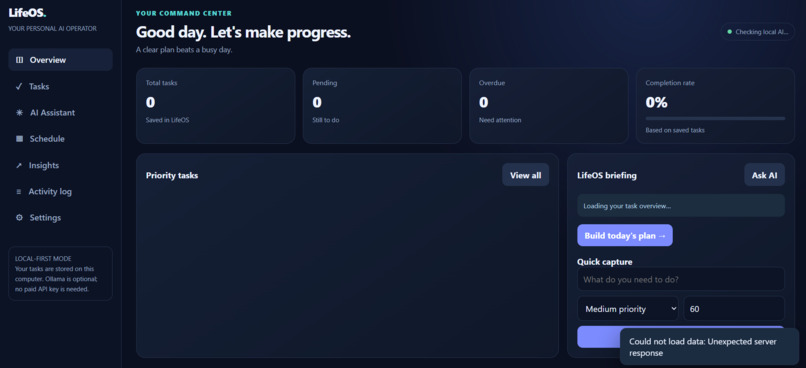
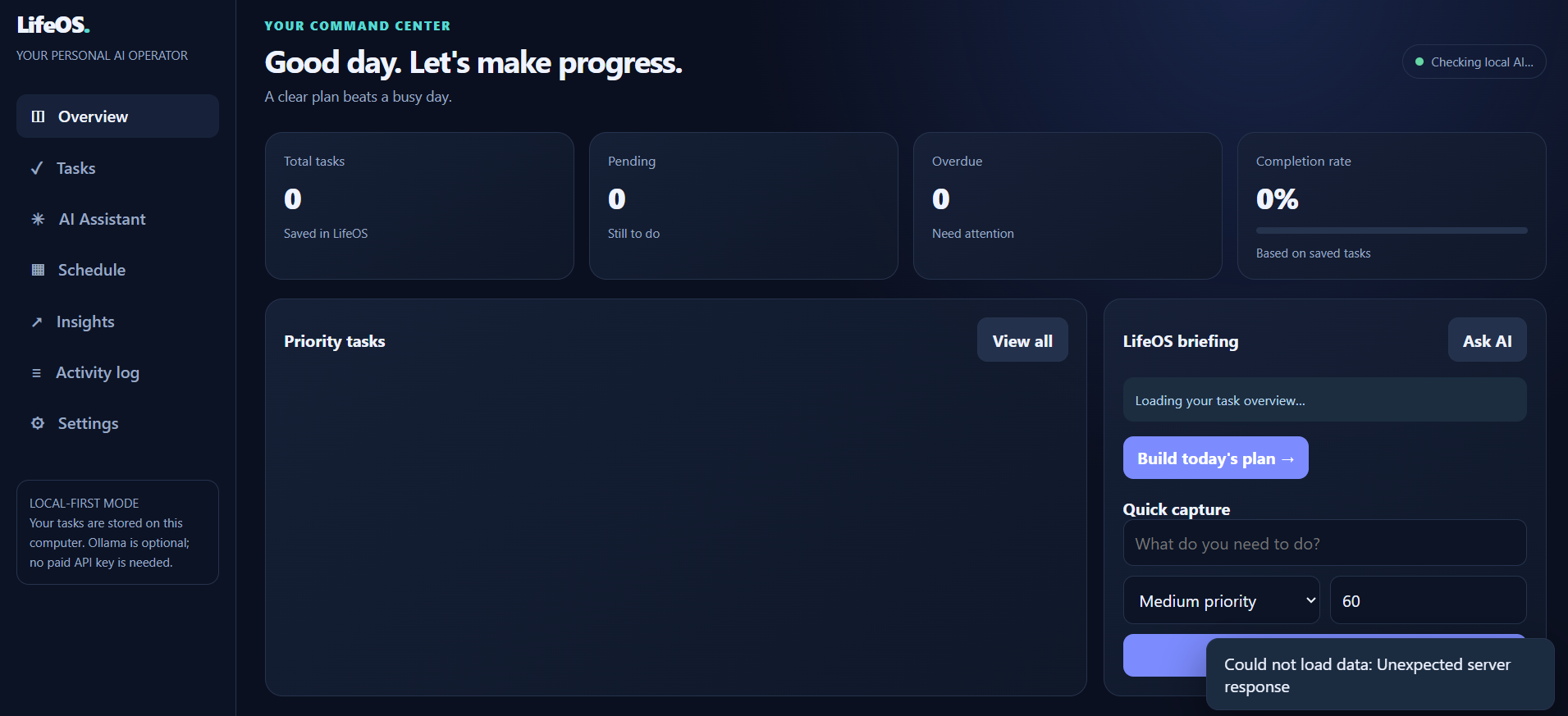
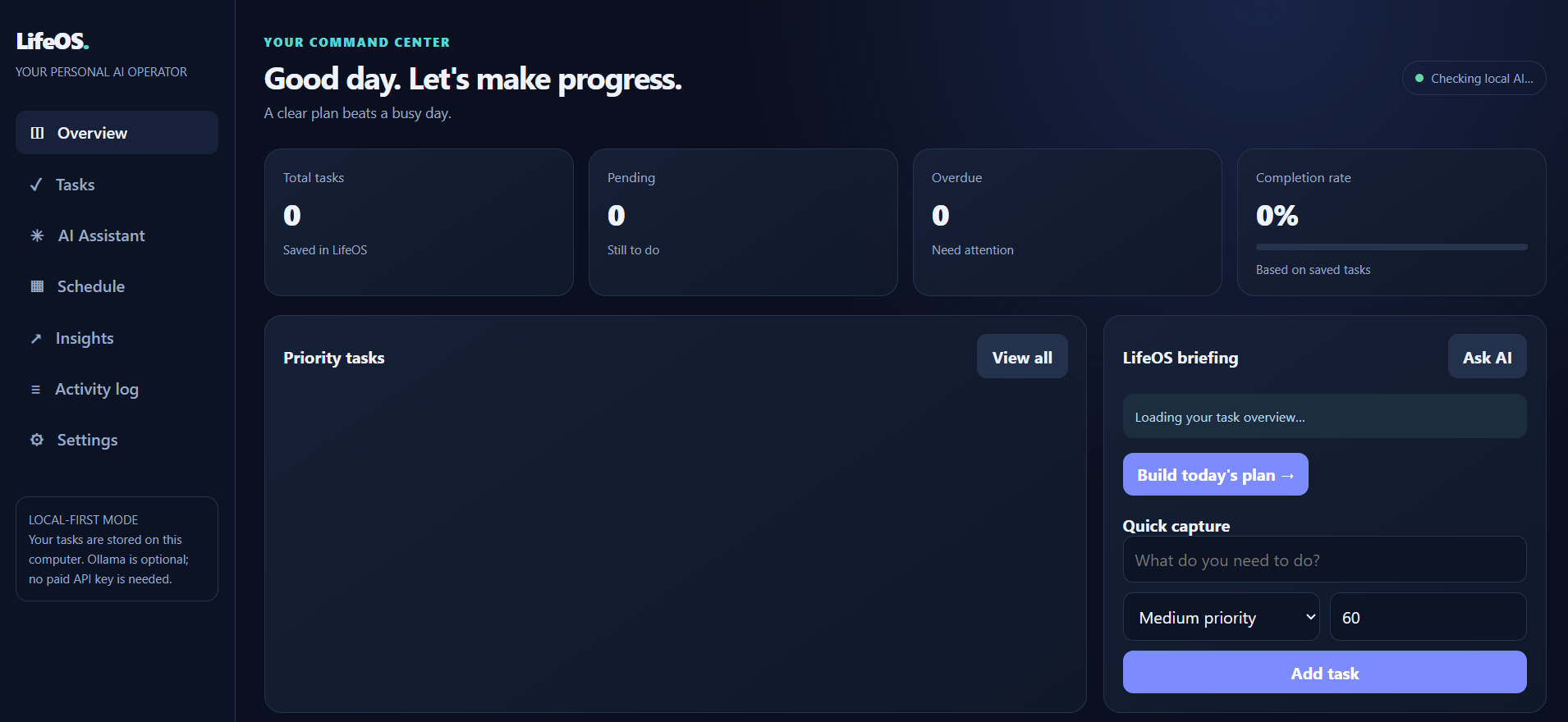
Overview
-
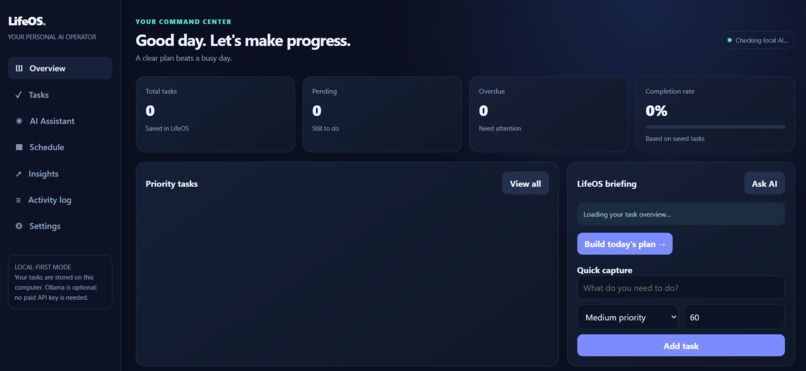
Dashboard
-
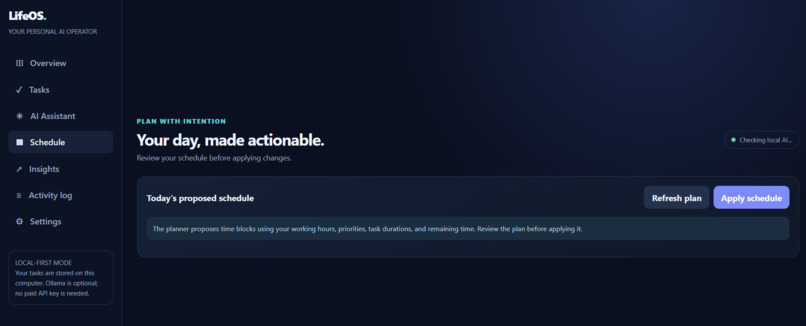
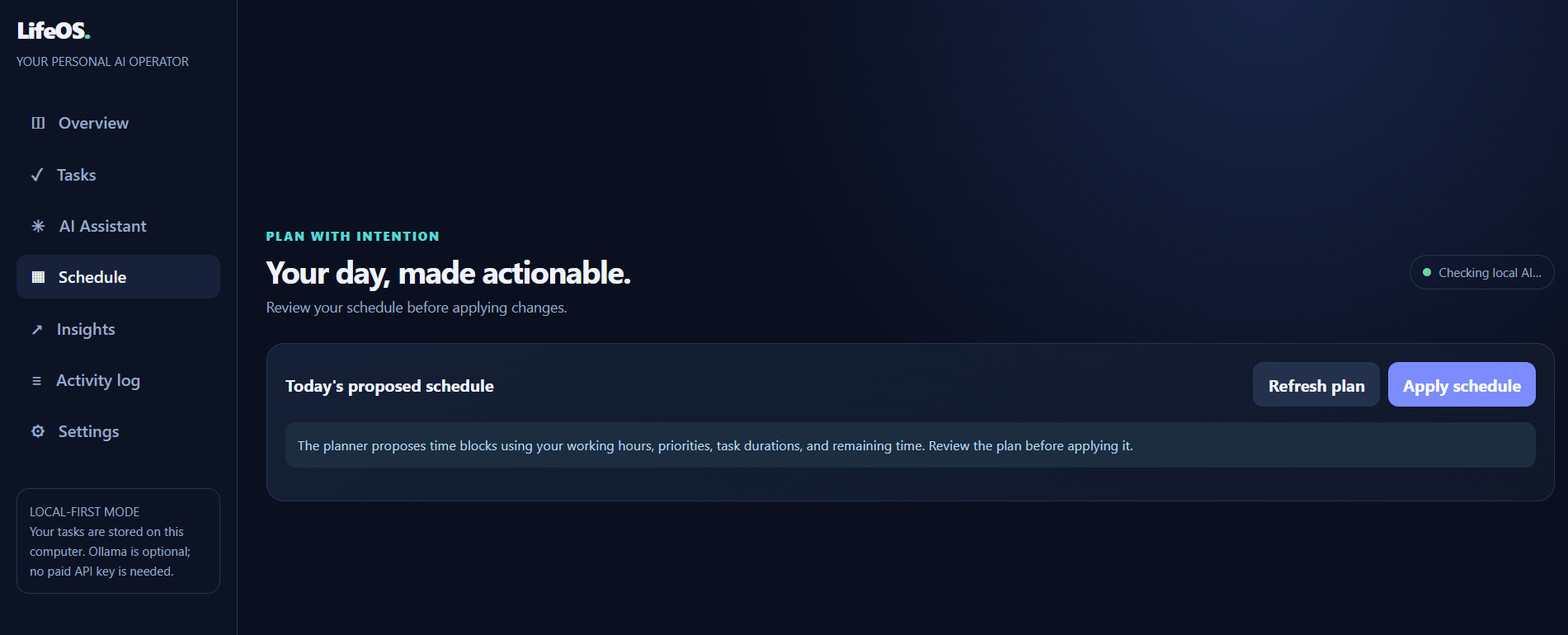
Schedule
-
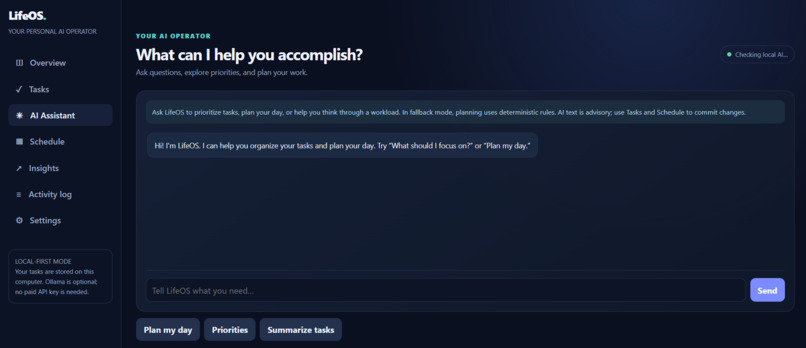
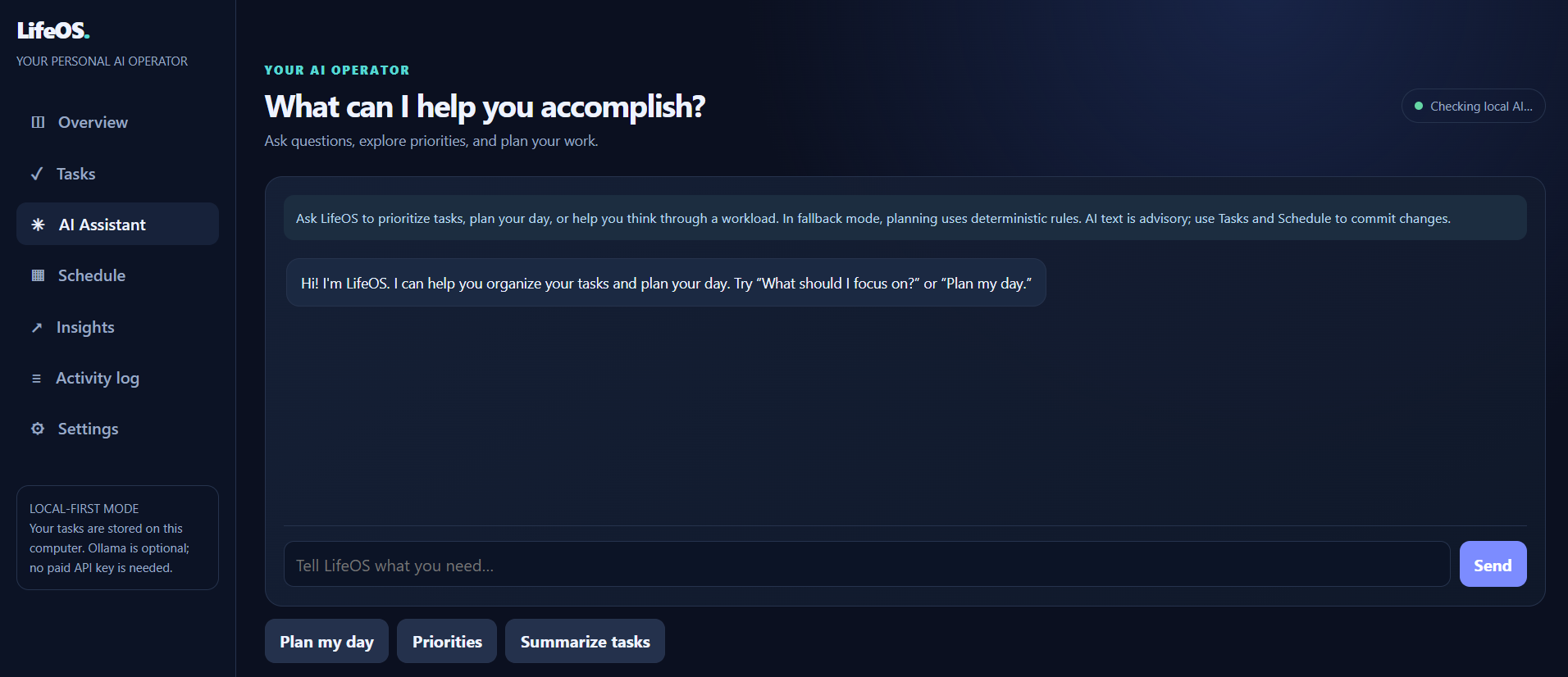
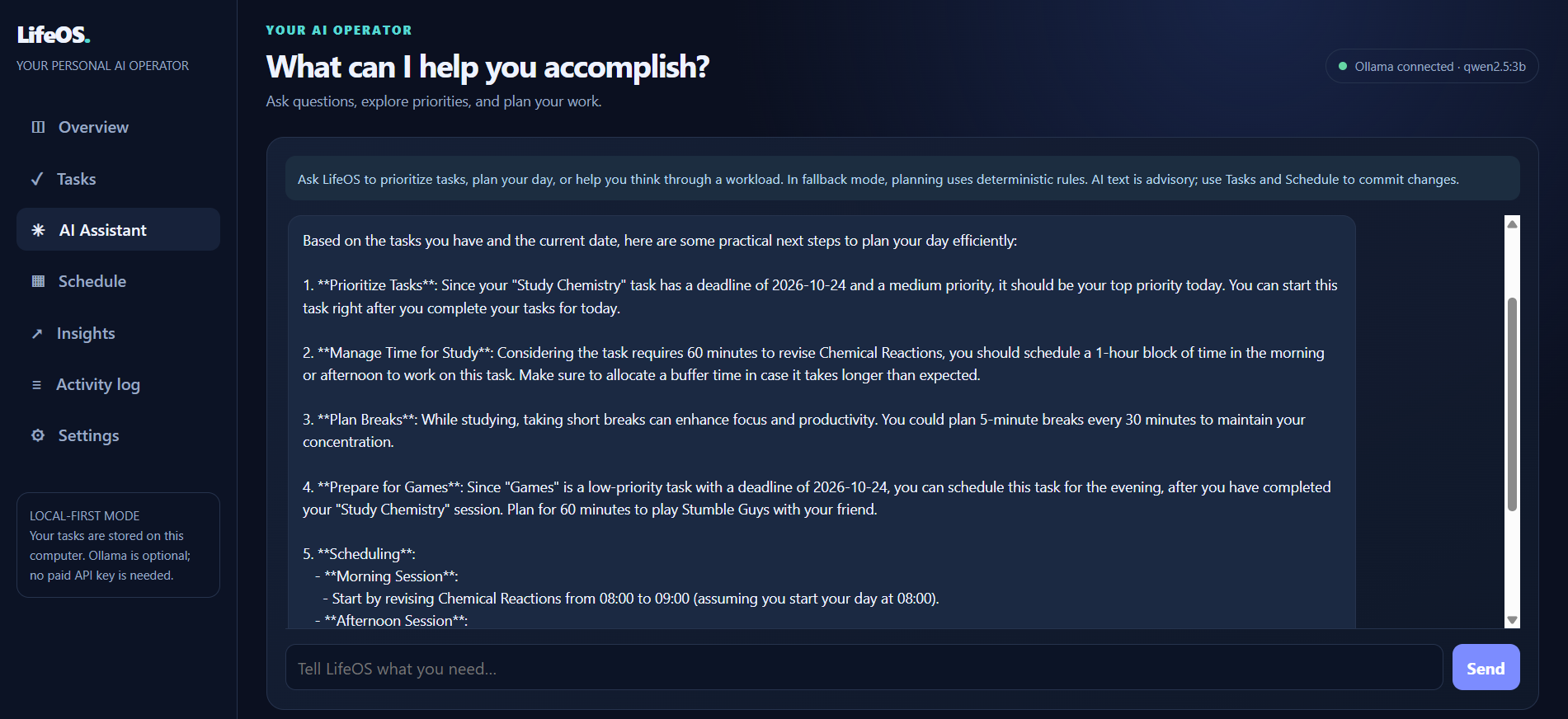
AI Assistant
-
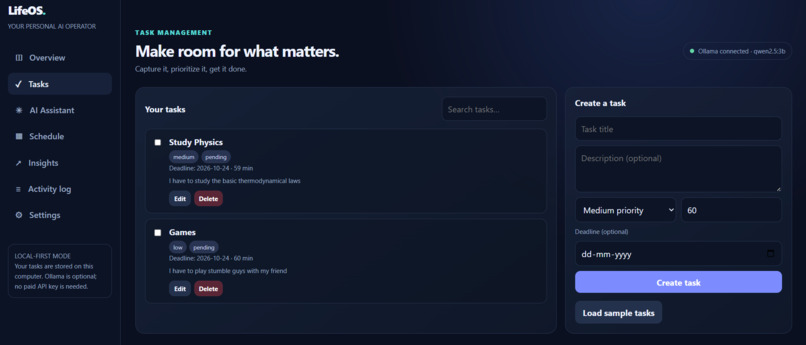
Adding Task
-
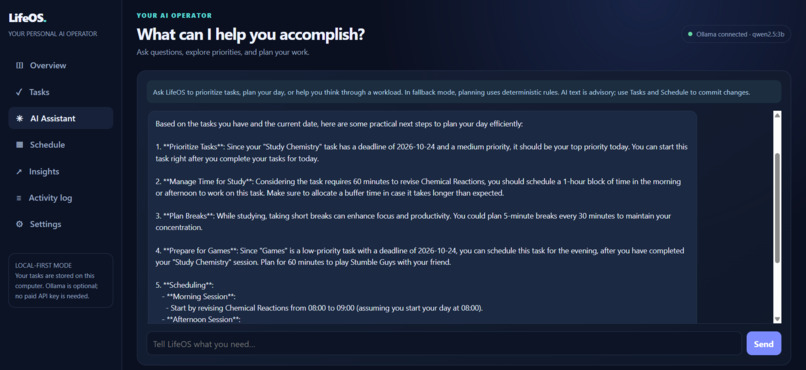
Plan my day
Inspiration
In today's fast-paced world, managing daily tasks, deadlines, meetings, and personal goals can become overwhelming. People often use multiple applications to organize their lives, yet they still struggle to decide what to prioritize and how to use their time effectively.
We were inspired by the idea of creating a personal AI assistant that goes beyond answering questions. We wanted to build a system that helps people organize their responsibilities, plan their days, and stay focused on what truly matters. This idea led to LifeOS Agent — an AI-powered personal productivity assistant designed to make everyday life smarter, simpler, and more organized.
What it does
LifeOS Agent provides a centralized platform for managing daily productivity. Its key features include:
- AI Assistant: Helps users think through their priorities and provides productivity guidance.
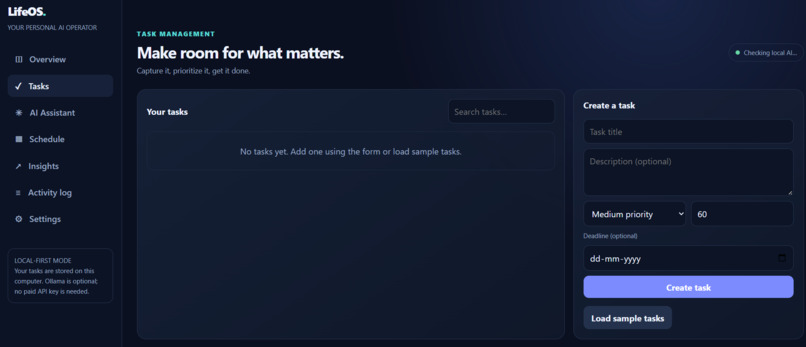
- Task Management: Allows users to create tasks, set priorities, manage deadlines, and track progress.
- Smart Scheduling: Generates a daily plan based on tasks, estimated durations, and available working hours.
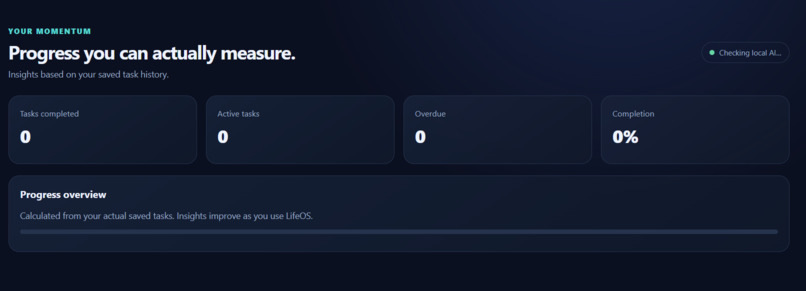
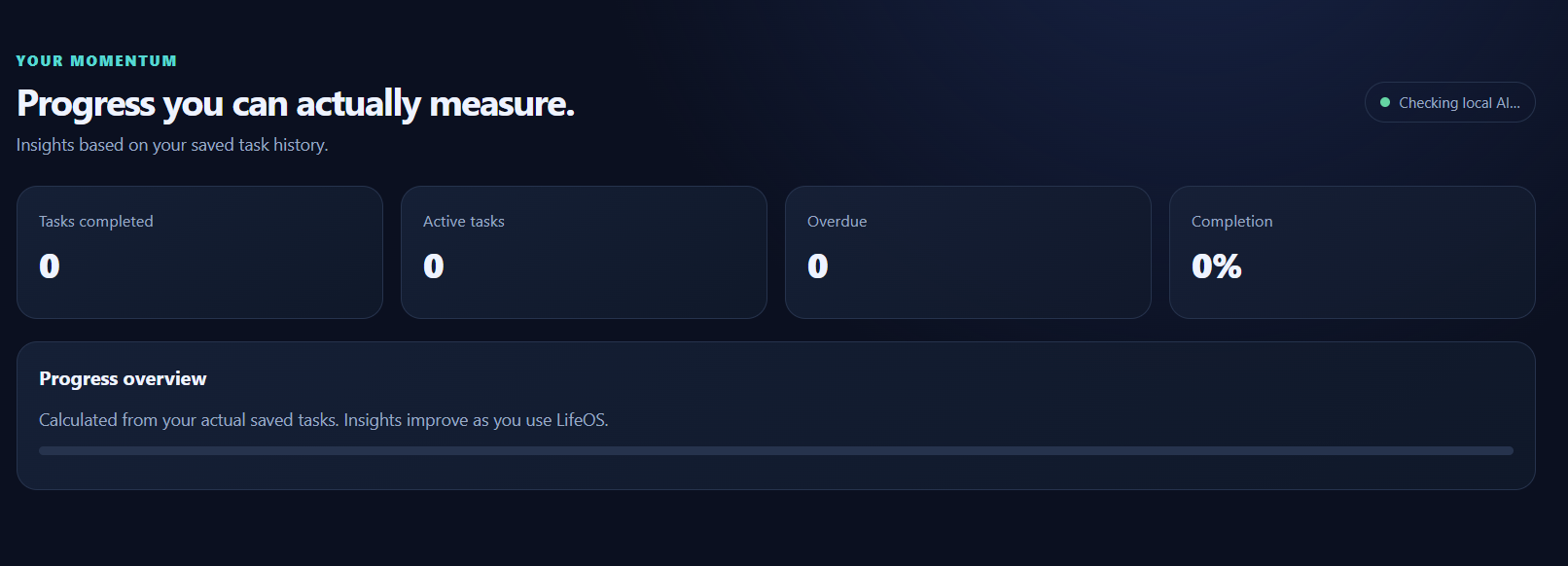
- Productivity Insights: Displays task statistics and progress to help users understand their productivity.
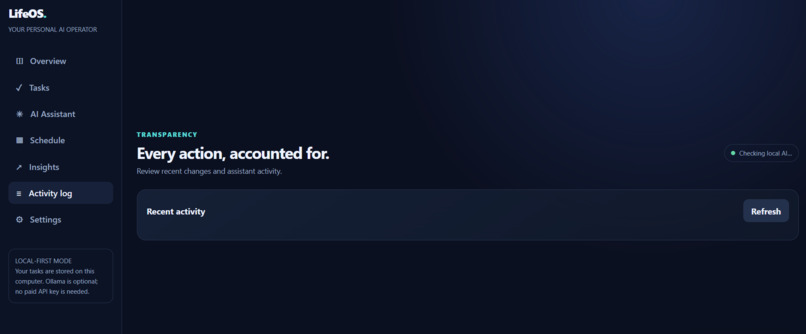
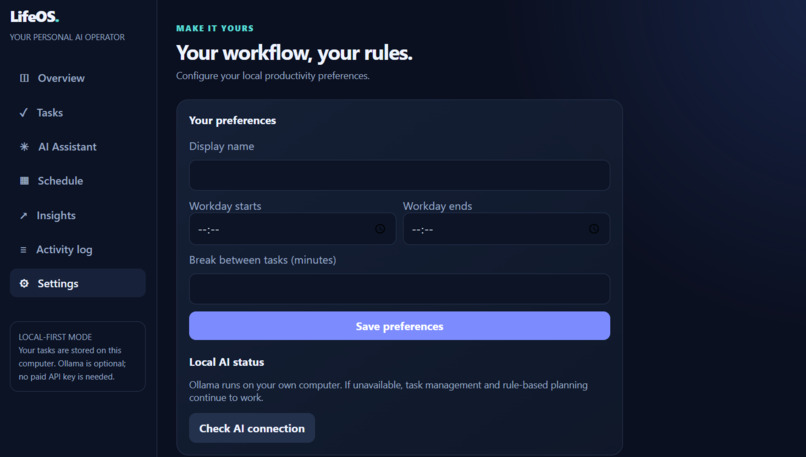
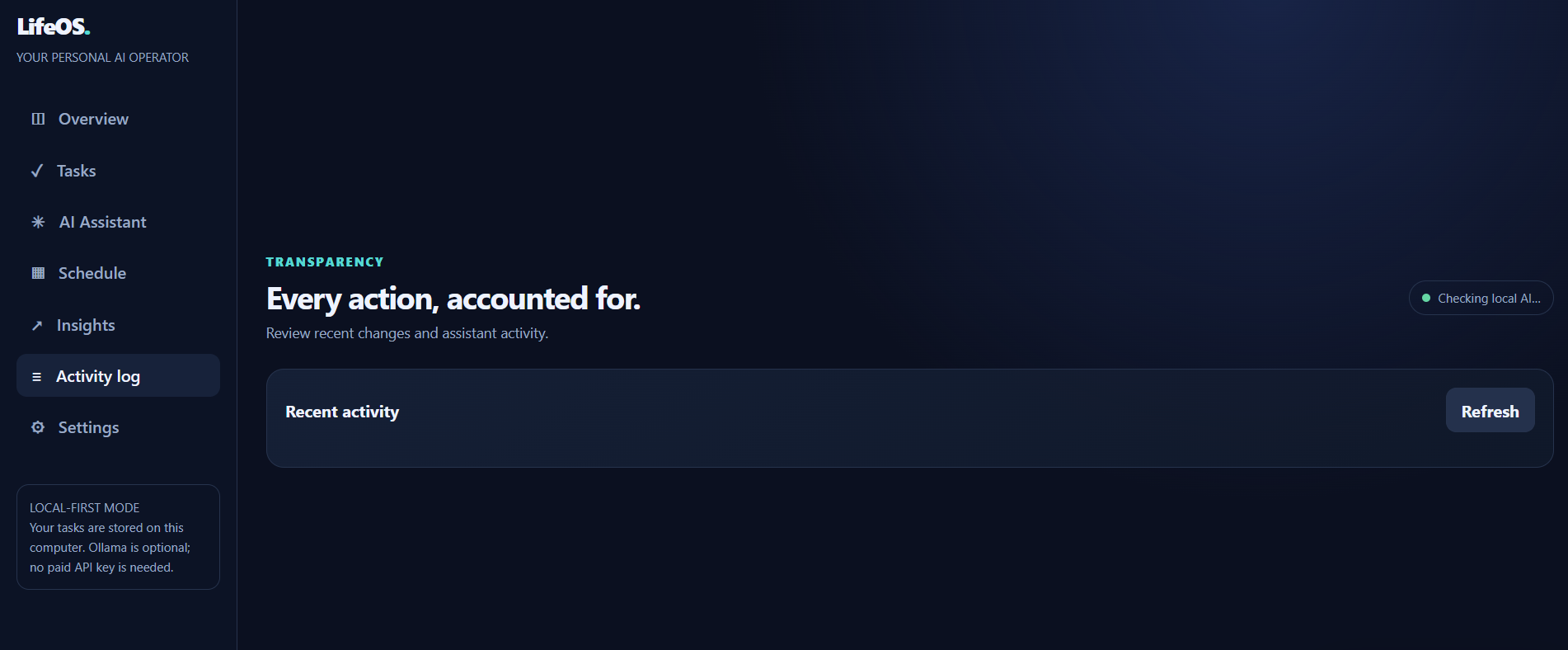
- Memory and Activity History: Stores tasks, settings, and activity records locally so users can review their work.
- Local-First Architecture: Uses a local database to keep information on the user's device and supports an AI model running locally, reducing dependence on paid API services.
Our goal is to help users spend less time organizing their work and more time completing it.
How we built it
We built LifeOS Agent using a simple, modular, and cost-effective technology stack.
- Frontend: HTML, CSS, and JavaScript provide a responsive dashboard for tasks, schedules, insights, settings, and AI assistance.
- Backend: Python with FastAPI handles application logic and communication between the interface and database.
- Database: SQLite stores tasks, user preferences, schedules, and activity history locally.
- AI Integration: Ollama can run a compatible language model locally to provide AI-powered assistance without requiring a paid API key. A basic rule-based fallback keeps essential assistant functionality available when the local AI service is unavailable.
We focused on building a working minimum viable product (MVP) with a clear interface and practical productivity features. The architecture is designed to support additional integrations and smarter automation in future versions.
Challenges we ran into
One of our main challenges was bringing several productivity features together in one application while keeping the interface simple and easy to navigate.
We also needed to balance AI capabilities with our goal of keeping the project accessible without paid API subscriptions. Local AI models can require additional setup and computing resources, so we designed a fallback approach for basic assistance.
Another challenge was designing a useful scheduling workflow. Creating a daily plan requires considering task priorities, estimated durations, deadlines, and available working hours. Our current version establishes the foundation for this process, while more advanced conflict resolution and adaptive scheduling remain opportunities for improvement.
Finally, we had to ensure that tasks and settings remain available between sessions through persistent local storage.
Accomplishments that we're proud of
We are proud to have developed a functional starting point for an AI-powered personal productivity platform that combines several essential features in one place.
Our key accomplishments include:
- Building a unified dashboard for daily planning and task management.
- Implementing task creation, prioritization, deadlines, and progress tracking.
- Creating a daily schedule generation workflow.
- Adding productivity statistics and an activity history.
- Integrating optional local AI assistance through Ollama.
- Using an open-source-friendly, local-first technology stack to minimize running costs.
- Establishing a foundation that can be extended into a more autonomous personal assistant.
Most importantly, LifeOS Agent represents our effort to turn the idea of a personal AI productivity companion into a practical working prototype.
What we learned
Developing LifeOS Agent helped us understand how frontend interfaces, backend APIs, databases, and AI models work together in a complete application.
We learned that building an AI-powered product involves more than connecting a language model. A useful assistant also needs reliable data storage, sensible task workflows, clear user feedback, and safeguards against incorrect or unrealistic recommendations.
We also learned the importance of designing around real user problems, choosing technologies that fit our resources, and developing a manageable MVP before introducing complex automation.
This project strengthened our understanding of full-stack development, local AI integration, application architecture, and iterative product development.
What's next for LifeOS Agent
LifeOS Agent is only the beginning. Our next goal is to evolve it from a productivity dashboard into a more personalized and proactive AI agent.
Our planned improvements include:
- Smarter AI planning: Generate schedules that adapt to deadlines, priorities, workload, and changing plans.
- Calendar integration: Connect supported calendar services to coordinate tasks and meetings.
- Voice interaction: Enable users to add tasks, ask questions, and manage their day using natural speech.
- Proactive reminders: Notify users about upcoming deadlines, unfinished tasks, and schedule conflicts.
- Personalized recommendations: Learn from user preferences and activity to suggest more effective routines.
- Cross-device access: Make personal plans available across devices with appropriate privacy and security controls.
- Expanded integrations: Explore compatibility with voice assistants and other productivity platforms, subject to their APIs and program requirements.
- Stronger privacy and security: Add authentication where needed, secure synchronization, and greater control over personal data.
Our long-term vision is to make LifeOS Agent a dependable personal AI companion that helps people plan better, work smarter, and achieve their goals with less stress.
LifeOS Agent — A smarter you, every day.


Log in or sign up for Devpost to join the conversation.