LifeOps
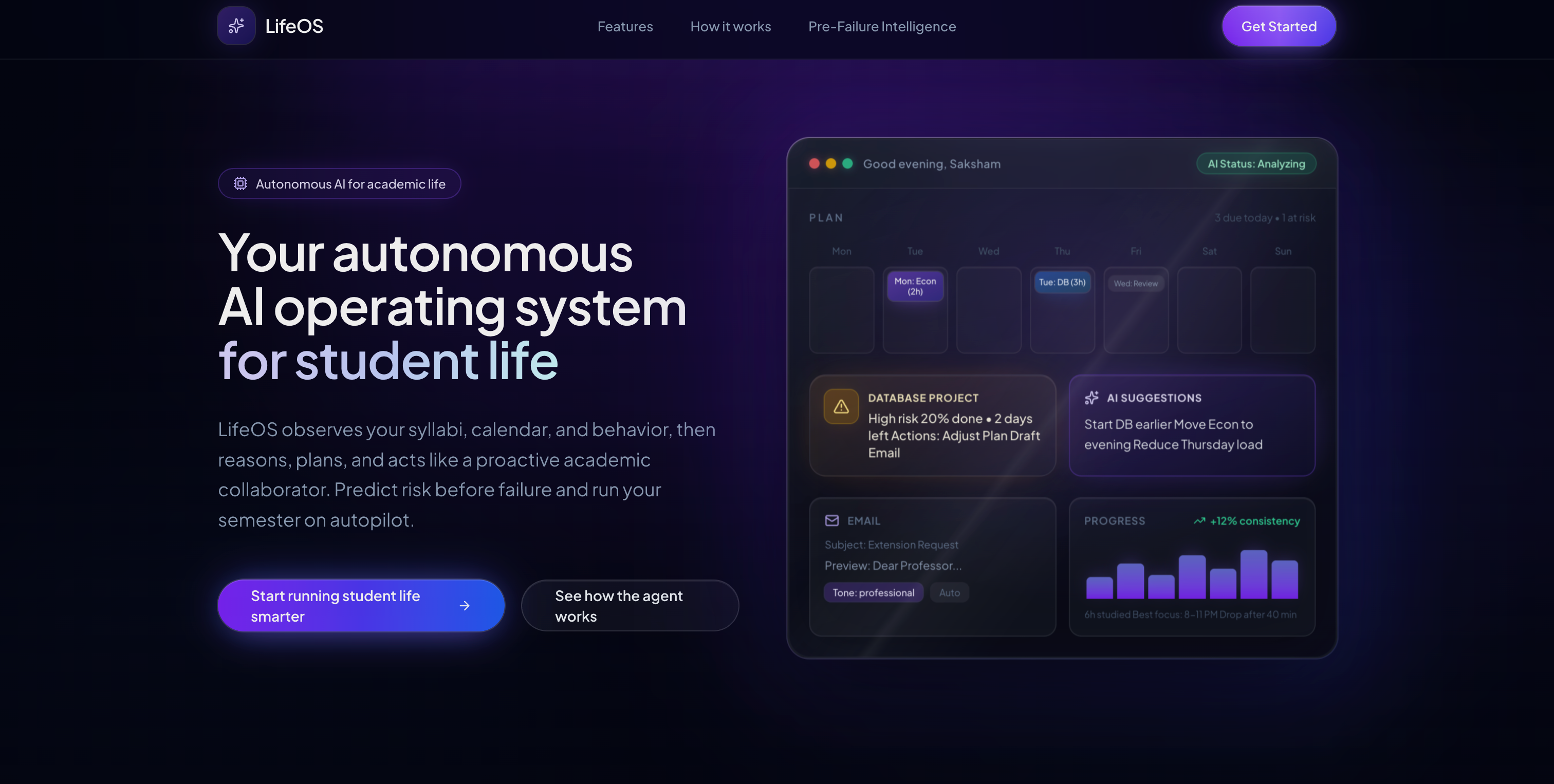
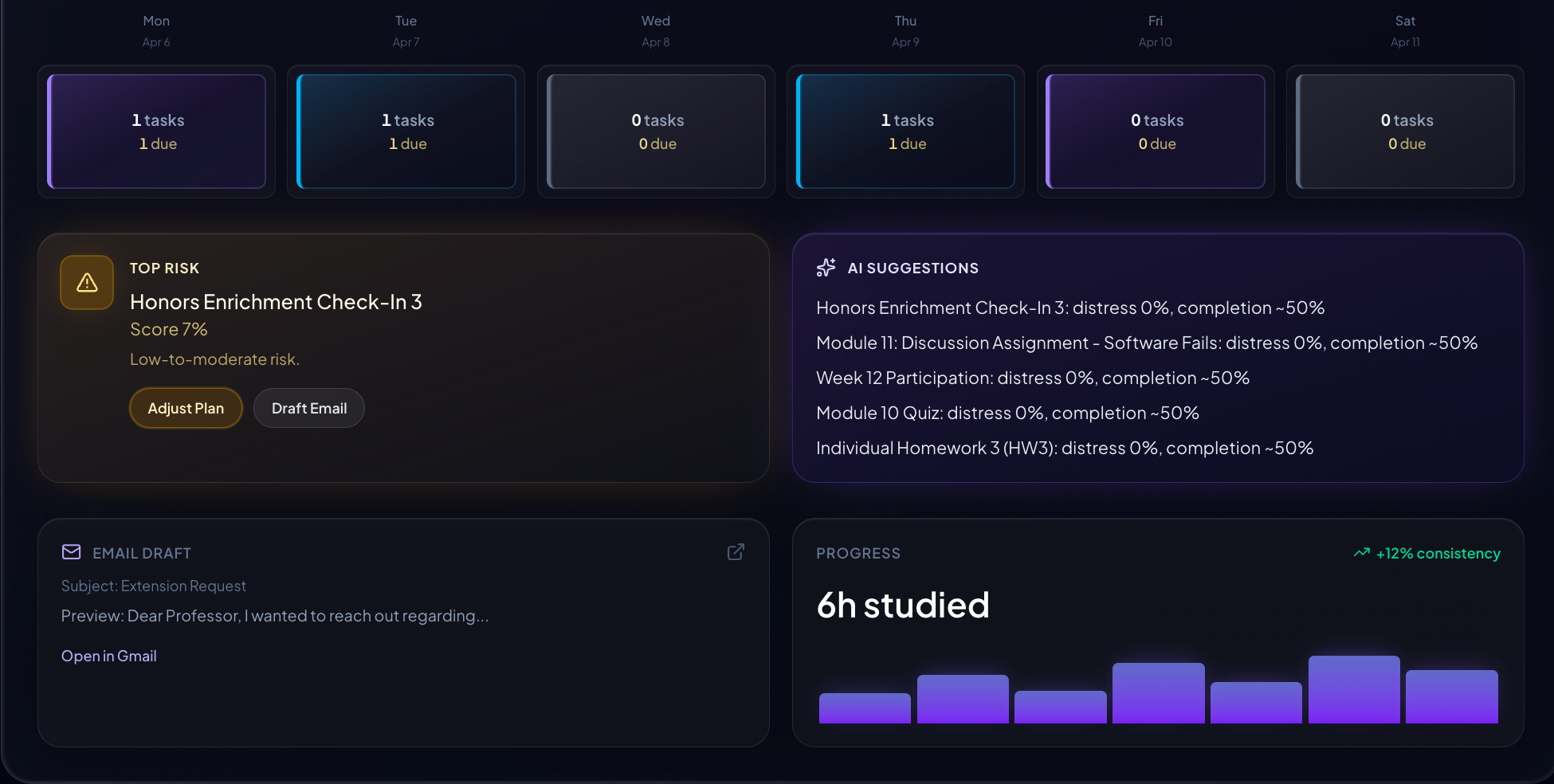
LifeOps is a personalized productivity operating system that helps users structure their day intelligently. Instead of simply listing tasks, LifeOps creates a dynamic, adaptive daily plan that reduces cognitive load and helps users focus on what matters most.
Inspiration
Modern productivity tools require users to constantly decide what to do next. Tasks are scattered across multiple platforms like email, learning portals, calendars, and personal reminders, which creates friction, context switching, and mental fatigue.
We wanted to build something that acts more like a personal operating system for life, not just another to-do list.
The inspiration behind LifeOps was simple:
What if your planner could learn from you, adapt to you, and actually help you move through your day with clarity?
We wanted a system that reduces overwhelm, supports consistency, and improves productivity through structure and intelligent prioritization.
What it does
LifeOps creates a personalized, efficient daily planner that adapts to each user's workflow.
Key Features
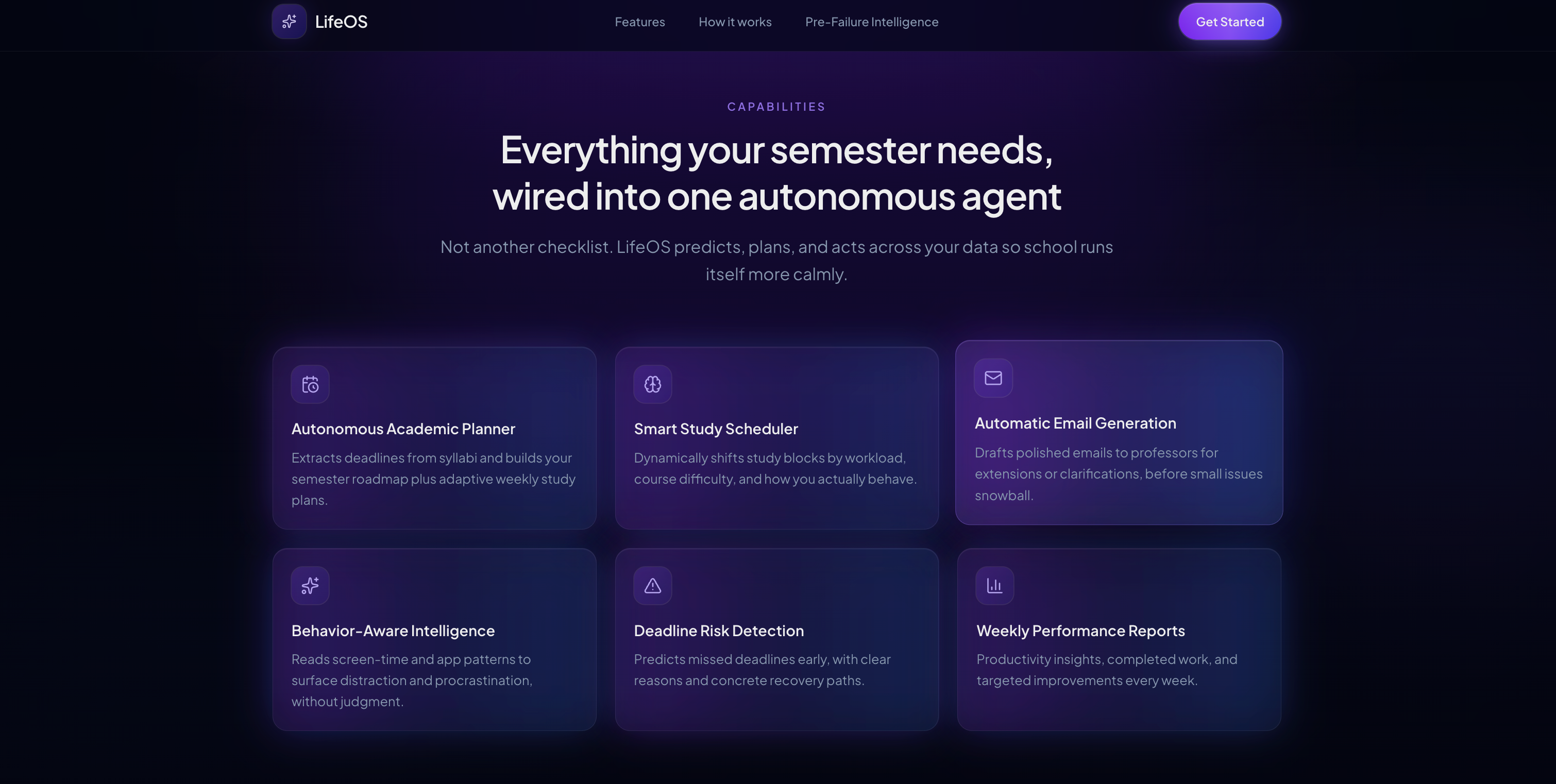
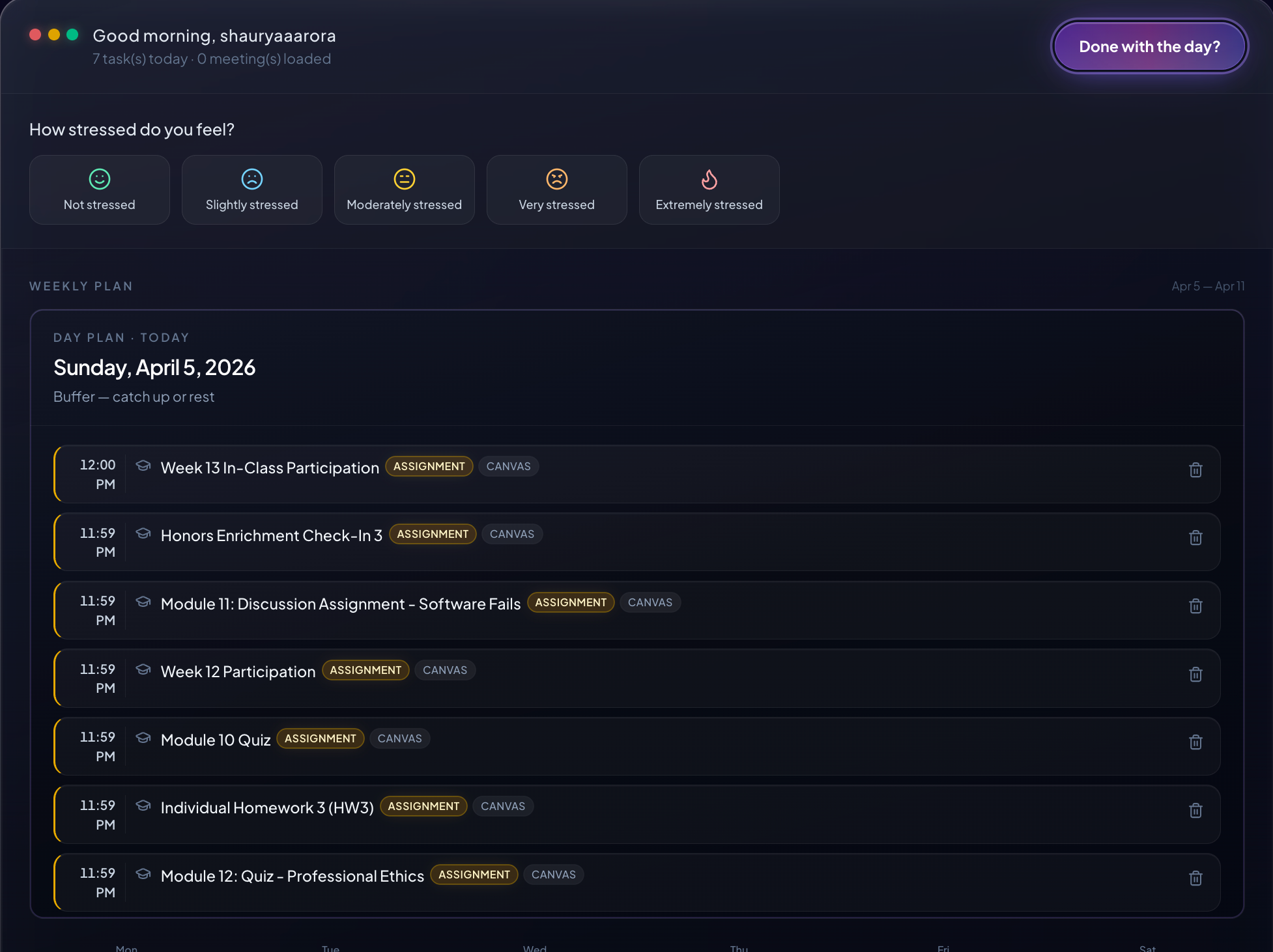
- Aggregates tasks from different sources into one unified workspace
- Generates a structured daily plan instead of a cluttered task list
- Learns from user behavior to improve prioritization over time
- Tracks progress dynamically as tasks are completed
- Provides a clear end-of-day state (Done for the Day)
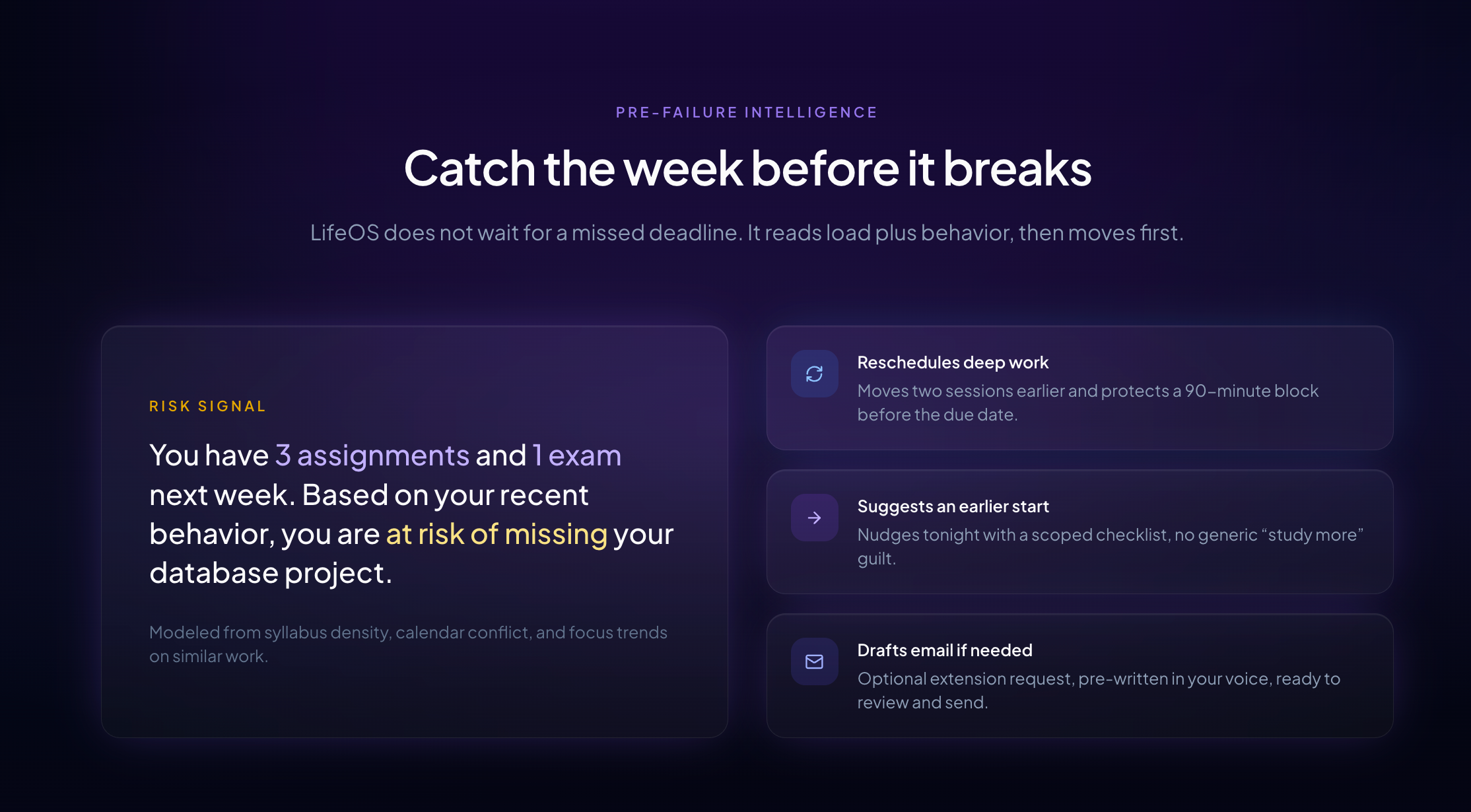
- Reduces decision fatigue by highlighting high-impact tasks
- Creates a productivity system that improves with continued use
LifeOps transforms productivity from reactive task management into intentional daily execution.
How we built it
LifeOps was built using a modular full-stack architecture designed for scalability and integrations.
Core Components
- Backend: Python-based API services for task processing and integrations
- Database: Structured schema for storing users, tasks, and integration metadata
- Integrations: APIs that connect external productivity sources into a unified system
- Scheduler: Background sync processes to keep tasks updated automatically
- Authentication: Secure login and identity handling
- Task Engine: Logic layer that structures and prioritizes tasks for daily planning
We focused on building a flexible architecture that allows LifeOps to evolve into a broader life-management platform.
Challenges we ran into
Designing a system that simplifies productivity without oversimplifying real-life workflows was one of the biggest challenges.
Key Challenges
- Structuring tasks from multiple sources into a consistent format
- Designing prioritization that feels helpful rather than restrictive
- Avoiding overwhelming the user with too much information
- Maintaining flexibility while still providing structured guidance
- Handling integrations reliably across providers
- Creating meaningful daily workflow instead of just another to-do list
- Designing for long-term usability rather than short-term novelty
Balancing simplicity with intelligence required multiple iterations of the workflow design.
Accomplishments that we're proud of
- Built a working prototype that connects tasks into a unified workflow
- Designed a daily planning experience focused on clarity and momentum
- Created a system that encourages completion and daily closure
- Implemented a structure capable of supporting intelligent prioritization
- Developed a foundation for a productivity system that improves with continued use
- Focused on solving cognitive overload instead of just adding features
We are especially proud of creating a product that feels intentional and supportive, not overwhelming.
What we learned
Through building LifeOps, we learned that productivity is not just about efficiency — it is about reducing mental friction.
Key Insights
- People struggle more with prioritization than with task creation
- Fragmented tools increase cognitive load
- Structure improves consistency more than motivation alone
- Simplicity requires careful design decisions
- Personalization increases product value over time
- A sense of completion is essential for sustainable productivity
- Productivity systems should adapt to people, not the other way around
We also gained experience designing systems that balance user psychology with technical functionality.
What's next for LifeOps
LifeOps is just getting started.
Upcoming Improvements
- Expanding integrations across more productivity platforms
- Enhancing learning capabilities for better prioritization
- Smarter daily workload balancing
- Productivity insights and behavioral analytics
- Improved daily workflow visualization
- Collaboration-friendly task features
- Mobile-first experience improvements
- AI-assisted planning recommendations
Long-Term Vision
To build a true operating system for life management, where planning, execution, and reflection work seamlessly together.
LifeOps aims to become the central intelligence layer that helps people navigate their daily responsibilities with clarity and confidence.

Log in or sign up for Devpost to join the conversation.