Inspiration
We created LifeOps: AI-Powered Goal Planning and Execution Platform to address a common challenge: people know what they want to achieve, but often struggle to convert their goals into actionable plans and consistent daily progress.
We wanted to build a platform that bridges the gap between setting goals and actually achieving them. By combining AI-powered planning, task management, and progress tracking, LifeOps helps users turn their ambitions into structured, manageable actions.
What it does
LifeOps is an AI-powered productivity platform that helps users plan, organize, and execute their personal and professional goals.
Key features include:
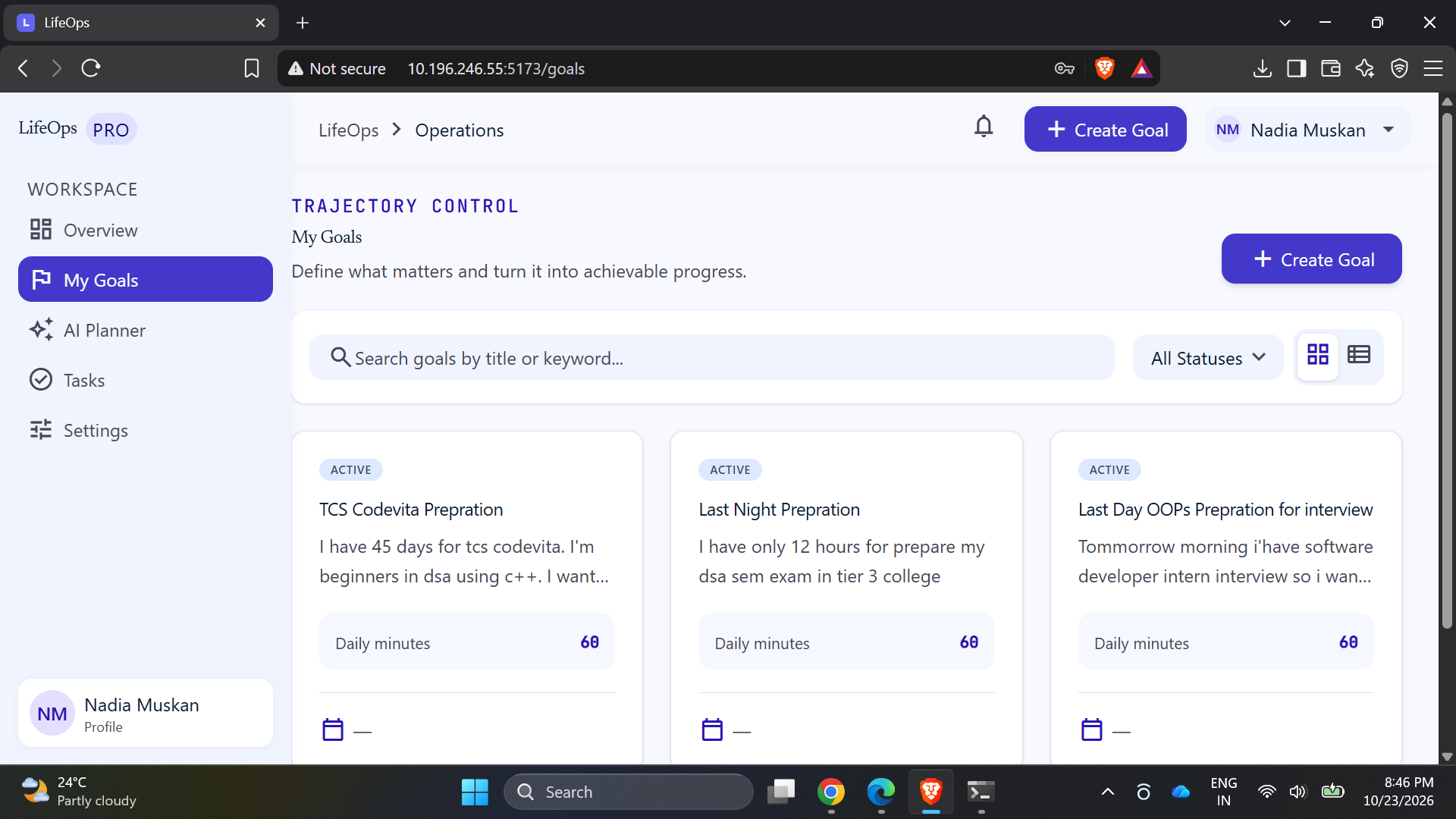
- Goal Management: Create and manage goals in one centralized workspace.
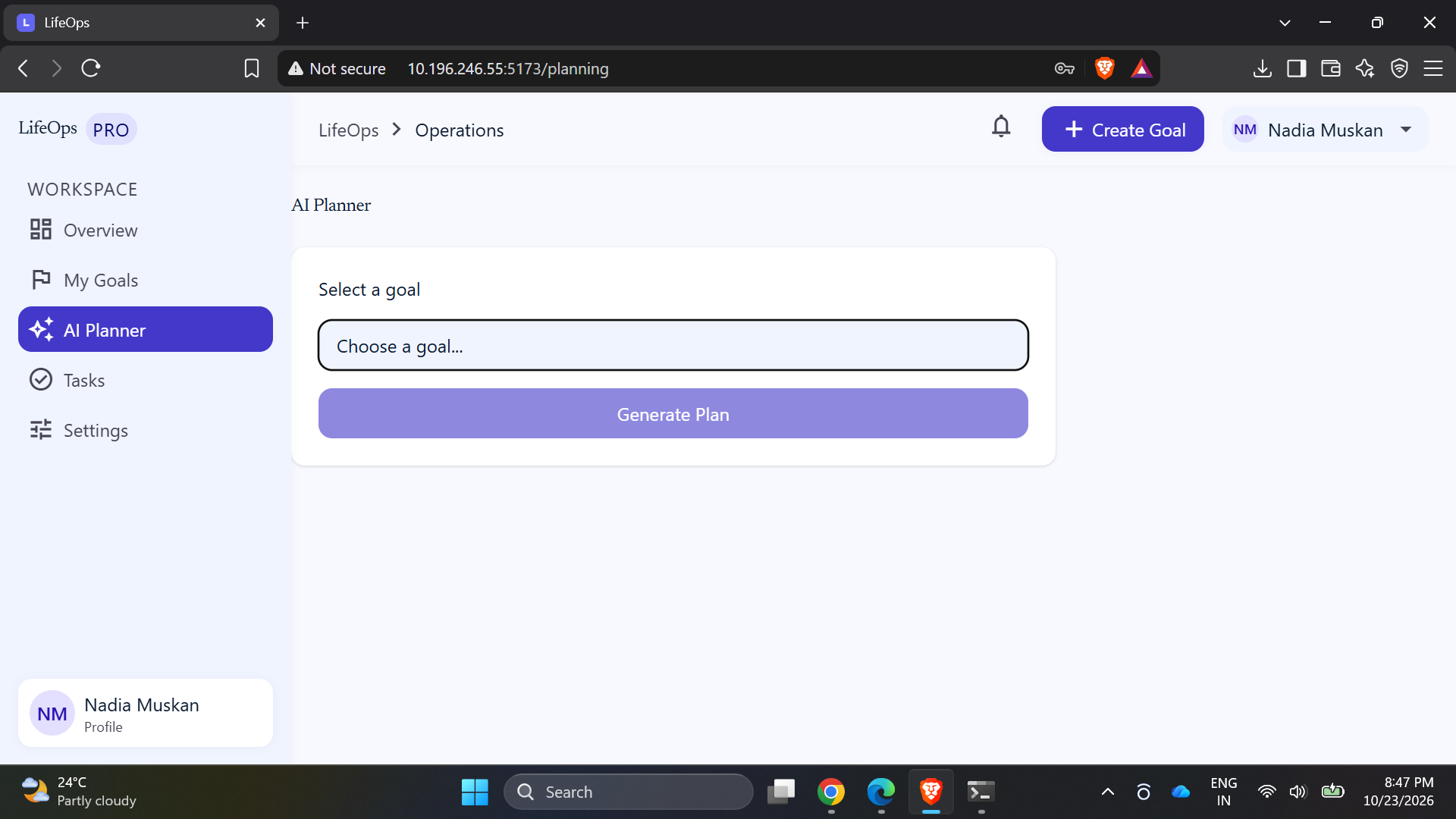
- AI-Powered Planning: Generate structured plans from goals using AI.
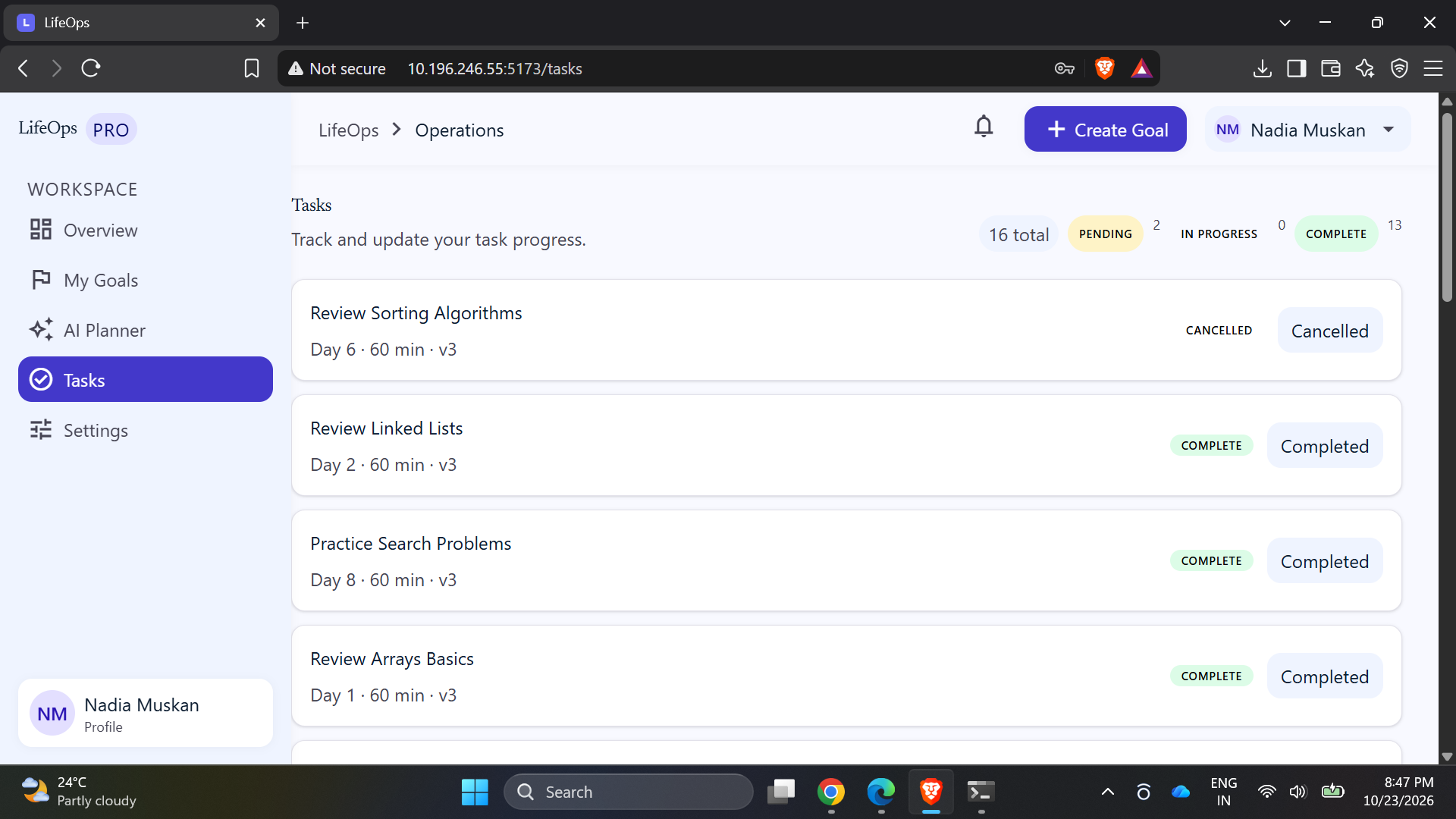
- Task Management: Break plans into manageable tasks and track their status.
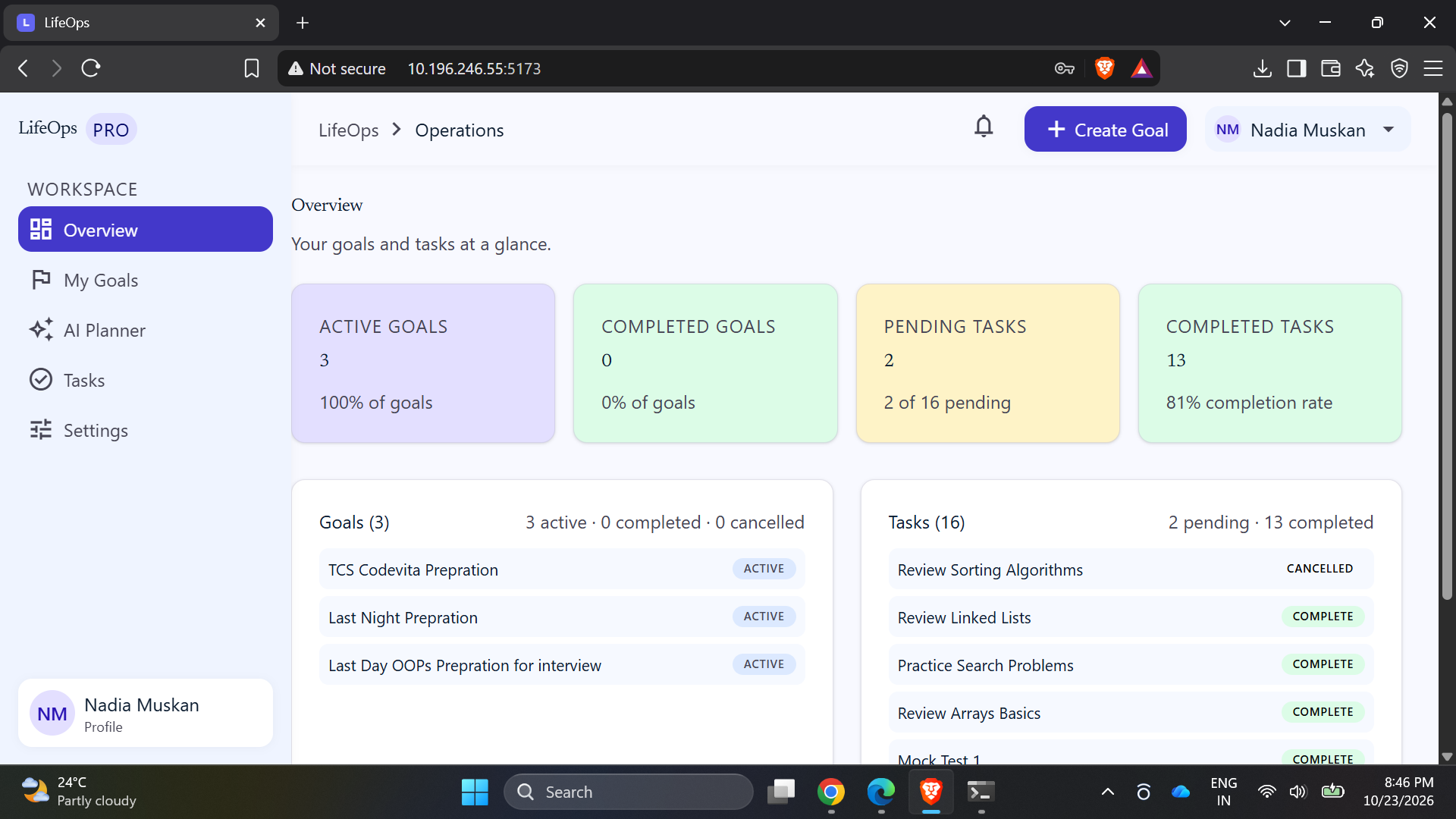
- Progress Monitoring: View goal statistics, task completion, and progress through a unified dashboard.
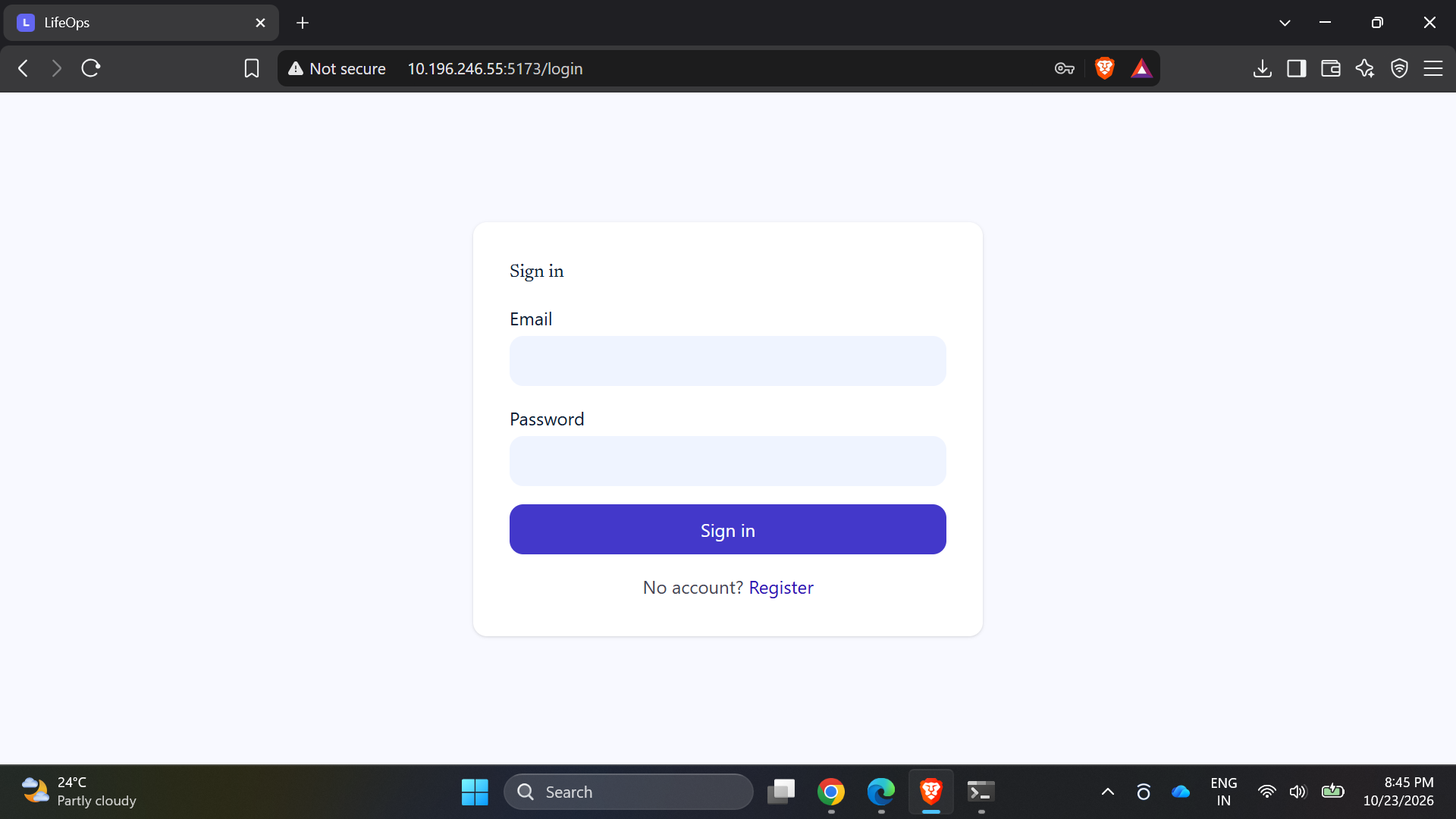
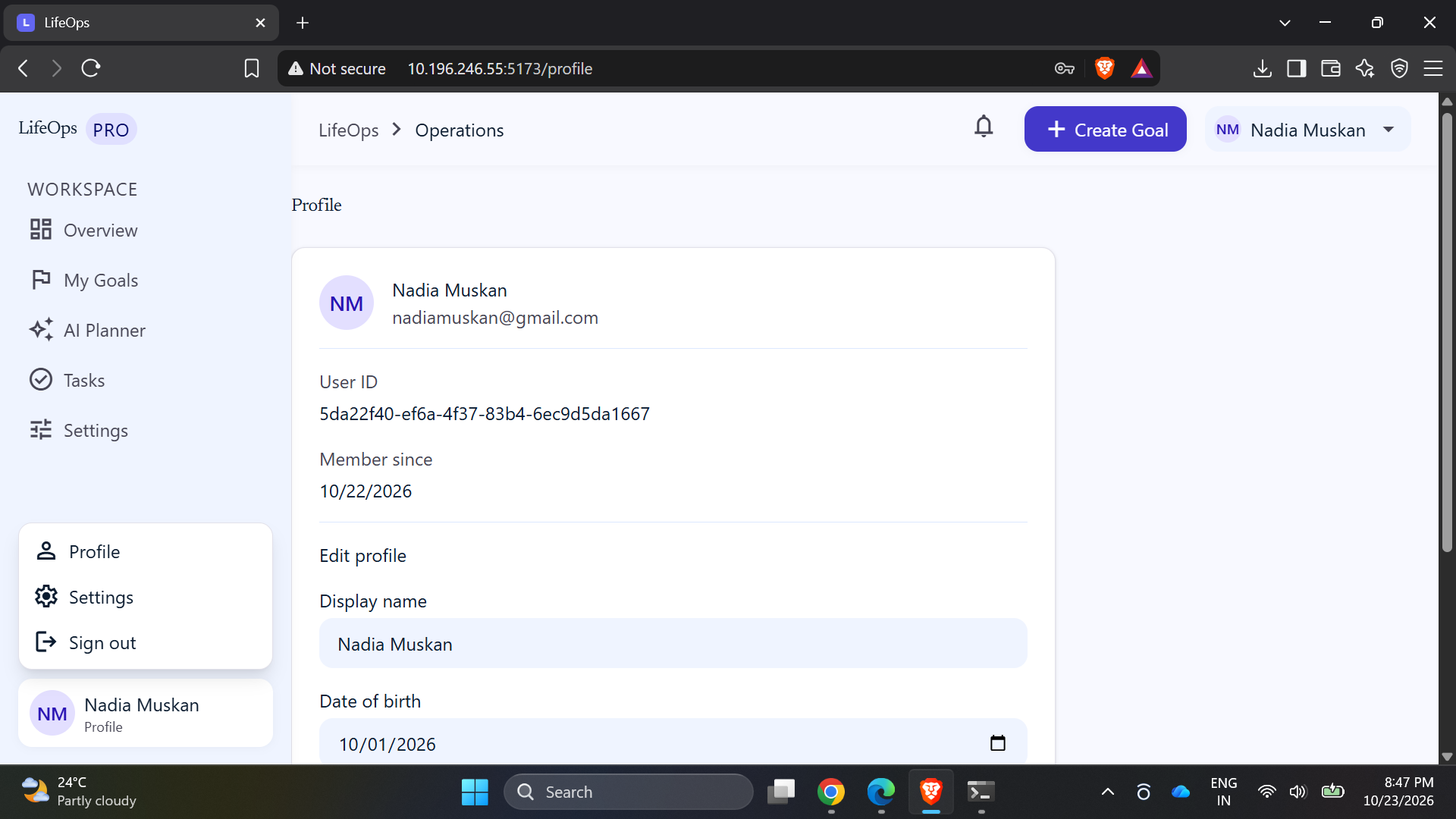
- Secure Authentication: Provide users with authenticated access to their personal workspace.
- MCP Integration: Expose selected goal and planning capabilities to compatible AI clients through the Model Context Protocol (MCP), enabling natural-language interactions with LifeOps.
LifeOps aims to make productivity more organized, actionable, and accessible.
How we built it
We built LifeOps using a modular full-stack architecture designed to keep the application maintainable and extensible.
- Frontend: React and Vite for a responsive, interactive user interface.
- Backend: FastAPI for REST API development and application logic.
- Database: PostgreSQL for persistent data storage.
- ORM and Migrations: SQLAlchemy and Alembic for database modeling and schema management.
- AI Integration: An AI provider adapter for generating structured goal plans.
- MCP Server: An MCP integration that exposes selected goal and planning operations as tools for compatible AI clients.
- Authentication: Token-based authentication to protect user-specific resources.
We organized the backend into separate responsibilities for API routes, business logic, data access, and domain models. This modular approach helps us maintain a clear separation of concerns while making future enhancements easier.
Challenges we ran into
One of our biggest challenges was connecting AI-generated plans with real application workflows. AI output needs to be structured, validated, and usable by the application rather than simply displayed as text.
We also worked through challenges involving:
- Integrating the React frontend with FastAPI endpoints.
- Implementing authentication and protecting user-specific data.
- Maintaining consistency between database models and migrations.
- Handling task status transitions and plan approval rules.
- Managing AI provider responses and converting them into structured plans.
- Designing MCP tools that allow compatible AI clients to interact with LifeOps capabilities.
These challenges reinforced the importance of reliable APIs, data validation, clear architecture, and predictable application behavior.
Accomplishments that we're proud of
We are proud to have built a unified platform that brings goal setting, AI-assisted planning, task execution, and progress monitoring into one application.
Our key accomplishments include:
- Building a full-stack productivity platform with a dedicated frontend and backend.
- Connecting goals and tasks to persistent database records.
- Implementing AI-assisted plan generation.
- Creating a dashboard that summarizes goal and task progress.
- Developing an MCP server that exposes selected application capabilities to compatible AI clients.
- Designing the backend with modularity and future extensibility in mind.
Most importantly, LifeOps is designed around the complete goal-execution workflow—not just task lists or AI-generated suggestions.
What we learned
Building LifeOps helped us understand how to combine AI capabilities with conventional software engineering to create a practical product.
We strengthened our knowledge of full-stack development, REST API design, database management, authentication, schema migrations, and modular backend architecture.
We also learned that AI integration involves more than connecting a model to an application. Reliable results require structured outputs, validation, error handling, and integration with real business workflows.
Working with MCP introduced us to a way of exposing application functionality as tools that compatible AI clients can discover and use. This helped us think about productivity beyond a traditional graphical interface.
What's next for LifeOps: AI-Powered Goal Planning and Execution Platform
Our next goal is to make LifeOps a more intelligent and accessible productivity companion.
We plan to explore:
- More personalized AI-generated plans based on user goals and progress.
- Smarter progress insights and recommendations.
- Improved plan adaptation when priorities or circumstances change.
- Enhanced task prioritization and deadline management.
- Deeper MCP integration with compatible AI assistants, including the Alexa+ ecosystem.
- Better conversational workflows for creating goals, retrieving plans, and managing tasks.
Our long-term vision is to make goal execution feel less overwhelming by helping people move naturally from intention to planning, from planning to action, and from action to achievement.
Built With
- fastapi
- groq
- javascript
- llm
- mcp
- npm
- postgresql
- python
- react
- sqlalchemy
- tailwind
- uvicorn
- vite


Log in or sign up for Devpost to join the conversation.