




Inspiration
As students at Georgia State University, we were constantly surrounded by homelessness and individuals in need. It was heartbreaking to see so many people struggle with access to basic necessities and support. Thus, we were determined to find a solution to this pressing issue and that's when the idea for LifeNet was born. Our goal was to provide a platform where the community could come together and address homelessness, by offering access to resources through public kiosks and a donor website. With LifeNet, individuals can earn LifePoints and receive support via the Kiosk Chatbot, all while making a positive impact on the community. We're inspired to see the potential for change and are proud to be a part of such a meaningful and impactful initiative.
What it does
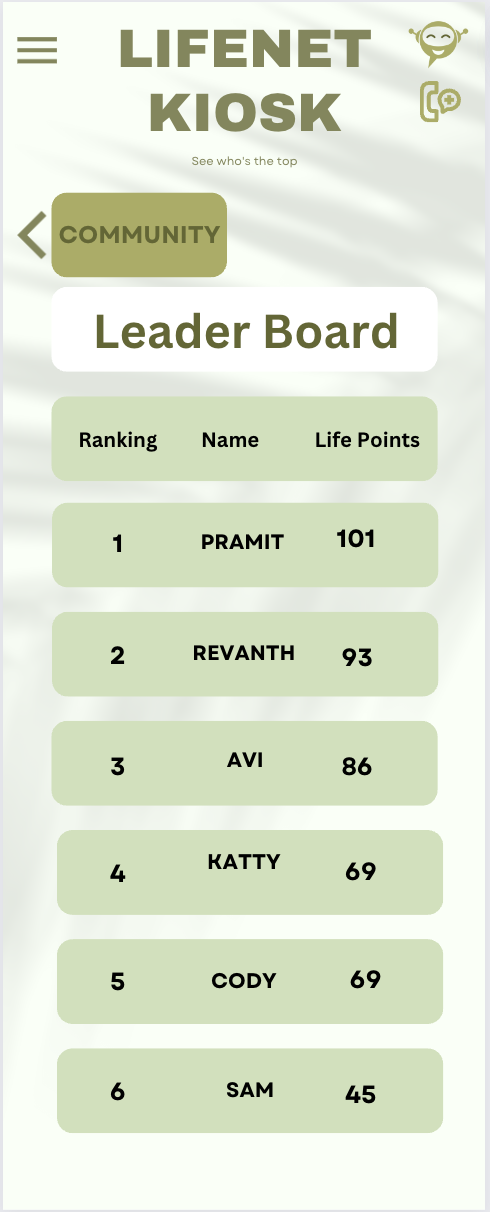
LifeNet is more than just a software solution, it's a way to make a positive impact on the world. LifeNet is a software platform that helps communities address homelessness through the use of public kiosks and a donor website. The kiosks provide access to information about available resources such as food donations, job boards, and emergency services, while the donor website allows individuals to register and post information about the services they are offering. The platform also includes a community leaderboard to encourage participation and a GPT-powered chatbot to provide support and resources to homeless individuals. By using LifeNet, communities can come together to support those in need and make a positive impact on the lives of homeless individuals.
How we built it
Although LifeNet Kiosks are still in the ideation phase, we have effectively built the donation portals that would allow donors to publish events and let people in need find resources to help them. We created a full-stack web development project with technologies such as ReactJS, NodeJS, Express JS, MongoDB, Open-AI GPT, Python, Flask, etc. Our proprietary idea allows for economically viable Kiosks to be used to help not only consumers but companies as well.
LifeNet was built with the aim of addressing the challenges faced by communities, particularly homelessness. We realized that homeless individuals face many challenges such as lack of access to basic necessities, healthcare, and exposure to crime. To tackle this issue, we built software that uses public kiosks placed in vulnerable areas such as MARTA stations, bus stands, airports, and university points.
Users can create accounts on the website and post information about services offered, which can be accessed by those in need through the kiosks. We also have a reward system where users can earn "LifePoints" for successfully providing resources to the homeless. The software includes a community leaderboard to encourage participation and collaborations with MARTA and State Farm to increase reach and impact.
Additionally, the kiosks also have a chatbot feature that allows users to access a community helpline and get support for issues such as depression and mental health. Our goal is to provide homeless individuals with improved access to resources and support to help them get back on their feet.
Challenges we ran into
We ran into several challenges. Creating such a well-thought-out project when some members of our group are attending their first hackathon, required 2 sleepless nights and tirelessly working around the clock. We faced several issues getting the proper DB Schema to work and not causing errors, getting Open-AI to properly work with the react-chatbot package, and setting up email JS to work properly.
Accomplishments that we're proud of
Considering that this was the first hackathon for some of the members of our group, we feel that we have created a thorough, well-thought-out project that can practically be implemented in the real world. It has a multitude of advantages both for consumers and companies, and we are very excited about the degree to which it will be able to help out those in need.
What we learned
While building LifeNet, we learned the importance of addressing the issue of homelessness and the positive impact it can have on the community. We realized the need for a centralized platform to provide access to resources for those in need. The challenges we faced in implementing the technology taught us the importance of effective partnerships, user involvement, and community engagement. Overall, building LifeNet has been a rewarding experience that has allowed us to make a difference in people's lives and bring communities together.
What's next for LifeNet Kiosk
As the creators of LifeNet, our vision for the future is to continue improving and expanding the impact of our platform. This includes partnering with more organizations, expanding our kiosk network to more vulnerable areas, and adding new features to our website and chatbot to better support the needs of the homeless community. Our goal is to provide individuals experiencing homelessness with access to the resources and support they need to rebuild their lives. We want to bring our vision for LifeNet to fruition with the support of sponsors and make a lasting, positive impact on communities in need around the world.


Log in or sign up for Devpost to join the conversation.