Life Log: Project Story
Personal Knowledge Management Track
Inspiration
Life Log was inspired by the need for deeper self-reflection in our daily lives. We realized that while many people track their habits or moods, few have tools that help them interpret that information in a meaningful way. Questions like “Am I too stressed?” or “Did I exercise enough this week?” often go unanswered. We wanted to create a tool that not only stores data but helps users talk to it—just like a friend or coach would.
What it does
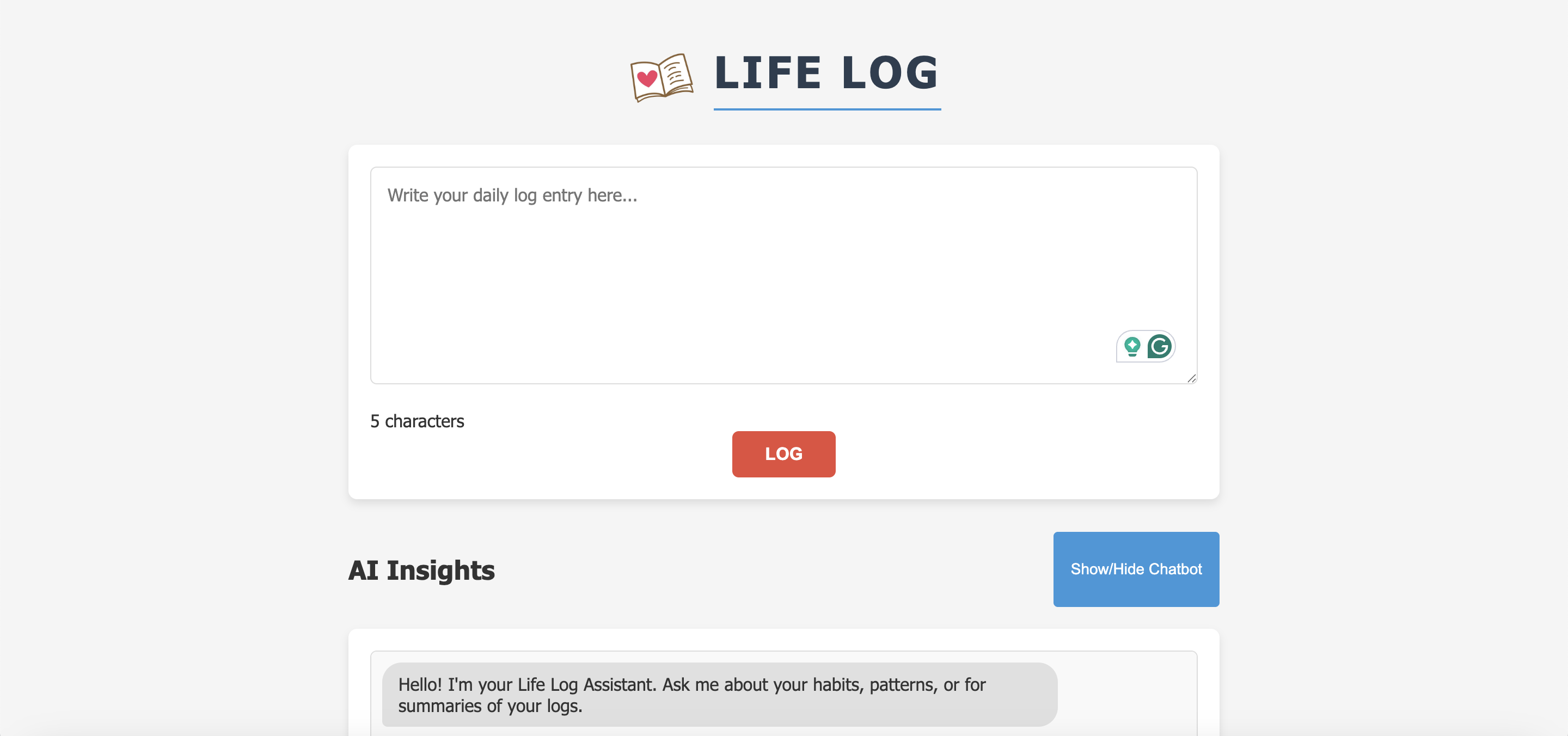
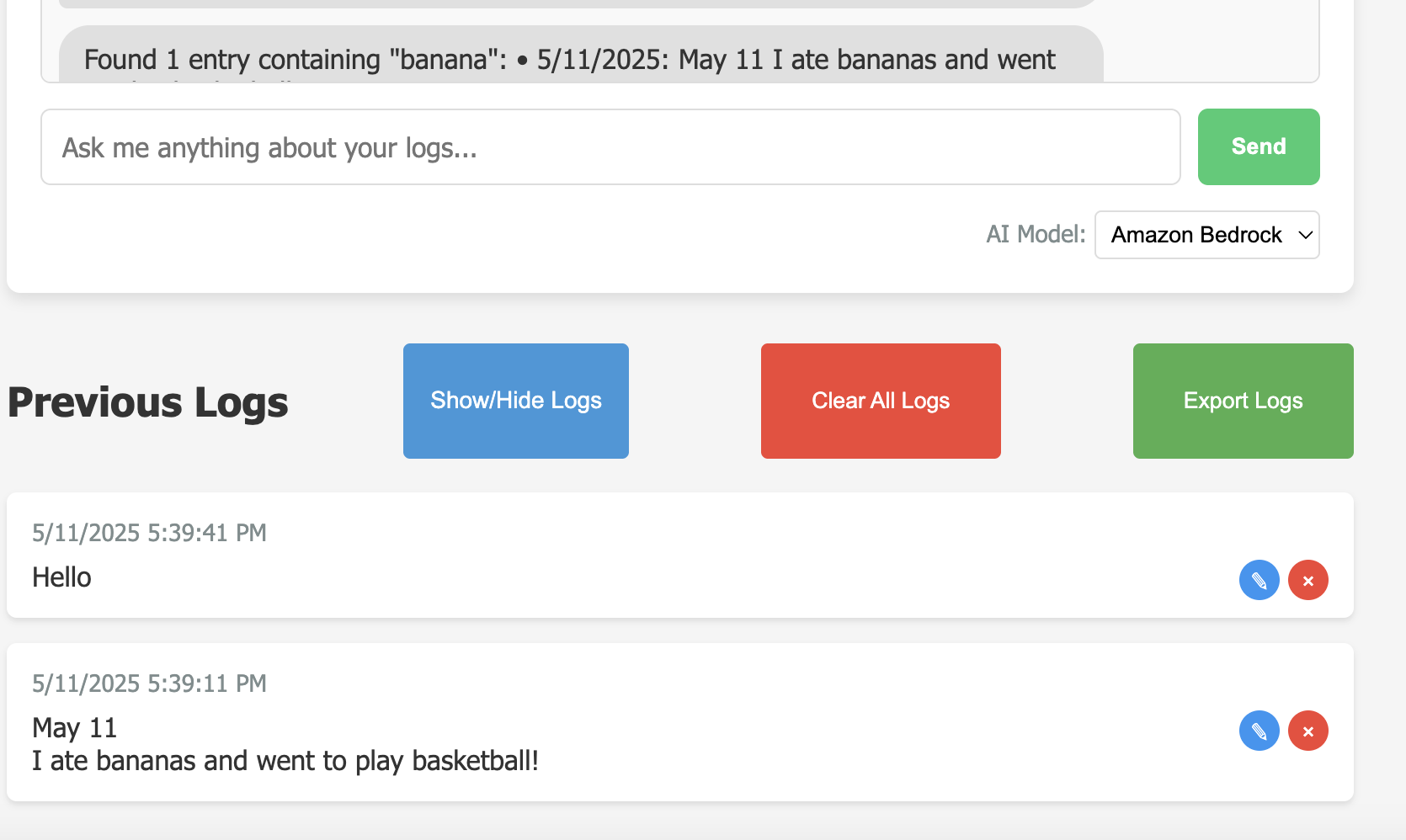
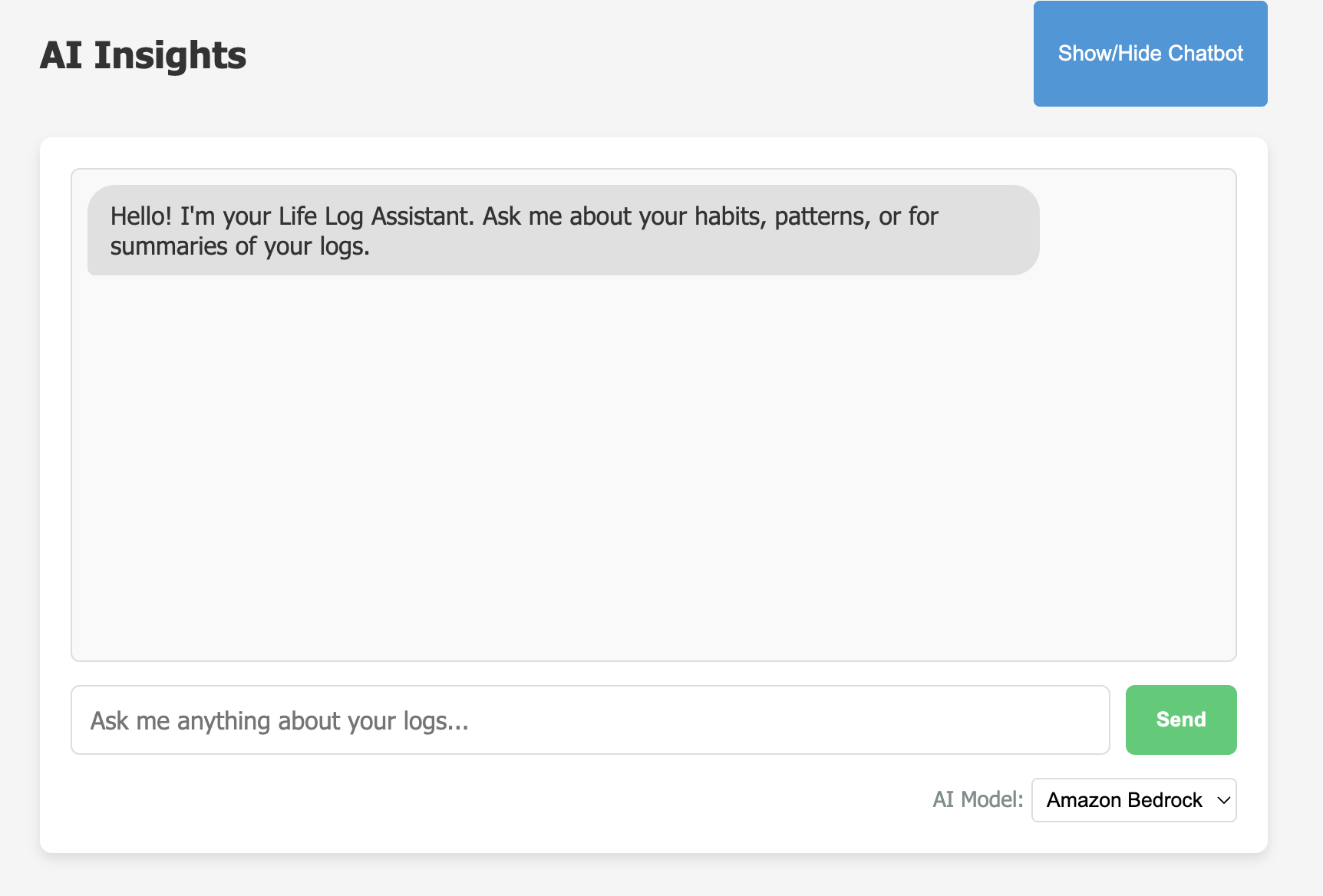
Life Log is a personal journaling website that allows users to log their daily activities, emotions, and habits. It features an AI-powered chatbot that can respond to questions based on a user’s past entries. By combining structured data logging with conversational insights, Life Log helps users identify trends in their behavior—whether it's stress levels, gym consistency, or productivity over time.
How we built it
We built Life Log as a full-stack web application using HTML, CSS, and JavaScript for the frontend, with a backend powered by AWS Bedrock and AWS Lambda. We integrated Anthropic's Claude 3.7 to power the chatbot, crafting prompts that allow it to analyze and respond to user data in a conversational format. User data is stored securely on the browser.
Challenges we ran into
One of the biggest challenges was getting the AI chatbot to connect to AWS Bedrock through the AWS API Gateway and AWS Lambda. We faced multiple errors and places where problems could arise from CORS, IAM permissions, to Python coding errors. Eventually, we were able to implement a fallback such that it runs three different AI models even if the first one fails, and also allows for a search feature.
Accomplishments that we're proud of
We're proud of how seamlessly the AI chatbot integrates with user data to create a reflective experience. Building a system that feels both personal and intelligent was a major technical and design achievement. We're also proud of the simplicity and usability of the daily logging interface, which makes it easy for users to stick with the habit.
What we learned
We learned how to combine AI and user-generated data to create personalized, conversational experiences. We gained valuable experience with prompt engineering, full-stack development, and data visualization. Perhaps most importantly, we learned that tools for self-reflection must be intuitive, respectful of privacy, and engaging to truly be useful.
What's next for LifeLog
Our next steps include launching a mobile version of Life Log, adding support for natural language logging (e.g., "I felt anxious this morning"), and integrating reminders to encourage consistency. We also plan to expand the chatbot's capabilities so it can provide more nuanced mental health insights, always with a focus on user privacy and data ownership.

Log in or sign up for Devpost to join the conversation.