-
-
App icon
-
Over-view
-
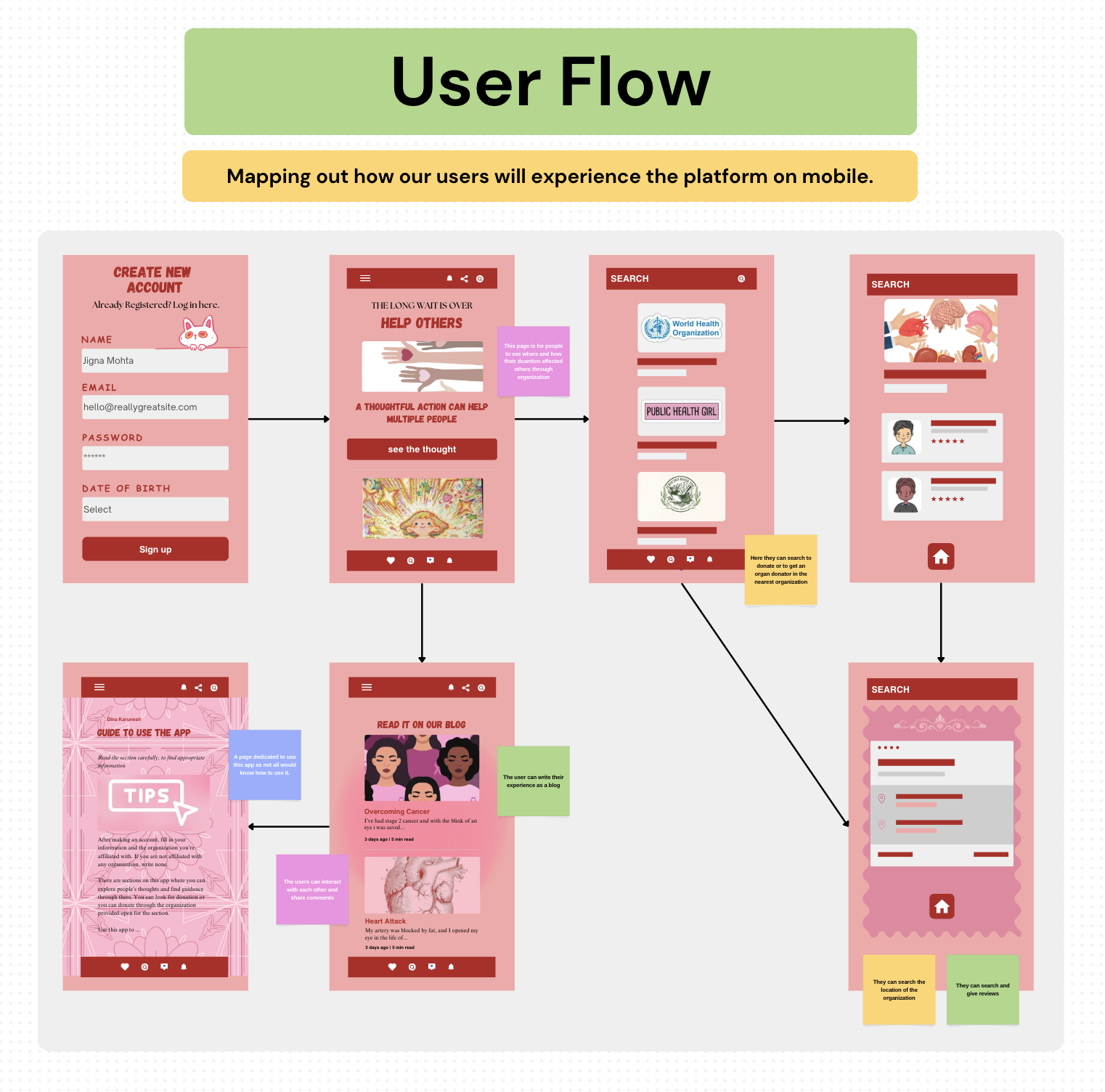
User Flow
-
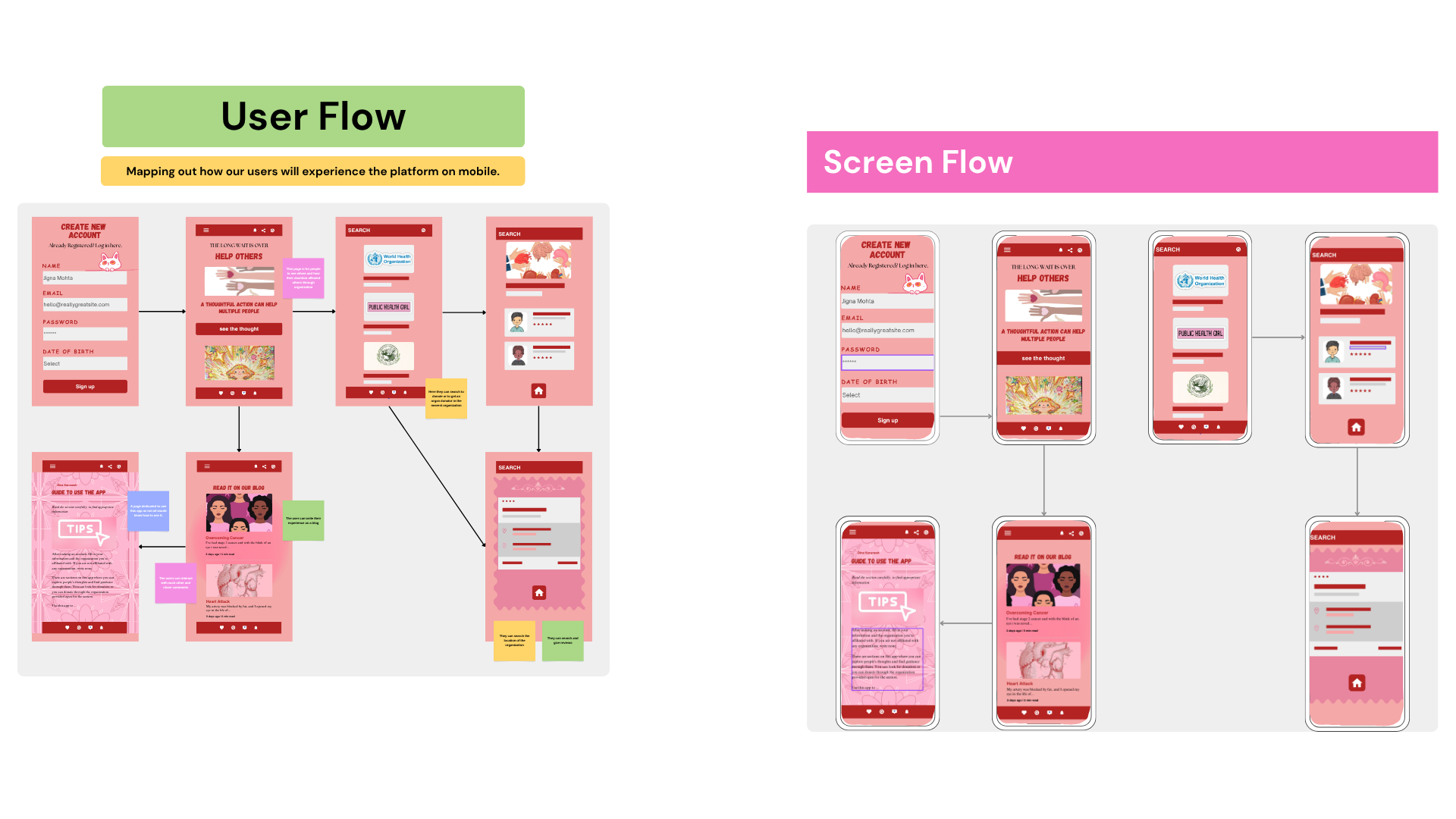
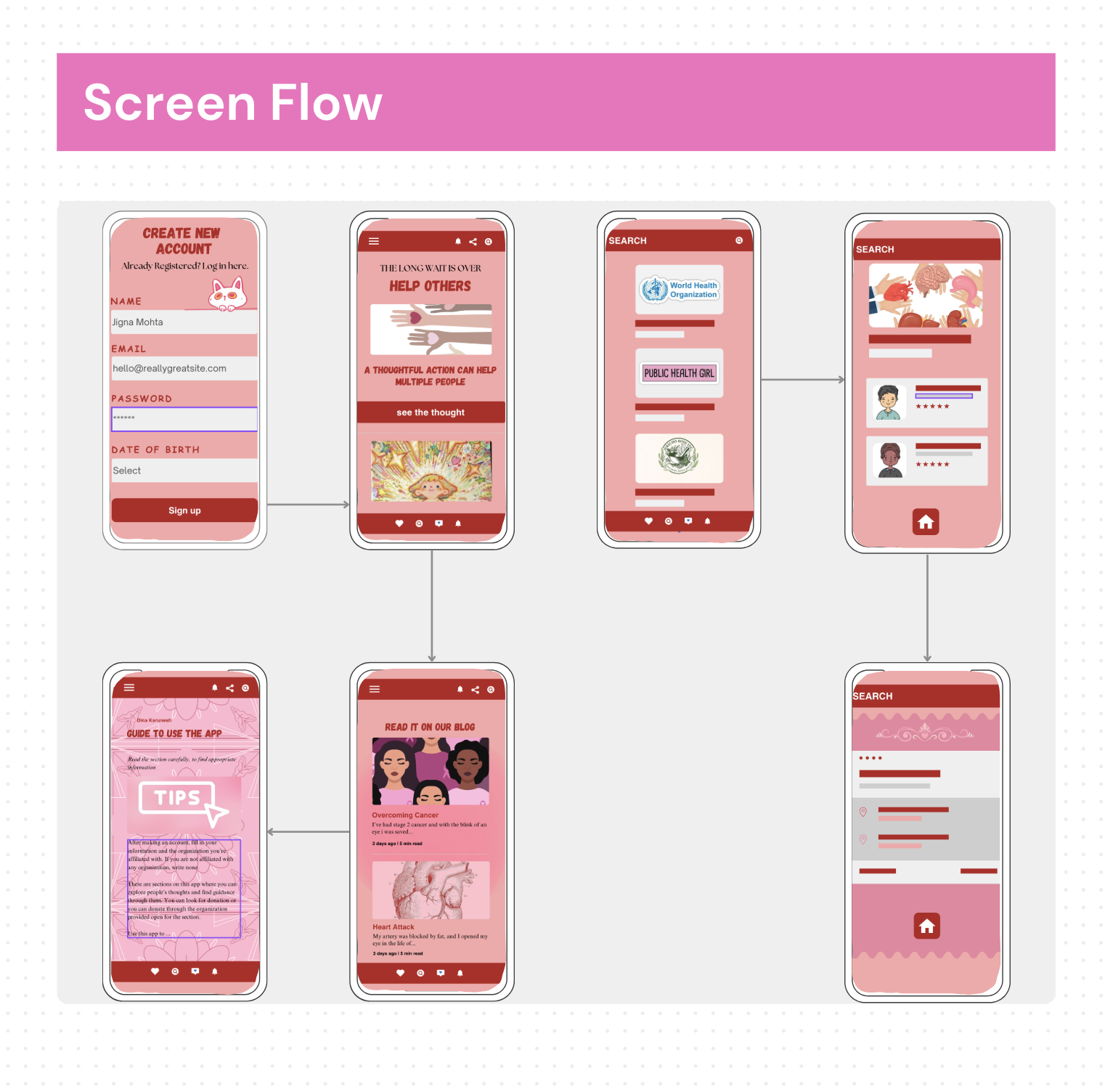
Screen Flow
Inspiration
In Nepal, organ donation is still surrounded by silence, hesitation, and difficult conversations. Members of organizations like hospitals often approach grieving families in cremation areas to ask for organ donation, which can feel uncomfortable and emotionally overwhelming for everyone involved. Even though awareness campaigns exist, there is still a gap in communication and accessibility. This inspired LifeLink, which is a compassionate process where people can contact without pressure and share their stories as well.
What it does
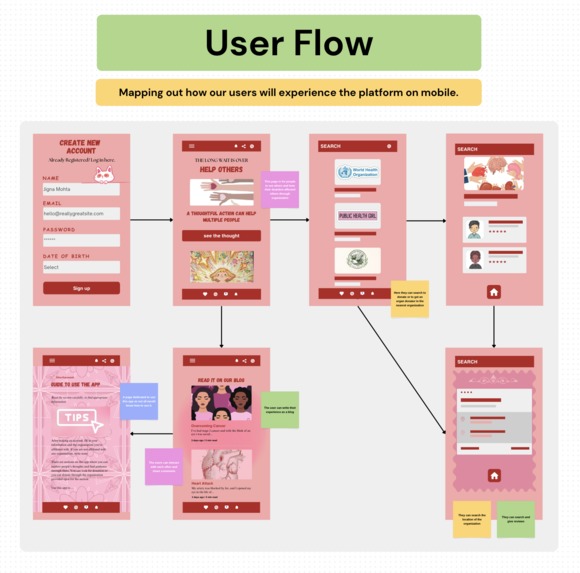
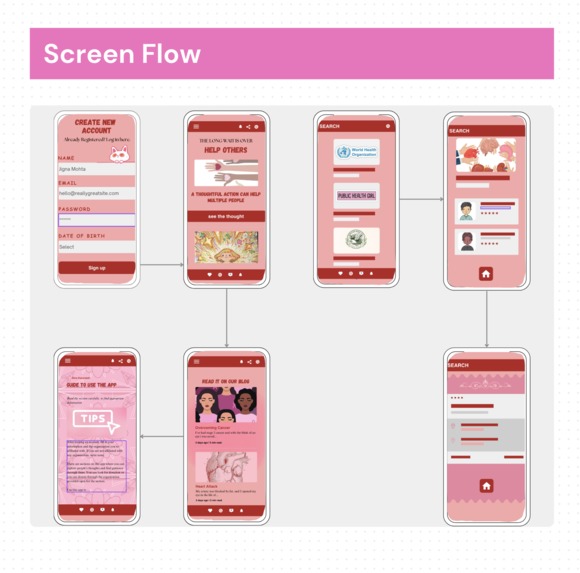
LifeLink is an app designed to connect donors, recipients, and trusted organizations in one safe digital space. It allows people to register as donors, request organs, and communicate through verified channels. The app also includes a blog section where users can share personal experiences, spreading awareness and breaking the stigma around organ donation. By making everything accessible in one place, LifeLink turns a sensitive, often awkward process into something more respectful, informed, and human.
How we built it
I designed LifeLink with Canva, ibispaint, and brainstorming through ChatGPT. The interface is clean and easy to navigate, ensuring that users of all ages can understand it. I focused on creating features like donor registration, log-in, and storytelling blog to make the experience both functional and emotional. The design prioritizes clarity and comfort, avoiding anything that might feel overwhelming during such an important decision. If the app is hard for the user to navigate, there is a page for that as well.
Challenges we ran into
One of the biggest challenges was addressing the sensitivity of organ donation. It was important to design something that does not feel transactional or cold. Another challenge was thinking about trust and how the user can feel safe sharing personal information. Apparently, the color pink makes people feel calmer.
Accomplishments that we're proud of
I am proud of creating a concept that respects both donors and recipients while solving a real-world problem. LifeLink transforms an awkward, in-person interaction into a thoughtful digital connection. The inclusion of storytelling through blogs adds a human touch, helping people feel less alone and more informed. Most importantly, it creates a space where saving lives feels achievable and possible.
What we learned
Through this project, I learned that design is not about visuals, but rather it is about understanding emotions, culture, and human behaviour. I realized how important it is to build trust in healthcare-related platforms and how powerful shared stories can be in changing perspectives. This project also taught me the value of empathy-driven design.
What's next for LifeLink
Next, I hope the design is implemented in real-life applications. This would include partnering with verified hospitals and organizations, improving security features, and expanding awareness campaigns. In the future, Lifelink could grow into a nationwide platform in Nepal that not only connects donors and recipients but also changes how people think about organ donation, making it more open, accessible, and lifesaving.
Built With
- canva
- chat
- gpt
- ibispaint


Log in or sign up for Devpost to join the conversation.