-
-
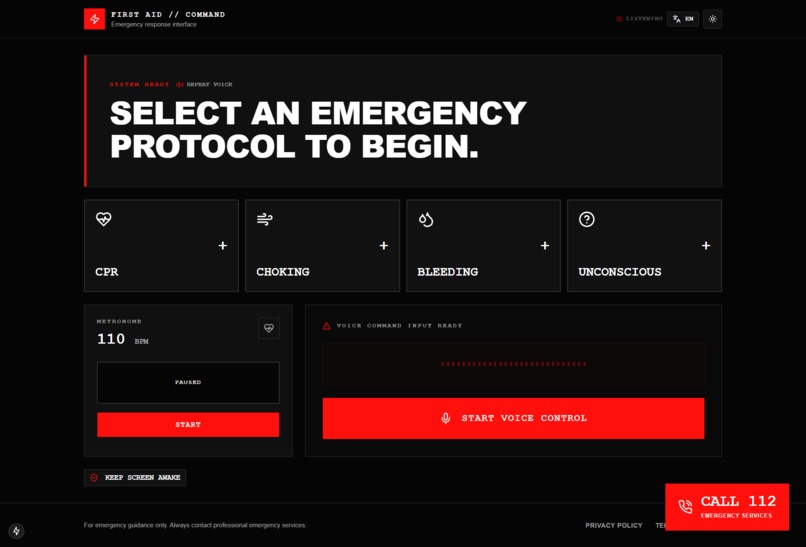
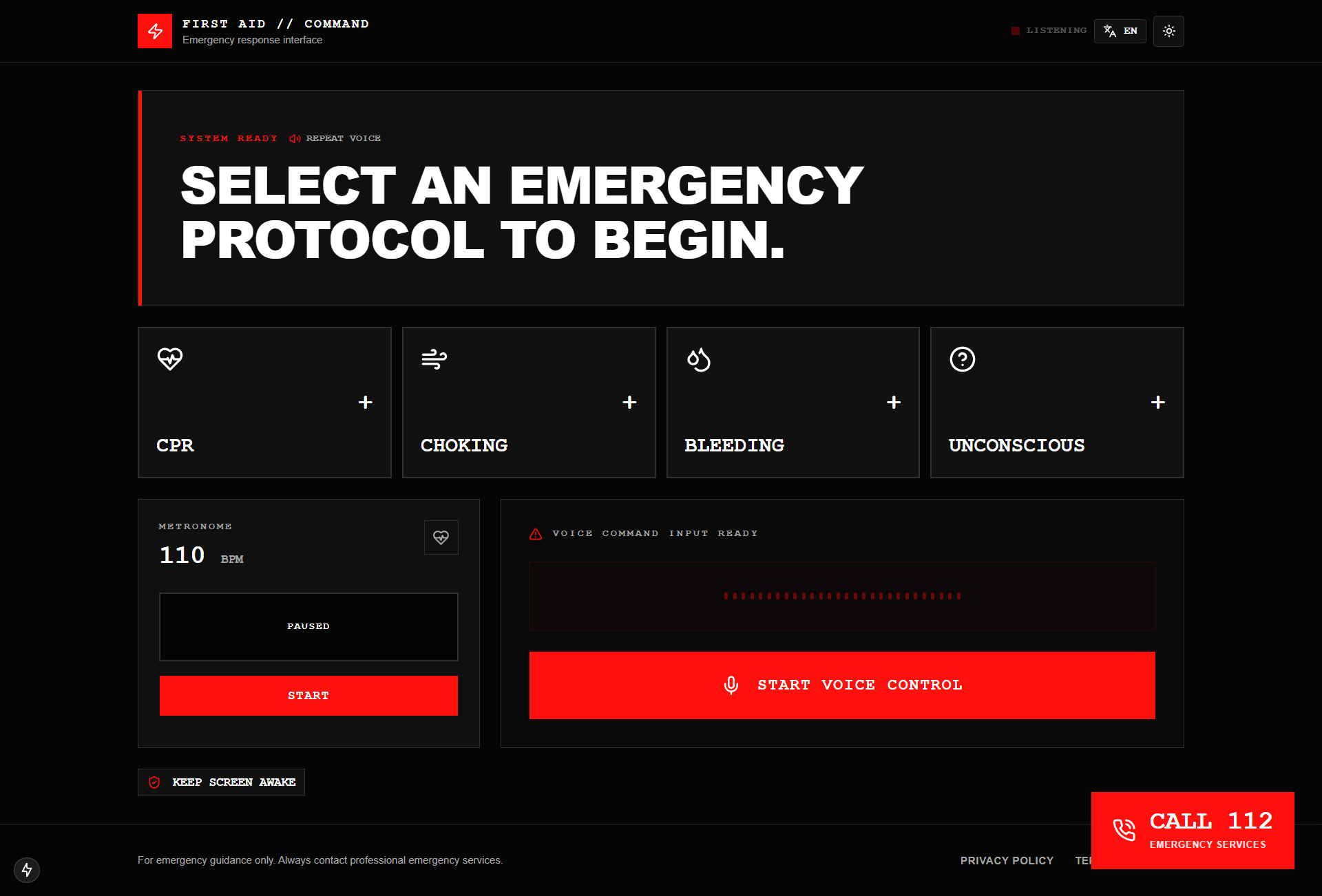
Zero-latency emergency command center with hands-free voice dispatch and hardware telemetry.
-
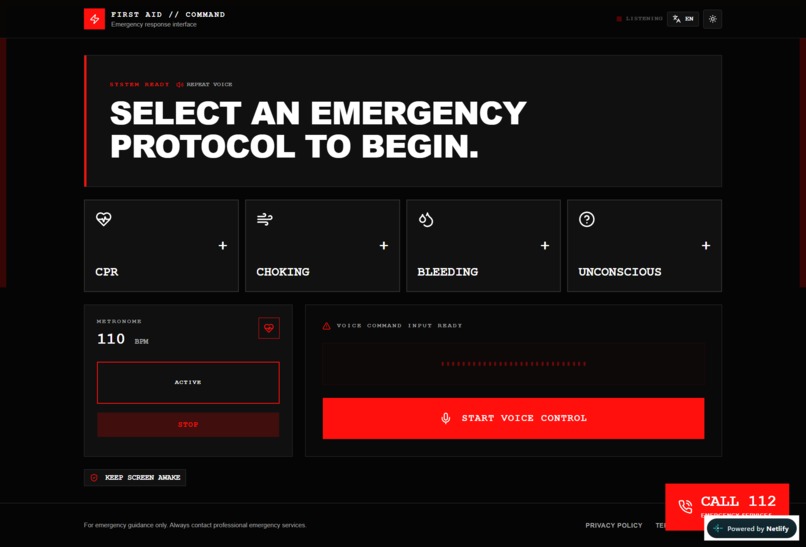
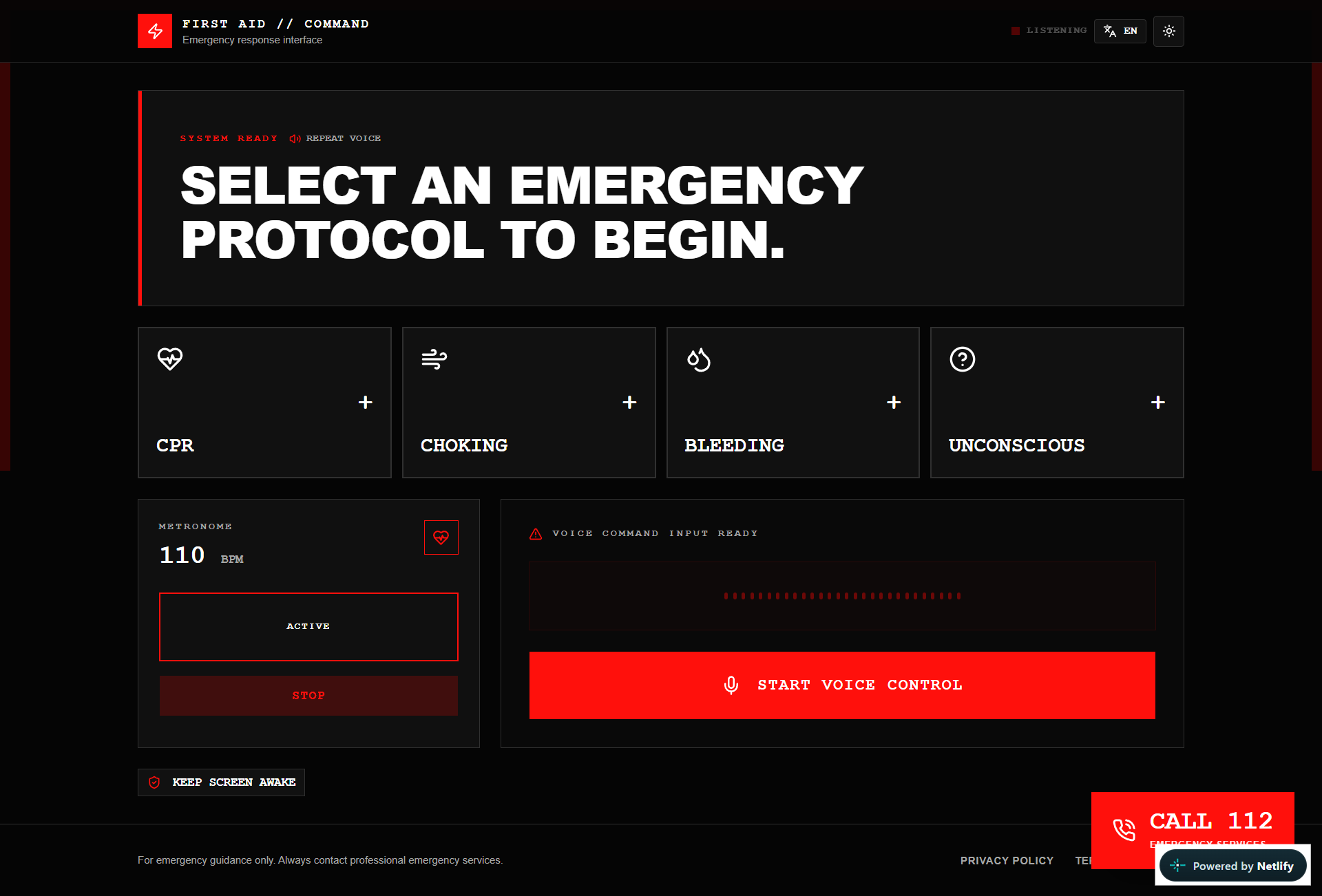
Sensory metronome in active state — 110 BPM chest compression pacing with context-safety lock.
-
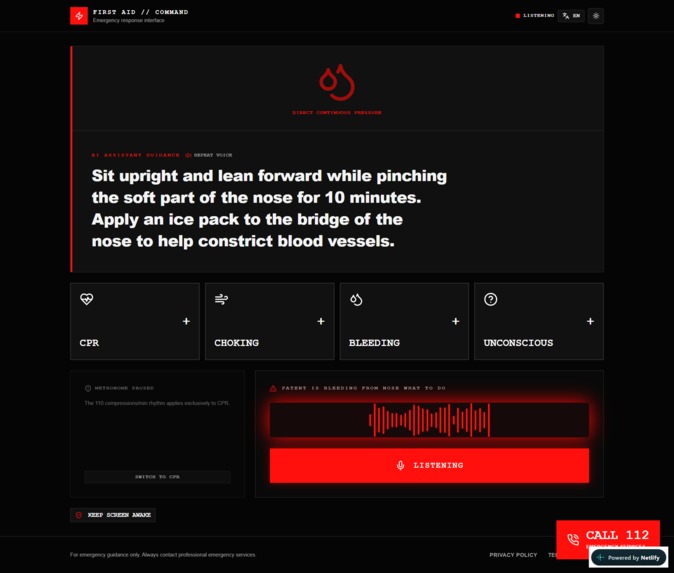
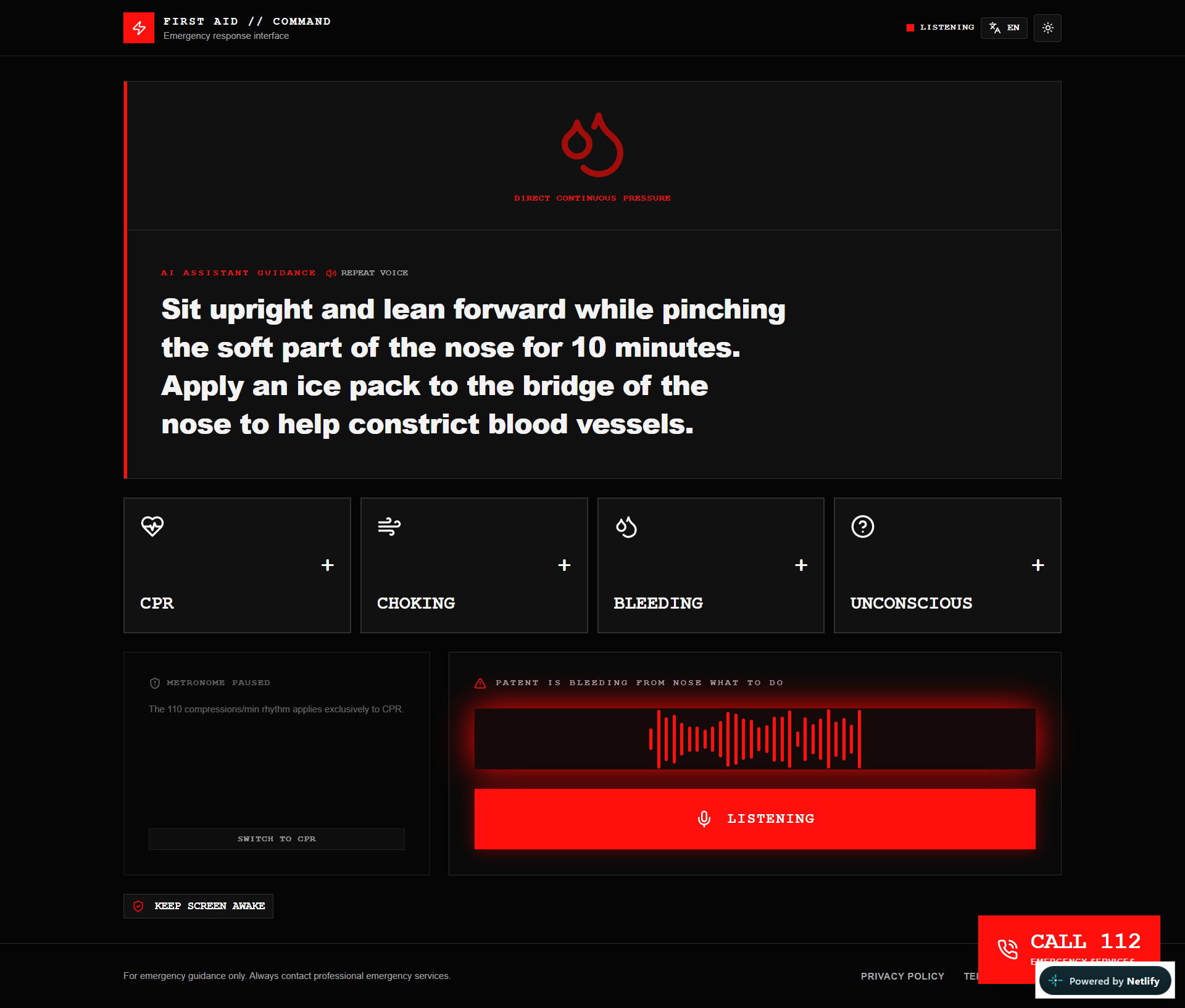
Real-time speech transcription and dynamic AI emergency reasoning via Groq Llama 3.1.
-
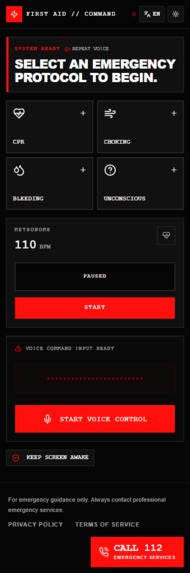
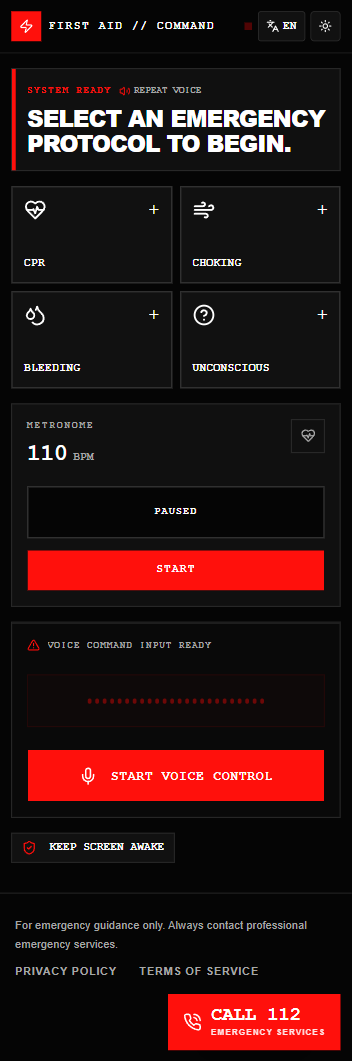
Mobile-first dark mode: 0 ms rescue protocols, 110 BPM metronome, and instant 112 emergency bridge.
💡 Inspiration
Foundation Models (LLMs) possess vast medical intelligence, yet in life-or-death physical emergencies, raw LLMs completely fail. Standard models suffer from The Latency Trap (4–8s reasoning times), disembodied text output, lack of sensory pacing, and fatal conversational "chattiness". In a real rescue, hands are occupied or contaminated, and phones lock automatically.
We built LifeLine Voice to solve the Paradox of Intelligence Systems by wrapping ultra-fast inference into a deterministic, physically grounded, multimodal emergency operating layer.
🚀 What it does
LifeLine Voice is a hands-free, real-time emergency dispatcher operating across two distinct execution tracks:
- 12 Deterministic ERC/AHA Protocols (0 ms Local Latency): Instant offline guidance for acute emergencies (CPR, severe choking, arterial bleeding, unconsciousness, pediatric head trauma, chemical/detergent ingestion, insect stings in mouth/throat, burns, seizures, fractures, and nosebleeds).
- Real-Time Voice Barge-In (<200 ms Cancellation): Rescuers can interrupt ongoing speech synthesis mid-sentence when patient status deteriorates (e.g., shouting "Patient lost consciousness!" immediately cuts off the choking protocol and switches to CPR).
- Acoustic Echo Suppression: Intent-gating algorithms prevent the device speaker from triggering false-positive voice loops in its own microphone.
- Phonetic Speech Normalization (TTS): Preserves clean, high-contrast visual digits on screen (
112,1.,2.,110 BPM) while phonetically speaking natural phrases ("sto dwanaście", "Po pierwsze" / "one one two", "Step one"). - Sensory Hardware Telemetry: 110 BPM optical & haptic metronome with medical context-lock for CPR, plus auto-resuming Screen Wake Lock API.
- Expert AI Reasoning (Server-Side Proxy): Unstructured medical queries outside the 12 protocols are routed via an authenticated server-side Route Handler to Groq Cloud (Llama 3.3-70B & Mixtral), strictly bounded to 3 imperative sentences.
- Agentic AI Certified: Fully compliant with WebMCP standards and curated
llms.txtindex for autonomous AI agent discovery.
🛠️ How we built it
- Framework: Next.js 15 (App Router, React Hooks, Turbopack) with zero client-side API key exposure.
- Decision Engine (
lib/rescue-engine.ts): Pure TypeScript rescue state machine with Unicode-safe Polish and English stem analysis. - Audio & Telemetry: Web Speech API (STT streaming with
interimResults: true& TTS), Web Audio API (AED triangle-wave audio pulse), Screen Wake Lock API, and Vibration API. - Frontend & Accessibility: Tailwind CSS v4 in a high-contrast Swiss-Brutalist emergency aesthetic (100% WCAG AA compliance, min. 5.75:1 contrast).
🧠 Challenges we ran into
- Acoustic Feedback & Interruption (Barge-In): Preventing the microphone from hearing its own text-to-speech speaker while still allowing the human rescuer to interrupt instantaneously. We solved this with real-time interim intent gating and session index tracking.
- Mobile Sandbox Restrictions: Overcoming iOS Safari audio autoplay blocks via silent user-gesture priming, handling mobile OS microphone throttling, and eliminating the mobile 300 ms tap delay via
touch-action: manipulation. - Latency Elimination: Enforcing strict prompt boundaries and deterministic local fallbacks so the assistant never stalls during network drops or API rate limits (404/429).
🏅 Accomplishments that we're proud of
- Achieving 0 ms local latency for 12 life-critical emergency protocols.
- Engineering a sub-200 ms Voice Barge-In with full acoustic echo suppression on native browser APIs.
- Perfect 100/100 score on Google PageSpeed & Lighthouse (100 Performance with 0.3s FCP, 100 WCAG AA Accessibility, 100 Best Practices, 100 SEO, and 3/3 WebMCP Agentic certification).
- Publishing a comprehensive Technical Architecture Whitepaper comparing LifeLine Voice across 8 commercial platforms (Apple Emergency SOS, Google Personal Safety, Noonlight, Life360).
📖 What we learned
In high-stakes physical domains, system architecture, sensory feedback, and physical telemetry matter far more than raw model parameter scale. Medical safety requires deterministic guardrails over conversational creativity.
🔮 What's next for LifeLine Voice
- Automated wearable sensor fusion (Apple Watch & Pixel Watch HR/SpO₂) for real-time cardiac arrest detection.
- WebRTC Computer Vision to passively assess chest compression depth and hand placement.
- Direct tele-dispatch bridge integration with European 112 / E911 dispatch networks.
📄 Technical Deep Dive: Read our full Mobile & System Architecture Whitepaper (benchmark comparisons, latency budgets, and regulatory analysis).
Built With
- ai
- first-aid
- groq
- llama-3.3
- llm
- mixtral
- mobile-web
- next.js
- react
- screen-wake-lock-api
- server-side-prox
- tailwind-css
- typescript
- wcag
- web-speech-api
- webmcp

Log in or sign up for Devpost to join the conversation.