-
-
-
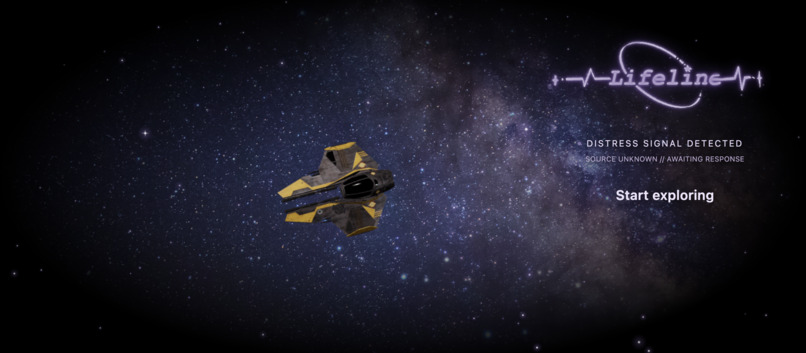
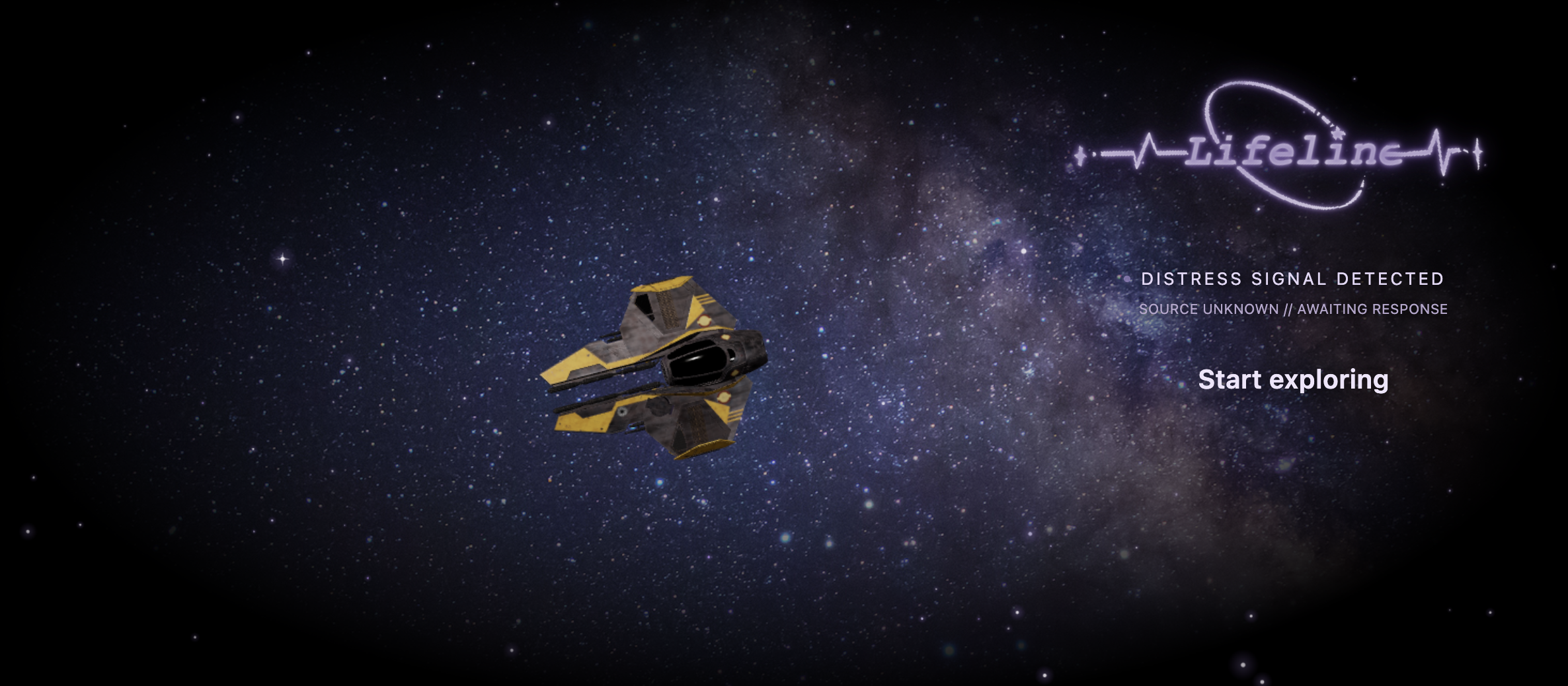
home screen
-
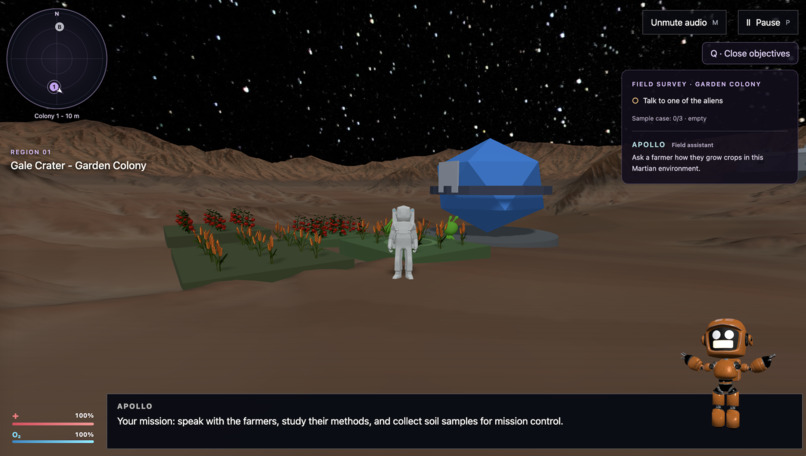
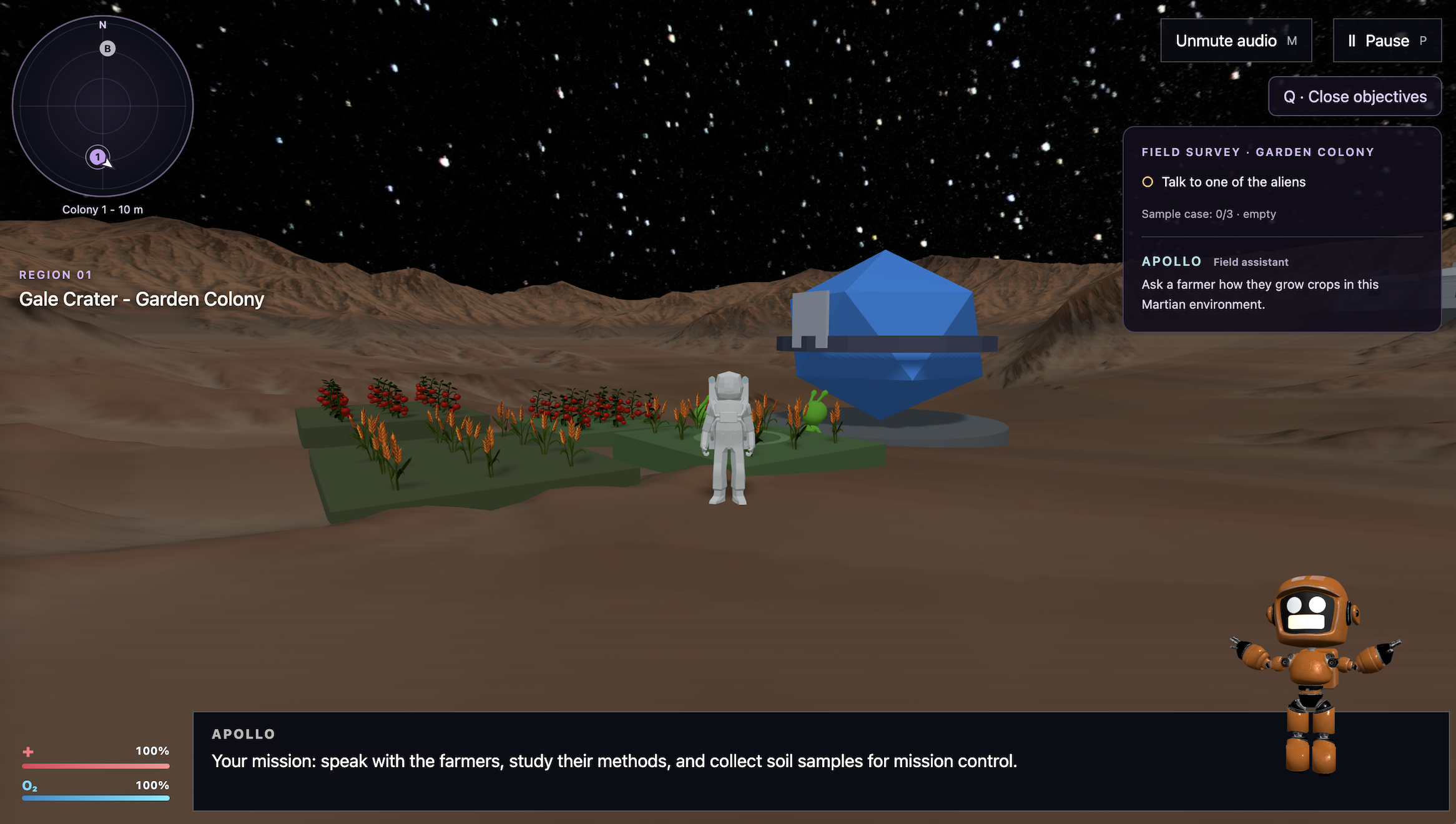
Gale Crater
-
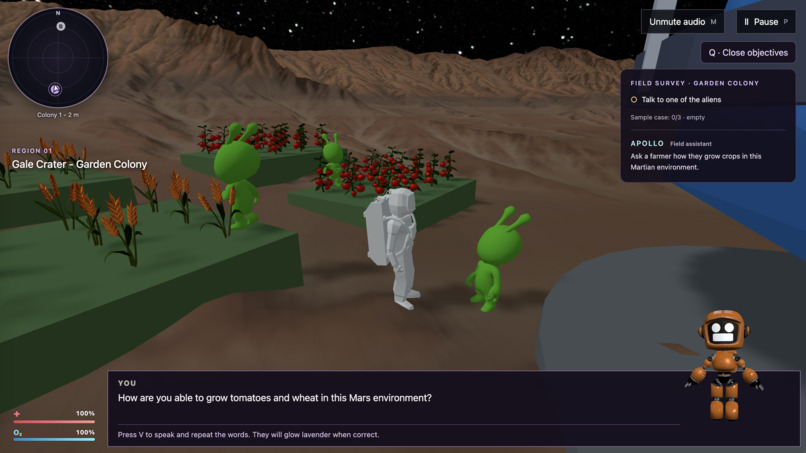
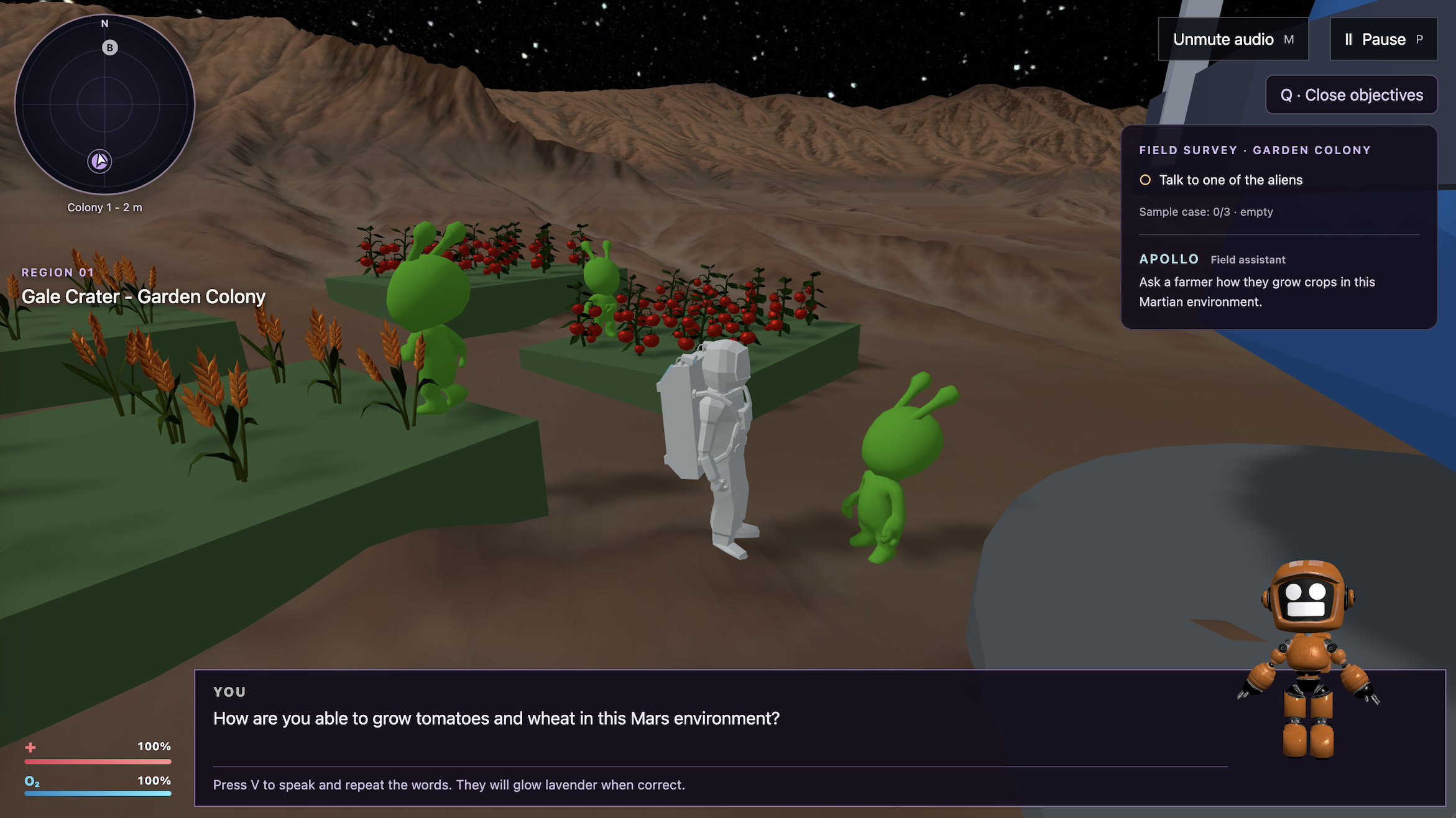
Talking to an alien
-
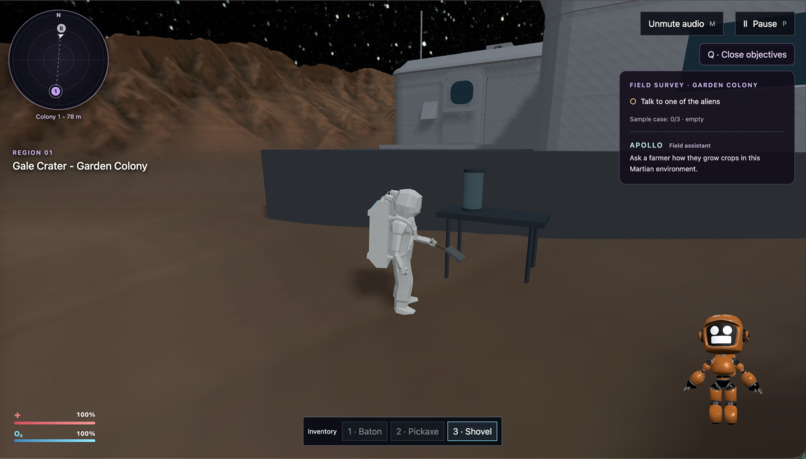
Collecting soil sample

Inspiration
Space movies like The Martian and Project Hail Mary, AI guardrails, the possibility of alien life on Mars, and the potential for humans and aliens to coexist on Mars.
What it does
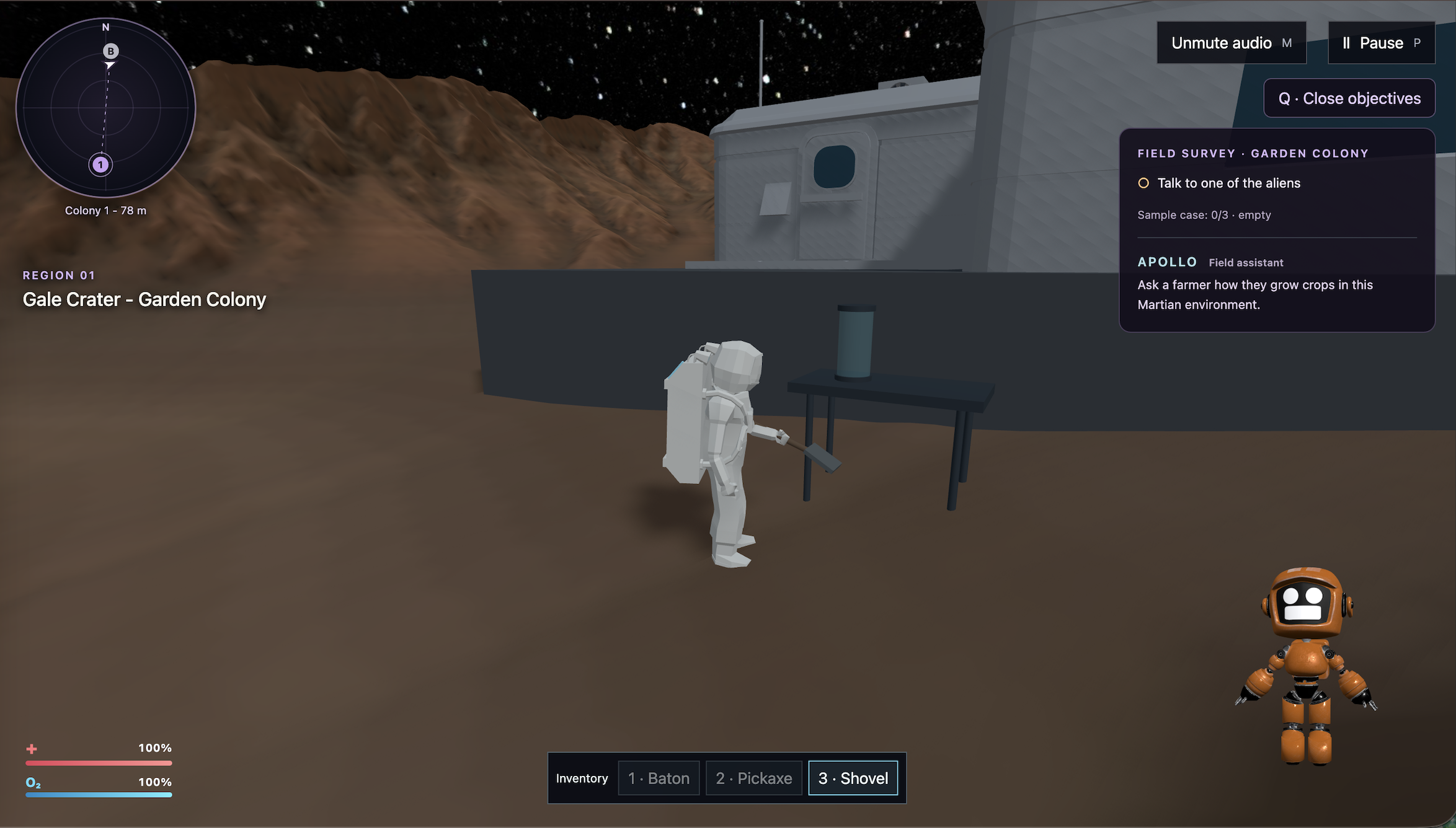
Lifeline is a 3D, story-driven exploration game set in a future where Earth has become nearly uninhabitable. Players take on the role of a scientist employed by a powerful corporation and sent to Mars to research how alien civilizations have adapted to its harsh environment.
Throughout the game, players explore Martian settlements, interact with aliens, and investigate their unique abilities to sustain life through agriculture, atmospheric regulation, and resource generation.
How we built it
We built Lifeline using JavaScript and Three.js, starting with foundational code and examples from the Three.js documentation. We incorporated free 3D assets, including astronaut and alien characters, environmental objects, and structures, to create an immersive Martian environment.
We implemented third-person character movement, camera controls, environmental interactions, and mission progression. We also integrated speech-to-text and text-to-speech functionality to make conversations with alien characters more interactive and engaging.
By combining 3D rendering, interactive gameplay, and narrative elements, we created a playable experience entirely within the browser.
Challenges we ran into
One of our biggest challenges was integrating voice interactions into the game. Working with the ElevenLabs API and troubleshooting browser microphone permissions created unexpected issues, particularly when trying to connect speech input and audio output with our dialogue system.
Another major challenge was working with 3D assets. Different models came with varying file formats, scales, textures, and animation structures, which made importing and animating characters more complicated than expected.
Time management was also a significant challenge. We had ambitious ideas for multiple Martian regions, but we needed to prioritize the most important gameplay mechanics and narrative moments to deliver a complete experience within the hackathon deadline.
Accomplishments that we're proud of
We're especially proud of successfully implementing speech-to-text and text-to-speech features, allowing players to interact with the game's characters in a more immersive way.
We're also proud of developing a fully working 3D game within the limited hackathon timeframe. We went beyond creating a static environment by incorporating exploration, player movement, interactive characters, and a story with a deeper message about corporate greed and exploitation.
Most importantly, we were able to turn an ambitious idea into a playable experience that combines technology, creativity, and ethical storytelling.
What we learned
This project taught us a lot about working with 3D assets and game development in Three.js. We gained hands-on experience importing FBX models, handling character animations, positioning objects in 3D space, and managing interactions between the player and the environment.
We also learned more about integrating APIs into interactive applications, especially the challenges associated with microphone access, speech recognition, and audio playback in browsers.
What's next for Lifeline
We plan to expand Lifeline by developing Phases 2 and 3, introducing additional regions of Mars that reveal more of the corporation's exploration of alien civilizations.
These future phases will introduce new environments, alien abilities, survival challenges, and storylines that gradually expose the corporation's true intentions. We also hope to improve character animations, expand voice-based interactions, and introduce more meaningful player choices that influence the game's outcome.
Ultimately, we want Lifeline to become a more immersive narrative experience that explores the relationship between humanity, extraterrestrial life, and the ethical responsibilities that come with scientific discovery.
Built With
- css
- elevenlabs
- javascript
- three.js

Log in or sign up for Devpost to join the conversation.