-
-
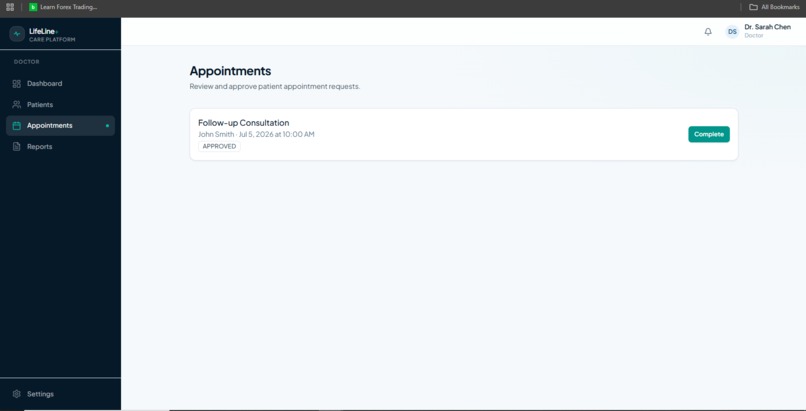
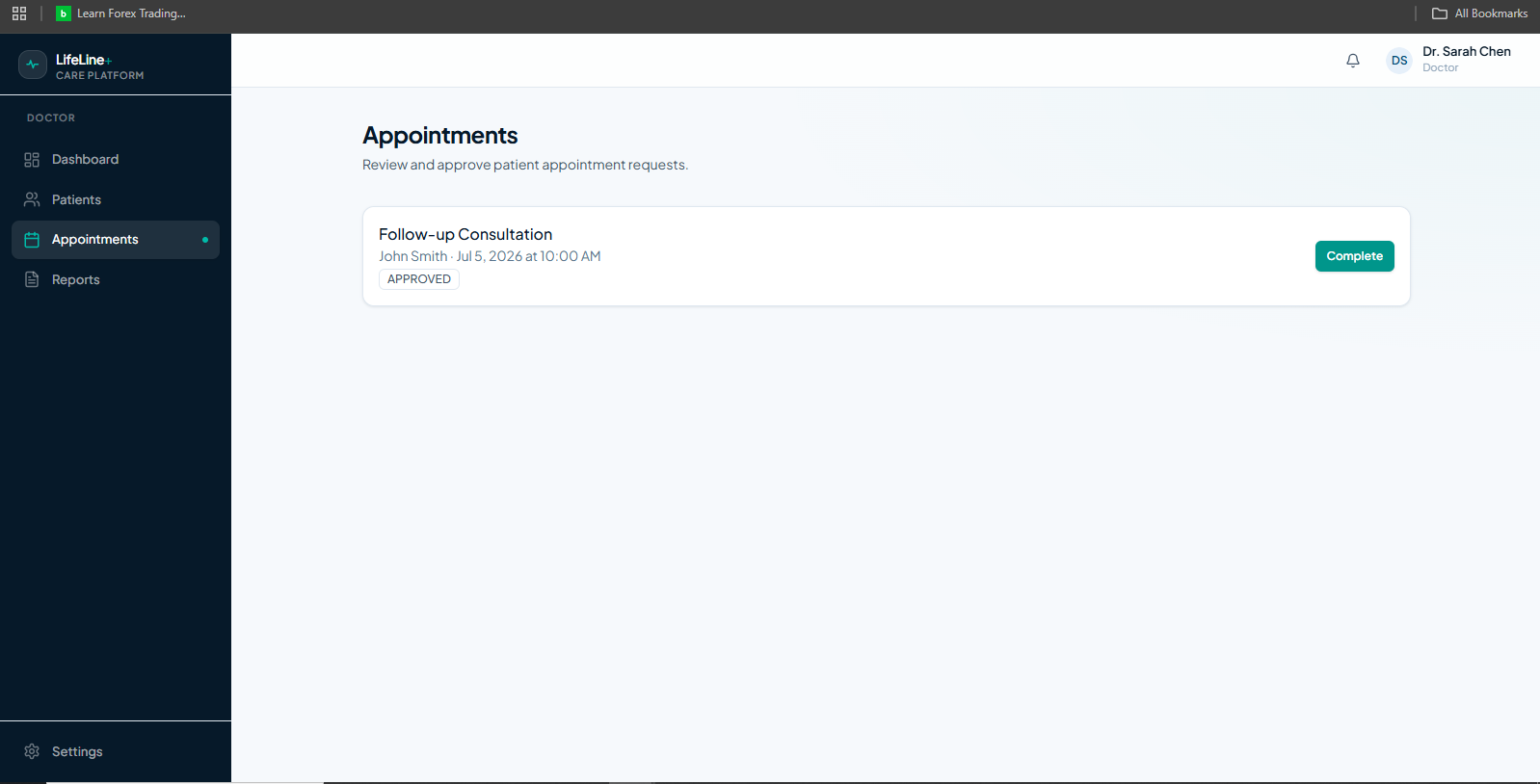
Doctor Appointment section
-
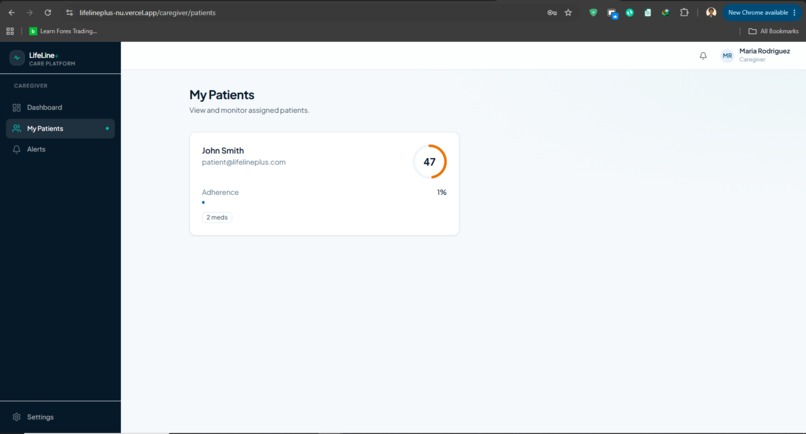
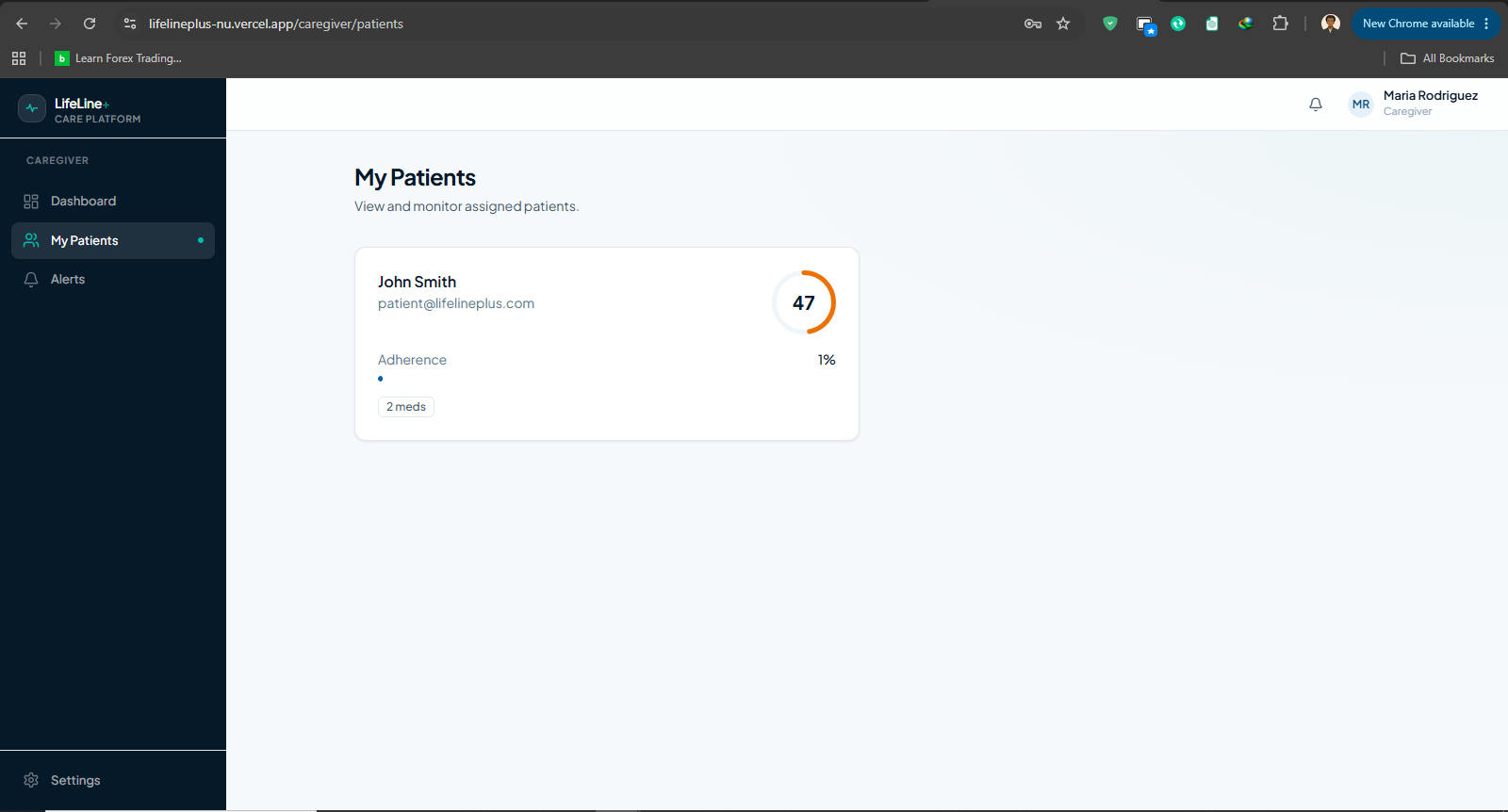
Caregiver patients' section
-
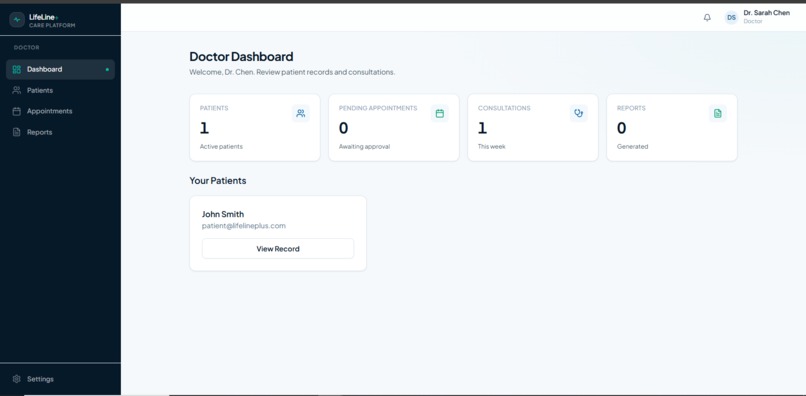
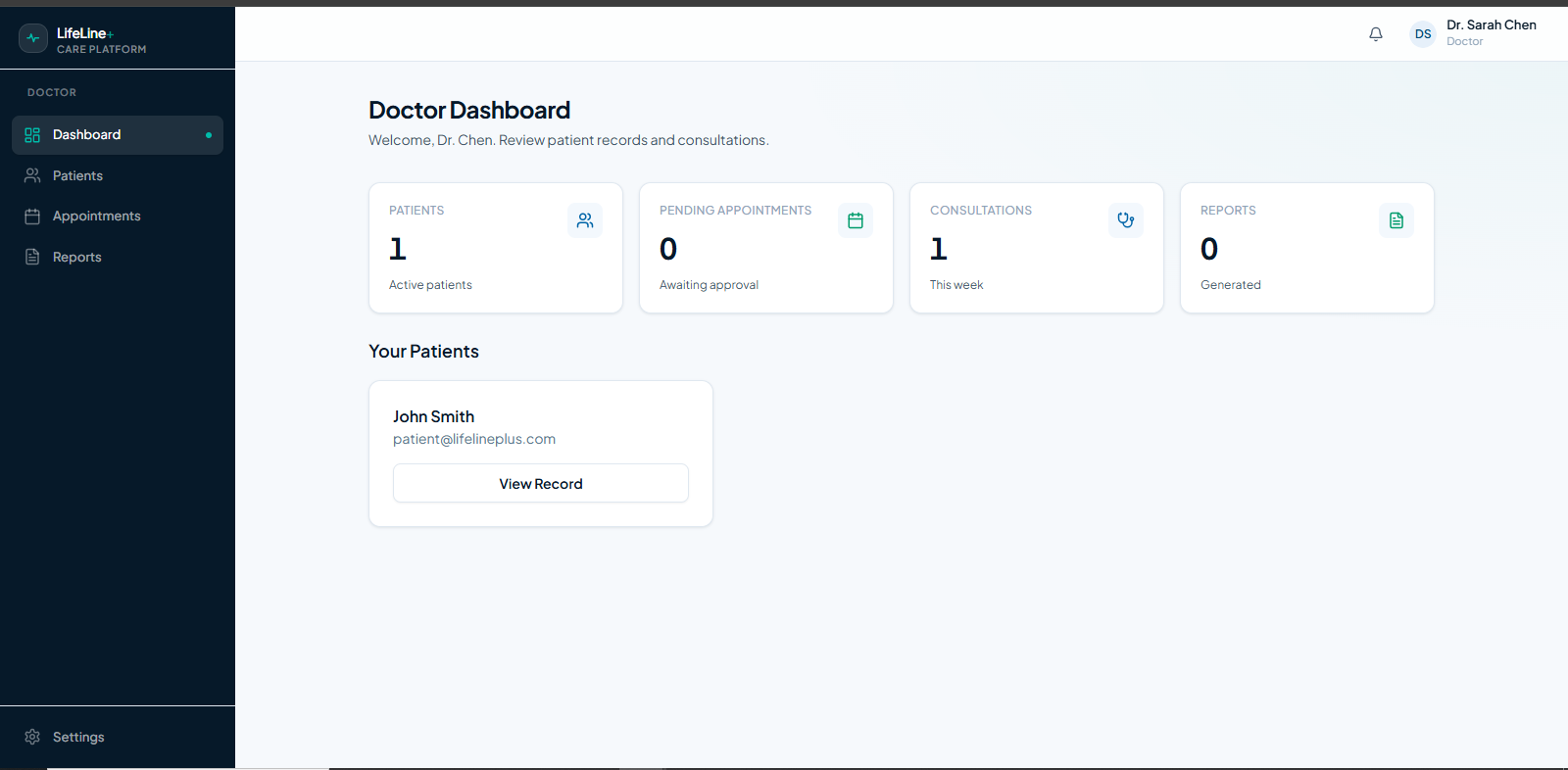
Doctor dashboard section
-
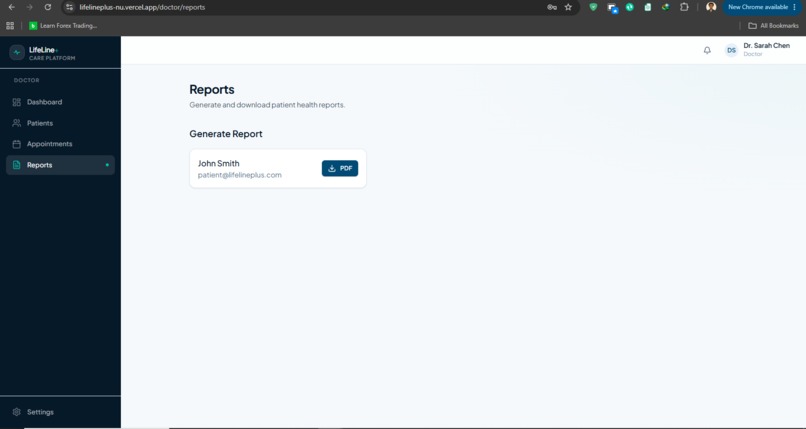
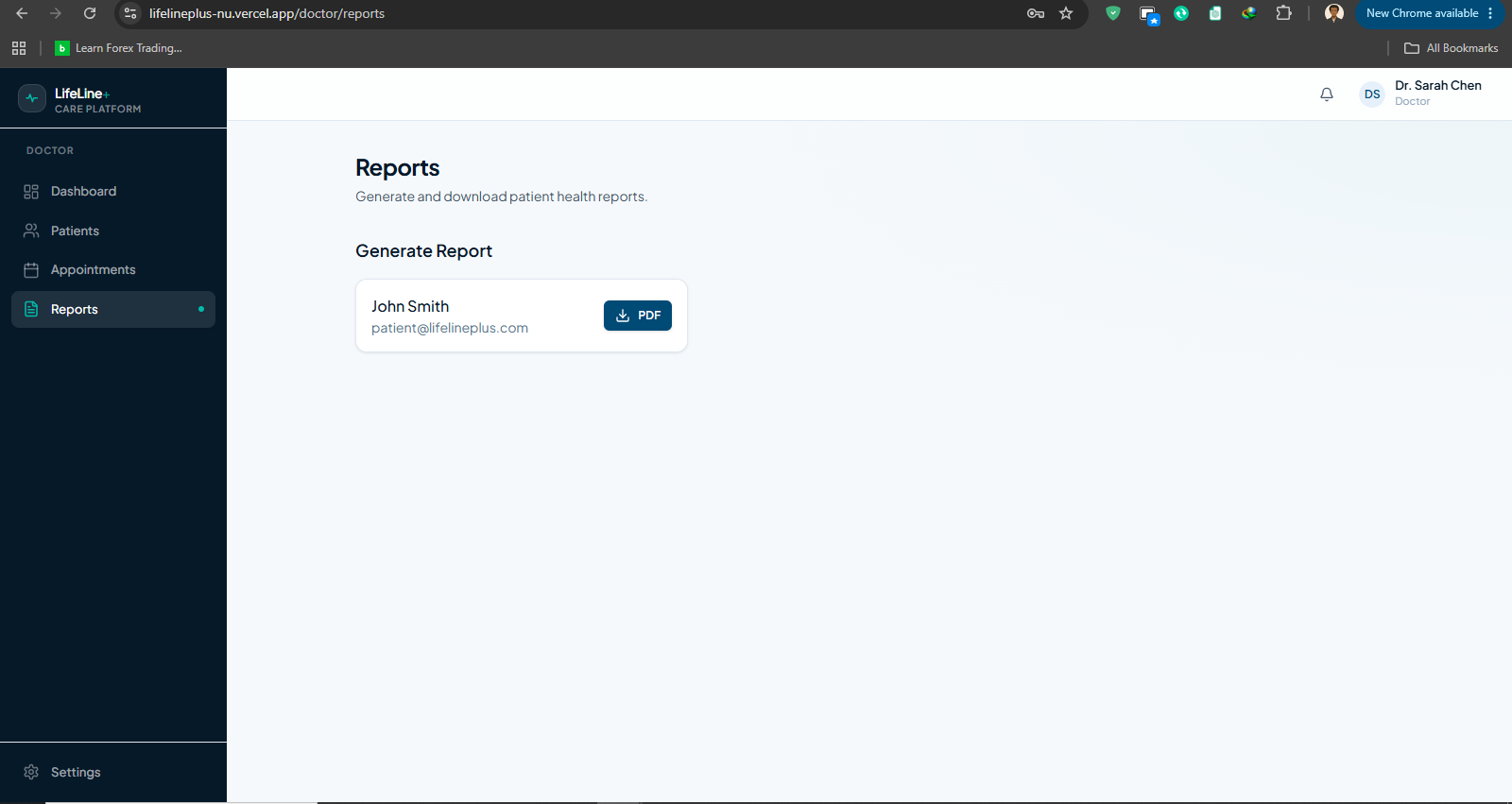
Doctor reports section
-
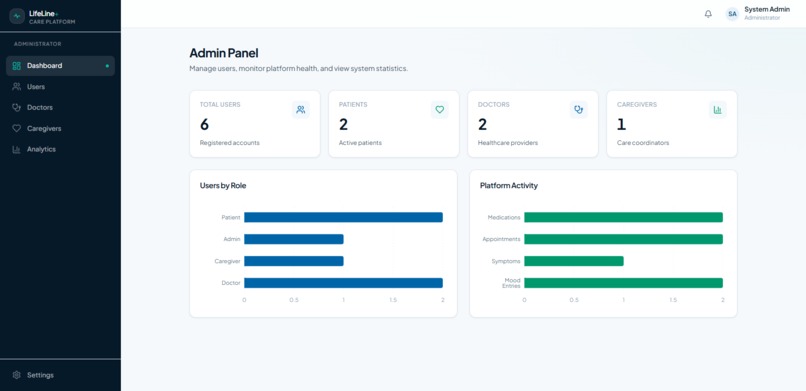
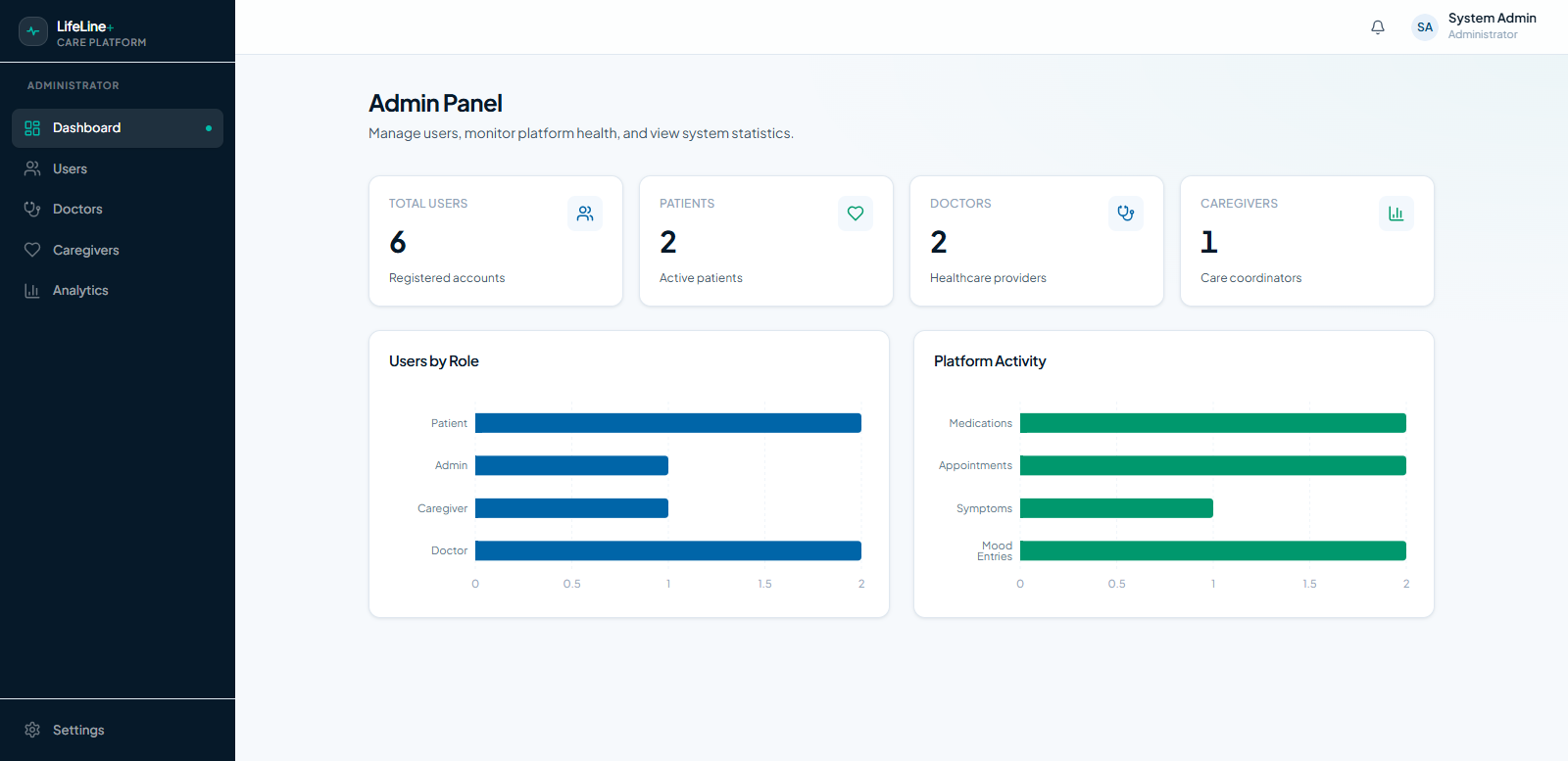
Admin dashboard section
-
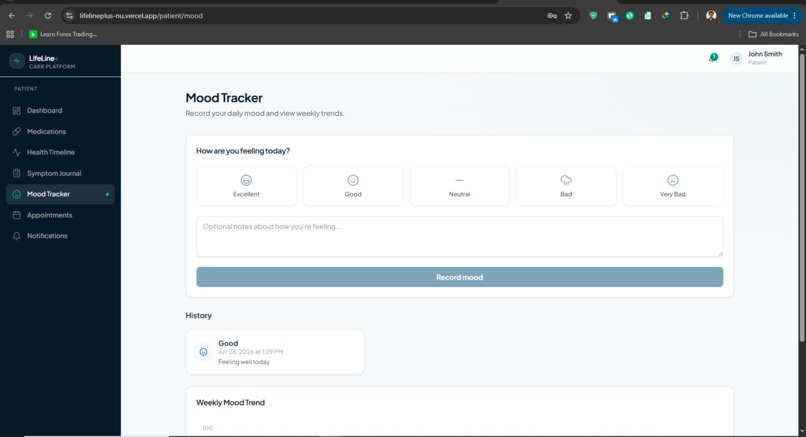
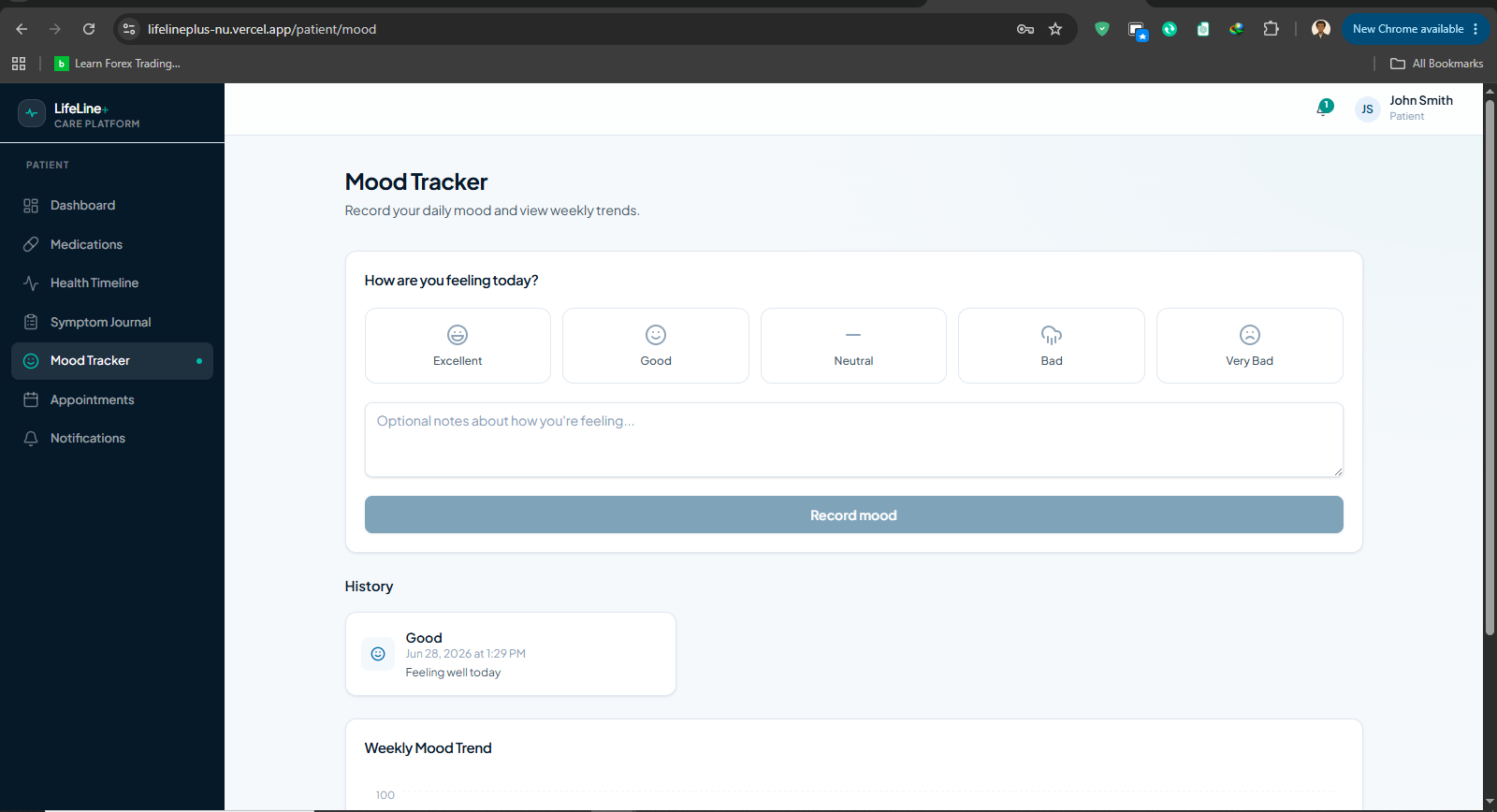
Patient Mood Tracker section
-
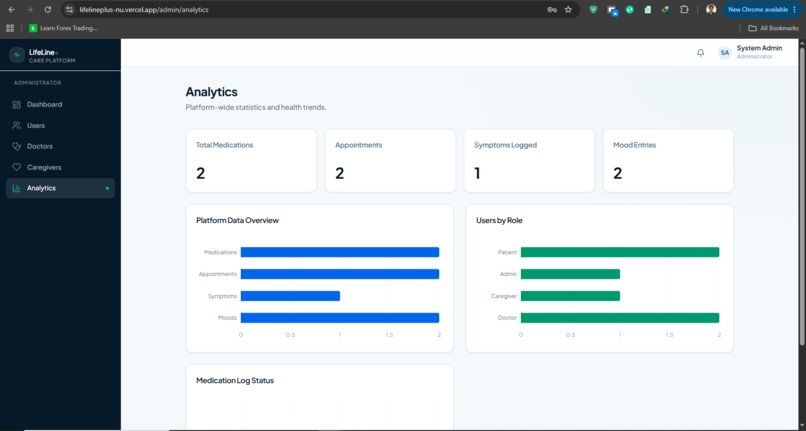
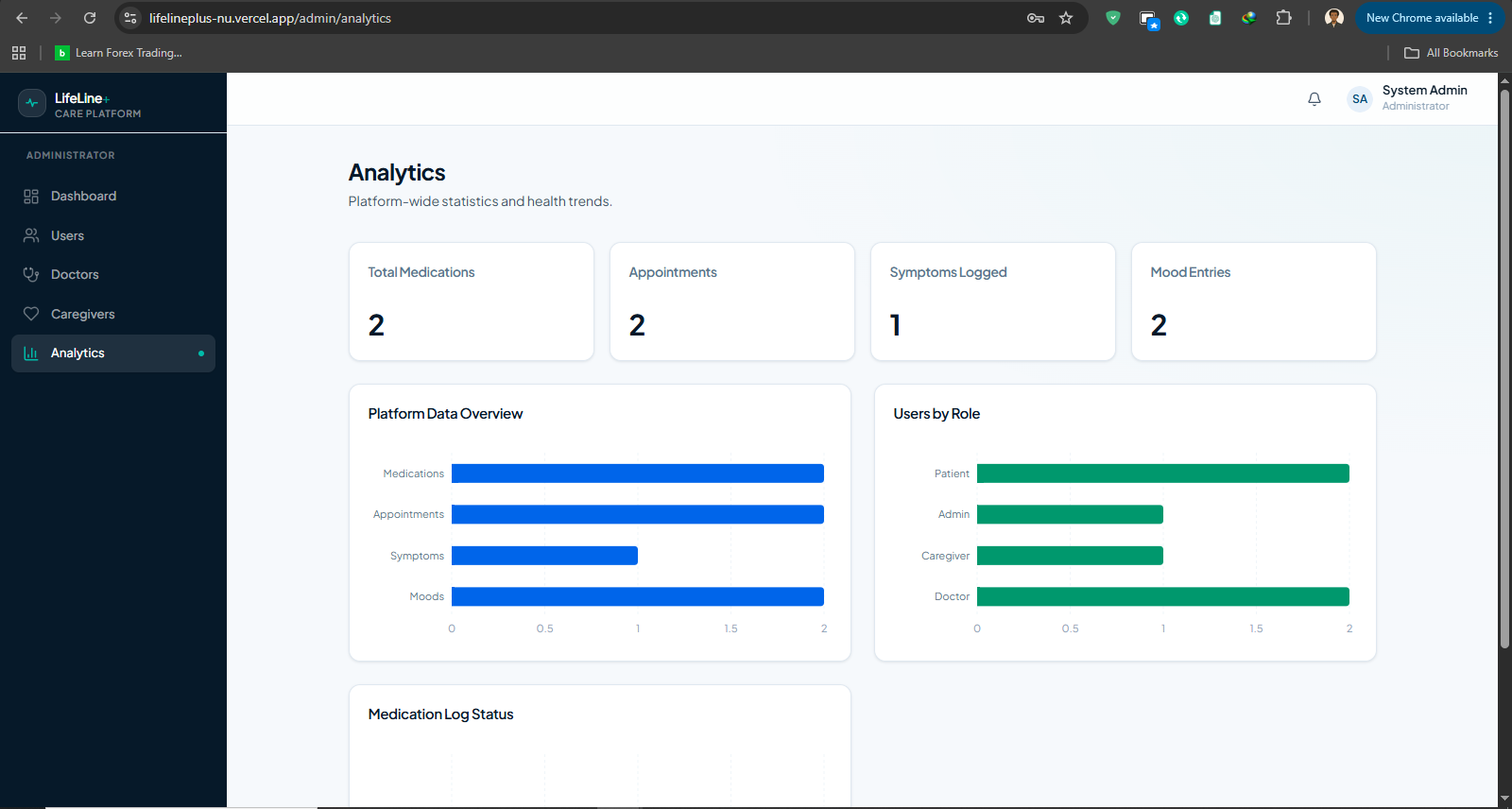
Admin analytics section
-
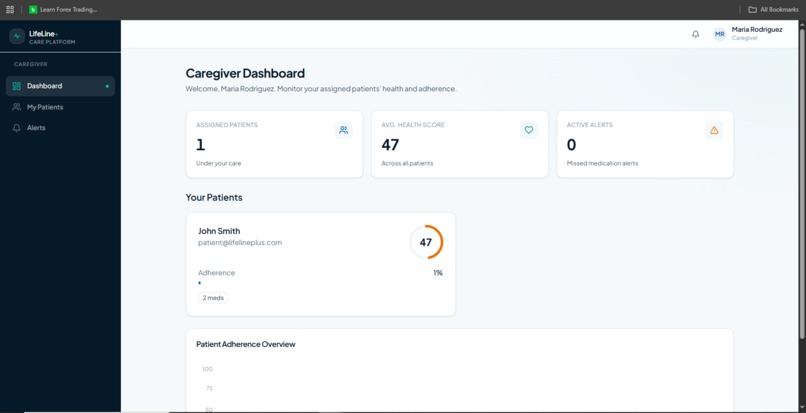
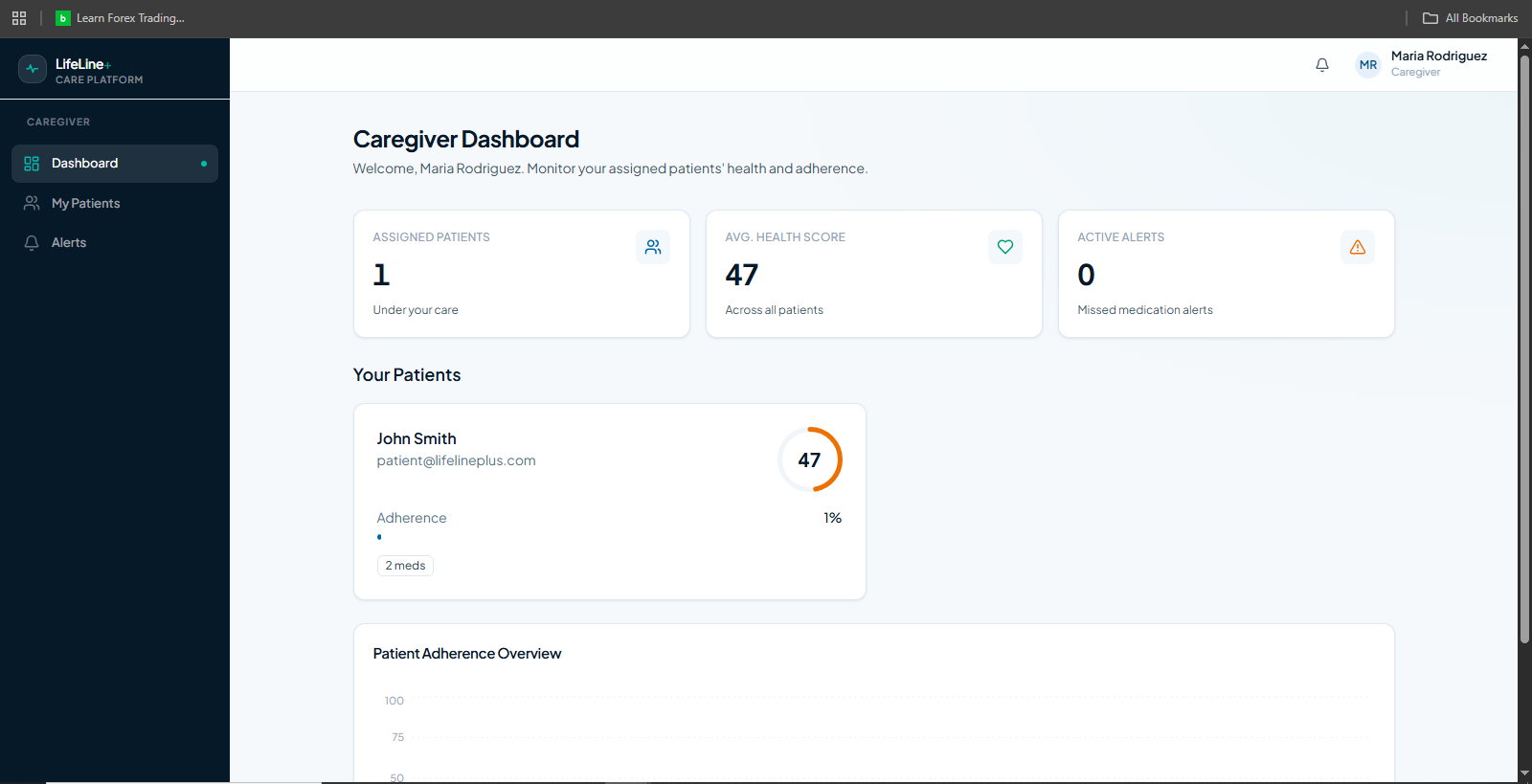
Caregiver dashboard section
-
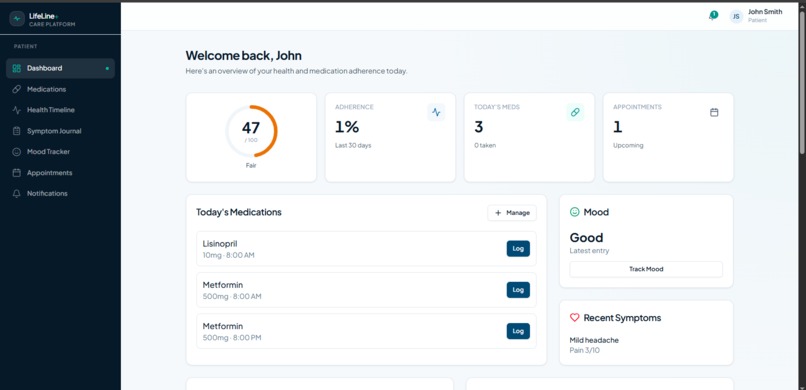
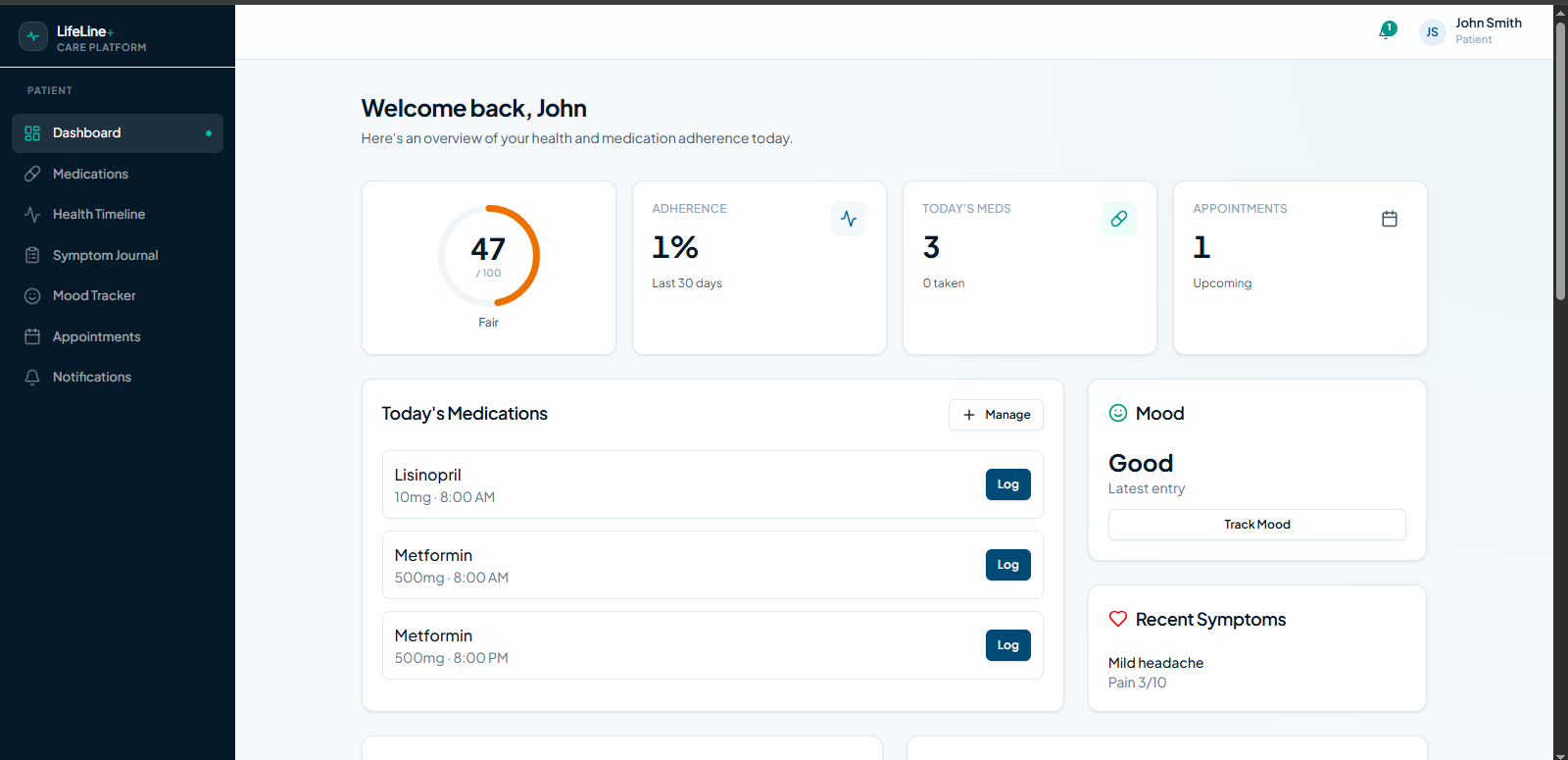
Patient dashboard section
-
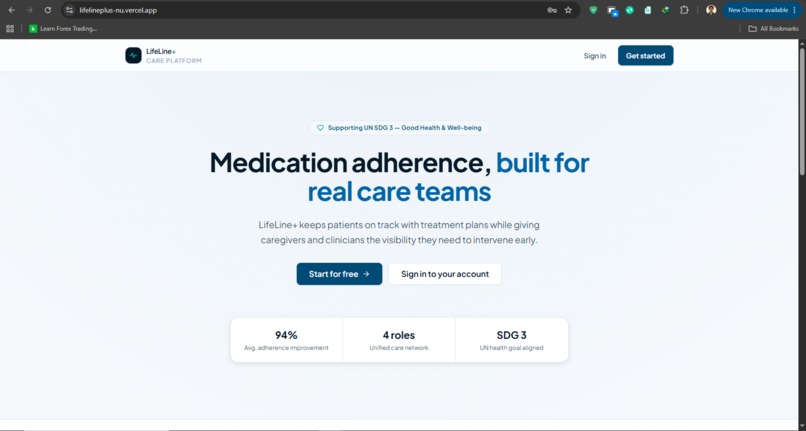
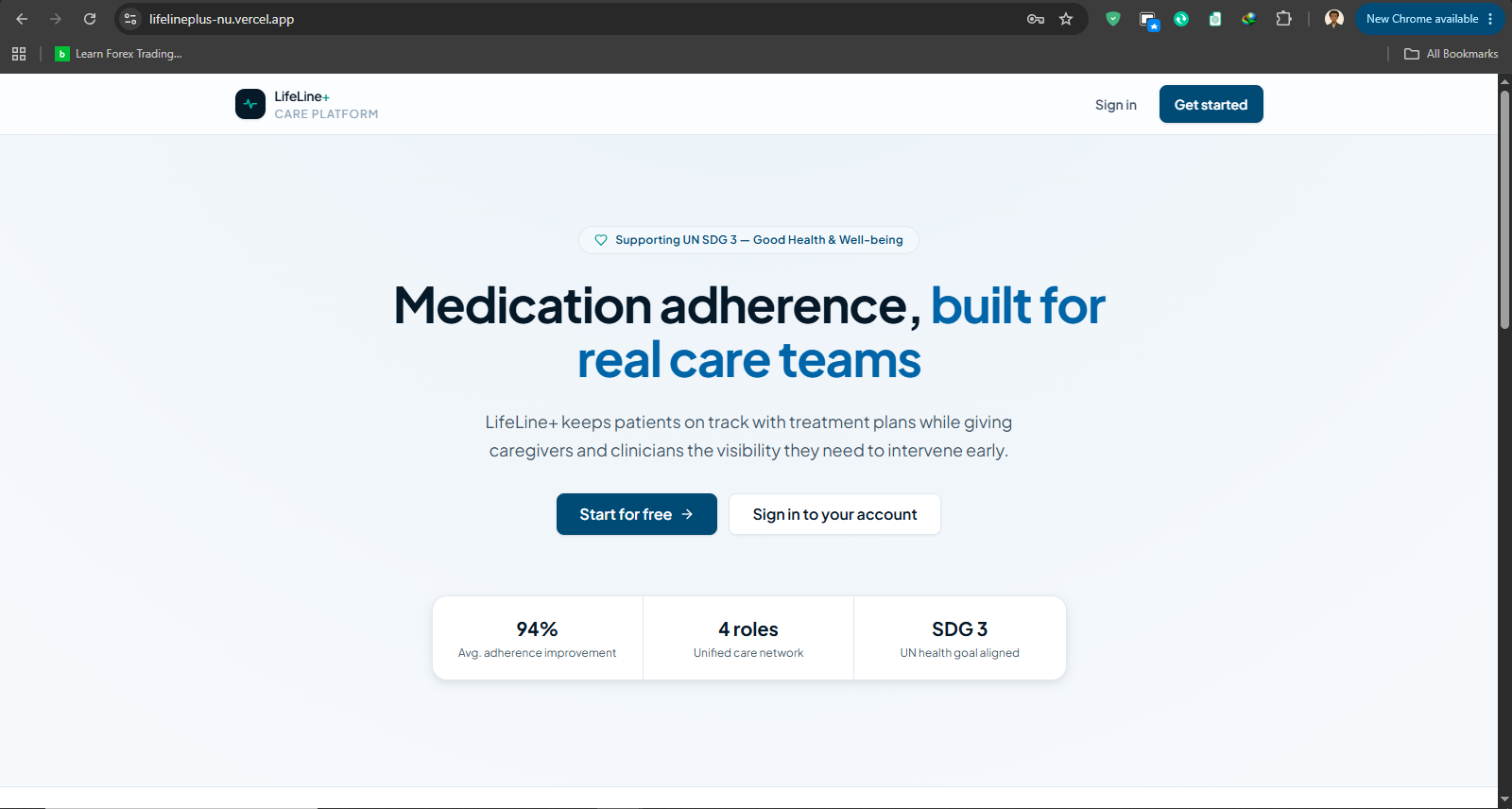
Platform Landing Page
LifeLine+
Helping patients stay on track, every step of the way.
Inspiration
Medication adherence remains one of the biggest challenges in healthcare. Many patients miss doses, forget appointments, or struggle to track symptoms over time, leading to poorer health outcomes and avoidable complications. While many health applications focus on isolated features, I wanted to create a solution that brings medication management, symptom tracking, caregiver support, and health insights together in one intuitive platform.
This project was inspired by the United Nations Sustainable Development Goal 3 (Good Health and Well-being), with the goal of encouraging consistency in treatment and improving communication between patients, caregivers, and healthcare professionals.
What it does
LifeLine+ is a web-based medication adherence and care coordination platform designed to help patients stay engaged with their treatment plans.
Key features include:
- Secure user authentication with role-based access.
- Medication scheduling and adherence tracking.
- Daily symptom and mood journaling.
- Appointment scheduling and management.
- Health timeline showing patient activity over time.
- Caregiver dashboard for monitoring medication adherence.
- Doctor dashboard with consultation notes and patient history.
- Health score calculated from adherence, appointments, mood, and symptom trends.
- Interactive analytics dashboards.
- Downloadable PDF health reports.
- In-app notifications for reminders and important updates.
How I built it
The project was built as a modern full-stack web application using Next.js and TypeScript. Prisma ORM and SQLite provide a lightweight yet structured database layer, while Tailwind CSS and shadcn/ui create a responsive and accessible user interface.
Form validation is handled with React Hook Form and Zod, while Recharts powers the analytics dashboards. The application follows a modular architecture, separating features into reusable components and maintaining a clean project structure to simplify future expansion.
Challenges I ran into
One of the biggest challenges was balancing functionality with simplicity. It was tempting to add advanced features such as wearable integrations, AI diagnostics, or real-time messaging, but these would have increased complexity without necessarily improving the core user experience.
Instead, I focused on solving one problem well: helping patients consistently follow their treatment plans while giving caregivers and healthcare professionals meaningful visibility into patient progress.
Designing a database that supported multiple user roles while remaining simple and maintainable also required careful planning.
What I learned
This project reinforced the importance of defining a clear product scope before writing code. Rather than building many disconnected features, creating a cohesive workflow around medication adherence resulted in a more focused and maintainable application.
I also gained deeper experience designing relational databases with Prisma, building reusable UI components, implementing role-based access control, and creating data visualizations that communicate health information effectively.
What's next for LifeLine+
Future improvements include:
- Push notifications and SMS medication reminders.
- Calendar synchronization.
- Family and caregiver collaboration tools.
- Wearable device integration.
- Offline support for areas with limited connectivity.
- AI-powered health insights based on long-term patient trends.
- Telemedicine and secure messaging.
- Multi-language support to improve accessibility across diverse communities.
LifeLine+ demonstrates how thoughtful software design can support healthier habits, improve continuity of care, and contribute toward achieving SDG 3 by empowering patients to take a more active role in managing their health.
Built With
- auth.js
- lucidereact
- next.js
- prisma
- react
- reacthookform
- recharts
- shadcn/ui
- sqlite
- tailwindcss
- typescript
- vercel
- zod


Log in or sign up for Devpost to join the conversation.