-
Lifeline Ai
Inspiration
In many urban areas, traffic congestion causes critical delays for ambulances, often putting lives at risk. We were inspired by real-life incidents where patients could not receive timely medical care due to blocked roads. The concept of manually creating a “green corridor” showed us that faster emergency response is possible but it needs automation. This motivated us to design a system that uses AI and real-time data to ensure ambulances get a clear path instantly.
What it does
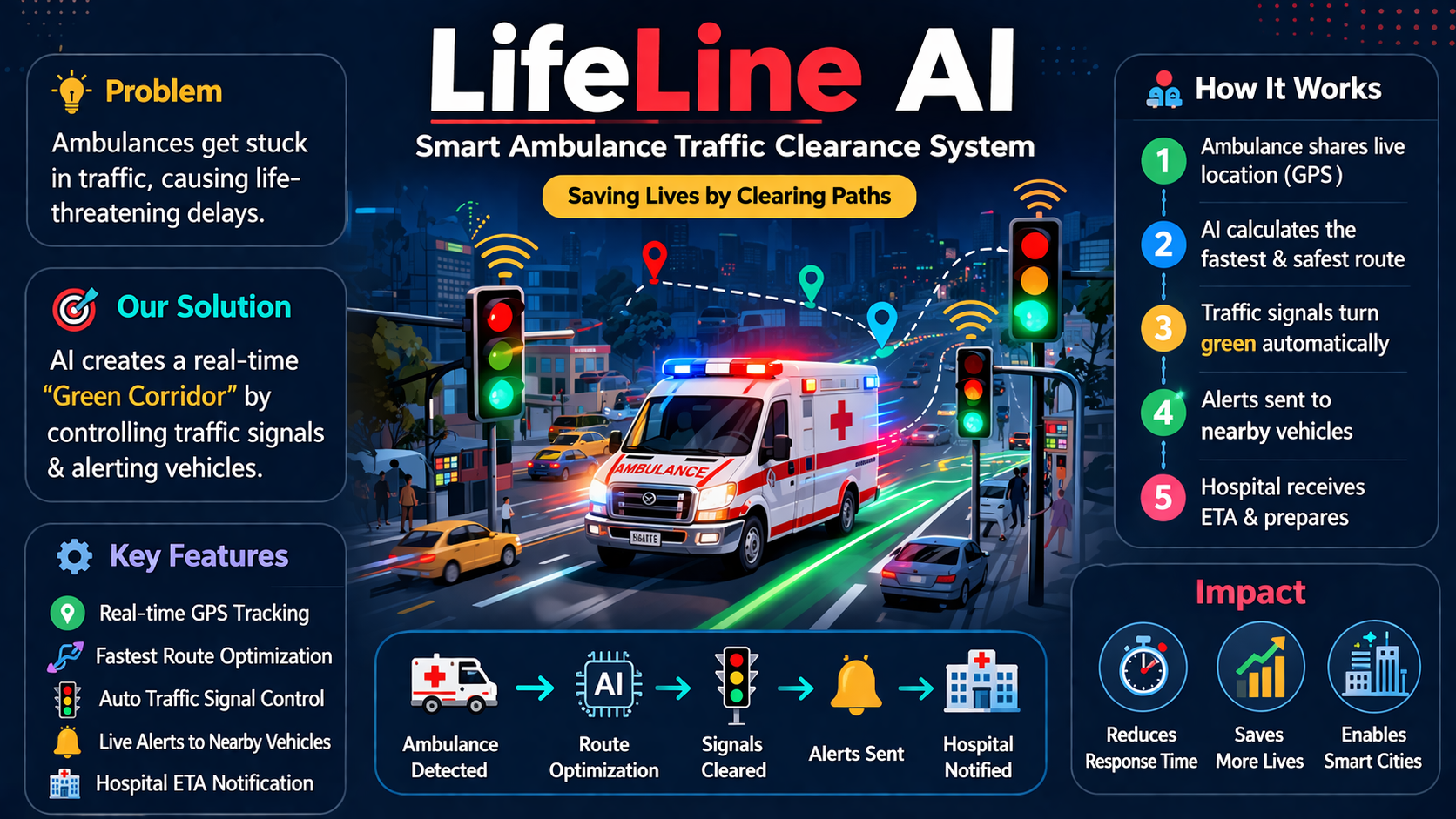
LifeLine AI is a smart traffic management system that: Tracks ambulance location in real time 📍 Calculates the fastest and safest route Automatically turns traffic signals green along the route Sends alerts to nearby vehicles to clear the way 🔔 Notifies hospitals with estimated arrival time (ETA) ⏱️ The system creates a dynamic green corridor, reducing delays and improving emergency response efficiency.
How we built it
We developed a prototype that simulates real-world traffic coordination: Frontend: Built using HTML, CSS, JavaScript (or Flutter for mobile UI) Backend: Python with Flask for handling logic and requests APIs: Google Maps and location services for route calculation Database: Firebase for real-time updates Working Flow: 1.Ambulance shares live GPS location 2.Backend computes optimal route 3.Traffic signals on the route are dynamically controlled 4.Alerts are sent to users nearby Hospital receives ETA updates
Challenges we ran into
Simulating real-time traffic signal control without actual hardware Ensuring fast and reliable communication between components Handling dynamic traffic conditions in the model Designing a system that remains simple yet scalable
Accomplishments that we're proud of
Successfully built a working prototype demonstrating green corridor creation Integrated real-time tracking and route optimization Designed a system with clear real-world impact Created an intuitive and easy-to-understand user interface
What we learned
How AI and real-time systems can solve critical real-world problems Importance of efficient algorithms in time-sensitive applications Challenges in designing scalable smart city solutions The value of teamwork, planning, and rapid prototyping
What's next for LifeLine AI: Smart Ambulance Traffic Clearance System
Integration with IoT-based smart traffic signals Advanced AI traffic prediction models Support for multiple ambulances with priority handling Expansion into a full smart city emergency response system Collaboration with authorities for real-world implementation

Log in or sign up for Devpost to join the conversation.