-
-
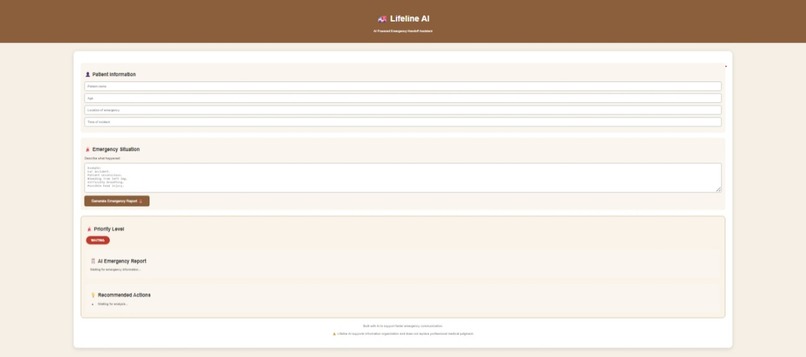
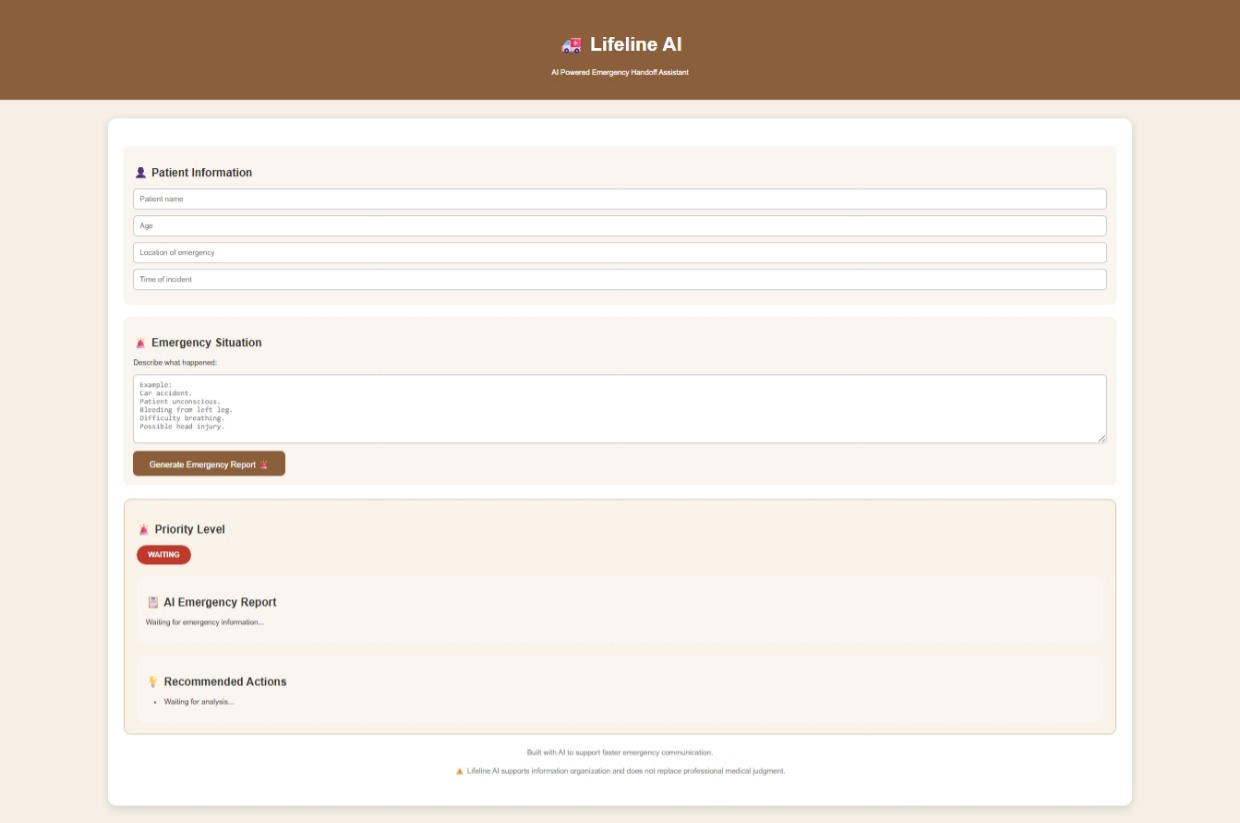
normal interface
-
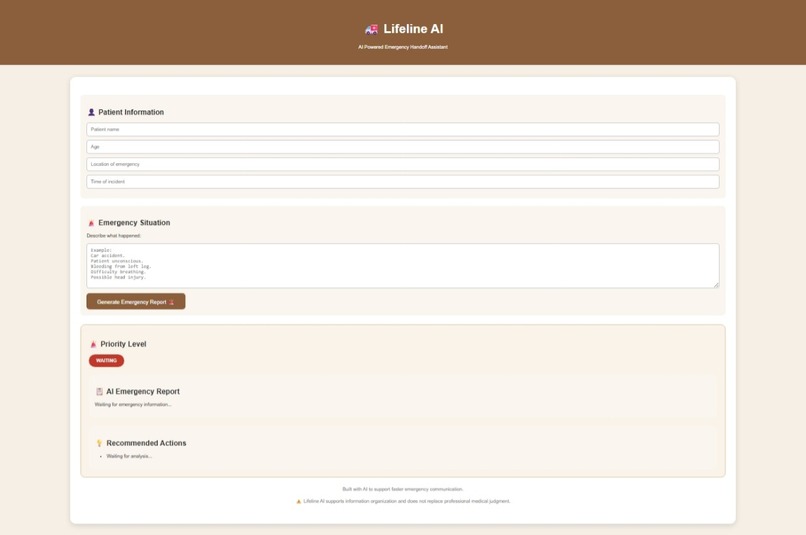
normal interface
-
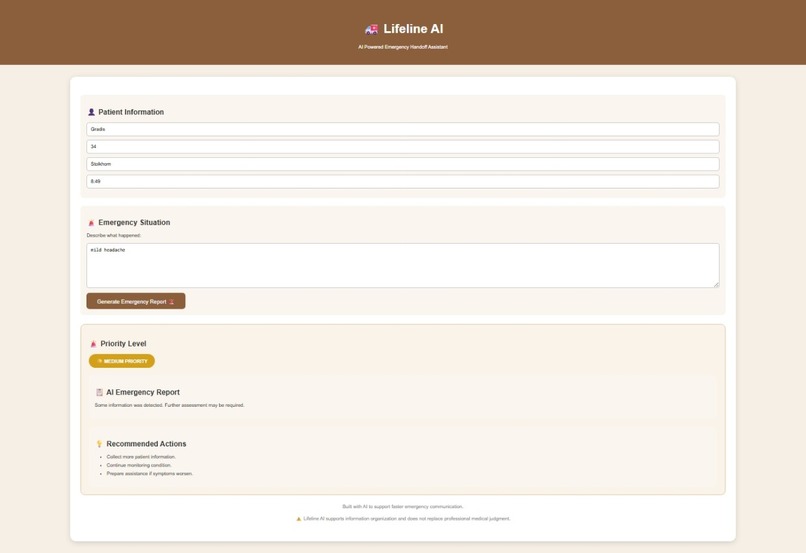
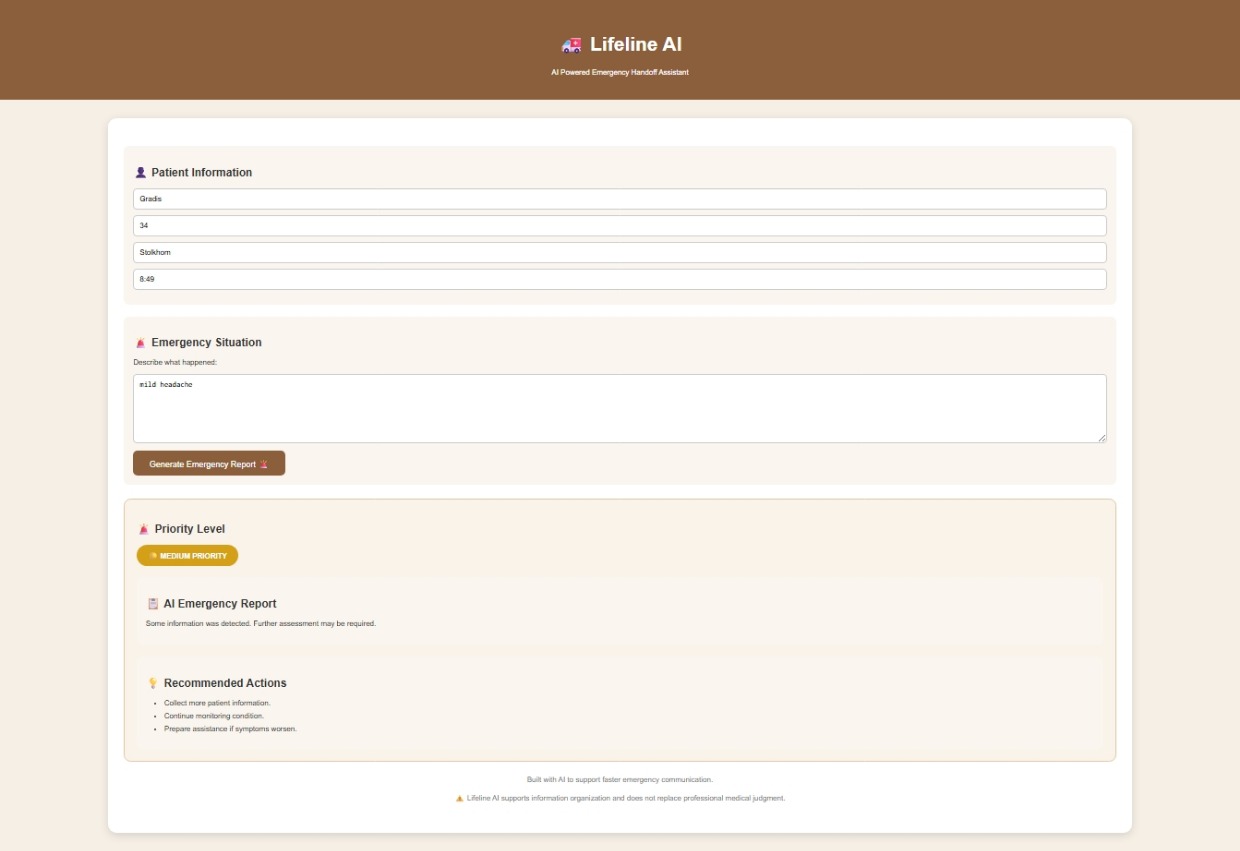
when information of patient are entered
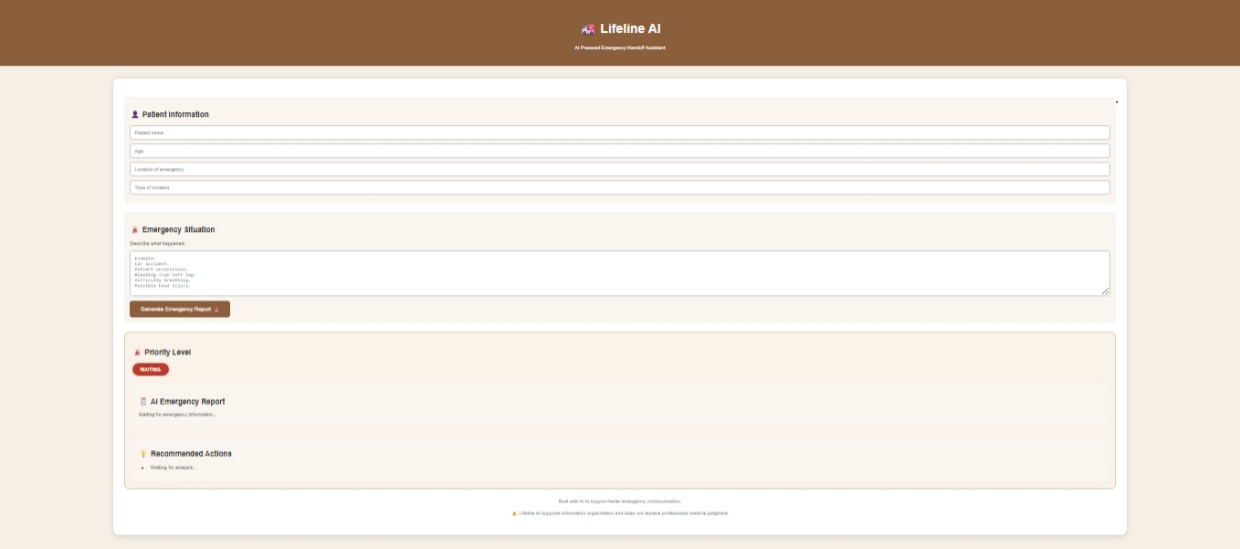
Inspiration
Emergency situations require fast and accurate communication. However, important patient information can sometimes be delayed, incomplete, or difficult to organize during stressful moments.
I was inspired to create Lifeline AI after thinking about how technology could support emergency responders and healthcare teams by helping them quickly structure critical information. My goal was to create a simple tool that turns emergency descriptions into a clearer handoff report.
What it does
Lifeline AI is an emergency handoff assistant prototype that helps organize emergency information.
Users can:
- Enter patient information and emergency details.
- Describe the emergency situation.
- Receive an urgency classification.
- Generate an emergency summary.
- View recommended actions based on the reported situation.
The purpose of Lifeline AI is to support faster and clearer communication during emergencies.
How I built it
I built Lifeline AI as a web application using:
- HTML for the structure of the application.
- CSS for the design and user experience.
- JavaScript for the interactive logic and emergency analysis.
I developed the project through rapid prototyping, testing, and debugging. AI-assisted development helped me learn concepts faster, improve my code structure, and solve programming challenges during the building process.
Challenges I ran into
One of my biggest challenges was transforming an idea into a functional prototype within a limited time while learning new development concepts.
The challenges I faced included:
- Understanding how different parts of a web application work together.
- Debugging and improving my code.
- Designing an interface that is simple but useful.
- Creating meaningful emergency responses while keeping the prototype realistic.
- Limited access to advanced AI models due to budget constraints, which prevented us from integrating the more powerful real-time analysis and intelligent decision-making features we had originally envisioned for the prototype.
Accomplishments that I'm proud of
I am proud of turning an idea into a working prototype in a short period of time.
My key accomplishments include:
- Building a functional emergency reporting interface.
- Creating an urgency classification system.
- Generating structured emergency reports.
- Designing a clean and accessible user experience.
- Developing a solution focused on a real-world problem.
What I learned
Building Lifeline AI taught me that solving real problems requires more than just technology. It requires understanding users, designing clearly, testing ideas, and continuously improving.
I learned:
- Practical web development skills.
- How to turn a concept into a working product.
- How to use AI-assisted tools to accelerate development.
- The importance of simplicity and communication when designing solutions.
What's next for Lifeline AI
My future vision for Lifeline AI is to continue improving it into a more advanced emergency support system.
Future versions could include:
- Real-time AI-powered emergency analysis.
- Voice-based emergency reporting.
- Multilingual support for emergency communication.
- Integration with healthcare systems.
- Automated medical handoff documentation.
I hope to continue developing Lifeline AI into a tool that helps make emergency communication faster, clearer, and more organized.
Built With
- ai
- css
- github
- html
- javascript
- social
- vscode
- web


Log in or sign up for Devpost to join the conversation.