🚨 Inspiration
Every minute after an accident can decide between life and death.
In many real-world cases, the biggest problem is not the accident itself — but the delay in emergency response.
We were inspired by a simple but critical question:
“What happens in the first 5 minutes after an accident?”
Most existing solutions focus on detecting accidents.
But very few focus on what truly matters — reducing response time and saving lives.
💡 What it does
LifeLine AI is an intelligent emergency response system designed to automate and optimize the critical first minutes after an accident.
It:
- Triggers emergency alerts instantly
- Uses AI to analyze severity and recommend the best hospital
- Coordinates nearby helpers in real time
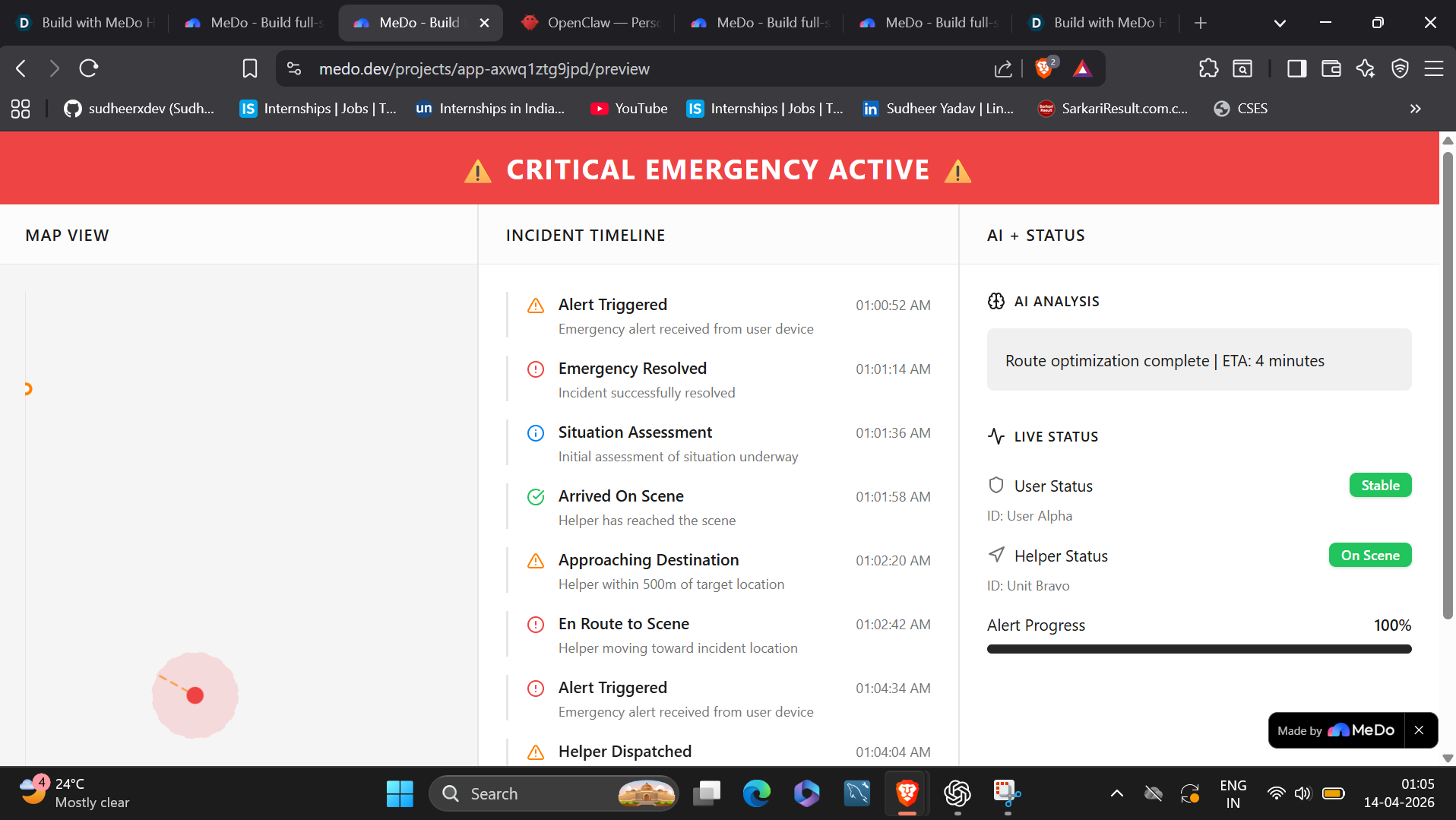
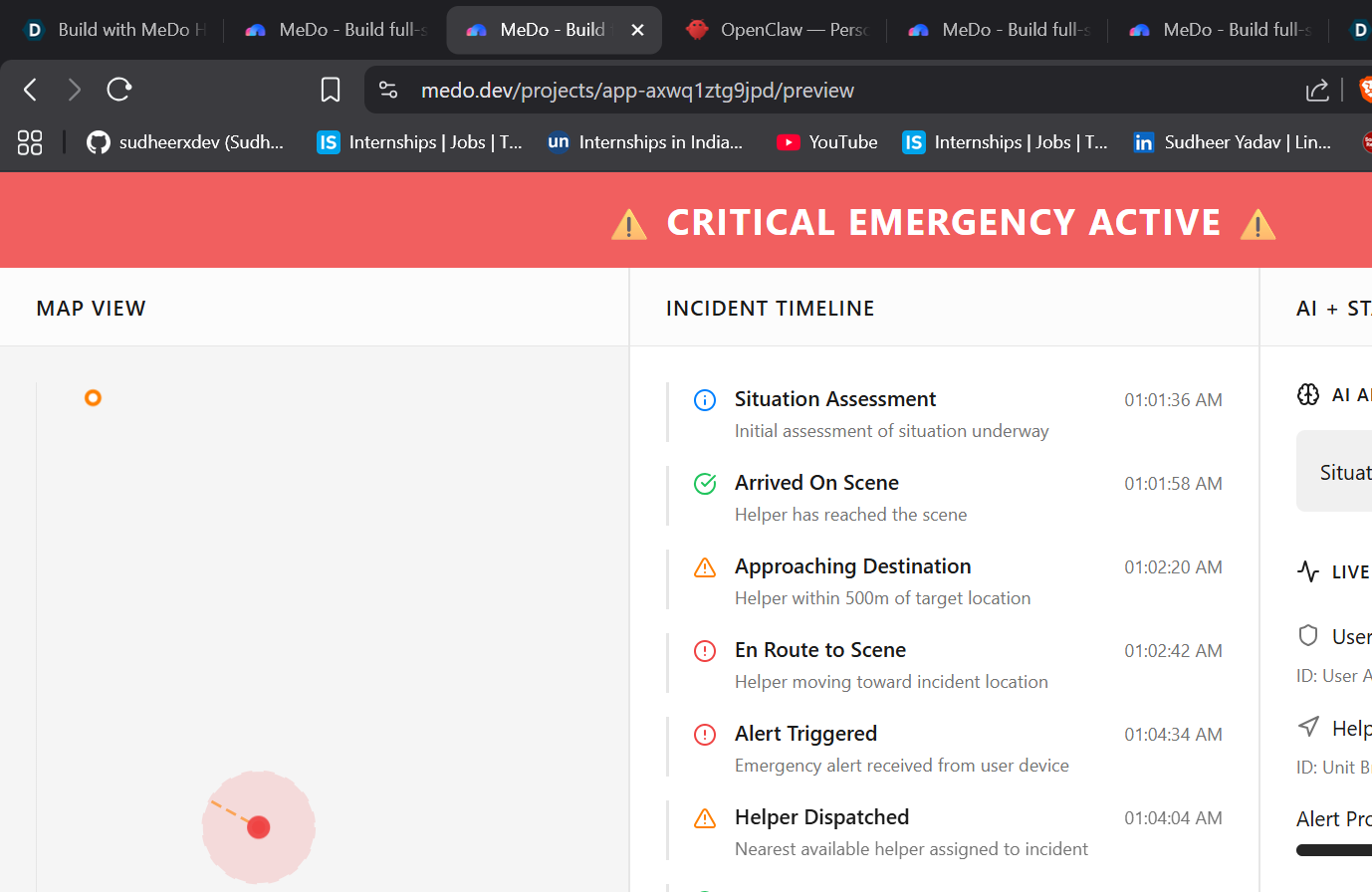
- Displays everything in a live command center dashboard
This transforms a chaotic situation into a structured, intelligent response system.
🧠 How we built it
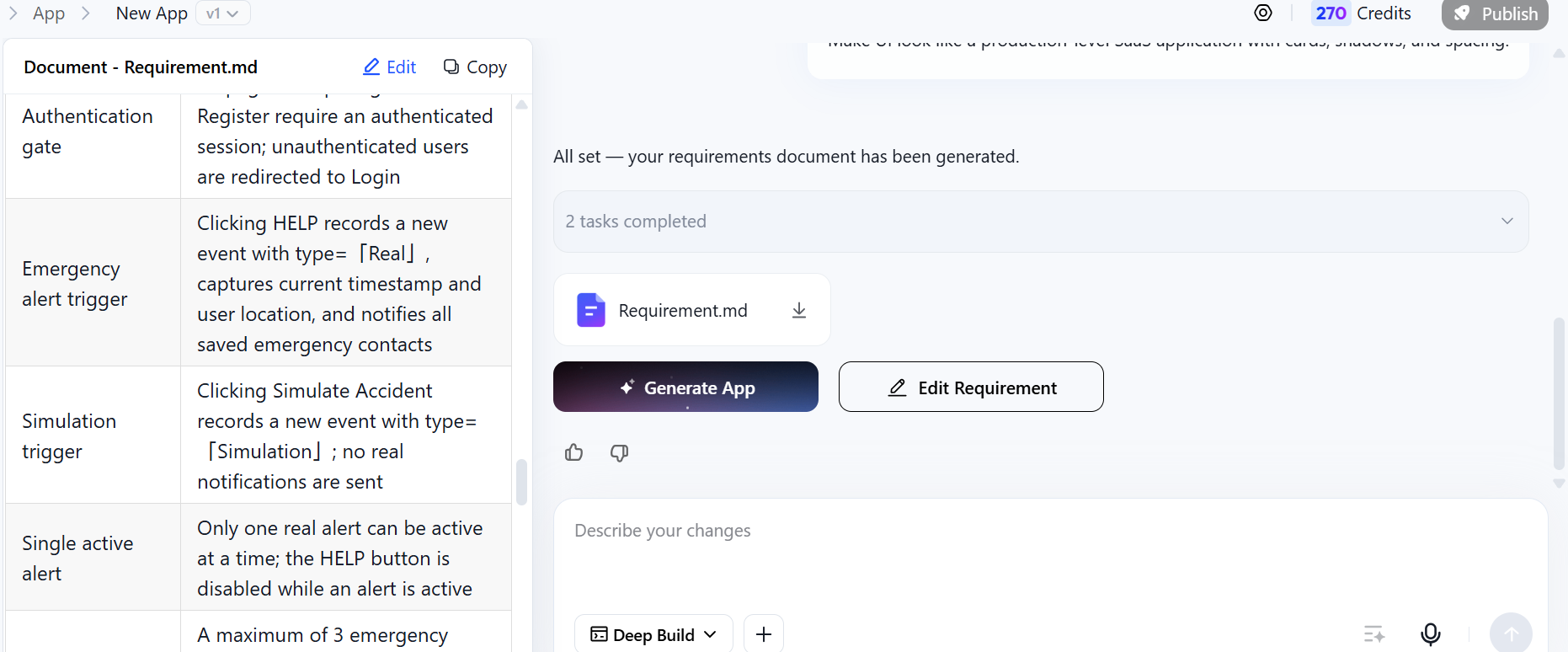
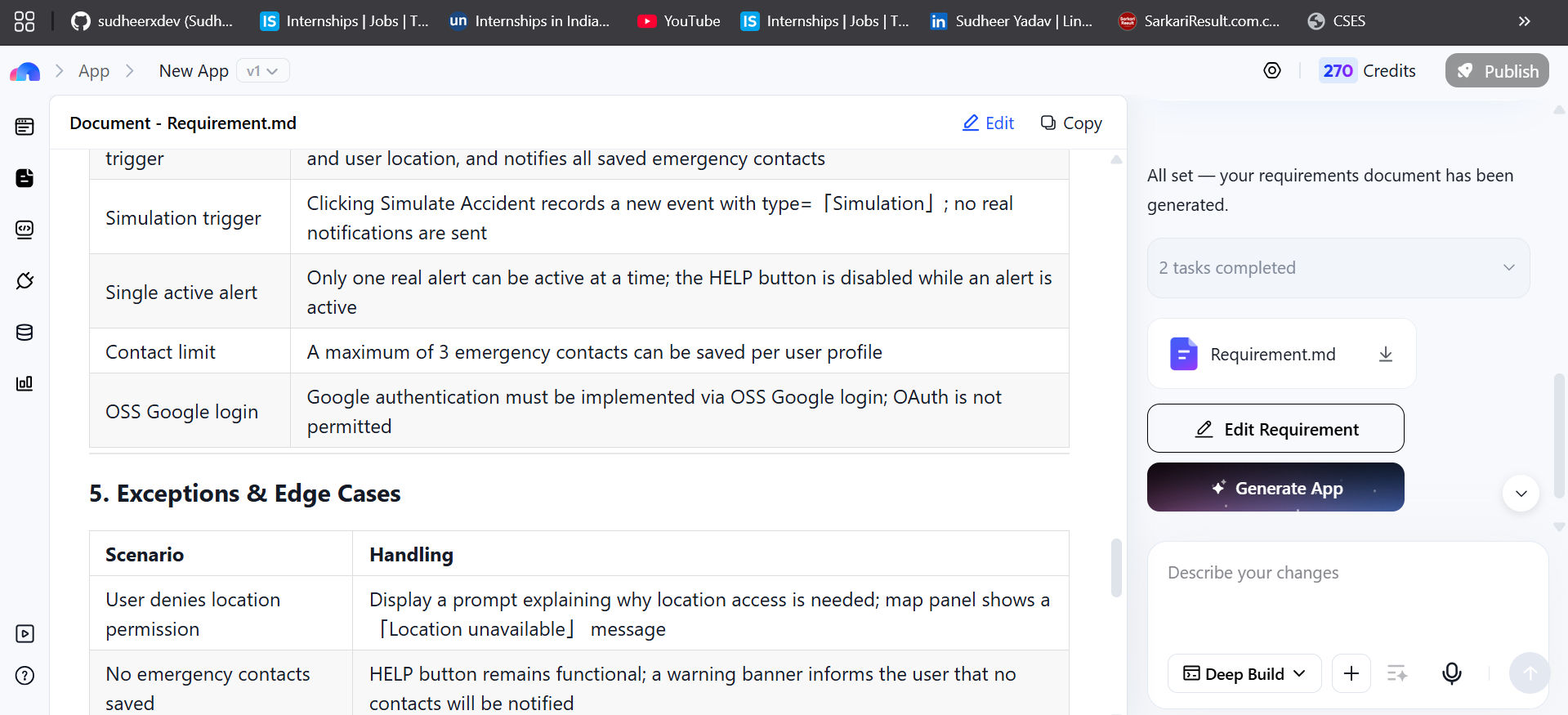
We built LifeLine AI using MeDo’s AI-powered full-stack generation system.
- Used multi-turn prompting to iteratively build features
- Designed a real-time dashboard with map, timeline, and AI panels
- Implemented an AI Decision Engine for hospital selection and severity analysis
- Simulated emergency workflows including alerts, helpers, and routing
MeDo allowed us to rapidly prototype and deploy a fully functional system with minimal friction.
⚙️ Key Features
- 🚑 One-click emergency trigger (HELP button)
- 🧠 AI-powered decision engine with explainable reasoning
- 🗺️ Real-time map with hospital routing
- 👥 Nearby helper coordination system
- 📊 Live emergency timeline and status tracking
- 🎬 Demo mode for smooth real-time simulation
⚡ Challenges we ran into
- Designing a system that feels real-time and realistic
- Making AI decisions visible and understandable (not hidden)
- Creating a smooth demo flow for presentation
- Balancing simplicity with powerful features
📚 What we learned
- Real-world problems require more than just features — they need systems thinking
- AI is powerful only when its decisions are transparent and explainable
- Presentation and clarity are just as important as technical implementation
🌍 Impact
LifeLine AI is designed to reduce the gap between accident and response —
a gap where most lives are lost due to delay.
If implemented at scale, this system could help:
- Reduce emergency response time
- Improve coordination
- Potentially save thousands of lives
🚀 Future Scope
- Integration with real emergency services APIs
- Traffic-aware routing
- Wearable device integration
- Real-time hospital capacity tracking
💀 Final Thought
We are not just detecting accidents.
We are reducing the time between accident and survival.
Built With
- ai-(simulated)
- javascript
- maps-api-(simulated)
- medo
- real-time-dashboard


Log in or sign up for Devpost to join the conversation.