-
-
LifeLine AI — Online NVIDIA Nemotron AI + Offline Emergency Resilience
-
LifeLine AI By MSB CREATIVE STUDIOS
-
Inspiration# LifeLine AI by MSB CREATIVE STUDIOS
LifeLine AI is an emergency communication assistant designed for situations where people may need fast, structured help even when internet connectivity or cloud AI is unavailable.
Inspiration
The project was inspired by a simple problem: during an emergency, a person may have difficulty clearly communicating what happened, what assistance is needed, and how severe the situation is. Connectivity can also become unreliable during fires, accidents, disasters, infrastructure failures, or other crisis situations.
I wanted to build a system that could use advanced AI when connectivity is available, while still providing useful emergency classification when it is not.
How it works
LifeLine AI has two deliberately separated modes:
ONLINE AI
When internet connectivity is available, the application sends emergency text to a Node.js/Express backend. The backend makes a runtime inference request to Nebius Token Factory using NVIDIA Nemotron.
Nemotron structures the emergency information into:
- Emergency category
- Severity level
- Required assistance
- Responder-oriented instructions
- Emergency communication output
- English translation assistance
The API key remains server-side and is never exposed to the browser.
OFFLINE / RESILIENCE
When cloud AI is unavailable, LifeLine AI does not attempt to call Nebius, OpenAI, Gemini, or another cloud AI service.
Instead, a deterministic local emergency classifier provides basic emergency categorization using predefined rules and multilingual emergency keywords.
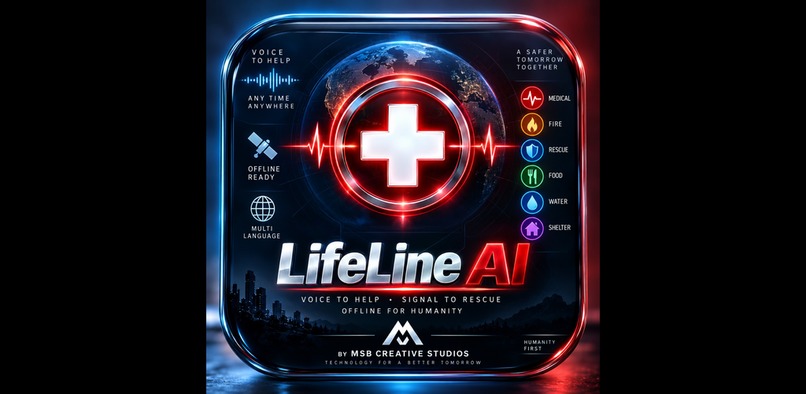
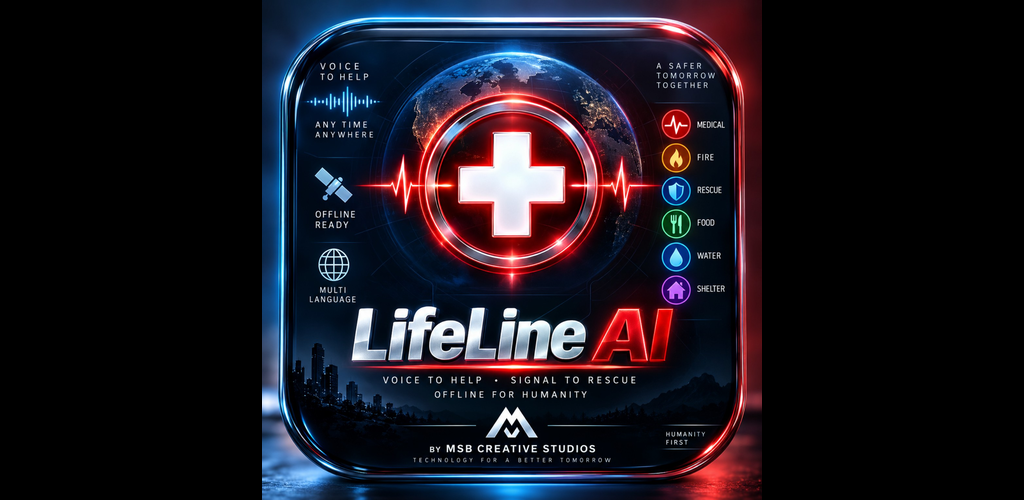
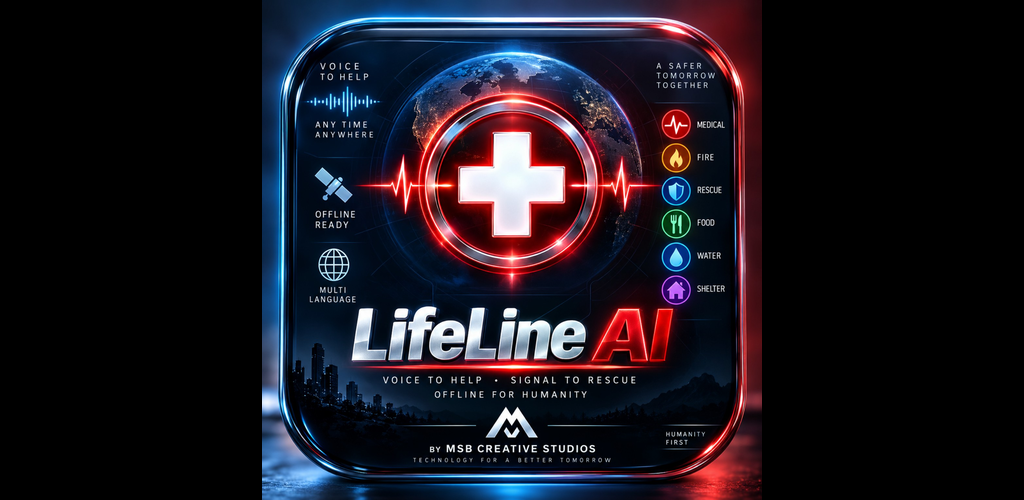
The offline system supports categories including:
- Medical
- Fire
- Rescue
- Food
- Water
- Shelter
- Missing Person
- Other
It also assigns severity levels from 1–5 and maps detected needs to emergency resources.
Multilingual communication
LifeLine AI is designed around 10 languages:
English, Tamil, Hindi, Telugu, Kannada, Malayalam, Bengali, Marathi, Spanish, and French.
The application preserves the original transcript and can provide an English translation aid for structured emergency communication.
Browser speech recognition is supported for voice input. The server architecture also supports optional NVIDIA Whisper multilingual ASR when appropriate NVIDIA/NIM credentials are provisioned.
Silent SOS / Low-Interaction Emergency Mode
LifeLine AI provides a low-interaction SOS mode for situations where speaking may be difficult, unsafe, or impractical.
The user can activate SOS and, if able, enter a short message. They can also attach up to two photos and an optional short video as visual evidence. Before anything is shared, LifeLine AI presents a confirmation screen showing the information that will be sent.
When internet is available: After the user explicitly confirms, the SOS can be shared through a configured destination or emergency-organization integration. The system does not automatically contact government, police, ambulance, fire, or rescue services.
When internet is unavailable: The SOS information is saved locally on the device as a pending SOS. The emergency message, classification, timestamp, and available evidence are retained locally. No cloud service is contacted and nothing is transmitted while offline.
When connectivity returns: The pending SOS can be prepared for transmission through a supported connection and configured integration. The user remains in control of the sharing process; the system does not claim automatic emergency dispatch.
Location is optional: If the device can obtain a GPS/GNSS position, the location can be included after review. If location is unavailable or permission is denied, the SOS continues without location data.
This creates a simple resilience flow:
No internet → Save locally → Connection returns → Review/controlled sharing → Configured destination
Emergency organization integration
The application includes an integration framework for:
- TEST / DEMO destinations
- Public contact integrations
- Authorized API integrations
External emergency transmission requires an appropriate configured integration and a user-controlled sharing flow.
Offline SOS information can remain in a local pending queue and be prepared for transmission when a supported connection becomes available.
How it was built
The project was built as a web application using React, TypeScript, Vite, Node.js and Express.
Nebius Token Factory provides the online inference path for NVIDIA Nemotron. The offline engine is implemented locally in the browser so that the resilience path remains independent from cloud AI.
A major engineering challenge was keeping the online AI path and offline path strictly separated. Another challenge was making multilingual voice input work while preserving the original emergency statement for reliable downstream processing.
During development, I also fixed a production triage event-handling issue, added multilingual voice architecture, implemented explicit SOS confirmation, and strengthened privacy and server-side credential handling.
What I learned
The project taught me that an emergency AI system should not depend entirely on cloud connectivity. AI capability and deterministic resilience need to be treated as separate layers.
I also learned that preserving the user's original words is important in emergency communication. AI can structure and translate information, but the original statement should remain available as the source message.
The final architecture combines cloud AI when available with a deterministic local fallback when it is not.
Safety boundary
LifeLine AI is an emergency communication and information-structuring tool. It does not replace emergency services and does not automatically contact government, police, ambulance, fire, or rescue organizations.
Any external emergency-organization transmission requires an appropriate configured integration and explicit user-controlled sharing.
Built With
- generativeai
- llm
- neibustokenfactory
- nividianemotron
- node.js
- react
- typescript
- vite
- webapplication
