
LifeLine+: AI-Powered Emergency Response for Everyone
Inspiration
Every second matters during an emergency, yet millions of people around the world lack immediate access to reliable first aid guidance or emergency services. In many low-resource communities, delayed response times and limited healthcare access cost lives that could have been saved. We built LifeLine+ to bridge this gap by putting an intelligent emergency assistant in everyone's pocket.
What it does
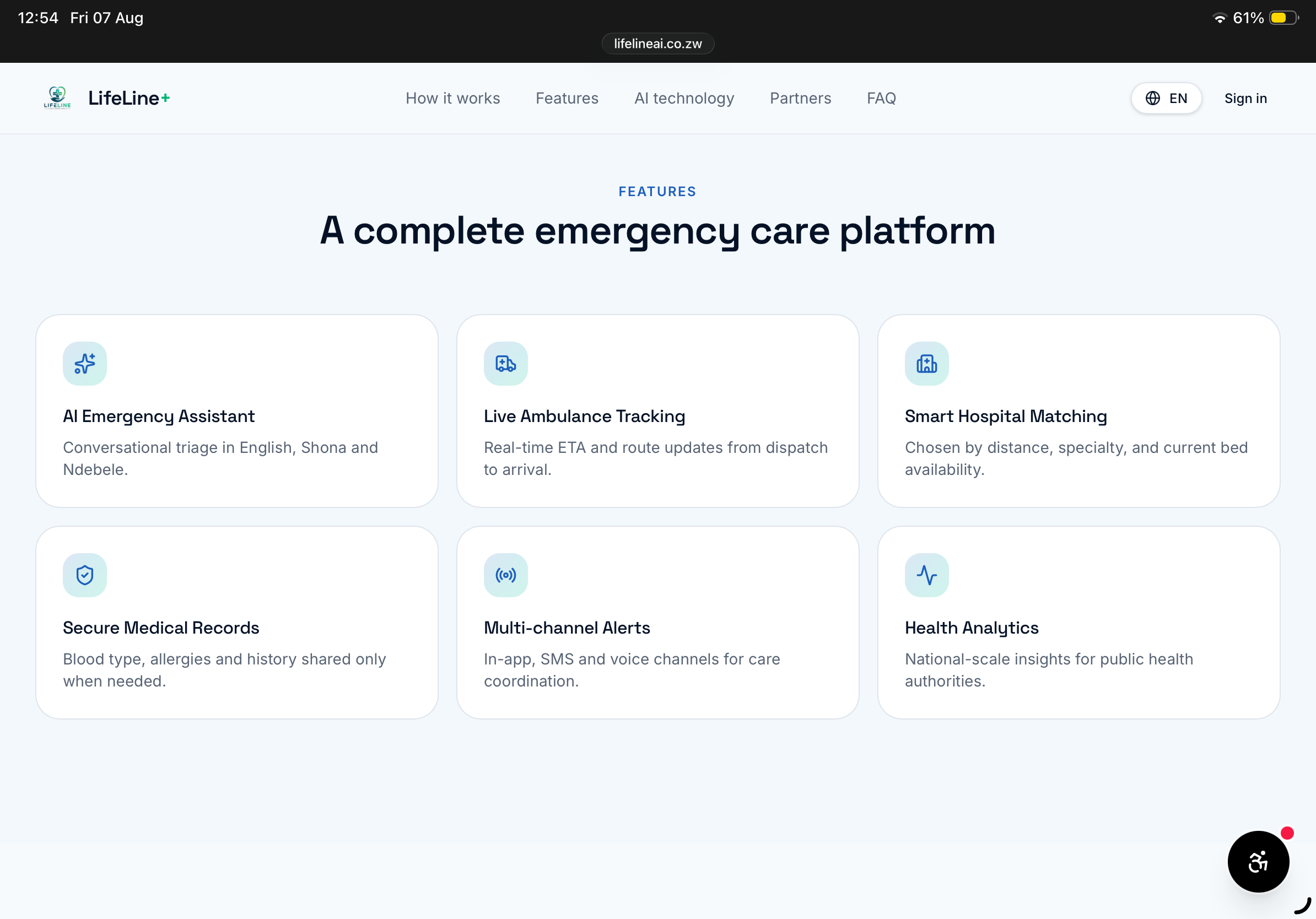
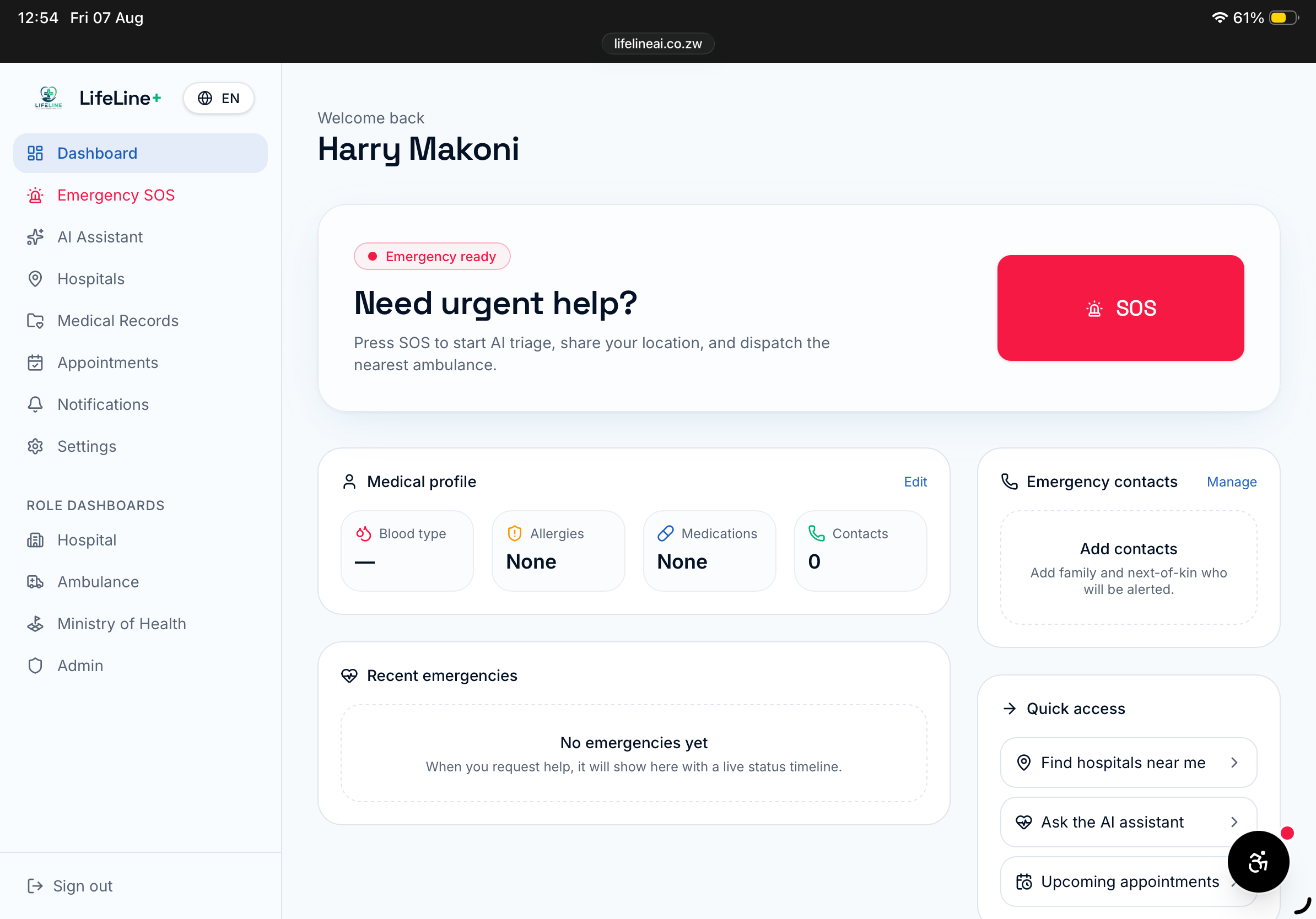
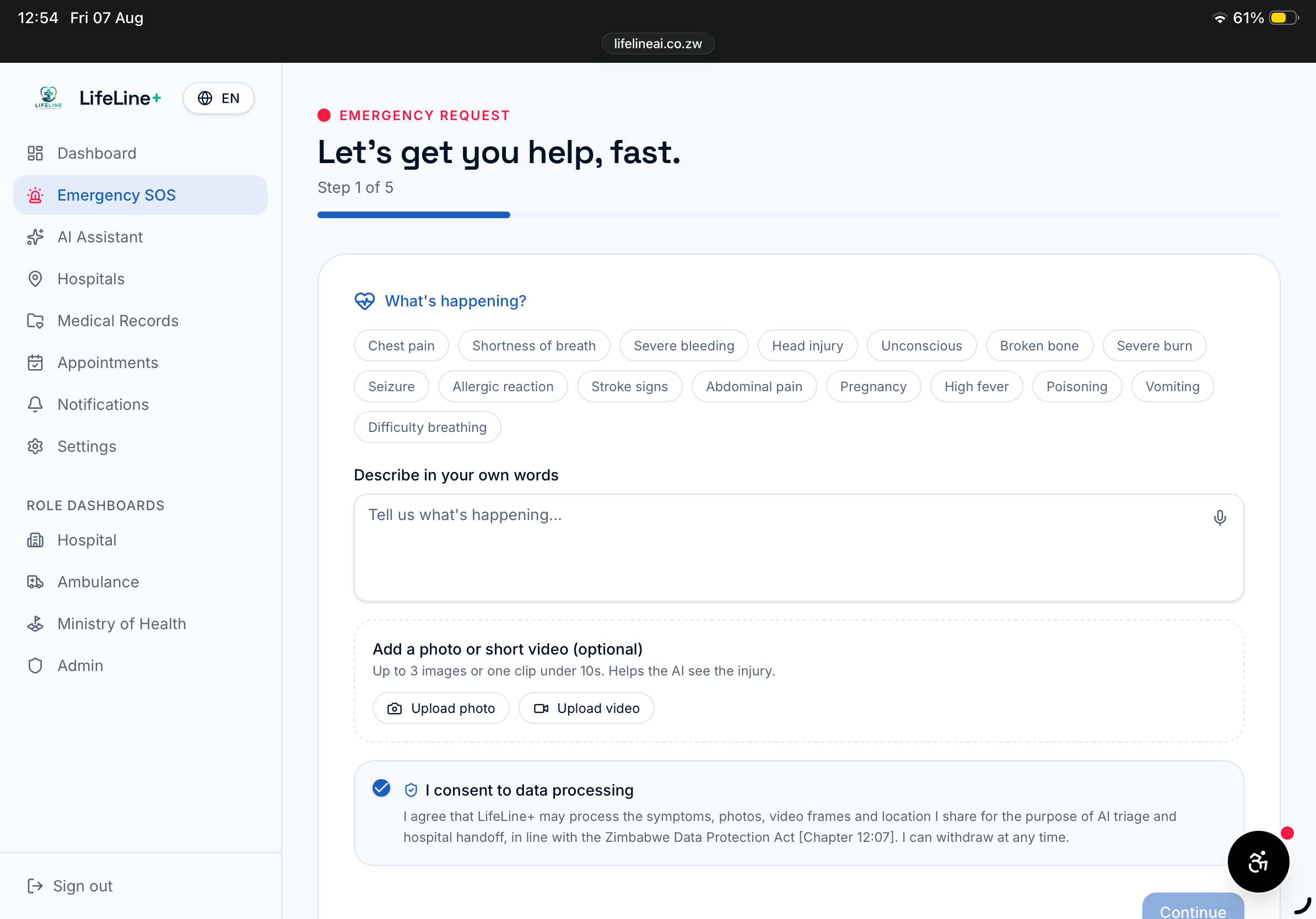
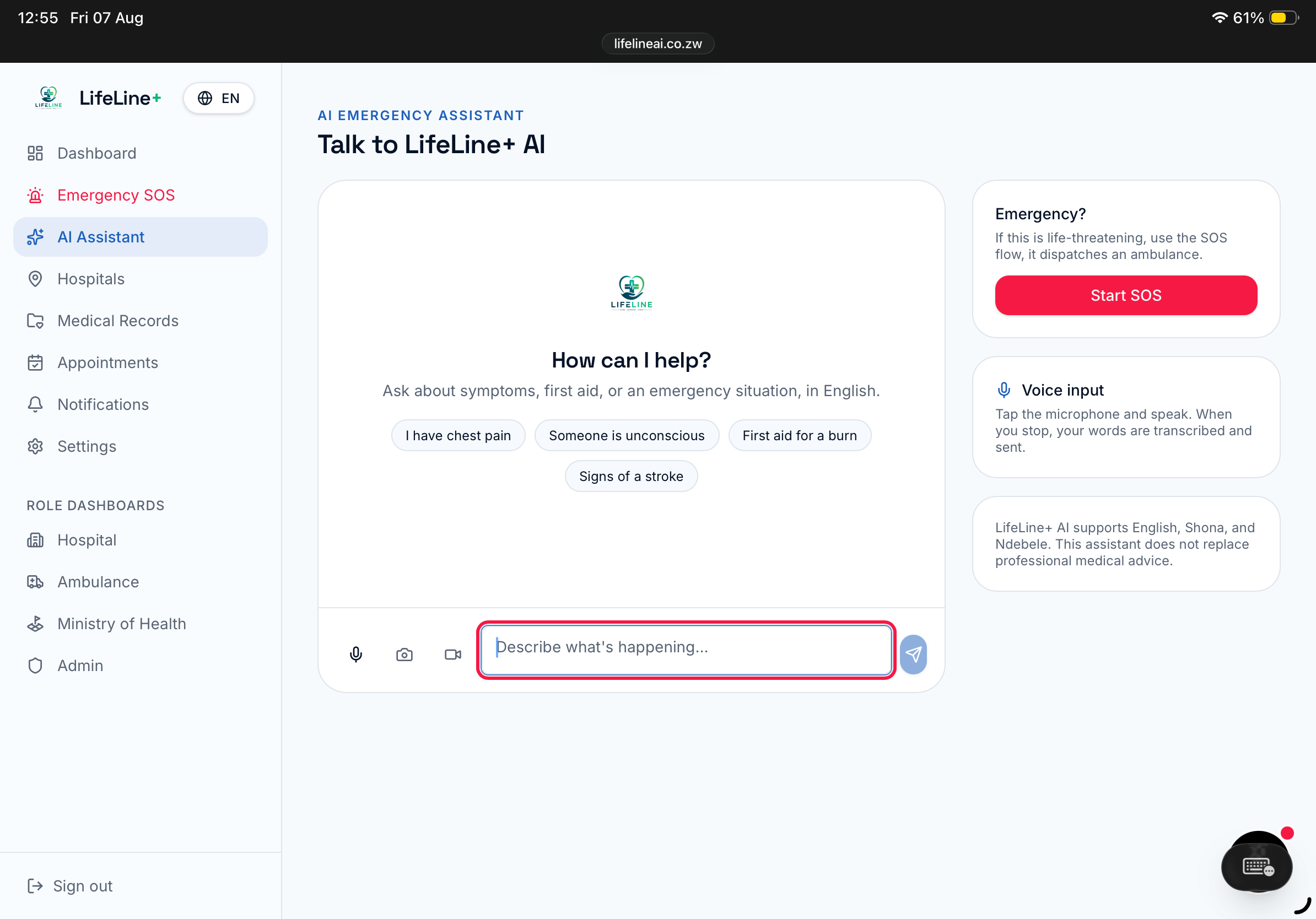
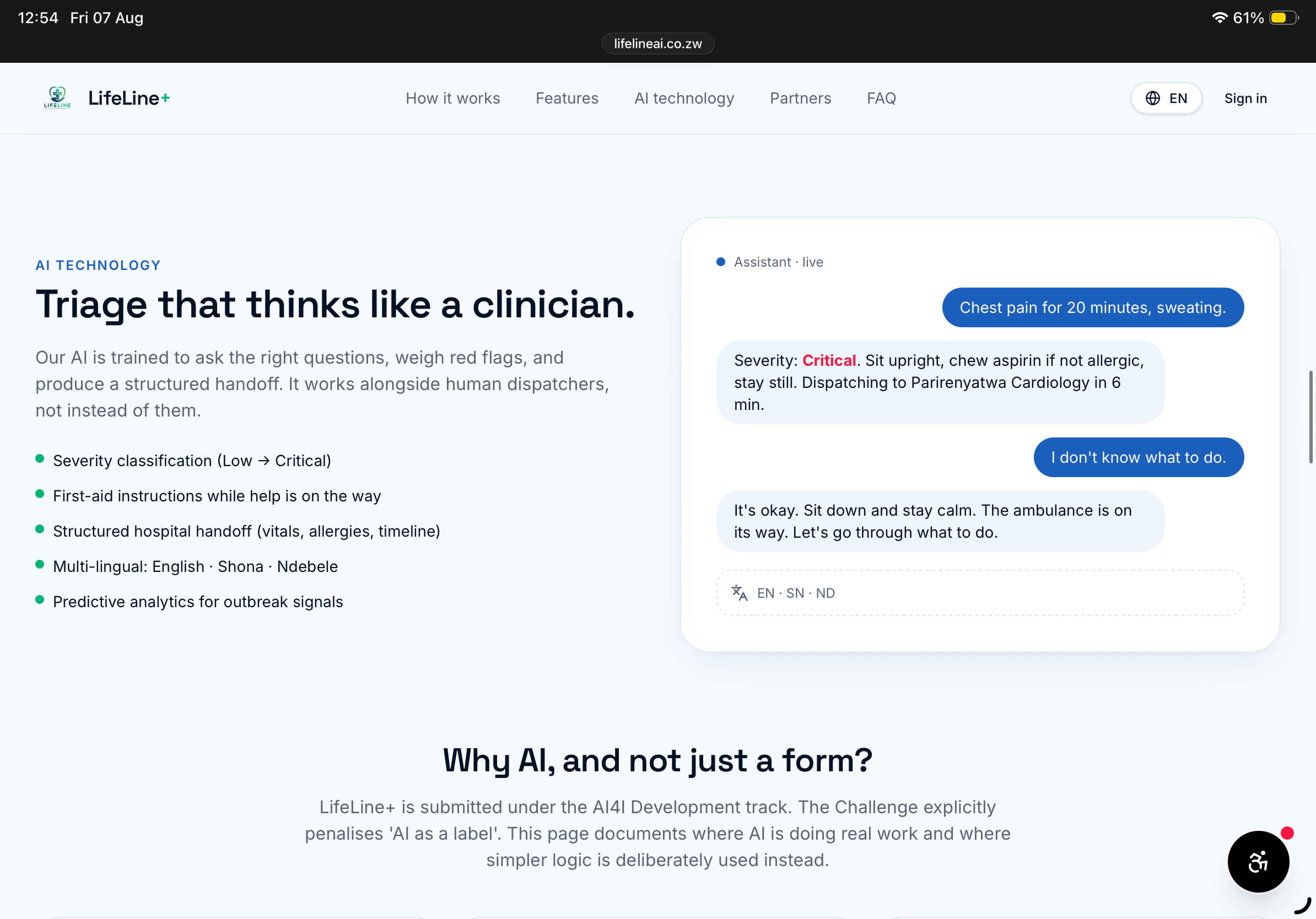
LifeLine+ is an AI-powered emergency response platform that provides instant first aid guidance, emergency triage, and connects users to the appropriate emergency services. Users can interact using text, voice, or images, enabling rapid assistance during medical emergencies, road accidents, fires, and other critical situations.
The platform helps users:
- Receive step-by-step first aid instructions.
- Get AI-powered emergency assessments.
- Share emergency information quickly.
- Access assistance even in resource-constrained environments.
How we built it
LifeLine+ was built using a modern full-stack architecture with TypeScript and React for the frontend, Supabase for authentication and secure data storage, and AI models for medical guidance, speech recognition, text-to-speech, and image understanding. Security and privacy were key priorities, with role-based access control and encrypted communication protecting sensitive user data.
Challenges we ran into
Building a reliable AI assistant for emergencies required balancing speed, accuracy, and user safety. We also had to design a system that remains intuitive under stressful situations while ensuring secure handling of sensitive health information.
Accomplishments that we're proud of
- Built a functional AI emergency response platform.
- Integrated multimodal AI supporting text, voice, and images.
- Designed a secure and scalable architecture.
- Created a solution with the potential to improve emergency response in underserved communities.
What we learned
This project strengthened our skills in AI integration, cloud architecture, secure application development, and user-centered design. Most importantly, it showed us how technology can make life-saving assistance more accessible.
What's next for LifeLine+
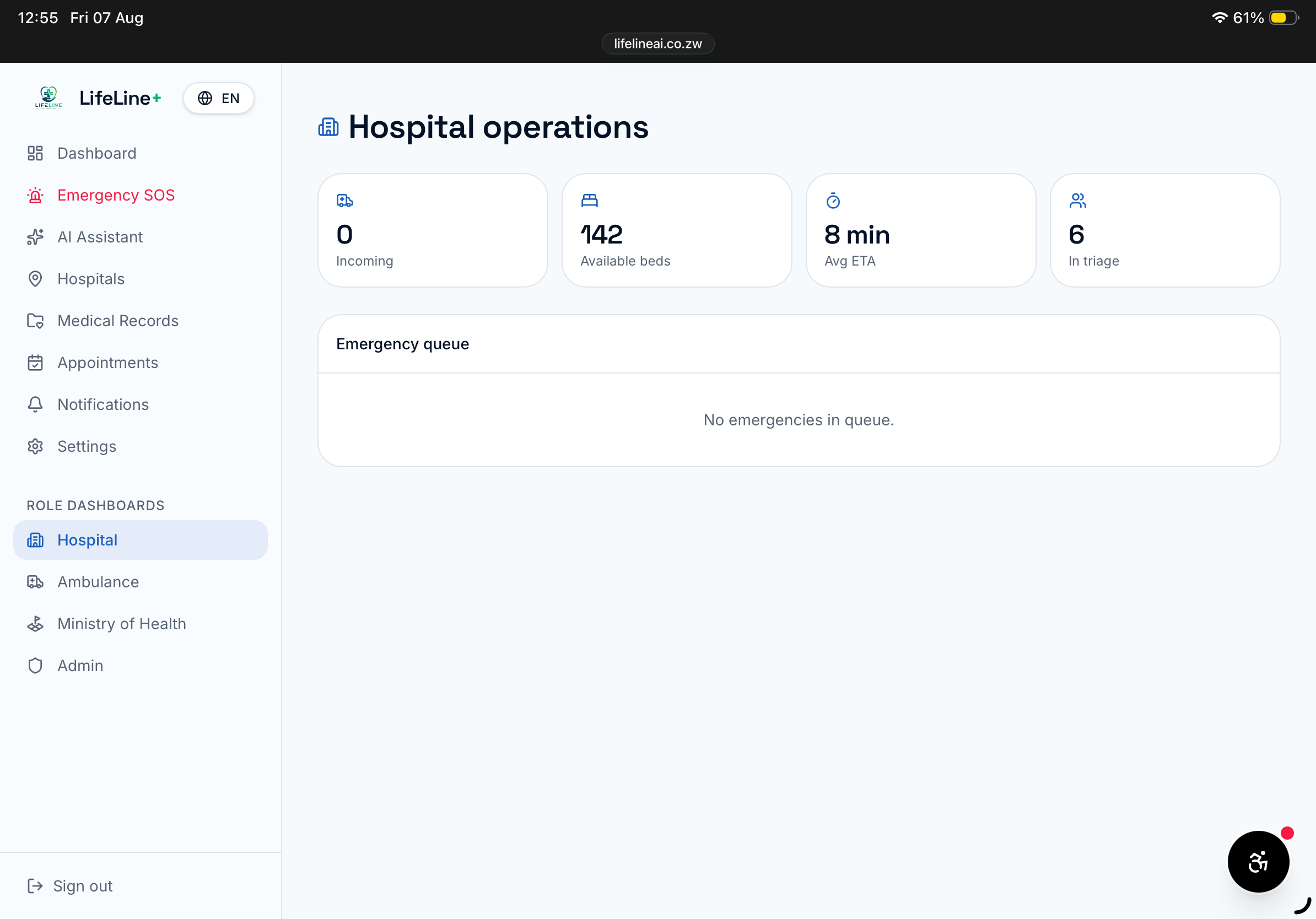
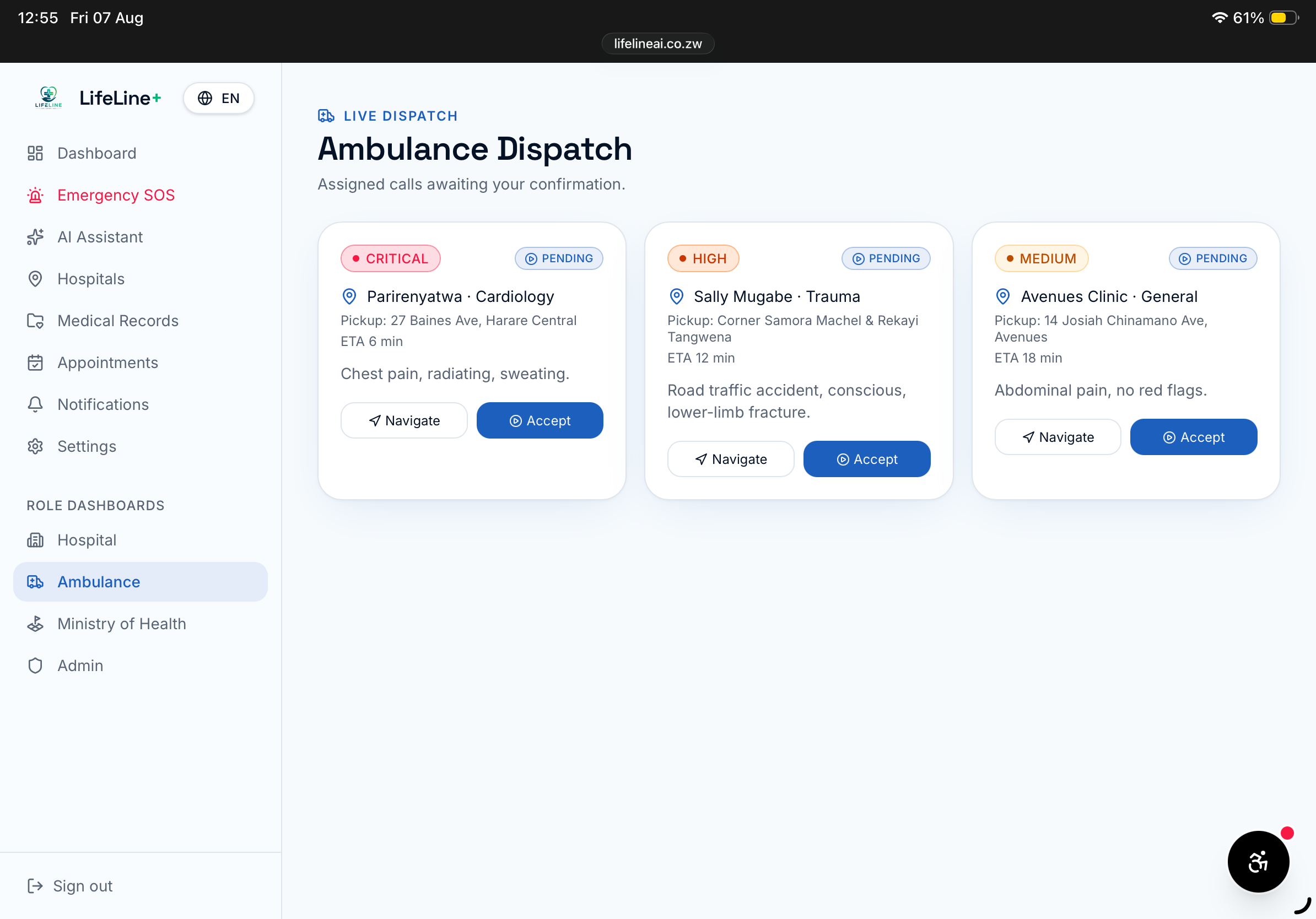
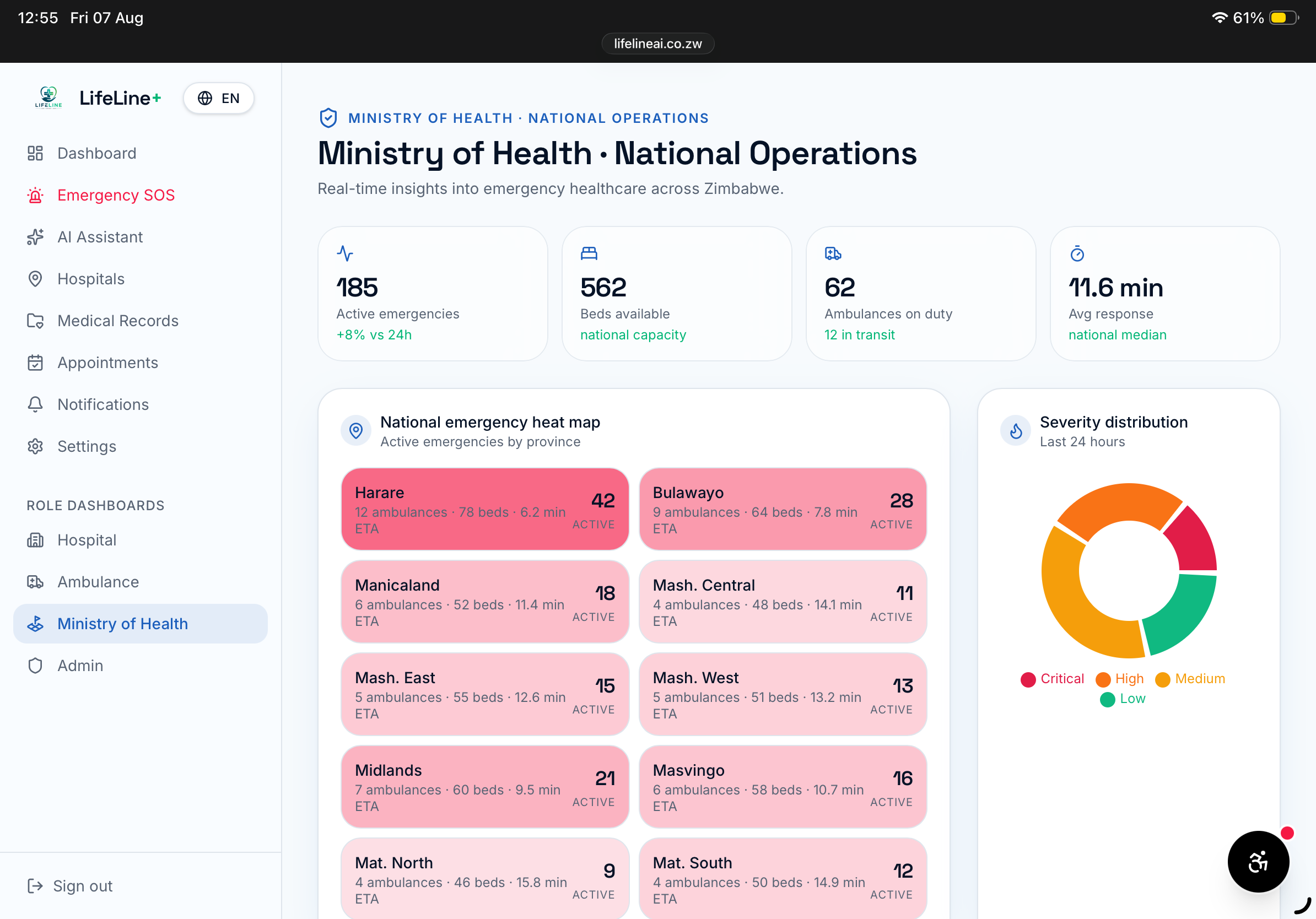
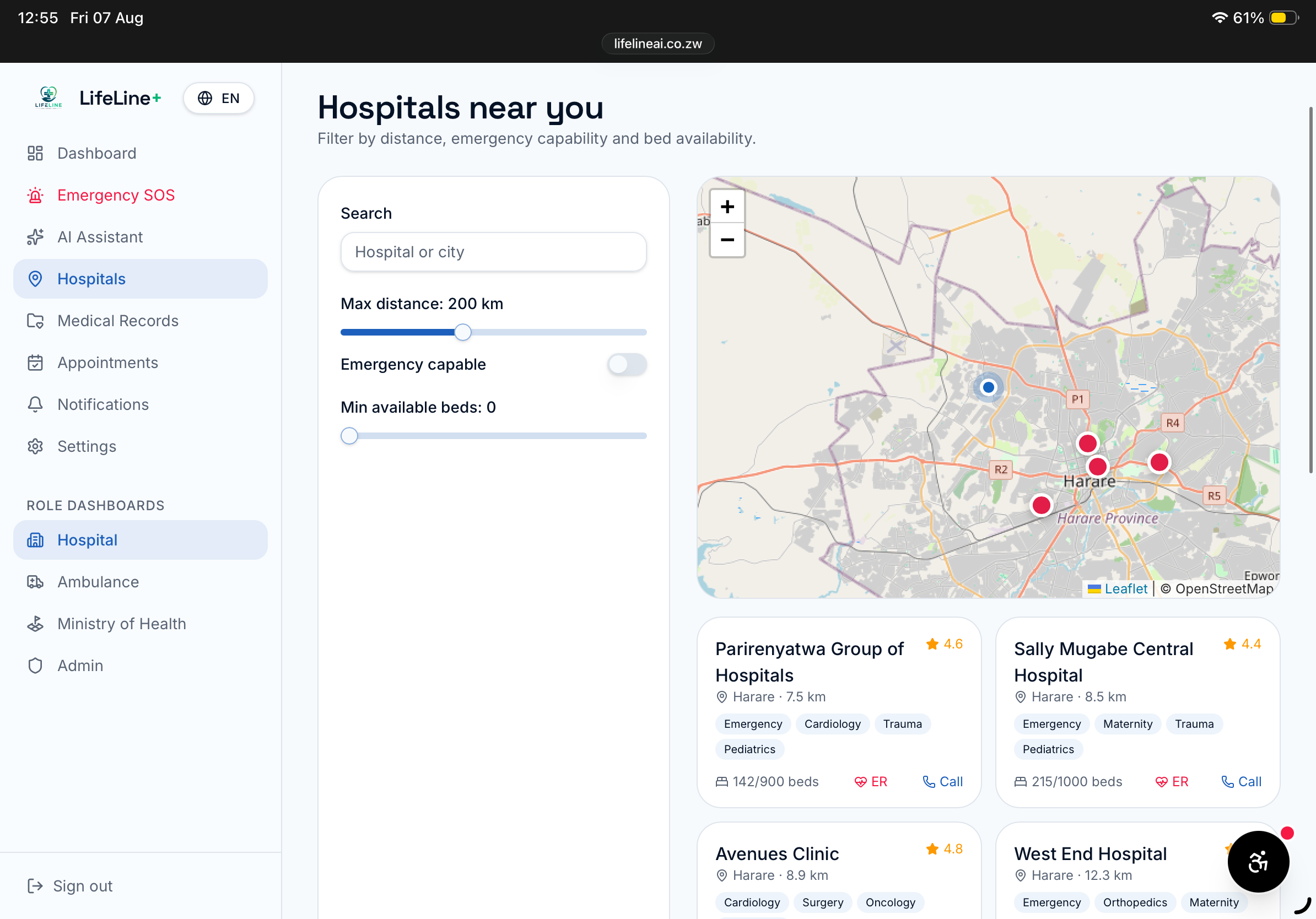
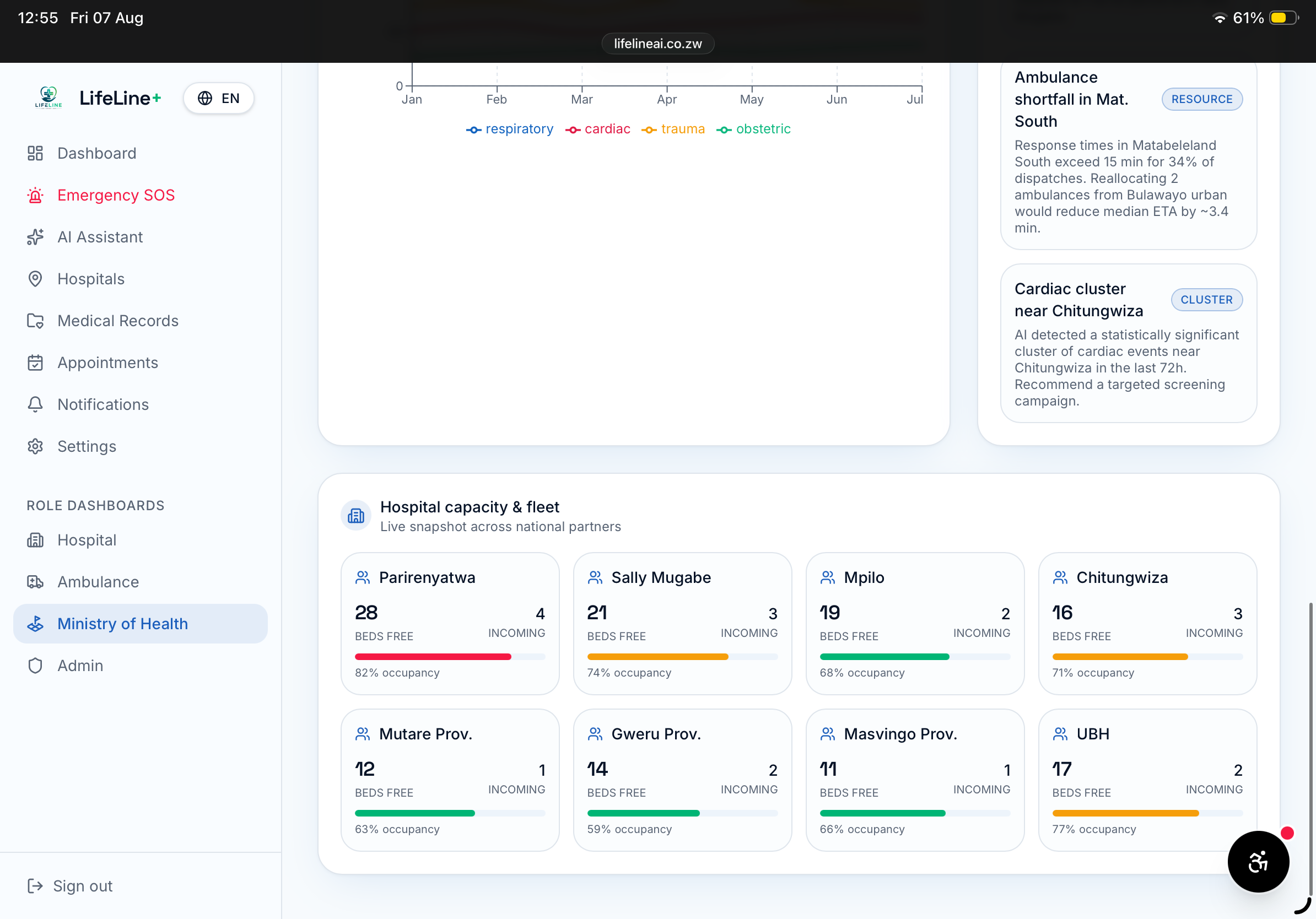
We plan to integrate live emergency dispatch, offline functionality, wearable device support, multilingual assistance, hospital integration, and predictive AI that can proactively identify high-risk situations. Our vision is to make LifeLine+ the world's most accessible AI-powered emergency response platform, helping save lives wherever and whenever emergencies happen.
Built With
- ai-gateway
- bun
- cloudfare-workers
- google-gemini
- i8n
- lucide-react
- media-recorder-api
- multimodal-ai
- openai-tts
- openai-whisper
- postgresql
- react
- react-query
- rest-api
- row-level-security
- shadcn/ui
- supabase
- tailwind-css
- tanstack-start
- typescript
- vite
- wcag-2.2
- web-audio-api
- zod

Log in or sign up for Devpost to join the conversation.