🚑 LIFELINE
When every second matters, the city moves with you.
Every second matters during an emergency.
Yet when an ambulance enters a congested city, it has to navigate the same unpredictable roads as everyone else. A traffic jam, blocked intersection, road incident, or sudden change in conditions can turn a supposedly fast route into a dangerous delay.
💡 The Idea
LIFELINE is an intelligent emergency-response layer for cities.
Instead of simply asking:
“What is the fastest route for this ambulance?”
LIFELINE asks:
“What needs to happen across the city to make this emergency journey faster and safer?”
The goal is to make the city adapt around the emergency, rather than forcing the emergency vehicle to adapt to the city.
🧠 How LIFELINE Works
When an emergency is triggered, LIFELINE considers the surrounding road and transport context.
It can analyse factors such as:
- 🚑 Ambulance location and destination
- 🚦 Traffic and intersection conditions
- 🚧 Road incidents and obstacles
- 🛣️ Alternative routes
- 🚗 Surrounding traffic
- 🏥 Emergency destination information
LIFELINE then generates an adaptive emergency-response plan.
Instead of simply returning a route, the system can identify what needs to change along that route to create a more effective emergency corridor.
The difference
Traditional navigation:
Find the fastest available route.
LIFELINE:
Coordinate the route so the city can make way.
✨ Built with Gemini
Gemini acts as the intelligent reasoning layer within LIFELINE.
Rather than using Gemini as a simple chatbot, we use it to interpret emergency context and turn multiple pieces of information into an understandable response plan.
For example, given an emergency situation and changing road conditions, Gemini can help identify:
- Which route should be considered
- What obstacles may affect the journey
- Which parts of the route require attention
- When an alternative route may be preferable
- Why a particular response is recommended
This allows LIFELINE to move beyond static navigation toward context-aware emergency coordination.
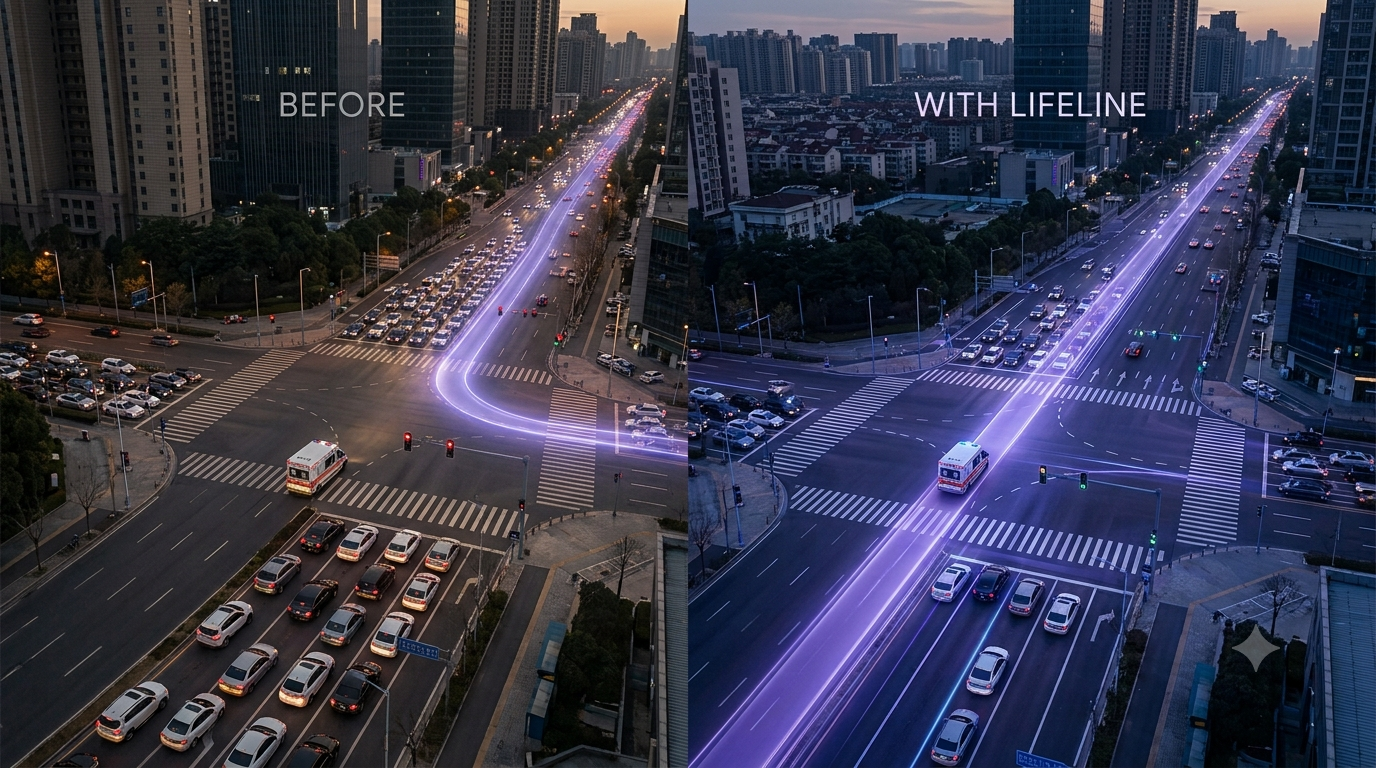
🚦 Before LIFELINE
An ambulance enters a congested city.
Traffic is unpredictable.
Intersections operate independently.
Road incidents disrupt planned routes.
The ambulance has to react to the city.
The city does not react to the ambulance.
🚑 With LIFELINE
An emergency triggers an intelligent response.
The route is evaluated continuously.
Potential obstacles are identified.
The emergency corridor is coordinated.
The city begins to make way.
The ambulance doesn't simply navigate the city.
The city adapts around the ambulance.
🌍 Why It Matters
For ordinary journeys, saving a few minutes is convenient.
During an emergency, those minutes can matter enormously.
LIFELINE is designed around a simple idea:
Emergency response should not depend entirely on how well an ambulance can fight its way through a city.
Cities already contain roads, traffic systems, emergency vehicles, and enormous amounts of information.
The opportunity is to make those systems work together when it matters most.
🔮 What's Next?
LIFELINE begins with emergency medical response, but the underlying vision is much larger.
The same intelligent emergency layer could eventually support:
- 🚒 Fire response
- 🚓 Critical police response
- 🌊 Flood and disaster response
- 🌪️ Large-scale emergency coordination
- 🚨 Multi-vehicle emergency situations
The long-term vision is a city that can temporarily reorganise itself around an emergency.
Not just smarter navigation.
A smarter emergency-response city.
❤️ Our Vision
We imagine a future where an emergency vehicle never has to face a city that simply says:
“Good luck getting through.”
Instead, the city understands what is happening and makes way.

Log in or sign up for Devpost to join the conversation.