-
-
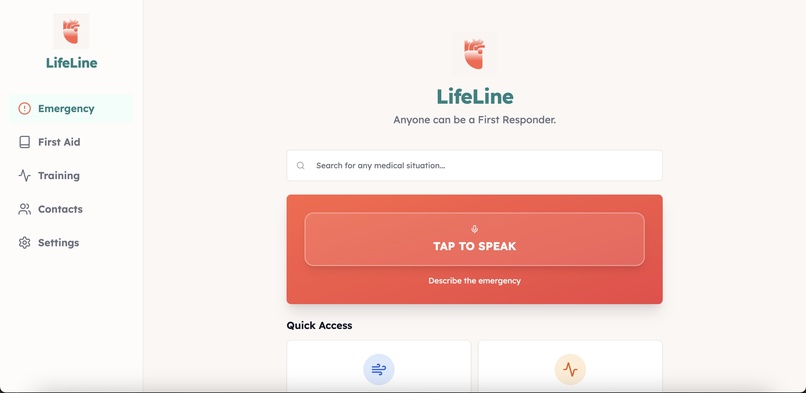
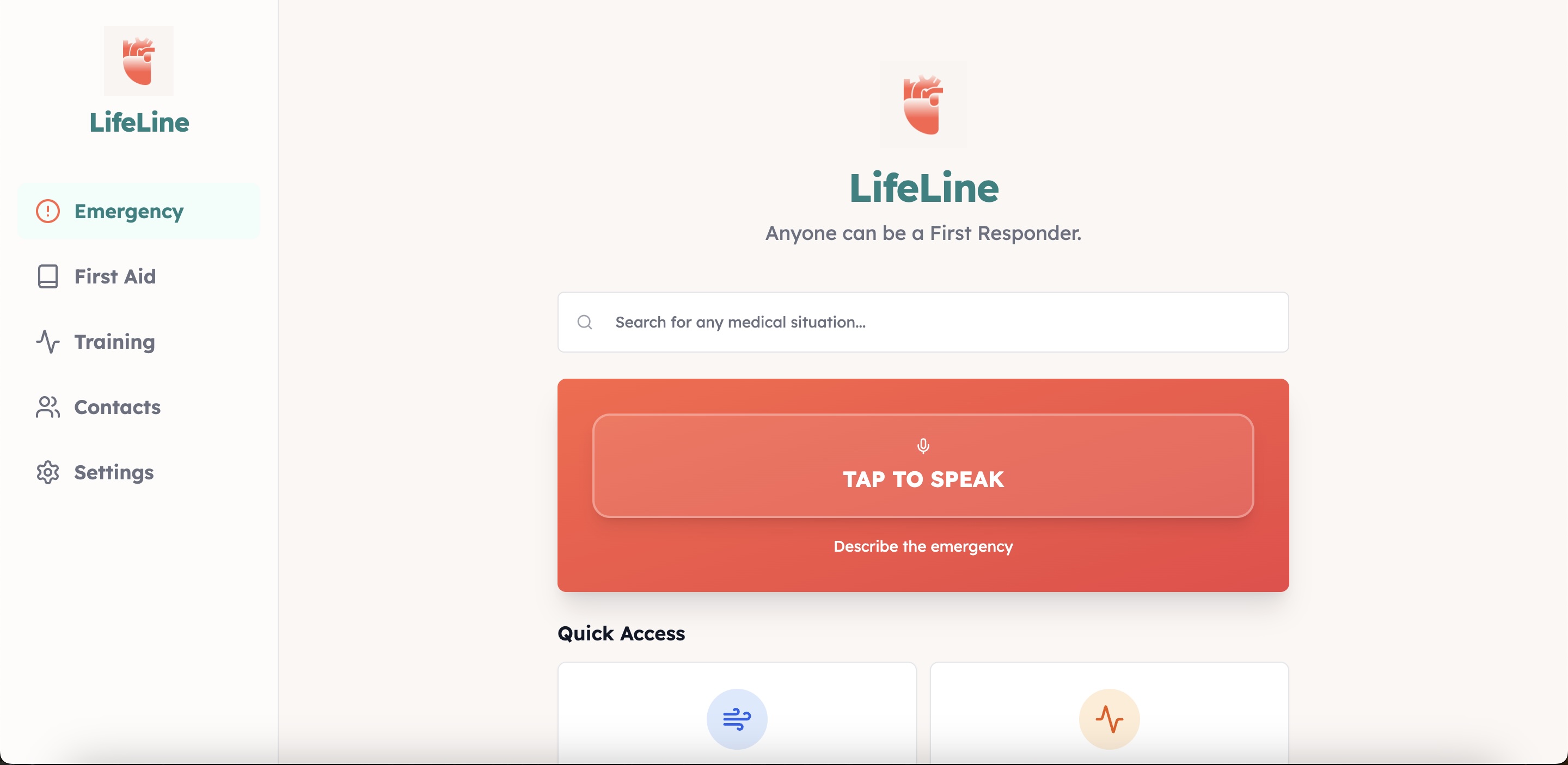
Home landing page.
-
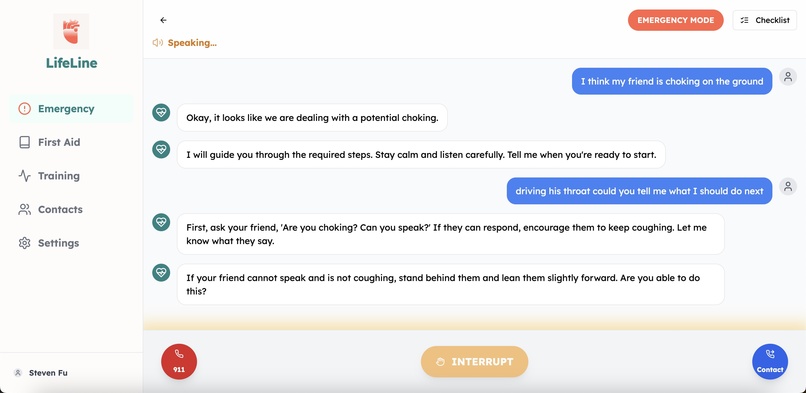
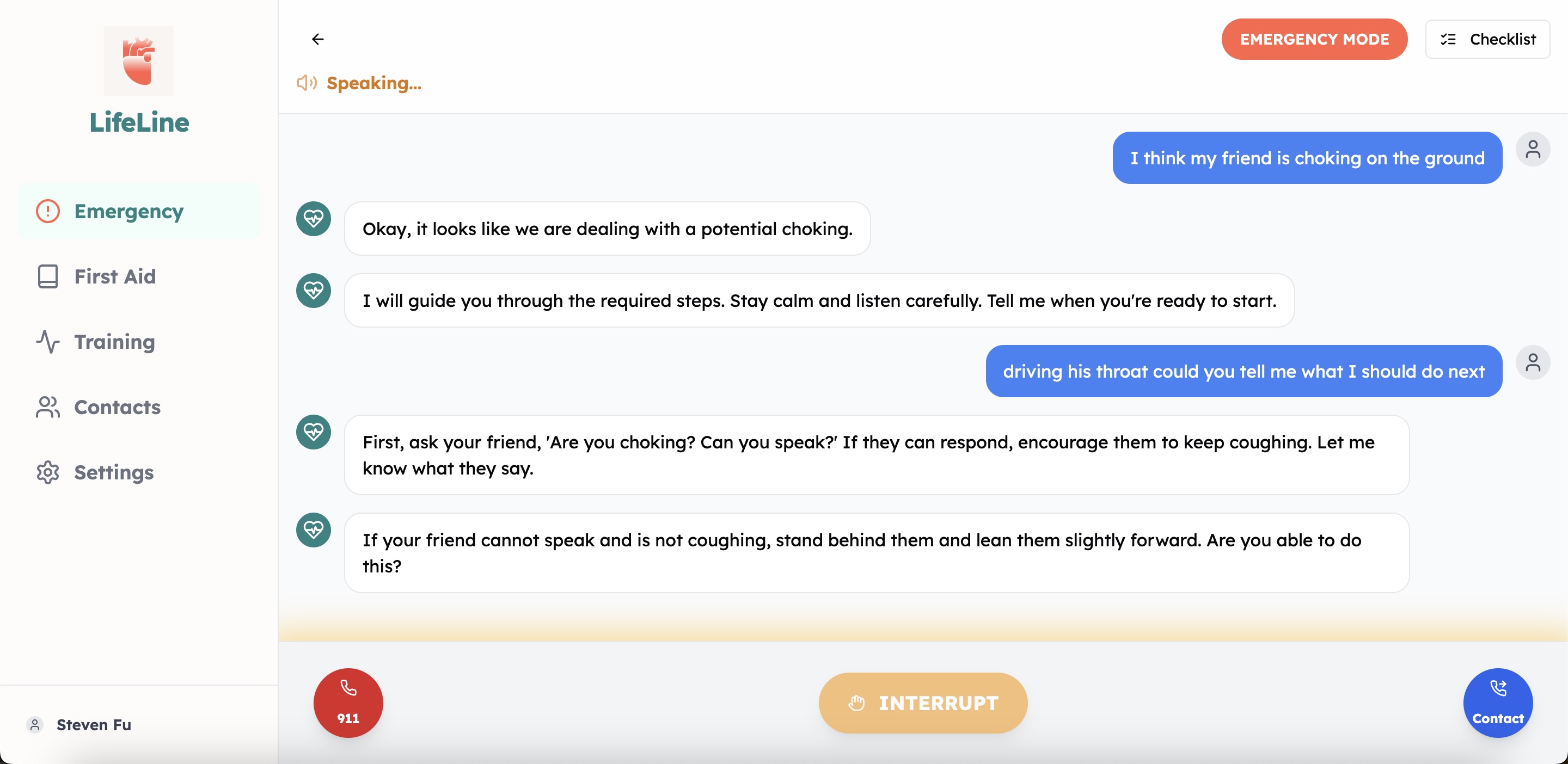
Example emergency conversation.
-
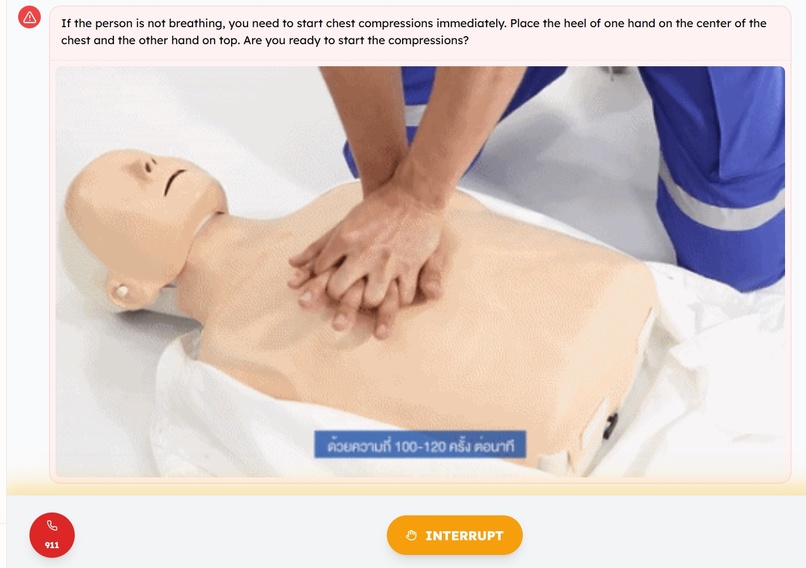
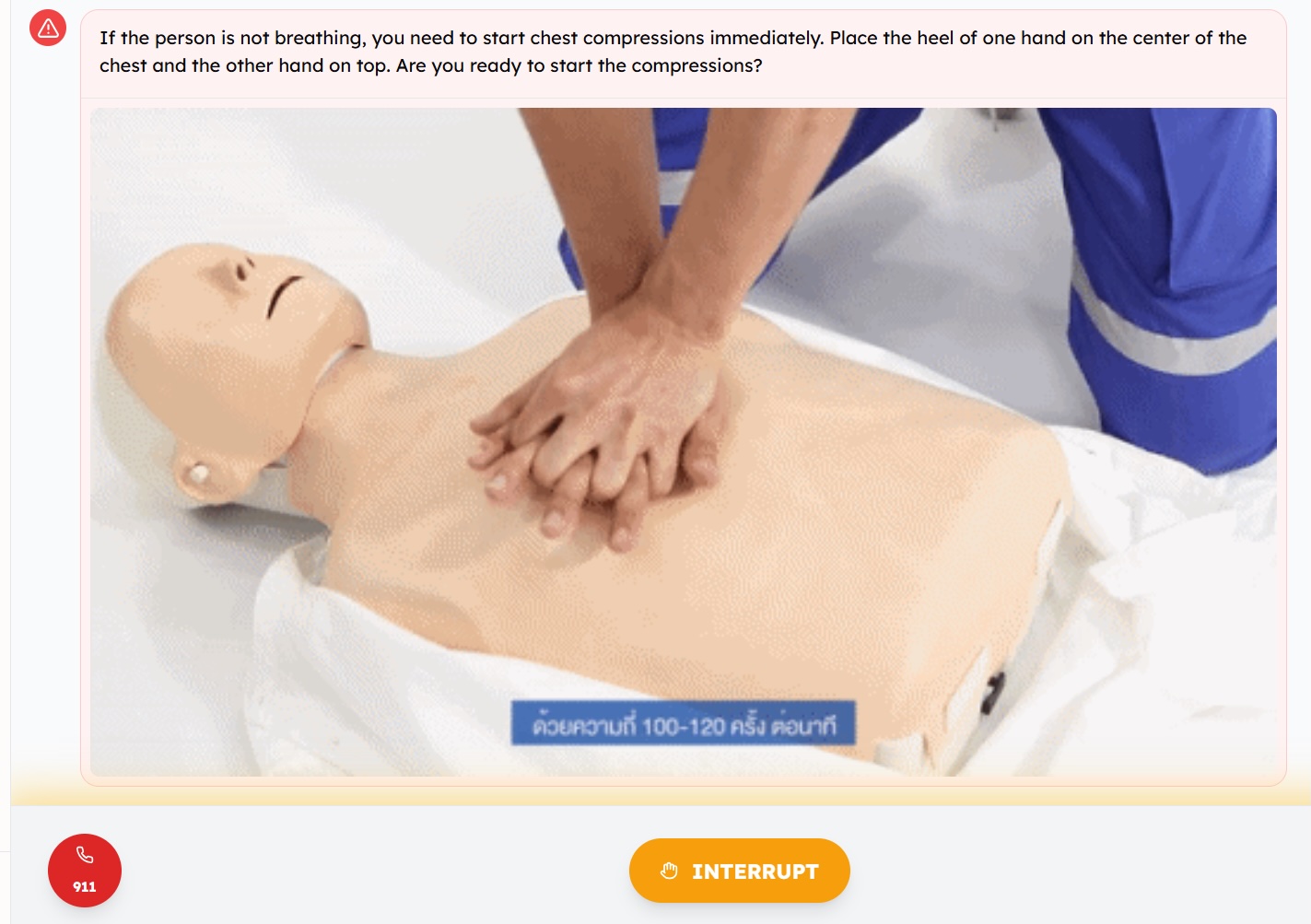
Example gif demonstration for CPR.
-
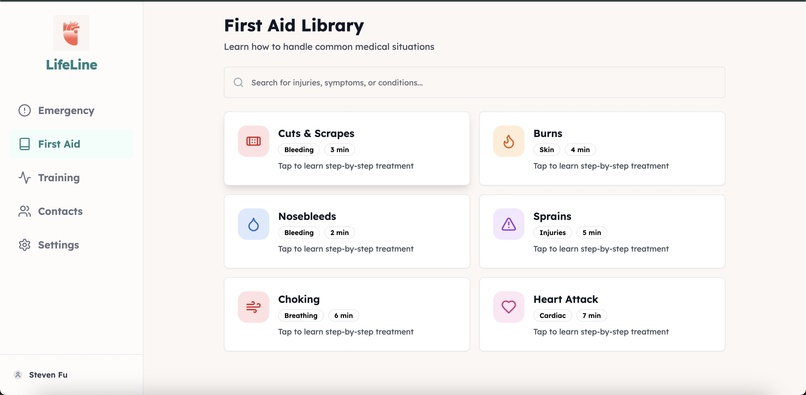
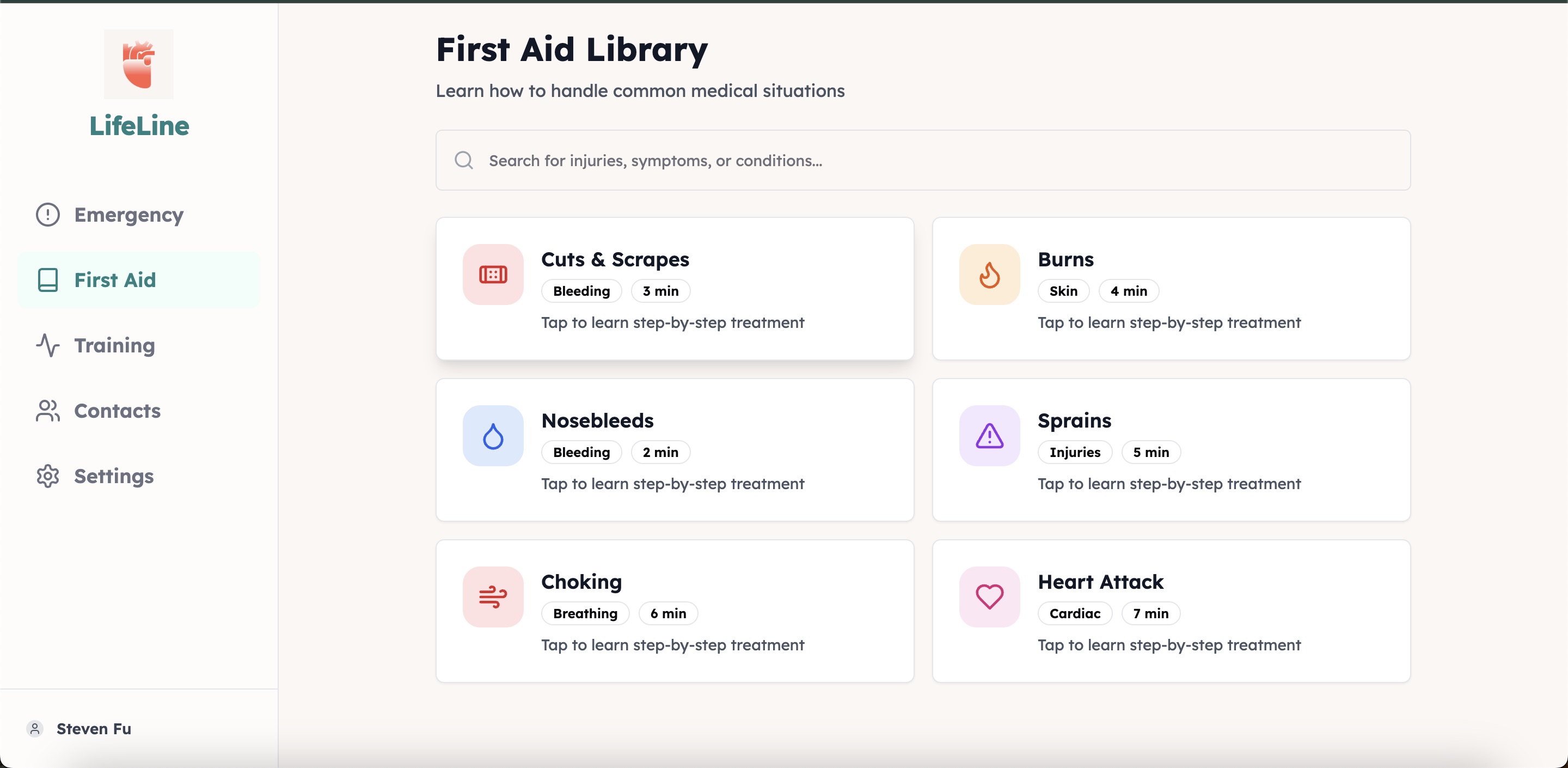
First aid landing page.
-
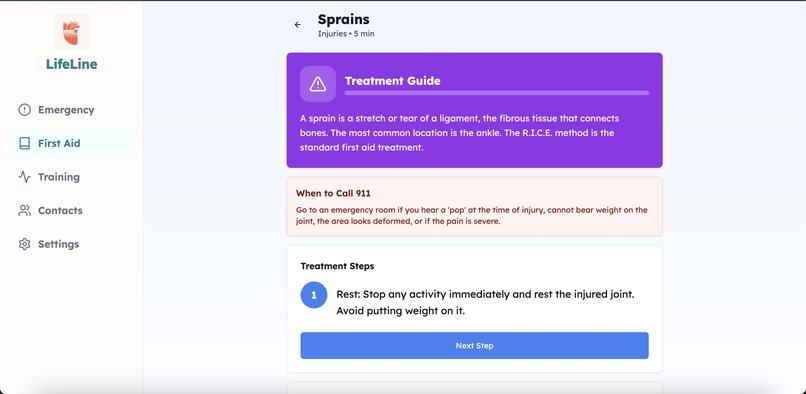
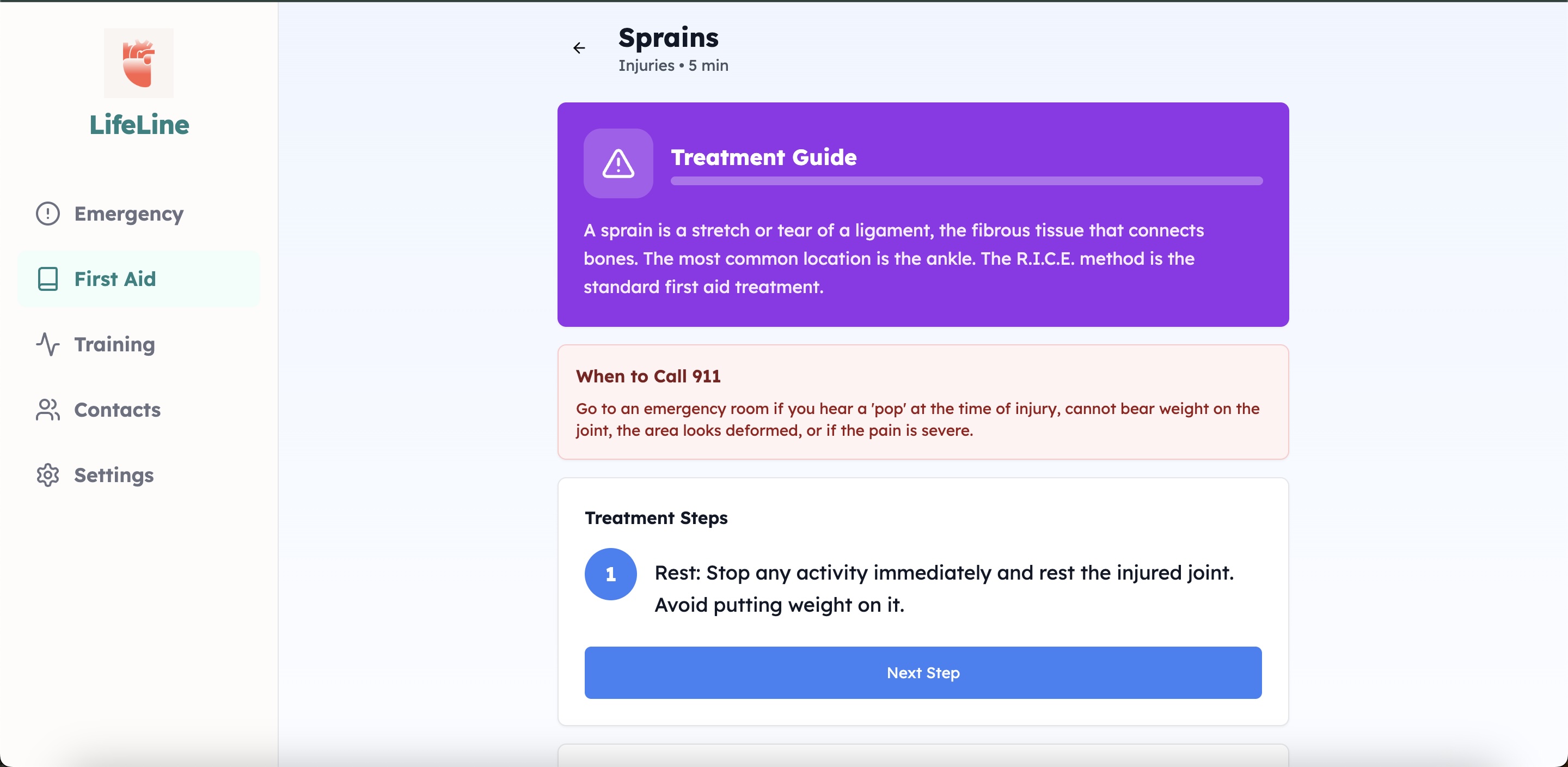
Example first aid guide (sprains).
-
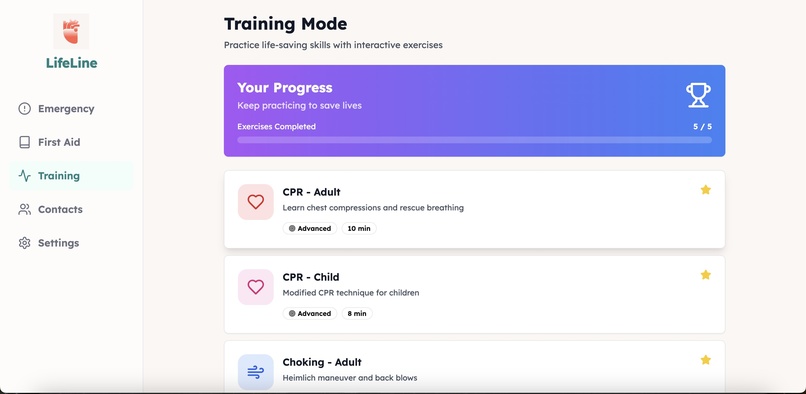
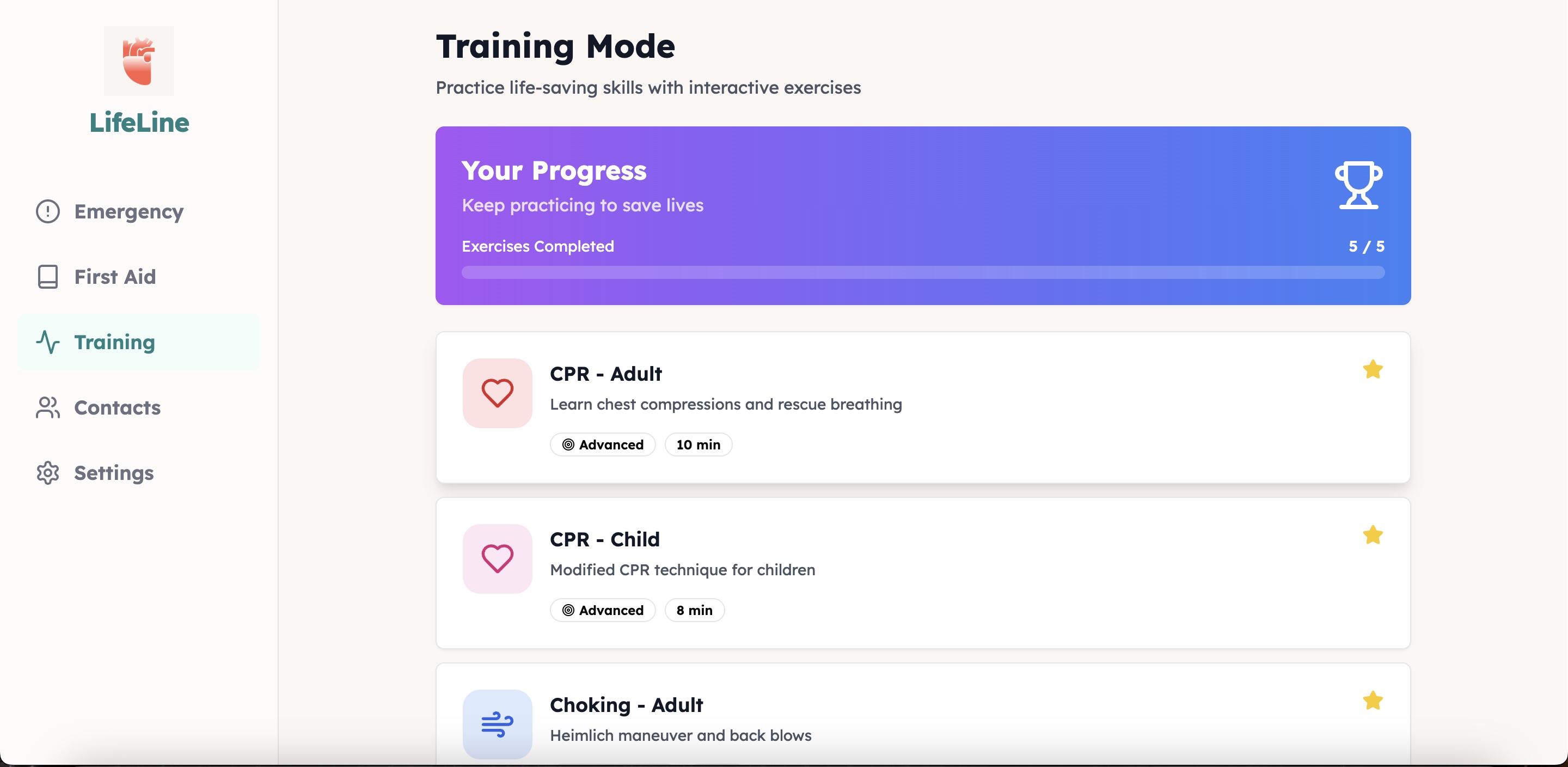
Training landing page.
-
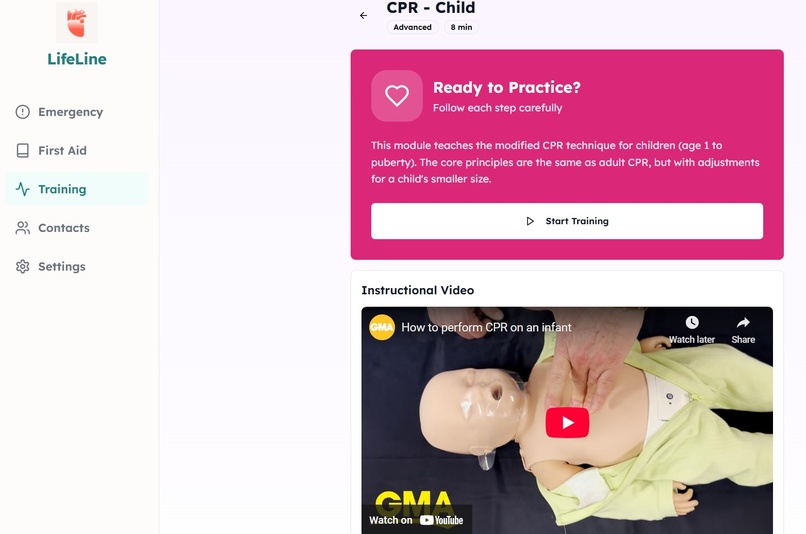
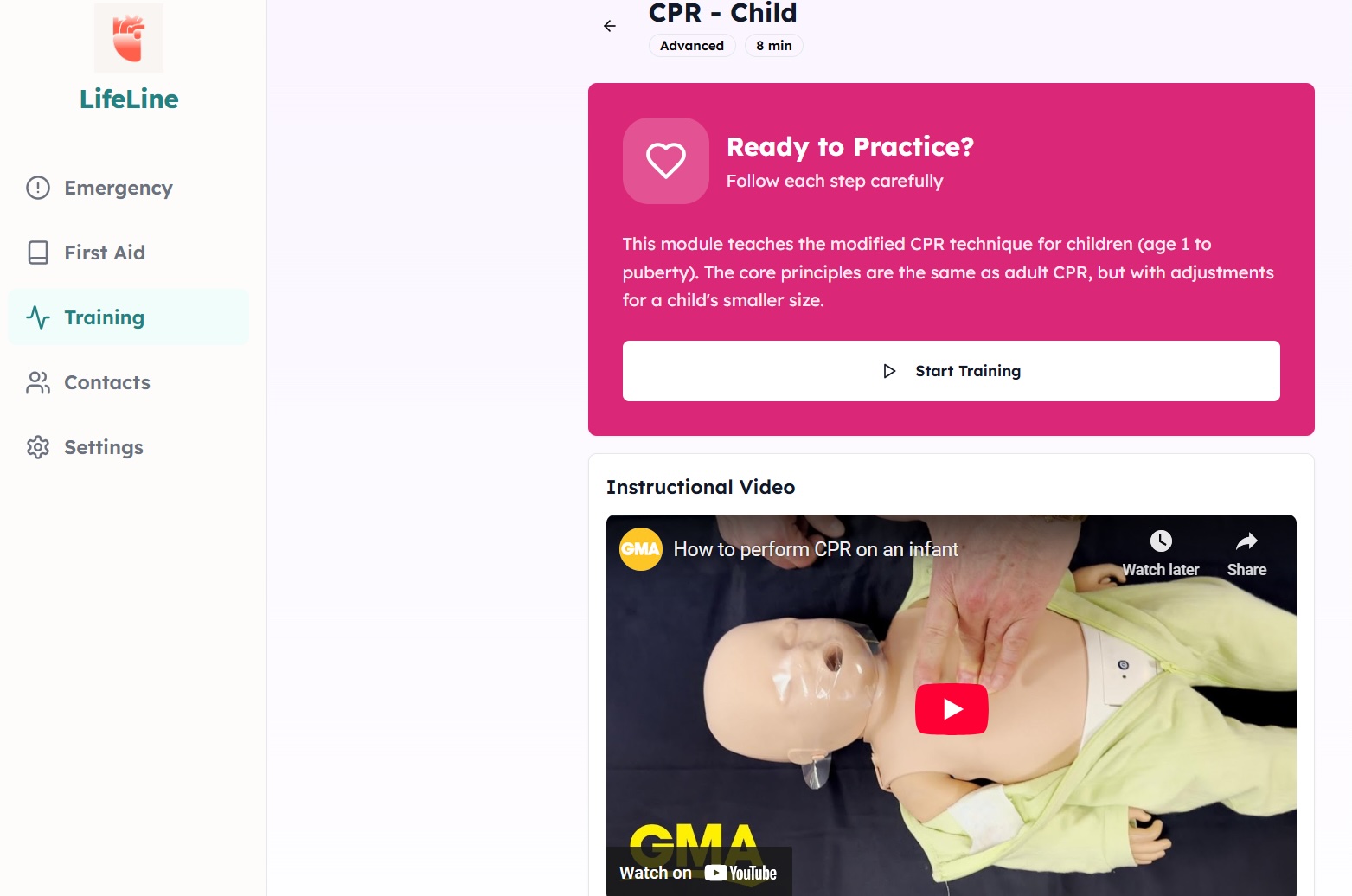
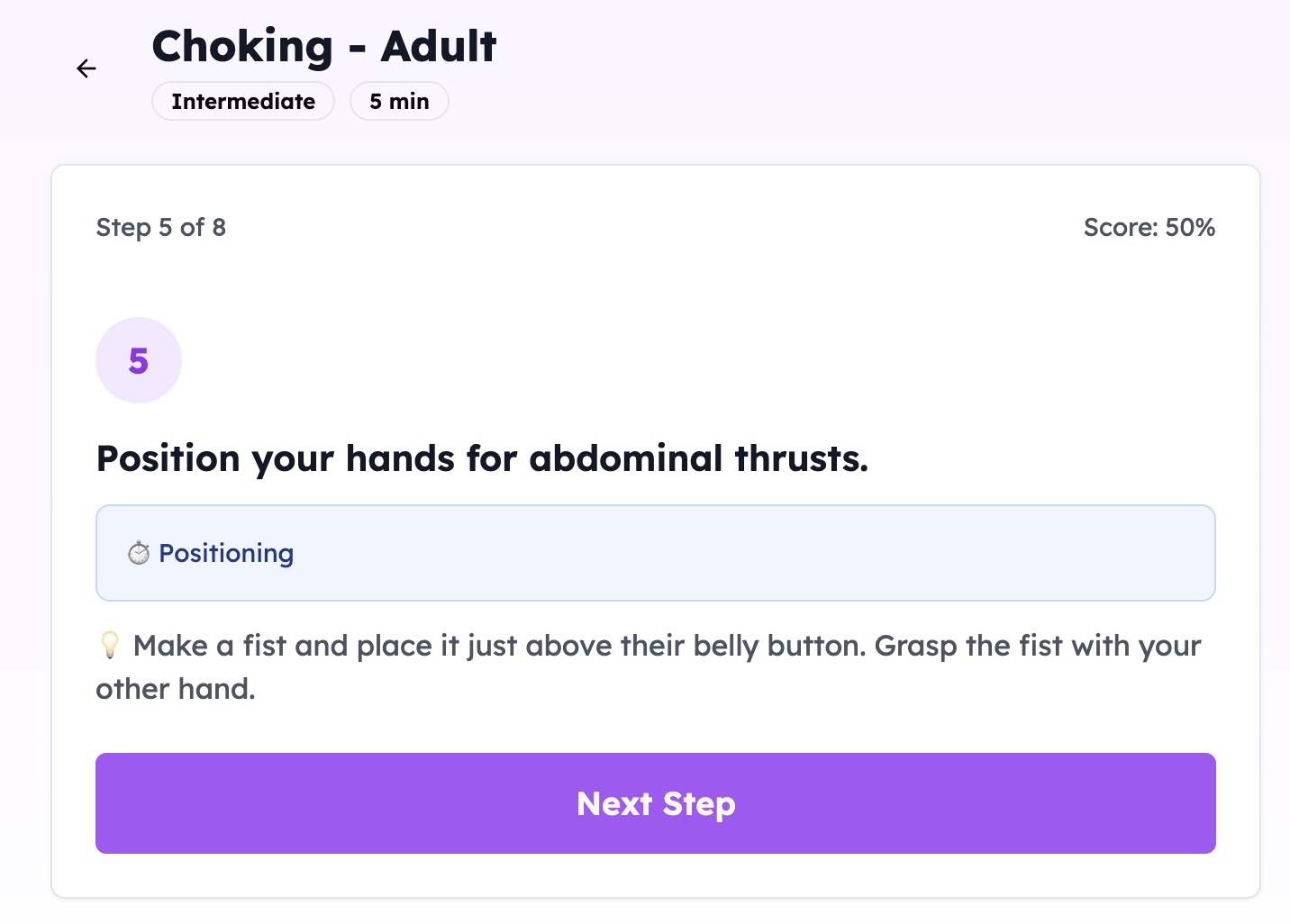
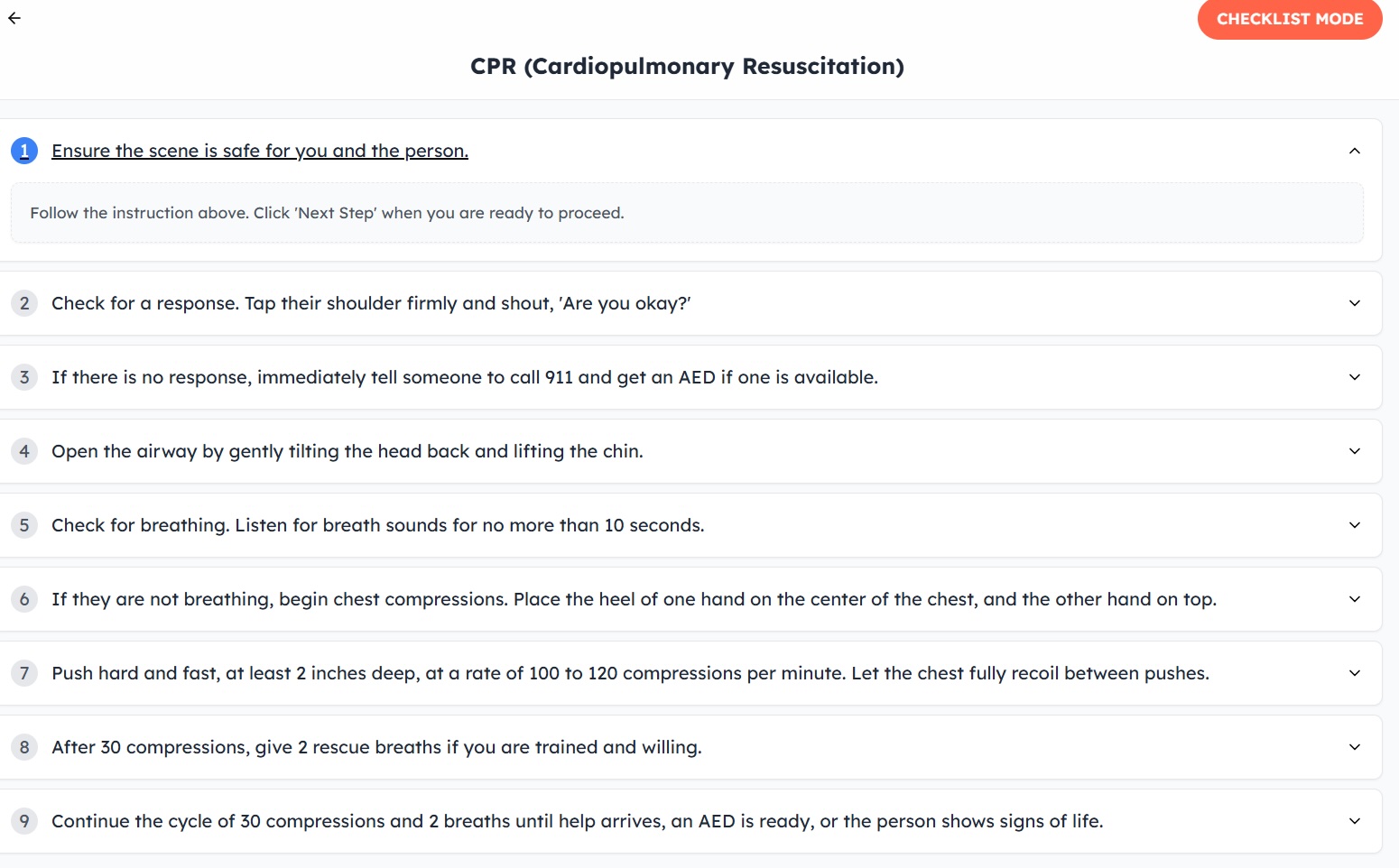
Example training guide (1/2).
-
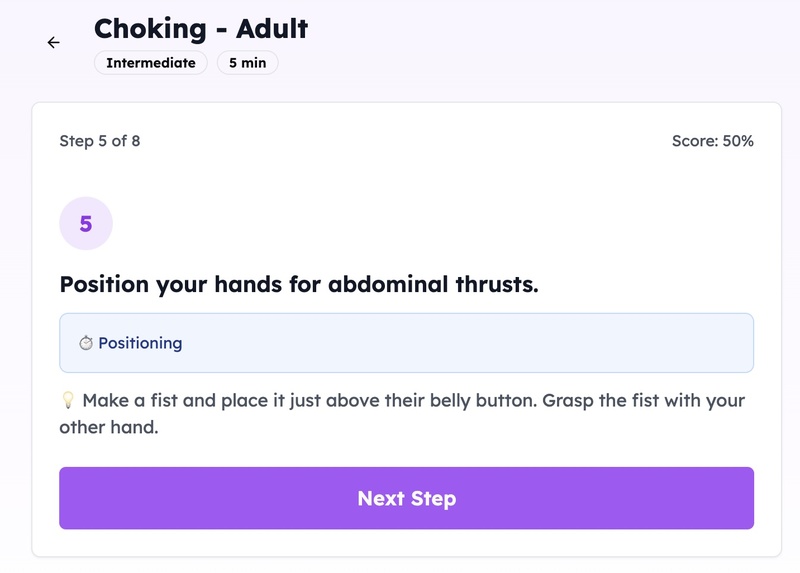
Example training guide (2/2).
-
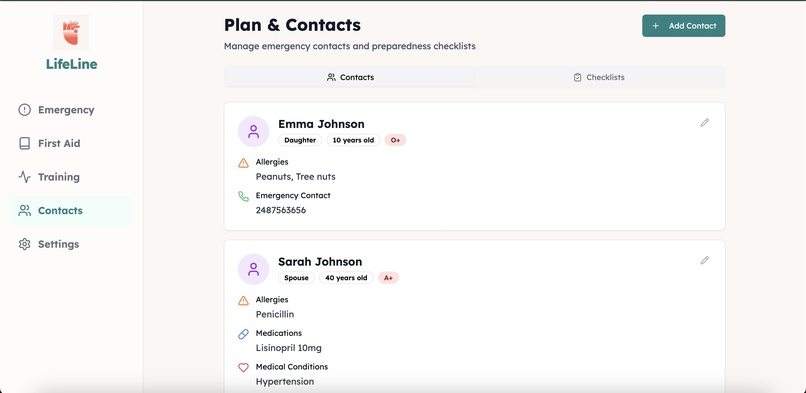
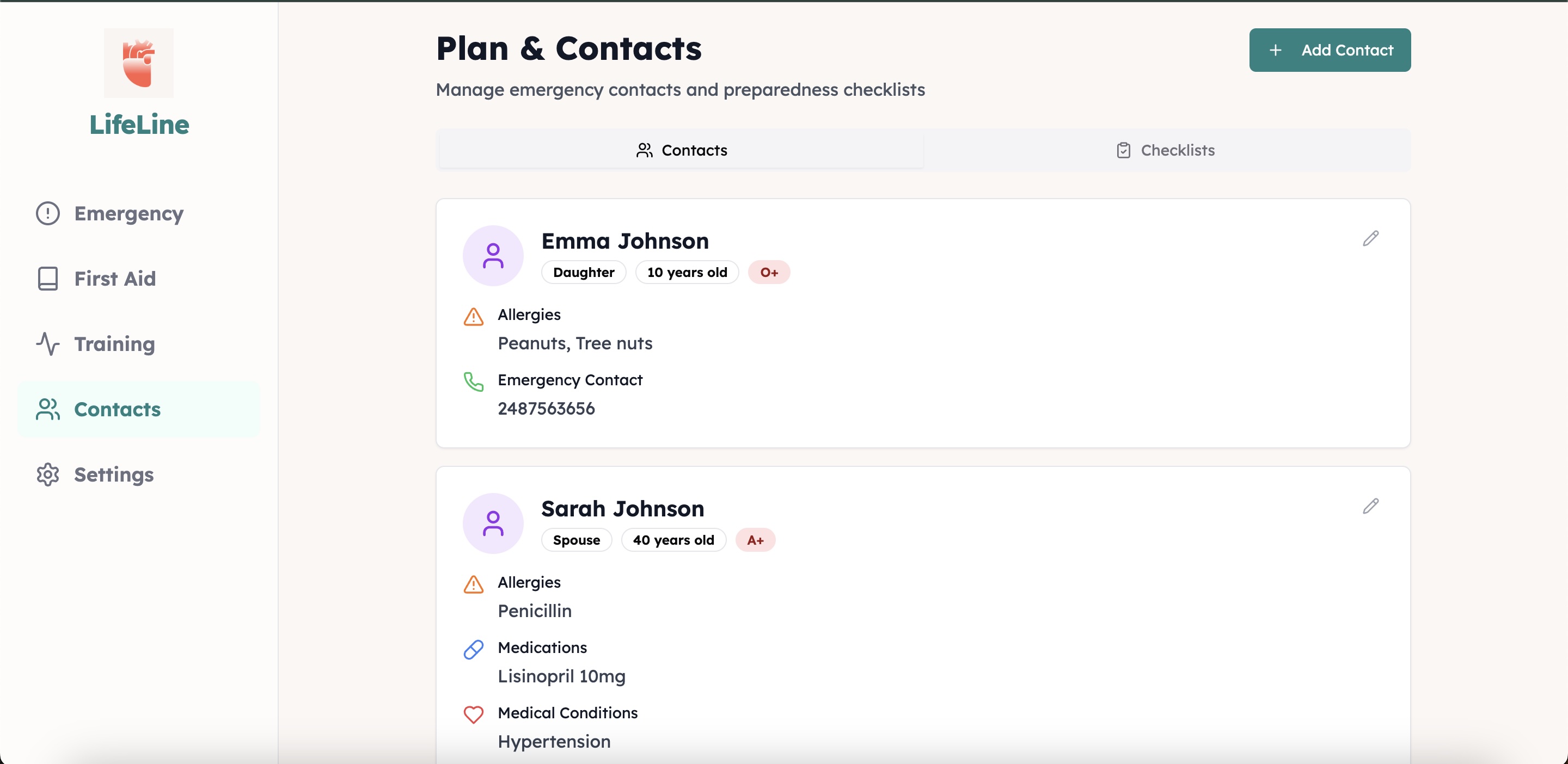
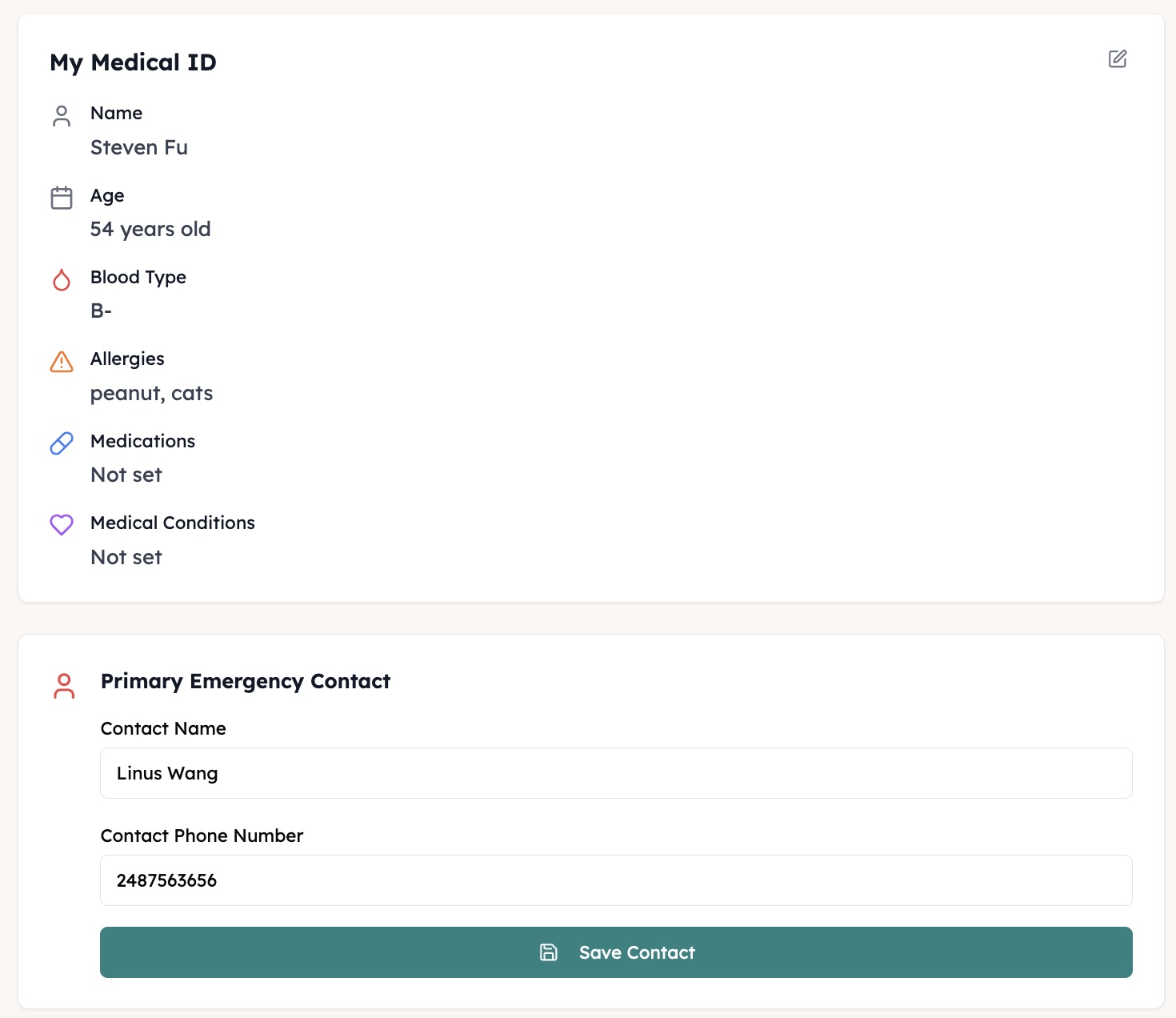
Emergency contacts landing page.
-
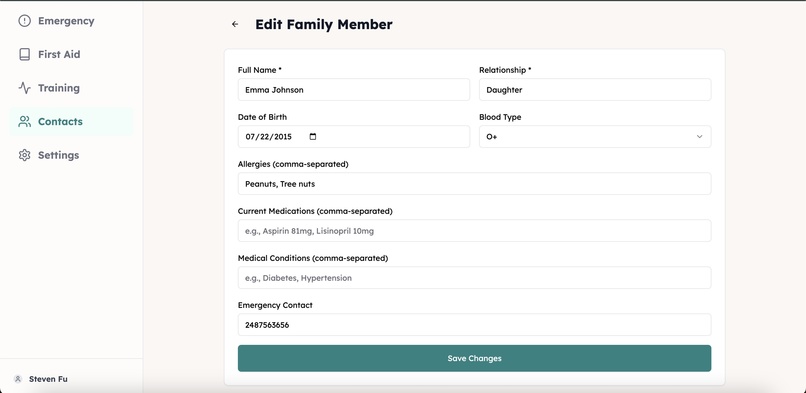
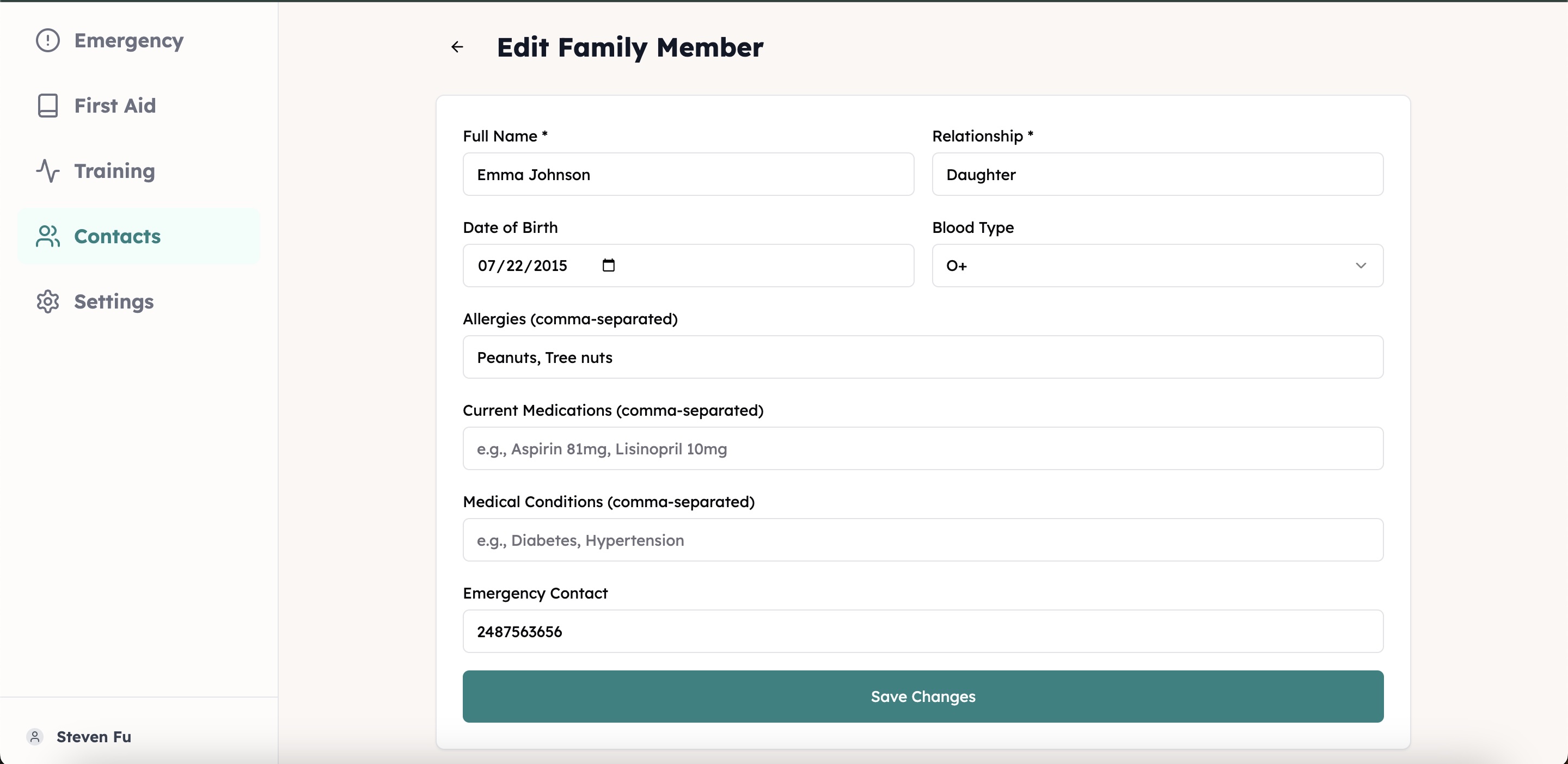
Edit emergency contact information.
-
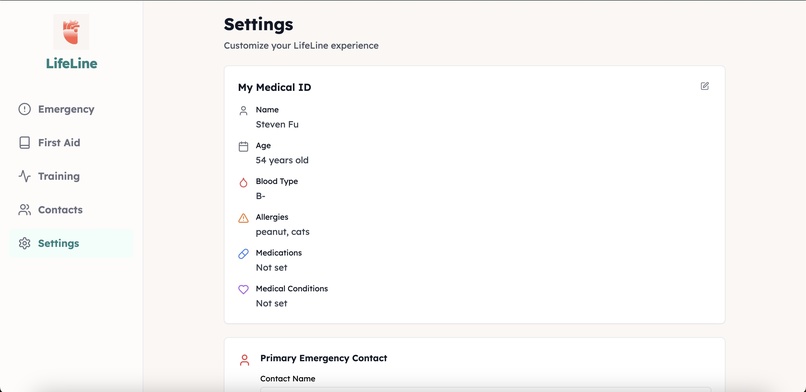
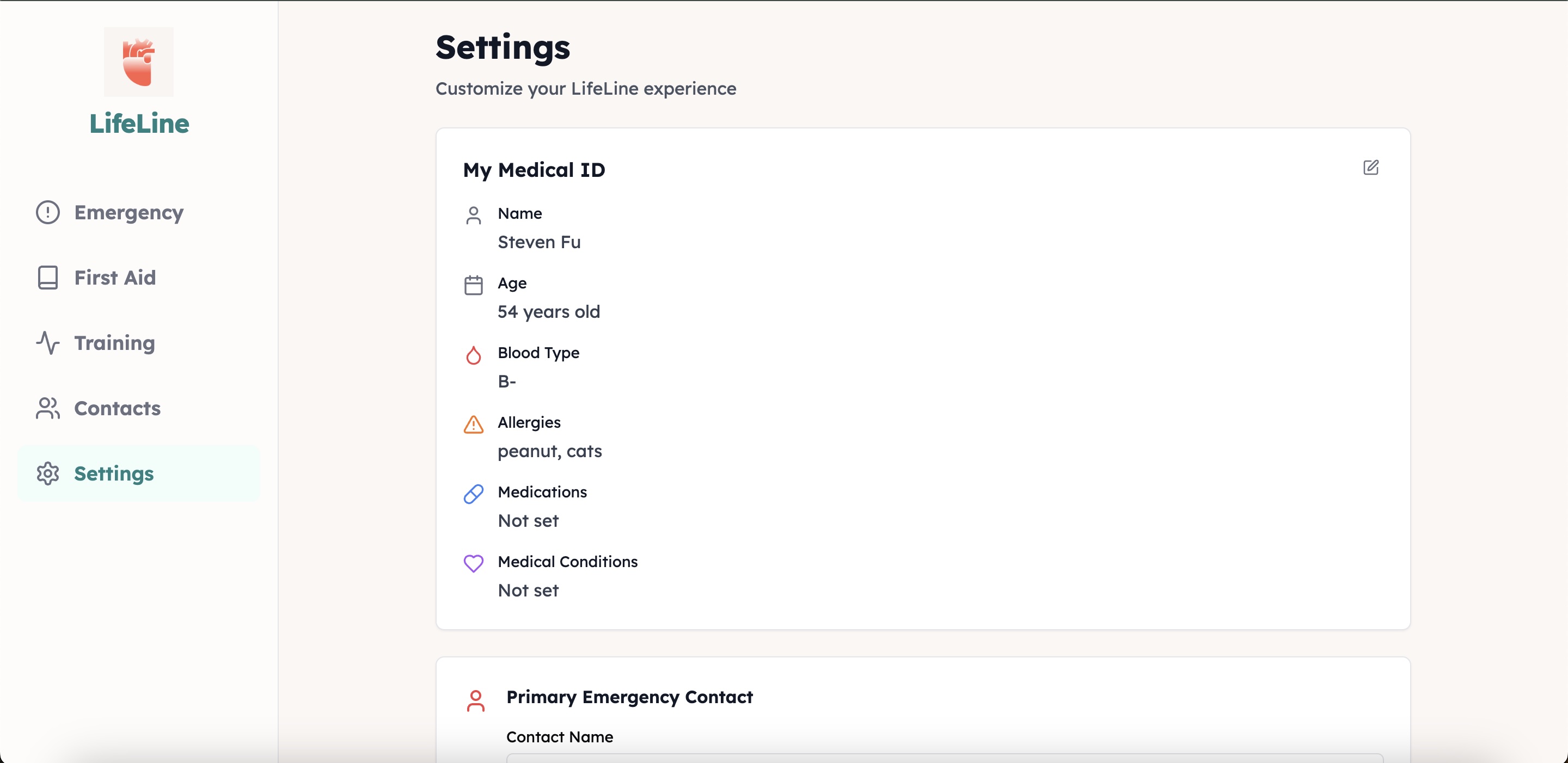
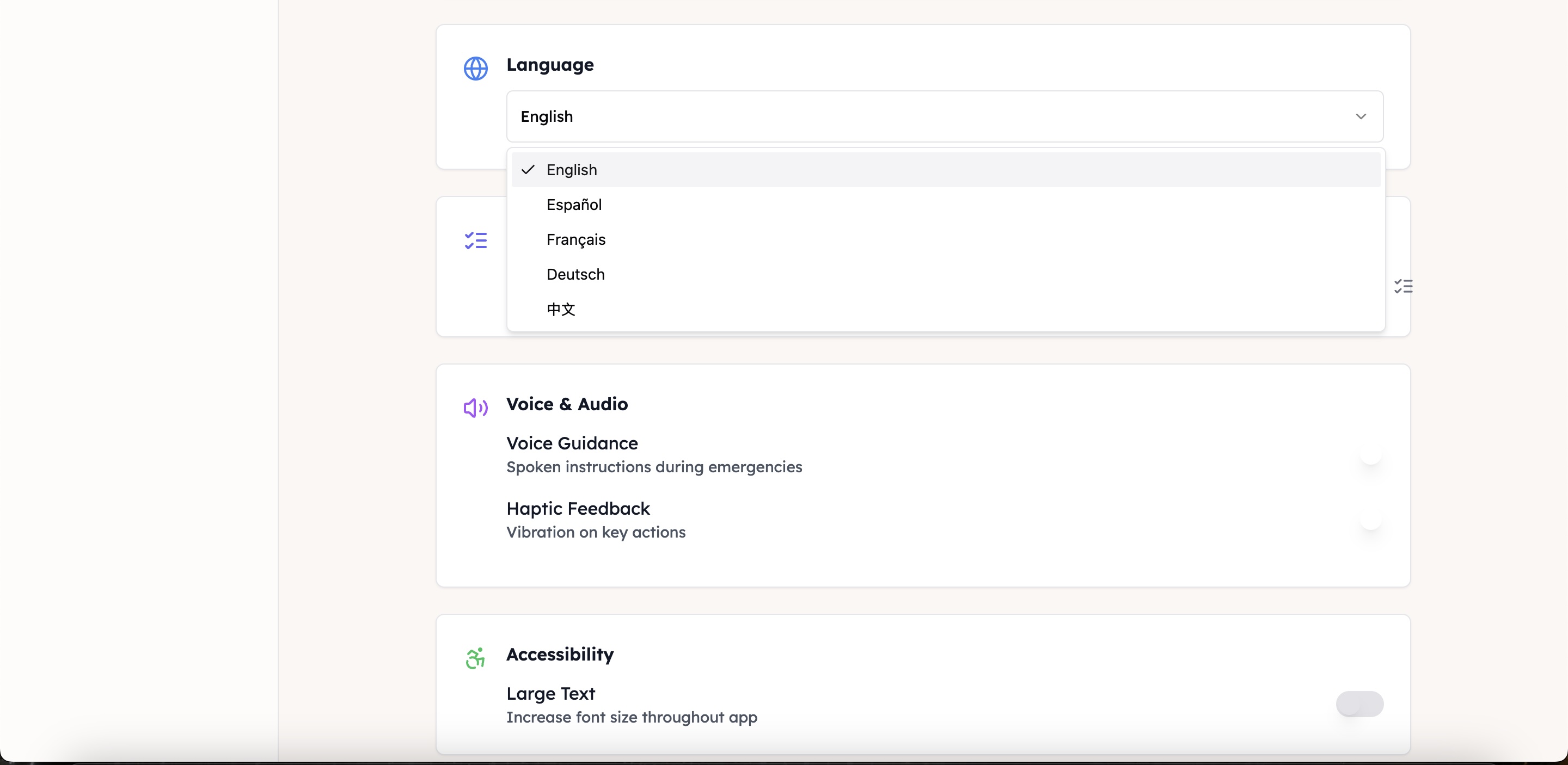
Settings landing page (1/3).
-
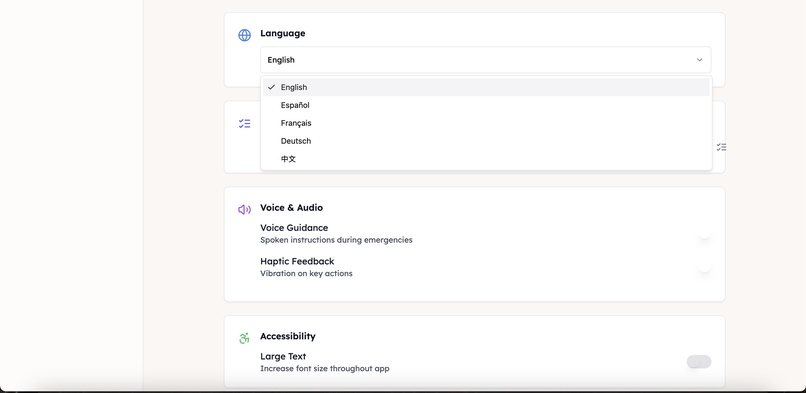
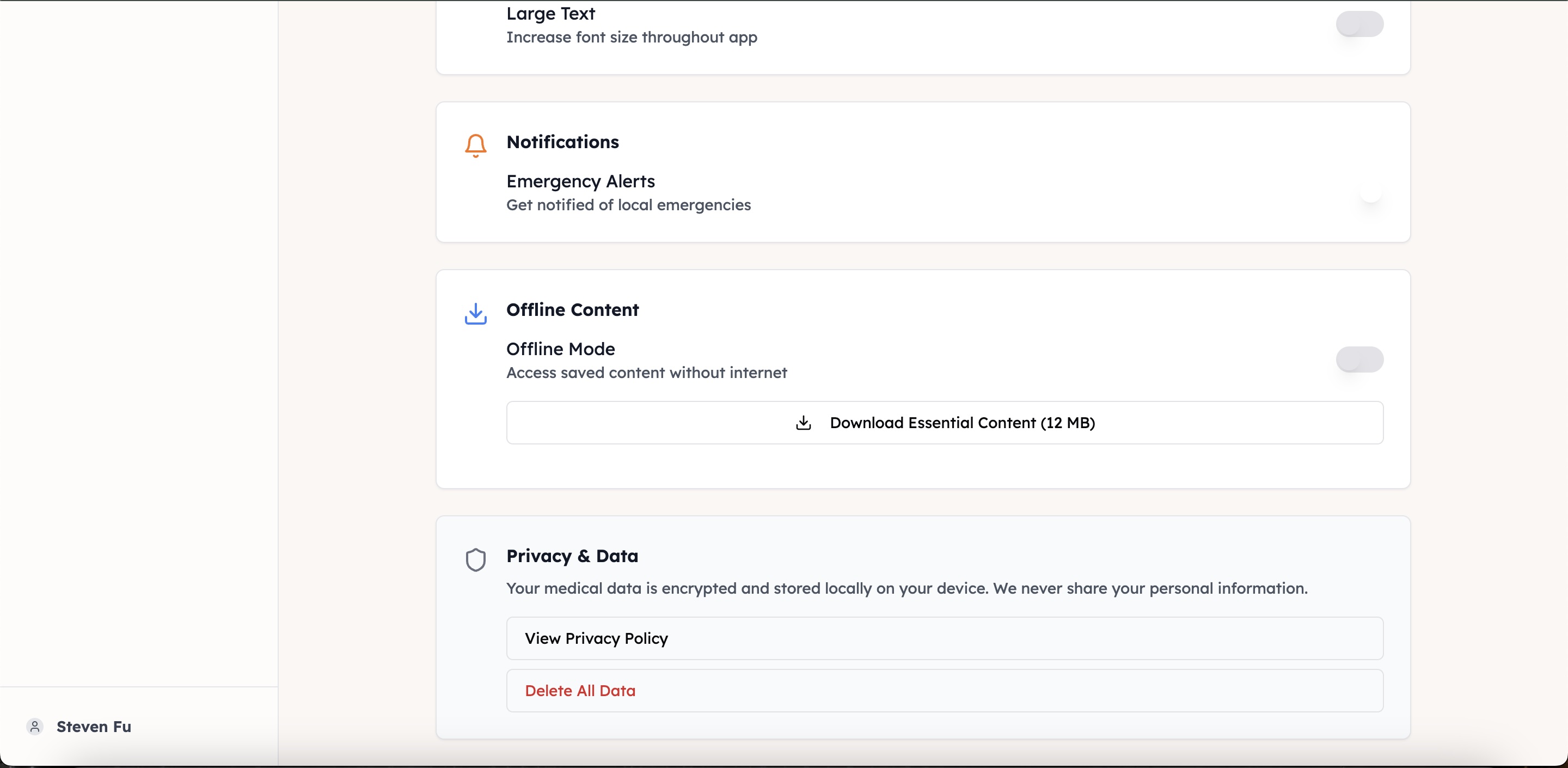
Settings landing page (2/3).
-
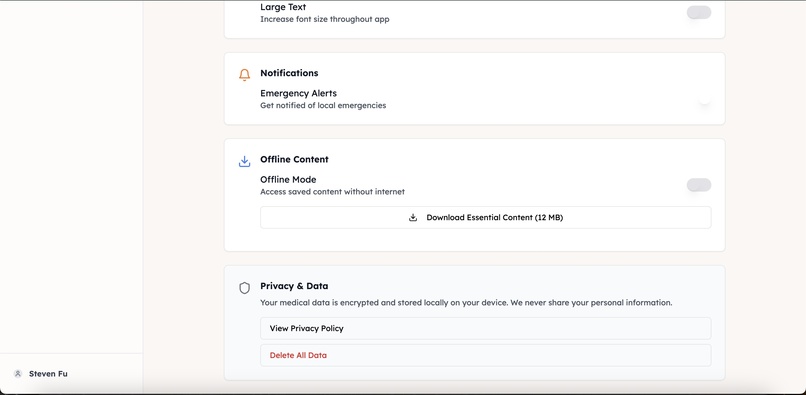
Settings landing page (3/3).
-
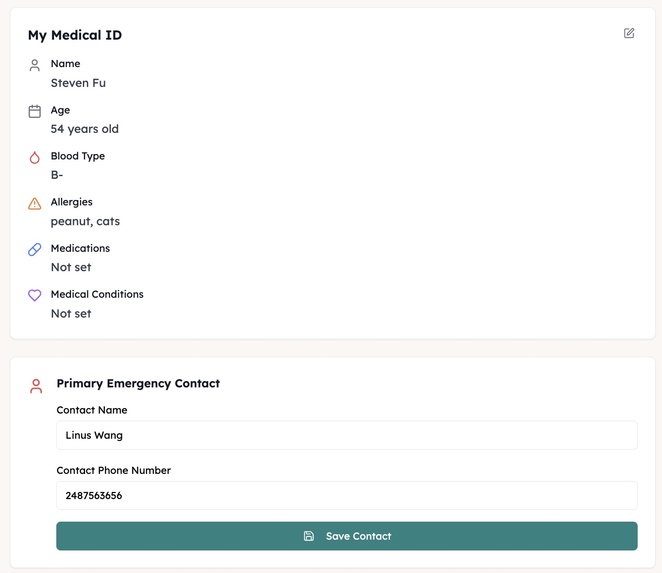
Edit personal information.
-
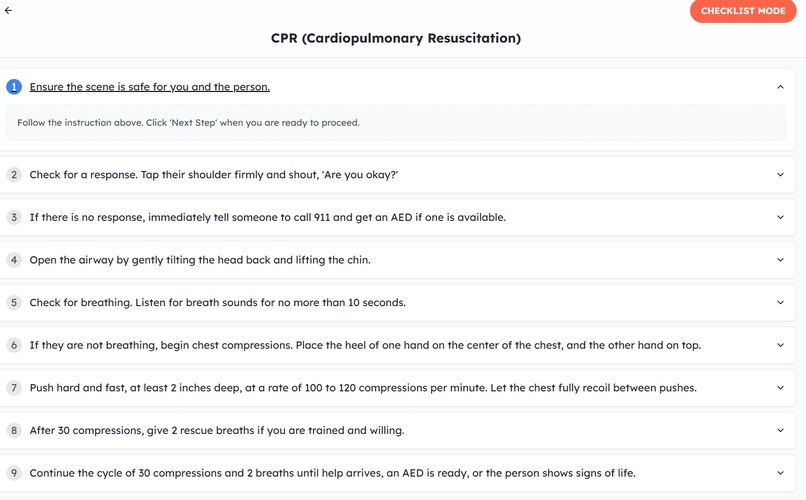
Example of offline help functions.
-
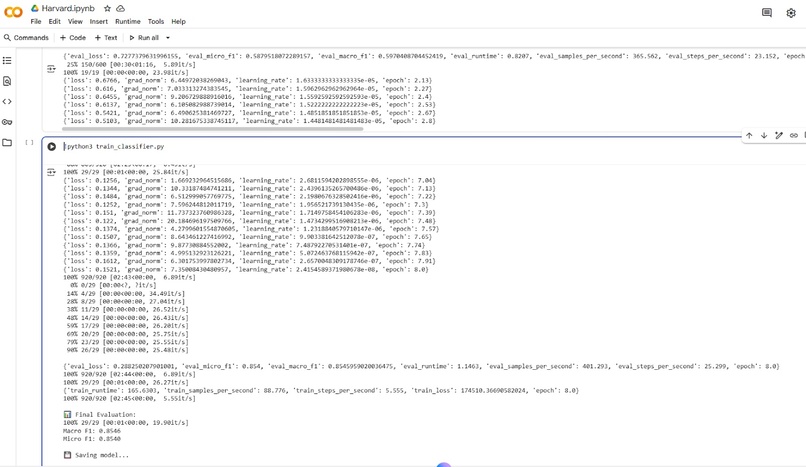
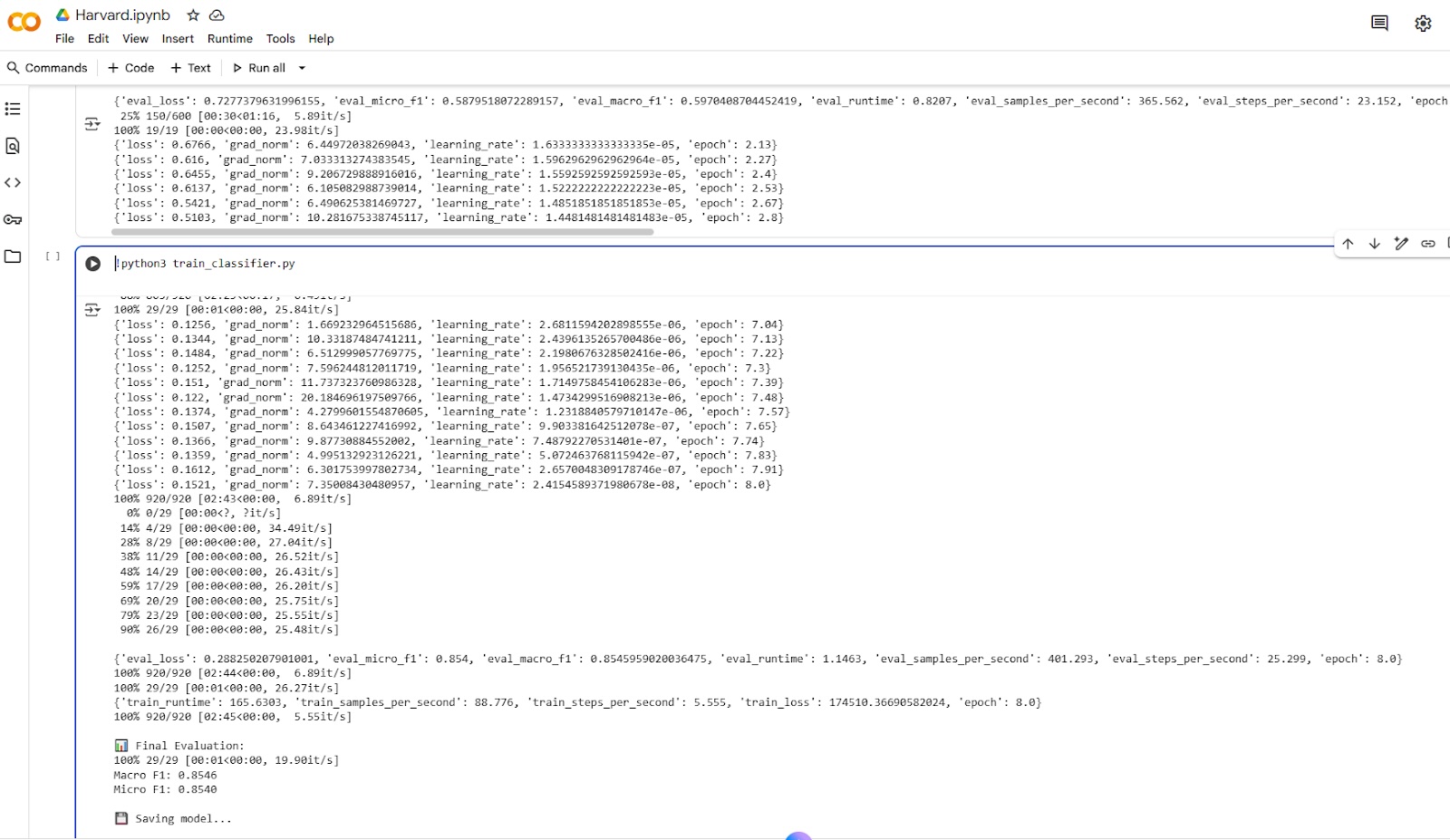
Training LLM model.
-
-
-
-
-

Inspiration
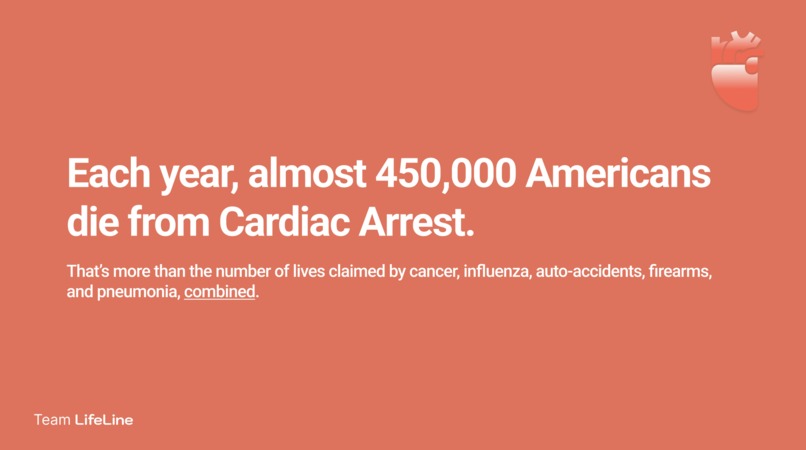
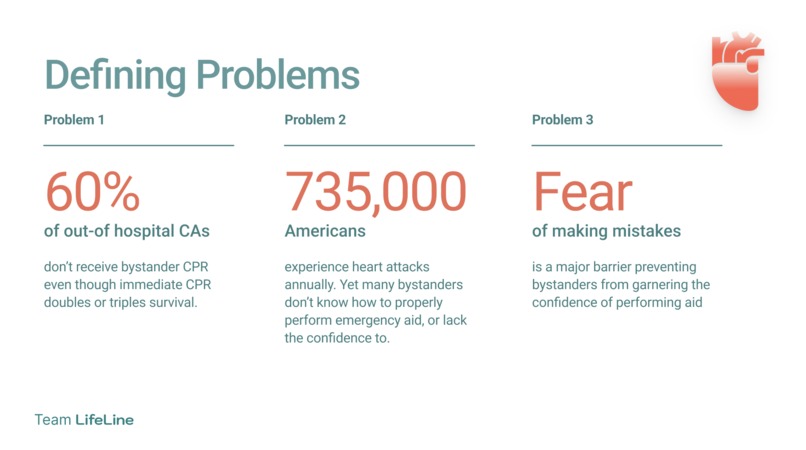
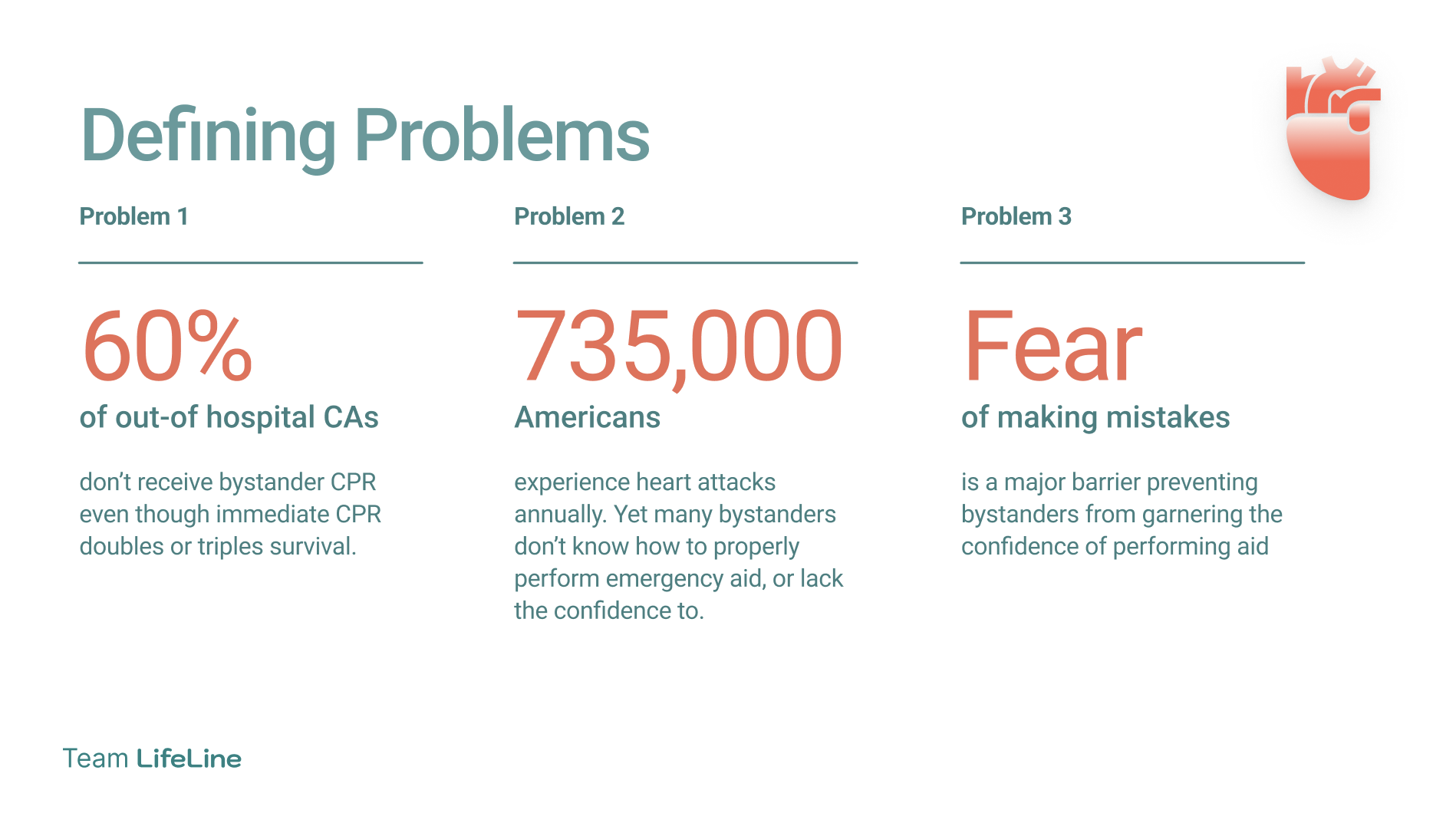
Over 450,000 Americans die each year from cardiac arrest. That’s more than the number claimed by cancer, influenza, auto-accidents, firearms, and pneumonia, combined. The issue? Even though immediate aid can triple a person’s chance of survival, bystanders fail to act in 60% of cases.
And we can’t really blame them. When emergencies strike, panic often takes over and clear thinking disappears. Many people worry about making things worse or even facing legal trouble. And with only 18% of Americans currently on first-aid training, most simply don’t feel confident enough to help. Our team wanted to bridge the gap between instinct and knowledge by designing an AI companion that guides, reassures, and empowers anyone to act with confidence in critical moments.
Empathy is what makes us human: lifeline is a tool that augments the human ability to empathize and save lives, and is therefore aiming for a healthier, more interconnected, and empathetic world.
What it does
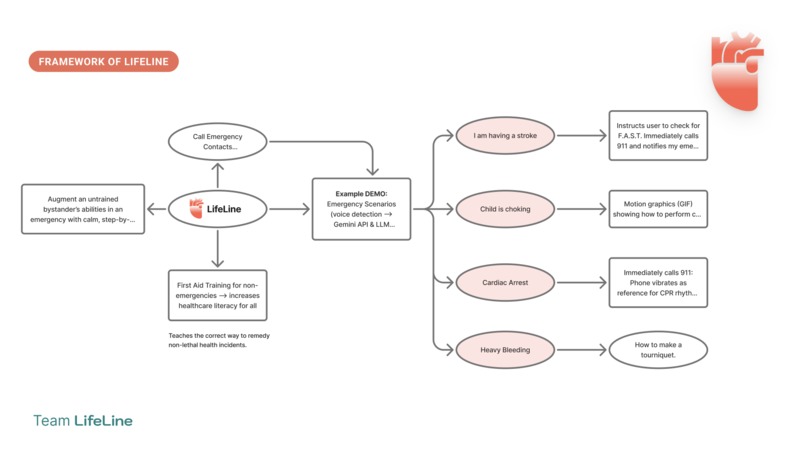
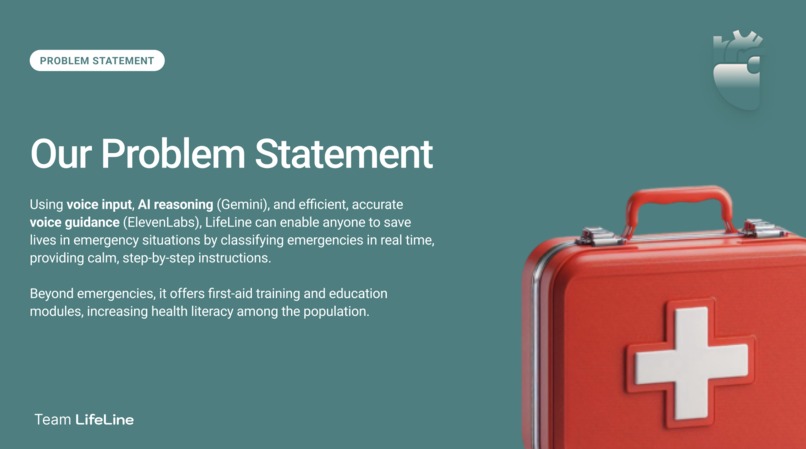
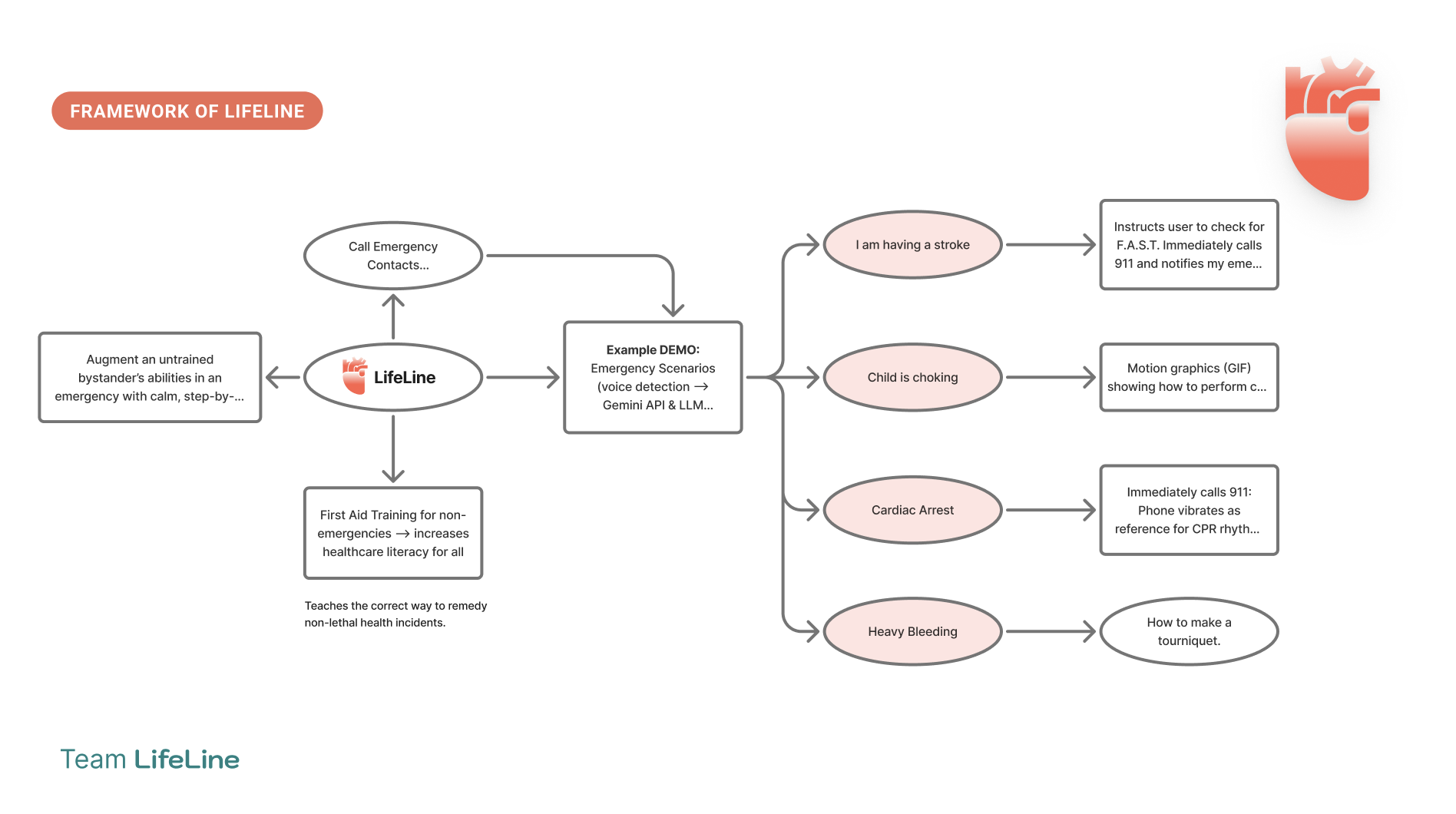
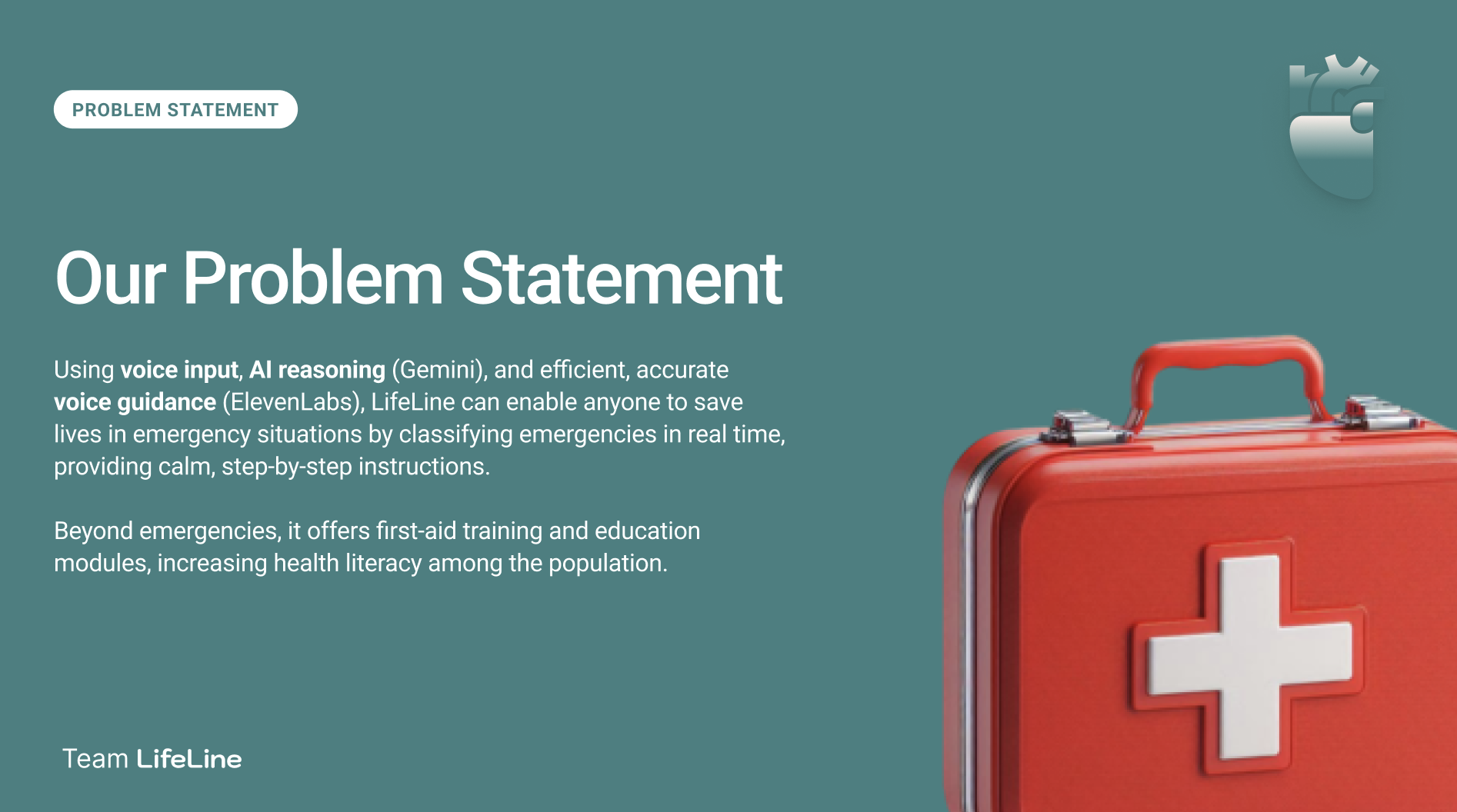
LifeLine is an AI-powered first-aid and emergency companion that enhances human awareness and decision-making in critical moments. It listens to a user’s voice, interprets their situation through a hybrid two-stage AI system, and delivers real-time, step-by-step guidance tailored to the emergency at hand.
When someone describes a crisis, a custom fine-tuned model first classifies the emergency, such as cardiac arrest, choking, or fainting, in seconds. Then, a Gemini powered LLM takes over to provide calm, adaptive, conversational guidance using medically verified playbooks based on Red Cross and U.S. Department of Health guidelines. Through structured guidelines, access to visual representations, and dynamic situation handling, our Gemini agent walks users through the respective emergency protocol, providing the highest-quality instruction adaptable to any unique situation. ElevenLabs generates a clear, human-like voice that speaks instructions aloud, while simple, high-contrast visuals ensure users can follow along easily under stress. If the user verbally requests for their emergency contact to be notified about an incident, then Gemini will prompt Twilio to call the emergency contact. Additionally, there's in app functionality for calling 911 using a separate Twilio stream so the user never has to leave the app.
Beyond active emergencies, LifeLine offers tools for training, learning, and preparedness. Users can practice CPR or choking scenarios through interactive simulations, browse a quick-access first-aid library for common injuries, and organize key medical and contact information in a personal dashboard. These supplemental materials contain valuable videos and resources to help users prepare for a real-world emergency.
How we built it
To create the App, we fine-tuned a custom MobileBERT model: a lightweight 15MB variant that classifies emergencies across 5 categories: CPR, severe bleeding, choking, seizure, and burns. The model is trained using synthesized data on real-world panic scenarios with noisy inputs (misspelled words, background speech, malformed inputs), then compressed down to 4MB using quantized ONNX for app deployment. The model, serviced through Cloudflare, only needs to be loaded in once upon first entry and can later be used locally for inference. Most impressively, this lightweight model is able to categorize initial inputs to recognizes cases like cardiac arrest or choking in under 50 milliseconds: saving precious rescue time over standard LLM approaches. Because the model runs locally through the user's app/browser, the application maintains built-in emergency protocols, enabling immediate, offline-capable guidance for procedures like CPR and the Heimlich maneuver. Our system uses a 2-tier approach: local ONNX inference runs first with a 0.70 confidence threshold, achieving around 90% accuracy for most queries entirely in-app using WebGPU and WASM acceleration. For ambiguous cases where confidence is low, we fall back to the Gemini API, feeding it relevant procedures and context to generate conversational, protocol-verified guidance. This ensures 100% privacy for most interactions while maintaining accuracy through intelligent cloud backup. ElevenLabs handles voice synthesis, producing clear and steady audio instructions that adapt as the conversation unfolds, delivering sub-200ms response times for over 75% of emergency queries, all without leaving the app.
The backend runs on Node.js with serverless Deno functions handling real-time coordination between the ML pipeline, Gemini API, and external services. Twilio powers automated emergency phone calls using Amazon Polly's neural TTS to contact pre-configured emergency contacts within seconds of incident detection. User profiles, medical histories, and session logs are stored on an external server database with secure access controls.
For training and non-emergency education, static modules and embedded YouTube tutorials are preloaded locally for near-instant access. Every system component, from the ML pipeline to the interface animations, was built to make LifeLine responsive, reliable, and reassuring when every second matters.
Challenges we ran into
Our biggest challenge was latency, because every millisecond matters when someone’s life is under threat. The delay between speech recognition, emergency classification, and voice synthesis had to be nearly instantaneous. To solve this, we fine-tuned our own lightweight classification model to handle the first stage of inference locally and in parallel, cutting the initial detection time down to a fraction of a second.
We also optimized the backend pipeline to reduce network round trips and preloaded voice prompts through ElevenLabs so guidance could start speaking even as the next instruction was still generating. Achieving that fluid responsiveness without sacrificing accuracy or stability required careful balancing across every layer of the system.
Because speed means nothing without trust, we paired these optimizations with deterministic medical protocols and strict fallback rules to ensure the AI never hallucinated or provided misleading information.
Accomplishments that we're proud of
We’re proud that LifeLine became a fast, reliable, and human-centered emergency companion within just 36 hours. The system can listen, classify, and guide in real time, even in low-connectivity environments, thanks to our custom fine-tuned classification model, which runs locally and detects emergencies in under a second.
Achieving this level of responsiveness while maintaining medical accuracy was one of our biggest breakthroughs. Every optimization, from asynchronous speech recognition to preloaded voice synthesis, was engineered to make the experience feel instant and trustworthy under pressure.
We’re also proud that LifeLine feels genuinely empathetic. The voice tone, pacing, and interface were designed to calm users, not overwhelm them. Beyond building functional AI, we built a system that transforms panic into clarity.
What we learned
We learned that designing for emergencies is as much about empathy as it is about engineering. The tone, pacing, and clarity of AI guidance can completely change how a user reacts under pressure. Augmentation isn’t about always replacing human instinct with high tech but strengthening it, such as giving people calm, confident direction when fear takes over. Building LifeLine reminded us that humane AI design demands precision, emotional awareness, and simplicity above all else.
What's next for LifeLine
Next, we plan to expand LifeLine’s coverage to include accessibility tools, such as experimenting with AR glasses and designing health tech for people with special needs. In the long run, we hope to scale LifeLine into a global platform, empowering anyone, anywhere, to act with clarity when every second counts.
Built With
- amazonpolly
- base44
- cloudflare
- deno
- elevenlabs
- gemini
- javascript
- python
- pytorch
- react
- render
- supabase
- tailwindcss
- twilio
- webspeechapi


Log in or sign up for Devpost to join the conversation.