-
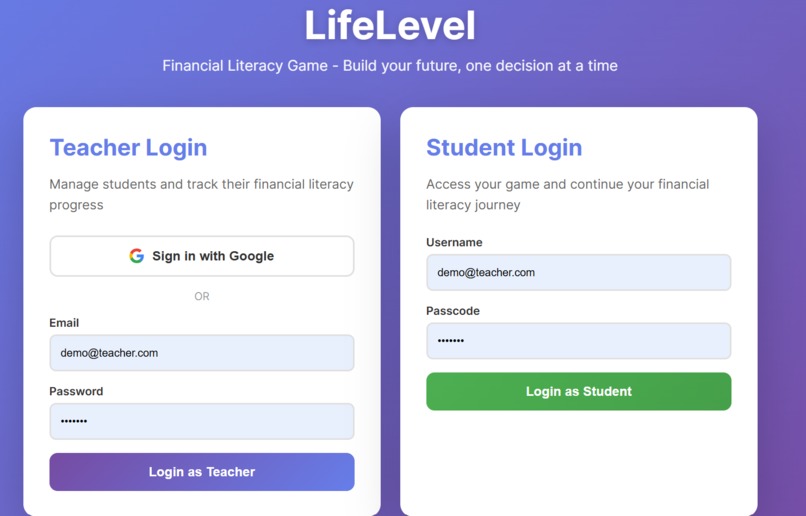
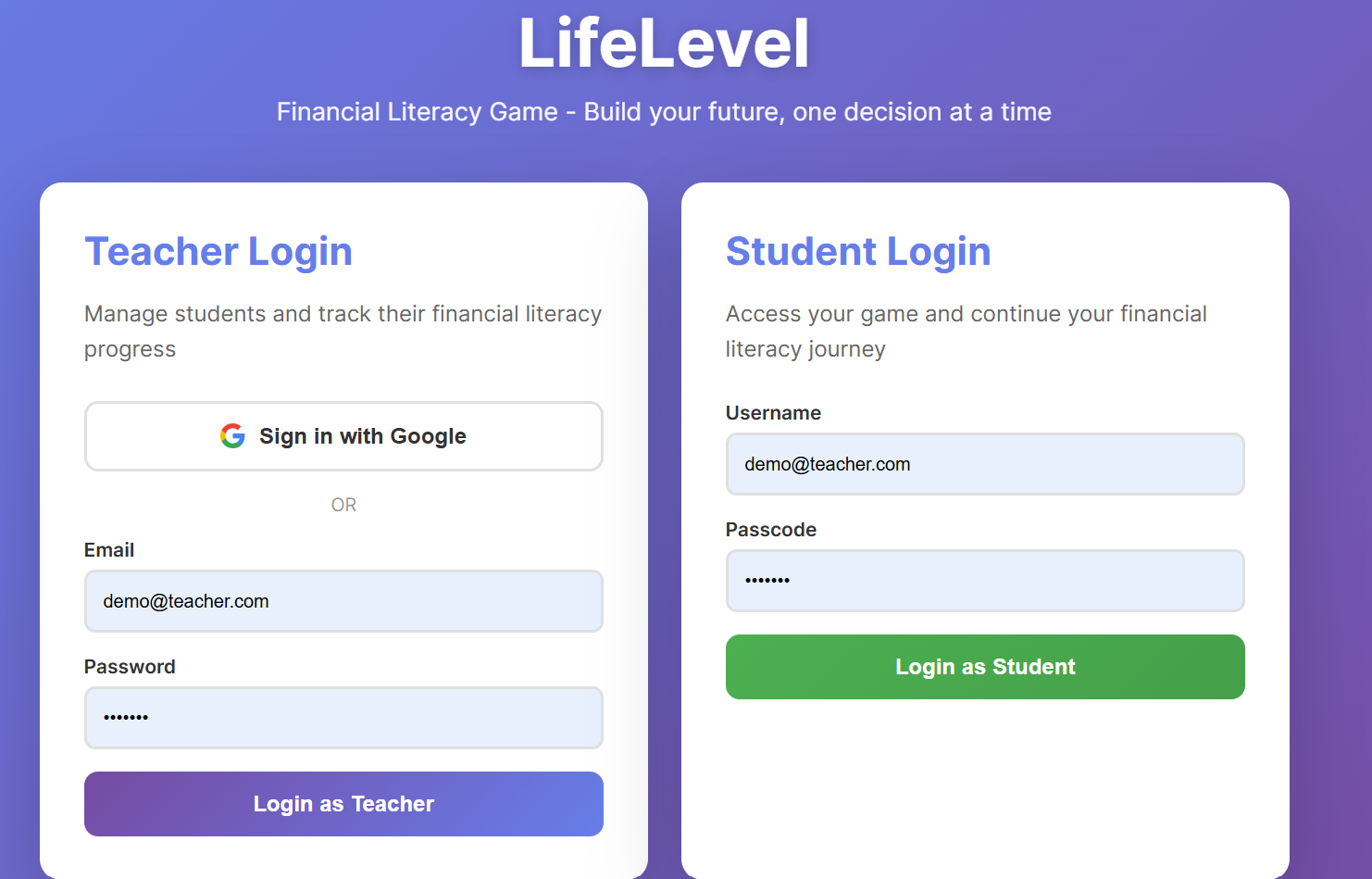
User Facing Login Page
-
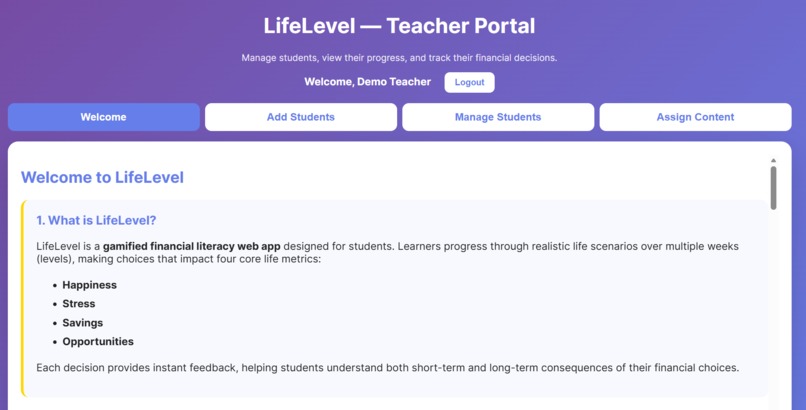
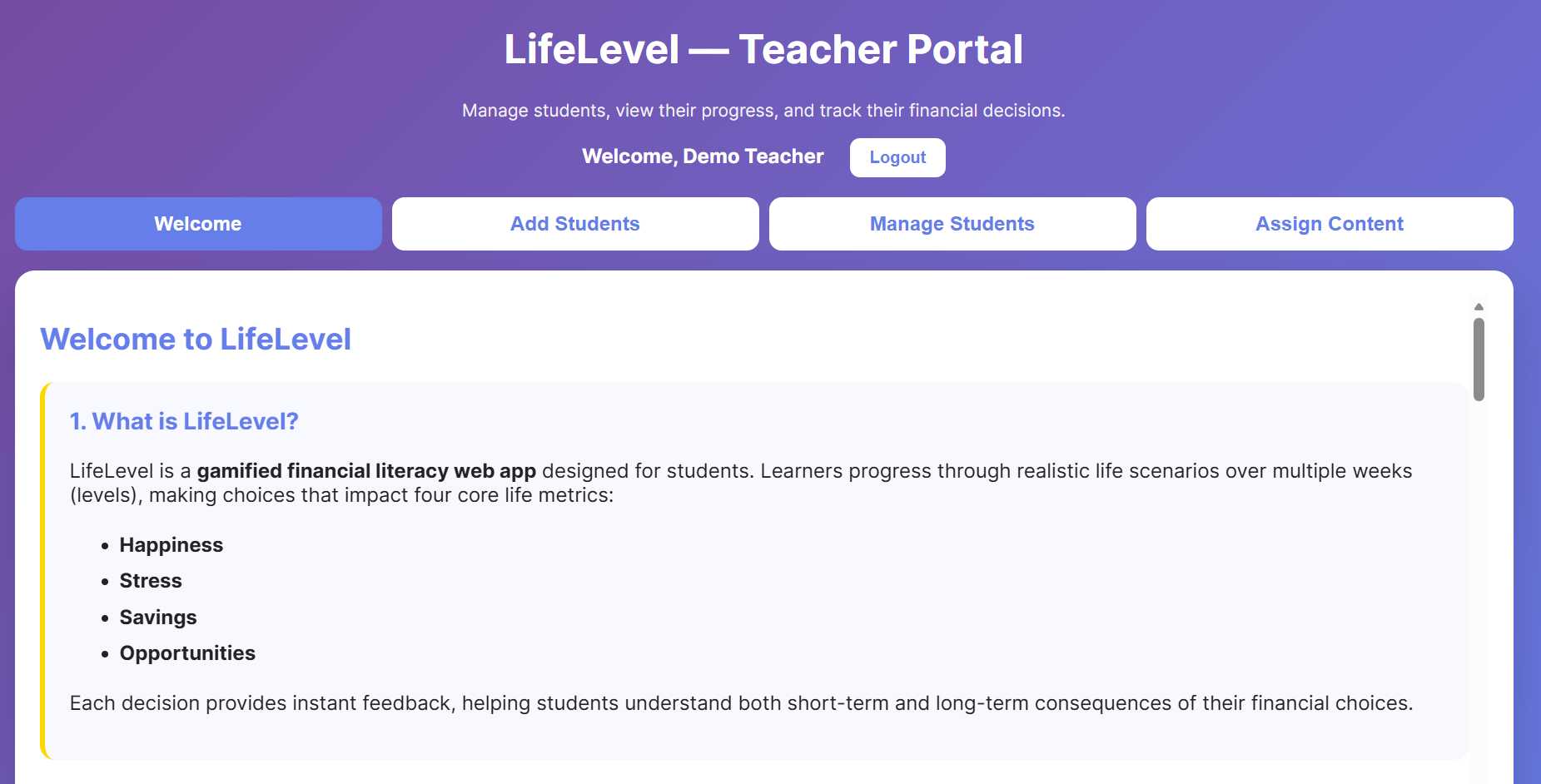
IntroGuide - TeacherPortal
-
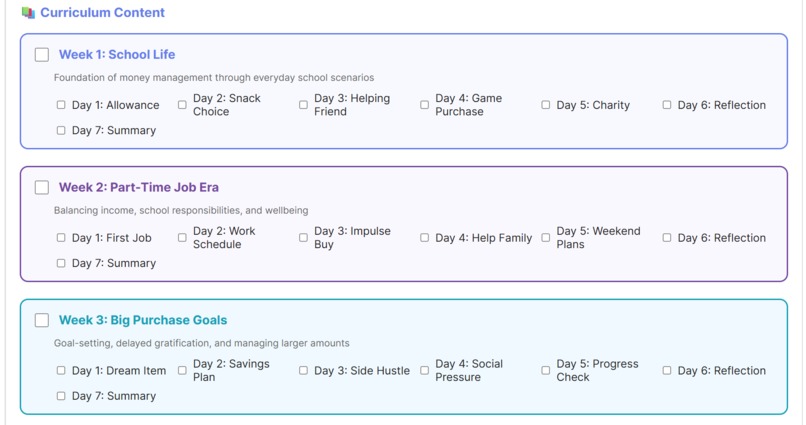
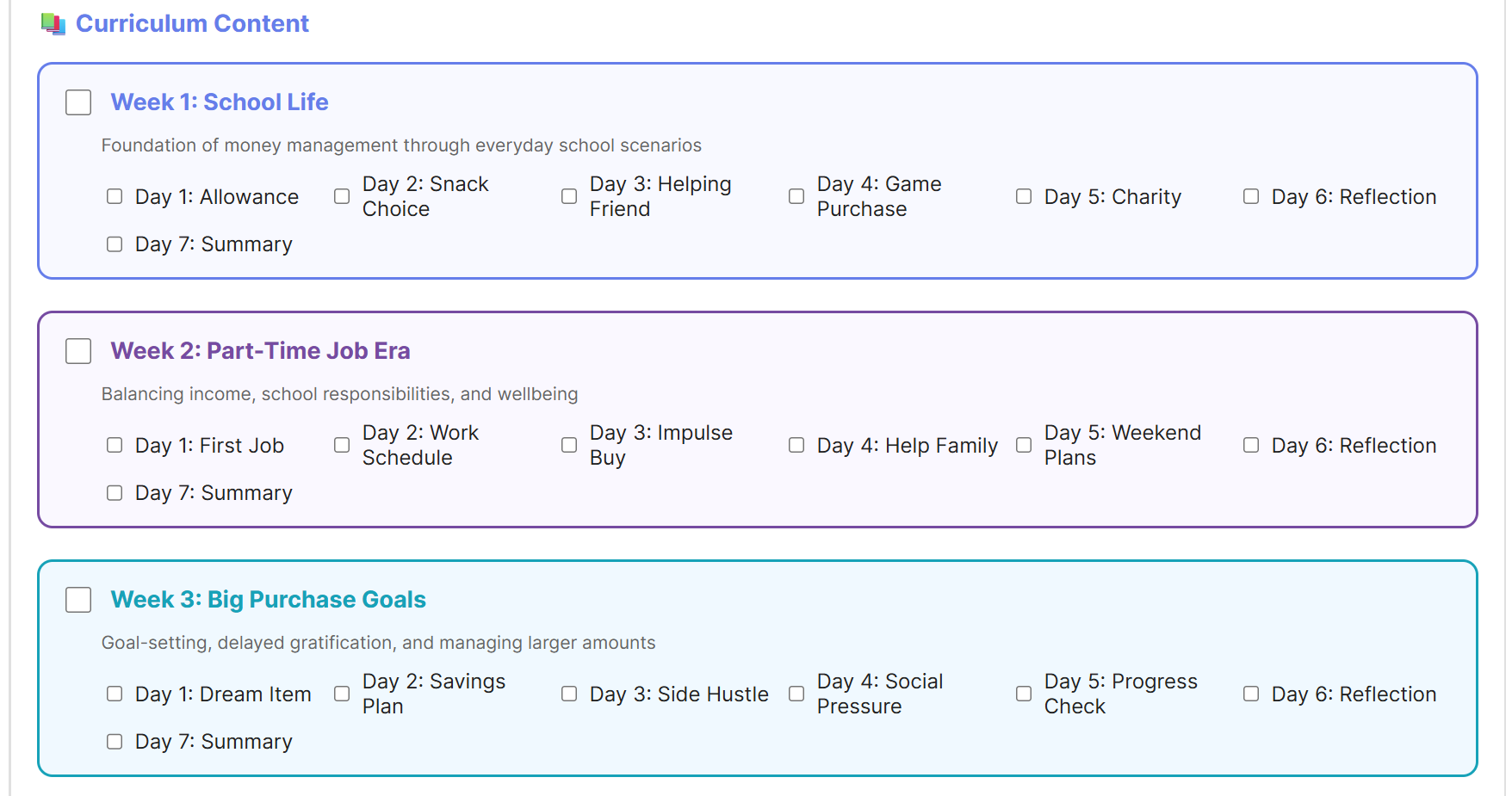
Content Selection - TeacherPortal
-
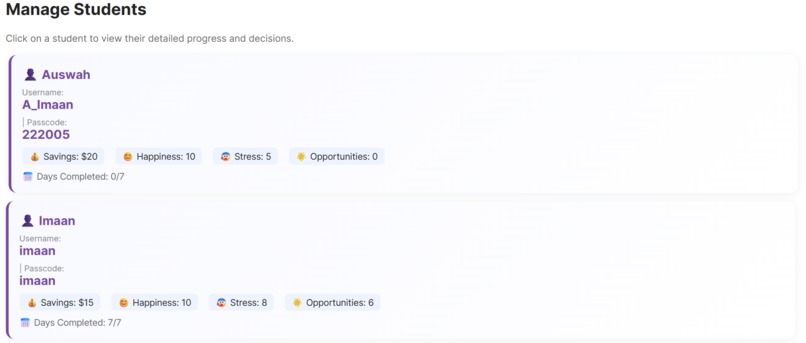
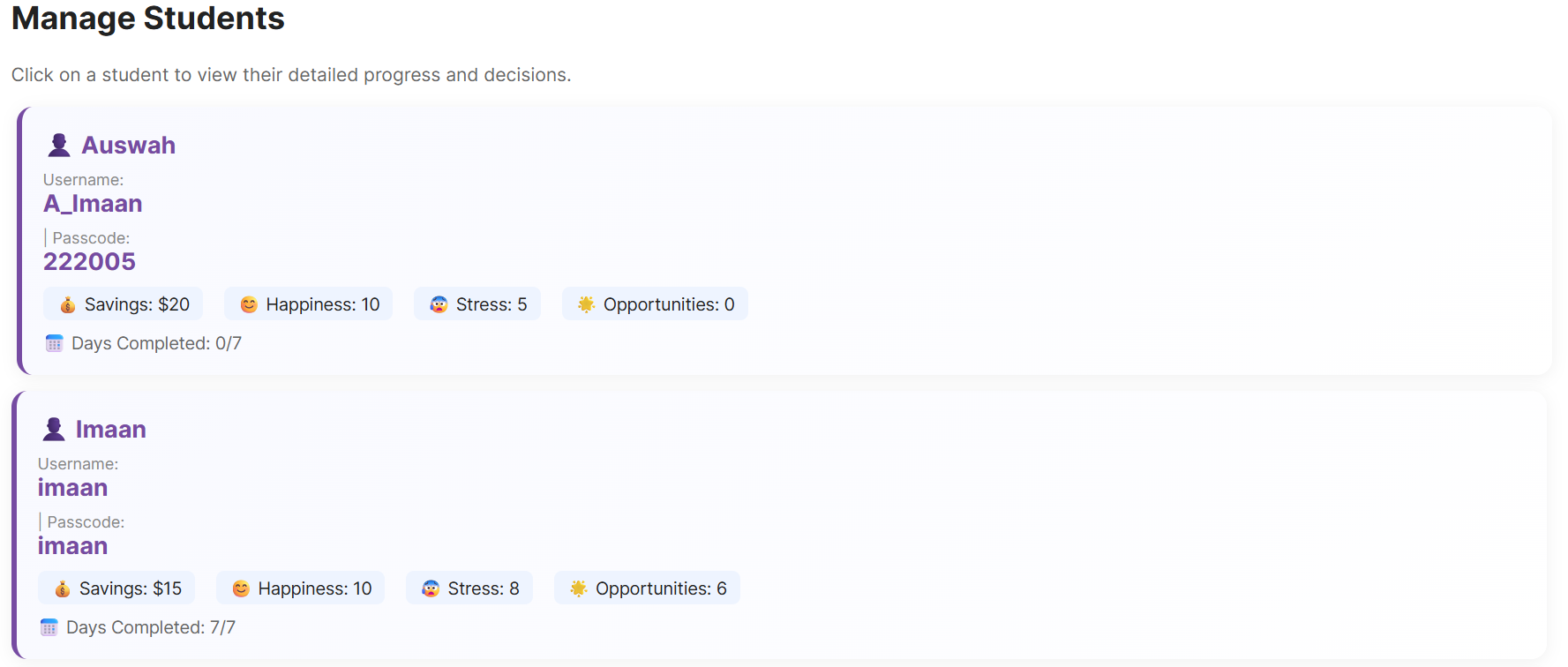
Student Management - TeacherPortal
-
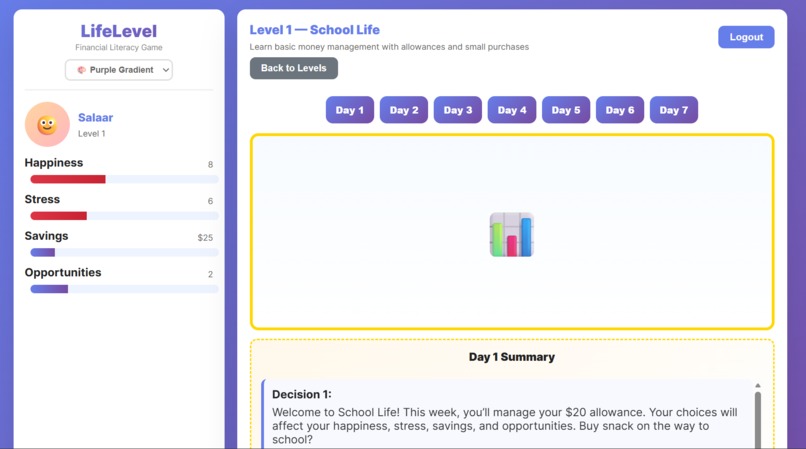
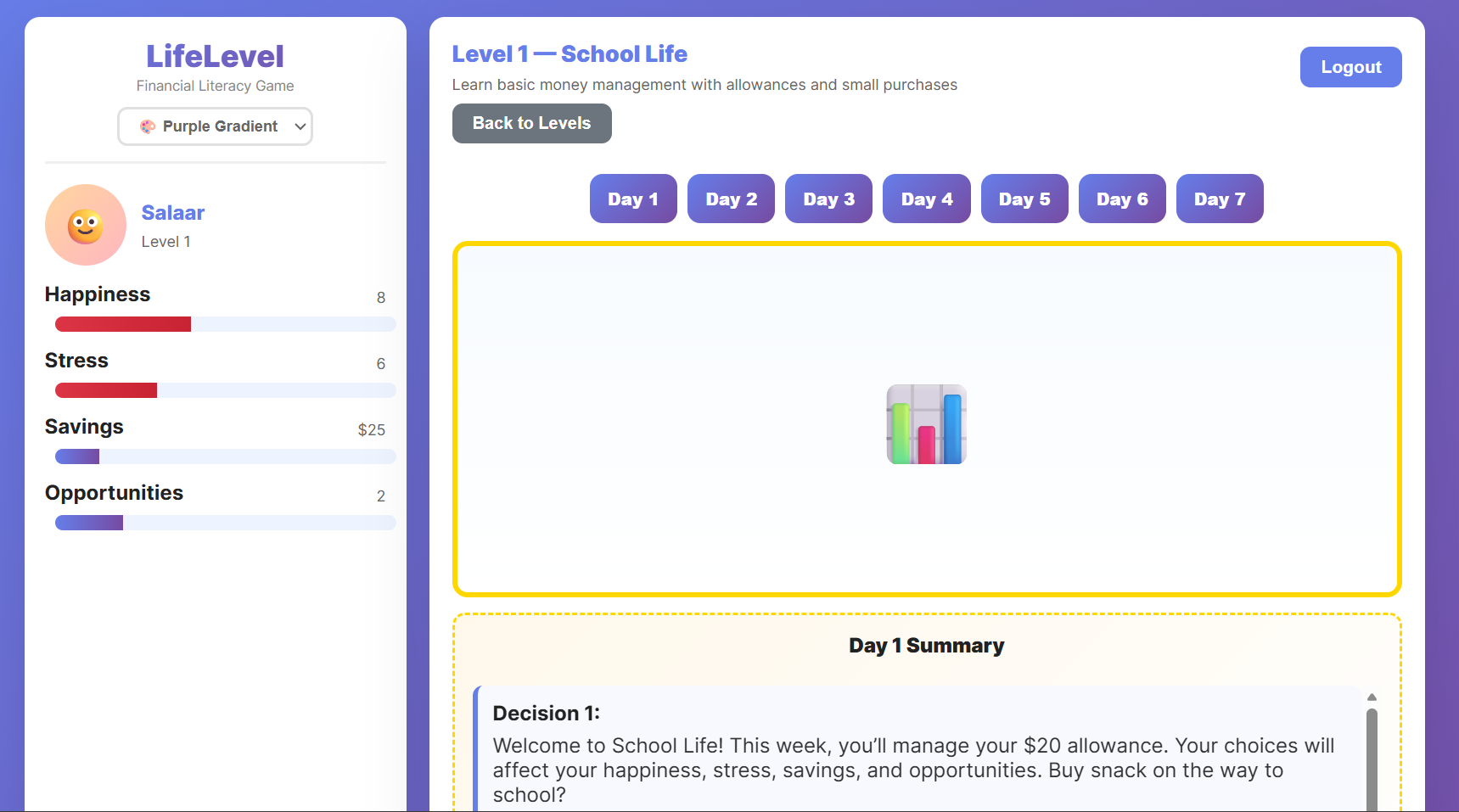
Student_Portal
-
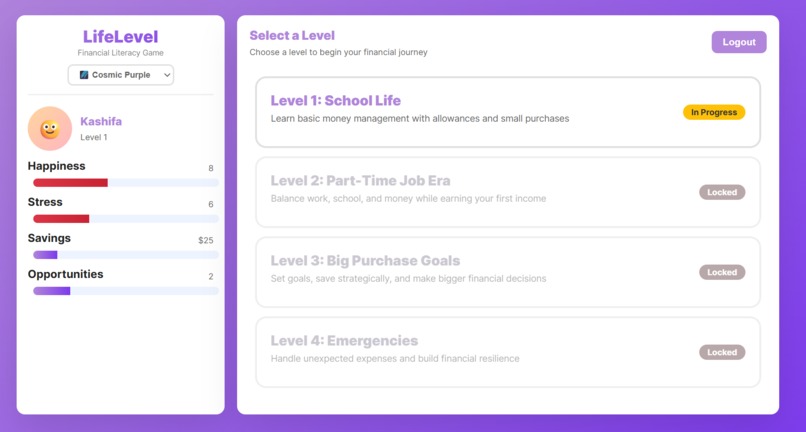
Student_Portal
-
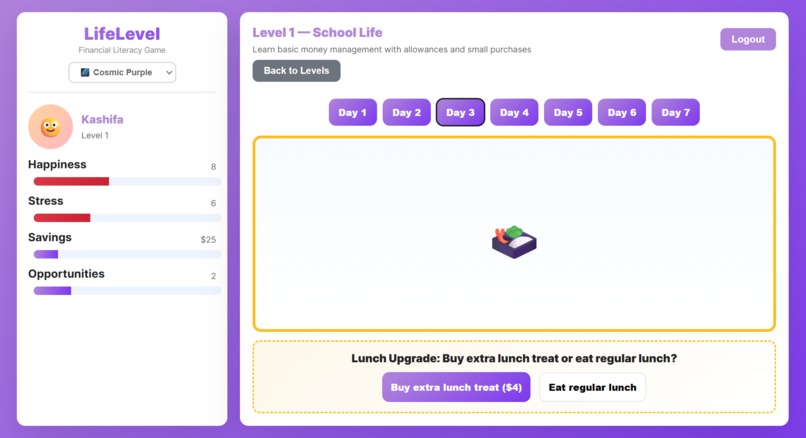
Student_Portal
Inspiration
We realized kids don’t struggle with financial literacy because they can’t understand numbers, they struggle because money doesn’t feel real. Most lessons are just worksheets or videos with no consequences. LifeLevel was inspired by the idea that learning sticks when students see the impact of their choices, feel the outcomes, and reflect on what really works, just like real life.
What it does
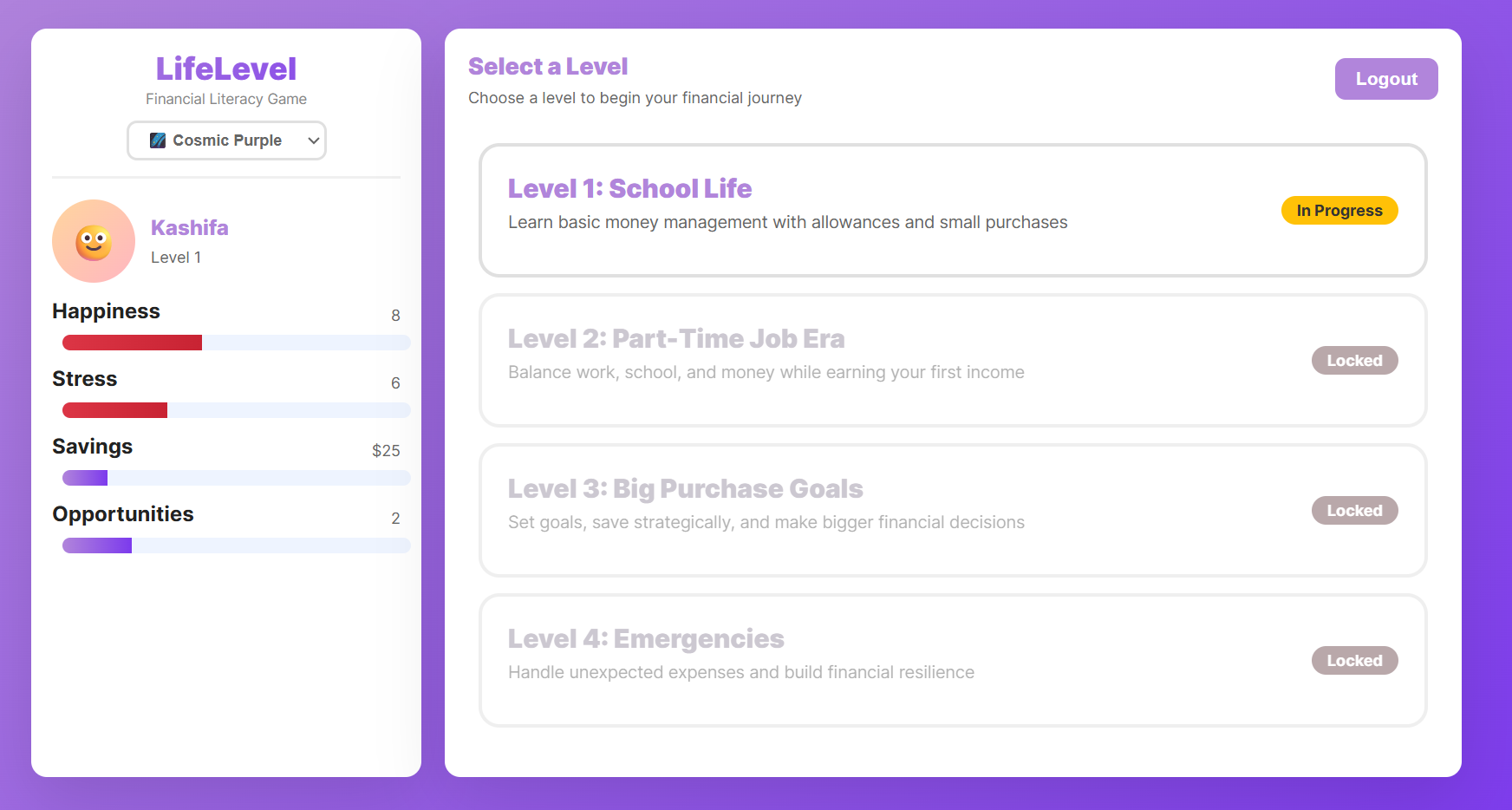
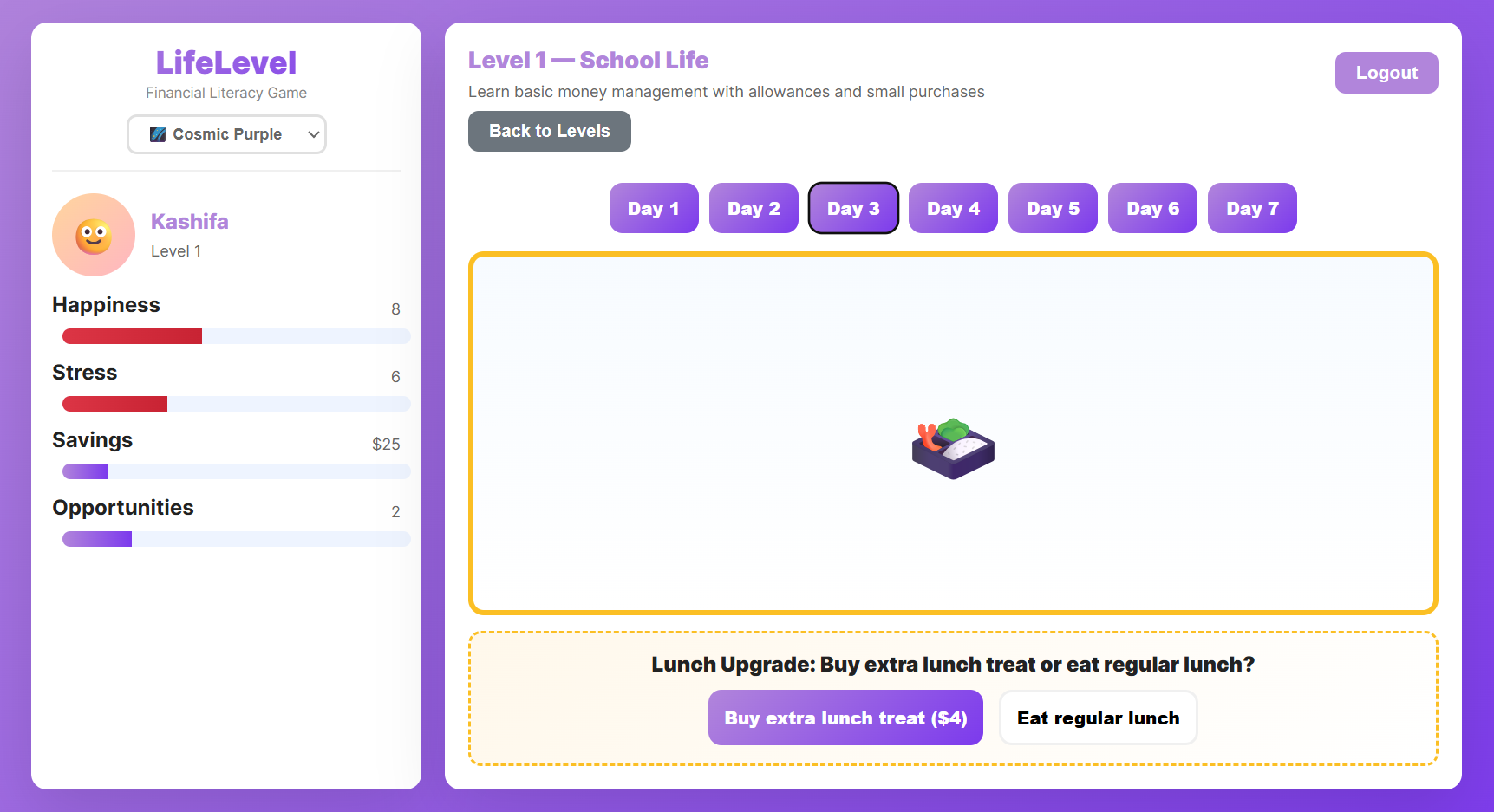
LifeLevel turns financial literacy into a living experience. Students don’t just read or watch, they live their choices. Every decision affects their happiness, stress, savings, and opportunities in real time. Characters react, stats change, and the world responds to them. It’s not a lesson, it’s a life simulator that teaches kids how money, choices, and consequences actually work.
How we built it
LifeLevel was built entirely using HTML, CSS, and Vanilla JavaScript with no frameworks or external dependencies. It runs as a client-side single-page application with separate student and teacher portals. All data is stored locally using browser localStorage, enabling offline use and easy deployment. A modular game engine, dynamic UI rendering, and a theme system powered by CSS variables support a clean and engaging user experience.
Challenges we ran into
Making financial decisions feel real for kids was harder than we expected, it’s not enough to show numbers on a screen. We had to balance age-appropriate difficulty with fun and engagement, while also making sure every choice had visible consequences. Giving teachers control over student progression was also challenging, since the system needed to be flexible enough to let them reset or unlock levels, but simple enough to use without overwhelming them. Designing the portal, and leaving room for future animations and personalization, pushed us to think differently and make LifeLevel a platform that truly teaches through experience.
Accomplishments that we're proud of
- Built a complete, zero-dependency educational game from scratch
- Implemented a structured multi-week progression system with real decision consequences
- Created both student and teacher portals without backend services
- Designed a flexible theme and UI system optimized for young users
What we learned
We were actually surprised to discover a real gap in financial literacy programs for kids. Usually it’s hard to find gaps in markets, but after researching, we couldn’t find any platform that truly combines real consequences, engagement, and teacher control, and that’s what inspired LifeLevel. We gained a deeper understanding of client-side architecture, manual state management, and building scalable logic without relying on frameworks. We also learned how to design educational experiences that balance engagement, clarity, and meaningful feedback for younger audiences.
What's next for LifeLevel
LifeLevel is designed to grow with each student. In the future we plan to:
1. Grade-Based Evaluation: Each grade will have unique evaluation parameters, with difficulty adjusted to match students’ level and learning pace.
2. Age-Appropriate Difficulty: Younger students will start with lower happiness tolerance, allowing them to make mistakes safely while gradually increasing challenges as they progress.
3. Living Character System: Students will have a character or pet that visibly reacts and evolves based on their decisions, making the learning experience more personal and engaging.
4. Progress-Based Rewards: Smart choices will unlock rewards like outfits, accessories, and special animations for their character, motivating positive decision-making.
5. Enhanced Animations: Future updates will include more interactive animations to show the immediate impact of choices, making consequences feel more real and immersive.

Log in or sign up for Devpost to join the conversation.