-
-
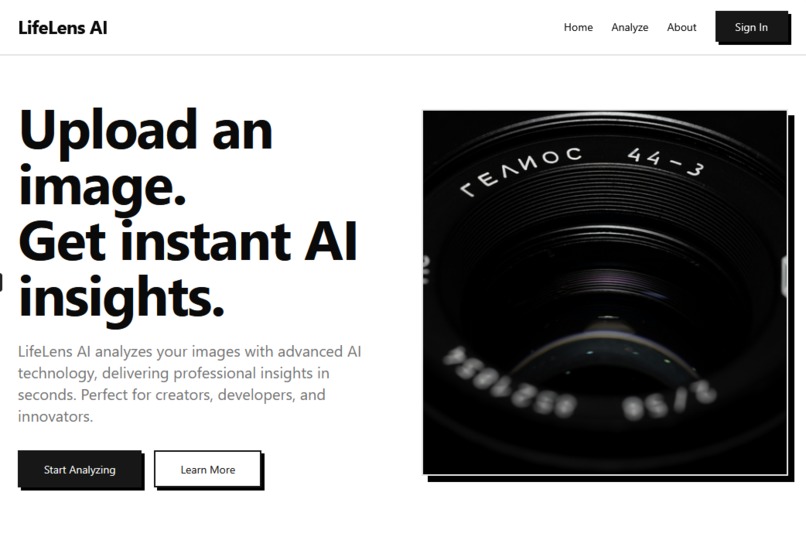
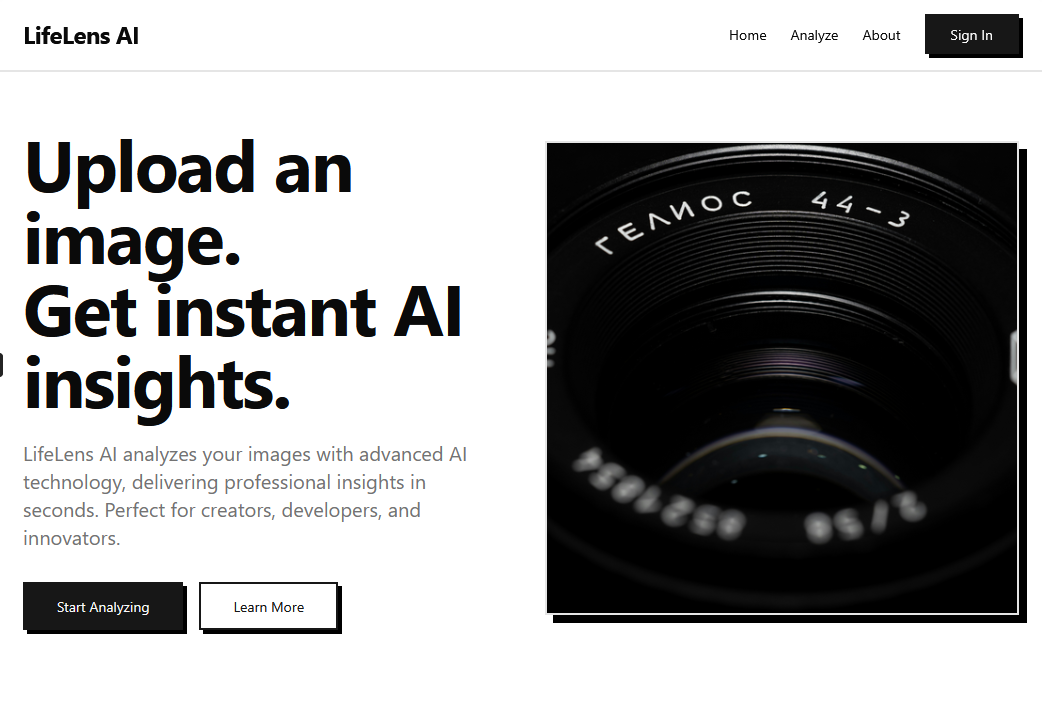
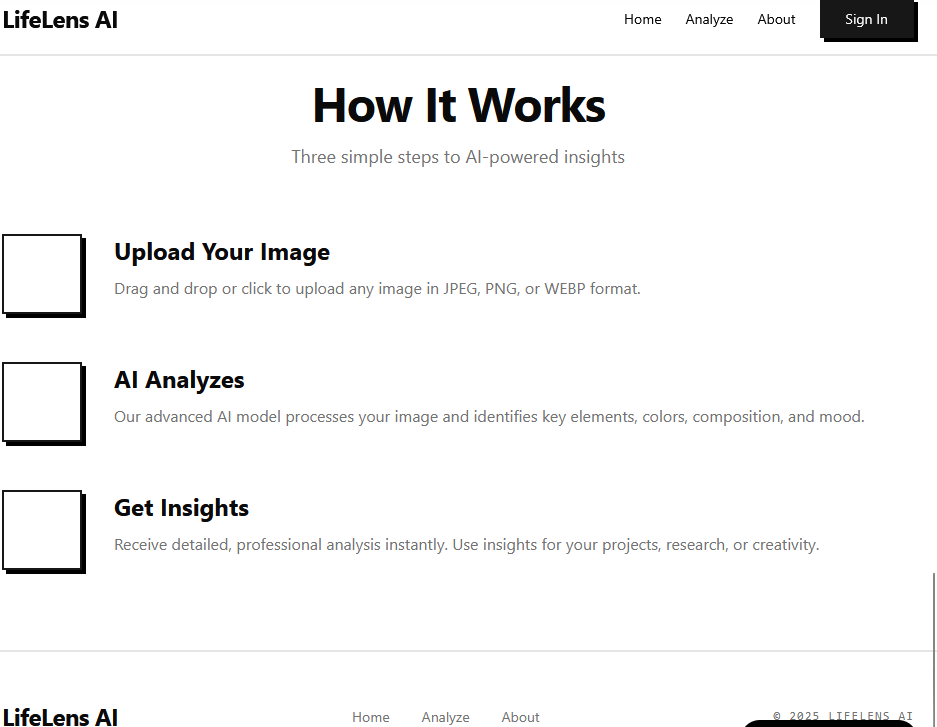
This is my website home page photo.
-
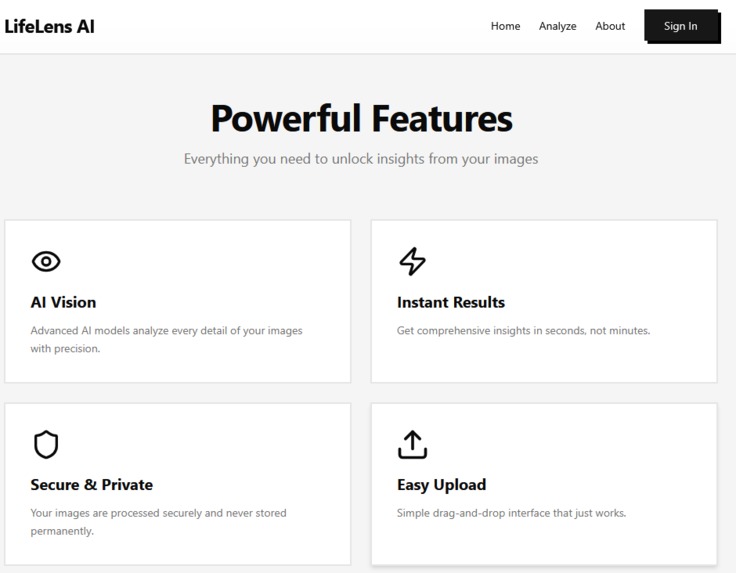
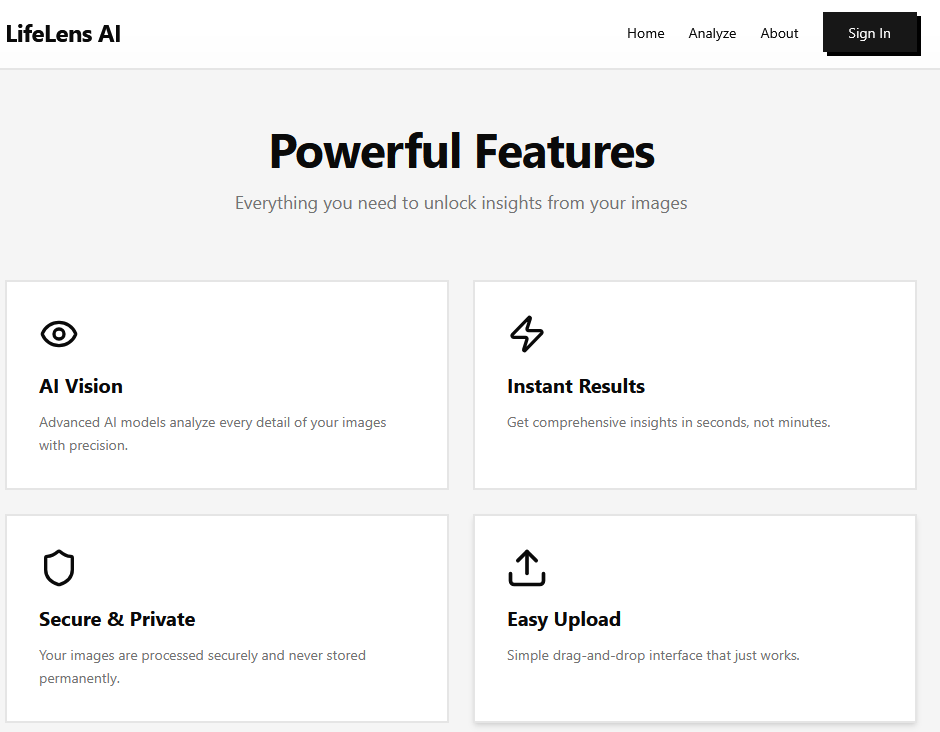
When scroll down the page then we can see this.
-
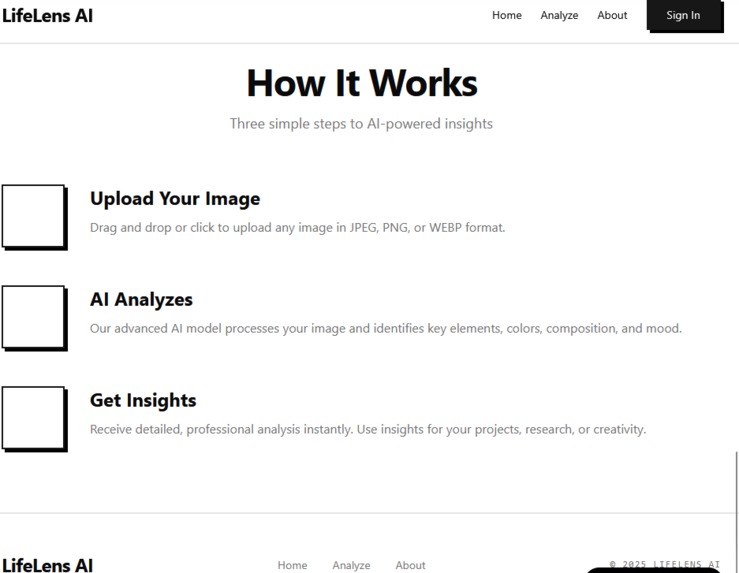
This is the last part of home page.
-
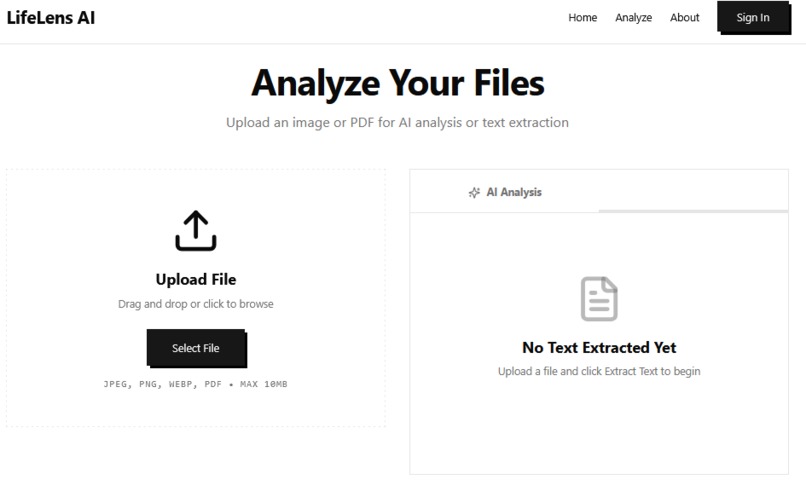
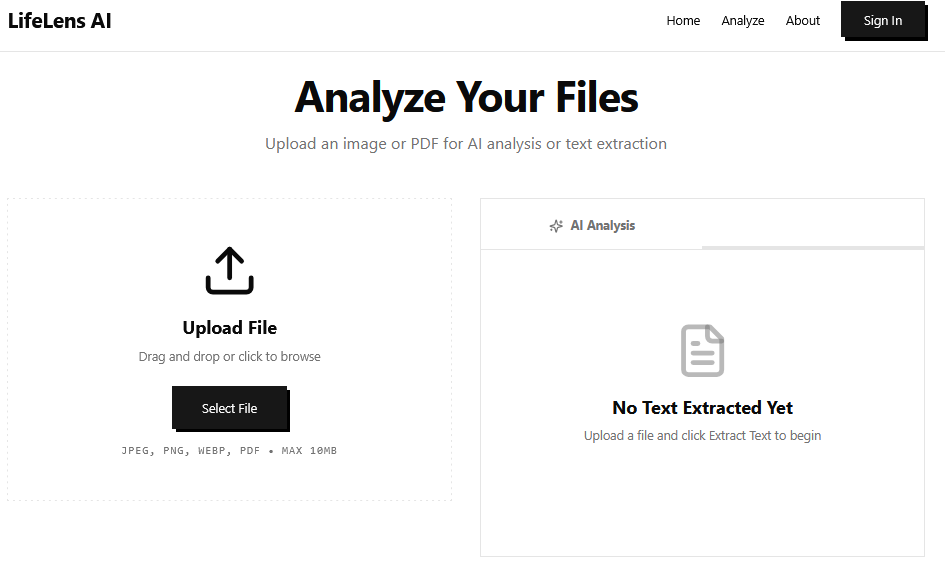
This is the analyze page.
-
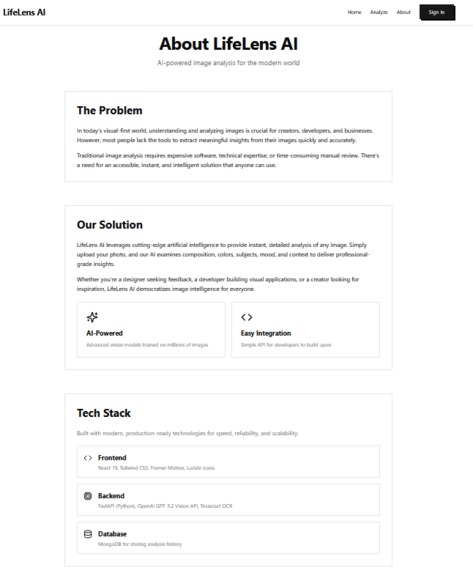
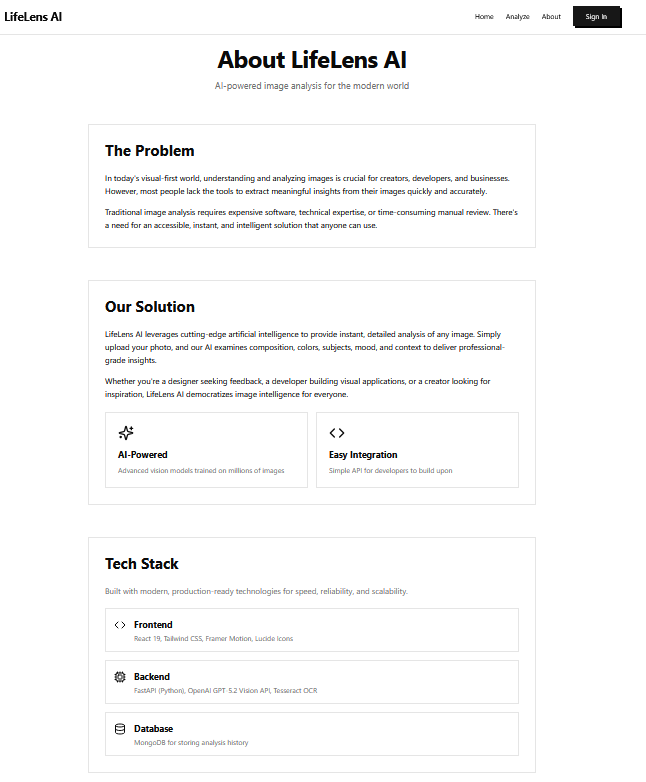
This is the about page.
-
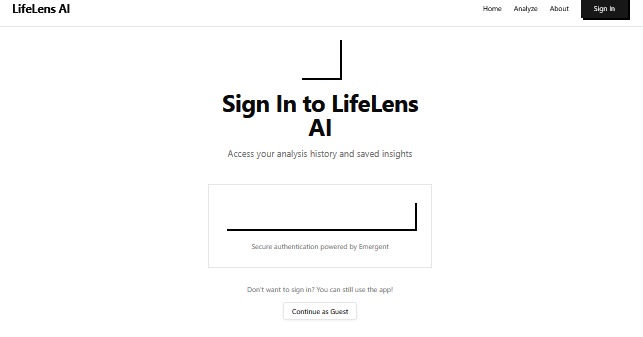
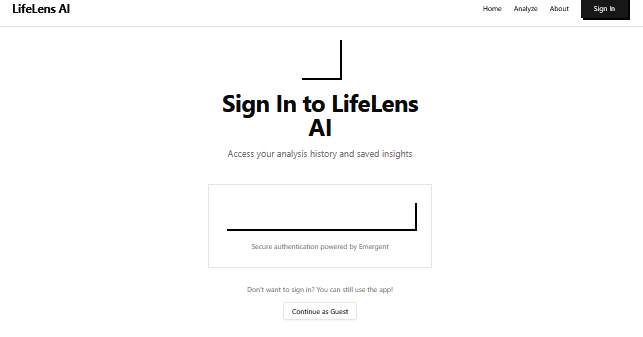
This is the sign in page.
Inspiration :
LifeLense AI was inspired by a simple but important question: how can technology help people better understand patterns in their lives using data they already generate? Many existing tools either overwhelm users with raw information or require technical expertise. We wanted to build something that feels accessible, insightful, and genuinely useful. The goal was to turn everyday inputs into meaningful analysis that can guide better decisions.
What it does :
LifeLense AI analyzes user-provided data and transforms it into clear, actionable insights. Instead of showing only raw numbers or logs, the system highlights trends, summaries, and key signals that matter most. Users can upload or input data, and LifeLense AI processes it to present results in a simple, easy-to-understand format, helping users reflect, evaluate, and improve.
How we built it :
LifeLense AI was built as a modular full-stack application.
The frontend was designed with a clean UI to keep interactions simple and distraction-free.
The backend manages data processing, validation, and core logic.
AI-driven analysis is used to extract patterns and generate insights from user inputs.
The system architecture was kept flexible so new features and data sources can be added later.
At a high level, the system follows this flow:
Insight=f (User Data,Processing Logic,AI Model)
This structure helped us maintain clarity and consistency throughout development.
Challenges we ran into :
One major challenge was integrating multiple components smoothly within a limited hackathon timeframe. Debugging data handling issues and ensuring stable output for different input formats required careful testing. Another challenge was balancing speed and accuracy in analysis while keeping the interface responsive. UI refinement under time pressure was also a significant hurdle.
Accomplishments that we're proud of :
We are proud to have delivered a working, end-to-end prototype within the hackathon period. Successfully combining data processing, AI-driven insights, and a usable interface was a key achievement. We also take pride in building a system that is easy to understand and demonstrates clear real-world potential beyond the hackathon.
What we learned :
This project reinforced the importance of planning and prioritization under constraints. We learned how critical clean data handling is for reliable results and how small UI decisions can dramatically impact user experience. Most importantly, we gained confidence in building and shipping a complete product, not just isolated features.
What's next for LifeLense AI :
Next, we plan to improve the accuracy and depth of insights by enhancing the AI models and adding support for more data types. We also aim to refine the UI/UX further, introduce user personalization, and deploy LifeLense AI as a scalable platform that can support real users beyond the hackathon environment.


Log in or sign up for Devpost to join the conversation.