Inspiration
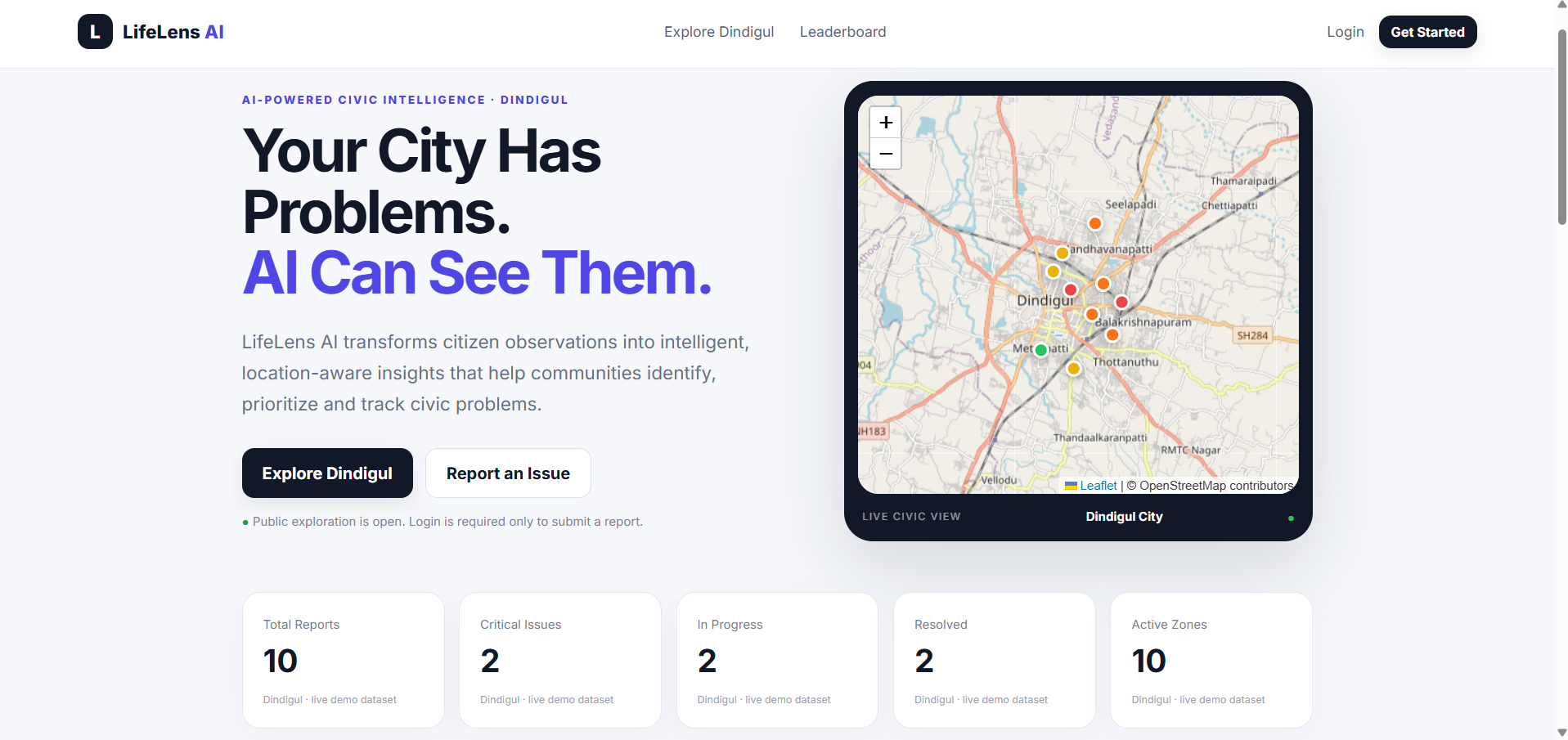
LifeLens AI was inspired by the everyday civic problems faced by people in Dindigul City, Tamil Nadu, such as potholes, overflowing garbage, damaged streetlights, and water leakage. These issues can remain unresolved due to delayed reporting and inefficient complaint management. Our goal is to use Artificial Intelligence to connect citizens and local authorities, making communities cleaner, safer, and smarter.
What it does
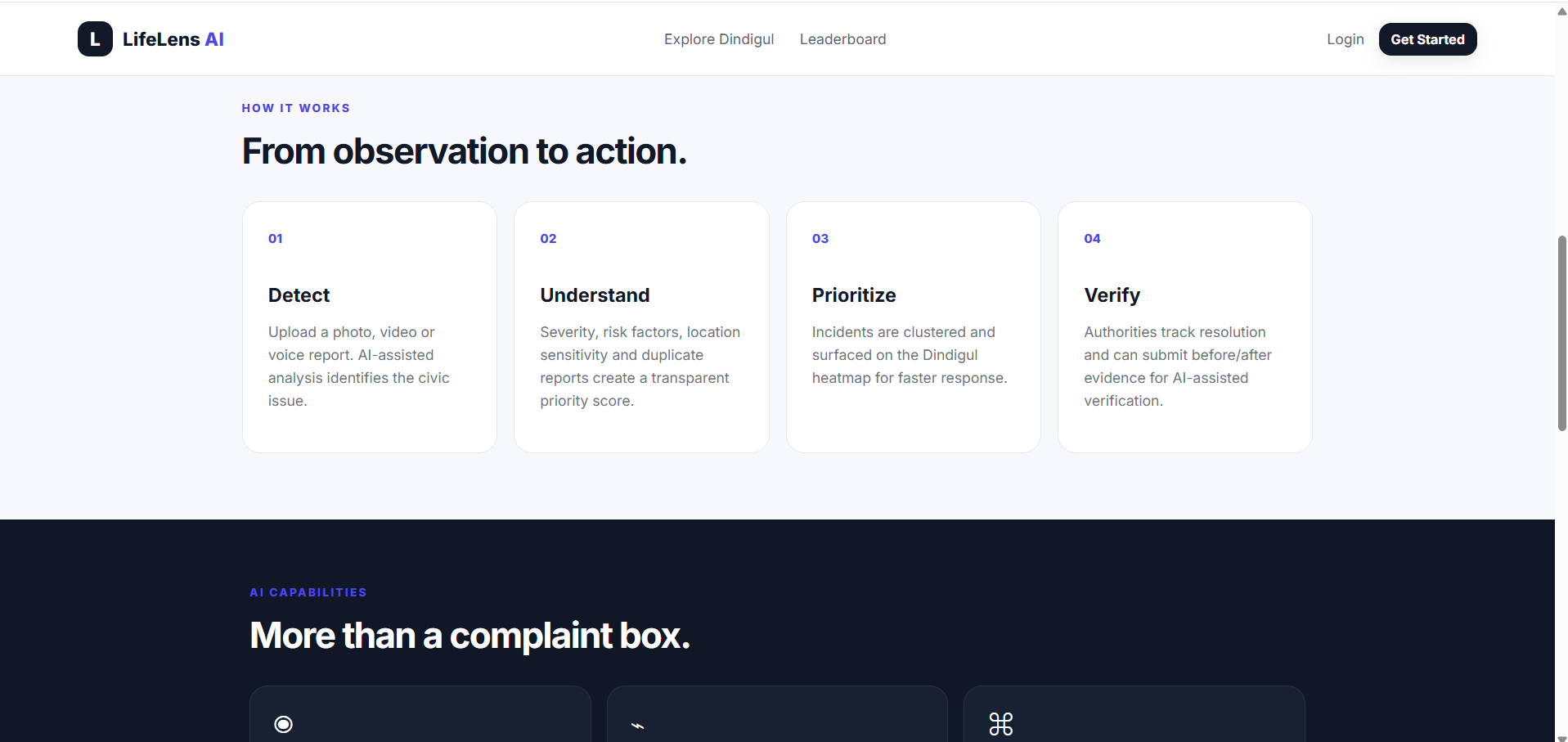
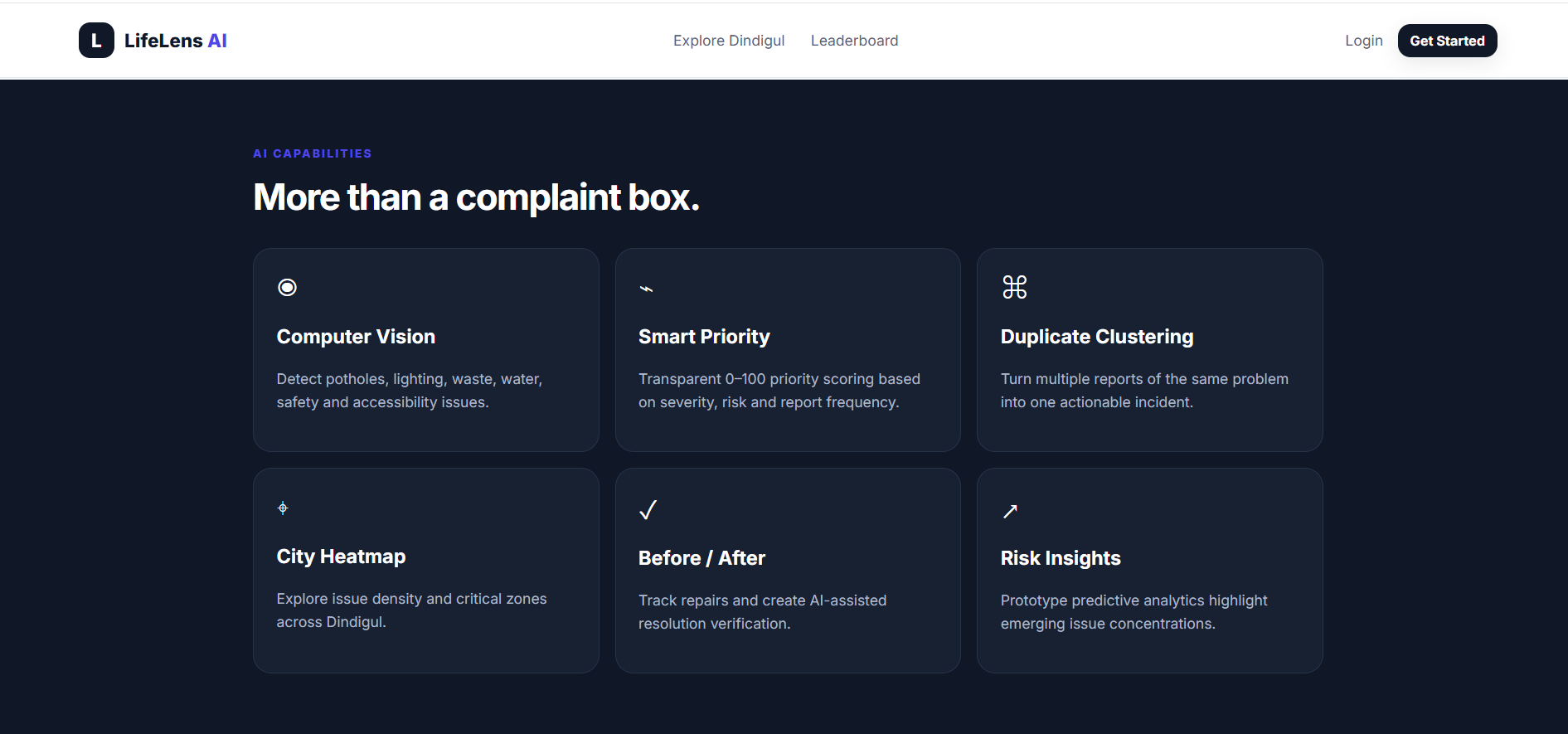
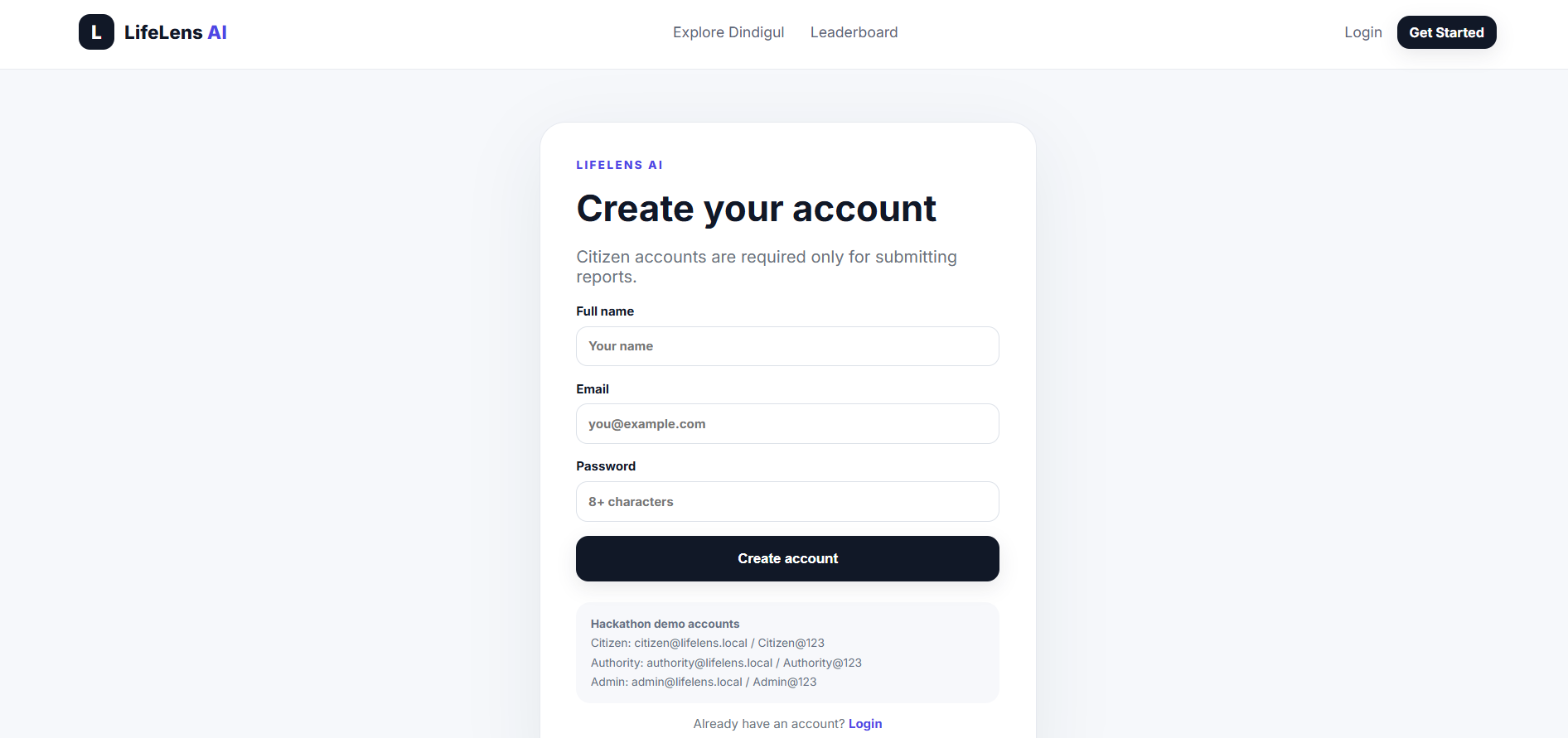
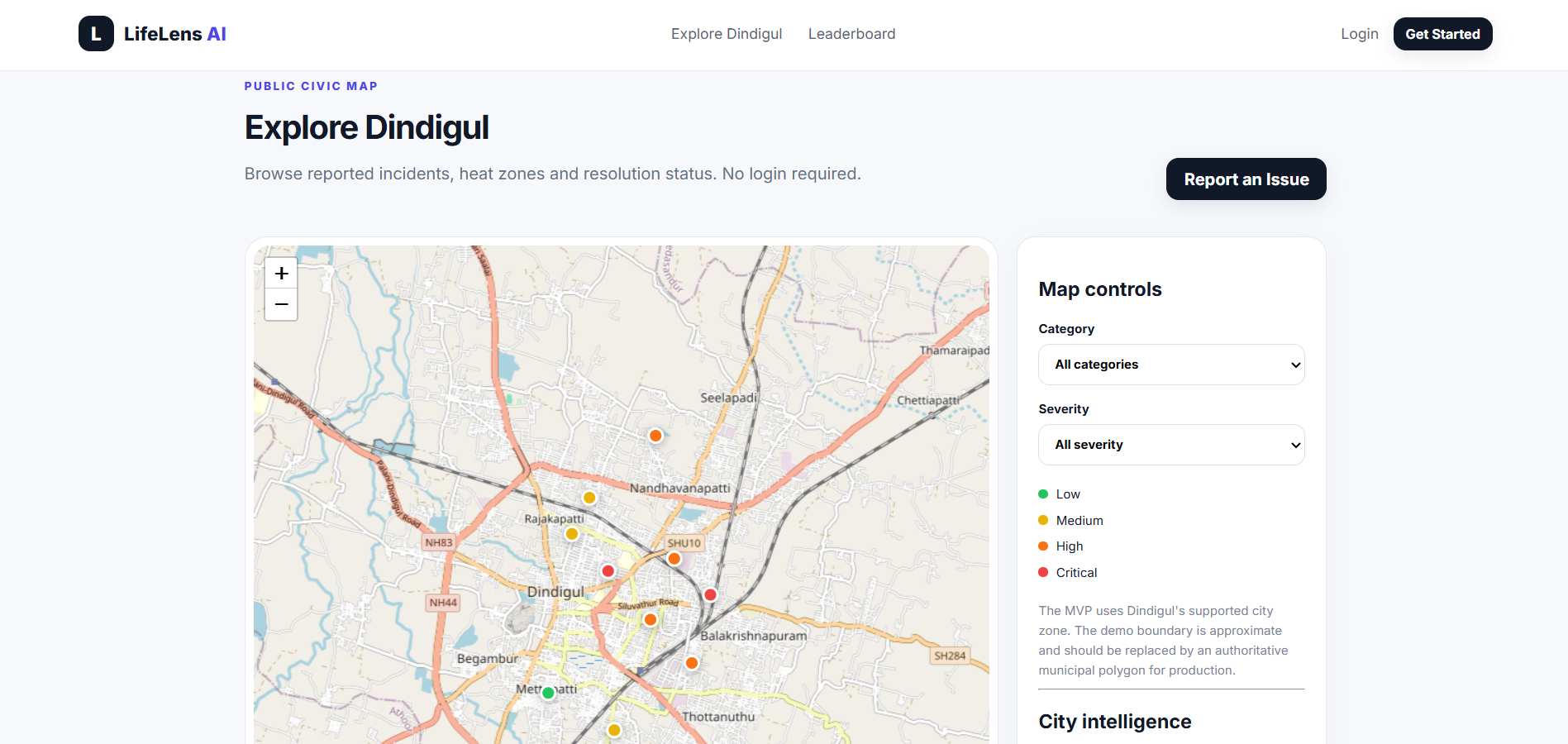
LifeLens AI is an AI-powered civic issue management platform that helps citizens report public infrastructure problems. It supports image and voice-based reporting, issue classification, severity assessment, priority scoring, duplicate report detection, and map-based issue visualization. Dashboards help authorities monitor complaints, track resolution progress, and make data-driven decisions. Gamification features encourage citizens to participate actively.
How we built it
We developed LifeLens AI as a responsive web application using Flask for the backend, Python for application logic, and HTML, CSS, and JavaScript for the frontend. We integrated map-based visualization, dashboard components, and AI-assisted issue analysis workflows. The application was deployed on Vercel to make the prototype accessible online.
Challenges we ran into
Our main challenges included designing a simple and accessible reporting interface, prioritizing civic issues effectively, identifying duplicate complaints, and presenting complex information clearly on dashboards. We also worked on mobile responsiveness, deployment configuration, and providing fallback behavior for prototype features.
Accomplishments that we're proud of
We are proud to have developed a working LifeLens AI prototype focused on Dindigul City. The platform brings citizen reporting, issue prioritization, map visualization, administrative monitoring, and gamification together in one solution. Making the prototype accessible through a live deployment was another important milestone.
What we learned
We learned how to integrate frontend and backend components, develop web applications using Flask, design responsive interfaces, and deploy a project online. We also gained experience in applying AI-assisted workflows to real-world civic challenges and understanding the importance of transparency, usability, and citizen participation.
What's next for LifeLense Ai
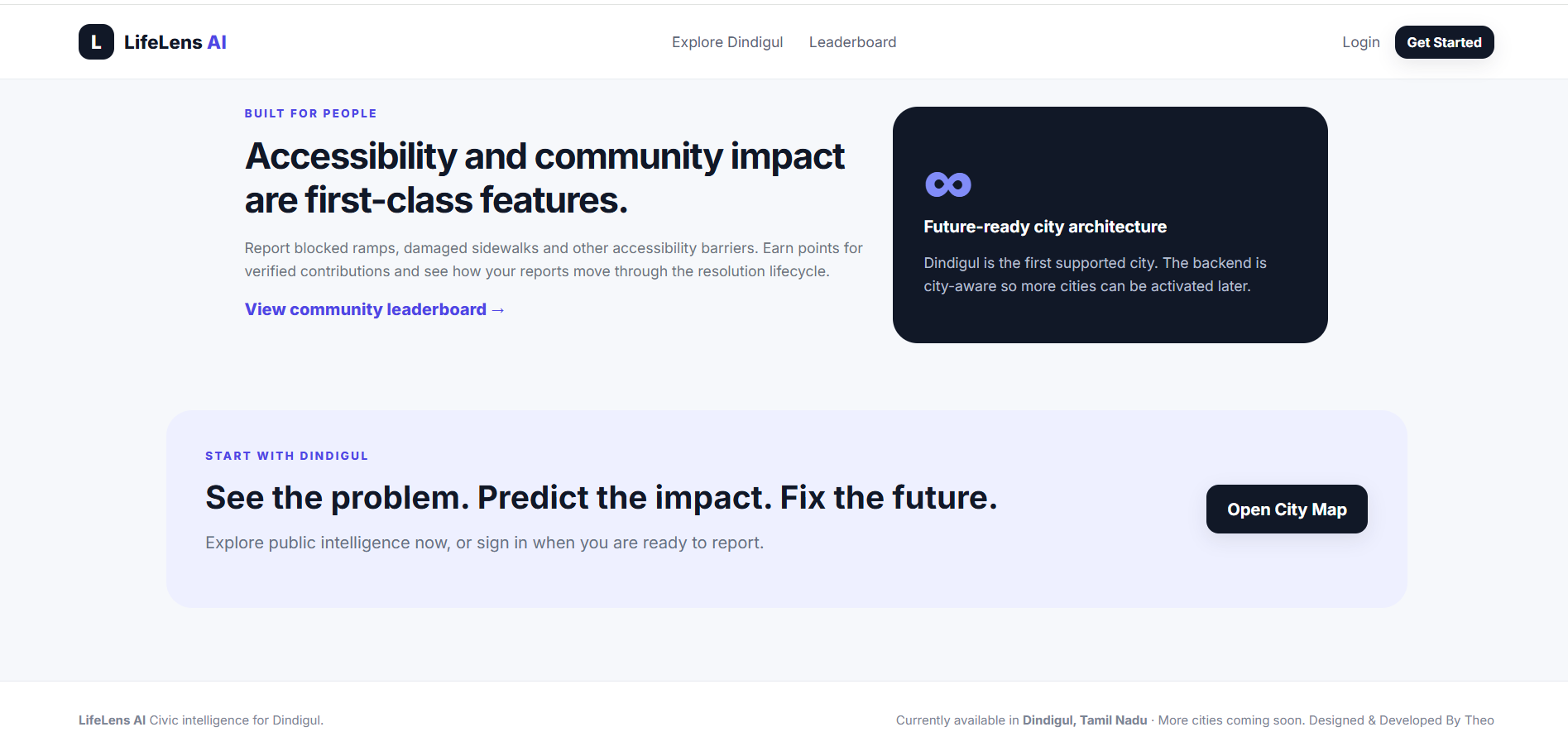
Our future plans include integrating more reliable AI models for image and voice analysis, connecting the platform with official municipal complaint systems, enabling persistent cloud-based data storage, and introducing real-time notifications. We also aim to improve predictive analytics, strengthen multilingual support, and expand LifeLens AI to additional cities beyond Dindigul.
Built With
- artificial-intelligence
- css3
- data-visualization
- flask
- generative-ai
- git
- html5
- interactive-maps
- javascript
- machine-learning
- python
- responsive-web-design
- rest-api
- vercel

Log in or sign up for Devpost to join the conversation.