-
-

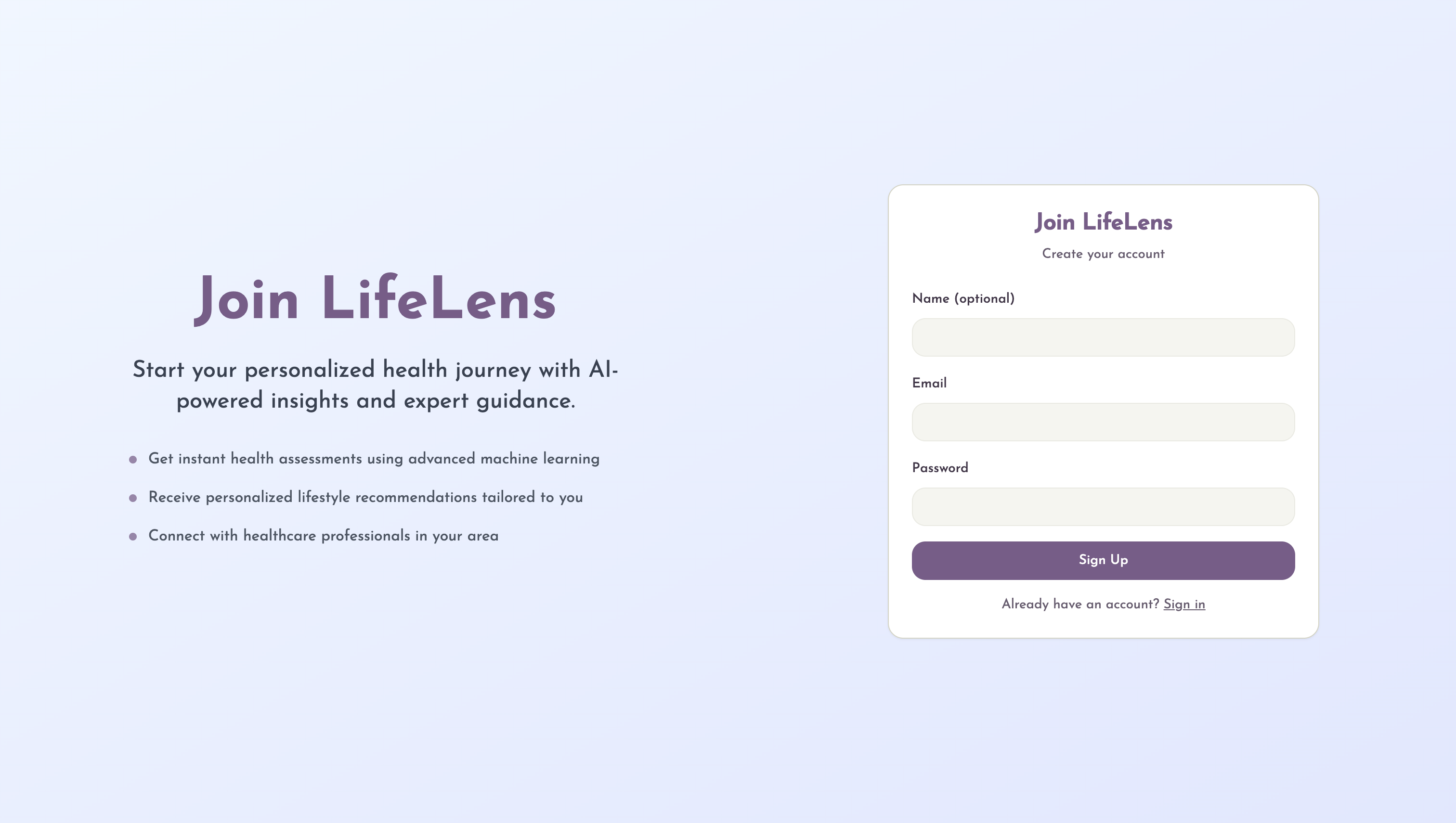
Sign Up
-
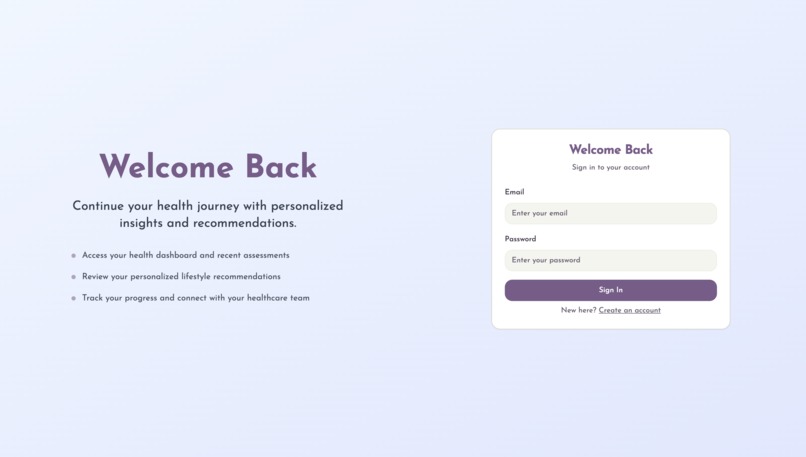
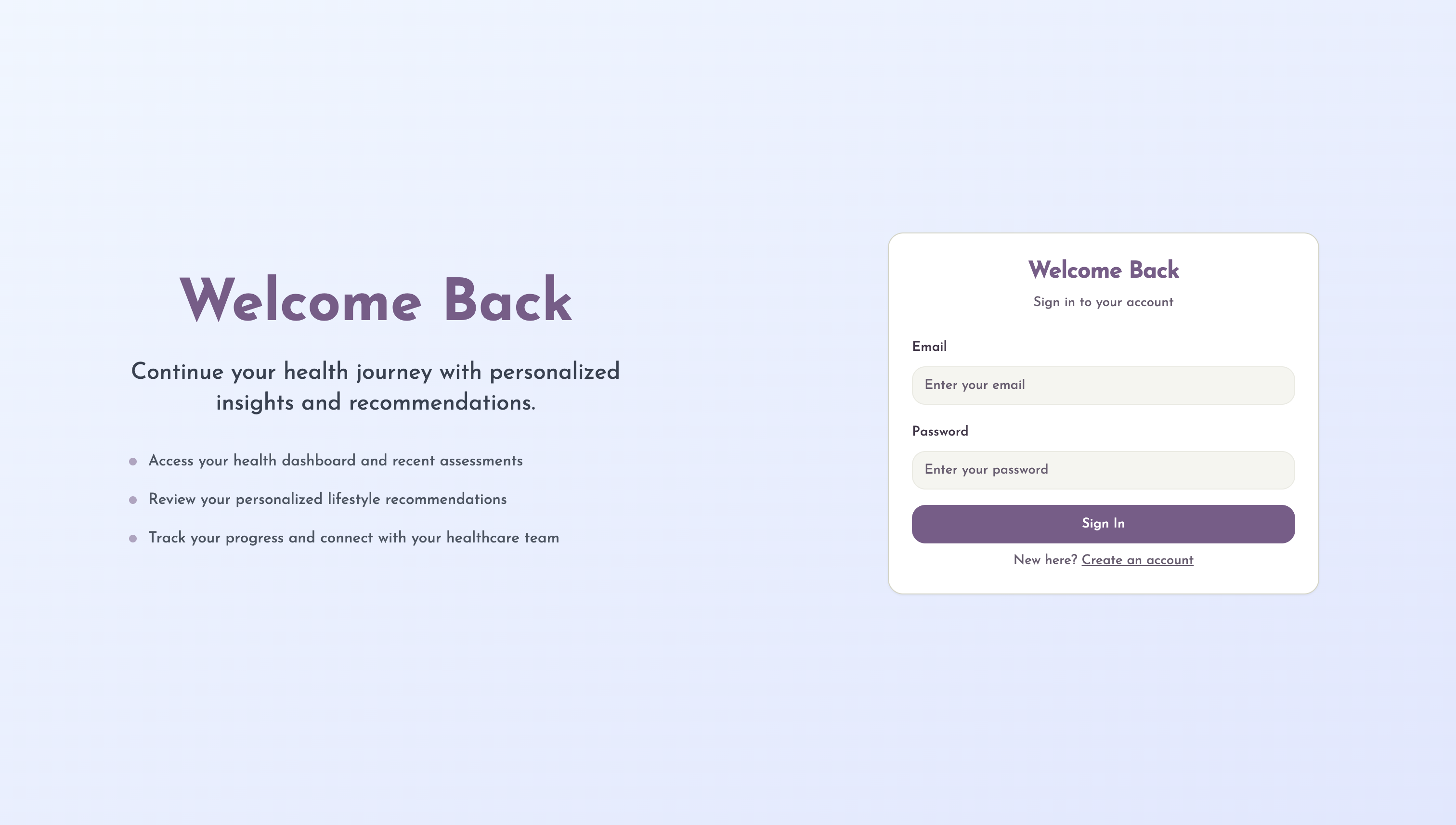
Login
-
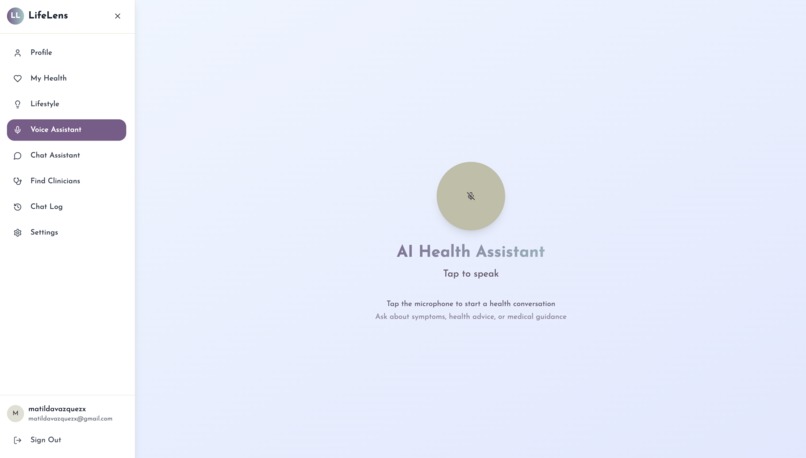
Home
Inspiration
We were inspired by the shortcomings of current AI doctor chatbots, which often rely only on patient self-reports. Miscommunication, incomplete information, and inaccurate self-diagnoses showed us the need for a more data-driven health assistant.
What it does
LifeLens combines:
- 5 ML Health Risk Models: Diabetes, High Blood Pressure, Allergy, Cancer, and Sleep Quality predictions
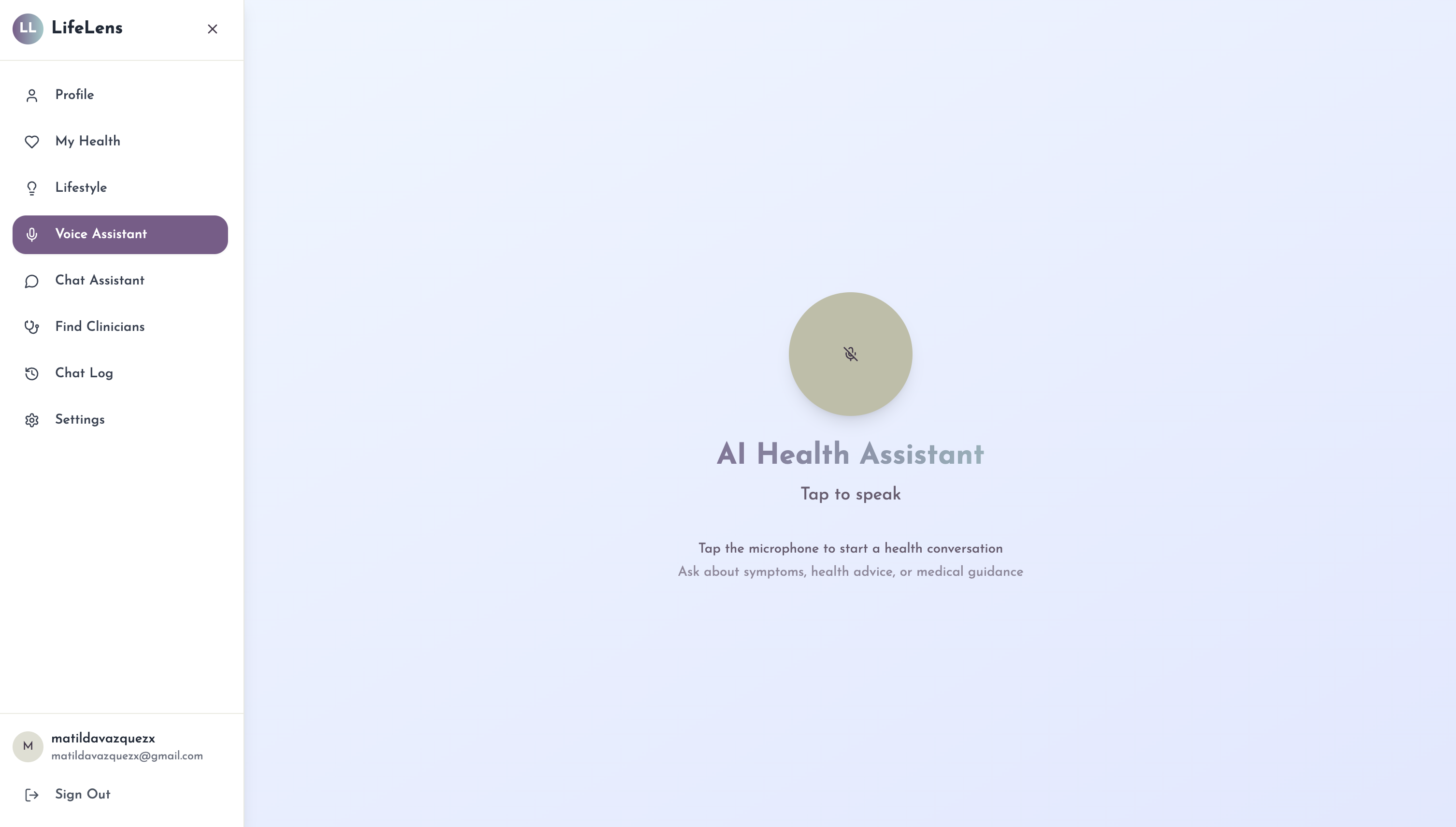
- AI Health Assistant: GPT-4 powered conversations with voice interface
- Healthcare Provider Discovery: Location-based clinic search with specialty matching
- Real-time Health Data: Comprehensive profiles with trend analysis
How we built it
- Frontend: React + TypeScript + Tailwind CSS for a modern, responsive interface.
- Backend: Supabase for database, authentication, and real-time updates.
- ML Models: Flask API serving models for diabetes, blood pressure, allergy, cancer, and sleep risk assessments.
- AI Chat: OpenAI GPT integrated with voice recognition and text-to-speech.
- Maps: Leaflet + Geolocation API for provider recommendations.
Challenges we ran into
- ML Model Integration: Orchestrating 5 different models with varying data requirements
- Voice Processing: Implementing reliable speech-to-text and text-to-speech with fallbacks
- Performance: Optimizing real-time ML predictions for smooth user experience
Accomplishments that we're proud of
- 5 Production-Ready ML Models serving real-time health predictions
- Complete Voice AI Pipeline with speech-to-text and text-to-speech
- Healthcare Provider Integration with location-based specialty matching
What we learned
Machine Learning in Healthcare
- Model Ensemble Methods: Combining multiple algorithms (XGBoost, LightGBM, Logistic Regression) for improved accuracy
- Feature Engineering: Importance of preprocessing health data for optimal model performance
- Real-time Inference: Challenges of serving ML models in production healthcare applications
Built With
- git
- github
- numpy
- pandas
- postgresql
- python
- react
- scikit-learn
- supabase
- tailwind
- typescript


Log in or sign up for Devpost to join the conversation.