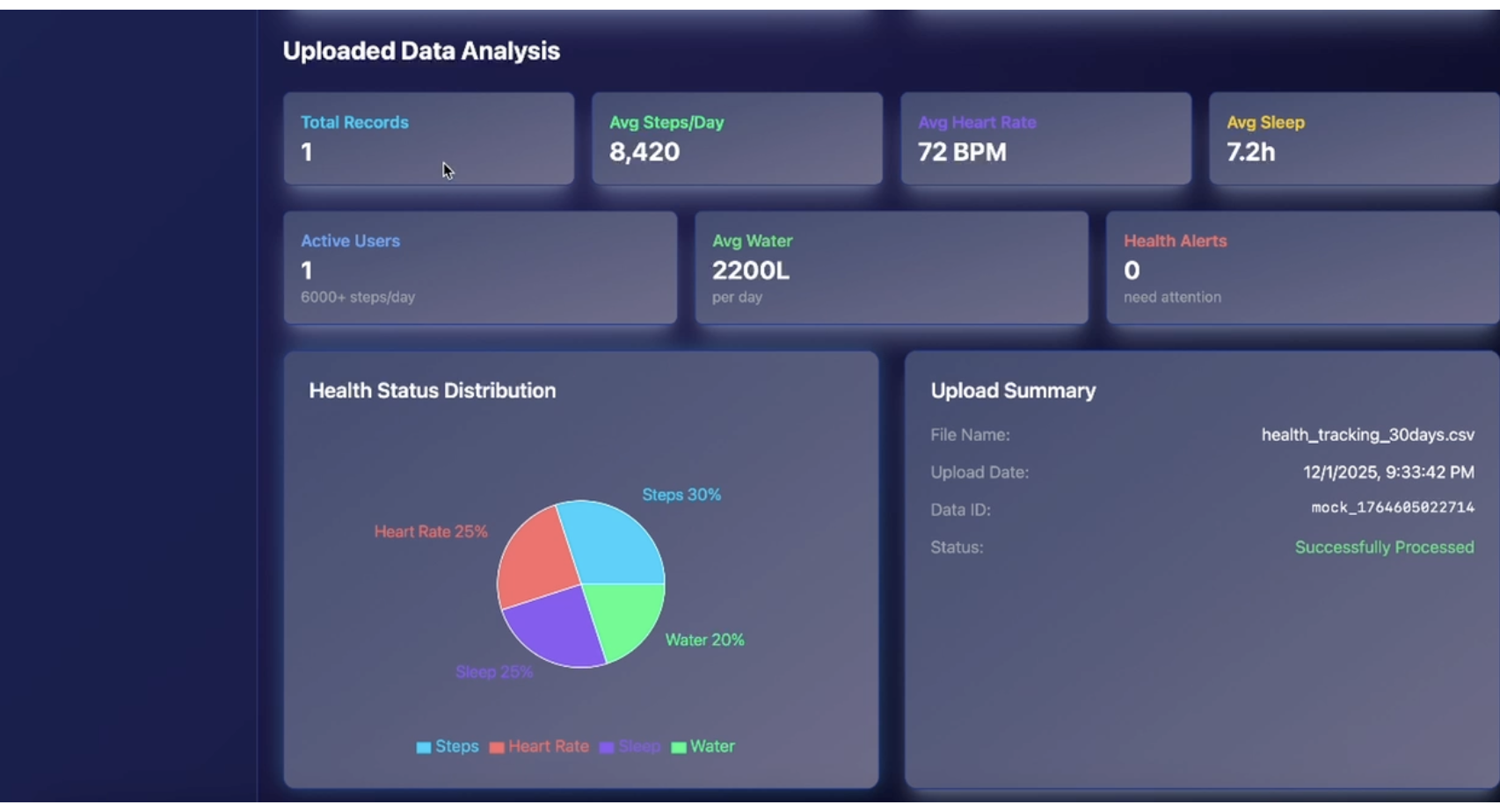
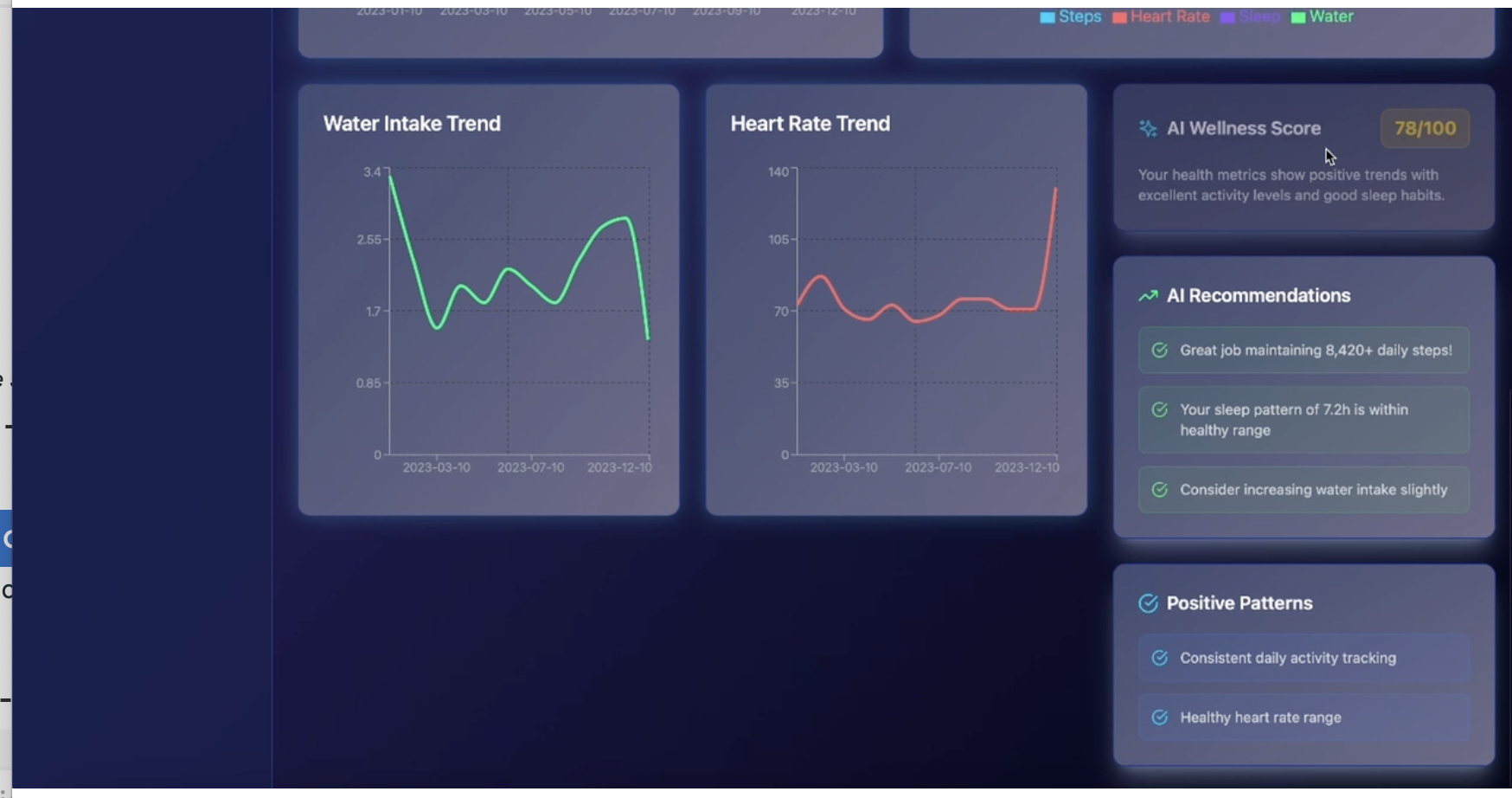
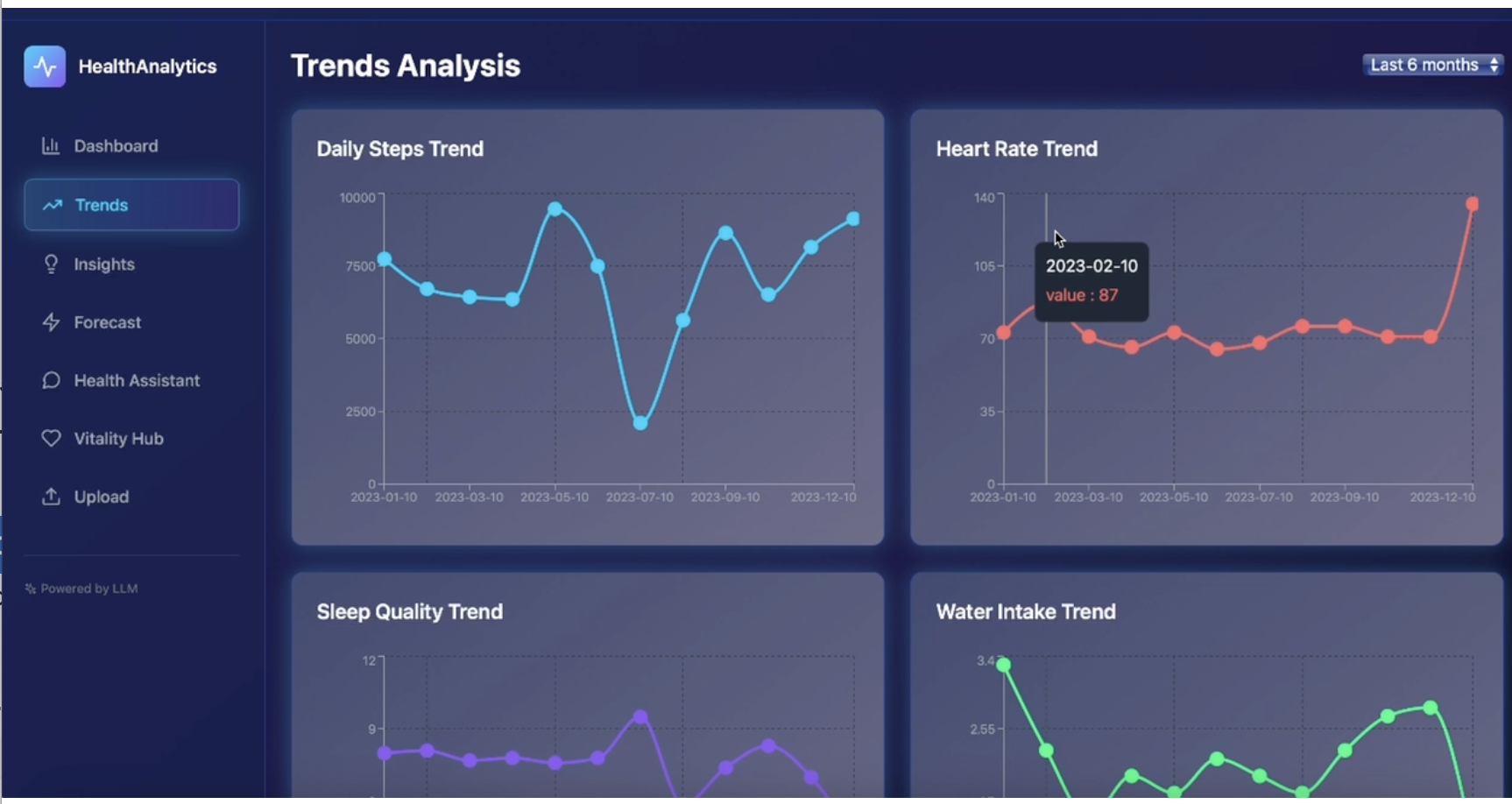
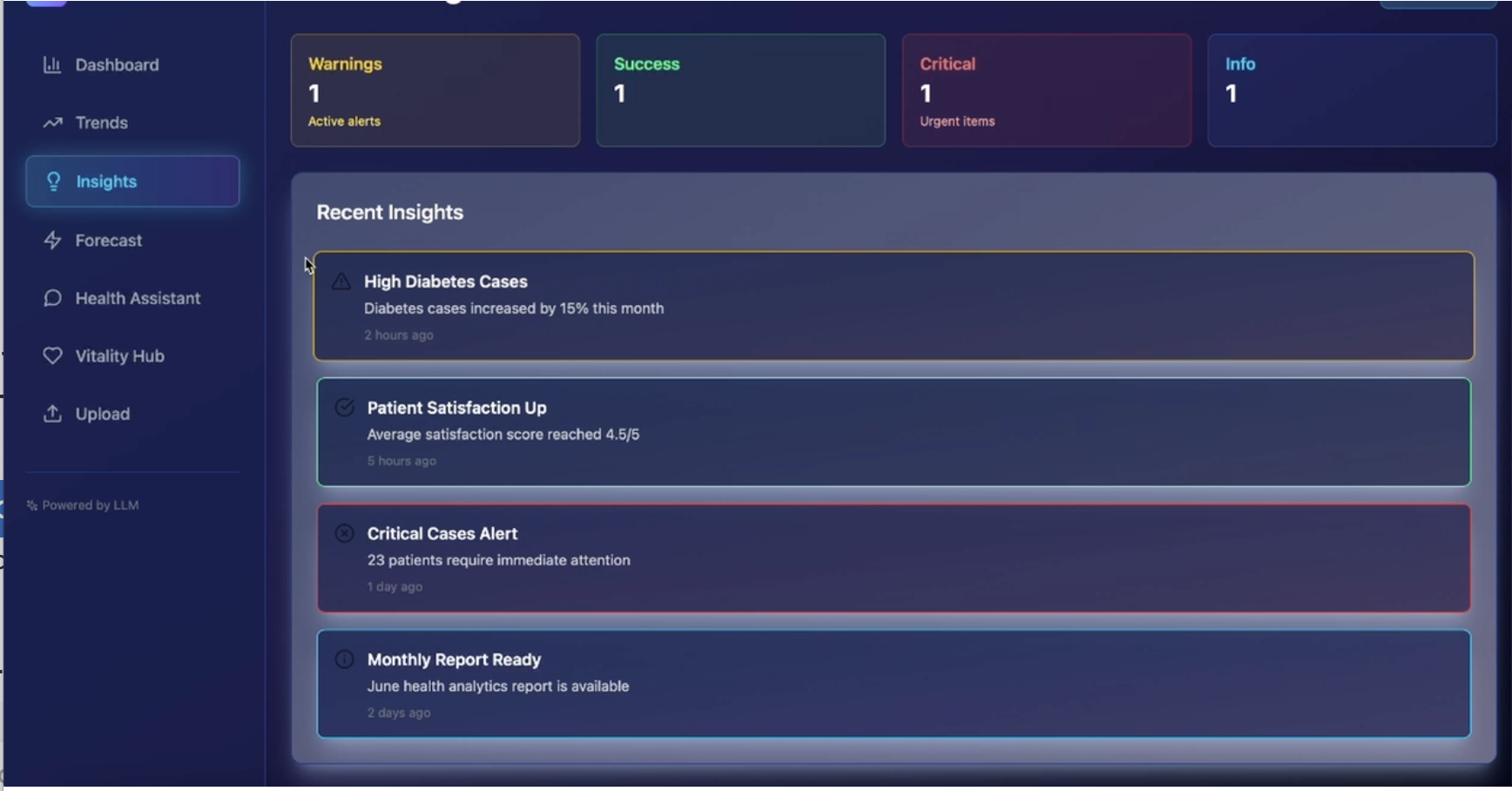
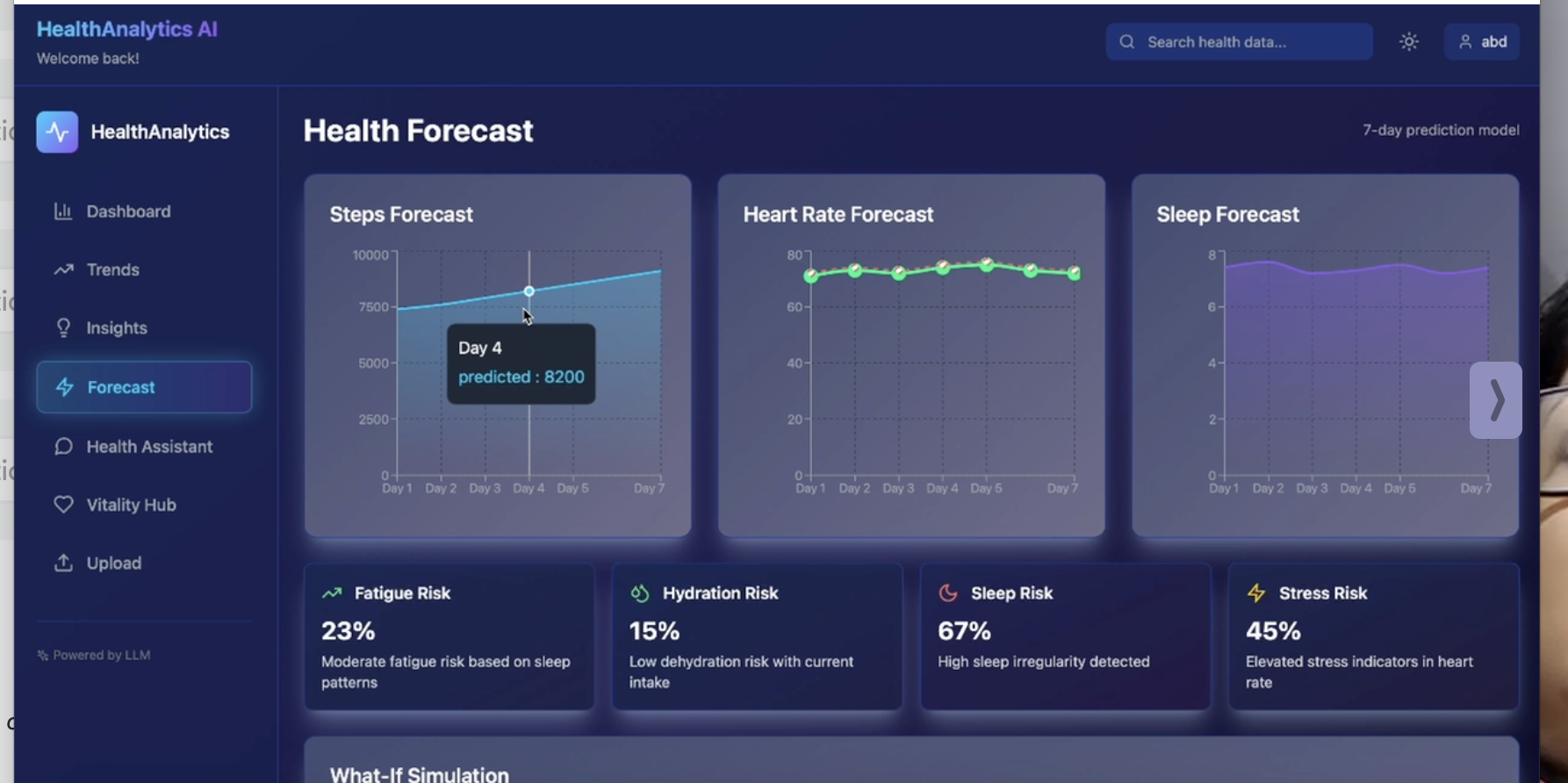
LifeLens: AI-Powered Health Insights is an intelligent health analytics platform that transforms raw wellness data into meaningful insights using a multi-agent AI system powered by Google Gemini and ADK-inspired design principles. In a world where people generate huge amounts of health data—steps, sleep hours, hydration, calories, heart rate—most users still struggle to interpret what these numbers truly mean. LifeLens solves this problem by allowing users to upload a simple CSV file containing their daily metrics and automatically converting this data into a visual, predictive, and conversational health intelligence experience. The platform features a clean, modern dashboard built using React, Vite, TailwindCSS, and Recharts, presenting each health metric through interactive charts and trend summaries. Users can instantly see their step count patterns, sleep fluctuations, hydration cycles, calorie variations, and heart rate signals across the week in a visually digestible format.
One of the core strengths of LifeLens is the integration of Google AI Studio and the Gemini API using the google-generativeai library. The project uses the model models/gemini-2.5-flash, which enables highly contextual and accurate health insights. The platform uses a secure API key to connect to Gemini, allowing the system to generate explanations, interpret trends, provide natural language insights, and act as a personal health companion. Users can ask questions about their data—such as why sleep decreased, why heart rate spiked, what habits need improvement, or what patterns look concerning—and the Gemini-powered assistant responds with personalized, data-driven explanations.
What makes LifeLens unique is its multi-agent architecture inspired by Agent Development Kit (ADK) patterns and A2A (agent-to-agent) communication concepts. Instead of a single model doing everything, LifeLens divides responsibilities among specialized agents to mimic real-world AI collaboration. The TrendAnalysisAgent examines weekly trends and patterns in metrics such as steps, sleep, hydration, calories, and heart rate. It prepares structured summaries of increases, decreases, irregularities, and consistency levels. The AnomalyDetectionAgent runs in parallel and focuses on detecting sudden changes, abnormal values, outliers, or risk indicators such as dramatic sleep drops or unexpected heart rate spikes. The InsightGeneratorAgent, backed by Gemini, takes outputs from the other agents and converts them into natural language insights, habit suggestions, and personalized interpretations. These agents communicate internally following A2A-style patterns, passing data sequentially and in parallel depending on their task. Trend analysis flows into insight generation, while anomaly detection runs concurrently and feeds alerts into the final result.
LifeLens implements ADK-inspired principles such as session management, memory, and observability. Using an InMemorySessionService, agents maintain coordination during a user’s analysis session, ensuring that trend data, anomalies, and insight requests remain synchronized. A memory bank structure stores past interactions so that agents can build on previous context instead of starting from scratch. Logging and tracing mechanisms provide observability, allowing the system to monitor agent decisions and generate reliable, traceable outputs. Through this architecture, LifeLens demonstrates a real-world application of multi-agent intelligence in healthcare, where different AI components work together to produce comprehensive results.
Beyond analysis and insights, LifeLens includes a full Wellness Center that enhances the user’s experience. This includes a weekly PDF report generator summarizing the user’s metrics, insights, and recommendations. The system generates habit suggestions tailored to the user’s behavior—for example, improving hydration routine, stabilizing sleep schedule, increasing step consistency, or balancing calorie intake. The Sleep Quality Analyzer evaluates sleep patterns, identifying irregular sleep windows or insufficient rest periods. The Stress Index uses combined signals from sleep quality, hydration, heart rate patterns, and activity levels to estimate potential stress levels. These additional features elevate LifeLens from a mere dashboard to a complete wellness companion.
The frontend implementation provides a smooth user experience with responsive design, modern aesthetics, and theme support. Every visual element is designed to help users understand their data instantly. The interface loads quickly due to Vite’s optimized build system, while TailwindCSS ensures clean styling. Recharts is used to render interactive graphs, enabling users to explore their weekly trends easily. These technologies ensure that LifeLens feels modern, fast, and user-friendly.
From a technical standpoint, the project also includes an AI folder containing the multi-agent system. The MultiAgentHealthSystem class initializes and coordinates the three agents: TrendAnalysisAgent, AnomalyDetectionAgent, and InsightGeneratorAgent. The GeminiHealthAgent class configures the Gemini API using an environment variable for the API key and loads the models/gemini-2.5-flash model for natural language insight generation. This design ensures that each agent has a clear role and that all insights remain grounded in the user’s dataset.
Overall, the system achieves real multi-agent coordination. Trend agents and anomaly agents analyze raw data independently, while the insight agent transforms structured analysis into meaningful prose. The communication between these agents demonstrates agent-to-agent coordination, where each agent contributes to the final output without redundancy or conflict. Together, they produce a comprehensive understanding of the user's health in a way that feels seamless and intelligent.
The goal of LifeLens is simple: give users clarity. Most people have the data but lack interpretation. LifeLens turns those numbers into clear explanations and personalized guidance. Whether the user is a student, a fitness beginner, an athlete, or someone simply trying to improve their wellness, the system provides meaningful insights without requiring any expertise. It reduces the complexity of health data and turns it into something approachable and actionable.
LifeLens stands out because it combines clean UI, real-time analytics, multi-agent AI reasoning, Gemini-powered insight generation, session and memory management, predictive forecasting, and a complete suite of wellness tools. Instead of overwhelming users with charts, it focuses on interpretation and guidance. LifeLens is more than a dashboard; it is an intelligent companion built to help people understand their bodies better. It blends modern frontend design with advanced multi-agent AI architecture to create a new kind of digital health experience—one that is insightful, accessible, and genuinely useful.

Log in or sign up for Devpost to join the conversation.